

P0191 on 2010-2014 Chevrolet Silverado: Fuel Rail Pressure Sensor Causes and Fixes
P0191 on a 2010-2014 Silverado typically points to a faulty Fuel Rail Pressure Sensor (FRPS) or a failing Fuel Pump Control Module (FPCM). The FPCM is a common failure point, often due to corrosion on its frame-mounted location near the spare tire. Expect to pay $40-$125 for a sensor or $70-$195 for a control module.
- P0191 means the fuel rail pressure is not what the computer expects it to be.
- Before replacing the expensive fuel pump, thoroughly inspect the Fuel Pump Control Module (FPCM) and its wiring for corrosion, as it's a very common and cheaper fix.
- Always verify actual fuel pressure with a mechanical gauge and compare it to your scan tool's reading to determine if the sensor is bad or if there's a real pressure problem.
- Check for the related code P069E, which strongly points to a faulty FPCM.
- Be aware of the generation split in 2014; ensure you are diagnosing and ordering parts for the correct fuel system (standard vs. direct injection).
What's Unique About the 2010-2014 Chevrolet SILVERADO

On this generation of Silverado, P0191 is frequently caused by more than just a bad sensor. A very common point of failure is the frame-mounted Fuel Pump Control Module (FPCM), which is highly susceptible to corrosion from road salt and moisture, leading to erratic fuel pressure. A bad ground connection for the FPCM is also a frequent culprit. Additionally, GM issued technical service bulletins for these trucks related to fuel system contamination (TSB #PIP5151A) and hard start/no-start conditions (TSB #PIP4949D), making a broader fuel system inspection critical.
Diagnostic Flowchart

Tap your situation to follow the diagnostic path that matches what you're seeing on this vehicle.
Generation note: This range covers the end of the 2nd generation (GMT900, 2007-2013/14) and the start of the 3rd generation (K2XX, 2014-2019). The K2XX models introduced direct injection on V8s, which uses a more complex dual-pressure (low and high) fuel system. The fuel pressure sensor design also changed; for example, the 2014-2016 models use a sensor like GM part #12673824, while 2017+ models use a different sensor like #12708493, so ensure you have the correct part for your year.
Symptoms You May Notice
- Check Engine Light is on
- Hard starting or long crank times
- No-start condition
- Rough idle and engine stalling
- Poor acceleration and loss of engine power
- Engine hesitation or surging under load
- Reduced fuel economy
- Replacing the fuel rail pressure sensor when the actual fault is with the Fuel Pump Control Module (FPCM) or a weak fuel pump.
- On direct injection engines (2014+), replacing the high-pressure fuel pump when the issue is with the low-pressure in-tank pump or FPCM.
Most Likely Causes

- Failing Fuel Pump Control Module (FPCM) 🔴 High Probability → Shop Fuel Pump The FPCM is mounted on the frame rail, often on a crossmember above the spare tire, making it highly susceptible to corrosion from road salt and moisture. This is a well-documented failure point on GM trucks of this era.
How to confirm: Inspect the FPCM and its connector for corrosion or physical damage. A scan tool may show a P069E code alongside P0191, strongly pointing to the FPCM. You can test for power and ground at the module connector. A common DIY test is to bypass the module with jumper wires to see if the fuel pump runs, which confirms a bad module.
Typical fix: Replace the Fuel Pump Control Module. The new module must be programmed to the vehicle's VIN.
Est. part cost: $70-$195 - Faulty Fuel Rail Pressure Sensor (FRPS) 🟡 Medium Probability → Shop Fuel Pressure Sensor Sensors can fail over time due to heat cycles and vibration. Corrosion at the electrical connector is also a known issue, as noted in GM TSB 20-NA-197, which applies to a wide range of GM vehicles and codes including P0191.
How to confirm: Use a scan tool to monitor the fuel rail pressure reading. Compare this reading to a mechanical fuel pressure gauge connected to the fuel rail. If the scan tool data is erratic or does not match the mechanical gauge, the sensor is likely faulty.
Typical fix: Replace the fuel rail pressure sensor and its O-ring. Apply dielectric grease to the new connector to prevent future corrosion.
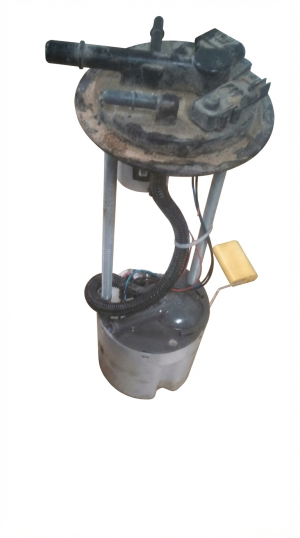
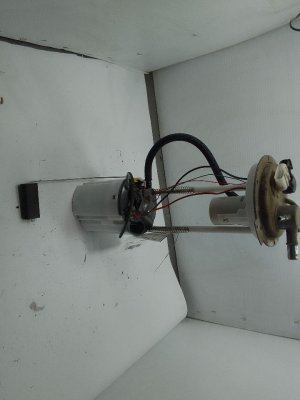
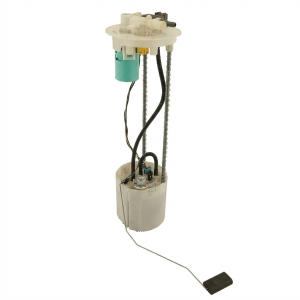
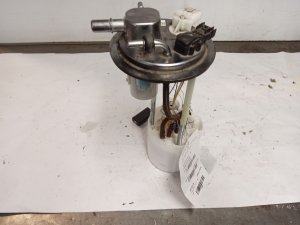
Est. part cost: $40-$125 - Weak or Failing In-Tank Fuel Pump 🟡 Medium Probability → Shop Fuel Pump The fuel pump can wear out over time, failing to provide adequate pressure to the fuel rail. The fuel filter is integrated into the pump module on these trucks and cannot be serviced separately.
How to confirm: Perform a fuel pressure test with a mechanical gauge. For many V8 models, key-on pressure should be around 50-62 PSI. If the pressure is low, drops significantly under load, or is erratic, the pump is the primary suspect.
Typical fix: Replace the in-tank fuel pump module assembly. This can often be done by lifting the truck bed rather than dropping the tank.
Est. part cost: $200-$500 - Fuel System Contamination ⚪ Low Probability GM issued TSB #PIP5151A regarding fuel system contamination from sources like poor fuel quality causing hard starts, rough running, and setting P0191.
How to confirm: A fuel pressure test may show erratic readings. Visual inspection of the fuel tank or fuel samples may reveal debris, water, or other contaminants.
Typical fix: Clean the entire fuel system, including the tank and lines, and replace the fuel pump module/filter assembly.
Est. part cost: $200-$500 (for pump, plus labor)
Rare But Worth Checking
- Damaged Wiring or Connector: Corrosion or damage to the wiring harness for the FRPS or FPCM can cause intermittent signals, mimicking a failed component. TSB 20-NA-197 specifically calls out inspecting the FRPS connector for corrosion and replacing the connector pigtail (Part No. 19367009) if damage is found.
- Faulty Powertrain Control Module (PCM): → Shop Engine Control Module (ECM) This is very rare, but a faulty PCM can misinterpret sensor data. This should only be considered after all other possibilities have been exhaustively ruled out.
Diagnosis Steps
- Check for other stored DTCs, paying close attention to codes like P0087, P0088, or P069E, as they strongly suggest a fuel delivery problem.
- Connect a scan tool and observe the live data for the fuel rail pressure sensor. Note the reading with the key on, engine off, and while running. Look for erratic behavior or values that don't make sense.
- Connect a mechanical fuel pressure gauge to the fuel rail's service port. Compare the mechanical reading to the scan tool's reported pressure. They should be within a few PSI of each other.
- If the pressures do not match, the Fuel Rail Pressure Sensor (FRPS) is likely faulty.
- If the pressures match but are low or erratic, the problem is with fuel delivery. Visually inspect the Fuel Pump Control Module (FPCM) and its ground wire, located on the frame rail near the spare tire, for heavy corrosion or physical damage.
- If the FPCM appears okay, test its power and ground circuits. A scan tool can be used to command the fuel pump on and off to verify FPCM function.
- If the FPCM and its wiring are good, test the in-tank fuel pump's pressure and volume to ensure it meets specifications (typically 50-62 PSI key-on, engine-off for V8s).
- Inspect the wiring and connectors for the FRPS and FPCM for any signs of corrosion, chafing, or loose pins, as detailed in TSB 20-NA-197.
Parts You'll Likely Need
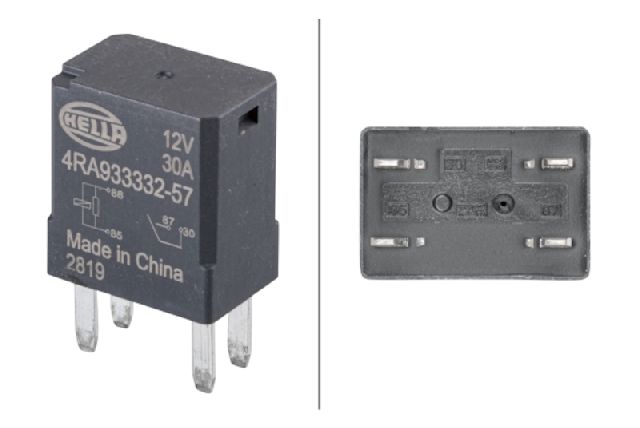
- Fuel Pump Control Module (FPCM)
(OEM #20877116)— This module is a very common failure point due to its location on the frame, where it is exposed to moisture and corrosion, causing erratic fuel pressure.
Trusted brands: ACDelco, Dorman (e.g., 601-131), Wells
OEM price range: $120-$195
Aftermarket price range: $70-$150 - Fuel Rail Pressure Sensor (FRPS)
(OEM #12673824)— This sensor provides the pressure reading to the ECM. It can fail internally or its connector can corrode, sending incorrect signals and triggering P0191.
Trusted brands: ACDelco, Bosch, Delphi, Dorman
OEM price range: $70-$125
Aftermarket price range: $40-$80 - In-Tank Fuel Pump Module — A weak or failing pump will cause low fuel pressure, directly leading to a P0191 code. The fuel filter is integrated into this assembly.
Trusted brands: ACDelco, Delphi
OEM price range: $350-$500
Aftermarket price range: $200-$350
Related Codes That Often Appear With This One
- P0087 — Indicates 'Fuel Rail/System Pressure - Too Low,' which is a direct mechanical consequence of the issues causing P0191. This code is mentioned in TSBs PIP4949D and PIP5151A.
- P0088 — Indicates 'Fuel Rail/System Pressure - Too High,' which can also trigger the P0191 performance code. This code is also mentioned in TSBs PIP4949D and PIP5151A.
- P069E — Indicates 'Fuel Pump Control Module Requested MIL Illumination.' This code points directly to a fault with the FPCM, a very common cause for P0191 on these trucks.
Technical Service Bulletins (TSBs) & Recalls
- PIP4949D: Mentions P0191 in the context of hard start or no-start conditions.
- PIP5151A: Discusses fuel system contamination as a potential cause for P0191.
Platform-Specific Known Issues
- TSB #PIP4949D notes that P0191 can be associated with hard start or no-start conditions.
- TSB #PIP5151A points to fuel system contamination as a potential cause for P0191, requiring the entire fuel system to be cleaned.
- TSB #20-NA-197 (for later models, but relevant) identifies corrosion at the fuel pressure sensor electrical connector as a cause for P0191 and other fuel-related codes.
Mechanic-Grade Diagnostic Values
- Low-Pressure Fuel System (All Years) — expected: 50-62 PSI (345-414 kPa) with key on, engine off.. Failure: Pressure is low, fluctuates wildly, or drops significantly under load.
- High-Pressure Fuel System (2014+ Direct Injection) — expected: Approximately 700-900 PSI at idle.. Failure: Pressure is excessively high (e.g., 2500 PSI at idle) or fails to build, often setting P0087 or P0088.
- Fuel Rail Pressure Sensor (FRPS) Signal Voltage (Key On, Engine Off) — expected: Approximately 1.5V to 1.8V.. Failure: Voltage is stuck high near 5.0V (indicating an open in the signal circuit) or near 0V.
- FRPS 5V Reference Circuit — expected: 4.8-5.2 V.. Failure: A reading outside this range indicates a short to voltage, short to ground, or an open/high resistance in the circuit.
- FPCM Power and Ground Circuits (Voltage Drop) — expected: Less than 0.1V drop on both the power and ground side with the circuit energized.. Failure: Excessive voltage drop indicates a poor connection or corroded wire that needs to be repaired before replacing the module.
Scan Tool Commands That Help
- GDS2 / Tech2 (or equivalent professional scan tool): Fuel Pump On/Off Command (Output Control) — Used to verify if the ECM, FPCM, and fuel pump are communicating. When commanding the pump ON, you should hear it run and see pressure build on a gauge. If the pump doesn't run, it points to a failure in the FPCM, wiring, or the pump itself.
- GDS2 / Tech2: FSCM/FPCM Programming — A new Fuel Pump Control Module must be programmed to the vehicle's VIN to function correctly. This is a required step after replacement.
Wiring & Ground Locations
- FPCM Ground — The FPCM is typically grounded to the frame near its mounting location, which is on a crossmember above the spare tire.. Corrosion of this ground connection is a very common cause of erratic FPCM behavior, leading to fluctuating fuel pressure and the P0191 code. A voltage drop test on the ground is critical.
- FPCM Connector (Pin 13) — The Dark Green/White wire at Pin 13 of the FPCM connector.. This is the command signal wire from the ECM. With the key on, it should have 12V (either constantly, for 3-6 seconds, or while cranking). If there is no voltage here but there is voltage at the corresponding PCM pin (Pin 50, black connector), there is a break in the wire.
- Wiring Harness Chafe Point — In the square tube section of the frame where the wiring loom makes a turn under the driver's side, near the underhood fuse panel.. A documented case showed the power wire to the FPCM chafing and breaking inside this part of the frame, causing a voltage drop and preventing the module from working, which can trigger P0191.
Real Owner Repair Stories
- YouTube channel 'Chevy Silverado p0191 and p069e troubleshoot + repair' (2007 Chevrolet Silverado (GMT900 platform, similar to 2010-2013)) — Check Engine Light with codes P0191 and P069E, low fuel pressure, and eventually a no-start condition.
❌ Tried (didn't work) Replaced the Fuel Rail Pressure Sensor., Replaced the in-tank fuel pump (this corrected the low pressure reading but the codes remained).
✅ What actually fixed it Replacing the Fuel Pump Control Module (FPCM). The owner confirmed the FPCM was bad by using jumper wires to bypass it, which allowed the truck to start. A new FPCM programmed to the VIN resolved the codes.
OEM Part Supersession History
20877116 (FPCM)→20791901, 20827745, 20850927.— Standard part revision and consolidation by the manufacturer.
Heads up: The replacement module must be programmed to the vehicle's VIN to function.12623130 (FRPS)→12673824.— Updated part design by the manufacturer.
Model Year Variations Within This Range

- 2010-2013 (GMT900): These models use a conventional returnless port fuel injection system. P0191 diagnosis focuses entirely on the low-pressure side: the in-tank pump, the FPCM, the FRPS, and wiring. Fuel pressure should be around 50-62 PSI.
- 2014 (K2XX): The 2014 model year introduced the EcoTec3 V8 engines with Direct Injection (DI). This adds a second, engine-driven high-pressure fuel pump (HPFP) that boosts pressure to hundreds or thousands of PSI. For these engines, P0191 can be caused by failures in either the low-pressure system (in-tank pump, FPCM) or the high-pressure system (HPFP, high-pressure sensor).
Helpful Videos
Used OEM Parts in Stock
New Aftermarket Parts Available



The information in this article is provided for general reference and educational purposes only. Vehicle specifications, procedures, and part compatibility can vary by production date, trim level, and region. Always consult your vehicle's factory service manual and verify part numbers before purchasing or performing repairs. Safety-critical components such as airbags, seat belts, and braking systems should be installed by a qualified professional.
- Chevrolet SILVERADO:
- 🧭 Diagnostic Flowchart
- 🎬 Helpful Videos
- 🛍️ Shop This Part
- What's Unique About the 2010-2014 Chevrolet SILVERADO
- Symptoms You May Notice
- Most Likely Causes
- Rare But Worth Checking
- Diagnosis Steps
- Parts You'll Likely Need
- Related Codes That Often Appear With This One
- Technical Service Bulletins (TSBs) & Recalls
- Platform-Specific Known Issues
- Mechanic-Grade Diagnostic Values
- Scan Tool Commands That Help
- Wiring & Ground Locations
- Real Owner Repair Stories
- OEM Part Supersession History
- Model Year Variations Within This Range
- 🎟️ Get 5% Off