

P0191 on 2015-2017 Chevrolet Silverado: Fuel Pressure Sensor Causes and Fixes
P0191 on a 2015-2017 Silverado indicates a fuel pressure problem. The most common fixes are replacing a faulty fuel rail pressure sensor or addressing a failing high-pressure fuel pump. Before replacing expensive parts, check for fuel contamination and inspect the sensor's wiring for corrosion or damage as noted in GM service bulletins like TSB 20-NA-197.
- P0191 means the fuel rail pressure reading is not what the truck's computer expects.
- On these trucks, the cause can be the sensor, the high-pressure pump, the low-pressure pump, or the module that controls it (FPDM/FPCM).
- Always check for simple fixes first: inspect the sensor's wiring connector for corrosion as noted in TSB 20-NA-197.
- Do not replace the expensive high-pressure fuel pump without first testing the low-pressure system and checking for fuel contamination, as advised by GM service bulletins.
- This code often appears with P0087 (pressure too low) or P0088 (pressure too high), which can help pinpoint the problem. [NHTSA]
What's Unique About the 2015-2017 Chevrolet SILVERADO

The 2015-2017 Silverado (K2XX generation) uses a direct injection fuel system with two fuel pumps: a low-pressure pump in the tank and a high-pressure fuel pump (HPFP) driven by the engine. This complexity means P0191 can be triggered by faults in either the low or high-pressure circuits. GM has issued multiple Technical Service Bulletins (TSBs) for these trucks that relate to this code, pointing to issues like fuel system contamination (TSB 16-NA-102) and corrosion on sensor connectors (TSB 20-NA-197), making a thorough diagnosis more critical than on simpler systems.
Diagnostic Flowchart

Tap your situation to follow the diagnostic path that matches what you're seeing on this vehicle.
Symptoms You May Notice
- Check Engine Light is on
- Engine goes into 'Reduced Engine Power' or 'Limp Mode'.
- Hard starting or long crank times. [NHTSA]
- No-start condition. [NHTSA]
- Rough idle and engine stalling. [9, NHTSA]
- Poor acceleration and loss of engine power.
- Engine hesitation or surging, sometimes at specific speeds like 40-55 mph.
- Reduced fuel economy.
- Replacing the high-pressure fuel pump (HPFP) when the actual fault is a weak low-pressure in-tank pump or a corroded Fuel Pump Driver Module (FPDM).
- Replacing the fuel rail pressure sensor without first verifying actual fuel pressure with a mechanical gauge, or without inspecting the connector and wiring for damage as per TSB 20-NA-197.
Most Likely Causes

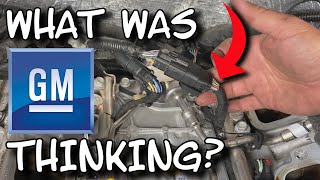
- Faulty Fuel Rail Pressure Sensor (FRPS) 🔴 High Probability → Shop Fuel Pressure Sensor The sensor is a sensitive electronic component that operates in a high-heat, high-vibration environment. Corrosion on the electrical connector is a well-documented issue, specifically called out in TSB 20-NA-197, which advises inspecting the connector and replacing the pigtail if corrosion or damage is found.
How to confirm: With a scan tool, compare the 'Desired Fuel Rail Pressure' to the 'Actual Fuel Rail Pressure' PID. If the actual reading is erratic, stuck on one value (e.g., 0 PSI or maxed out), or clearly incorrect while the engine is running, the sensor is likely faulty. Also, inspect the connector for green or black corrosion and check for bent pins. The sensor's signal wire should show a voltage that corresponds to pressure, typically between 0.5V and 4.5V.
Typical fix: Replace the fuel rail pressure sensor. 🎬 Watch: A quick walkthrough of the fuel rail pressure sensor replacement. If the connector is corroded, replace the connector pigtail (GM Part #19367009 per TSB 20-NA-197) and apply dielectric grease.
Est. part cost: $50-$150 - Failing High-Pressure Fuel Pump (HPFP) 🟡 Medium Probability → Shop Fuel Pump The HPFP is a mechanical pump that can wear out over time, sometimes failing internally and shedding metallic debris into the fuel system. TSBs for these trucks point to fuel contamination as a cause of premature pump failure. [11, 24, NHTSA]
How to confirm: After confirming the low-pressure fuel system is working correctly (supplying 55-62 PSI), monitor fuel rail pressure with a scan tool. If the actual pressure cannot meet the desired pressure under load, the HPFP is a likely cause. TSB 16-NA-102 advises inspecting the fuel pressure regulators for magnetic metallic debris after pump removal to confirm internal failure.
Typical fix: Replace the high-pressure fuel pump. If metallic contamination is found, the entire fuel system (injectors, rails, lines, tank) must be cleaned or replaced as per TSB 16-NA-102 to prevent repeat failure. [2, NHTSA]
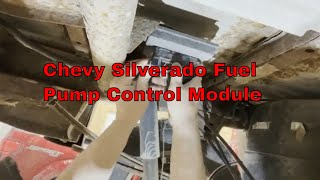
Est. part cost: $400-$900 - Failing Low-Pressure Fuel Pump or Fuel Pump Driver Module (FPDM/FPCM) 🟡 Medium Probability → Shop Fuel Pump The FPDM (also called FPCM) is mounted on the frame rail, often near the spare tire, making it highly susceptible to corrosion from road salt and moisture. This can cause it to fail and not provide proper voltage to the in-tank pump. A weak in-tank pump cannot supply the necessary volume of fuel to the HPFP, starving it and causing low high-side pressure.
How to confirm: Test the fuel pressure at the low-pressure line feeding the HPFP; it should be stable and within GM's specification (typically 55-62 PSI at idle). If pressure is low, inspect the FPDM and its connector for heavy corrosion. 🎬 See how to locate and inspect the fuel pump control module. Test for power, ground, and command signal at the FPDM to isolate the fault between the module and the in-tank pump.
Typical fix: Replace the faulty component, which could be the in-tank fuel pump assembly or the Fuel Pump Driver Module. The FPDM may require programming to the vehicle's VIN.
Est. part cost: $100-$400 - Fuel System Contamination ⚪ Low Probability Mentioned specifically in TSBs PIP5151F and 16-NA-102 for causing fuel pressure issues, hard starts, and rough running. [NHTSA, 24] Debris from a deteriorating HPFP, rust from the tank, or contaminated fuel can clog filters, injectors, or damage the pumps.
How to confirm: Inspect the fuel pressure regulators and sensors for debris as outlined in TSB 16-NA-102. A fuel sample taken from the low-pressure line into a clean glass jar may also show visible water, rust, or other debris after settling.
Typical fix: If contamination is found, the complete fuel system, including the tank, lines, and rails, will need to be cleaned or replaced as per GM service procedures to prevent a recurrence. [NHTSA]
Est. part cost: $500-$2000+
Rare But Worth Checking
- Wiring Harness Issue: Damaged or corroded wiring between the ECM and the fuel rail pressure sensor can cause erratic signals. TSB 20-NA-197 specifically calls out checking the sensor connector for corrosion. In at least one owner-reported case, a bent pin in a larger harness connector was the culprit.
- Faulty Engine Control Module (ECM): → Shop Engine Control Module (ECM) This is very rare, but an internal failure of the ECM's driver circuit for the sensor can cause the P0191 code. This should only be considered after all other possibilities, including wiring and connectors, have been exhaustively ruled out.
Diagnosis Steps
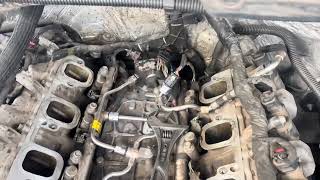
- Scan for all DTCs. Note any other codes present, especially P0087, P0088, P128E, or P069E 🎬 Watch: Troubleshooting and repairing P0191 and P069E codes together., as they provide critical diagnostic direction.
- Inspect the fuel rail pressure sensor's electrical connector for any signs of corrosion (green or black residue), damage, or loose pins, as suggested by TSB 20-NA-197. Gently wiggle the harness while monitoring sensor data to check for intermittent connections.
- Using a scan tool, observe the live data for 'Desired Fuel Rail Pressure' and 'Actual Fuel Rail Pressure'.
- With the engine running, see if the actual pressure closely follows the desired pressure. If the actual reading is stuck, erratic, or nonsensical (e.g., reading 0 PSI with the engine running), the sensor or its circuit is the primary suspect.
- If the actual pressure is consistently low, the next step is to test the low-pressure fuel system. Connect a mechanical fuel pressure gauge to the low-pressure feed line. Pressure should be stable and within manufacturer specifications (typically 55-62 PSI).
- If low-side pressure is out of spec, diagnose the in-tank fuel pump and the frame-mounted Fuel Pump Driver Module (FPDM/FPCM), checking the FPDM for corrosion.
- If low-side pressure is good but high-side pressure is still low or fails to meet the desired value under load, the high-pressure fuel pump (HPFP) is the likely culprit.
- Before replacing the HPFP, follow the diagnostic procedure in TSB 16-NA-102 to inspect for metallic fuel contamination, which could be the underlying cause of the failure and would require more extensive cleaning.
Parts You'll Likely Need
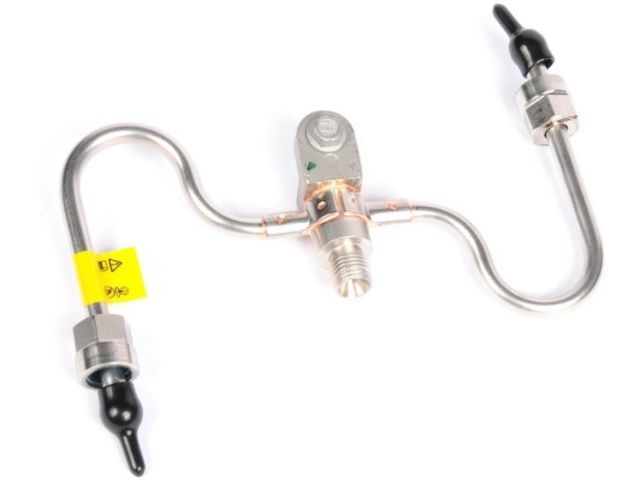
- Fuel Rail Pressure Sensor
(OEM #12673)
Related Codes That Often Appear With This One
- P0087 — Stands for 'Fuel Rail/System Pressure - Too Low,' which is a direct mechanical consequence that can trigger the P0191 performance code. Both are mentioned together in TSBs PIP5151F, PIP4949D, and 16-NA-102. [NHTSA, 5]
- P0088 — Stands for 'Fuel Rail/System Pressure - Too High,' the opposite of P0087. It can also trigger the P0191 performance code and is mentioned in the same TSBs. [NHTSA, 5]
- P128E — A manufacturer-specific code for 'Fuel Rail Pressure Performance,' often set alongside P0191 as noted in TSBs PIP5151F and PIP4949D. [NHTSA, 21]
- P069E — Indicates a fault in the Fuel Pump Control Module, which can be the root cause of the low fuel pressure that triggers P0191.
Technical Service Bulletins (TSBs) & Recalls
- PIP5151F: Addresses hard start, no start, rough running, and low fuel pressure, potentially caused by fuel system contamination.
- PIP4949D: Pertains to hard start or no start conditions associated with code P0191.
- 16-NA-102: Details a diagnostic procedure for fuel pressure codes, including inspecting for debris before replacing the high-pressure pump.
- 20-NA-197: Points to corrosion on the fuel pressure sensor connector as a possible cause.
Platform-Specific Known Issues
- Bent Pin in Harness Connector: In one documented case on an r/MechanicAdvice thread, a 2016 Silverado with a 5.3L engine repeatedly threw P0191 and P0192 codes after engine work. The root cause was not a failed part, but a bent pin within the main electrical connector that serves the fuel pressure sensor and injectors. This highlights the sensitivity of the circuit and the need to inspect connectors carefully after any related service.
- Recurring Sensor Failure Suggests Deeper Problem: A thread on the Car Talk Community forum illustrates a common frustration where a 2016 Silverado owner replaced the fuel rail pressure sensor multiple times, yet the P0191 code and limp mode continued to occur. This experience underscores that P0191 is a 'performance' code, and simply replacing the sensor without diagnosing the underlying cause (like a wiring issue, pump weakness, or contamination) often does not fix the problem.
Mechanic-Grade Diagnostic Values
- Low-Pressure Fuel System Pressure — expected: 55-70 PSI. Failure: Pressure below 55 PSI indicates a weak in-tank pump or faulty FPCM.
- High-Pressure Fuel System Pressure (at idle) — expected: 500-900 PSI. Failure: Pressure significantly below 500 PSI or wildly fluctuating at idle can indicate a failing HPFP or sensor issue.
- High-Pressure Fuel System Pressure (while cranking) — expected: 300-400 PSI. Failure: Significantly lower pressure during cranking can indicate a no-start condition related to the HPFP or cam timing.
- Fuel Rail Pressure Sensor (FRPS) Signal Voltage — expected: 0.4V to 4.5V (Key On, Engine Off/Running). Failure: Voltage outside this range, or stuck at a specific value (e.g., 0V or 5V) indicates a sensor or wiring fault.
- Fuel Rail Pressure Sensor (FRPS) 5V Reference Voltage — expected: 4.8V to 5.2V. Failure: No voltage or incorrect voltage points to a wiring issue or a fault in the ECM.
- Fuel Rail Pressure Sensor (FRPS) Ground Circuit Resistance — expected: Less than 10 Ω to chassis ground. Failure: Resistance higher than 10 Ω indicates a poor ground connection, which can cause erratic sensor readings.
Scan Tool Commands That Help
- GDS2 (GM Global Diagnostic System 2): Fuel Pump Speed Control — This bidirectional control allows a technician to command the Fuel Pump Control Module (FPCM) to run the in-tank fuel pump at various speeds. It is used to verify if the FPCM and low-pressure pump are responding correctly, helping to isolate a fault between the control module, wiring, and the pump itself.
- GDS2 (GM Global Diagnostic System 2): Fuel Pump Driver Control Module Configuration — This function is required after replacing the Fuel Pump Driver Control Module (FPCM/FPDM) to program the new module to the vehicle. Failure to perform this step can result in a no-start or persistent fuel pressure codes.
Wiring & Ground Locations
- Fuel Pump Control Module (FPCM/FPDM) — On the driver's side frame rail, typically above or near the spare tire.. This location makes the module and its connector highly vulnerable to corrosion from road salt and moisture, which is a common cause of low-pressure fuel delivery failure that can trigger P0191.
- ECM Connector X3, Pin 3 — At the Engine Control Module (ECM).. This is the specific pin for the Fuel Rail Pressure Sensor Signal. Testing for signal integrity at this pin can help determine if a wiring fault exists between the sensor and the ECM.
- Fuel Pump Control Module Fuse — In the underhood fuse block. For 2014-2016 models, it is typically fuse #21 (20A). For 2017-2019 models, it is also fuse #21.. A blown fuse will cut power to the FPCM, disabling the low-pressure fuel pump and leading to a no-start and fuel pressure codes like P0191 and P0087.
Real Owner Repair Stories
- YouTube channel 'Diagnose It All' (2016 Chevrolet Silverado 1500 5.3L V8) — Crank no-start condition after a different shop replaced the engine.
❌ Tried (didn't work) The original shop was unable to diagnose the no-start after engine replacement.
✅ What actually fixed it The technician found that two adjacent, identical bulk harness connectors on the engine were swapped. One connector served the left fuel rail and the other served the right. Because they were reversed, the fuel rail pressure sensor was receiving a ground signal on its 5V reference pin and 8.5V on its ground pin. Swapping the connectors to their correct positions restored the proper 5V reference and ground, and the truck started and ran correctly.
OEM Part Supersession History
12611873→12651990— Part number update by GM. The new part is the standard service replacement.
Heads up: While this part number is listed for GM vehicles, it is primarily associated with the 6.6L Duramax diesel engine. The gasoline L83 engine uses a different sensor. Always verify the part number with the vehicle's VIN.
Model Year Variations Within This Range
- 2016-2017: For 2016 models, the 8-speed (8L90) automatic transmission became more widely available with the 5.3L V8, whereas 2015 models predominantly used the 6-speed (6L80). This does not directly affect the P0191 code's cause but is a notable powertrain change within the generation.
Helpful Videos
We Have This Part in Stock

The information in this article is provided for general reference and educational purposes only. Vehicle specifications, procedures, and part compatibility can vary by production date, trim level, and region. Always consult your vehicle's factory service manual and verify part numbers before purchasing or performing repairs. Safety-critical components such as airbags, seat belts, and braking systems should be installed by a qualified professional.
- Chevrolet SILVERADO:
- 🧭 Diagnostic Flowchart
- 🎬 Helpful Videos
- 🛍️ Shop This Part
- What's Unique About the 2015-2017 Chevrolet SILVERADO
- Symptoms You May Notice
- Most Likely Causes
- Rare But Worth Checking
- Diagnosis Steps
- Parts You'll Likely Need
- Related Codes That Often Appear With This One
- Technical Service Bulletins (TSBs) & Recalls
- Platform-Specific Known Issues
- Mechanic-Grade Diagnostic Values
- Scan Tool Commands That Help
- Wiring & Ground Locations
- Real Owner Repair Stories
- OEM Part Supersession History
- Model Year Variations Within This Range
- 🎟️ Get 5% Off