

P0191 on 2017-2020 Chevy Silverado 2500HD/3500HD: Fuel Rail Pressure Sensor Causes & Fixes
On the L5P Duramax, P0191 is most often caused by a poor electrical connection at the Fuel Rail Pressure Sensor, a known issue addressed by GM TSB 20-NA-197. Before replacing the sensor, inspect the connector pigtail for corrosion or damage. A new pigtail kit (GM Part #85518225) costs around $40-$60 and is the most likely fix.
- For a 2017-2020 Duramax, P0191 is most likely an electrical issue, not a catastrophic pump failure.
- Always start your diagnosis by inspecting the fuel rail pressure sensor's electrical connector for corrosion, per GM TSB 20-NA-197.
- Replacing the connector pigtail is a common and inexpensive fix for this code.
- Do not work on the high-pressure fuel system without proper training and safety precautions due to extreme pressures.
- Use a scan tool to compare 'Desired' vs. 'Actual' fuel pressure and the two internal sensor readings to confirm the diagnosis before replacing parts.
What's Unique About the 2017-2020 Chevrolet Silverado 2500HD/3500HD
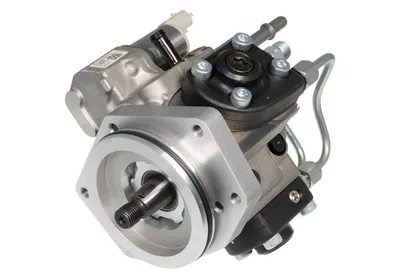
For the 2017-2020 L5P Duramax, this code is very frequently an electrical issue, not a major mechanical failure. General Motors released Technical Service Bulletin 20-NA-197, which highlights that corrosion and poor terminal tension in the fuel rail pressure sensor's electrical connector are the most common culprits. This is a key difference from the previous generation LML Duramax, where this code often signaled a catastrophic failure of the CP4 high-pressure fuel pump. The L5P uses a more reliable Denso HP4 pump, making the sensor and its wiring the primary suspects.
Generation note: The 2017-2020 model years span two Silverado HD generations: the K2XX (2017-2019) and the T1XX (2020). However, the 6.6L L5P Duramax engine and its high-pressure fuel system are the same across these years, so the causes and fixes for P0191 are identical.
Symptoms You May Notice
- Check Engine Light is on
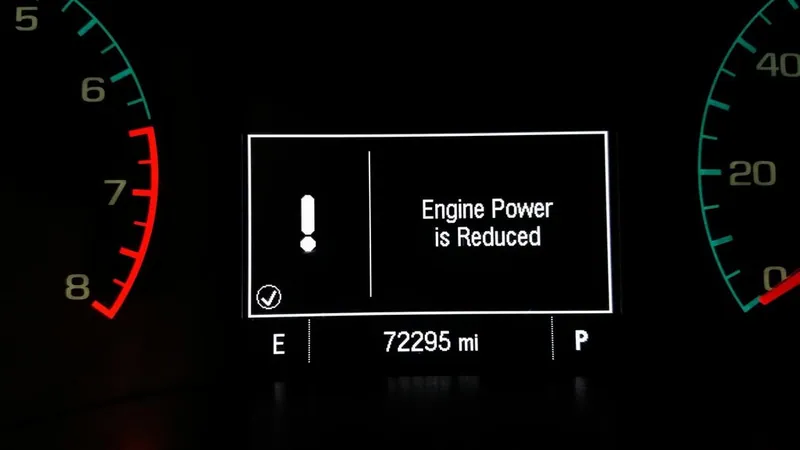
- Reduced engine power (Limp Mode)
- Engine stalling or shutting off while driving
- Hard starting or failure to start
- Engine surging or hesitating during acceleration
- Message on Driver Information Center (DIC) about reduced power
- Immediately replacing the high-pressure fuel pump. On the L5P engine, this is rarely the cause of P0191 and is an extremely expensive misdiagnosis. The electrical connector and sensor should always be checked first per TSB 20-NA-197.
Most Likely Causes

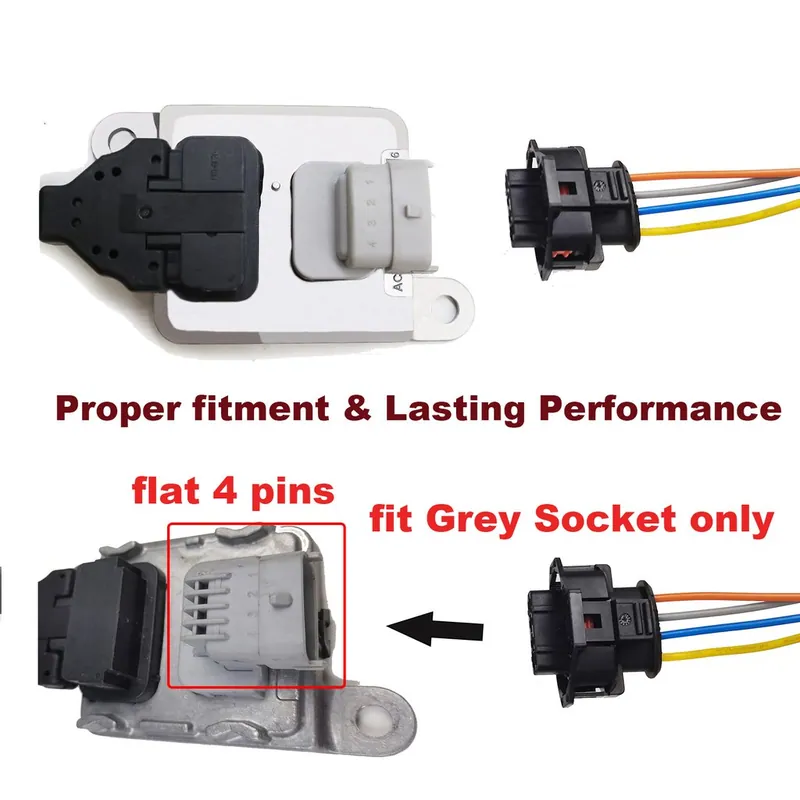
- Faulty Fuel Rail Pressure Sensor Electrical Connector 🔴 High Probability → Shop Fuel Pressure Sensor GM issued TSB 20-NA-197 specifically for this issue, citing corrosion, fretting, and poor terminal tension in the connector as a common problem on L5P engines. This is the most widely reported cause in owner forums.
How to confirm: Visually inspect the sensor's four-wire connector (located at the front of the engine, passenger side, at the end of the fuel rail, behind the throttle body) for any signs of green or white corrosion, spread terminals, or damaged wires. The TSB recommends using a terminal test tool with dielectric grease to 'drag' the terminals up to 10 times to identify poor tension or fretting that may not be visible. Wiggle the connector with the engine running and monitor fuel rail pressure on a scan tool to see if the reading becomes erratic.
Typical fix: Replace the connector pigtail. This involves cutting the old connector off and splicing the new one in, using high-quality, sealed butt connectors. The TSB advises applying dielectric grease to the new connector terminals before installation.
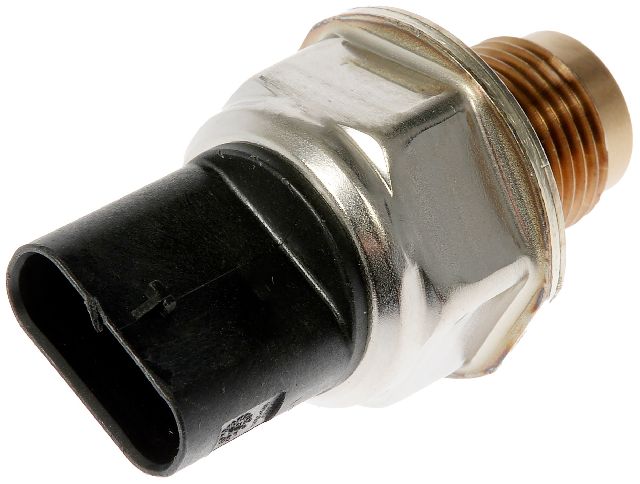
Est. part cost: $40-$60 for the OEM pigtail kit. - Failed Fuel Rail Pressure Sensor 🟡 Medium Probability → Shop Fuel Pressure Sensor While the connector is the most common issue, the sensor itself can fail electronically, providing incorrect or no signal to the ECM. One owner noted that upon inspection, a pin on the original sensor was discolored, suggesting an internal failure.
How to confirm: After confirming the connector and wiring are good, use a scan tool to monitor 'Fuel Rail Pressure Sensor 1' and 'Fuel Rail Pressure Sensor 2' data. These are two redundant readings from the same sensor body; they should be nearly identical. A differential of more than 100 PSI between them points to a bad sensor.
Typical fix: Replace the Fuel Rail Pressure Sensor. This requires relieving the fuel system pressure before removal. Access is tight but manageable.
Est. part cost: $150-$250 for an OEM sensor. - Damaged Wiring Harness ⚪ Low Probability
How to confirm: If the connector and sensor are good, perform a continuity and resistance test on the four wires between the sensor connector and the ECM connector to check for breaks or shorts. Check for chafing where the harness may rub against engine components.
Typical fix: Repair the specific section of damaged wire or run new wires as needed.
Est. part cost: $10-$100 for wiring repair supplies.
Rare But Worth Checking
- Failing High-Pressure Fuel Pump (Denso HP4): → Shop Fuel Pump While much more reliable than the previous generation's CP4 pump, the HP4 can still fail. If actual rail pressure consistently fails to meet desired pressure under load and all sensor/wiring issues are ruled out, the pump may be weak. This is an expensive repair and should be the last consideration.
- Engine Control Module (ECM) Failure: → Shop Engine Control Module (ECM) In very rare cases, the ECM itself can fail, causing it to misinterpret the sensor's signal. This is diagnosed by eliminating all other possibilities.
- Fuel System Contamination: Manufacturer Bulletin #PIP5151F notes that for some GM vehicles, hard starting, rough running, or low fuel pressure accompanied by P0191 may be caused by contamination. If found, the complete fuel system requires cleaning.
Diagnosis Steps
- Connect a professional scan tool capable of reading live engine data.
- Check for any other stored trouble codes, especially those listed in TSB 20-NA-197 (P0087, P0089, P026D, etc.).
- Observe the 'Desired Fuel Rail Pressure' and 'Actual Fuel Rail Pressure' PIDs. Note any significant deviations, especially during a test drive under load.
- Monitor the 'Fuel Rail Pressure Sensor 1' and 'Fuel Rail Pressure Sensor 2' PIDs. The difference between them should not exceed 100 PSI. If it does, the sensor is likely faulty.
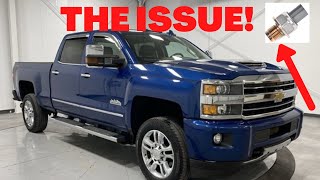
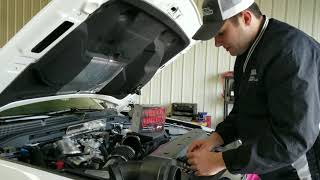
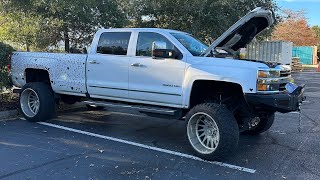
- Turn off the engine. Locate the fuel rail pressure sensor at the front of the engine on the passenger side fuel rail, tucked behind the throttle body assembly. 🎬 Watch: A walkthrough of the fuel rail and sensor replacement.
- Disconnect the electrical connector. Carefully inspect the connector and the sensor pins for any signs of corrosion (green/white powder), moisture, or physical damage.
- Per TSB 20-NA-197, check for poor terminal tension (fretting). If any corrosion or looseness is found, the connector pigtail should be replaced.
- If the connector looks perfect, the next most likely cause is the sensor itself. Replace the Fuel Rail Pressure Sensor (Part #12686809).
- If the problem persists after replacing both the pigtail and the sensor, perform a continuity and resistance test on the wiring harness between the sensor and the ECM.
- As a final step, if all wiring and components test good, investigate the health of the high-pressure fuel pump and low-pressure fuel system.
Parts You'll Likely Need
- Fuel Rail Pressure Sensor Connector Pigtail Kit
(OEM #85518225 (supersedes 19367009, 19331705, ACDelco PT3744))— This is the most common failure point for this code on this specific engine, as identified in GM Technical Service Bulletin 20-NA-197.
Trusted brands: ACDelco (GM Genuine), Dorman
OEM price range: $40-$60
Aftermarket price range: $20-$40 - Fuel Rail Pressure Sensor
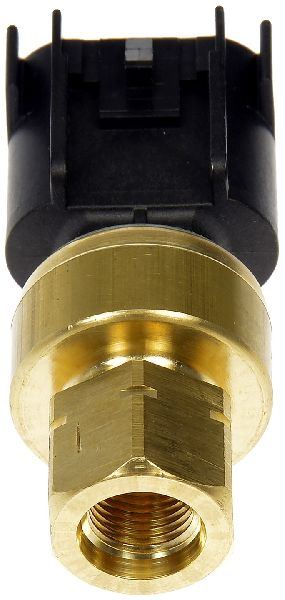
(OEM #12686809 (replaces 12647909))— If the connector is not the issue, the sensor itself is the next most likely component to have failed.
Trusted brands: ACDelco (GM Genuine), Bosch, Standard Motor Products
OEM price range: $200-$250
Aftermarket price range: $120-$180
Related Codes That Often Appear With This One
- P0087 — Fuel Rail/System Pressure - Too Low. This code is explicitly listed in TSB 20-NA-197 as a potential companion code caused by the same faulty connector issue.
- P0089 — Fuel Pressure Regulator 1 Performance. Also listed in TSB 20-NA-197.
- P026D — Injection Quantity Too High. Also listed in TSB 20-NA-197.
- P1089 — Fuel Rail Pressure Performance During Deceleration Fuel Cut-Off. Also listed in TSB 20-NA-197.
- P228C / P228D — Fuel Pressure Regulator 1 Control Performance - Low/High Pressure. Also listed in TSB 20-NA-197.
Technical Service Bulletins (TSBs) & Recalls
- 20-NA-197: Addresses poor connection at the fuel rail pressure sensor electrical connector causing DTC P0191 and other related fuel pressure codes.
- Bulletin #PIP5151F: Notes that P0191, along with P0087 and P0088, may be found during inspection for hard starts or rough running; if contamination is found, the complete fuel system must be cleaned.
Platform-Specific Known Issues
- TSB 20-NA-197: The Definitive Guide for P0191: This bulletin from General Motors specifically addresses intermittent check engine lights with DTC P0191 (and many others) on 2017-2021 models with the L5P engine. It identifies the cause as high resistance, corrosion, or poor connection at the fuel rail pressure sensor electrical connector. The official fix is to inspect and, if any fault is found, replace the connector pigtail (Part #85518225 or 19367009) and apply dielectric grease.
Mechanic-Grade Diagnostic Values
- Fuel Rail Pressure Sensor 5V Reference — expected: 4.8V to 5.2V. Failure: Voltage significantly lower or higher than 5V points to a wiring issue or a fault in the ECM.
- Fuel Rail Pressure Sensor Signal Voltage (KOEO) — expected: 0.4V to 4.5V (Normal Range). Failure: A reading near 5.0V can indicate an open circuit; 0V can indicate a short to ground.
- Low-Side Fuel Pressure (Lift Pump) — expected: ~60 PSI. Failure: Pressure significantly below 60 PSI indicates a weak lift pump or a restriction (e.g., clogged filter).
- High-Side Fuel Rail Pressure at Idle — expected: 4,000 - 7,000 PSI. Failure: Wildly fluctuating or erratic readings that do not match the desired pressure suggest a sensor or connector issue.
- Scan Tool PID: 'Fuel Rail Pressure Sensor 1' vs 'Fuel Rail Pressure Sensor 2' — expected: Nearly identical readings.. Failure: A differential of more than 100 PSI between the two readings strongly indicates a faulty sensor, as both readings come from the same sensor body.
- Low Reference (Ground) Circuit Resistance — expected: Less than 10 Ω between the low reference circuit terminal and ground.. Failure: Resistance of 10 Ω or greater indicates a poor ground connection, which can cause erratic sensor readings.
Scan Tool Commands That Help
- GDS2 / High-End Scan Tool: Live Data Monitoring of 'Fuel Rail Pressure Sensor 1' and 'Fuel Rail Pressure Sensor 2' — This is a primary diagnostic step. The L5P sensor provides two separate signals to the ECM. These values should track each other closely. If they differ by more than 100 PSI, it's a strong indication the sensor itself has failed internally.
Wiring & Ground Locations
- B47B Fuel Rail Pressure Sensor Connector — On the passenger side fuel rail, at the front of the engine, tucked behind the throttle body assembly.. This 4-pin connector is the subject of TSB 20-NA-197 and is the most common failure point for P0191 due to fretting corrosion and poor pin tension.
- FRPS Connector Pinout — At the 4-pin B47B connector.. For electrical testing: Pin 1 is the 5V reference (Gray), Pin 2 is the primary signal (Dark Blue), Pin 3 is the low reference/ground (Tan), and Pin 4 is the secondary signal (Light Blue/White). Note: wire colors can vary by year/harness.
- K20 Engine Control Module (ECM) — Typically located on the driver's side of the engine bay.. This is the destination for the FRPS signals. Continuity and resistance checks must be performed between the B47B connector and the K20 ECM connector to rule out harness damage.
- K20 ECM Connector Pins for FRPS — At the ECM harness connector.. According to service information, the relevant pins are: Pin 59 (5V Reference), Pin 57 (Low Reference), and the two signal pins. These must be tested for continuity and shorts to ground/voltage.
Real Owner Repair Stories
- irate4x4 Forums user (2019 L5P Duramax, 104k miles) — Persistent P0191 code that started immediately after a head gasket repair. Also had previous fuel system codes (P026D).
❌ Tried (didn't work) Dealer replaced fuel pressure sensor, Owner replaced fuel pressure sensor and pigtail (initially), Owner replaced in-tank lift pump, Owner replaced fuel pump driver module, Owner replaced driver's side fuel rail
✅ What actually fixed it After replacing the pigtail with GM-supplied butt connectors didn't work, the owner went back in. The final fix was soldering the pigtail connections instead of using the butt connectors and physically bending the female terminals in the new pigtail connector tighter to ensure a solid connection to the sensor pins. The truck then went 2,000+ miles without issue. - YouTube user comment on 'This Sensor Was The Cause Of This L5P's Fuel System Issues!' (2017 L5P Duramax, ~88k miles) — Intermittent limp mode with low fuel pressure codes, especially when under load or after using a tuner. The pedal would become nearly dead.
❌ Tried (didn't work) Clearing codes, Disconnecting Banks Derringer tuner (this helped temporarily but the issue returned)
✅ What actually fixed it The owner first replaced the fuel rail pressure sensor after noticing a discolored pin on the original. This helped, but a separate issue with a tuner harness complicated diagnosis. The final, complete fix for all remaining fuel pressure drop issues (especially on deceleration) was replacing the in-tank lift pump module. The combination of a new sensor and a new lift pump module solved all problems.
Documented NHTSA Reports
- NHTSA ODI #11476716: An owner reported that their vehicle goes into limp mode after about 15 minutes of driving with the engine light on and code P0191. Despite the dealer replacing the fuel tank fuel pump, the issue returned during the drive home.
- NHTSA ODI #11632552: A report describes a vehicle burning oil with diagnostic trouble codes P0011, P0191, P228D, and P0089 present, noting this as a common problem with the engine.
OEM Part Supersession History
19331705, 19367009→85518225— Standard part number updates and consolidation by GM.
Heads up: ACDelco PT3744 is also listed as a compatible service part number for this connector.12647909→12686809— Part revision by the manufacturer.
Diagnostic Flowchart
Other Known Issues on This Vehicle
Issues unrelated to this code that are worth knowing about as an owner of this generation:
- DEF Tank Heater Failure 🔴 High — Very common, especially on 2017-2022 models in colder climates. Failure often occurs between 45k-95k miles. Can cause 'Service Emission System' warnings and speed-limited limp mode. (Ref: TSB 21-NA-078, 22-NA-198, PIP5908E, N212342980)
- MAP/TMAP Sensor Clogging 🟠 Medium — Extremely common due to EGR soot buildup, often starting as early as 17,500-30,000 miles. Leads to rough idle, reduced power, and codes like P0106.
- NOx Sensor Failure 🟠 Medium — Common failure item leading to check engine lights and limp mode. Often related to internal heater circuits or performance degradation.
- Glow Plug and Harness Issues 🟡 Low — Failures can cause hard starting in cold weather. Less common than emissions sensor issues but still a known pattern.
- Water Pump Failure 🟠 Medium — The stock water pump is a known weak point that can lead to overheating. Failures are reported across various mileages.
Used vs. New Parts: Buying Guide for This Vehicle
When a used part is the smart pick: For this specific P0191 repair, using used parts is not recommended. The primary failure points are the electronic sensor and its electrical connector, both of which degrade with age, heat cycles, and exposure to the elements. A used part would carry the same risk of failure as the part being replaced.
What to inspect on the donor part:
- Not applicable as used parts are not advised for this repair.
OEM-only on this vehicle (don't cheap out):
- Fuel Rail Pressure Sensor
- Fuel Rail Pressure Sensor Connector Pigtail
Aftermarket brands forum-validated for this vehicle:
- ACDelco (GM Genuine) for both sensor and pigtail.
- Bosch is a reputable alternative for the sensor.
- Alliant Power is mentioned as an aftermarket sensor supplier with a warranty.
Brands owners have reported issues with on this vehicle:
- Unnamed, no-brand sensors and pigtails from online marketplaces should be avoided. The fuel pressure signal is critical, and low-quality electronics can cause persistent issues, leading to more diagnostic time and cost.
Real Owner Stories
Aggregated from forums and TSBs cited above. Mileages and costs reflect what owners reported in those sources.
2018 Chevrolet Silverado L5P — 52000 miles
Symptoms: Intermittent limp mode and P0191 code occurring randomly on start ups, specifically when parked on a slight incline.
What fixed it: The owner replaced the sensor and the connector pigtail. After the initial repair with the GM-recommended butt connectors still caused issues, the owner soldered the connector wires to ensure a solid connection.
Source hint: Reddit r/Duramax owner report
2018 Chevrolet Silverado 2500HD L5P
Symptoms: Intermittent limp mode with P0191.
What fixed it: Replacing the four-wire sensor connector pigtail located behind the throttle body as per the TSB.
Source hint: Reddit r/Duramax: '2018 L5P P0191 Fuel Rail Pressure Sensor Performance help'
Related OBD-II Codes
Frequently Asked Questions
Does TSB 20-NA-197 apply to my 2018 Chevrolet Silverado 2500HD with the L5P engine?
Where is the fuel rail pressure sensor located on the L5P Duramax?
What part number should I use to fix the common connector issue mentioned in the GM bulletin?
How can I tell if the sensor itself is bad versus just a loose wire?
Is there a specific way to test for 'fretting' in the connector terminals?
Will a P0191 code cause my truck to go into Limp Mode?
Helpful Videos
We Have This Part in Stock


The information in this article is provided for general reference and educational purposes only. Vehicle specifications, procedures, and part compatibility can vary by production date, trim level, and region. Always consult your vehicle's factory service manual and verify part numbers before purchasing or performing repairs. Safety-critical components such as airbags, seat belts, and braking systems should be installed by a qualified professional.
- Chevrolet Silverado 2500HD/3500HD:
- 🧭 Diagnostic Flowchart
- 🎬 Helpful Videos
- 🛍️ Shop This Part
- What's Unique About the 2017-2020 Chevrolet Silverado 2500HD/3500HD
- Symptoms You May Notice
- Most Likely Causes
- Rare But Worth Checking
- Diagnosis Steps
- Parts You'll Likely Need
- Related Codes That Often Appear With This One
- Technical Service Bulletins (TSBs) & Recalls
- Platform-Specific Known Issues
- Mechanic-Grade Diagnostic Values
- Scan Tool Commands That Help
- Wiring & Ground Locations
- Real Owner Repair Stories
- Documented NHTSA Reports
- OEM Part Supersession History
- Other Known Issues on This Vehicle
- Used vs. New Parts: Buying Guide for This Vehicle
- Real Owner Stories
- 2018 Chevrolet Silverado L5P — 52000 miles
- 2018 Chevrolet Silverado 2500HD L5P
- Related OBD-II Codes
- Frequently Asked Questions
- 🎟️ Get 5% Off