

P0191 on 2005-2007 Ford Focus 2.0L: Causes, Symptoms, and Fixes
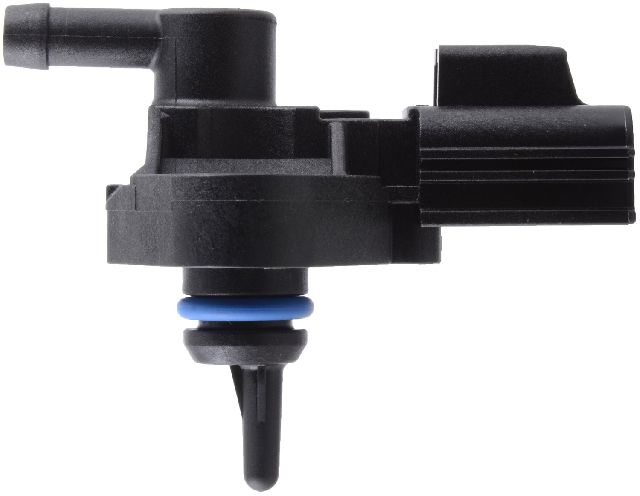
For a 2005-2007 Ford Focus with a 2.0L engine, code P0191 is most often caused by a failing Fuel Rail Pressure (FRP) sensor. Replacing this sensor is a common, relatively easy DIY fix with the part costing between $40 and $100. Always verify with a mechanical gauge before replacing the more expensive fuel pump.
- Code P0191 on a 2005-2007 Focus most likely means you need a new Fuel Rail Pressure (FRP) sensor.
- The FRP sensor is located on top of the engine on the fuel rail and is relatively easy to replace with basic tools.
- Before replacing the more expensive fuel pump, always confirm the failure by testing the actual fuel pressure with a mechanical gauge.
- Look for other codes like P0171 (lean condition), as they can help confirm that the issue is related to a lack of fuel.
- If fuel pressure drops only after the car has been running for a while, suspect a weak fuel pump rather than a sensor.
What's Unique About the 2005-2007 Ford Focus
On the 2.0L Duratec engine in this generation of Ford Focus, the Fuel Rail Pressure (FRP) sensor is a well-documented, common failure point that leads to code P0191. Unlike some other Ford vehicles where a Fuel Pump Driver Module (FPDM) is a frequent culprit due to external corrosion, for the Focus, diagnosis typically starts and ends with the easily accessible sensor on top of the fuel rail. The repair is straightforward and often resolves the issue without needing to diagnose the rest of the fuel system.
Symptoms You May Notice
- Check Engine Light is on
- Engine hesitation or stumbling during acceleration
- Rough or unstable idle
- Engine stalling, especially at low RPM or when coming to a stop
- Noticeable loss of power
- Difficulty starting the engine, requiring long cranks
- Increased fuel consumption
- Replacing the fuel pump when the Fuel Rail Pressure sensor is the actual problem. Always verify actual fuel pressure with a mechanical gauge and compare it to the sensor's reading on a scan tool before replacing an expensive fuel pump.
Most Likely Causes
- Faulty Fuel Rail Pressure (FRP) Sensor 🔴 High Probability → Shop Fuel Pressure Sensor The FRP sensor is a known common failure item on this platform, often failing from age and heat cycles which degrade its internal electronics. Its location on top of the engine exposes it to significant temperature swings.
How to confirm: With a scan tool, observe the fuel rail pressure reading (KOEO or at idle). If the reading is erratic, nonsensical (e.g., 0 psi or extremely high), or doesn't change with RPM, the sensor is likely bad. A definitive test is to compare the scan tool reading to a mechanical fuel pressure gauge; a significant difference points to a bad sensor. Tapping the sensor with the handle of a screwdriver while the engine is running may also cause a stall or erratic behavior, indicating an internal fault.
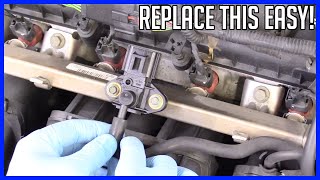
Typical fix: Replace the Fuel Rail Pressure sensor located on the fuel rail. This is typically held on by two 7mm bolts. 🎬 Watch: Step-by-step guide to replacing the fuel pressure sensor. SAFETY NOTE: The fuel system must be depressurized before removing the sensor to avoid fuel spray and fire risk.
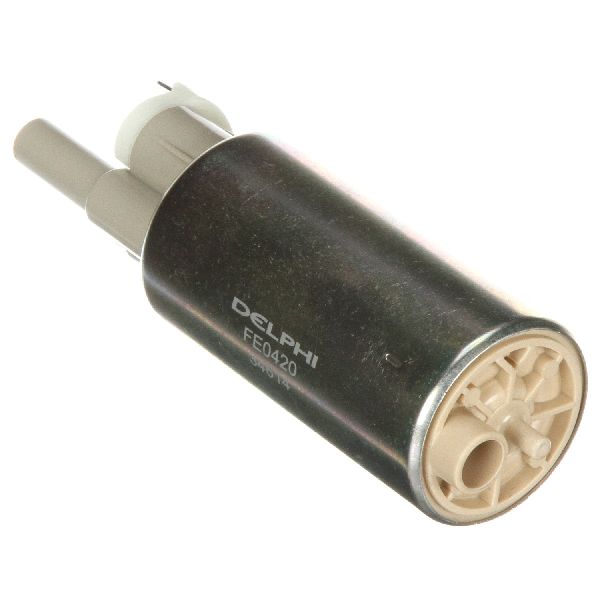
Est. part cost: $40-$100 - Failing Fuel Pump 🟡 Medium Probability → Shop Fuel Pump The in-tank fuel pump can weaken over time, failing to supply adequate pressure to the fuel rail. This failure is often intermittent at first, appearing when the pump gets hot after 15-30 minutes of driving, and may not be present on a cold start.
How to confirm: Perform a fuel pressure test with a mechanical gauge at the fuel rail. If the pressure is below the manufacturer's specification (typically around 35-55 psi for this system) or drops off during a test drive under load, the pump is a likely cause. This test should be performed after ruling out the FRP sensor.
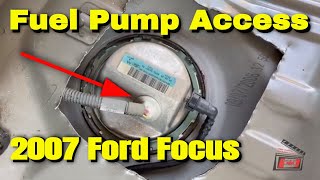
Typical fix: Replace the in-tank fuel pump module assembly. Access is typically under the rear seat. 🎬 Watch: How to create an access hole for the fuel pump.
Est. part cost: $150-$350 - Clogged Fuel Filter ⚪ Low Probability → Shop Fuel Filter The fuel filter is a maintenance item that can become restricted over time, impeding fuel flow and causing low pressure. On the 2005-2007 Focus, the filter is a serviceable item located along the frame rail, not integrated into the pump assembly.
How to confirm: If fuel pressure is confirmed to be low, the filter is a logical and inexpensive part to replace before condemning the fuel pump. If replacing the filter restores pressure, it was the cause.
Typical fix: Replace the in-line fuel filter.
Est. part cost: $15-$40 - Wiring or Connector Issue ⚪ Low Probability Engine bay heat and vibration can cause the wiring or connector for the FRP sensor to become damaged, corroded, or loose over time.
How to confirm: Visually inspect the FRP sensor's electrical connector and wiring harness for any signs of damage, corrosion, or loose pins. Wiggle the connector with the engine running to see if it affects the fuel pressure reading on a scan tool. With a multimeter, back-probe the connector to verify a 5-volt reference, a good ground, and a signal wire that changes voltage with pressure.
Typical fix: Repair the damaged wiring or replace the connector pigtail.
Est. part cost: $10-$30
Rare But Worth Checking
- Faulty Fuel Pump Driver Module (FPDM): → Shop Fuel Pump While a common issue on other Fords (like trucks), it's less frequently the cause on the Focus. The FPDM is located under the rear seat and controls the voltage to the fuel pump. If fuel pressure is zero and the pump isn't priming, this module could be at fault after checking fuses (specifically the 20A fuse in the passenger footwell) and the inertia switch.
Diagnosis Steps
- Check for other diagnostic trouble codes to see if codes like P0171 are also present.
- Connect a scan tool and monitor the live data for Fuel Rail Pressure (FRP). Note the reading with the Key On, Engine Off (KOEO) and at idle.
- Inspect the FRP sensor's electrical connector and wiring for any visible damage, corrosion, or looseness. Wiggle the connector to check for intermittent faults.
- Connect a mechanical fuel pressure gauge to the fuel rail's test port.
- Compare the mechanical gauge reading to the scan tool's FRP reading. If the readings differ significantly (e.g., gauge shows 45 psi, scan tool shows 10 psi), the FRP sensor is faulty and should be replaced.
- If both readings are low, the problem is in the fuel delivery system. Start by replacing the fuel filter, as it is an inexpensive routine maintenance item.
- If the fuel filter replacement does not resolve the low pressure, investigate the fuel pump circuit. Check the FPDM fuse (typically a 20A fuse in the passenger kick panel fuse box) and the inertia switch.
- If the fuel pump circuit is intact but pressure remains low, the fuel pump or Fuel Pump Driver Module (FPDM) is the likely culprit. Test the FPDM and fuel pump circuit before replacing the pump assembly.
Parts You'll Likely Need
- Fuel Rail Pressure Sensor
(OEM #3F2Z9G756AC)— This is the most common cause of P0191 on this specific vehicle. It is easily accessible and a straightforward replacement.
Trusted brands: Motorcraft, Bosch, Standard Motor Products, Delphi
OEM price range: $80-$120
Aftermarket price range: $40-$80 - Fuel Pump Module Assembly
(OEM #6S4Z9H307A)— If actual fuel pressure is confirmed to be low and the filter is not the cause, the fuel pump is the next most likely part to have failed.
Trusted brands: Motorcraft, Delphi, Carter, Spectra Premium
OEM price range: $300-$450
Aftermarket price range: $150-$250
Related Codes That Often Appear With This One
- P0171 — System Too Lean. If the fuel pressure is genuinely low due to a weak pump or clogged filter, the engine will run lean, triggering P0171 alongside P0191.
- P0190 — Fuel Rail Pressure Sensor 'A' Circuit. This is a more generic circuit fault code for the same sensor and can appear with P0191, often pointing directly to a sensor or wiring failure.
- P0193 — Fuel Rail Pressure Sensor Circuit High Input. This specific code points to a short or sensor failure causing a high voltage signal, and often confirms the sensor itself is the root cause.
Technical Service Bulletins (TSBs) & Recalls
- 07-4-7 — MIL ON WITH DTC P0191 - FUEL RAIL PRESSURE SENSOR CIRCUIT PERFORMANCE — This TSB addresses intermittent P0191 codes on 2005-2006 Ford Five Hundred, Freestyle, and Mercury Montego vehicles. It outlines diagnostic procedures for intermittent faults, including checking for an internal short in the EGR System Module (ESM) and inspecting the main engine harness for rubbing on an A/C line, which could cause a short. While not for the Focus specifically, it highlights Ford's diagnostic approach to this code on similar-era vehicles.
Platform-Specific Known Issues
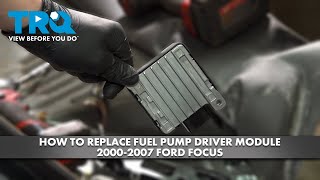
- FPDM Location and Failure Mode: On the 2005-2007 Focus, the Fuel Pump Driver Module (FPDM) is located under the rear seat cushion, mounted to the chassis. 🎬 See how to access and replace the fuel pump driver module. This protects it from the elements, so it does not suffer from the same severe external corrosion and cracking that plagues the frame-mounted FPDMs on Ford trucks like the F-150. While failure is less common, it can still occur due to internal electronics issues.
- Lack of Schrader Valve: Unlike many other vehicles, the 2005-2007 Ford Focus with the 2.0L Duratec engine does not have a Schrader valve test port on the fuel rail for easily connecting a mechanical pressure gauge. To test fuel pressure mechanically, a technician must use a special adapter that connects in-line with the fuel supply hose to the rail.
Mechanic-Grade Diagnostic Values
- FRP Sensor Signal Wire Voltage (KOEO) — expected: ~0.5V. Failure: Voltage stuck near 0V or 5V indicates a short or open. A reading significantly different from 0.5V with no pressure can indicate a biased sensor.
- FRP Sensor Reference Voltage (KOEO) — expected: 5.0V. Failure: No voltage or low voltage indicates a wiring issue or a problem with the PCM's 5V reference circuit.
- FRP Sensor Ground Wire — expected: Near 0V. Failure: Voltage present on the ground wire indicates a bad ground connection.
- Fuel Pressure (KOEO & Idle) — expected: 35-55 PSI. Failure: Pressure below 35 PSI indicates a fuel delivery problem (pump, filter). Pressure that drops intermittently, especially when the engine is warm, points to a failing fuel pump.
Scan Tool Commands That Help
- Ford IDS (Integrated Diagnostic System): Power Balance — To identify if a specific cylinder is misfiring due to a fuel delivery issue, which can be a symptom of the erratic pressure caused by P0191.
- Ford IDS (Integrated Diagnostic System): Datalogger - Fuel Pump Control — To manually activate the fuel pump to confirm it runs and to observe the pressure response on the FRP PID. This helps isolate a bad pump from a bad FPDM or wiring.
- Ford IDS (Integrated Diagnostic System): Clear Fuel Injector & HP Pump Adaptive Tables — After replacing a major fuel system component like the fuel pump or FRP sensor, this function resets the PCM's learned fuel trim adjustments, allowing it to relearn with the new component.
Wiring & Ground Locations
- G105 — On the cylinder head, likely on the passenger side of the engine compartment.. This is a primary engine ground. A poor connection here can cause a floating ground for multiple sensors, including the PCM's ground reference for the FRP sensor, leading to erratic readings and codes like P0191.
- S252 — A splice located in the wiring harness, likely in the passenger kick panel area near the PCM.. This splice connects the ground paths for the PCM, MAF sensor, and VSS. Corrosion or a break in this splice can interrupt the ground signal for the PCM, causing various engine control issues, including P0191.
- FRP Sensor Connector — On top of the engine, connected to the fuel rail pressure sensor.. The connector itself or its pigtail wiring is a common failure point due to engine heat and vibration. Inspect for corrosion on the pins, loose terminals, or brittle/cracked wiring insulation.
Real Owner Repair Stories
- 2CarPros.com Forum (2005 Ford Focus 2.0L, 140,000 miles) — Engine stutters or shuts down after 5-10 minutes of driving. Scan tool shows fuel pressure dropping from 40-45 psi to 8-10 psi. Restarting the car temporarily restores pressure.
❌ Tried (didn't work) Replaced Fuel Rail Pressure (FRP) sensor, Replaced fuel filter, Cleaned FPDM contacts
✅ What actually fixed it Replacing the in-tank fuel pump. The original pump was failing intermittently as it warmed up. - Reddit /r/MechanicAdvice (2005 Ford Focus 2.0L) — Car shut off while driving. Odometer displays dashes "- - - - -". No start condition. No ground signal at two PCM pins.
❌ Tried (didn't work) Checked fuse 9 under the hood, Cleaned ground points on the left strut tower
✅ What actually fixed it The user discovered that applying 12V to a specific Black/Blue wire (originally for the ignition capacitor) made the car start and run. This indicates a complex wiring issue where a power feed, not a ground, was lost, but presented as a ground fault at the PCM. The root cause was likely a break in the power distribution harness.
OEM Part Supersession History
3F2Z-9G756-AC→This part number is still widely used, but is often cross-referenced with aftermarket numbers like Motorcraft CM5229, Bosch 0261230093, and Standard Motor Products FPS505.— Standard part lifecycle and aftermarket manufacturing.
Heads up: The sensor is used across a vast range of Ford, Lincoln, and Mercury vehicles from the mid-2000s. While physically identical, always verify fitment for the specific vehicle, as internal calibration could differ on visually similar parts intended for different engine families (though this is rare for this specific part).
Model Year Variations Within This Range
- 2005-2007: Some 2.0L Duratec engines in this range were available as PZEV (Partial Zero-Emission Vehicle) models, primarily sold in California and other states that follow its emissions standards. While the fundamental fuel system is the same, there can be minor differences in evaporative emissions components. However, the cause and diagnosis for P0191 remain consistent between PZEV and non-PZEV versions.
Diagnostic Flowchart
Other Known Issues on This Vehicle
Issues unrelated to this code that are worth knowing about as an owner of this generation:
- Passenger-Side Hydraulic Motor Mount Failure 🔴 High — Extremely common. The fluid-filled mount collapses, causing intense vibration in the cabin at idle and while driving. Many owners report this as the single most common non-maintenance repair.
- Leaking Valve Cover Gasket / Spark Plug Well Seals 🟠 Medium — Very common. The gasket seals around the spark plug wells fail, allowing oil to fill the wells. This leads to ignition coil failure, engine misfires, hesitation, and a rough idle.
- Failing Door Latch Mechanisms 🟠 Medium — Common issue where the door latch fails to catch, causing the door to not shut properly or pop open while driving. It can also cause a 'Door Ajar' light to stay on, draining the battery. (Ref: While later Focus models were subject to recalls for this, the 2005-2007 models were not, though the issue is prevalent.)
- Cracked Plastic Thermostat Housing 🔴 High — A frequent failure point. The plastic housing can develop cracks over time due to heat cycles, leading to a significant coolant leak and potential for engine overheating.
- Intake Manifold Runner Control (IMRC) Failure 🟡 Low — The plastic swirl flaps inside the intake manifold can break or get stuck, causing a characteristic tapping or clicking noise from the engine bay and potentially minor performance issues.
Used vs. New Parts: Buying Guide for This Vehicle
When a used part is the smart pick: A used Fuel Rail Pressure (FRP) sensor from a low-mileage donor vehicle is a reasonable choice, as it's a simple electronic component that is easy to access and replace if it's faulty. Connectors or wiring pigtails are also excellent candidates for used parts.
Donor-vehicle mileage cap: roughly under 80000 miles for the part to have meaningful remaining life.
What to inspect on the donor part:
- Check the donor vehicle's mileage; lower is always better.
- Inspect the plastic body of the sensor for any cracks, melting, or physical damage.
- Look at the electrical connector pins on the sensor to ensure they are straight and free of corrosion.
- For a wiring pigtail, ensure there is at least 4-6 inches of clean, un-cracked wire to work with.
OEM-only on this vehicle (don't cheap out):
- Fuel Pump Module Assembly
Aftermarket brands forum-validated for this vehicle:
- Bosch (for FRP Sensor)
- Motorcraft (OEM for all parts)
- Standard Motor Products (SMP)
- Delphi (for Fuel Pump)
Brands owners have reported issues with on this vehicle:
- Unbranded, 'white-box' electronic sensors and fuel pumps from online marketplaces should be avoided. Failure rates are high, and they can cause frustrating diagnostic issues.
Real Owner Stories
Aggregated from forums and TSBs cited above. Mileages and costs reflect what owners reported in those sources.
2005 Ford Focus 2.0L Duratec
Symptoms: Fuel pressure would drop after 5-10 minutes of driving.
What fixed it: Replacement of the fuel pump, after the FRP sensor and fuel filter failed to solve the issue.
Source hint: 2CarPros.com
2005 Ford Focus
Symptoms: Severe vibration throughout the vehicle.
What fixed it: Replacing the passenger side motor mount.
Source hint: Reddit.com/r/FordFocus - 'Replacing Engine Mounts (2005 model)'
Related OBD-II Codes
Frequently Asked Questions
Where is the fuel pressure test port located on my 2005-2007 Ford Focus 2.0L Duratec?
Does TSB 07-4-7 apply specifically to my 2005-2007 Ford Focus?
Where is the Fuel Pump Driver Module (FPDM) located on this model?
Can a bad motor mount cause a P0191 code on my Focus?
How can I confirm if my Fuel Rail Pressure (FRP) sensor is actually bad?
Is the fuel filter a likely cause for P0191 on this vehicle?
Helpful Videos

Used OEM Parts in Stock
New Aftermarket Parts Available


The information in this article is provided for general reference and educational purposes only. Vehicle specifications, procedures, and part compatibility can vary by production date, trim level, and region. Always consult your vehicle's factory service manual and verify part numbers before purchasing or performing repairs. Safety-critical components such as airbags, seat belts, and braking systems should be installed by a qualified professional.
- Ford Focus:
- 🧭 Diagnostic Flowchart
- 🎬 Helpful Videos
- 🛍️ Shop This Part
- What's Unique About the 2005-2007 Ford Focus
- Symptoms You May Notice
- Most Likely Causes
- Rare But Worth Checking
- Diagnosis Steps
- Parts You'll Likely Need
- Related Codes That Often Appear With This One
- Technical Service Bulletins (TSBs) & Recalls
- Platform-Specific Known Issues
- Mechanic-Grade Diagnostic Values
- Scan Tool Commands That Help
- Wiring & Ground Locations
- Real Owner Repair Stories
- OEM Part Supersession History
- Model Year Variations Within This Range
- Other Known Issues on This Vehicle
- Used vs. New Parts: Buying Guide for This Vehicle
- Real Owner Stories
- 2005 Ford Focus 2.0L Duratec
- 2005 Ford Focus
- Related OBD-II Codes
- Frequently Asked Questions
- 🎟️ Get 5% Off