

P0191 on 2010-2014 GMC Sierra: Causes, Fixes, and Parts Guide
P0191 on a 2010-2014 Sierra usually points to a faulty Fuel Rail Pressure Sensor (FRPS) or a failing Fuel Pump Driver Module (FPDM). The FPDM is a common failure point due to corrosion. Expect to pay $40-$120 for a sensor or $90-$200 for a new module.
- P0191 means the fuel pressure reading is not what the truck's computer expects.
- Before buying any parts, visually inspect the Fuel Pump Driver Module (FPDM) on the driver's side frame rail for corrosion. This is a very common point of failure.
- Use a mechanical gauge to test actual fuel pressure. This will tell you if you have a bad sensor or a real fuel delivery problem (pump or FPDM).
- This code is often seen with P069E (points to the FPDM) or P0087 (confirms low pressure).
- If you find contamination in the fuel, simply replacing the pump won't be enough; the entire system may need to be cleaned as per GM's TSB. [⭐ MANUFACTURER TSB #PIP5151A]
What's Unique About the 2010-2014 Gmc SIERRA
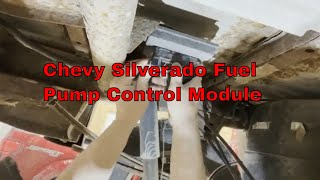
On these GMT900 platform trucks, the fuel system uses a Fuel Pump Control Module (FPCM), also known as a Fuel Pump Driver Module (FPDM), to manage fuel pressure by varying the voltage to the in-tank fuel pump. This FPCM is notoriously prone to failure due to its mounting location on the frame rail crossmember above the spare tire, where it is exposed to moisture and road salt, leading to severe corrosion of the module and its ground wire. Additionally, GM has issued Technical Service Bulletins (TSBs), like #PIP5151A, specifically mentioning that fuel contamination can cause this code, requiring a more thorough system cleaning than just replacing a single part.
Diagnostic Flowchart
Tap your situation to follow the diagnostic path that matches what you're seeing on this vehicle.
Symptoms You May Notice
- Check Engine Light is on
- Hard starting or no-start condition [⭐ MANUFACTURER TSB #PIP5151A]
- Rough running or idling [⭐ MANUFACTURER TSB #PIP5151A]
- Engine stalling, sometimes when coming to a stop
- Reduced engine power or 'limp mode'
- Hesitation during acceleration
- Increased fuel consumption
- Unusual smell from tailpipe emissions
- Replacing the fuel pump when the actual problem is the Fuel Pump Driver Module (FPDM). Always inspect the FPDM for corrosion before condemning the pump.
- Replacing the Fuel Rail Pressure Sensor without first verifying the actual fuel pressure with a mechanical gauge. The sensor may be accurately reporting a real pressure problem caused by the pump or FPDM.
Most Likely Causes
- Failing Fuel Pump Driver Module (FPDM/FPCM) 🔴 High Probability → Shop Fuel Pump The module is mounted on the frame rail, often near the spare tire, making it highly susceptible to corrosion from water, snow, and road salt, which damages the module's housing, ground connection, and internal electronics.
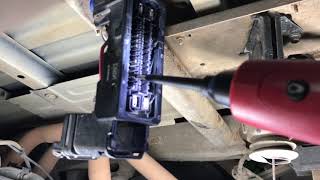
How to confirm: Visually inspect the module and its connector for heavy corrosion, swelling, or physical damage. A scan tool may show a P069E code alongside P0191, which strongly points to a faulty module. A common DIY test involves dropping the spare tire for access, disconnecting the module, and using jumper wires to bypass it. If the truck starts and runs with the module bypassed, the module is confirmed bad.
Typical fix: Replace the Fuel Pump Driver Module. The frame surface and ground connection should be cleaned thoroughly. A new OEM module must be programmed to the vehicle's VIN to function correctly. Some aftermarket versions may come pre-programmed.
Est. part cost: $90-$200 - Faulty Fuel Rail Pressure Sensor (FRPS) 🔴 High Probability → Shop Fuel Pressure Sensor
How to confirm: Use a scan tool to monitor live fuel rail pressure. If the reading is erratic, stuck at one value, or clearly incorrect (e.g., showing high pressure with the engine off), the sensor is likely bad. The definitive test is to compare the scan tool reading to a mechanical fuel pressure gauge connected to the rail's service port; if they don't match, the sensor is faulty.
Typical fix: Replace the fuel rail pressure sensor. It is typically screwed into the fuel rail and is accessible for DIY replacement. Ensure the O-ring is seated correctly and apply dielectric grease to the connector pins to prevent future corrosion.
Est. part cost: $40-$120 - Weak or Failing In-Tank Fuel Pump 🟡 Medium Probability → Shop Fuel Pump
How to confirm: Connect a mechanical fuel pressure gauge. If the pressure is below the 50-62 PSI specification, or if it drops significantly under load (e.g., during acceleration), the fuel pump is likely weak.
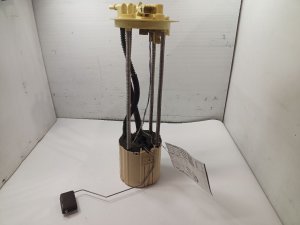
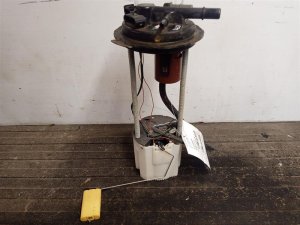
Typical fix: Replace the in-tank fuel pump module assembly. This is a labor-intensive job that requires either dropping the fuel tank or lifting the truck bed for access.
Est. part cost: $200-$450 - Fuel System Contamination ⚪ Low Probability GM TSB #PIP5151A specifically calls this out as a potential cause for P0191 on these trucks, often from water, debris, or poor-quality fuel. This can cause the isolator boot inside the fuel tank to deteriorate, leading to a short.
How to confirm: Inspect the fuel tank for water or debris. A fuel sample can be taken to check for contamination. If a new fuel pump fails quickly, contamination is highly likely.
Typical fix: If contamination is found, the complete fuel system must be cleaned, which includes draining and cleaning the tank, flushing the fuel lines, and replacing the fuel pump/filter assembly. [⭐ MANUFACTURER TSB #PIP5151A]
Est. part cost: $200+ (depending on cleaning extent and parts replaced) - Damaged Wiring or Connector ⚪ Low Probability The wiring harnesses for the FPDM and FRPS are exposed to the elements, road debris, and heat. GM TSB #20-NA-197, while for later models, highlights that corrosion on the fuel pressure sensor connector pins is a known cause of P0191.
How to confirm: Visually inspect the wiring harness and connectors for the Fuel Rail Pressure Sensor and the Fuel Pump Driver Module. Look for chafed wires, loose pins, or corrosion (green or black residue). A Reddit user's persistent P0191 issue on a Sierra was ultimately resolved by replacing the wiring harness between the fuel rail and ECM. 🎬 See how to troubleshoot and repair P0191 and P069E codes.
Typical fix: Repair the damaged section of the wiring harness or replace the connector pigtail. Clean terminals with a proper contact cleaner.
Est. part cost: $20-$100
Rare But Worth Checking
- Clogged Fuel Filter: → Shop Fuel Filter On these GMT900 models, the fuel filter is integrated into the in-tank fuel pump module and is not serviced separately. If the filter is clogged, the entire fuel pump assembly must be replaced.
- Faulty Engine Control Module (ECM): → Shop Engine Control Module (ECM) This is extremely rare and should only be considered after all other possibilities, including wiring, have been thoroughly ruled out.
Diagnosis Steps
- Scan for all DTCs. Note any other codes present, especially P0087, P0088, or P069E. The presence of P069E strongly suggests an FPDM issue.
- Using a scan tool, observe the live data for 'Fuel Rail Pressure' and 'Desired Fuel Rail Pressure'.
- With the key on and engine off, the pressure should be between 55-62 PSI and stable. If it's erratic or reads high, suspect the sensor or a fuel delivery issue.
- Start the engine. Compare the actual pressure to the desired pressure. A large discrepancy points to a problem.
- The most critical step: Connect a mechanical fuel pressure gauge to the fuel rail's service port. Compare its reading to the scan tool's reading. If they differ significantly, the Fuel Rail Pressure Sensor is bad.
- If the mechanical gauge confirms the pressure is out of spec (e.g., below 50 PSI at idle), the problem is with the fuel delivery system, not the sensor.
- Locate and visually inspect the Fuel Pump Driver Module (FPDM) on the driver's side frame rail, near the spare tire. Check for corrosion, cracks, or connector damage.
- If the FPDM looks corroded or P069E is present, it is the primary suspect. Confirm by testing power/ground with a voltage drop test or performing a bypass test with a jumper wire. 🎬 Watch: Professional diagnosis and bypass testing for the GMT-900 module.
- If the FPDM and its wiring are good, but pressure is low, suspect a weak in-tank fuel pump or a clogged fuel filter (which is part of the pump module).
- If TSB #PIP5151A is relevant (hard start/rough run), consider taking a fuel sample to check for contamination before replacing the pump.
Parts You'll Likely Need
- Fuel Pump Driver Module
(OEM #20898936, 20877116)— This module is a very common failure point on GMT900 trucks due to corrosion from its exposed mounting location on the frame rail. It often fails along with code P069E.
Trusted brands: ACDelco (OE), Dorman (e.g., 601-023), Standard Motor Products
OEM price range: $110-$150
Aftermarket price range: $90-$160 - Fuel Rail Pressure Sensor
(OEM #12651990, 12673824)— The sensor itself can fail electronically, sending incorrect or erratic signals. Its connector is also prone to corrosion.
Trusted brands: ACDelco (OE), Bosch, Delphi
OEM price range: $80-$125
Aftermarket price range: $40-$90
Related Codes That Often Appear With This One
- P0087 — Fuel Rail/System Pressure - Too Low. This code often appears with P0191 when the root cause is a weak fuel pump, clogged filter, or failing FPDM. [⭐ MANUFACTURER TSB #PIP5151A]
- P069E — Fuel Pump Control Module Requested MIL Illumination. This code specifically points towards a fault detected by the FPCM/FPDM itself, making it a strong indicator that the module is the problem.
- P0088 — Fuel Rail/System Pressure - Too High. This can occur if the fuel pressure sensor fails in a way that causes a false high reading or if the system malfunctions. [⭐ MANUFACTURER TSB #PIP5151A]
Technical Service Bulletins (TSBs) & Recalls
- Addresses hard start, no start, rough running, and low fuel pressure with DTCs P0087, P0088, P0191, and P128E. Points to fuel system contamination as a primary cause, requiring a full system cleaning.
- Though for slightly later models, this TSB is relevant as it identifies corrosion at the fuel pressure sensor electrical connector as a cause for P0191 and other fuel-related codes. The fix involves cleaning terminals or replacing the connector.
- Another TSB related to hard start/no-start conditions that can be associated with P0191 and P0087, reinforcing the focus on the overall fuel delivery system.
Platform-Specific Known Issues
- TSB #PIP5151A: Addresses hard start, no start, rough running, and low fuel pressure with codes P0087, P0088, P0191, and P128E. It points to potential fuel system contamination requiring a full system cleaning. [⭐ MANUFACTURER TSB #PIP5151A]
- Corrosion of Fuel Pump Driver Module (FPDM): The location of the FPDM on the frame makes it extremely vulnerable to failure from moisture and road salt, a widely documented issue on these trucks.
Mechanic-Grade Diagnostic Values
- Fuel Rail Pressure (KOEO - Key On, Engine Off) — expected: 55-62 PSI, stable.. Failure: Pressure below 50 PSI, or pressure that bleeds off quickly, indicates a weak pump or a leak.
- Fuel Rail Pressure Sensor (FRPS) 5V Reference Circuit — expected: 4.8 - 5.2 Volts.. Failure: A reading outside this range suggests a short to voltage, short to ground, or an open/high resistance in the circuit.
- Fuel Rail Pressure Sensor (FRPS) Low Reference Circuit Resistance — expected: Less than 1 Ω to ground.. Failure: A reading greater than 1 Ω indicates an open or high resistance in the ground circuit for the sensor.
- Fuel Pump Driver Module (FPDM) Power/Ground Voltage Drop — expected: Near 0V (e.g., 0.05V) with the circuit energized.. Failure: Excessive voltage drop indicates high resistance in the power or ground side of the FPDM circuit, which must be repaired before condemning the module.
- FPDM Command Signal from PCM (at FPCM Pin 13, Dark Green/White wire) — expected: 12V present for 3-6 seconds after key-on or while cranking.. Failure: No voltage indicates a break in the wire or a faulty PCM.
Scan Tool Commands That Help
- GDS2 (GM Global Diagnostic System 2): Fuel Pump Relay/Control Module Command — This bidirectional control allows a technician to command the fuel pump on and off to verify the FPDM is receiving the command and sending voltage to the pump, helping to isolate the fault between the ECM, FPDM, and pump.
- Vehicle Ignition Switch: Enter 'Service Only Mode' — For some bidirectional tests, the vehicle must be placed in a specific power mode. Pressing the ignition button for 5+ seconds without depressing the brake pedal puts the vehicle in 'Service Only Mode', which may be required before a scan tool can command certain components.
Wiring & Ground Locations
- FPDM/FPCM Ground — On the frame rail crossmember where the Fuel Pump Driver Module is mounted, typically above the spare tire.. This ground point is highly susceptible to corrosion from road salt and moisture. A poor ground here can cause the FPDM to malfunction, leading to erratic fuel pressure and triggering P0191 and P069E.
- FPDM Connector Pin 13 — At the main electrical connector for the Fuel Pump Driver Module.. This pin carries the command signal (on a Dark Green/White wire) from the PCM to the FPDM. Verifying voltage here is a key step in determining if a non-responsive FPDM is due to an internal failure or a lack of signal from the PCM.
- Fuel Rail Pressure Sensor Connector — On the driver's side fuel rail, connected to the FRPS.. Corrosion or damage to the pins within this connector can cause erratic or out-of-range signals, directly causing a P0191 code even if the sensor itself is good. This is noted in GM TSB 20-NA-197.
Real Owner Repair Stories
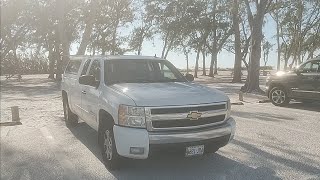
- YouTube channel 'Chevy Silverado p0191 and p069e troubleshoot + repair' (2007 Chevrolet Silverado (GMT900 platform, similar to 2010-2013 Sierra)) — Check Engine Light with codes P0191 and P069E, low fuel pressure, and eventually a no-start condition.
❌ Tried (didn't work) Replaced the Fuel Rail Pressure Sensor., Replaced the in-tank fuel pump (which corrected the low pressure reading, but the codes remained).
✅ What actually fixed it Replacing the Fuel Pump Control Module (FPCM) and programming it to the VIN resolved the codes. - Reddit user on r/gmcsierra (2024 GMC Sierra 6.6L Duramax (newer model, but logic is relevant for stubborn electrical faults)) — Persistent P0191 code, often occurring during deceleration.
❌ Tried (didn't work) Replaced fuel rail sensors., Replaced the entire fuel rail., Replaced the fuel rail a second time (which included a new regulator).
✅ What actually fixed it The dealership ultimately replaced the wiring harness between the fuel rail and the ECM, which finally resolved the code.
"I Checked Everything" — The Actual Cause
- A complex case documented in a technical video showed P0191 with extremely high fuel pressure (over 70 PSI). The FRPS was correctly reporting the high pressure, and the FPDM had good power and ground. The actual cause was an internal short-to-ground within the in-tank fuel pump hanger assembly. A rubber isolator boot had deteriorated from fuel contamination, allowing the pump's metal case to touch the hanger, creating a direct path to ground. This bypassed the FPDM's control, causing the pump to run continuously at 100% speed. This is missed because a simple voltage drop test on the external FPDM wiring would show no issue.
When the Usual Fixes Don't Work
- While the Fuel Rail Pressure Sensor is a common cause, blindly replacing it can be a waste of money. In one documented case, a technician replaced the FRPS and then the in-tank fuel pump, but the P0191 and P069E codes persisted. The actual root cause was the corroded Fuel Pump Driver Module (FPDM), which should have been the primary suspect given the presence of code P069E. This highlights the importance of diagnosing based on all present codes, not just P0191 in isolation.
OEM Part Supersession History
20877116 (FPCM)→20791901, 20827745, 20850927, 20898936— Standard part revision and consolidation by the manufacturer.
Heads up: New OEM modules must be programmed to the vehicle's VIN to function.12611873 (FRPS)→12651990— Updated part design by the manufacturer.12623130 (FRPS)→12673824— Updated part design by the manufacturer.
Model Year Variations Within This Range
- 2010-2012: The Fuel Pump Control Module with OEM part number 20898936 is specifically listed for the 2010-2012 model years, suggesting potential differences in modules used in 2013-2014 GMT900 trucks.
Helpful Videos
Used OEM Parts in Stock
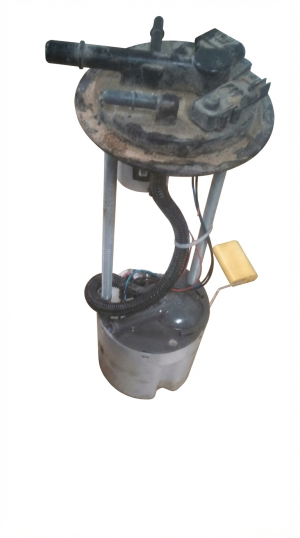
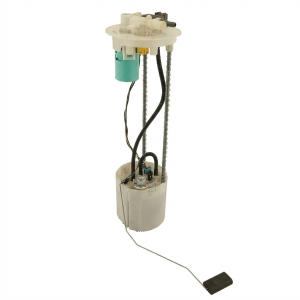
New Aftermarket Parts Available



The information in this article is provided for general reference and educational purposes only. Vehicle specifications, procedures, and part compatibility can vary by production date, trim level, and region. Always consult your vehicle's factory service manual and verify part numbers before purchasing or performing repairs. Safety-critical components such as airbags, seat belts, and braking systems should be installed by a qualified professional.
- Gmc SIERRA:
- 🧭 Diagnostic Flowchart
- 🎬 Helpful Videos
- 🛍️ Shop This Part
- What's Unique About the 2010-2014 Gmc SIERRA
- Symptoms You May Notice
- Most Likely Causes
- Rare But Worth Checking
- Diagnosis Steps
- Parts You'll Likely Need
- Related Codes That Often Appear With This One
- Technical Service Bulletins (TSBs) & Recalls
- Platform-Specific Known Issues
- Mechanic-Grade Diagnostic Values
- Scan Tool Commands That Help
- Wiring & Ground Locations
- Real Owner Repair Stories
- "I Checked Everything" — The Actual Cause
- When the Usual Fixes Don't Work
- OEM Part Supersession History
- Model Year Variations Within This Range
- 🎟️ Get 5% Off