

P0191 on 2014-2021 Mazda 6 2.5L: Fuel Rail Pressure Sensor Issues & Fixes
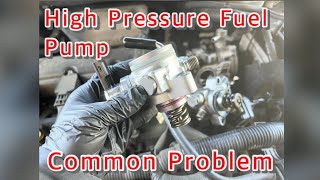
On a 2014-2021 Mazda 6, code P0191 almost always points to a failing high-pressure fuel pump (HPFP), not the sensor. This is a well-documented issue, confirmed by a Mazda Technical Service Bulletin (TSB) for early models, but failures are seen across the generation. The fix is to replace the HPFP, which can cost between $700 and $1,500 at a shop.
- For the 2014-2021 Mazda 6, P0191 is almost always caused by a failed High-Pressure Fuel Pump (HPFP), not the sensor.
- Mazda released a Technical Service Bulletin (01-010/14) that confirms this is a known manufacturing defect, especially on 2014 models.
- Do not replace the fuel rail pressure sensor first. Proper diagnosis involves checking live fuel pressure data to confirm the pump is not meeting the target pressure.
- This repair is not recommended for DIY due to the extremely high pressures in the fuel system, which pose a fire and safety risk.
- When replacing the HPFP, the single-use high-pressure fuel pipe must also be replaced.
What's Unique About the 2014-2021 Mazda 6
Mazda's SkyActiv-G engines use a high-pressure direct injection system that is sensitive to fuel pressure deviations. For early models in this generation (specifically 2014 vehicles produced before December 1, 2013), Mazda issued Technical Service Bulletin (TSB 01-010/14) and its successor (01-004/15). These bulletins acknowledge that a "manufacturing error of the inner parts" of the high-pressure fuel pump (HPFP) is the primary cause for this code. This makes P0191 on this platform a very specific issue, where the problem is almost certainly the pump itself, not the sensor the code is named after, even on model years not explicitly covered by the TSB.
Symptoms You May Notice
- Check Engine Light is on
- Engine hesitation or stumbling during acceleration
- Sudden loss of power, especially under load
- Engine stalling, sometimes while driving at speed or coming to a stop
- Engine will not accelerate past 2000 RPM (limp mode)
- Rough or unstable idle
- Difficulty starting the engine
- Strong smell of gasoline in the engine oil
- Replacing the fuel rail pressure sensor when the actual problem is the high-pressure fuel pump. This is the most common misdiagnosis for this specific vehicle and code, as the TSB points directly to the pump as the culprit.
Most Likely Causes
- Failing High-Pressure Fuel Pump (HPFP) 🔴 High Probability → Shop Fuel Pump Mazda TSB 01-010/14 and its successor 01-004/15 explicitly identify a manufacturing defect in the HPFP as the root cause for P0191 on early models of this generation. This pattern of failure continues to be the most common cause across the year range, with forum posts confirming failures on 2017 and 2018 models as well.
How to confirm: Use a scan tool to monitor live data for 'Fuel Rail Pressure'. At idle, a healthy system should show 3.0 MPa (approx. 435 PSI) or more. If the actual pressure is stuck at a low value (e.g., 60-70 PSI, which is low-side pressure) and does not increase with engine load, the HPFP is very likely the cause. Also, check the engine oil for a strong gasoline smell, which can indicate the failing pump's internal seal has failed, leaking fuel into the crankcase.
Typical fix: Replace the high-pressure fuel pump, the single-use high-pressure fuel pipe, and the pump's rubber seal. The TSB specifies using a modified part.
Est. part cost: $650-$1100 - Faulty Fuel Rail Pressure Sensor ⚪ Low Probability → Shop Fuel Pressure Sensor
How to confirm: This is an unlikely cause. However, if the fuel pressure readings on the scan tool are erratic, stuck at a maximum value (like 2281 PSI), or do not change at all when the engine is running, the sensor itself or its wiring could be the issue. Test the sensor's wiring for continuity and check for proper voltage.
Typical fix: Replace the fuel rail pressure sensor.
Est. part cost: $50-$150 - Wiring or Connector Issue ⚪ Low Probability
How to confirm: Visually inspect the wiring harness and connector for the fuel rail pressure sensor. Look for any signs of corrosion, damage, or loose pins. A forum user on a similar platform found a chafed wire under the intake manifold to be the ultimate cause after replacing the PCM. Perform a continuity test on the wires between the sensor and the PCM.
Typical fix: Repair the damaged wiring or replace the connector pigtail.
Est. part cost: $20-$50
Rare But Worth Checking
- Failing Low-Pressure Fuel Pump (In-Tank): → Shop Fuel Pump A recall was issued for the low-pressure fuel pump on some 2018 Mazda 6 models (NHTSA #21V923000) for a different issue that could cause stalling. While less likely to cause P0191, a weak in-tank pump can starve the HPFP of fuel. A technician should first test the low-side pressure (should be 55-71 PSI) to rule this out before condemning the more expensive HPFP.
- Powertrain Control Module (PCM) Failure: → Shop Engine Control Module (ECM) In very rare cases, the PCM itself can fail, causing incorrect readings or false codes. This should only be considered after all other possibilities, including wiring faults, have been exhaustively ruled out.
Diagnosis Steps
- Verify the code P0191 is present using an OBD-II scanner. Check for any other related codes like P0192, P0087, or P0088.
- Check for Technical Service Bulletins. TSB 01-004/15 is directly relevant for 2014 models with VINs lower than JM1GJ**162756.
- Using a scan tool with live data capability, monitor the 'Fuel Rail Pressure' (FRP) PID. Compare the desired pressure with the actual pressure at idle and under load.
- A healthy system will show around 435 PSI (3.0 MPa) at idle and increase significantly with RPM. If the actual pressure is stuck low (e.g., 60-70 PSI) and doesn't respond to load, the HPFP is the primary suspect.
- Before condemning the HPFP, verify the low-pressure fuel pump is supplying adequate pressure to it. Check low-side pressure; it should be between 55-71 PSI.
- As a key diagnostic step, check the engine oil dipstick for a strong smell of gasoline. A failing HPFP can leak fuel into the crankcase, diluting the oil and causing further engine damage.
- If the pressure reading is erratic or frozen, inspect the fuel rail pressure sensor's connector and wiring for damage, corrosion, or loose connections.
- If the HPFP is confirmed to be the cause, replace the pump, the single-use high-pressure fuel line, and the rubber seal as per the workshop manual instructions.
Parts You'll Likely Need
- High-Pressure Fuel Pump (HPFP)
(OEM #PE19-20-3F0)— This is the most common failure part for code P0191 on this vehicle, as confirmed by Mazda's own Technical Service Bulletins. This part number supersedes previous versions like PE18-20-3F0, PE01-20-3F0F, and others.
Trusted brands: Mazda (OEM)
OEM price range: $620-$900
Aftermarket price range: $400-$800 - High-Pressure Fuel Pipe
(OEM #PE02-13-L70)— This is a single-use, 'torque-to-yield' part that must be replaced anytime it is disconnected to prevent dangerous high-pressure fuel leaks. The TSB explicitly calls for its replacement.
Trusted brands: Mazda (OEM)
OEM price range: $40-$70
Aftermarket price range: $30-$60
Related Codes That Often Appear With This One
- P0192 — This code for 'Fuel Rail Pressure Sensor Circuit Low Input' often appears for the same reason as P0191—a failing high-pressure fuel pump that cannot build enough pressure.
- P0087 — This code for 'Fuel Rail/System Pressure - Too Low' is a more direct indicator of low pressure and is frequently caused by a failing HPFP.
- P0088 — This code for 'Fuel Rail/System Pressure - Too High' is also mentioned in the superseding TSB 01-004/15, indicating that erratic behavior from the failing HPFP can sometimes cause pressure spikes.
Technical Service Bulletins (TSBs) & Recalls
- 01-010/14: 'MULTI-MODEL (WITH SKYACTIV 2.0L/2.5L) - MIL ON WITH DTC P0191:00'. Confirms the cause is the high-pressure fuel pump failing to generate target pressure due to a "manufacturing error of the inner parts". Applies to 2014 Mazda 6 vehicles with VINs lower than JM1GJ**162756.
- 01-004/15: This bulletin supersedes TSB 01-010/14, adding DTC P0088:00 to the list of codes caused by the same HPFP failure and revising warranty information. It confirms the same root cause and repair procedure.
Platform-Specific Known Issues
- TSB 01-010/14 & 01-004/15: Mazda issued these bulletins for 2014 Mazda 6 models (and other SkyActiv vehicles) which explicitly identify the high-pressure fuel pump as the cause for P0191 due to an internal manufacturing error. The fix is to replace the pump with a modified part. The TSB applies to 2014 Mazda 6 vehicles with VINs lower than JM1GJ**162756.
Mechanic-Grade Diagnostic Values
- Low-Pressure Fuel Pump (In-tank) — expected: 55-71 PSI (Key On, Engine Off). Failure: Pressure below 55 PSI indicates a weak in-tank pump that can starve the HPFP.
- High-Pressure Fuel System at Idle — expected: Approx. 400-522 PSI (3.0 - 3.6 MPa). Failure: Pressure is stuck low (near 60-70 PSI) or does not respond to RPM changes.
- High-Pressure Fuel System Under Load — expected: Up to 2,176 PSI (15.0 MPa). Failure: Actual pressure fails to rise significantly from idle when revving or driving.
- Fuel Rail Pressure Sensor Signal Voltage (KOEO) — expected: ~0.5V. Failure: Voltage is stuck high (near 5V) or low (near 0V).
- Fuel Rail Pressure Sensor Signal Voltage (Idle) — expected: ~1.0V - 1.7V. Failure: Voltage is erratic or does not correspond to the expected idle pressure.
- Fuel Rail Pressure Sensor Connector Pins (KOEO) — expected: Pin 1 (Power): 5V Reference; Pin 2 (Signal): ~0.5V; Pin 3 (Ground): 0V / Continuity to ground.. Failure: Incorrect voltage on any pin or an open/short on the ground wire.
Scan Tool Commands That Help
- Mazda IDS / FORScan / Advanced Scan Tools: Fuel Pump Activation / On-Demand Self Test — Can be used with the engine off to command the low-pressure in-tank pump to run. This helps isolate a fault between the low-pressure and high-pressure sides by verifying the low-side pump can build and hold pressure independently.
Wiring & Ground Locations
- PCM Connector Pins (FRP Sensor Circuit) — At the Powertrain Control Module connector in the engine bay.. For advanced diagnosis, testing at the PCM connector verifies the entire circuit's integrity. For a similar SkyActiv engine, the pins are 1CA (Signal), 1CB (5V Power), and 1BJ (Ground), allowing a technician to check for opens, shorts, or high resistance between the sensor and the PCM.
- G1 / G2 — Behind the driver's side headlight assembly in the engine compartment.. These are primary ground points for the forward engine bay harness. A loose or corroded connection here can cause erratic sensor readings and control module issues, potentially triggering a false P0191 code.
- HPFP Ground — A ground wire is typically attached to the High-Pressure Fuel Pump housing or nearby on the transmission case.. While the FRP sensor has its own ground via the PCM, a poor ground for the HPFP's control solenoid (spill valve) could potentially cause erratic pump behavior that leads to pressure performance codes.
Real Owner Repair Stories
- Reddit user, 2016 Mazda 6 (2016 Mazda 6) — Check engine light, car juddered on startup, loss of power, hesitation to upshift gears.
❌ Tried (didn't work) Driving in manual mode to manage shifting.
✅ What actually fixed it The dealer initially read code P0191, then also found P0192. They diagnosed a faulty high-pressure fuel pump and replaced it, which resolved the issue. This aligns with the known common failure. - Reddit user, 2015 CX-5 2.5L (same engine/HPFP) (2015 Mazda CX-5 2.5L with 121k miles) — Car lurched, went into limp mode (3000 RPM max), and threw codes P0171 (lean) and P0192 (fuel pressure low). Also experienced crank-no-start and rough idle.
❌ Tried (didn't work) The dealer had recently replaced the low-pressure fuel pump, which did not prevent the issue.
✅ What actually fixed it The dealer diagnosed low pressure from the high-pressure fuel pump. The owner was quoted $1600 for the HPFP replacement, confirming this as the diagnosed root cause after the low-pressure pump was ruled out.
OEM Part Supersession History
PE01-20-3F0B, PE01-20-3F0C, PE01-20-3F0D, PE01-20-3F0E, PE01-20-3F0F, PE18-20-3F0, PE18-20-3F0A→PE19-20-3F0— Part revision and improvement to address the manufacturing defect identified in TSB 01-010/14.
Heads up: One aftermarket seller notes that if the original fuel pump is part number PE22-20-3F0, this part (PE19-20-3F0) is not compatible. Always verify the part number on the existing pump before ordering.
Model Year Variations Within This Range
- 2014-2017 (Pre-facelift): These models are most associated with the HPFP failure TSB. The infotainment system is notably dated compared to later models.
- 2018-2021 (Post-facelift): Received a significant interior/exterior refresh, improved noise/vibration dampening, and the 2.5L NA engine gained cylinder deactivation. While the HPFP is still a potential failure point, it is less commonly documented than on early models. A recall for the low-pressure fuel pump was issued for some 2018 models.
Diagnostic Flowchart
Other Known Issues on This Vehicle
Issues unrelated to this code that are worth knowing about as an owner of this generation:
- Infotainment 'Ghost Touch' / Delamination 🟠 Medium — Very common, especially on 2016+ models. Often worsens in heat and humidity. Can make the system unusable. (Ref: No recall, but Mazda has had warranty extension programs for some models. The issue is a physical failure of the screen's digitizer.)
- Intake Valve Carbon Buildup 🟡 Low — A potential long-term issue inherent to all direct-injection (GDI) engines, including SkyActiv-G. Mazda's design mitigates it better than some other brands, and it is not considered a widespread problem requiring frequent cleaning for most owners. Onset is typically over 100,000 miles, if at all.
- Cracked/Torn Air Intake Hose 🟡 Low — The flexible rubber hose between the air filter box and the throttle body can become brittle and tear, causing lean codes, rough idle, and hesitation. This is a relatively common and inexpensive fix.
- Failing Cooling Fan Control Module 🟠 Medium — A known issue where the cooling fan module can fail, causing fans to run constantly or not at all, leading to potential overheating.
- Low-Pressure Fuel Pump Failure (2018 models) 🔴 High → Shop Fuel Pump — Specific to 2018 models, a recall (NHTSA #21V923000) was issued for the in-tank low-pressure fuel pump impeller, which could deform and cause the pump to fail, leading to engine stalling. (Ref: NHTSA Recall #21V923000)
Used vs. New Parts: Buying Guide for This Vehicle
When a used part is the smart pick: For this specific repair, buying a used High-Pressure Fuel Pump (HPFP) is NOT recommended. The original part is known to have a manufacturing defect, and a used part from a donor vehicle is highly likely to either be faulty already or fail prematurely. Other related components like sensors or wiring harnesses could be sourced from a junkyard if needed, but the pump itself should be new.
What to inspect on the donor part:
- Not applicable for the HPFP due to the high risk of failure.
OEM-only on this vehicle (don't cheap out):
- High-Pressure Fuel Pump (HPFP): Given the known TSB and manufacturing defect, only a new OEM part (or a new part from the original equipment manufacturer, like Bosch) with the latest part number (PE19-20-3F0) should be used to ensure the problem is fixed permanently.
- High-Pressure Fuel Pipe: This is a one-time-use, torque-to-yield part. It must be replaced with a new OEM part anytime it is disconnected to prevent catastrophic, high-pressure fuel leaks.
Aftermarket brands forum-validated for this vehicle:
- Bosch: Bosch is often the Original Equipment Manufacturer for Mazda's fuel system components. A new Bosch-branded sensor or pump is generally considered a reliable alternative to dealer-sourced parts.
Brands owners have reported issues with on this vehicle:
- Unbranded/white-box parts: Avoid generic, no-name high-pressure fuel pumps from online marketplaces. The extreme pressures and precision required for a GDI system mean that low-quality parts are a significant safety and reliability risk. There are no specific aftermarket brands with widespread negative reports, but the general advice is to stick with OEM or a reputable OE manufacturer like Bosch.
Real Owner Stories
Aggregated from forums and TSBs cited above. Mileages and costs reflect what owners reported in those sources.
2016 Mazda 6 2.5L SkyActiv-G
Symptoms: Check engine light turned on, car juddered during morning start, loss of power on the road, and the car would not upshift gears correctly, requiring manual mode to stay drivable.
What fixed it: The technician at KwikKar identified the code, though the final fix is pending the diagnostic results for the fuel system.
Source hint: Reddit r/mazda
2017 Mazda 6 2.5L SkyActiv-G — ~49709 miles
Symptoms: High Pressure Fuel Pump failure.
What fixed it: Replacement of the High Pressure Fuel Pump (HPFP).
Source hint: Mazda Forum thread titled 'High Pressure Fuel Pump Failure - Mazda Forum'
2014 Mazda 6 2.5L SkyActiv-G
Symptoms: MIL ON with DTC P0191:00 due to a manufacturing error of the inner parts of the high-pressure fuel pump.
What fixed it: Replace the high-pressure fuel pump with a modified part and replace the high-pressure fuel pipe.
Source hint: TSB 01-010/14
Related OBD-II Codes
Frequently Asked Questions
Does TSB 01-004/15 apply to my 2014 Mazda 6?
I have a 2018 Mazda 6; could my P0191 code be related to a recall?
Why does my engine oil smell like gasoline along with the P0191 code?
Can I just replace the fuel rail pressure sensor to fix P0191?
My Mazda 6 won't accelerate past 2000 RPM. Is this related to P0191?
What parts are required to fix the HPFP issue according to Mazda?
Helpful Videos
We Have This Part in Stock


The information in this article is provided for general reference and educational purposes only. Vehicle specifications, procedures, and part compatibility can vary by production date, trim level, and region. Always consult your vehicle's factory service manual and verify part numbers before purchasing or performing repairs. Safety-critical components such as airbags, seat belts, and braking systems should be installed by a qualified professional.
- Mazda 6:
- 🧭 Diagnostic Flowchart
- 🎬 Helpful Videos
- 🛍️ Shop This Part
- What's Unique About the 2014-2021 Mazda 6
- Symptoms You May Notice
- Most Likely Causes
- Rare But Worth Checking
- Diagnosis Steps
- Parts You'll Likely Need
- Related Codes That Often Appear With This One
- Technical Service Bulletins (TSBs) & Recalls
- Platform-Specific Known Issues
- Mechanic-Grade Diagnostic Values
- Scan Tool Commands That Help
- Wiring & Ground Locations
- Real Owner Repair Stories
- OEM Part Supersession History
- Model Year Variations Within This Range
- Other Known Issues on This Vehicle
- Used vs. New Parts: Buying Guide for This Vehicle
- Real Owner Stories
- 2016 Mazda 6 2.5L SkyActiv-G
- 2017 Mazda 6 2.5L SkyActiv-G — ~49709 miles
- 2014 Mazda 6 2.5L SkyActiv-G
- Related OBD-II Codes
- Frequently Asked Questions
- 🎟️ Get 5% Off