

P0191 on 2013-2016 Mazda CX-5: Causes and Fixes for Fuel Pressure Issues
On a 2013-2016 Mazda CX-5, code P0191 is most often caused by a failing high-pressure fuel pump (HPFP), a known issue confirmed by a Mazda TSB. It can also be caused by a faulty fuel rail pressure sensor. Expect significant performance issues like stalling and hesitation. A professional diagnosis is recommended due to the high pressures involved.
- P0191 on a SkyActiv Mazda CX-5 usually points to a problem with the high-pressure fuel system.
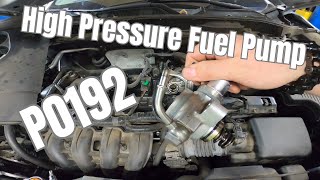
- The most likely cause is a failing high-pressure fuel pump (HPFP), even though the code name points to the sensor.
- Symptoms are serious and include stalling and severe hesitation, making the vehicle potentially unsafe to drive in traffic.
- Due to the extremely high pressures and fire risk, diagnosis and repair are best left to a professional mechanic.
- Do not immediately replace the fuel rail pressure sensor; ensure a proper diagnosis is performed to confirm if the sensor or the pump is the true cause.
What's Unique About the 2013-2016 Mazda CX-5
Mazda's SkyActiv-G direct injection engines rely on a very high-pressure fuel system to operate efficiently. This system has two main pumps: a low-pressure pump in the tank and a high-pressure fuel pump (HPFP) driven by the engine. Code P0191 on these engines is frequently linked to a failure of the mechanical high-pressure pump, an issue Mazda has addressed with Technical Service Bulletin 01-010/14, which explicitly states the cause is the HPFP not generating target pressure "due to a manufacturing error of the inner parts". While the code blames the sensor, the root cause is often the pump's inability to generate the required pressure.
Symptoms You May Notice
- Check Engine Light is on
- Engine stalling, especially when stopping or at low speeds
- Hesitation, bucking, or lack of power during acceleration, especially up hills
- Rough idle
- Hard starting or no-start condition
- Decreased fuel economy
- Engine will not rev past a certain RPM (e.g., 2000 RPM)
- Replacing the fuel rail pressure sensor when the actual problem is the high-pressure fuel pump's inability to generate sufficient pressure, as highlighted by Mazda's own TSB.
- Replacing fuel injectors when the issue is related to fuel pressure delivery, not injection.
- Assuming the low-pressure fuel pump is the cause without first diagnosing the high-pressure system, which is the more common failure point for this code on SkyActiv engines.
Most Likely Causes
- Failing High-Pressure Fuel Pump (HPFP) 🔴 High Probability → Shop Fuel Pump The HPFP is a known failure point on early SkyActiv engines, as acknowledged by Mazda TSB 01-010/14, which applies directly to 2013-2014 CX-5s. The bulletin identifies a manufacturing defect in the pump's internal components.
How to confirm: A technician will use a scan tool to monitor desired vs. actual fuel rail pressure. 🎬 Watch: A professional walkthrough on diagnosing the P0191 code. A healthy pump should produce around 3.0 MPa (435 PSI) at idle. If the actual pressure is significantly lower than the target (e.g., 69 PSI at idle as one owner reported) and fails to rise under load, the HPFP is the likely culprit.
Typical fix: Replace the high-pressure fuel pump with the updated part. The associated high-pressure fuel line is a one-time-use part and must also be replaced. The TSB explicitly calls for replacing the pump with a modified one.
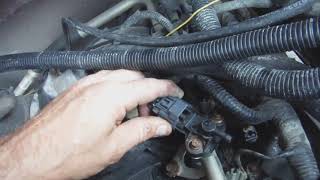
Est. part cost: $400-$1000 - Faulty Fuel Rail Pressure Sensor 🟡 Medium Probability → Shop Fuel Pressure Sensor The sensor provides the data that triggers the code. While often not the root cause, the sensor itself can fail, sending incorrect or erratic readings to the PCM. In some cases, owners have replaced the sensor to fix the issue.
How to confirm: With the engine running, a scan tool will show illogical pressure readings (e.g., stuck at 0 PSI or a fixed high value, or fluctuating wildly). A technician may also test the sensor's voltage output to confirm it's within the 0.5V to 4.5V range. According to the Mazda service manual, the sensor cannot be removed as a single unit and must be replaced with the fuel distributor (rail).
Typical fix: Replace the fuel rail pressure sensor. On the CX-5, Mazda specifies replacing the entire fuel distributor/rail assembly, as the sensor is integrated.
Est. part cost: $150-$350 - Wiring or Connector Issues ⚪ Low Probability Engine heat and vibration can cause wiring harnesses to degrade over time, leading to corrosion or loose connections at the sensor connector, causing an out-of-range signal.
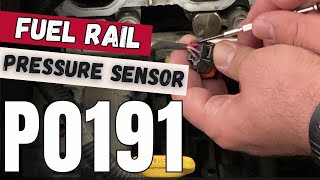
How to confirm: Visually inspect the fuel rail pressure sensor's connector and wiring for signs of damage, corrosion, or loose pins. A multimeter can be used to check 🎬 Watch: How to test the fuel rail pressure sensor circuit. for continuity and proper voltage at the connector (typically a 5V reference, ground, and signal).
Typical fix: Repair or replace the damaged section of the wiring harness or clean/replace the connector.
Est. part cost: $10-$100
Rare But Worth Checking
- Failing Low-Pressure In-Tank Fuel Pump: → Shop Fuel Pump The high-pressure pump cannot work if the low-pressure pump in the tank isn't supplying it with enough fuel. While less common for this specific code, it's a possibility if the HPFP has been replaced without success. A Reddit user with a similar code (P0192) suspected the low-pressure pump after replacing the HPFP and sensor did not solve the stalling issue. The low-pressure system should deliver 55-71 psi to the HPFP.
- Powertrain Control Module (PCM) Malfunction: → Shop Engine Control Module (ECM) In very rare instances, the PCM itself can fail or require a software update. This should only be considered after all other possibilities, including pumps, sensors, and wiring, have been thoroughly ruled out.
Diagnosis Steps
- Connect an OBD-II scanner and check for any other stored codes.
- Using the scanner's live data function, monitor the 'Desired Fuel Rail Pressure' and 'Actual Fuel Rail Pressure' PIDs. Compare the two values at idle, during a brief rev, and if possible, under load during a test drive.
- A healthy system should show actual pressure closely tracking the desired pressure. At idle, a normal reading is around 3.0 MPa (435 PSI). If actual pressure is consistently low, suspect the HPFP.
- If the readings are erratic, stuck at a specific value, or do not make sense, suspect the sensor or its wiring.
- Visually inspect the fuel rail pressure sensor's electrical connector and wiring for any signs of damage, corrosion, or loose connections.
- If wiring appears intact, test the sensor circuit for proper voltage (typically a 5V reference), ground, and signal wire integrity using a multimeter.
- If the sensor and wiring test good but pressure is low, the high-pressure fuel pump (HPFP) is the most likely culprit, as per TSB 01-010/14.
- Before replacing the HPFP, it's wise to check the low-pressure fuel system. Verify the in-tank pump is priming and providing adequate pressure (typically 55-71 psi) to the HPFP.
Parts You'll Likely Need
- High-Pressure Fuel Pump
(OEM #PE19-20-3F0 (or superseding numbers like PE18-20-3F0A))— This is the most common failure part that causes P0191 on this specific engine, as confirmed by Mazda TSB 01-010/14.
Trusted brands: Mazda (OEM), Bosch, Standard Motor Products (GDP510)
OEM price range: $600-$1000
Aftermarket price range: $400-$700 - Fuel Rail Pressure Sensor
(OEM #0261545074 (Bosch part number, often used as OEM reference))— The sensor itself can fail, sending incorrect data. Note: Mazda's official procedure is to replace the entire fuel rail assembly, as the sensor is not sold separately as an official Mazda part.
Trusted brands: Bosch, Denso
OEM price range: $200-$350 (for the full rail assembly)
Aftermarket price range: $50-$150 (for sensor only)
Related Codes That Often Appear With This One
- P0087 — P0087 (Fuel Rail/System Pressure - Too Low) often appears with P0191 because it indicates a specific mechanical problem (low pressure) that causes the sensor's performance to be out of the expected range.
- P0192 — P0192 (Fuel Rail Pressure Sensor Circuit Low) can appear if there is an electrical fault, like a short to ground in the sensor circuit. Several owners in forums reported this code alongside P0191 symptoms, which were ultimately traced back to the HPFP.
- P0193 — P0193 (Fuel Rail Pressure Sensor Circuit High) can appear if there is an electrical fault, like an open circuit or short to power, causing the sensor's signal to be out of range.
Technical Service Bulletins (TSBs) & Recalls
- 01-010/14 (later 01-004/15): CHECK ENGINE LIGHT ON WITH DTC P0191:00. Directly applies to 2013-14 CX-5s and identifies a manufacturing defect in the high-pressure fuel pump as the cause.
- 01-024-12-2729A: Vehicle may experience rough idle and/or MIL on with DTC P0191:00 (Related to Mazda3, but relevant)
- TSB Bulletin #01-010-14-2896A: Notes that the MIL on with DTC P0191:00 is caused by the high pressure fuel pump not generating the target pressure.
- TSB Bulletin #01-010-14-2896B: Documents that vehicles may experience the check engine light with DTC P0191:00 or P0192:00 stored in memory.
- TSB Bulletin #01-004-15-3028: Reports that some vehicles may experience the check engine light with DTC P0191:00 or DTC P0088:00 stored in memory.
Platform-Specific Known Issues
- Mazda TSB Confirms HPFP Failure: Mazda issued Technical Service Bulletin 01-010/14 (later superseded by 01-004/15) for 2013-2014 CX-5 models (among others) with code P0191. It explicitly states the cause is the "high pressure fuel pump not generating the target fuel pressure (due to a manufacturing error of the inner parts)" and instructs dealers to replace the pump with a modified part.
- Owner Experience: HPFP is the Fix: On the Mazdas247 forum, a user with a 2016 CX-5 experiencing code P0192 (low input) and severe acceleration issues confirmed the fix was replacing the high-pressure fuel pump. Live data showed fuel pressure was only 69 PSI at idle before the repair and returned to a normal ~300 PSI after.
- Owner Experience: Repeated HPFP Failures: A 2017 CX-5 owner on Reddit reported a P0192 code and confirmed via scan tool that the fuel rail pressure was stuck at 62 PSI, which is the output of the low-pressure in-tank pump. This indicates the high-pressure system was completely disabled by the PCM as a fail-safe, strongly pointing to a failed HPFP or sensor.
Mechanic-Grade Diagnostic Values
- High-Pressure Fuel System (at rail) at Idle — expected: Approx. 3.0 MPa (435 psi). Failure: Pressure significantly below 435 psi. One owner with a bad HPFP reported only 69 psi.
- High-Pressure Fuel System (at rail) Under Load — expected: Up to 15.0 MPa (2176 psi). Failure: Pressure fails to increase significantly from idle when revving the engine or under load.
- Low-Pressure Fuel System (supplying the HPFP) — expected: 55-71 psi. Failure: Pressure below this range indicates a failing in-tank fuel pump or clogged filter, which will starve the HPFP.
- Fuel Rail Pressure Sensor Signal Voltage — expected: 0.5V to 4.5V. Failure: Voltage is stuck, erratic, or does not correspond to pressure changes.
- Fuel Rail Pressure Sensor Connector (KOEO) — expected: Pin 1: 5V (Reference), Pin 2: ~1-2V (Signal, plugged in), Pin 3: 0V (Ground). Failure: Incorrect voltages point to a wiring or PCM issue rather than the sensor itself.
- Sensor Wiring Harness Resistance — expected: Less than 5 ohms. Failure: Resistance higher than 5 ohms between the sensor connector and the ECU indicates a problem in the wiring harness (corrosion, break).
Scan Tool Commands That Help
- Mazda M-MDS, FORScan, or equivalent: Live Data PID Monitoring (FUEL_PRES, FRP_REQ) — This is the primary diagnostic step. Use this to compare actual fuel pressure (FUEL_PRES) to the target/desired pressure (FRP_REQ) under various engine loads and RPMs to determine if the high-pressure pump is keeping up.
- iCarsoft CR MAX or similar: Special Functions > Pump Activation — Can be used with the engine off to test the low-pressure in-tank pump's ability to build pressure, helping to isolate it from the high-pressure system.
Wiring & Ground Locations
- G1 / G2 — Behind the left (driver's side) headlight assembly in the engine compartment.. These are primary ground points for the forward engine bay harness. A poor connection here can cause erratic sensor readings and control module issues.
- G4 — On the right (passenger side) of the engine compartment.. This is another primary ground point for multiple engine components. A loose or corroded ground here can introduce electrical noise and trigger sensor performance codes.
- Engine Mount Ground — A ground wire is often found dangling below the battery tray, intended to be bolted to a bracket on or near the engine mount.. This ground is commonly left disconnected after service (like a thermostat replacement), leading to various electrical issues. A forum user found this exact scenario on their 2014 CX-5.
Real Owner Repair Stories
- Mazdas247 Forum User (2016 Mazda CX-5 GT 2.5L) — Check Engine Light with code P0192. Car would not accelerate past 2000 RPM; the RPM needle would bounce. Stalling when trying to accelerate quickly.
❌ Tried (didn't work) Replacing the Mass Airflow (MAF) sensor, which fixed a separate P0171 code but not the P0192.
✅ What actually fixed it Replacing the high-pressure fuel pump (HPFP). Before the fix, live data showed fuel rail pressure was only 69 PSI at idle. After replacing the HPFP with a Standard Ignition GDP510, the idle pressure returned to a normal ~300 PSI and all symptoms were resolved. - Reddit User r/mazda (2016 Mazda CX-5) — Code P0192, poor acceleration, hard starting.
✅ What actually fixed it The user, a mechanic, advised testing the low-pressure pump first by jumping the relay and checking for 50-70 PSI at the quick-release fitting on the HPFP. In their customer's case, the low-pressure side was fine, and the ultimate fix was replacing the high-pressure fuel pump. - Reddit User r/CX5 (Mazda CX-5 (year not specified)) — Reoccurring issue where the car loses power and dies while driving, throwing code P0192.
❌ Tried (didn't work) Replacing the high-pressure fuel pump with a part from RockAuto., Running fuel system cleaner (BG 44k) through the system., Replacing the fuel pressure sensor with a used part.
✅ What actually fixed it The story is unresolved but serves as a cautionary tale. After replacing both the HPFP and the sensor, the problem returned. This strongly suggests the actual cause was either a failing low-pressure in-tank pump or a wiring/connector issue, which are the next logical diagnostic steps when the common parts fail to fix the problem.
"I Checked Everything" — The Actual Cause
- While a smoke test is not applicable, a common diagnostic trap for P0191 is replacing the fuel rail pressure sensor because the code description mentions 'sensor circuit'. However, the sensor is often reporting the situation correctly: the pressure is out of range because the high-pressure fuel pump (HPFP) has failed mechanically and cannot generate the pressure the PCM is requesting. Technicians confirm this by comparing desired vs. actual fuel pressure on a scan tool; if actual pressure is low, the pump is the problem, not the sensor that is accurately reporting the low pressure.
OEM Part Supersession History
pe01203f0b, pe01203f0c, pe01203f0d, pe01203f0e, pe01203f0f, pe18203f0, pe18203f0a→PE19-20-3F0— Part has been revised multiple times by Mazda, likely to address the internal manufacturing defects mentioned in TSB 01-010/14.
Heads up: A seller notes that if the original pump is stamped PE22-20-3F0, this part (PE19-20-3F0) is not the correct replacement. Always verify the number on the existing pump.
Model Year Variations Within This Range
- 2013-2015 vs 2016: The 2016 model year marked a mid-cycle refresh with an updated interior, better sound insulation, and a new 'Mazda Connect' infotainment system. However, the 2.0L and 2.5L SkyActiv-G engines and their direct injection fuel systems remained fundamentally the same. The HPFP failure, while officially noted in a TSB for 2013-2014 models, is still reported by owners of 2016 models, indicating the issue can persist across the entire first generation.
- 2013-2016: The 2.0L engine was more common in the base model trims, especially in the earlier years (2013). The 2.5L engine became the standard or more widely available option from 2014 onwards, offering more power. Both engines use a similar high-pressure direct injection system and are susceptible to the P0191 code caused by HPFP failure.
Diagnostic Flowchart
Real Owner Stories
Aggregated from forums and TSBs cited above. Mileages and costs reflect what owners reported in those sources.
2016 Mazda CX-5 — 101000 miles
Symptoms: Sudden loss of power, struggling engine, check engine light, rough idle for a few seconds then sputtering out, would not maintain idle. Code P0192 came back immediately after clearing. Live data showed fuel rail pressure at 62-68 PSI.
What fixed it: Replaced the high-pressure fuel pump (HPFP) with a used one from a donor engine.
Cost: $80
Source hint: Reddit r/mazda
2016 Mazda CX-5
Symptoms: Severe acceleration issues and code P0192 (low input). Live data showed fuel pressure was only 69 PSI at idle before the repair.
What fixed it: Replacing the high-pressure fuel pump, which returned fuel pressure to a normal ~300 PSI.
Source hint: Mazdas247 forum thread 'High-pressure-fuel-pump-or-pressure-sensor-issue-2017-cx-5'
2017 Mazda CX-5
Symptoms: P0192 code. Confirmed via scan tool that the fuel rail pressure was stuck at 62 PSI, indicating the high-pressure system was completely disabled by the PCM as a fail-safe.
What fixed it: Diagnosed as a failed HPFP or sensor causing the PCM to rely on the low-pressure in-tank pump.
Source hint: Reddit r/CX5
2017 Mazda CX-5 — 63000 miles
Symptoms: Experienced two separate high-pressure fuel pump failures, one at 15k miles and another at 63k miles.
What fixed it: The high-pressure fuel pump had to be replaced twice.
Source hint: CarTalk forum discussion '2017 cx-5 63k miles second time the high pressure fuel pump has been replaced'
Related OBD-II Codes
Frequently Asked Questions
Is there a TSB for the P0191 code on my 2013-2014 Mazda CX-5?
Can I just replace the fuel rail pressure sensor on my SkyActiv-G engine?
How can I tell if my high-pressure fuel pump (HPFP) is failing instead of the sensor?
What other parts need to be replaced when installing a new high-pressure fuel pump on the CX-5?
Are other Mazda models affected by this same high-pressure fuel pump issue?
Why won't my CX-5 rev past 2000 RPM with this code?
Related OBD-II Codes
Frequently Asked Questions
Is there a TSB for the P0191 code on my 2013-2014 Mazda CX-5?
Can I just replace the fuel rail pressure sensor on my SkyActiv-G engine?
How can I tell if my high-pressure fuel pump (HPFP) is failing instead of the sensor?
What other parts need to be replaced when installing a new high-pressure fuel pump on the CX-5?
Are other Mazda models affected by this same high-pressure fuel pump issue?
Why won't my CX-5 rev past 2000 RPM with this code?
Helpful Videos
Used OEM Parts in Stock
New Aftermarket Parts Available


The information in this article is provided for general reference and educational purposes only. Vehicle specifications, procedures, and part compatibility can vary by production date, trim level, and region. Always consult your vehicle's factory service manual and verify part numbers before purchasing or performing repairs. Safety-critical components such as airbags, seat belts, and braking systems should be installed by a qualified professional.
- Mazda CX-5:
- 🧭 Diagnostic Flowchart
- 🎬 Helpful Videos
- 🛍️ Shop This Part
- What's Unique About the 2013-2016 Mazda CX-5
- Symptoms You May Notice
- Most Likely Causes
- Rare But Worth Checking
- Diagnosis Steps
- Parts You'll Likely Need
- Related Codes That Often Appear With This One
- Technical Service Bulletins (TSBs) & Recalls
- Platform-Specific Known Issues
- Mechanic-Grade Diagnostic Values
- Scan Tool Commands That Help
- Wiring & Ground Locations
- Real Owner Repair Stories
- "I Checked Everything" — The Actual Cause
- OEM Part Supersession History
- Model Year Variations Within This Range
- Real Owner Stories
- 2016 Mazda CX-5 — 101000 miles
- 2016 Mazda CX-5
- 2017 Mazda CX-5
- 2017 Mazda CX-5 — 63000 miles
- Related OBD-II Codes
- Frequently Asked Questions
- Related OBD-II Codes
- Frequently Asked Questions
- 🎟️ Get 5% Off