

P0191 on 2012-2013 Mazda 3: Fuel Pressure Range/Performance Causes and Fixes
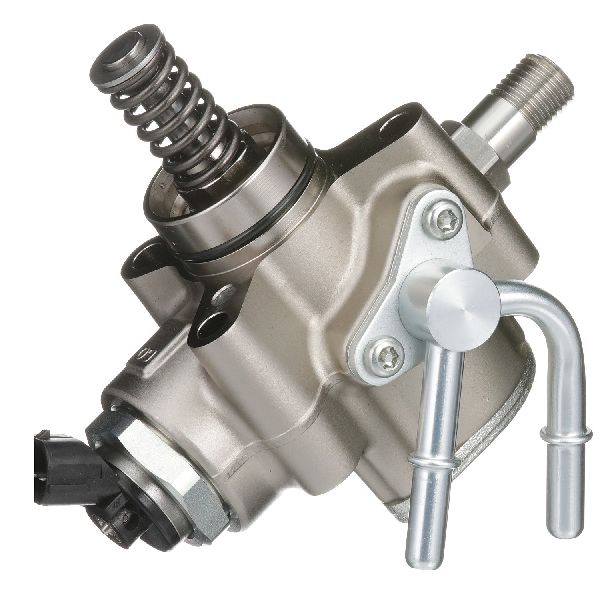
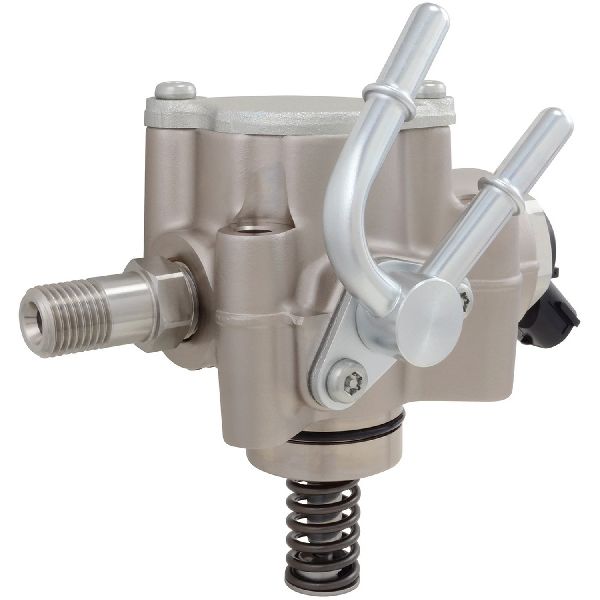
On a 2012-2013 Mazda 3 with the 2.0L SkyActiv engine, code P0191 is most often caused by a failing high-pressure fuel pump (HPFP). Mazda has acknowledged this with multiple Technical Service Bulletins which state the failure is due to a manufacturing defect in the pump's internal parts. Replacing the HPFP with the updated part is the most common and definitive fix.
- For the 2012-2013 Mazda 3 with a SkyActiv engine, P0191 almost always points to a failing high-pressure fuel pump (HPFP).
- Mazda has acknowledged this known issue with multiple Technical Service Bulletins.
- Symptoms include stalling, rough idle, hesitation, and reduced power.
- Due to the high pressures involved and fire risk, this repair is not recommended for DIYers and should be handled by a professional.
- When replacing the HPFP, the high-pressure fuel line should also be replaced.
What's Unique About the 2012-2013 Mazda MAZDA3
This issue is particularly common on the 2012-2013 Mazda 3 models equipped with the then-new 2.0L SkyActiv-G direct injection engine. This engine uses a high-pressure fuel system to inject fuel directly into the cylinders, which requires both a low-pressure in-tank pump and a high-pressure, engine-driven pump. Mazda has issued multiple Technical Service Bulletins (TSBs) acknowledging that the high-pressure fuel pump (HPFP) can fail to generate the target pressure, directly causing the P0191 code. The TSBs specify the cause is a "manufacturing error of the inner parts" of the HPFP.
Diagnostic Flowchart
Tap your situation to follow the diagnostic path that matches what you're seeing on this vehicle.
Symptoms You May Notice
- Check Engine Light is on
- Engine hesitation or stumbling, especially during acceleration
- Rough idle
- Engine may stall, particularly after idling for a long time or during slow acceleration
- Reduced engine power or 'limp mode' where the car won't accelerate past a certain speed
- Decrease in fuel economy
- Long crank times before the engine starts
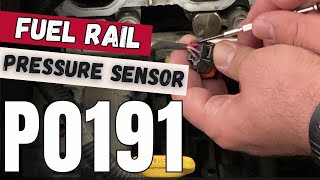
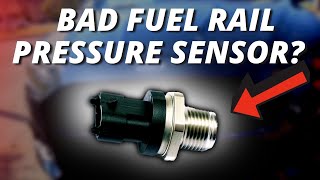
- Strong smell of fuel from the exhaust, indicating a rich condition 🎬 See a breakdown of common bad fuel rail pressure sensor symptoms
- Replacing the fuel rail pressure sensor when the actual cause is the high-pressure fuel pump's inability to generate pressure.
- Replacing fuel injectors when the issue is fuel pressure delivery.
- Assuming the low-pressure in-tank pump is bad without first verifying the performance of the high-pressure pump, which is the more common failure point for this code on this vehicle.
Most Likely Causes
- Failing High-Pressure Fuel Pump (HPFP) 🔴 High Probability → Shop Fuel Pump Mazda TSBs #01-010-14-2896A and #01-004-15-3028 directly state this is caused by the HPFP not generating target pressure due to a 'manufacturing error of the inner parts'. This is a known weak point on early SkyActiv engines.
How to confirm: A technician will use a scan tool to monitor desired vs. actual fuel rail pressure in live data. If the actual pressure consistently fails to meet the desired pressure, especially under load, the HPFP is the culprit. On some SkyActiv engines, a deviation of over 725 psi from the target pressure can trigger the code. Mazda's diagnostic procedure specifies checking if the 'FUEL_PRES' PID is 3.0 MPa (435 psi) or more at idle; if not, the HPFP should be replaced.
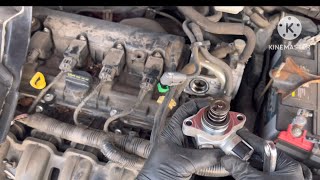
Typical fix: Replace the high-pressure fuel pump with the modified part, along with the single-use high-pressure fuel pipe and rubber seal as per Mazda's TSB repair procedure.
Est. part cost: $550-$900 - Faulty Fuel Rail Pressure Sensor 🟡 Medium Probability → Shop Fuel Pressure Sensor
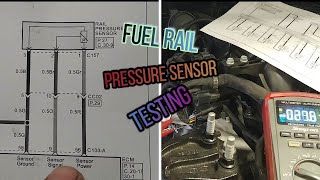
How to confirm: If fuel pressure readings on a scan tool are erratic, nonsensical (e.g., jumping from 0 to max instantly), or stuck at a specific value regardless of engine state, the sensor itself may be faulty. A technician can test the sensor's voltage output, which should typically be between 0.5V at 0 PSI and 4.5V at maximum pressure, to confirm.
Typical fix: Replace the fuel rail pressure sensor. On some models, this sensor is sold as part of the entire fuel rail assembly.
Est. part cost: $50-$180 - Wiring or Connector Issues ⚪ Low Probability
How to confirm: Visually inspect the wiring harness and connector for the fuel rail pressure sensor. Look for any signs of corrosion, damage, backed-out pins, or loose connections. A forum user on Mazdaspeeds.org traced a similar issue to a damaged wire in the harness under the intake manifold. A multimeter can be used to check for 5V reference, proper ground, and the signal wire voltage.
Typical fix: Repair or replace the damaged section of the wiring harness or the connector itself.
Est. part cost: $10-$50
Rare But Worth Checking
- Failing Low-Pressure In-Tank Fuel Pump: → Shop Fuel Pump The high-pressure pump cannot function correctly if it isn't being supplied with enough fuel from the in-tank pump. If HPFP replacement doesn't fix the issue, the low-pressure side should be investigated. A key-on, engine-off pressure reading should be around 55-71 psi. A failure on the low-pressure side can starve the high-pressure pump and trigger a P0191 code.
- Clogged Fuel Filter: → Shop Fuel Filter A clogged fuel filter can restrict fuel flow to the high-pressure pump, causing a drop in pressure. The filter is typically integrated into the in-tank fuel pump module and is not serviced separately.
- PCM Malfunction: In very rare cases, the Powertrain Control Module itself can be the source of the problem, but all other possibilities, especially the HPFP and sensor, should be exhausted first.
Diagnosis Steps
- Connect an OBD-II scanner to read the code and check for any other related codes like P0088, P0192, or P0171.
- Use the scanner's live data function to monitor 'Desired Fuel Rail Pressure' and 'Actual Fuel Rail Pressure'.
- Observe the pressure readings at idle, during steady cruising, and under heavy acceleration. Note any significant discrepancies where actual pressure cannot keep up with desired pressure. A healthy system should show the actual pressure closely tracking the desired pressure.
- If pressure readings are erratic, stuck, or illogical (e.g., reading 0 PSI while the engine is running), inspect the fuel rail pressure sensor's wiring and connector for damage or corrosion.
- If wiring is okay, test the sensor's voltage output according to the service manual specifications. The signal should typically be between 0.5V and 4.5V.
- If the sensor and wiring test good, but fuel pressure is consistently low and fails to meet the target under load, the high-pressure fuel pump is the most likely cause, as per Mazda's TSBs. Specifically, check if the idle fuel pressure ('FUEL_PRES' PID) is below 3.0 MPa (435 psi), which Mazda indicates as a failure condition.
- Before replacing the HPFP, it's wise to check the low-pressure fuel system. With the key on and engine off, the low-side pressure should be stable at around 55-71 psi.
Parts You'll Likely Need
- High-Pressure Fuel Pump
(OEM #PE19-20-3F0)— This is the most common failure part for this code on this specific vehicle, as documented by multiple Mazda TSBs. This part number supersedes several previous versions including PE18-20-3F0, PE01-20-3F0B, PE01-20-3F0C, PE01-20-3F0D, PE01-20-3F0E, and PE01-20-3F0F.
Trusted brands: Mazda (OEM), Hitachi
OEM price range: $620-$880
Aftermarket price range: $160-$700 - High-Pressure Fuel Pipe
(OEM #PE01-13-290D)— Mazda recommends replacing this single-use pipe whenever the high-pressure fuel pump is replaced to ensure a proper, leak-free seal in the high-pressure system.
Trusted brands: Mazda (OEM)
OEM price range: $30-$50 - Fuel Rail Pressure Sensor
(OEM #PE01-13-555 (Rubber Seal))— If diagnostic tests show the sensor itself is providing faulty readings, it will need to be replaced. Note that Mazda may sell this as part of the entire fuel rail. The TSBs also call for replacing the rubber seal (PE01-13-555) during the HPFP job.
Trusted brands: Bosch, Denso, Ford (cross-compatible part reported by users)
OEM price range: $100-$180
Aftermarket price range: $50-$120
Related Codes That Often Appear With This One
- P0088 — This code for 'Fuel Rail/System Pressure - Too High' is also mentioned in Mazda TSB #01-004-15-3028, indicating it can be triggered by the same faulty high-pressure fuel pump, which may behave erratically.
- P0192 — This code for 'Fuel Rail Pressure Sensor Circuit Low' is mentioned in Mazda TSB #01-010-14-2896B and in owner forums, pointing to a related failure mode 🎬 Watch: Diagnostic steps for the P0192 circuit low code of either the sensor or the pump.
- P0171 — 'System Too Lean (Bank 1)' can be logged when the fuel pressure is too low, preventing the injectors from delivering the commanded amount of fuel. A Reddit user reported this code along with P0192 before the HPFP was replaced.
Technical Service Bulletins (TSBs) & Recalls
- 01-004-15-3028: Check Engine Light on with DTC P0191:00 or DTC P0088:00.
- 01-010-14-2896B: Check Engine Light on with DTC P0191:00 or DTC P0192:00.
- 01-010-14-2896A: MIL on with DTC P0191:00 caused by the high pressure fuel pump not generating the target pressure.
- 01-024-12-2729A: Vehicle may experience rough idle and/or MIL on with DTC P0191:00.
Platform-Specific Known Issues
- Mazda issued TSB #01-010-14-2896A specifically for the 2012-2013 Mazda 3 (and other SkyActiv models) stating that P0191 is caused by the high-pressure fuel pump not generating the target fuel pressure due to a manufacturing error in its internal parts.
- TSB #01-024-12-2729A links P0191 to symptoms of rough idle and the engine stalling after idling for a long time.
- TSB #01-004-15-3028 and #01-010-14-2896B also point to the same fuel pressure sensor circuit performance problem, sometimes appearing with codes P0088 or P0192, and confirm the fix is a modified HPFP.
Mechanic-Grade Diagnostic Values
- High-Pressure Fuel Pump Pressure at Idle — expected: 3.0 MPa (435 psi) or more. Failure: Pressure reading below 3.0 MPa (435 psi) at idle points to a faulty high-pressure fuel pump.
- High-Pressure Fuel Pump Pressure under Load — expected: Up to 150 bar (approx. 2175 psi). Failure: Pressure failing to increase significantly under acceleration suggests a weak HPFP.
- Fuel Rail Pressure Sensor Signal Voltage — expected: 0.5V at 0 PSI, rising to 4.5V at maximum rated pressure.. Failure: Voltage that is stuck, erratic, or does not correspond to pressure changes indicates a faulty sensor or wiring.
- Fuel Rail Pressure Sensor Connector Voltages (Key On, Engine Off) — expected: Power Supply: 5V; Signal Wire: ~1V-2V (plugged in); Ground: 0V.. Failure: Incorrect voltages on any pin point to a wiring or PCM issue rather than the sensor itself.
- Low-Pressure Fuel Pump Pressure (Key On, Engine Off) — expected: 55-71 psi. Failure: Low pressure from the in-tank pump can starve the HPFP, causing P0191. This should be checked if the HPFP is suspect.
Scan Tool Commands That Help
- Mazda M-MDS (or equivalent professional scanner): Live Data PID Monitoring (FUEL_PRES, LOAD, RPM) — This is the primary diagnostic step. Use this to compare actual fuel pressure (FUEL_PRES) to the target pressure under various engine loads and RPMs to determine if the high-pressure pump is keeping up.
- Mazda M-MDS: DTC Self-Test — To retrieve any stored or pending manufacturer-specific codes that may not be visible on a generic OBD-II scanner.
Wiring & Ground Locations
- G4 — Right side of engine compartment.. This is a primary ground point for multiple engine components. A poor connection here can cause erratic sensor readings and control module issues.
- G1 / G2 — Behind the left headlight.. Grounds for the forward engine bay harness. A fault here could impact circuits for components like the fuel injection relay.
- HPFP Ground — A ground wire is often located on the high-pressure fuel pump itself or on a nearby bracket.. A dedicated ground for the pump's electronic components is critical. Some owners add a redundant ground from this point to the battery negative terminal to ensure a solid connection.
- Transmission Grounds — There are typically two ground points on the front of the transmission case and one on top.. The PCM and other modules rely on clean grounds through the engine/transmission assembly. A loose or corroded ground here can cause widespread communication and sensor issues.
Real Owner Repair Stories
- 2CarPros Forum User (Vehicle not specified, but symptoms and parts match GDI systems.) — Engine stalled while driving, code P0191. Would restart but stall immediately.
❌ Tried (didn't work) Replaced fuel rail pressure sensor., Replaced fuel filter and fuel pump., Replaced sensor again with a higher quality (Motorcraft) part., Replaced fuel pump again with a better brand.
✅ What actually fixed it The issue persisted after replacing all major components. The live data scanner showed 0 fuel pressure and the pump was not priming. The final diagnosis pointed to a wiring issue, corroded connection, or a fault in the control circuit (e.g., fuel pump driver module or PCM), as the parts cannon approach failed.
OEM Part Supersession History
PE01-20-3F0B through PE01-20-3F0F, PE18-20-3F0→PE19-20-3F0— The original high-pressure fuel pumps were prone to internal failure due to a manufacturing defect. The updated part number PE19-20-3F0 is the modified replacement specified in TSBs to correct the issue.
Heads up: Using an older, non-superseded part number, even if new-old-stock, will likely lead to a repeat failure.
Model Year Variations Within This Range
- 2012-2013: The 2012-2013 Mazda 3 was one of the first models to feature the 2.0L SkyActiv-G engine. These early production models are the primary subjects of the TSBs related to HPFP failure causing P0191. Later model years received the improved pump from the factory.
Helpful Videos
We Have This Part in Stock


The information in this article is provided for general reference and educational purposes only. Vehicle specifications, procedures, and part compatibility can vary by production date, trim level, and region. Always consult your vehicle's factory service manual and verify part numbers before purchasing or performing repairs. Safety-critical components such as airbags, seat belts, and braking systems should be installed by a qualified professional.
- Mazda MAZDA3:
- 🧭 Diagnostic Flowchart
- 🎬 Helpful Videos
- 🛍️ Shop This Part
- What's Unique About the 2012-2013 Mazda MAZDA3
- Symptoms You May Notice
- Most Likely Causes
- Rare But Worth Checking
- Diagnosis Steps
- Parts You'll Likely Need
- Related Codes That Often Appear With This One
- Technical Service Bulletins (TSBs) & Recalls
- Platform-Specific Known Issues
- Mechanic-Grade Diagnostic Values
- Scan Tool Commands That Help
- Wiring & Ground Locations
- Real Owner Repair Stories
- OEM Part Supersession History
- Model Year Variations Within This Range
- 🎟️ Get 5% Off