

P0191 on 2007-2013 Mini Cooper S: Fuel Rail Pressure Causes and Fixes
On a 2007-2013 Mini Cooper S, code P0191 almost always points to a failing High-Pressure Fuel Pump (HPFP), especially on the N14 engine. Symptoms include long cranks, stalling, and limp mode. MINI issued warranty extensions up to 10 years/120,000 miles for this part, so check with a dealer before paying for this expensive repair, which can cost over $1500 at a shop.
- P0191 on a 2007-2013 Mini Cooper S is most often caused by a failing High-Pressure Fuel Pump (HPFP).
- Symptoms are most obvious during cold starts, including long cranking times and stalling.
- Before paying for any repairs, call a MINI dealer with your VIN to see if your car is covered by one of the multiple HPFP warranty extensions.
- Proper diagnosis involves checking the low-pressure fuel pump's output first (~5 bar / 72.5 PSI) before condemning the expensive HPFP.
- The N14 engine (2007-2010) is more likely to experience this failure than the N18 (2011-2013), but both are affected.
What's Unique About the 2007-2013 Mini Cooper S
The direct-injected N14 and N18 'Prince' engines in the Mini Cooper S are notorious for High-Pressure Fuel Pump (HPFP) failures. This issue is so common, especially on the earlier N14 engine (2007-2010), that MINI issued multiple warranty extensions covering the pump for up to 10 years or 120,000 miles. While P0191 can have other causes, the HPFP is the first and most likely suspect on this specific platform, often accompanied by symptoms like long cranks, cold start stalls, and the manufacturer-specific code P2880.
Generation note: Yes, this range covers two different engines within the R56 generation. The 2007-2010 models primarily use the N14 engine, which is highly prone to HPFP failure. The 2011-2013 models use the updated N18 engine. While the N18's HPFP is considered more reliable, models built up to March 2012 still used a problematic pump and were also subject to a warranty extension. Diagnosis for both is similar, but the probability of HPFP failure is higher on the N14.
Symptoms You May Notice
- Check Engine Light is on (sometimes the 'half-engine' light)
- Engine is hard to start, especially when cold (long crank).
- Engine starts and then immediately stalls.
- Rough idle or engine stumbling, RPMs may fluctuate.
- Hesitation or sputtering during acceleration.
- Reduced engine power ('limp mode').
- Decreased fuel economy.
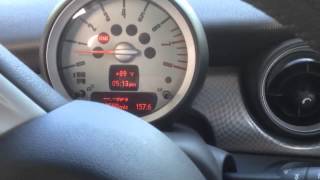
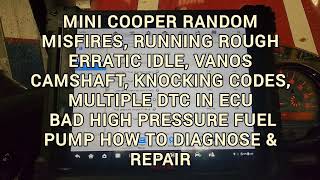
- Violent shaking for a few seconds on startup. 🎬 Watch: See what a typical cold start failure looks like.
- Replacing the fuel rail pressure sensor when the HPFP is actually the cause. Because the HPFP is expensive, many will try the cheaper sensor first. Proper diagnosis by comparing actual vs. desired pressure is key to avoiding this.
- Replacing spark plugs or ignition coils for misfire codes (P0300-P0304) that are actually induced by the incorrect fuel pressure, without first addressing the fuel system fault.
Most Likely Causes
- Failing High-Pressure Fuel Pump (HPFP) 🔴 High Probability → Shop Fuel Pump The original HPFP design, particularly on the N14 engine, has a very high failure rate, sometimes in as few as 40,000 miles. The issue was so widespread that MINI extended the warranty on the part to 10 years/120,000 miles for both N14 and N18 engines. The pump is known to have internal seals that fail, preventing it from building adequate pressure.
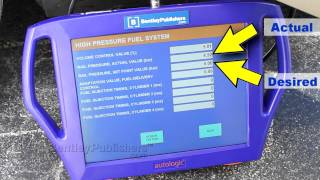
How to confirm: Use a diagnostic scan tool to monitor 'Fuel Rail Pressure, Actual' vs. 'Fuel Rail Pressure, Setpoint/Desired'. At idle, actual pressure should hold steady around 50 bar (725 PSI). If the actual pressure drops significantly below the desired pressure, especially during startup or under load (where it should reach 120+ bar), and the low-pressure system is confirmed to be working 🎬 Watch: How to diagnose HPFP failure using live scan data., the HPFP is faulty. Often, after a hard acceleration that triggers the fault, the pressure will drop to a default low value (~100-120 PSI) and the car will be in limp mode.
Typical fix: Replace the High-Pressure Fuel Pump and the one-time-use fuel line connected to it. It is also recommended to replace the three M6x25 mounting bolts.
Est. part cost: $400-$1200 - Faulty Fuel Rail Pressure Sensor 🟡 Medium Probability → Shop Fuel Pressure Sensor While less common than HPFP failure, the sensor can fail, providing incorrect readings to the ECU. It is located on the end of the fuel rail and is exposed to heat and vibration.
How to confirm: If fuel pressure readings on the scan tool are erratic, jump to extreme values, are stuck at a specific number, or don't change with engine RPM, the sensor may be at fault. You can test the sensor's wiring for correct voltage (typically a 5V reference, ground, and a signal wire that reads ~0.5V with key-on-engine-off and increases with pressure). Many owners replace this cheaper part first, only to find the HPFP was the real issue.
Typical fix: Replace the fuel rail pressure sensor, which is located on the end of the fuel rail.
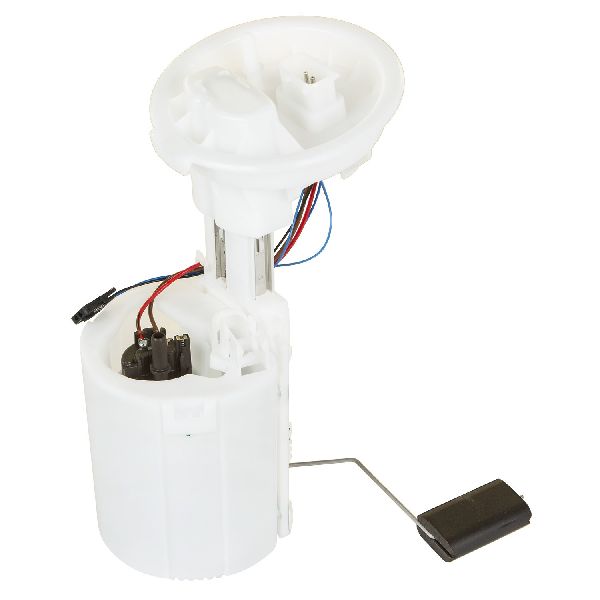
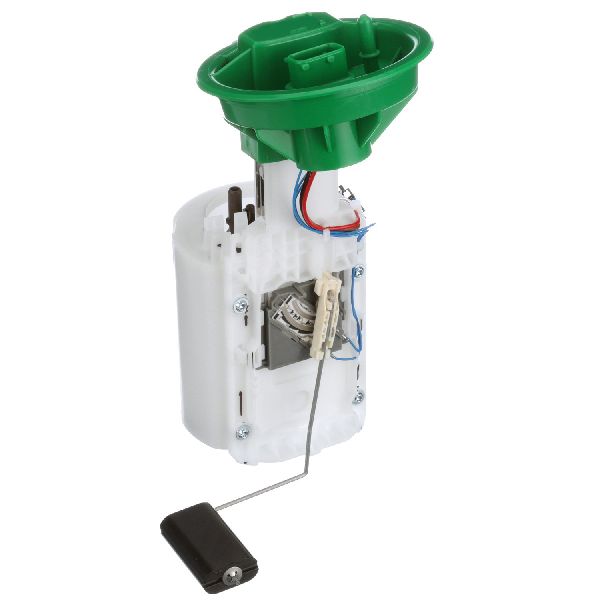
Est. part cost: $70-$200 - Weak In-Tank Low-Pressure Fuel Pump (LPFP) ⚪ Low Probability → Shop Fuel Pump
How to confirm: The HPFP cannot function correctly without adequate fuel supplied by the LPFP. A mechanic can test the low-pressure system using a fuel pressure gauge connected before the HPFP. It should read a steady pressure of around 5 bar (72.5 PSI). If this pressure drops, the HPFP will be starved of fuel and cannot reach its target pressure, which can trigger P0191.
Typical fix: Replace the in-tank fuel pump assembly. The fuel filter is part of this assembly.
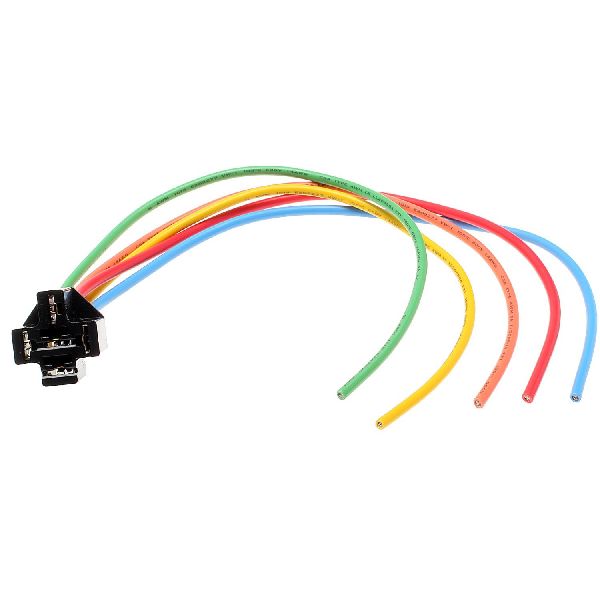
Est. part cost: $150-$350 - Damaged Wiring or Connectors ⚪ Low Probability The engine harness, particularly the wiring to the fuel rail pressure sensor, can be susceptible to heat damage, causing insulation to become brittle or wires to corrode.
How to confirm: Visually inspect the wiring harness and connector going to the fuel rail pressure sensor. Look for any signs of corrosion, chafing, or broken wires. Perform a 'wiggle test' on the harness while monitoring live data to see if the pressure reading fluctuates. Use a multimeter to check for continuity and proper voltage at the connector.
Typical fix: Repair the damaged section of the wiring harness or replace the connector pigtail.
Est. part cost: $20-$50
Rare But Worth Checking
- Clogged Fuel Filter: → Shop Fuel Filter The fuel filter is integrated with the low-pressure fuel pump assembly. While not a common failure point causing this specific code, a severely clogged filter could starve the HPFP of fuel, mimicking a weak LPFP. One owner reported replacing it but the issue persisted, pointing back to the HPFP.
- Faulty Engine Control Module (ECM/DME): → Shop Engine Control Module (ECM) This is extremely rare, but the ECM's internal circuits for processing the fuel pressure signal can fail. This should only be considered after all other possibilities have been exhaustively ruled out.
Diagnosis Steps
- Connect an OBD-II scanner and check for any other stored codes, especially P2880, 2C01, or misfire codes. Note the freeze frame data for P0191.
- Using the scanner's live data function, monitor 'Fuel Rail Pressure (Actual)' and 'Fuel Rail Pressure (Desired)'.
- Observe these values during a cold start. If the actual pressure struggles to meet the desired pressure (which should quickly rise to ~50 bar / 725 PSI), this points to a fuel delivery issue.
- If pressure is low, the next step is to determine if it's a low-pressure or high-pressure side fault. Connect a fuel pressure gauge to the low-pressure line feeding the HPFP. It must read a steady ~5 bar (72.5 PSI). If it's low or fluctuating, the in-tank pump (LPFP) or its filter is the problem.
- If the low-pressure supply is good but the high-pressure reading on the scan tool is still low, erratic, or fails to build under load, the issue is on the high-pressure side.
- Inspect the wiring and connector at the fuel rail pressure sensor for damage or corrosion. Perform a wiggle test.
- If wiring is good and the low-pressure system is healthy, the fault is almost certainly the High-Pressure Fuel Pump (HPFP) or, less commonly, the fuel rail pressure sensor itself.
- Before purchasing parts, call a MINI dealership with your VIN to check if your vehicle is covered under the extended warranty for the HPFP. Mention TSBs SI M01 04 10 (N14) and SI M01 01 16 (N18).
Parts You'll Likely Need
- High-Pressure Fuel Pump (HPFP)
(OEM #13517588879 (This is the most common number, superseding 13517573436 and 13537528345))— This is the most common failure part for this code on this specific vehicle, especially on the N14 engine. Failures can occur as early as 40,000 miles.
Trusted brands: MINI Genuine, PSA (Peugeot/Citroen) - Often the same part as Genuine MINI in a different box for less money., Bosch
OEM price range: $600-$1200
Aftermarket price range: $400-$700 - Fuel Rail Pressure Sensor
(OEM #13537537319 (For N14/N18))— This is the second most likely component to fail, causing incorrect readings. MINI does not sell this sensor separately from the fuel rail, but aftermarket options are available.
Trusted brands: Bosch, Standard Motor Products
OEM price range: $600 (with rail)
Aftermarket price range: $70-$200
Related Codes That Often Appear With This One
- P2880 — This is a manufacturer-specific code for 'High Pressure Fuel System Plausibility'. It often appears with or instead of P0191 and is a strong indicator of a failing HPFP on a MINI.
- P0300-P0304 — These are misfire codes. Incorrect fuel pressure can lead to a lean or rich condition, causing misfires in one or more cylinders. These are often a symptom of the P0191 fault, not the root cause.
- P0087 — This is a generic code for 'Fuel Rail/System Pressure - Too Low', which points to the same fundamental problem as P0191.
- 2C01 — A BMW/MINI specific code for 'High pressure fuel, plausibility: Pressure too low'. It is functionally very similar to P2880 and P0191 and points directly to the HPFP system.
Technical Service Bulletins (TSBs) & Recalls
- SI M01 04 10: Describes the special limited emission warranty extension for the HPFP on MY 2007-2009 N14 engines.
- SI M01 01 16: Details the HPFP limited warranty extension for the N18 engine on models produced up to Feb 2012.
- M01 04 19: References a class-action settlement (Boehm v. BMW of North America, LLC) further extending the HPFP warranty for certain N14 models to 10 years/120,000 miles.
Platform-Specific Known Issues
- MINI USA extended the warranty on the High-Pressure Fuel Pump for many N14 and N18 engines to 10 years or 120,000 miles due to high failure rates. This was the result of service bulletins and a class-action lawsuit. Owners should always check with a dealer for warranty coverage before paying for a repair.
- The N14 engine (2007-2010) is significantly more prone to HPFP failure than the later N18 engine (2011-2013). However, N18 engines produced before March 2012 are also highly susceptible.
Mechanic-Grade Diagnostic Values
- Low-Pressure Fuel Pump (LPFP) Output — expected: Steady 5 bar (~72.5 PSI) with key on, engine off. Should not bleed off more than 0.5 bar in 15 minutes.. Failure: Pressure is below 5 bar, fluctuates, or bleeds off quickly, indicating a weak in-tank pump or check valve.
- High-Pressure Fuel Rail at Idle (Warm) — expected: Actual pressure should match desired pressure at ~50 bar (725 PSI).. Failure: Actual pressure is significantly below desired pressure, or fluctuates wildly.
- High-Pressure Fuel Rail during Cranking (Cold Start) — expected: Actual pressure should quickly rise from the LPFP's 5 bar to meet the ECU's desired starting pressure.. Failure: Actual pressure struggles to rise above 5-10 bar, causing a long crank or start-and-stall condition.
- Fuel Rail Pressure Sensor Voltage (KOEO) — expected: ~0.5V.. Failure: Voltage is stuck at 0V, 5V, or does not change, indicating a sensor or wiring fault.
- Fuel Rail Pressure Sensor Connector Pins (KOEO) — expected: Pin 1: 5V (Power Supply), Pin 2: ~0.5V (Signal), Pin 3: Ground (continuity to chassis).. Failure: Missing 5V reference, no ground, or incorrect signal voltage.
Scan Tool Commands That Help
- ISTA / Autologic / Foxwell NT510: Live Data Monitoring: 'Fuel Rail Pressure, Actual' vs. 'Fuel Rail Pressure, Setpoint' — This is the primary diagnostic step. It's used during cranking, at idle, and under load to see if the HPFP can generate and maintain the pressure requested by the DME. A large deviation points to a pump or sensor issue.
Wiring & Ground Locations
- Engine-to-Body Ground Strap — A braided strap typically running from the engine block or transmission housing to the chassis frame rail in the engine bay.. A corroded or loose main engine ground can cause a variety of electrical issues, including erratic sensor readings and module communication problems that could potentially mimic fuel system faults.
- DME/Fuse Box Grounds — On the driver's side in front of the firewall, under the main fuse box and ECM. Requires removing the ECM/fuse box to access.. These are critical ground points for the engine management system. Corrosion here can directly impact the ECM's ability to correctly read sensor inputs, including the fuel rail pressure sensor.
- Fuel Rail Pressure Sensor Connector — On the end of the fuel rail, typically on the driver's side of the engine.. This 3-pin connector provides power, ground, and signal for the sensor. Heat and vibration can damage the wiring or cause corrosion in the pins, leading to incorrect signals and a P0191 code.
Real Owner Repair Stories
- North American Motoring user post (2009 MINI JCW (N14 engine), 125,000 miles (61k on replacement HPFP)) — Classic HPFP failure symptoms (long crank, hesitation).
❌ Tried (didn't work) The vehicle already had a warranted replacement HPFP installed by a dealer 61,000 miles prior, which was supposed to be a redesigned part.
✅ What actually fixed it The owner disassembled the failed HPFP and found the two O-rings on the internal 'Volume Control Valve' were hardened, cracked, and had lost their round shape. He believed they were failing due to ethanol in the fuel. He replaced them with Viton O-rings (McMaster-Carr PNs 1288N112 and 1288N111), which restored pump function.
OEM Part Supersession History
13537528345→13517573436— Initial design improvement for the N14 engine.13517573436→13517588879— Further design revision for the N14 engine to improve reliability.
Heads up: 13517588879 is the most current and commonly used replacement part number for the N14 engine.
Model Year Variations Within This Range
- 2011-03/2012: N18 engines built up to March 2012 used a Continental-brand HPFP similar in design and failure rate to the N14 pump. These were also covered under a warranty extension.
- 04/2012-2013: N18 engines built from April 2012 onward use a more reliable Bosch-brand HPFP, which is not known for the same high failure rate.
Diagnostic Flowchart
Other Known Issues on This Vehicle
Issues unrelated to this code that are worth knowing about as an owner of this generation:
- Timing Chain 'Death Rattle' 🔴 High — Very common, especially on N14 engines. Can occur at any mileage. Caused by a faulty tensioner, leading to chain stretch and guide failure. (Ref: A class-action lawsuit (Skeen v. BMW) resulted in a warranty extension to 7 years/100,000 miles for this issue on certain models.)
- Carbon Buildup on Intake Valves 🟠 Medium — Inevitable on the direct-injected N14 engine, often requiring cleaning every 30-50k miles to prevent rough idle, hesitation, and misfires. The N18 has an improved PCV design but is still susceptible over time.
- Excessive Oil Consumption 🔴 High — Common on the N14 engine due to piston ring and valve stem seal design. Owners often need to add oil between changes. Can lead to turbo failure if oil level gets too low.
- Turbocharger Oil Line Leaks 🟠 Medium — The oil feed line to the turbo has gaskets that degrade from heat, causing oil leaks onto the hot turbo and exhaust manifold, creating a burning smell or smoke. Affects both N14 and N18.
- Thermostat Housing Leaks 🟠 Medium — The plastic thermostat housing is prone to cracking and leaking coolant, which can lead to overheating. A very common failure on both N14 and N18 engines.
- Water Pump Failure 🔴 High — The water pump, often the plastic auxiliary pump, can fail, leading to coolant leaks and potential engine overheating.
Used vs. New Parts: Buying Guide for This Vehicle
When a used part is the smart pick: A used part is generally NOT recommended for the High-Pressure Fuel Pump (HPFP) on this vehicle. Given the extremely high failure rate, even on newer revisions, a used pump from a junkyard has an unknown history and a high probability of premature failure. It only makes sense if the budget is extremely tight and the part comes with a warranty from the seller.
Donor-vehicle mileage cap: roughly under 40000 miles for the part to have meaningful remaining life.
What to inspect on the donor part:
- Verify the part number is the latest revision (13517588879 for N14).
- Ask for the VIN of the donor car to check its production date and mileage, if possible.
- Inspect the electrical connector for corrosion or damage.
- Ensure the drive mechanism on the end of the pump moves freely.
- Avoid pumps that look excessively corroded or have been sitting exposed to the elements.
OEM-only on this vehicle (don't cheap out):
- High-Pressure Fuel Pump (HPFP) - Due to the high failure rate of unbranded aftermarket units, sticking with a Genuine MINI or Genuine PSA (Peugeot/Citroen) part is strongly advised.
Aftermarket brands forum-validated for this vehicle:
- PSA (Peugeot/Citroen) - This is the same manufacturer as the Genuine MINI part, often available for a significantly lower price.
- Bosch (For N18 engines from 04/2012 onwards)
Brands owners have reported issues with on this vehicle:
- Unbranded, low-cost pumps from online marketplaces like eBay or Amazon. Forum users frequently report these failing within weeks or months.
Real Owner Stories
Aggregated from forums and TSBs cited above. Mileages and costs reflect what owners reported in those sources.
2007-2009 Mini Cooper S N14 — ~40000 miles
Symptoms: High failure rates of the HPFP, sometimes occurring in as few as 40,000 miles due to internal seals failing.
What fixed it: Replacement of the High-Pressure Fuel Pump under the 10-year/120,000-mile extended warranty.
Source hint: Article Context: common_causes and vehicle_specific_issues citing TSB SI M01 04 10
2011 Mini Cooper S N18
Symptoms: Frustration over repeat failures and high repair costs at the dealership.
What fixed it: High-Pressure Fuel Pump (HPFP) replacement.
Cost: $1500-$1500
Source hint: Reddit thread '2011 mini s hpfp' at r/MINI
2007-2010 Mini Cooper S N14
Symptoms: Cold start stalls, rough running, and receiving codes P2880 and P030x.
What fixed it: High-Pressure Fuel Pump (HPFP) replacement.
Source hint: North American Motoring thread 'high-pressure-fuel-pump-failure-symptoms'
2007-2013 Mini Cooper S
Symptoms: The HPFP was replaced and the car ran fine for one week, but then symptoms returned.
What fixed it: Diagnosis and repair of the low-pressure fuel system (LPFP).
Source hint: North American Motoring thread 'hpfp-replaced-ran-fine-for-one-week-now-has-problems-again'
2007-2013 Mini Cooper S
Symptoms: Live data showed pressure at idle around 700 PSI, but it dramatically dropped to ~100 PSI during failure.
What fixed it: Replacement of the defective HPFP.
Source hint: North American Motoring thread 'hpfp-defective'
Related OBD-II Codes
Frequently Asked Questions
Is my 2009 Mini Cooper S N14 covered under a warranty extension for the high-pressure fuel pump?
Does the HPFP warranty extension apply to the newer N18 engine found in 2011-2013 models?
My scan tool shows fuel rail pressure at 120 PSI while driving in limp mode; is this normal?
What should the fuel rail pressure be at idle for a healthy N14 or N18 engine?
Can I just replace the fuel rail pressure sensor to fix P0191?
What is the required low-side fuel pressure before it reaches the HPFP?
Helpful Videos
We Have This Part in Stock


The information in this article is provided for general reference and educational purposes only. Vehicle specifications, procedures, and part compatibility can vary by production date, trim level, and region. Always consult your vehicle's factory service manual and verify part numbers before purchasing or performing repairs. Safety-critical components such as airbags, seat belts, and braking systems should be installed by a qualified professional.
- Mini Cooper S:
- 🧭 Diagnostic Flowchart
- 🎬 Helpful Videos
- 🛍️ Shop This Part
- What's Unique About the 2007-2013 Mini Cooper S
- Symptoms You May Notice
- Most Likely Causes
- Rare But Worth Checking
- Diagnosis Steps
- Parts You'll Likely Need
- Related Codes That Often Appear With This One
- Technical Service Bulletins (TSBs) & Recalls
- Platform-Specific Known Issues
- Mechanic-Grade Diagnostic Values
- Scan Tool Commands That Help
- Wiring & Ground Locations
- Real Owner Repair Stories
- OEM Part Supersession History
- Model Year Variations Within This Range
- Other Known Issues on This Vehicle
- Used vs. New Parts: Buying Guide for This Vehicle
- Real Owner Stories
- 2007-2009 Mini Cooper S N14 — ~40000 miles
- 2011 Mini Cooper S N18
- 2007-2010 Mini Cooper S N14
- 2007-2013 Mini Cooper S
- 2007-2013 Mini Cooper S
- Related OBD-II Codes
- Frequently Asked Questions
- 🎟️ Get 5% Off