

P0191 on 2014-2020 Ram 2500 6.7L Cummins: Causes and Fixes for Fuel Rail Pressure Faults
On a 2014-2020 Ram 2500 with the 6.7L Cummins, P0191 is most often caused by a faulty fuel rail pressure sensor. A quick check with a scan tool showing pressure above 100 PSI with the key on and engine off is a strong sign the sensor is bad. Clogged fuel filters are the next most common cause, and should be the first part replaced if their service history is unknown. The code monitor typically runs at a hot idle, explaining why it often appears after exiting the highway.
- Before buying any parts, use a scan tool to check the fuel rail pressure with the key on and engine off. A reading significantly above zero (e.g., >100 PSI) strongly points to a bad fuel rail pressure sensor.
- Always start with the cheapest and most likely solutions: check the sensor reading, and if in doubt, replace both fuel filters if they are due for service.
- If the code appears on a 2014 model only during very cold weather, the problem is likely a software issue covered by a Technical Service Bulletin (TSB #14-001-14).
- Do not immediately assume the expensive high-pressure fuel pump has failed. For P0191, the sensor, wiring, filters, or minor mechanical leaks are far more common culprits.
What's Unique About the 2014-2020 Ram 2500
On the 6.7L Cummins, the high-pressure common rail fuel system is precisely controlled, and the diagnostic for P0191 is known to be sensitive, often running when the engine is hot and at an idle. This leads to a common complaint of the check engine light appearing after coming to a stop from an extended highway drive. A unique, documented issue for 2013-2014 models is that this code can be set during cold weather (below 20°F or -7°C) due to a software problem preventing the frame-mounted fuel heater from working, leading to fuel gelling. This is documented in TSB #14-001-14 REV. B. For 2018 and newer models, a security gateway module requires a specific type of scan tool, like a wiTECH, to clear codes or perform certain diagnostic functions.
Diagnostic Flowchart
Tap your situation to follow the diagnostic path that matches what you're seeing on this vehicle.
Generation note: This range covers the end of the third generation (2014-2018) and the start of the fourth generation (2019-2020). The primary fuel system difference is the high-pressure pump: 2014-2018 models use a robust Bosch CP3 pump, while 2019-2020 models use a Bosch CP4.2 pump. While P0191 is common to both, a CP4.2 failure is more catastrophic, often sending metal debris through the entire fuel system. P0191 can be an early symptom of CP4.2 failure, though P0087 is more common. A recall (Y78 / NHTSA 21V880) was issued for 2019-2020 trucks to replace the CP4.2 with a CP3 pump.
Symptoms You May Notice
- Check Engine Light is on
- Engine stalling, especially when coming to a stop after highway driving
- Reduced engine power or "limp mode"
- Hard start or no-start condition
- Rough or oscillating idle, particularly when warm
- Engine hesitation or stumbling
- Increased fuel consumption
- Immediately replacing the high-pressure fuel pump (CP3/CP4). This is an expensive part and is rarely the cause of an isolated P0191 code. The sensor, filters, or minor leaks are far more common culprits.
- Replacing the fuel rail pressure sensor without first performing the Key On, Engine Off (KOEO) scan tool test to confirm it is biased.
Most Likely Causes
- Faulty Fuel Rail Pressure Sensor 🔴 High Probability → Shop Fuel Pressure Sensor The sensor can become biased over time, sending a false pressure reading to the PCM even when the engine is off. The diagnostic for P0191 is very sensitive to this incorrect reading. This is the most widely reported fix in owner forums.
How to confirm: With a scan tool, view live data for 'Fuel Rail Pressure' with the Key On, Engine Off (KOEO). The reading should be near 0 PSI. While official service literature may allow for readings up to 870 PSI, real-world technician and owner experience confirms that a reading over 100-200 PSI is a definitive sign of a biased and faulty sensor. As a secondary check, you can back-probe the sensor's signal wire (typically the center pin); it should read approximately 0.5V at KOEO. A significant deviation can be enough to set the code.
Typical fix: Replace the fuel rail pressure sensor. It is located on the fuel rail, which is on the driver's side of the engine.
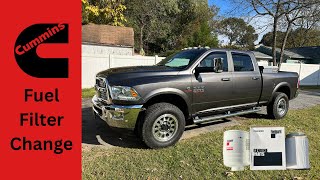
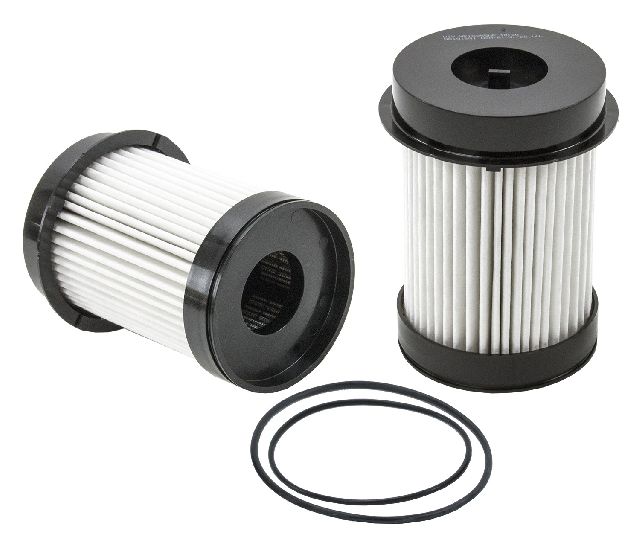
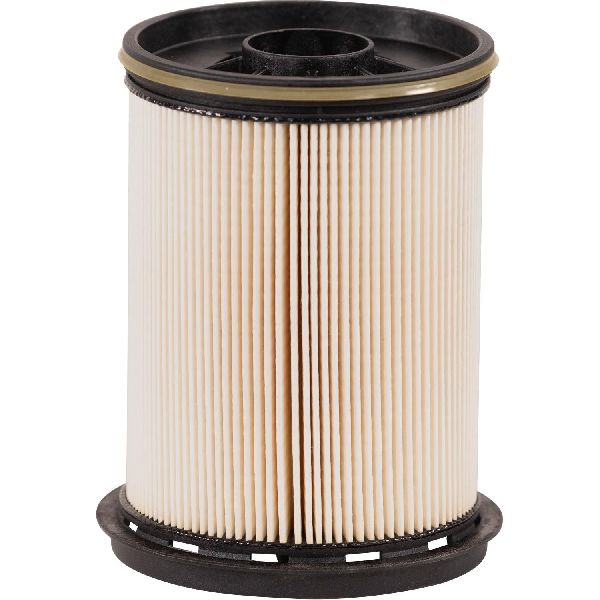
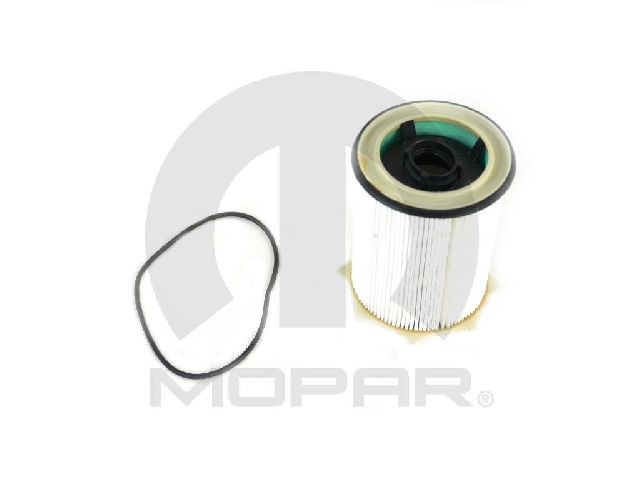
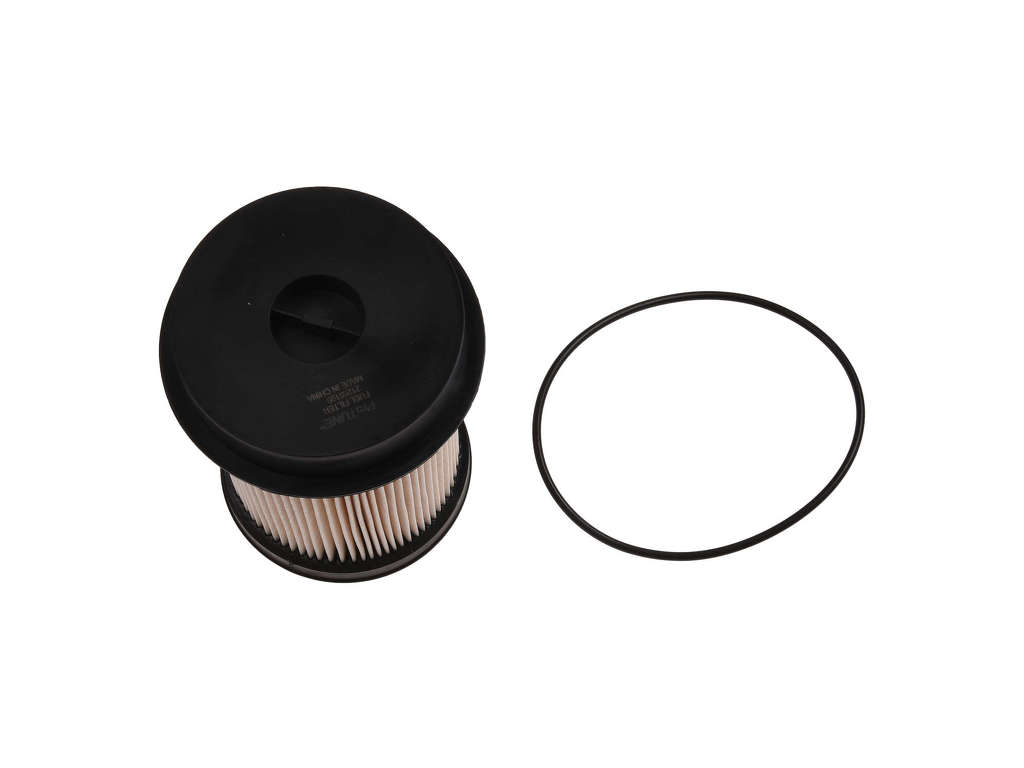
Est. part cost: $150-$350 - Clogged Fuel Filters 🟡 Medium Probability → Shop Fuel Water Separator Filter The 6.7L Cummins uses a two-filter system (engine and frame-mounted) that is sensitive to fuel quality and requires regular changes (every 15,000 miles or 12 months). Restricted filters can cause pressure fluctuations that trigger the code, especially under load or during the sensitive hot-idle test.
How to confirm: Check service records. If the filters have not been changed within the recommended interval, they are a prime suspect. This is often the cheapest and easiest first step and should be done before replacing more expensive components.
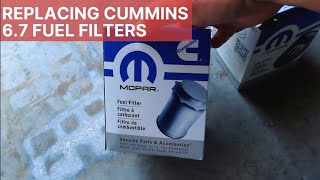
Typical fix: Replace both the engine-mounted and chassis-mounted fuel filters. Using high-quality OEM (Mopar or Fleetguard) filters is recommended.
Est. part cost: $100-$150 - Leaking Fuel Injector Connector Tubes 🟡 Medium Probability → Shop Fuel Line On higher mileage trucks, the connector tubes (also called feed tubes) that supply high-pressure fuel from the rail to the injectors can loosen or the sealing surface can wear. This creates a small internal leak, causing a pressure drop that is most noticeable at hot idle, which is when the P0191 monitor runs.
How to confirm: This is difficult to confirm without ruling out other causes. A visual inspection may show fuel residue near the injector lines on the cylinder head. If the sensor and filters are good, but the code persists at a hot idle, loose tubes are a strong possibility. An injector return flow test may show excessive leakage, which could be from the tubes or the injectors themselves.
Typical fix: Re-torquing the injector connector tube nuts to the manufacturer's specification. The final torque spec is typically 37-41 ft-lbs, but a specific sequence involving preliminary torquing is required for proper sealing. If re-torquing doesn't work, the tubes may need to be replaced.
Est. part cost: $0 (if only labor for re-torquing) - Cold Weather Fuel Gelling (2013-2014 models) ⚪ Low Probability TSB #14-001-14 REV. B states that a Body Control Module (BCM) configuration setting can prevent the frame-mounted fuel filter heater from functioning in cold temperatures (20°F or -7°C), causing fuel to gel and restrict flow.
How to confirm: The problem occurs only in very cold weather and often presents with a hard start or no-start condition along with codes P0191, P0087, and/or P026B. The issue is specific to 2013-2014 model year trucks.
Typical fix: A Ram dealership needs to reconfigure the Body Control Module (BCM) with updated software using a wiTECH scan tool as per the TSB.
Est. part cost: $0 (if covered by dealer or warranty)
Rare But Worth Checking
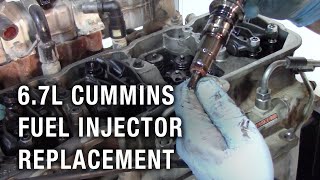
- Leaking Fuel Injectors: → Shop Fuel Injector If connector tubes are tight, the injectors themselves can leak internally, causing excessive return flow and a drop in rail pressure. This is more common on high-mileage engines and requires a professional injector return flow test to diagnose. For a no-start cranking test, total return flow should be less than 40 mL in 10 seconds. For a running test at 1200 RPM, total leakage should be less than 210 ml in 30 seconds, with no single injector contributing more than 40 ml.
- Wiring or Connector Issues: The wiring harness to the fuel rail pressure sensor can become damaged from heat and vibration, causing an intermittent signal. A common chafe point is near the A/C compressor clutch. Wiggling the harness while monitoring live data can sometimes reveal a bad connection.
- Failing Lift Pump: A weak in-tank lift pump may not supply enough fuel to the high-pressure pump, causing pressure to drop under load or at idle. This will typically set a P0087 code along with P0191.
- Fuel Pressure Limiting Valve: Also known as a relief valve, this component on the fuel rail can stick open or leak, bleeding off pressure. This is less common for an isolated P0191 but can be tested by checking for fuel flow from its return port at idle; there should be none.
Diagnosis Steps
- Connect a quality OBD-II scanner and verify P0191 is present. Note any other codes, especially P0087 or P2BAC.
- With the Key On, Engine Off (KOEO), monitor the live data for 'Fuel Rail Pressure'. The reading should be close to 0 PSI. If it is above 100-200 PSI, the sensor is biased and is the most likely cause. Replace it.
- If the KOEO reading is normal, check the vehicle's service history and replace both fuel filters (engine and frame-mounted) if they are due for service or their age is unknown. Use quality Mopar or Fleetguard filters.
- If the code persists, start the engine and let it reach full operating temperature. The P0191 monitor often runs at a hot idle. Monitor 'Desired Fuel Rail Pressure' vs. 'Actual Fuel Rail Pressure'. Look for large deviations, or an oscillating actual pressure while desired pressure is steady.
- Visually inspect the wiring harness and connector going to the fuel rail pressure sensor for any signs of damage, corrosion, or looseness. Check for 5V reference, good ground, and a 0.5V signal at the connector with the key on.
- If no issues are found, the next step is to perform an injector return flow test to check for leaking injectors or connector tubes, which is a common cause on higher mileage trucks.
Parts You'll Likely Need
- Fuel Rail Pressure Sensor
(OEM #68214374AA (Mopar), 0281006327 (Bosch))— This is the most common failure point for P0191 on this platform, often failing by giving a biased reading at key-on. The OEM part is made by Bosch.
Trusted brands: Bosch, Mopar
OEM price range: $250-$350
Aftermarket price range: $150-$250 - Fuel Filter Kit (Engine and Frame Mounted)
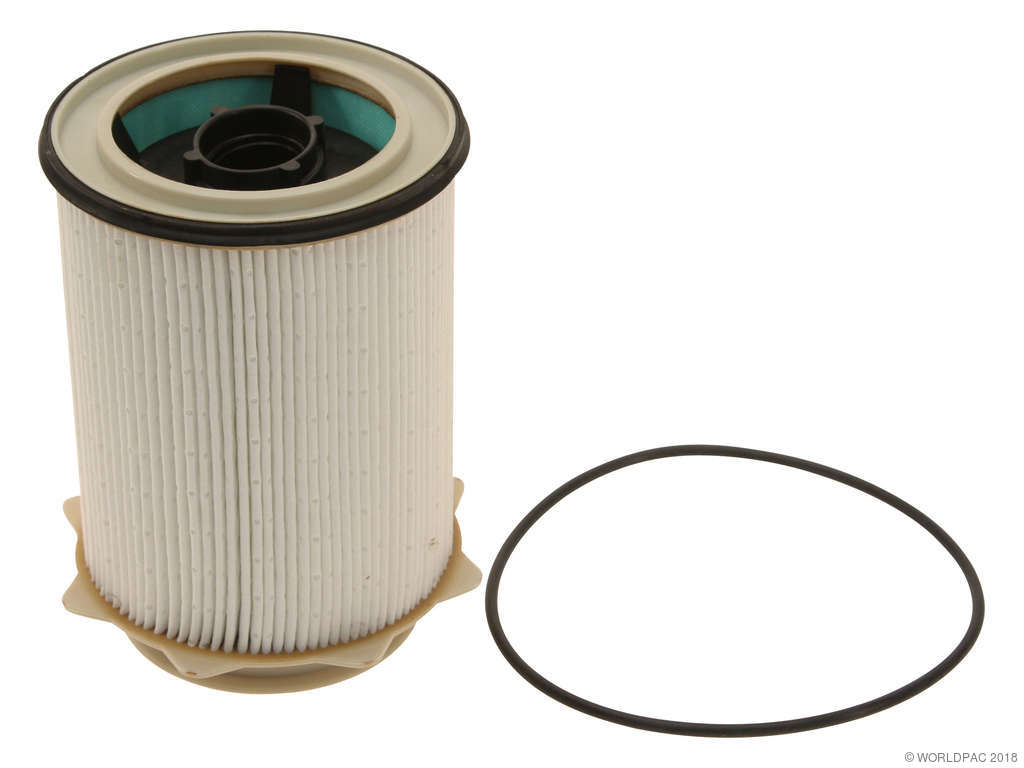
(OEM #68436631AA (Mopar Kit), FK48002 (Fleetguard Kit))— Clogged filters are a frequent cause of fuel pressure deviations and should be replaced as a primary diagnostic step if their age is unknown. Fleetguard is a known OEM supplier for Mopar filters.
Trusted brands: Mopar, Fleetguard
OEM price range: $100-$150
Aftermarket price range: $70-$120
Related Codes That Often Appear With This One
- P0087 — Means "Fuel Rail/System Pressure - Too Low" and often appears with P0191 when the cause is a legitimate lack of fuel, such as from clogged filters, fuel gelling, or a failing pump.
- P2BAC — This is an informational code indicating that another emissions-related fault (like P0191) has occurred, causing the EGR system to be disabled. It does not require a separate repair and will clear once the P0191 fault is fixed.
- P026B — This code for "Fuel Injection Quantity Lower Than Expected" is mentioned in the cold weather TSB (#14-001-14 REV. B) alongside P0191 as a result of fuel gelling.
Technical Service Bulletins (TSBs) & Recalls
- 14-001-14 REV. B
- 18-102-22 REV. A
- 18-012-21 REV. A
Platform-Specific Known Issues
- TSB #14-001-14 REV. A and B note that 2014 models may set P0191, P0087, or P026B in cold weather due to fuel gelling caused by a software issue with the fuel heater. [Bulletin #1400114, Bulletin #14-001-14 REV. A]
- TSB #1810222REVA and #18-012-21 REV. A list P0191-00 - Fuel Rail Pressure Sensor Circuit Performance as a potential diagnostic trouble code on 2020 models, among others. [Bulletin #1810222REVA, Bulletin #18-012-21 REV. A]
Mechanic-Grade Diagnostic Values
- Fuel Rail Pressure Sensor Signal Voltage (KOEO) — expected: ~0.5V. Failure: A reading significantly different from 0.5V. A reading of 0.59V has been shown to be enough to set the code.
- Fuel Rail Pressure Sensor Ground Circuit Voltage Drop — expected: < 50 mV. Failure: Voltage greater than 50 millivolts indicates high resistance in the ground circuit.
- Fuel Rail Pressure Sensor 5V Reference — expected: 4.90V to 5.10V. Failure: Voltage outside this range indicates a problem with the PCM or wiring.
- Injector Return Flow (Cranking Test) — expected: < 40 mL in 10 seconds. Failure: Volume greater than 40 mL indicates excessive leakage from one or more injectors or connector tubes.
- Injector Return Flow (Running Test) — expected: < 210 mL in 30 seconds (total). Failure: Total volume greater than 210 mL, or any single injector contributing more than 40 mL, indicates a faulty injector.
- Fuel Rail Pressure Sensor Resistance (Bosch 0281006327) — expected: Pin 1-2: Open/Infinity; Pin 1-3: ~24 kOhms; Pin 2-3: ~2.3 MOhms. Failure: Readings that deviate significantly from these values on a new or known-good sensor.
Scan Tool Commands That Help
- wiTECH or equivalent: Fuel Pressure Override Test — This function commands maximum rail pressure (e.g., 26,000+ PSI) at a set RPM to stress-test the system. It is used to perform a running injector return flow test to identify leaks that may only appear under high pressure.
- wiTECH or equivalent: Injector Kill Test — Used to isolate a single faulty or leaking injector. By disabling injectors one by one while monitoring rail pressure stability or engine smoothness, a technician can pinpoint which cylinder is causing the pressure drop.
- wiTECH or equivalent: FCA Unplug Test (for CP3-equipped trucks, 2018 and older) — While monitoring rail pressure, unplugging the Fuel Control Actuator (FCA) should cause rail pressure to spike to its mechanical maximum. If it does, the high-pressure pump is likely healthy, pointing the diagnosis towards the FCA or sensor.
Wiring & Ground Locations
- Fuel Rail Pressure Sensor Connector — On the fuel rail, located on the driver's side of the engine, often towards the rear.. This is the primary electrical connection for the sensor. The pins for 5V reference, signal, and ground must be clean and secure.
- Harness Chafe Point — The main engine harness can rub near the A/C compressor clutch and near the back of the fuel filter housing.. Chafing can damage the insulation on the sensor's wires, causing an intermittent short or open circuit that directly triggers P0191.
- G104 / G105 — Primary engine and chassis ground points, often located in the engine bay near the battery or on the engine block/fender.. A poor ground at these locations can introduce electrical noise and voltage offsets, affecting the PCM's interpretation of the sensor's signal and potentially causing a false code.
Real Owner Repair Stories
- Turbo Diesel Register forum user 'RamVenture' (2012 Ram 2500, 145,000 miles) — P0191 check engine light for over a year. Truck runs well but code sets at idle (e.g., at a stop light). Logged data showed fuel pressure oscillating at idle.
❌ Tried (didn't work) Replaced fuel rail pressure sensor (Bosch), Replaced fuel filters three times (Wix, Napa Gold, Mopar), Replaced Fuel Control Actuator (FCA)
✅ What actually fixed it The user did not post a final fix, but the detailed diagnostic process and list of failed attempts is highly valuable in showing that replacing the sensor, filters, and FCA does not always resolve a hot-idle P0191, strongly pointing towards a mechanical leak (injectors/tubes) as the next logical step.
"I Checked Everything" — The Actual Cause
- A common scenario for P0191 is when all electrical tests on the sensor and wiring pass, and the KOEO pressure reading is normal. The code still sets at a hot idle. The actual cause is often a small mechanical leak that only manifests under specific thermal conditions, such as a loose injector connector tube that weeps just enough pressure at hot idle to trigger the PCM's rationality check, but not enough to be obvious during other operating conditions.
OEM Part Supersession History
Mopar 68002436AA, AB, AC, AD→Mopar 68210175AA / Bosch F00RL01029— Part revision and consolidation.
Heads up: This sensor uses a 4-pin triangle-shaped plug.N/A→Mopar 68447763AA / Bosch 0281006928— New part for the redesigned 2019+ fuel system.
Heads up: This sensor is for the CP4.2-equipped trucks and is not interchangeable with the sensor for 2018 and older models.
Model Year Variations Within This Range
- 2014-2018: These models use a Bosch CP3 high-pressure pump and a fuel rail pressure sensor with Mopar P/N 68210175AA (Bosch F00RL01029).
- 2019-2020: These models use a Bosch CP4.2 high-pressure pump and a different fuel rail pressure sensor, Mopar P/N 68447763AA (Bosch 0281006928). The diagnosis is similar, but P0191 on these years could be an early warning for a more serious CP4.2 pump failure.
Helpful Videos
We Have This Part in Stock


The information in this article is provided for general reference and educational purposes only. Vehicle specifications, procedures, and part compatibility can vary by production date, trim level, and region. Always consult your vehicle's factory service manual and verify part numbers before purchasing or performing repairs. Safety-critical components such as airbags, seat belts, and braking systems should be installed by a qualified professional.
- Ram 2500:
- 🧭 Diagnostic Flowchart
- 🎬 Helpful Videos
- 🛍️ Shop This Part
- What's Unique About the 2014-2020 Ram 2500
- Symptoms You May Notice
- Most Likely Causes
- Rare But Worth Checking
- Diagnosis Steps
- Parts You'll Likely Need
- Related Codes That Often Appear With This One
- Technical Service Bulletins (TSBs) & Recalls
- Platform-Specific Known Issues
- Mechanic-Grade Diagnostic Values
- Scan Tool Commands That Help
- Wiring & Ground Locations
- Real Owner Repair Stories
- "I Checked Everything" — The Actual Cause
- OEM Part Supersession History
- Model Year Variations Within This Range
- 🎟️ Get 5% Off