

P0191 on 2000-2006 Toyota Tundra 4.7L V8: Fuel Pressure Causes and Fixes
On this Tundra, P0191 means the actual fuel pressure is out of spec; it does not have a fuel pressure sensor. The most common causes are a failing fuel pressure regulator or a weak fuel pump. Always confirm with a mechanical fuel pressure test before replacing parts.
- P0191 on this Tundra means there is a mechanical problem with your fuel pressure; it is NOT an electrical sensor failure.
- Do not look for or buy a 'Fuel Rail Pressure Sensor'; your truck does not have one.
- The most important diagnostic step is to test the fuel pressure with a mechanical gauge.
- The most likely culprits are the fuel pressure regulator, the fuel pump, or a clogged fuel filter.
- This code is often seen with lean codes (P0171, P0174) if pressure is too low, or rich codes (P0172, P0175) if pressure is too high.
What's Unique About the 2000-2006 Toyota Tundra
This first-generation Tundra uses a traditional return-style fuel system controlled by a vacuum-actuated fuel pressure regulator. Unlike modern vehicles, it lacks a dedicated electronic sensor to monitor rail pressure directly. Therefore, P0191 is not an electrical code about a sensor circuit, but a performance code indicating a mechanical problem with the fuel delivery system, such as a faulty fuel pump or regulator. The ECM's software includes a 'rationality check'; it knows how much fuel trim adjustment is reasonable. When the adjustments exceed a pre-programmed threshold for a certain period, the ECM concludes the fuel pressure must be out of range and sets the code. Technicians accustomed to other vehicles may waste time searching for a sensor that does not exist on this truck.
Symptoms You May Notice
- Check Engine Light is on
- Engine hesitation or stumbling during acceleration
- Loss of power, especially under load
- Engine may be hard to start or require long cranking times
- Stalling at idle or when coming to a stop
- Reduced fuel economy
- Engine cranks but will not start at all
- Searching for or replacing a non-existent fuel rail pressure sensor.
- Replacing the fuel pump when the fuel pressure regulator was the actual cause.
- Replacing oxygen sensors because of abnormal fuel trims, when the trims are a symptom of the fuel pressure issue.
- Replacing the Fuel Pump Driver Module (FPDM), which is a component on other vehicles (like Ford F-150s) but not the primary control method on this Tundra.
Most Likely Causes
- Failing Fuel Pressure Regulator 🔴 High Probability → Shop Fuel Injection Pressure Regulator The regulator is a mechanical part with a diaphragm and spring that can weaken or rupture over time, causing it to stick open (low pressure) or closed (high pressure). It is a very common failure point on the 2UZ-FE.
How to confirm: Perform a fuel pressure test with a mechanical gauge connected to the fuel rail. With the engine running, disconnect the vacuum line to the regulator; pressure should rise. If the pressure is out of spec (typically around 44 psi) or doesn't respond correctly, the regulator is faulty. A visual inspection of the vacuum line for raw fuel is also a key indicator of a ruptured diaphragm.
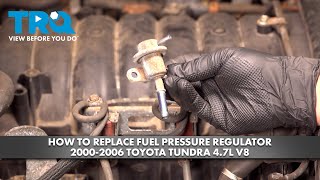
Typical fix: Replace the fuel pressure regulator. It is located on the passenger-side fuel rail, held by two 10mm bolts. 🎬 See this walkthrough for replacing the fuel pressure regulator.
Est. part cost: $50-$150 - Weak or Failing Fuel Pump 🟡 Medium Probability → Shop Fuel Pump The fuel pump is an electric motor inside the fuel tank that wears with age and mileage, leading to reduced pressure and volume. It's a common failure item on high-mileage trucks.
How to confirm: A fuel pressure test showing consistently low pressure that doesn't correct with a new regulator points to the pump. The pressure should hold steady after the engine is turned off; a rapid drop can indicate a bad check valve in the pump assembly. A definitive test involves checking for voltage at the pump connector (should be ~9.5V+ with key on) and listening for the pump to prime.
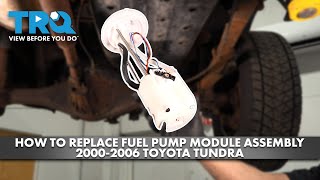
Typical fix: Replace the in-tank fuel pump assembly. This requires dropping the fuel tank for access, 🎬 Watch: Step-by-step guide to replacing the fuel pump assembly. which can be difficult if the tank is full or the strap bolts are rusted.
Est. part cost: $100-$300 - Clogged Fuel Filter 🟡 Medium Probability → Shop Fuel Filter The fuel filter is a maintenance item that is often overlooked. A clogged filter restricts fuel flow, causing low pressure under load, especially during acceleration or towing.
How to confirm: If fuel pressure is low, the filter is a common and inexpensive part to replace as a diagnostic step, especially if its service history is unknown. There is no easy way to test the filter itself; replacement is the most practical confirmation.
Typical fix: Replace the fuel filter. It is located on the driver's side frame rail.
Est. part cost: $20-$50
Rare But Worth Checking
- Leaking Fuel Injector: → Shop Fuel Injector A fuel injector stuck open can cause a drop in rail pressure, leading to a P0191. This would often be accompanied by a misfire code for the specific cylinder and a strong smell of raw fuel.
- Kinked or Clogged Fuel Line: → Shop Fuel Line Physical damage to a fuel line from road debris or a blockage from sediment can restrict flow and cause pressure issues. This is more common on vehicles that see off-road use.
- Faulty ECM: In extremely rare cases, the Engine Control Module itself can fail, but all other mechanical possibilities must be exhaustively ruled out first.
Diagnosis Steps
- Verify the code with a scanner. Note any other codes present, especially P0171/P0174 (lean) or P0172/P0175 (rich).
- Crucial Step: Connect a mechanical fuel pressure gauge to the service port on the fuel rail. 🎬 Watch: How to perform a fuel pressure test on your Tundra.
- Start the engine and observe the pressure at idle. It should be stable and within the manufacturer's specification (around 44 psi for this model).
- Disconnect the vacuum hose from the fuel pressure regulator. The fuel pressure should immediately rise. If it doesn't, the regulator is faulty. Also, check the vacuum port on the regulator for any signs of wet fuel, which indicates a ruptured diaphragm.
- Reconnect the vacuum hose. Briefly snap the throttle. The pressure should momentarily dip and then stabilize. Sluggish response can indicate a weak pump or clogged filter.
- If pressure is low, the next step is to replace the fuel filter, especially if its age is unknown. It is an inexpensive and common failure point.
- If pressure is still low after replacing the filter, the fuel pump is the primary suspect. Confirm by checking for voltage at the pump connector before committing to dropping the tank.
- If pressure is high and does not decrease to spec, the fuel pressure regulator is likely stuck and needs replacement.
- After any repairs, clear the codes and perform a test drive to ensure the issue is resolved. It's good practice to cycle the key a few times to prime the system and check for leaks before starting the engine.
Parts You'll Likely Need
- Fuel Pressure Regulator
(OEM #23280-50051)— This mechanical part is a very common failure point for causing incorrect fuel pressure, which directly triggers the P0191 performance code on this engine.
Trusted brands: Denso, Aisan, Beck/Arnley
OEM price range: $100-$180
Aftermarket price range: $50-$100 - Fuel Pump Assembly
(OEM #23221-50100 (pump motor only), full assembly part number varies by year/model.)— If fuel pressure is consistently low and the regulator/filter are good, the pump is the cause. It wears out over time.
Trusted brands: Denso, Aisin
OEM price range: $250-$400
Aftermarket price range: $100-$250 - Fuel Filter
(OEM #23300-50120)— A clogged filter is a common and inexpensive cause of low fuel pressure. It's often replaced as a first step in diagnosis.
Trusted brands: Denso, Wix, Toyota OEM
OEM price range: $30-$50
Aftermarket price range: $15-$30
Related Codes That Often Appear With This One
- P0171 — System Too Lean (Bank 1) - If fuel pressure is low, the engine will run lean, triggering this code.
- P0174 — System Too Lean (Bank 2) - If fuel pressure is low, the engine will run lean, triggering this code.
- P0172 — System Too Rich (Bank 1) - If the fuel pressure regulator fails and causes high pressure, the engine will run rich.
- P0175 — System Too Rich (Bank 2) - If the fuel pressure regulator fails and causes high pressure, the engine will run rich.
Platform-Specific Known Issues
- Owner Experience: Fuel Pump Failure and Replacement: → Shop Fuel Pump An owner on Tundras.com documented a complete no-start condition that did not initially throw a code but was caused by a failed fuel pump. The diagnostic process involved checking for voltage at the pump (~9.5V is normal) and confirming no fuel was being delivered. The repair required dropping a full 26-gallon tank, which is extremely heavy, highlighting the importance of running the tank near empty before attempting the job. The owner also noted the tank strap bolts were very rusty and required significant effort to remove.
Mechanic-Grade Diagnostic Values
- Fuel Pressure (KOEO or Idle) — expected: 38 - 44 psi (265 - 304 kPa). Failure: Pressure below 38 psi indicates a potential weak pump, clogged filter, or faulty regulator. Pressure above 44 psi points to a stuck regulator or kinked return line.
- Fuel Pressure Leak-Down Test — expected: Pressure must remain above 21 psi (147 kPa) for 5 minutes after shutting the engine off.. Failure: A rapid drop in pressure indicates a faulty check valve in the fuel pump assembly, a leaking fuel pressure regulator, or a leaking fuel injector.
- Fuel Pump Motor Resistance — expected: 0.2 - 3.0 Ω at 20°C (68°F). Failure: Resistance outside this range indicates a faulty fuel pump motor.
- Fuel Pump Resistor Resistance — expected: 0.70 - 0.76 Ω at 20°C (68°F). Failure: An open circuit (infinite resistance) or a reading significantly outside the specified range indicates a failed resistor. This will cause the fuel pump to run only in high-speed mode or not at all in low-speed mode.
Scan Tool Commands That Help
- Toyota Techstream: Active Test: Control the Fuel Pump/Speed — This is a primary diagnostic step to verify if the fuel pump and its circuit are functional without physically accessing the pump. It allows the technician to command the pump on to check for operation (listening for the hum) and to build pressure for a gauge test without starting the engine. The menu path on 2005+ models is DIAGNOSIS / ENHANCED OBD II / ACTIVE TEST / FUEL PUMP / SPD.
Wiring & Ground Locations
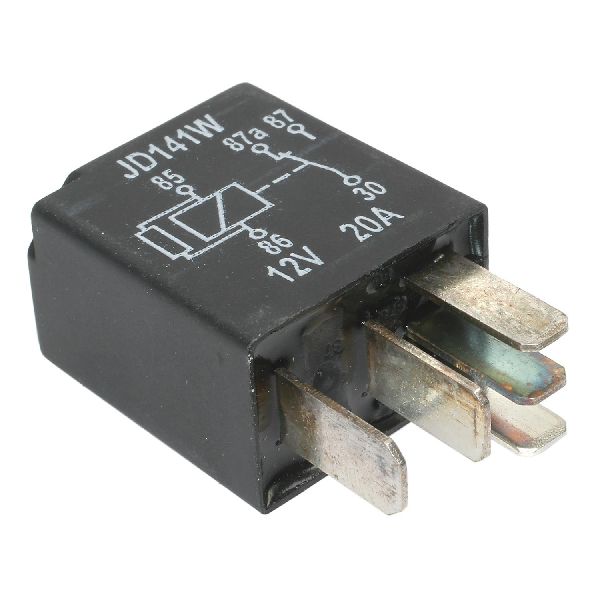
- C/OPN (Circuit Opening) Relay — Located in the under-hood fuse/relay box, typically on the driver's side.. This is the primary relay that powers the fuel pump. The ECM only provides a ground to activate this relay when it receives a signal from the crankshaft position sensor (engine cranking/running). A failure of this relay or its control circuit will result in a no-start or stalling condition.
- Fuel Pump Resistor — A separate component, often mounted to the frame rail in the engine bay.. This resistor is used by the fuel pump control circuit to run the pump at a lower speed during idle and light load conditions. If the resistor fails (open circuit), the pump may not run at low speed, causing hesitation or stalling. If it shorts, the pump may run at high speed constantly.
- EC / EW / EX Ground Points — EC: Rear of the left cylinder head. EW: Front left side of the cylinder head. EX: Left side of the cylinder block.. These are the primary ground points for the Engine Control Module (ECM) and various sensors. A corroded or loose ground here can cause erratic ECM behavior, including incorrect fuel calculations and faulty control of the fuel pump circuit, potentially triggering a P0191.
Real Owner Repair Stories
- TundraSolutions.com forum user (2000 Toyota Tundra 4.7L) — Intermittent rough running and no-start conditions. Fuel pressure was a steady 25 psi at idle and speed, far below spec.
❌ Tried (didn't work) The user confirmed the relay clicked, but pressure remained low.
✅ What actually fixed it The issue was traced to the two-speed fuel pump circuit. By jumping the fuel pump relay terminals, the user could force the pump into high-speed mode and achieve 35 psi (closer to spec), proving the pump itself was not completely dead but was stuck in low-speed operation. The final fix pointed towards a problem in the control side of the circuit, either the fuel pump resistor or the ECM's signal to switch to high speed. - NHTSA ODI #11722818 — While reported on a different model of the same make, this record describes a scenario where the vehicle hesitates and sputters upon acceleration, experiences a loss of power, and stalls during operation. In this case, trouble codes P0191, P0171, and P0174 were generated in combination, mirroring the lean-condition symptoms often seen on the Tundra.
Model Year Variations Within This Range
- 2005-2006: The 2UZ-FE engine was updated with VVT-i (Variable Valve Timing with intelligence). While the core return-style fuel system and lack of a pressure sensor remain the same, the ECM, wiring harnesses, and some sensor inputs are different. The fuel pressure specification of 38-44 psi is consistent across the generation, but diagnostic procedures using a scan tool like Techstream may have slightly different menu paths.
Diagnostic Flowchart
Other Known Issues on This Vehicle
Issues unrelated to this code that are worth knowing about as an owner of this generation:
- Frame Rust/Corrosion 🔴 High — Very common, especially in 'rust belt' states. Affects 2000-2003 models most severely, leading to a recall and a Limited Service Campaign (LSC). The frame could rust to the point of perforation, potentially causing the spare tire to detach or affecting brake line integrity. (Ref: Safety Recall and LSC for 2000-2003 models.)
- Lower Ball Joint Failure 🔴 High — A well-documented failure point across the entire first generation. Premature wear can lead to catastrophic failure where the wheel separates from the vehicle. A recall was issued for 2004-2006 models, but earlier models with the same part design were also affected. Many owners perform preventative replacement around 100,000 miles. (Ref: NHTSA Campaign ID: 07V013000 (for 2004-2006 models).)
- Cracked Exhaust Manifolds 🟠 Medium — Extremely common across all 2UZ-FE equipped vehicles. Owners report a distinct 'ticking' sound, especially when the engine is cold, which may disappear as the metal expands with heat. The thin, tubular design required for emissions standards is prone to cracking near the welds.
- Secondary Air Injection System (SAIS) Failure 🟠 Medium — Common on later models of this generation (and especially the next generation). The air pump or switching valves fail, often due to moisture intrusion, triggering a Check Engine Light (codes like P2440, P2441, P2442, P2445) and putting the truck in 'limp mode'. The failure is often characterized by a loud 'vacuum cleaner' noise on cold starts. (Ref: An extended warranty program existed for some model years, but not all. Many owners opt for aftermarket bypass kits.)
Used vs. New Parts: Buying Guide for This Vehicle
When a used part is the smart pick: Used parts are generally not recommended for fixing a P0191 code due to the critical nature of the fuel system. The only exceptions might be purely mechanical, non-wear items like mounting brackets or a fuel filler neck if damaged.
Donor-vehicle mileage cap: roughly under 50000 miles for the part to have meaningful remaining life.
What to inspect on the donor part:
- For a fuel pressure regulator, avoid any parts with visible corrosion or from a vehicle with high mileage.
- Never buy a used fuel pump; the labor to replace it is too high to risk a premature failure.
OEM-only on this vehicle (don't cheap out):
- Fuel Pump Assembly: The labor involved in dropping the fuel tank makes it critical to use a high-quality part to ensure longevity. OEM (Toyota) or the original supplier (Denso, Aisin) are strongly recommended.
- Fuel Pressure Regulator: While some aftermarket versions exist, the OEM-supplier part (Denso/Aisan) is known to be reliable and is not significantly more expensive.
Aftermarket brands forum-validated for this vehicle:
- Denso (often the OEM supplier)
- Aisin (often the OEM supplier)
Brands owners have reported issues with on this vehicle:
- Unbranded, 'white-box' or generic parts-store-brand fuel pumps and regulators. Forum consensus indicates these have a high failure rate on this platform.
Real Owner Stories
Aggregated from forums and TSBs cited above. Mileages and costs reflect what owners reported in those sources.
2000-2006 Toyota Tundra 4.7L V8
Symptoms: The vehicle experienced a complete no-start condition. Although it did not initially throw a code, the engine would crank but not deliver fuel.
What fixed it: Replacement of the in-tank fuel pump assembly. The repair involved checking for ~9.5V at the pump connector and dropping a heavy, full 26-gallon fuel tank with rusty strap bolts.
Source hint: https://www.tundras.com/threads/my-fuel-pump-diagnostic-and-repair-thread.106333/ - A detailed, first-hand account of diagnosing and replacing a failed fuel pump on a 1st Gen Tundra
NHTSA Reported Incident
Symptoms: An owner reported that the vehicle hesitates and sputters upon acceleration, suffers from a loss of power, and stalls during operation. Diagnostic scanning revealed trouble codes P0191, P0171, and P0174.
What fixed it: While the specific repair was not detailed in the report, these combined codes typically point to a significant fuel delivery failure such as a weak pump or restricted flow.
Source hint: NHTSA ODI #11722818
Related OBD-II Codes
Frequently Asked Questions
Where is the fuel pressure regulator located on my 4.7L V8 Tundra?
Is there a recall for the lower ball joints on my 2004-2006 Tundra?
My 2000 Tundra has severe frame rust; is there a program to fix this?
Where can I find the fuel filter on my first-generation Tundra?
What is the correct fuel pressure specification for the 2UZ-FE engine when testing P0191?
Why does my Tundra make a ticking sound when cold that goes away later?
Helpful Videos
We Have This Part in Stock


The information in this article is provided for general reference and educational purposes only. Vehicle specifications, procedures, and part compatibility can vary by production date, trim level, and region. Always consult your vehicle's factory service manual and verify part numbers before purchasing or performing repairs. Safety-critical components such as airbags, seat belts, and braking systems should be installed by a qualified professional.
- Toyota Tundra:
- 🧭 Diagnostic Flowchart
- 🎬 Helpful Videos
- 🛍️ Shop This Part
- What's Unique About the 2000-2006 Toyota Tundra
- Symptoms You May Notice
- Most Likely Causes
- Rare But Worth Checking
- Diagnosis Steps
- Parts You'll Likely Need
- Related Codes That Often Appear With This One
- Platform-Specific Known Issues
- Mechanic-Grade Diagnostic Values
- Scan Tool Commands That Help
- Wiring & Ground Locations
- Real Owner Repair Stories
- Model Year Variations Within This Range
- Other Known Issues on This Vehicle
- Used vs. New Parts: Buying Guide for This Vehicle
- Real Owner Stories
- 2000-2006 Toyota Tundra 4.7L V8
- NHTSA Reported Incident
- Related OBD-II Codes
- Frequently Asked Questions
- 🎟️ Get 5% Off