

P0192 on 2012-2018 Ford Focus 2.0L EcoBoost: Low Fuel Pressure Sensor Circuit Causes and Fixes
On the 2.0L EcoBoost Focus, P0192 is almost always caused by a damaged wiring harness rubbing against the intake manifold or a failed low-pressure fuel sensor. Before buying parts, carefully inspect the wiring harness for chafing near the sensor, specifically where it loops around a sharp edge on the back of the intake manifold.
- P0192 on a 2012-2018 Focus 2.0L almost always points to the low-pressure fuel sensor circuit.
- The most common cause is a damaged wiring harness rubbing against the intake manifold. Inspect this thoroughly before replacing any parts.
- If the wiring is good, the next most likely cause is a failed low-pressure fuel sensor (Motorcraft CM-5229).
- If the connector is damaged, the replacement pigtail is Motorcraft WPT-1051.
What's Unique About the 2012-2018 Ford Focus
The 2.0L GDI (Gasoline Direct Injection) engine in this generation of Ford Focus has both a low-pressure and a high-pressure fuel system. While many codes point to the high-pressure side, P0192 is most commonly associated with the low-pressure sensor. A well-documented and extremely common issue on this platform is the wiring harness for this sensor being routed too tightly from the factory. The harness rubs against a sharp plastic edge on the intake manifold where a mounting barb is located, eventually chafing through the insulation and severing the 5-volt reference wire (typically a gray wire). This specific failure mode is the number one cause of P0192 on these vehicles.
Symptoms You May Notice
- Check Engine Light is on
- Engine is hard to start or has a very long crank time
- Engine will not start at all
- Stalling, especially at idle or low speeds
- Hesitation or lack of power during acceleration
- Rough or uneven idle
- Reduced fuel economy
- Scan tool shows fuel rail pressure at or near 0 PSI, even when the pump is running
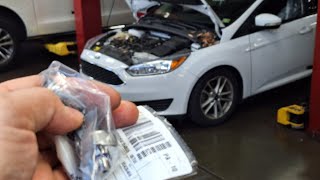
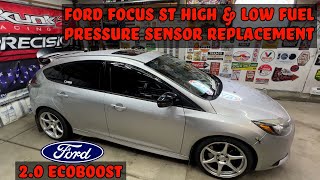
- Replacing the high-pressure fuel pump 🎬 Watch: Comparing high and low pressure sensor locations. (HPFP) before checking the low-pressure sensor and its wiring.
- Replacing the in-tank fuel pump without diagnosing the sensor circuit first.
- Mistaking symptoms of a faulty canister purge valve (related to Ford recall 18S32) for a fuel pressure sensor issue. A bad purge valve can cause a vacuum in the fuel tank, leading to fuel starvation and stalling.
Most Likely Causes
- Chafed/Damaged Sensor Wiring Harness Very High Probability The factory routing of the wiring harness for the low-pressure fuel sensor places it against a sharp edge of the intake manifold, leading to chafing and eventual wire failure.
How to confirm: Visually inspect the wiring harness where it loops around the rear of the intake manifold near the sensor. Pull up slightly on the harness loom. Look for rub marks, 'green crusties' (copper corrosion), or completely severed wires, particularly the gray 5-volt reference wire. The chafe point is often hidden right at a sharp corner where a plastic barb holds the harness to the manifold.
Typical fix: Repair the damaged section of the wire(s) using solder and heat-shrink tubing. Ensure all broken strands are reconnected. After repair, reroute the harness slightly or add protective conduit to prevent it from rubbing in the same spot again.
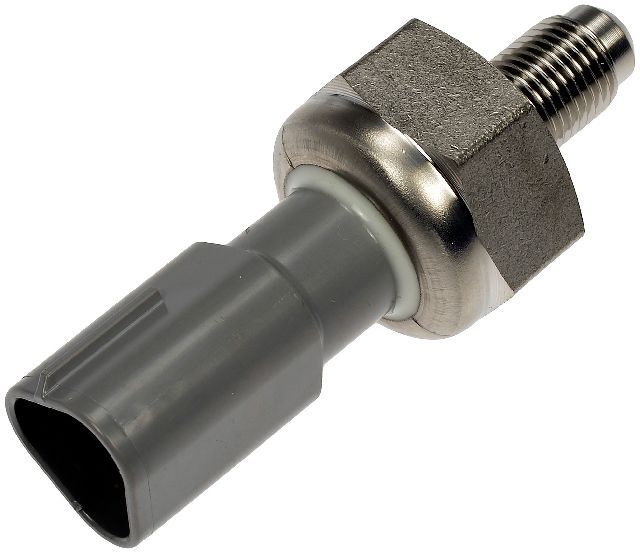
Est. part cost: $5-$15 - Faulty Low-Pressure Fuel Sensor 🔴 High Probability → Shop Fuel Pressure Sensor The sensor itself is a common failure point after years of service and exposure to heat and fuel. It is a shared part across many Ford models.
How to confirm: If the wiring and its connector are confirmed to be in perfect condition with proper voltage (5V reference, ground, and signal), the sensor is the likely culprit. Checking for raw fuel in the vacuum line (if equipped) can also indicate an internal sensor failure.
Typical fix: Replace the low-pressure fuel sensor. This requires depressurizing the fuel system first. 🎬 See this walkthrough for replacing the low-pressure fuel sensor. Using an OEM Motorcraft or Bosch sensor is highly recommended, as some aftermarket sensors have been reported to not resolve the issue.
Est. part cost: $60-$120 - Damaged or Corroded Electrical Connector 🟡 Medium Probability The connector is exposed to engine heat and moisture, which can degrade the plastic and pins over time.
How to confirm: Unplug the sensor and inspect the connector pins and the sensor's pins for corrosion (green or white powder), moisture, or physical damage. Ensure the connector clicks securely into place.
Typical fix: Clean the connector terminals with electrical contact cleaner. If the connector housing is cracked or the terminals are too corroded, replace it with a new pigtail connector (Motorcraft WPT-1051).
Est. part cost: $25-$45 - Faulty Powertrain Control Module (PCM) ⚪ Low Probability → Shop Engine Control Module (ECM)
How to confirm: This is a last resort. All other possibilities, including the entire wiring circuit (sensor to PCM) and the sensor itself, must be definitively ruled out by a professional before condemning the PCM.
Typical fix: Replace and reprogram the PCM.
Est. part cost: $400-$800
Rare But Worth Checking
- Blown Fuse:
Diagnosis Steps
- Scan the vehicle for all OBD-II codes. Expect to see P0192 and likely P00C6 together.
- THE MOST IMPORTANT STEP: Visually inspect the low-pressure fuel sensor wiring harness. The sensor is on the fuel rail under the intake manifold. Locate where the harness loops around and is secured to the back of the intake manifold. Pull gently on the loom and inspect the sharp corner for chafing, exposed wires, or green corrosion. This is the most common point of failure.
- If damage is found, repair the wires. If no damage is visible, proceed to the next step.
- With the key on (engine off), unplug the sensor and use a multimeter to test the electrical connector. You should find: a 5-volt reference wire (often gray), a ground wire, and a signal wire. A reading of 0V or millivolts on the 5V reference pin strongly confirms the common wiring chafe issue.
- If the connector itself is corroded or damaged, it should be replaced with a pigtail (Motorcraft WPT-1051).
- If the wiring provides correct voltages and is physically intact, the low-pressure fuel sensor itself is the most likely cause of the problem.
- Before replacing parts, check for any Technical Service Bulletins (TSBs) or recalls that may apply to your vehicle's VIN, such as the canister purge valve recall (18S32), as its symptoms can overlap.
Parts You'll Likely Need
- Low-Pressure Fuel Sensor
(OEM #3F2Z9G756AC)— This sensor is a common failure item and is the primary component related to the P0192 code when wiring is not the issue.
Trusted brands: Motorcraft (CM-5229), Bosch (0261230093) - OEM Manufacturer
OEM price range: $80-$120
Aftermarket price range: $40-$75 - Low-Pressure Fuel Sensor Connector Pigtail
(OEM #WPT-1051)— Needed if the original connector is damaged, corroded, or melted, or if a technician prefers to replace it during a wiring repair.
Trusted brands: Motorcraft
OEM price range: $25-$45
Aftermarket price range: $15-$30
Related Codes That Often Appear With This One
- P00C6 — P00C6 (Fuel Rail Pressure Too Low - Engine Cranking) is almost always triggered alongside P0192. When the 5V reference wire to the sensor is broken, the PCM reads 0 volts, which it interprets as 0 PSI of fuel pressure during cranking, setting both codes simultaneously. 🎬 Watch: How to find and fix the common wiring chafe.
- P0087 — P0087 (Fuel Rail/System Pressure - Too Low) can also appear, as the low voltage signal from the sensor is interpreted by the PCM as a critical loss of pressure.
Technical Service Bulletins (TSBs) & Recalls
- While there is no specific TSB from Ford for this common P0192 wiring failure, the issue is widely documented by independent mechanics and in owner forums. The repair is a standard wiring harness procedure.
Platform-Specific Known Issues
- A frequent and well-documented point of failure is the wiring harness for the low-pressure fuel sensor, which is known to chafe against a sharp edge on the rear of the intake manifold, causing a short or open in the 5-volt reference circuit.
Mechanic-Grade Diagnostic Values
- 5-Volt Reference Wire Voltage at Sensor Connector (KOEO) — expected: ~5.0 Volts. Failure: A reading near zero, such as 90 millivolts (0.09V), indicates an open or short in the reference circuit, most likely from the common harness chafe.
- Signal Wire Voltage at Sensor Connector (Engine Idling) — expected: Approximately 1.0 Volt.. Failure: A reading below 0.5V, often near zero, will trigger the P0192 code.
- Scan Tool Fuel Rail Pressure Sensor Voltage PID (Engine Idling) — expected: Should match the multimeter reading at the signal wire, approximately 1.0V.. Failure: Reading at or near 0V, while desired and actual pressure PIDs may also read 0 or show a discrepancy.
Scan Tool Commands That Help
- Ford IDS (Integrated Diagnostic Software): Datalogger for Fuel System PIDs — Use this to simultaneously graph 'Desired Fuel Pressure', 'Actual Fuel Pressure', and 'Fuel Pressure Sensor Voltage'. This allows you to see if the sensor voltage is dropping out, causing the fault, or if actual pressure is truly low.
- Ford IDS (or equivalent high-level scan tool): Fuel Pump Command (On/Off) — After confirming the wiring is intact, this bidirectional control allows you to command the low-pressure fuel pump on while monitoring the sensor voltage PID. If the pump runs and voltage does not respond, it points towards a faulty sensor.
- Ford IDS: Power Balance Test — While not a direct test for P0192, if the engine is running rough, this test can help rule out injector or ignition issues by showing the contribution of each cylinder, confirming the problem is likely fuel-supply related.
Wiring & Ground Locations
- Low-Pressure Fuel Sensor Connector — On the low-pressure fuel line, located underneath the intake manifold.. This is the primary connection point for testing. The pins for the 5V reference, signal, and ground must be checked here for correct voltage and continuity.
- Harness Chafe Point — Where the sensor wiring harness is secured by a plastic barb to a sharp corner on the rear of the intake manifold.. This is the number one failure point for this code on this vehicle. The harness rubs through, severing the 5V reference (Gray) wire and causing a P0192.
- Sensor Connector Pinout — At the sensor connector.. Knowing the wire functions is critical for testing. For the 2.0L GDI, the typical wire colors are: Gray (5V Reference), Blue/Brown (Signal Output to PCM), and a third wire for Ground.
Real Owner Repair Stories
- YouTube channel 'Busted to Built' (2013 Ford Focus, 120,000 miles) — No start or very long crank time, would die often, no power. Codes P0192 and P00C6 were present. Scan tool showed 0 PSI actual fuel pressure.
❌ Tried (didn't work) The technician went directly to electrical diagnosis based on the codes, so no parts were unnecessarily replaced.
✅ What actually fixed it The technician located the common chafe point on the intake manifold and found the gray 5-volt reference wire was completely severed, with other wires in the loom also damaged. The wires were repaired with solder and heat shrink, and the harness was rerouted to prevent future rubbing. This completely resolved the codes and drivability issues.
OEM Part Supersession History
3F2Z-9G756-AC→DS7Z-9F792-A, DS7Z-9F792-B, or DS7Z-9F792-C are common service replacements. The Motorcraft service part is CM-5229.— Standard part updates and revisions over time. The sensor is used on a wide variety of Ford vehicles.
Heads up: While multiple part numbers exist, the core sensor (Bosch 0261230093) is often the same. It is critical to use a high-quality OEM or OEM-supplier part, as aftermarket versions are known to cause persistent issues.
Model Year Variations Within This Range
- 2012-2018: The core issue of the wiring harness chafing and the function of the low-pressure fuel system are consistent across the 2012-2018 model years for the 2.0L GDI engine, including the 2015 facelift models. The canister purge valve recall (18S32) also covers the entire generation, indicating system similarity.
Diagnostic Flowchart
Used vs. New Parts: Buying Guide for This Vehicle
When a used part is the smart pick: A used wiring harness pigtail from a salvage yard is a cost-effective option if the original connector is damaged. It provides OEM-grade wire and terminals for a proper repair.
Donor-vehicle mileage cap: roughly under 100000 miles for the part to have meaningful remaining life.
What to inspect on the donor part:
- Inspect the connector for any cracks, melting, or brittle plastic.
- Check the pins for any signs of green or white corrosion.
- Ensure there is at least 6-8 inches of wire attached to the pigtail for ease of splicing.
- Avoid harnesses that appear to have been previously repaired or damaged.
OEM-only on this vehicle (don't cheap out):
- Low-Pressure Fuel Sensor
Aftermarket brands forum-validated for this vehicle:
- Bosch (OEM manufacturer for this part)
Brands owners have reported issues with on this vehicle:
- Unbranded, generic sensors from online marketplaces are frequently reported on forums as not working correctly or failing prematurely.
Real Owner Stories
Aggregated from forums and TSBs cited above. Mileages and costs reflect what owners reported in those sources.
Ford Focus ST — 36100 miles
Symptoms: Experienced a hard idle, misfiring around 2500 rpm, and a jerking or momentary power cut during acceleration. The check engine light was on with codes P0192, P0300, and P0088.
What fixed it: The owner did not report the final fix in the source.
Source hint: Reddit r/FocusST
2013 Ford Focus
Symptoms: Vehicle had low fuel rail pressure codes P0192 and P00C6, causing a no-start or hard-start condition.
What fixed it: The problem was a chafed and completely severed gray 5-volt reference wire for the low-pressure fuel sensor. The wire was repaired at the sharp corner of the intake manifold where it had rubbed through.
Source hint: YouTube - Busted to Built: '2013 Ford Focus LOW FUEL RAIL PRESSURE P0192 P00C6 FIXED!'
Ford Focus ST
Symptoms: The owner had persistent P0192 and P018C codes even after replacing both the high and low pressure fuel sensors with aftermarket parts.
What fixed it: The issue was not resolved by the original poster, but another user strongly advised that using genuine OEM (Motorcraft/Bosch) sensors is critical, as aftermarket electronics are a known cause of persistent issues for this fault.
Source hint: Reddit (r/FocusST) - 'P018C & P0192'
Related OBD-II Codes
Frequently Asked Questions
On my 2012-2018 Focus, where exactly is the wiring harness that chafes and causes code P0192?
What is the part number for the replacement connector pigtail if mine is corroded?
I replaced the low-pressure fuel sensor with an aftermarket part, but the P0192 code is still on. Why?
Is there an official Ford TSB for this common P0192 wiring problem?
My scan tool shows 0 PSI for fuel rail pressure, but the engine tries to start. Is my fuel pump bad?
Could the canister purge valve recall (18S32) be related to my P0192 code?
Helpful Videos

We Have This Part in Stock


The information in this article is provided for general reference and educational purposes only. Vehicle specifications, procedures, and part compatibility can vary by production date, trim level, and region. Always consult your vehicle's factory service manual and verify part numbers before purchasing or performing repairs. Safety-critical components such as airbags, seat belts, and braking systems should be installed by a qualified professional.
- Ford Focus:
- 🧭 Diagnostic Flowchart
- 🎬 Helpful Videos
- 🛍️ Shop This Part
- What's Unique About the 2012-2018 Ford Focus
- Symptoms You May Notice
- Most Likely Causes
- Rare But Worth Checking
- Diagnosis Steps
- Parts You'll Likely Need
- Related Codes That Often Appear With This One
- Technical Service Bulletins (TSBs) & Recalls
- Platform-Specific Known Issues
- Mechanic-Grade Diagnostic Values
- Scan Tool Commands That Help
- Wiring & Ground Locations
- Real Owner Repair Stories
- OEM Part Supersession History
- Model Year Variations Within This Range
- Used vs. New Parts: Buying Guide for This Vehicle
- Real Owner Stories
- Ford Focus ST — 36100 miles
- 2013 Ford Focus
- Ford Focus ST
- Related OBD-II Codes
- Frequently Asked Questions
- 🎟️ Get 5% Off