

P0192 Hyundai Sonata (2006-2020): Fuel Rail Pressure Sensor Low Input Causes & Fixes
For a 2006-2020 Hyundai Sonata, code P0192 most often points to a faulty Fuel Rail Pressure Sensor (FRPS) or its wiring. On 2011+ GDI models, a failing High-Pressure Fuel Pump (HPFP) is also a very common cause. Expect to pay $50-$150 for a new sensor; the HPFP is significantly more expensive, often $400+ for the part alone.
- P0192 means the fuel rail pressure sensor circuit is reading low voltage.
- First, diagnose the electrical circuit: check the sensor's connector, wiring, and voltage signals before replacing any parts.
- On 2011+ GDI models, if the electrical circuit is good, the High-Pressure Fuel Pump (HPFP) is a strong suspect.
- On 2006-2010 MPI models, if the circuit is good, focus on the in-tank fuel pump.
- Check your vehicle's VIN for open recalls related to fuel lines, as a leak can cause this code.
What's Unique About the 2006-2020 Hyundai Sonata
The 2006-2020 Sonata spans two different fuel system designs. The 2006-2010 (NF generation) models use a simpler Multi-Port Fuel Injection (MPI) system with a single in-tank fuel pump. Starting in 2011 (YF generation), Hyundai transitioned to Gasoline Direct Injection (GDI) with the Theta II engine. GDI systems use both a low-pressure in-tank pump and a high-pressure fuel pump (HPFP) mounted on the engine, driven by the camshaft. This makes GDI-equipped Sonatas (2011-2020) susceptible to HPFP failures and high-pressure fuel line leaks, which are common causes for fuel pressure codes that do not affect the earlier MPI models.
Generation note: This guide covers the NF (2006-2010), YF (2011-2014), LF (2015-2019), and the first year of the DN8 (2020) generations. The most significant difference is the fuel system: NF models have MPI engines, while YF, LF, and DN8 models primarily use GDI engines. Causes like a failed High-Pressure Fuel Pump only apply to the GDI models (2011 and newer).
Symptoms You May Notice
- Check Engine Light is on
- Engine is hard to start or requires long cranking (especially after sitting overnight).
- Hesitation or stumbling during acceleration, sometimes described as sputtering between 2,000-4,000 RPM.
- Loss of engine power and poor performance.
- Rough idle.
- Engine may stall unexpectedly, especially at low speeds or when coming to a stop.
- Decreased fuel economy.
- Replacing the fuel pump without first testing the fuel rail pressure sensor and its circuit. The code specifically points to a 'circuit low' condition, which is often electrical in nature (the sensor or wiring) rather than a mechanical pump failure.
Most Likely Causes
- Faulty Fuel Rail Pressure Sensor (FRPS) 🔴 High Probability → Shop Fuel Pressure Sensor The sensor itself is a common failure point across all model years. It operates in a high-stress environment and can fail electrically, providing a signal below the 0.25V threshold, or become contaminated.
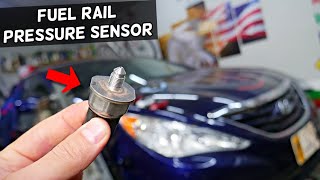
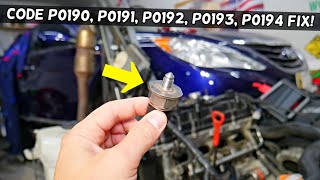
How to confirm: With a scan tool, check the fuel rail pressure reading with the Key On, Engine Off (KOEO). If it reads near zero, a default value, or a static low number that doesn't change, and testing shows the wiring is good 🎬 Watch: How to test a fuel pressure sensor the right way., the sensor has likely failed. On GDI engines, the sensor is located on the high-pressure fuel rail, often requiring intake manifold removal 🎬 See this walkthrough for sensor location and removal. for access.
Typical fix: Replace the fuel rail pressure sensor.
Est. part cost: $50-$150 - Wiring or Connector Issue 🟡 Medium Probability Engine vibration and heat can cause wires in the harness to chafe, break, or connectors to become loose or corroded over time. This can create a short-to-ground or an open circuit, resulting in a low voltage signal.
How to confirm: Visually inspect the wiring harness and connector going to the FRPS for any signs of damage, melting, or corrosion. Use a multimeter to check for the 5-volt reference from the PCM, a good ground, and continuity on the signal wire back to the ECM. Owners often find issues right at the connector from people pulling on wires to disconnect it.
Typical fix: Repair the damaged section of the wiring harness or clean/replace the connector.
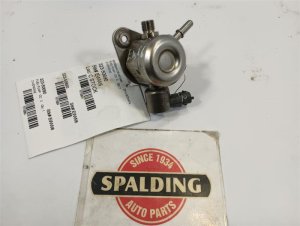
Est. part cost: $5-$50 - Failing High-Pressure Fuel Pump (HPFP) 🟡 Medium Probability → Shop Fuel Pump This applies only to 2011-2020 GDI models. The HPFP is a known weak point on many Hyundai/Kia GDI engines. The internal plunger (cam follower) can wear out, leading to a rattling noise and a failure to produce adequate pressure. This is a very common failure item around 100,000-150,000 miles.
How to confirm: This is difficult to confirm without a capable scan tool. Monitor desired vs. actual fuel rail pressure; a large discrepancy where actual pressure is much lower than desired under load points to a pump issue. A YouTube user with a 2012 Sonata documented symptoms like long cranks, hesitation, and a 25% drop in MPG before replacing the HPFP, which solved the issue.
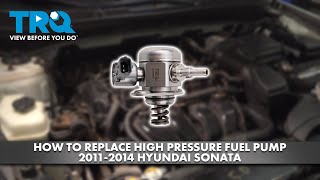
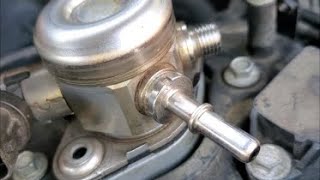
Typical fix: Replace the high-pressure fuel pump. 🎬 Watch: Step-by-step high-pressure fuel pump replacement guide. Several recalls and warranty extensions have been issued for related fuel system components.
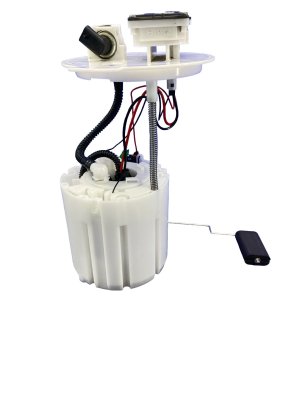
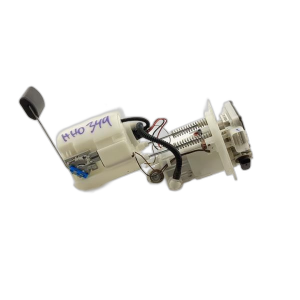
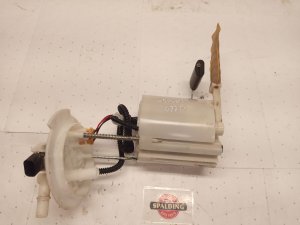
Est. part cost: $400-$800 - Weak Low-Pressure Fuel Pump or Clogged Fuel Filter ⚪ Low Probability → Shop Fuel Filter The in-tank fuel pump supplies fuel to the engine (and to the HPFP on GDI models). If it weakens with age or the integrated filter becomes clogged, it can't supply enough volume, starving the HPFP and leading to low pressure at the rail.
How to confirm: Test the fuel pressure from the in-tank pump at the engine bay (before the HPFP on GDI models). The pressure should meet the manufacturer's specification for the low-pressure side (typically 40-75 PSI).
Typical fix: Replace the in-tank fuel pump assembly, which typically includes a new filter.
Est. part cost: $150-$300
Rare But Worth Checking
- Leaking High-Pressure Fuel Line: Hyundai has issued recalls (like Campaign 189 for 2013-14 Sonatas) for fuel lines that can crack and leak due to engine bay heat. A fuel leak will cause a loss of pressure and trigger this code, along with a dangerous fire risk. Recall 227 was later issued for vehicles that may have missed the first recall fix.
- Failed Powertrain Control Module (PCM): → Shop Engine Control Module (ECM) This is very rare, but the PCM can fail internally and misinterpret the sensor's signal or fail to provide the 5V reference voltage. This should only be considered after all other possibilities, especially wiring, have been exhaustively ruled out.
- Melted Fuel Pump Housing Connector: → Shop Fuel Pump A user on a Hyundai forum reported an issue where the connector board for the low-pressure fuel pump had melted, causing intermittent fuel pump operation and eventual failure. This is a rare electrical failure point to consider.
Diagnosis Steps
- Connect an OBD-II scanner and confirm P0192 is present. Check for any other related codes like P0087 or P0191.
- Observe live data for 'Fuel Rail Pressure'. With the key on and engine off (KOEO), the reading should be a baseline value, not zero. If it's zero or stuck at a default low value, suspect a sensor or wiring issue.
- Turn the vehicle off and locate the Fuel Rail Pressure Sensor (FRPS). On GDI engines, this is on the metal fuel rail on top of the engine. Access may require removing the plastic engine cover and sometimes the intake manifold.
- Inspect the sensor's electrical connector and wiring for any visible damage, corrosion, loose pins, or signs of heat stress.
- Using a multimeter and a wiring diagram, probe the connector (with it disconnected and key on). You should find a 5-volt reference wire, a ground wire (near 0 ohms to chassis ground), and a signal wire.
- If 5V reference or ground is missing, trace the wiring back toward the PCM to find the open or short. Check related fuses. If voltage and ground are correct, the issue is likely the sensor itself.
- If the sensor and circuit test good, the problem is likely mechanical (actual low pressure). The next step is to diagnose the fuel delivery system. For GDI models, this means testing the High-Pressure Fuel Pump (HPFP) output against desired pressure on the scan tool, followed by testing the low-pressure in-tank pump.
- Check for any applicable recalls or TSBs for your specific VIN. Key recalls include 180 (high-pressure pipe), 189 (low-pressure feed line), and 227 (follow-up to 189).
Parts You'll Likely Need
- Fuel Rail Pressure Sensor
(OEM #35340-2G710)— This is the most common electrical failure point for this code. It directly measures the pressure and sends the signal the ECM is reporting as faulty. Part number 35340-2G710 fits many 2010-2015 Sonata, Santa Fe, and Tucson models.
Trusted brands: Hyundai (Genuine), Bosch, Standard Motor Products
OEM price range: $120-$180
Aftermarket price range: $50-$100 - High-Pressure Fuel Pump (GDI Engines)
(OEM #35320-2G720 (for YF, ~2011-2014), 35320-2GGA0 (for LF, ~2015-2019), 35320-2S000 (for DN8, ~2020+))— For 2011+ GDI models, this pump is a frequent cause of low fuel pressure when it fails mechanically. It is responsible for creating the high pressure needed for direct injection.
Trusted brands: Hyundai (Genuine), Bosch, A-Premium
OEM price range: $500-$800
Aftermarket price range: $350-$600
Related Codes That Often Appear With This One
- P0087 — P0087 is 'Fuel Rail/System Pressure - Too Low'. While P0192 points to a circuit fault, P0087 points to an actual low-pressure condition. They often appear together when a failing HPFP or a significant leak causes both a low voltage reading and a confirmed low-pressure state.
- P0191 — P0191 is 'Fuel Rail Pressure Sensor Circuit Range/Performance'. This code may appear alongside P0192 if the sensor's signal is erratic or intermittent, dropping in and out of the expected range rather than staying consistently low.
Technical Service Bulletins (TSBs) & Recalls
- 20-01-030H (Recall 189): Fuel tube inspection/replacement on 2013-2014 Sonata.
- 19-01-001H (Recall 180): High-pressure fuel pipe inspection/replacement on 2011-2018 Sonata.
- 22-FL-002H (and superseding TSBs): While for misfire codes (P030x), this TSB addresses internally leaking GDI injectors on 2.5L GDI engines (including 2020+ Sonata), which can affect fuel pressure.
Platform-Specific Known Issues
- Recall Campaign 189 (TSB 20-01-030H): Affects certain 2013-2014 Sonatas. The fuel feed line from the low-pressure pump to the HPFP can crack due to engine heat, causing a fuel leak and low pressure.
- Recall Campaign 180 (TSB 19-01-001H): Affects 2011-2018 Sonatas. The high-pressure fuel pipe
Mechanic-Grade Diagnostic Values
- Fuel Rail Pressure Sensor (FRPS) Signal Voltage — expected: Typically 0.5V to 1.0V at idle.. Failure: The P0192 code is set when voltage is less than 0.254V for more than 0.2 seconds.
- Low-Pressure Fuel Pump Pressure (GDI Models, pre-HPFP) — expected: A 2011 Sonata service manual specifies 69.6 - 75.4 psi (480 - 520 kPa) at idle. Another source indicates a wider range of 64.5 - 66.0 psi (445 - 455 kPa). A significant drop after engine shutoff indicates a leak or faulty check valve.. Failure: Pressure significantly below the specified range indicates a weak in-tank pump or clogged filter, which can starve the HPFP.
- High-Pressure Fuel System Pressure (GDI Models) — expected: Varies widely with engine load, from approximately 290 PSI at idle to over 2,000 PSI under load. A Hyundai TSB notes the range is 290 - 3,626 PSI. A user with a 2017 Sonata reported 89-90 PSI at idle when faulty, which is far too low.. Failure: Scan tool data showing 'Actual' fuel rail pressure failing to meet or follow the 'Desired' pressure, especially under acceleration, points to a failing HPFP.
- FRPS Wiring Harness Continuity — expected: Resistance should be less than 1.0 Ω on the signal, power, and ground wires between the sensor connector and the PCM.. Failure: High resistance (O.L. or >1.0 Ω) indicates a break in the wire. Wiggling the harness during testing can help find intermittent breaks.
Scan Tool Commands That Help
- Hyundai GDS (or equivalent advanced scanner): Component Change Routine — This procedure must be performed after replacing the Fuel Rail Pressure Sensor (RPS) on some models. Failure to complete this routine can lead to incorrect performance and fuel trim issues as the ECM needs to learn the values of the new component.
- Hyundai GDS (or equivalent advanced scanner): Flight Record / Data Analysis — For intermittent faults, the 'Flight Record' function allows the technician to capture data during a test drive when the symptom occurs. This is invaluable for diagnosing issues that don't happen in the service bay, like hesitation under specific load conditions.
- Hyundai GDS (or equivalent advanced scanner): Actuator Test (e.g., Fuel Pump Relay) — Allows the technician to command the low-pressure fuel pump on and off to verify the relay, wiring, and pump motor are functional, helping to isolate a low-pressure supply problem.
Wiring & Ground Locations
- Fuel Rail Pressure Sensor Connector — On the end of the metal fuel rail, typically on the driver's side of the engine for GDI models. It is a 3-pin connector.. This is the primary connection point to test for 5V reference, ground, and the signal wire. Damage or corrosion here is a common cause of P0192.
- Ground Point GE02 — A wiring diagram for a 2012 Sonata shows a ground point 'GE02' located on the left front of the engine compartment.. The PCM and its related sensors rely on clean ground connections. A corroded or loose GE02 ground could potentially cause erratic sensor readings, including a low voltage signal from the FRPS.
- PCM Connector — The PCM is located on the left side of the engine compartment on 2012 Sonata models.. This is the termination point for the FRPS wiring. A continuity test from the sensor connector to the corresponding pins on the PCM connector is the definitive way to confirm the wiring harness is intact.
Real Owner Repair Stories
- Reddit user in /r/mechanic (2017 Hyundai Sonata 2.4 GDI) — Code P0087 (Fuel Rail Pressure Too Low), long crank time (took a few seconds to start), hesitation/sputtering when going up a hill.
❌ Tried (didn't work) Initial diagnosis pointed towards a fuel pressure issue. The user was confirming the likely cause before proceeding.
✅ What actually fixed it The user observed fuel rail pressure at idle was only 89-90 PSI via a scanner. This is extremely low for a GDI system at idle. The consensus and evidence strongly pointed to a failing High-Pressure Fuel Pump (HPFP), which is the correct fix for these symptoms when actual pressure is confirmed to be low.
OEM Part Supersession History
35320-2G720→35320-2G730, 35320-2G740— Part revision and improvement by the manufacturer.
Heads up: The newer part numbers (35320-2G730, 35320-2G740) are generally backward-compatible with systems that originally used 35320-2G720. Always confirm fitment with VIN, but these are the common succession parts for the YF Sonata HPFP.35320-2GGA0→N/A— This is the part number for the later LF generation (2015-2019) and is not directly interchangeable with the YF generation pumps.
Model Year Variations Within This Range
- 2011-2014 (YF Generation GDI): The low-side fuel pressure specification can vary even within service literature for the same model year. One 2011 Sonata manual lists 69.6-75.4 psi, while another section shows 64.5-66.0 psi. This highlights the importance of checking live data for stability rather than just a single static number.
- 2011-2019 (GDI Models): Hyundai TSB 10-FL-019 outlines special procedures for handling the GDI high-pressure system, noting that maximum operating pressure can vary by model and year, ranging from 290 to 3,626 PSI. This wide range is normal and depends on engine load.
Diagnostic Flowchart
Used vs. New Parts: Buying Guide for This Vehicle
When a used part is the smart pick: For the expensive High-Pressure Fuel Pump (HPFP), a used part from a low-mileage, warrantied donor vehicle can be a cost-effective option, potentially saving hundreds of dollars. For purely electrical components like wiring harnesses or connectors, used is acceptable if in good condition.
Donor-vehicle mileage cap: roughly under 75000 miles for the part to have meaningful remaining life.
What to inspect on the donor part:
- For an HPFP, check for a clean, corrosion-free housing and an undamaged electrical connector.
- Ask for the VIN of the donor car to verify low mileage and check for accident history.
- Ensure the seller offers a warranty (30-90 days is common) in case the part is faulty.
- Inspect the cam follower interface on the bottom of the pump for any signs of excessive wear or scoring.
OEM-only on this vehicle (don't cheap out):
- High-Pressure Fuel Pump (HPFP): While some aftermarket options exist, the OEM pump (or one from an OE supplier like Bosch) is strongly recommended for reliability. Cheap aftermarket HPFPs are a significant gamble on a critical engine component.
Aftermarket brands forum-validated for this vehicle:
- Delphi (for HPFP)
- Bosch (often the OE supplier for sensors and pumps)
- Standard Motor Products (for sensors)
Brands owners have reported issues with on this vehicle:
- Avoid unbranded, deeply discounted HPFPs from online marketplaces, as their quality and longevity are highly questionable.
Real Owner Stories
Aggregated from forums and TSBs cited above. Mileages and costs reflect what owners reported in those sources.
2012 Hyundai Sonata GDI
Symptoms: Severe rough idle and a triggered check engine light.
What fixed it: The owner performed a live-data wiggle test on the sensor connector, which caused the engine to stumble. Cleaning the connector pins and applying dielectric grease resolved the issue.
Cost: $10-$20
Source hint: Go-Parts owner report
2012 Hyundai Sonata
Symptoms: Long cranking times, hesitation during acceleration, and a significant drop in fuel economy.
What fixed it: The owner replaced the High-Pressure Fuel Pump (HPFP), which successfully solved all the symptoms.
Source hint: YouTube video from a 2012 Sonata owner
2011 Hyundai Sonata
Symptoms: Undisclosed symptoms leading to a diagnosis of fuel pressure issues.
What fixed it: The owner needed both the high-pressure and low-pressure fuel pumps replaced. A melted connector was also discovered on the low-pressure pump housing.
Source hint: hyundai-forums.com thread titled '2011 hyundai sonata high/low pressure fuel pump problems'
Related OBD-II Codes
Frequently Asked Questions
My 2013 Sonata has a P0192 code. Are there any recalls I should know about for the fuel lines?
Is the high-pressure fuel pump (HPFP) a common failure on the 2011-2020 Sonata GDI models?
Where is the fuel rail pressure sensor located on my Sonata GDI?
I'm getting a P0192. What's the first thing to check besides replacing the sensor?
Does Hyundai have a recall for the high-pressure fuel pipe on the Sonata?
My 2020 Sonata has a P0192 and is also misfiring. Could the injectors be the cause?
Helpful Videos
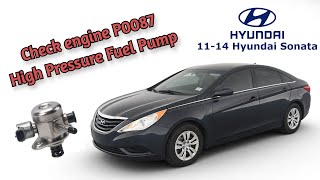
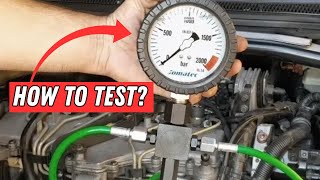
![Hyundai / Kia GDI high pressure PUMP replacement[#353202G720] ... 2012 Hyundai Sonata, 144K miles](https://img.youtube.com/vi/lPkyvJN4wlM/mqdefault.jpg)
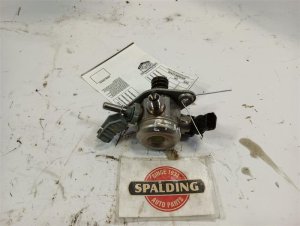
Used OEM Parts in Stock
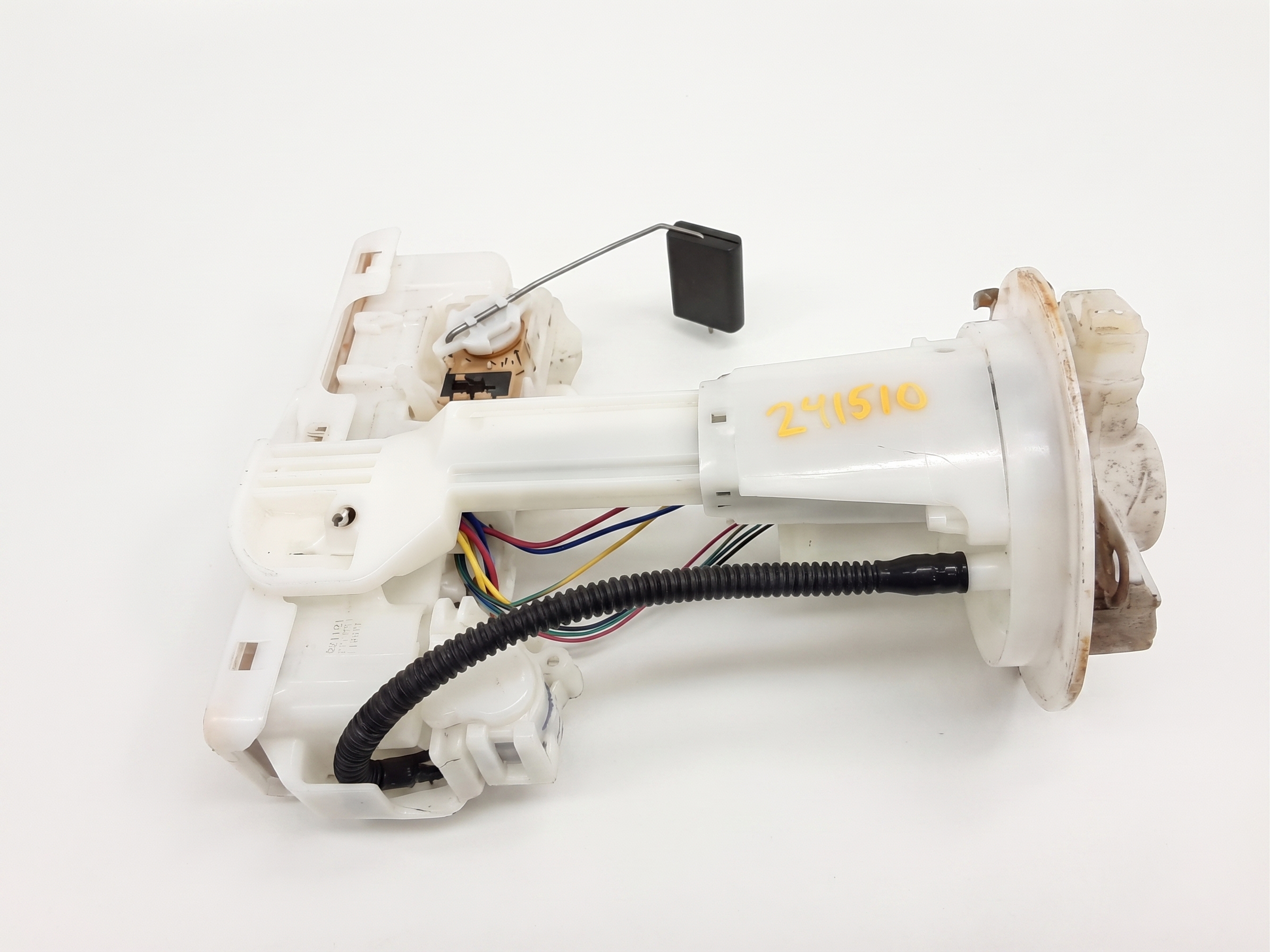
New Aftermarket Parts Available

The information in this article is provided for general reference and educational purposes only. Vehicle specifications, procedures, and part compatibility can vary by production date, trim level, and region. Always consult your vehicle's factory service manual and verify part numbers before purchasing or performing repairs. Safety-critical components such as airbags, seat belts, and braking systems should be installed by a qualified professional.
- Hyundai Sonata:
- 🧭 Diagnostic Flowchart
- 🎬 Helpful Videos
- 🛍️ Shop This Part
- What's Unique About the 2006-2020 Hyundai Sonata
- Symptoms You May Notice
- Most Likely Causes
- Rare But Worth Checking
- Diagnosis Steps
- Parts You'll Likely Need
- Related Codes That Often Appear With This One
- Technical Service Bulletins (TSBs) & Recalls
- Platform-Specific Known Issues
- Mechanic-Grade Diagnostic Values
- Scan Tool Commands That Help
- Wiring & Ground Locations
- Real Owner Repair Stories
- OEM Part Supersession History
- Model Year Variations Within This Range
- Used vs. New Parts: Buying Guide for This Vehicle
- Real Owner Stories
- 2012 Hyundai Sonata GDI
- 2012 Hyundai Sonata
- 2011 Hyundai Sonata
- Related OBD-II Codes
- Frequently Asked Questions
- 🎟️ Get 5% Off