

P0192 on 2016-2021 Mazda CX-3: Fuel Rail Pressure Low Causes and Fixes
On a 2016-2021 Mazda CX-3, code P0192 is most often caused by a failing high-pressure fuel pump (HPFP). Symptoms include long crank times, stalling, and hesitation. Replacing the HPFP is the most common fix, with the genuine Mazda part (PE22-20-3F0) costing around $600-$800, and labor adding another $150-$250.
- P0192 on a Mazda CX-3 is a serious code that should be addressed immediately due to the risk of the engine stalling in traffic.
- The most likely cause is a failed high-pressure fuel pump (HPFP), not the fuel rail pressure sensor itself.
- A key diagnostic step is to check fuel rail pressure with a scan tool at idle; if it's stuck around 60-70 psi and doesn't rise to ~500+ psi, the HPFP is faulty.
- When replacing the HPFP, it is wise to also change the engine oil, as the failing pump can contaminate it with gasoline.
What's Unique About the 2016-2021 Mazda CX-3
While P0192 is a generic code, on Mazda's SKYACTIV-G engines, it has a strong association with mechanical failures of the high-pressure fuel pump (HPFP). While not covered by a specific TSB for the CX-3, earlier SKYACTIV engines in other Mazda models had known HPFP manufacturing defects that caused this exact code. Owner experiences with the CX-3 and mechanically similar models like the CX-5 confirm that the HPFP is the most common point of failure, often leading to dangerous stalling at highway speeds. For instance, NHTSA ODI #11477801 describes a situation where a technician verified a fuel pump failure associated with code P0192, resulting in a $900 repair cost.
Symptoms You May Notice
- Engine cranks for a longer time than usual before starting
- Stumbling or hesitation when accelerating
- Engine stalls unexpectedly, sometimes at highway speeds
- Rough or irregular idle
- Noticeable loss of engine power
- Check Engine Light is on
- Engine bucks or kicks under load
- Smell of fuel in the engine oil
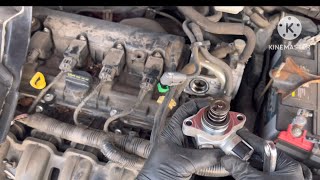
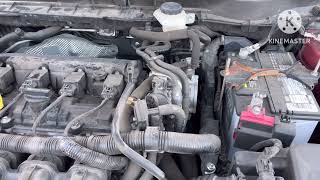
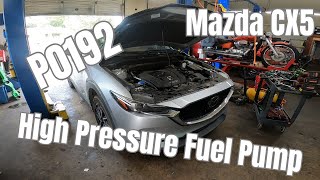
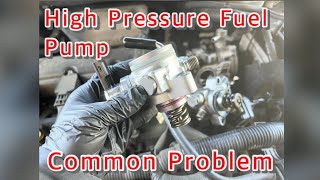
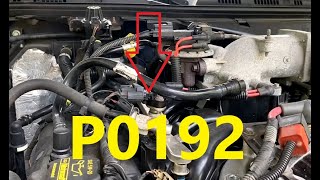
- Replacing the fuel rail pressure sensor when the high-pressure fuel pump is the actual cause. Because the code names the sensor circuit, it is often replaced first, but the low pressure reading is frequently a symptom of the pump's failure to generate pressure. One forum user replaced the rail/sensor on a 2016 CX-3 to no effect before determining the HPFP was the culprit. 🎬 Watch this 2016 CX-3 P0192 diagnostic and repair walkthrough
Most Likely Causes
- Failed High-Pressure Fuel Pump (HPFP) 🔴 High Probability → Shop Fuel Pump Similar SKYACTIV engines in other Mazda models had documented manufacturing defects in the HPFP leading to this code. Multiple owner and mechanic reports for the CX-3 and CX-5 confirm this is the most common failure part for P0192. An owner report in NHTSA ODI #11605868 for a similar Mazda model confirmed that after a diagnostic revealed P0192, a master mechanic verified the issue was indeed the high pressure fuel pump.
How to confirm: Use an OBD-II scanner to monitor live data for Fuel Rail Pressure. With the key on and engine off, pressure should be 60-70 psi (from the in-tank pump). At idle, it should rise to around 500-600 psi. If the pressure at idle remains low or doesn't increase with RPM, the HPFP has likely failed.
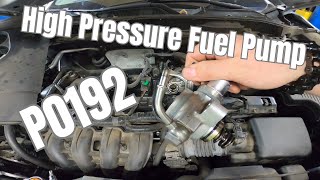
Typical fix: Replace the high-pressure fuel pump and its gasket. 🎬 Watch this easy 30-minute Mazda high-pressure fuel pump replacement The pump is mechanically driven by the camshaft. It is also recommended to inspect the cam follower (tappet/thimble) for wear during replacement.
Est. part cost: $400-$800 - Faulty Fuel Rail Pressure Sensor 🟡 Medium Probability → Shop Fuel Pressure Sensor
How to confirm: If fuel pressure readings on the scan tool are erratic, stuck at zero, or do not change with engine RPM despite the engine running, the sensor may be faulty. An owner reported in NHTSA ODI #11523583 that their vehicle would not start and displayed P0192, specifically indicating a Fuel Rail Pressure Sensor Low Input condition. Test the sensor's wiring for proper voltage (typically a 5V reference), ground, and signal continuity back to the PCM.
Typical fix: Replace the fuel rail pressure sensor. On some Mazda models, the sensor is sold as part of the entire fuel rail assembly, which can be costly. A 27mm deep well socket is typically required for removal. 🎬 See how to diagnose the fuel rail pressure sensor circuit
Est. part cost: $150-$350 - Wiring or Connector Issue ⚪ Low Probability
How to confirm: Visually inspect the wiring harness and connector for the fuel rail pressure sensor. Look for any signs of damage, corrosion, or loose connections. Use a multimeter to check for shorts or open circuits in the signal, power, and ground wires.
Typical fix: Repair or replace the damaged section of the wiring harness or the connector.
Est. part cost: $20-$100
Rare But Worth Checking
- Weak In-Tank (Low-Pressure) Fuel Pump: → Shop Fuel Pump The high-pressure pump cannot function correctly if it is not being supplied with adequate fuel from the in-tank pump. If both high and low-side pressure readings are low, the in-tank pump could be the root cause. There was a recall for the low-pressure pump on some 2019 Mazdas, but P0192 typically points to the high-pressure side.
- Powertrain Control Module (PCM) Fault: → Shop Engine Control Module (ECM) In very rare cases, the PCM itself can fail, causing it to misinterpret the sensor's signal. This should only be considered after all other possibilities have been thoroughly ruled out.
Diagnosis Steps
- Connect an OBD-II scanner and confirm the presence of the P0192 code. Check for any other accompanying codes like P0087 or P0171.
- Using the scanner's live data function, monitor the "Fuel Rail Pressure" PID.
- With the key in the 'ON' position but the engine off, the pressure should read between 60-70 psi (approx. 430 kPa). This confirms the low-pressure in-tank pump is working.
- Start the engine and let it idle. The fuel rail pressure should rise to approximately 500-600 psi (approx. 3.4-4.1 MPa).
- If the pressure remains low (near 60-70 psi) at idle, the high-pressure fuel pump (HPFP) is the primary suspect.
- If the pressure reading is erratic, zero, or does not respond to changes in engine speed, inspect the fuel rail pressure sensor and its electrical connector/wiring for damage or corrosion.
- If the wiring is intact, test the sensor's circuit for a 5-volt reference signal, a good ground, and a proper signal return to the PCM using a multimeter.
- Before replacing the HPFP, inspect the camshaft-driven follower (tappet) for any wear or damage.
- If the HPFP and sensor circuit test good, consider a potential issue with the low-pressure fuel pump or a clogged fuel filter.
Parts You'll Likely Need
- High-Pressure Fuel Pump
(OEM #PE22-20-3F0 (replaces PE21-20-3F0))— This is the most frequently reported failure item that resolves the P0192 code on the Mazda CX-3 and other SKYACTIV models.
Trusted brands: Mazda (OEM), Hitachi, Delphi
OEM price range: $600-$800
Aftermarket price range: $400-$700 - Fuel Rail Pressure Sensor — This sensor is the second most likely cause if the high-pressure pump is functioning correctly. It can fail electrically or provide inaccurate readings.
Trusted brands: Bosch, Denso
OEM price range: $200-$350
Aftermarket price range: $150-$250
Related Codes That Often Appear With This One
- P0087 — P0087 (Fuel Rail/System Pressure - Too Low) is a closely related code that also indicates insufficient fuel pressure. The PCM may store one or both depending on the specific conditions.
- P0171 — P0171 (System Too Lean) can occur because low fuel pressure prevents the injectors from delivering the correct amount of fuel, leading to an air-fuel mixture with too much air.
- P0300 — P0300 (Random/Multiple Cylinder Misfire) can be triggered when the lack of fuel pressure causes inconsistent combustion across the cylinders.
Technical Service Bulletins (TSBs) & Recalls
- TSB 01-010/14: While not for the CX-3, this TSB for 2012-2014 Mazda3, CX-5, and Mazda6 models with SKYACTIV engines identifies a manufacturing defect in the high-pressure fuel pump as the cause for P0192. This establishes a history of this issue with the engine family.
- Bulletin #01-010-14-2896B: This manufacturer bulletin notes that some vehicles may experience a Check Engine Light with DTC P0191:00 or DTC P0192:00 stored in memory, specifically referencing the fuel pressure sensor circuit.
- Bulletin #01-003-18-3421: This bulletin explains that updated PCM control logic allows DTCs P0192:00 or P0087:00 to be stored when the fuel injection amount is insufficient, specifically defining P0192:00 as High fuel pressure sensor circuit low input.
Platform-Specific Known Issues
- Fuel Smell in Oil: A failing high-pressure fuel pump can leak fuel past its internal seals and into the crankcase, contaminating the engine oil. Owners may notice a distinct gasoline smell on the oil dipstick. An oil change is highly recommended when replacing the HPFP.
Mechanic-Grade Diagnostic Values
- Low-Pressure Fuel System (In-Tank Pump) — expected: 55-71 psi (379-490 kPa) with Key On, Engine Off (KOEO).. Failure: Pressure is significantly lower than 55 psi or bleeds off quickly, indicating a weak in-tank pump or leak.
- High-Pressure Fuel System (HPFP) — expected: Approx. 435 psi (3.0 MPa) or more at idle.. Failure: Pressure at idle remains near the low-pressure reading (60-70 psi) and does not increase with RPM.
- Fuel Rail Pressure Sensor Signal Voltage — expected: The PCM expects a voltage between 0.5V and 4.5V.. Failure: P0192 is set when the PCM sees a voltage below 0.52V for more than 0.7 seconds.
- Fuel Rail Pressure Sensor Reference Voltage — expected: 5V at the sensor connector.. Failure: No voltage or significantly lower voltage indicates a wiring or PCM issue.
Scan Tool Commands That Help
- Mazda Modular Diagnostic System (M-MDS) or FORScan: Live Data PID Monitoring (FUEL_PRES, RPM, LOAD) — This is the primary diagnostic step to compare actual fuel rail pressure (FUEL_PRES) to the desired pressure commanded by the PCM under different engine loads and speeds. A significant deviation where actual pressure is much lower than desired points to a mechanical pump failure.
Wiring & Ground Locations
- G6 — Left rear of the engine block/cylinder head.. This is a primary engine ground. A loose or corroded connection here can cause erratic sensor readings and intermittent electrical faults for components grounded to the engine, including potentially the fuel rail pressure sensor or its shielding.
- G7 — Top rear of the engine.. Another critical engine ground point. Ensuring this ground is clean and tight is a key step when troubleshooting any electrical sensor circuit code on the engine.
Real Owner Repair Stories
- Mazda Forum user 'xilu0306' (2016 Mazda CX-3 GT, 90,378 miles) — Engine shut off completely while driving at highway speeds. The car would not restart initially, but after 20 minutes it started shakily.
❌ Tried (didn't work) Adding more gasoline, as the owner was near empty at the time of the stall.
✅ What actually fixed it The Mazda service center diagnosed code P0192 and replaced the high-pressure fuel pump, which resolved the issue. The repair cost was approximately $1300. - YouTube channel 'Wrench and Rev' (2016 Mazda CX-3) — Long crank time before starting, irregular RPM at idle, and code P0192 stored.
❌ Tried (didn't work) The video proceeds directly to HPFP replacement based on the symptoms and code.
✅ What actually fixed it Replacing the high-pressure fuel pump fixed the long crank, rough idle, and cleared the P0192 code.
Model Year Variations Within This Range
- 2016-2021: The 2.0L SKYACTIV-G engine and its direct injection fuel system remained fundamentally the same throughout the CX-3's production run in the US. A minor facelift in 2018 included tweaks for refinement but did not significantly alter the high-pressure fuel system components or the common causes for P0192.
Diagnostic Flowchart
Other Known Issues on This Vehicle
Issues unrelated to this code that are worth knowing about as an owner of this generation:
- Infotainment System Glitches / Ghost Touch 🟠 Medium — Common issue where the touchscreen becomes unresponsive or registers phantom touches, causing erratic behavior. Often requires replacement of the touchscreen digitizer.
- Noisy Wheel Bearings 🟠 Medium — A humming or grinding noise from the wheel area that increases with speed is a common complaint, indicating a failing wheel bearing/hub assembly.
- Failing Mass Air Flow (MAF) Sensor 🟡 Low — Can cause stalling or no-start conditions and trigger a Check Engine Light. It's a relatively common and easy-to-replace part.
- Electrical System Complaints 🟡 Low — The 2016 model year in particular has a higher number of general electrical complaints logged with the NHTSA, though no single component is a universal failure point.
Used vs. New Parts: Buying Guide for This Vehicle
When a used part is the smart pick: For this specific repair, using used parts is generally not recommended for the primary failure components. A used fuel rail or sensor assembly from a low-mileage vehicle could be considered if the new part is unavailable or prohibitively expensive, but the high-pressure fuel pump should be purchased new.
Donor-vehicle mileage cap: roughly under 50000 miles for the part to have meaningful remaining life.
What to inspect on the donor part:
- For a fuel rail/sensor, check for any signs of physical damage or corrosion on the electrical connector pins.
- Verify the donor vehicle was not in a major front-end collision.
- Ask for the VIN to check the donor vehicle's history for related issues if possible.
OEM-only on this vehicle (don't cheap out):
- High-Pressure Fuel Pump (HPFP): Given that this is a known high-failure-rate item and operates under extreme pressure, using a new OEM or OEM-supplier (e.g., Hitachi) part is critical for reliability and safety. A used pump carries a high risk of premature failure.
Aftermarket brands forum-validated for this vehicle:
- Hitachi (Often the OEM supplier for Mazda)
- Bosch (For the Fuel Rail Pressure Sensor)
Brands owners have reported issues with on this vehicle:
- Unnamed, low-cost 'white box' brands from online marketplaces. The precision and durability required for a high-pressure fuel pump are often lacking in these parts, leading to repeat failures.
Real Owner Stories
Aggregated from forums and TSBs cited above. Mileages and costs reflect what owners reported in those sources.
2019 Mazda CX-3 2.0L — 81000 miles
Symptoms: The car started to stutter and lose power while driving on the highway. The owner noticed the oil level seemed to rise and had a strong smell of fuel.
What fixed it: High-pressure fuel pump (HPFP) replacement.
Source hint: Reddit r/mazda (2019 CX-3) thread titled 'Help with CX-3 2019'
2016 Mazda CX-3 2.0L — ~100000 miles
Symptoms: The fuel pressure reading was stuck at a low-pressure constant of approximately 62 psi, failing to rise to the required high-pressure levels.
What fixed it: High-pressure fuel pump replacement (after an unsuccessful attempt to fix it by replacing the fuel rail and sensor).
Source hint: Reddit r/mazda3 (2016 CX-3) thread titled 'P0192 fuel rail pressure sensor-need some advice'
2016 Mazda CX-3 Touring 2.0L
Symptoms: Car stumbles like it is lacking fuel when the accelerator is pressed beyond 20% throttle; it takes extra time to start and struggles to maintain a smooth idle.
What fixed it: High-pressure fuel pump replacement.
Source hint: Mazda Forum owner report for 2016 CX3 Touring
2016 Mazda CX-5 2.0L
Symptoms: The vehicle experienced a stalling incident while driving at highway speeds.
What fixed it: Replacing the high-pressure fuel pump.
Source hint: Mazda Forum (mazdaforum.com) thread titled 'P0192 Fuel Rail Pressure Sensor Issue'
Related OBD-II Codes
Frequently Asked Questions
Does TSB 01-010/14 apply to my 2016-2021 Mazda CX-3?
Why does my oil smell like gasoline when the P0192 code is active?
Can I just replace the fuel rail pressure sensor to fix P0192 on my CX-3?
What should the fuel pressure readings be for a healthy 2.0L SKYACTIV-G engine?
Is there a specific tool needed to remove the fuel rail pressure sensor?
Should I check anything else while replacing the high-pressure fuel pump?
Helpful Videos
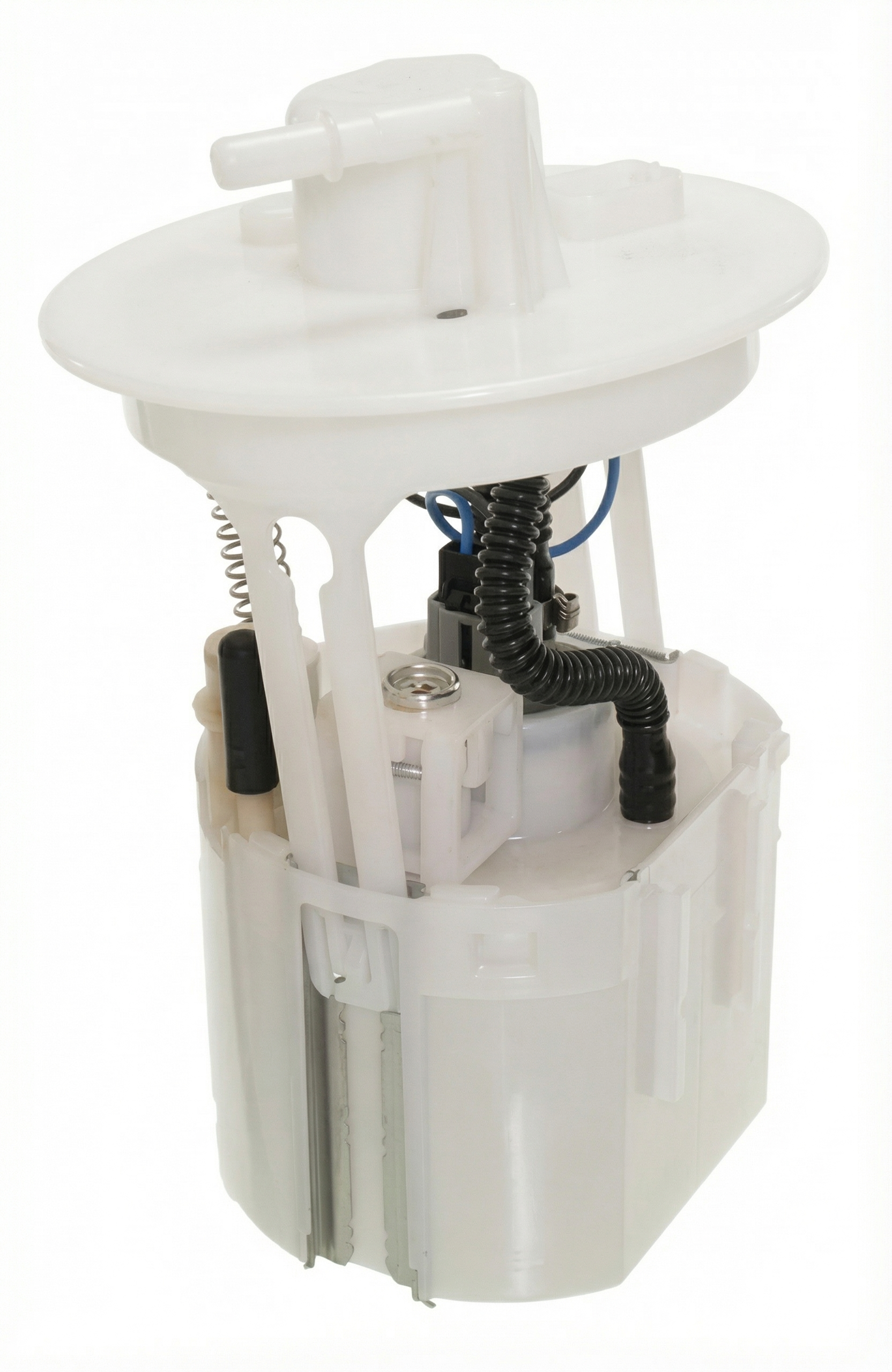
Used OEM Parts in Stock
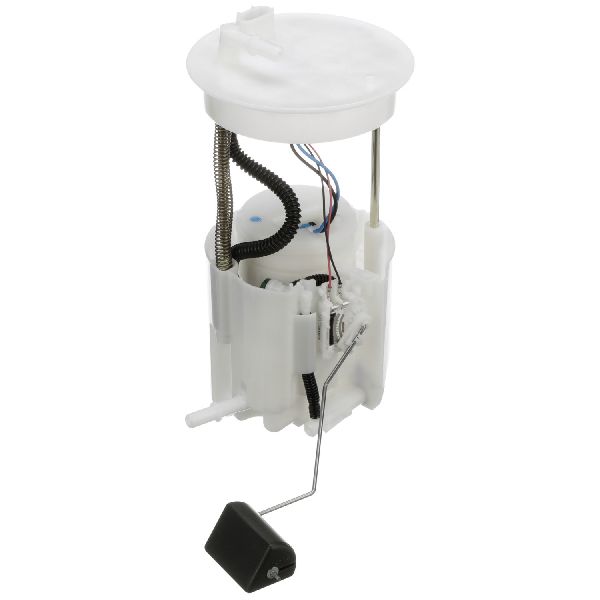
New Aftermarket Parts Available


The information in this article is provided for general reference and educational purposes only. Vehicle specifications, procedures, and part compatibility can vary by production date, trim level, and region. Always consult your vehicle's factory service manual and verify part numbers before purchasing or performing repairs. Safety-critical components such as airbags, seat belts, and braking systems should be installed by a qualified professional.
- Mazda CX-3:
- 🧭 Diagnostic Flowchart
- 🎬 Helpful Videos
- 🛍️ Shop This Part
- What's Unique About the 2016-2021 Mazda CX-3
- Symptoms You May Notice
- Most Likely Causes
- Rare But Worth Checking
- Diagnosis Steps
- Parts You'll Likely Need
- Related Codes That Often Appear With This One
- Technical Service Bulletins (TSBs) & Recalls
- Platform-Specific Known Issues
- Mechanic-Grade Diagnostic Values
- Scan Tool Commands That Help
- Wiring & Ground Locations
- Real Owner Repair Stories
- Model Year Variations Within This Range
- Other Known Issues on This Vehicle
- Used vs. New Parts: Buying Guide for This Vehicle
- Real Owner Stories
- 2019 Mazda CX-3 2.0L — 81000 miles
- 2016 Mazda CX-3 2.0L — ~100000 miles
- 2016 Mazda CX-3 Touring 2.0L
- 2016 Mazda CX-5 2.0L
- Related OBD-II Codes
- Frequently Asked Questions
- 🎟️ Get 5% Off