

P0192 on 2007-2013 MINI Cooper: Fuel Rail Pressure Sensor Circuit Low
For a 2007-2013 MINI Cooper with a 1.6L turbo engine, the P0192 code is most often caused by a failing High Pressure Fuel Pump (HPFP), especially on the earlier N14 engines. A faulty fuel rail pressure sensor is the next likely cause. Expect to pay $300-$600 for an aftermarket HPFP and $80-$150 for a sensor.
- For turbocharged MINI Coopers (2007-2010), the High Pressure Fuel Pump (HPFP) is a very common cause for code P0192 and should be investigated first.
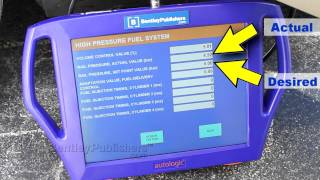
- Use a scan tool to compare desired vs. actual fuel rail pressure; a large discrepancy points to a mechanical fuel delivery problem, not just a sensor issue.
- If the fuel pressure appears normal, test the fuel rail pressure sensor's 3-wire circuit for 5V reference, ground, and a proper signal voltage before replacing the sensor.
- For diesel models, the diagnostic process is similar, focusing on the sensor, wiring, and high-pressure pump, though the specific components differ from the gasoline engine.
What's Unique About the 2007-2013 MINI Cooper
The 2007-2013 MINI Cooper, particularly the turbocharged 'S' models with the N14 engine (found in 2007-2010 Cooper S and up to 2012 for JCW models), is known for issues with the High Pressure Fuel Pump (HPFP). This pump is a very common failure point and can directly lead to the P0192 code due to a loss of actual fuel pressure. The issue was so widespread that it led to a class-action settlement (Boehm v. BMW of North America, LLC) and an extended warranty on the HPFP for some model years. Therefore, unlike many other vehicles where a P0192 code points directly to the sensor, on this specific MINI, the HPFP should be a primary suspect.
Generation note: This range covers the second generation (R56) MINI Cooper. Within this generation, the turbocharged gasoline engine changed from the N14 (2007-2010/12) to the N18 (2011-2013). The N14 engine is particularly susceptible to High Pressure Fuel Pump (HPFP) failure, which is a primary cause of P0192. While the N18's HPFP is more reliable, it can still fail, and MINI also extended the warranty for the N18's pump. The diesel models have a different fuel system but share the same basic principle of a high-pressure rail and sensor.
Symptoms You May Notice
- Hard starting or long crank times
- Hesitation during acceleration
- Reduced engine power or 'limp mode'
- Rough idle or stalling, especially on cold starts
- Check Engine Light illuminated
- Decreased fuel economy
- Sputtering or engine knocking sounds
- Replacing the fuel rail pressure sensor when the High Pressure Fuel Pump is the actual cause of the low pressure.
- Replacing spark plugs or ignition coils for misfires that are actually caused by the lack of fuel pressure from a failing HPFP.
Most Likely Causes
- Failing High Pressure Fuel Pump (HPFP) 🔴 High Probability → Shop Fuel Pump The HPFP on the N14 turbocharged engine is a well-documented, common failure item, with failures sometimes occurring as early as 40,000 miles. A class-action lawsuit (Boehm v. BMW of North America, LLC) and TSB M010419 extended the warranty for this part to 10 years/120,000 miles for certain models due to high failure rates.
How to confirm: Use a scan tool to monitor the actual vs. desired fuel rail pressure. At idle, actual pressure should be around 50 bar (725 psi). If the actual pressure is significantly lower than the desired pressure (e.g., below 5 bar during cranking) or fails to rise under load, the HPFP is likely failing. This often presents with code P0087 or the MINI-specific code 0x2880.
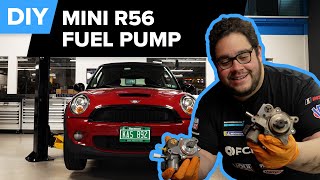
Typical fix: Replace the High Pressure Fuel Pump. It is located on the driver's side of the cylinder head.
Est. part cost: $300-$800 - Faulty Fuel Rail Pressure Sensor 🟡 Medium Probability → Shop Fuel Pressure Sensor The sensor, located on the fuel rail under the intake manifold, can fail electrically or become contaminated, sending a false low voltage signal to the ECM. It is a 27mm hex sensor.
How to confirm: With the ignition on and engine off, use a multimeter to check for a 5-volt reference and good ground at the sensor connector. Then, back-probe the signal wire; it should read around 0.5V. A reading near zero volts points to a short to ground or a failed sensor. If reference voltage or ground is missing, check the wiring back to the DME.
Typical fix: Replace the fuel rail pressure sensor. This requires removing the intake manifold for access.
Est. part cost: $80-$200 - Wiring or Connector Issues ⚪ Low Probability Engine vibrations and heat can cause wires to chafe or connectors to become loose or corroded over time. The harness to the sensor is routed over the fuel rail and secured with zip ties that may need to be cut for access.
How to confirm: Visually inspect the wiring harness and connector for the fuel rail pressure sensor. Look for any signs of damage, corrosion, or loose pins. Perform a continuity test on the signal, reference, and ground wires between the sensor and the ECM. Resistance should be close to 0 ohms.
Typical fix: Repair the damaged wiring or clean/replace the connector.
Est. part cost: $5-$50
Rare But Worth Checking
- Clogged Fuel Filter or Failing In-Tank Fuel Pump: → Shop Fuel Filter While the HPFP is the common failure, a problem with the low-pressure side of the system can starve the HPFP, leading to low rail pressure. A user on North American Motoring noted a missing o-ring on the fuel filter housing caused a low-pressure issue. The low-pressure system should supply the HPFP with at least 5 bar (73 PSI) of fuel pressure.
- Faulty Engine Control Module (ECM): → Shop Engine Control Module (ECM) This is very rare, but the ECM can fail internally and be unable to correctly interpret the signal from the sensor. This should only be considered after all other possibilities have been exhausted.
Diagnosis Steps
- Connect an OBD-II scanner and check for any other stored codes, especially P0087 and 0x2880.
- Use the scanner's live data function to monitor 'Desired Fuel Rail Pressure' and 'Actual Fuel Rail Pressure'.
- At idle, the values should be very close (around 725 psi / 50 bar). If the actual pressure is significantly lower than desired, suspect a mechanical fuel pressure issue (likely the HPFP).
- If the pressure readings seem plausible, inspect the fuel rail pressure sensor's wiring and connector for any visible damage or corrosion. The sensor is located under the intake manifold.
- Using a multimeter, verify the sensor is receiving a 5-volt reference and has a good ground connection with the key on, engine off.
- Back-probe the signal wire. The voltage should be around 0.5V with the key on, engine off, and should increase as the engine runs. A reading near zero volts indicates a short to ground or a failed sensor.
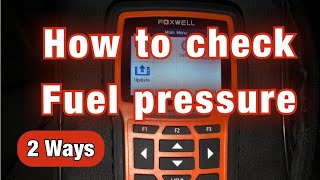
- If wiring and sensor voltage appear correct, but pressure readings are low, further diagnose the low-pressure fuel pump and fuel filter to ensure the HPFP is receiving adequate fuel supply (should be ~5 bar). 🎬 Watch: Two ways to check your Mini Cooper's fuel pressure
- If the sensor circuit checks out and the HPFP has been replaced, but the code persists, the ECM may be at fault, though this is highly unlikely.
Parts You'll Likely Need
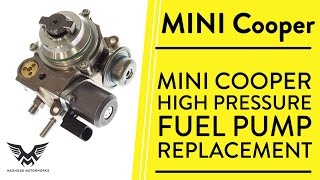
- High Pressure Fuel Pump (HPFP)
(OEM #13517588879)— This is the most common failure point on N14 engines that leads to low fuel rail pressure and the P0192 code. This part number supersedes 13517573436 and 13537528345.
Trusted brands: Bosch, Delphi, Genuine MINI, PSA Genuine (Peugeot/Citroën)
OEM price range: $600-$1000
Aftermarket price range: $300-$600 - Fuel Rail Pressure Sensor
(OEM #13537568050)— If the HPFP is working correctly, the sensor itself may have failed electrically, causing the low voltage signal. Note that MINI may only sell this part with the entire fuel rail attached.
Trusted brands: Bosch, Genuine MINI
OEM price range: $150-$250
Aftermarket price range: $80-$150
Related Codes That Often Appear With This One
- P0087 — This code means 'Fuel Rail/System Pressure - Too Low,' which is a mechanical fault. If you see P0192 (electrical circuit low) and P0087 together, it strongly points to an actual loss of fuel pressure from a failing HPFP or low-pressure pump.
- P0193 — This code for 'Fuel Rail Pressure Sensor Circuit High' can appear intermittently with P0192 if there is a loose connection or an internally failing sensor causing erratic voltage swings.
- P0300-P0304 — Misfire codes for various cylinders are common secondary codes, as the low fuel pressure prevents proper combustion. A failing HPFP can cause misfires before it throws a specific fuel pressure code.
- 0x2880 — This is a MINI-specific code for 'High Pressure System Plausibility'. It is a very strong indicator that the HPFP has failed.
Technical Service Bulletins (TSBs) & Recalls
- M010419 / SI M01 04 19: Details the class-action settlement and warranty extension for the N14 engine High Pressure Fuel Pump to 10 years/120,000 miles.
- M010116 / SI M01 01 16: Details the warranty extension for the N18 engine High Pressure Fuel Pump to 10 years/120,000 miles.
- SI M12 02 10: Discusses diagnosis of rough running and misfires, noting that if fuel pressure recorded in a misfire fault's environmental data is below 4.0 MPa (40 bar), the HPFP should be replaced.
Platform-Specific Known Issues
- A class-action settlement (Boehm v. BMW of North America, LLC) and TSB M010419 extended the warranty on the High Pressure Fuel Pump (HPFP) for certain 2010-2012 models with the N14 engine to 10 years or 120,000 miles due to high failure rates. A similar extension (TSB M010116) was issued for the N18 engine. Owners should check with a MINI dealer to see if their vehicle is covered.
Mechanic-Grade Diagnostic Values
- High-Pressure Fuel Rail (Actual vs. Setpoint) at Idle — expected: ~50 bar (5 MPa or ~725 psi). Actual and setpoint values should be nearly identical.. Failure: Actual pressure is significantly below the setpoint, or is erratic. A reading near 1 bar indicates the HPFP is not building pressure.
- High-Pressure Fuel Rail during Cranking (No Start) — expected: Should build to the setpoint of 50 bar (5 MPa) to allow the engine to start.. Failure: If actual pressure remains near low-side pressure (~5 bar) and does not build, the HPFP is highly suspect.
- Low-Pressure Fuel Pump Feed to HPFP — expected: A steady 5 bar (~73 psi).. Failure: Pressure below 5 bar indicates a problem with the in-tank pump or fuel filter, which will starve the HPFP.
- Fuel Rail Pressure Sensor Signal Voltage (KOEO) — expected: Approximately 0.5V.. Failure: A reading near 0V suggests a short to ground in the wiring or a failed sensor.
Hidden / Shadow Codes Worth Checking
- 0x2C01 (2C01): High pressure fuel, plausibility, pressure too low. This is a very common companion code to P0087 and strongly indicates a failing HPFP. (see via BMW/MINI specific scan tools like ISTA, Foxwell, or advanced OBD-II scanners.)
- 0x2BE9 (2BE9): Cylinder injection cutout, pressure too low in high-pressure fuel system. The DME is shutting off injectors to protect the engine due to the dangerously low fuel pressure. (see via BMW/MINI specific scan tools.)
- 0x2BF5 (2BF5): Rail pressure sensor, pressure too low before engine start. This indicates the system is not reaching its target pressure during the initial prime/crank sequence. (see via BMW/MINI specific scan tools.)
Scan Tool Commands That Help
- ISTA/D: Fuel System Test Plan — This guided diagnostic function will walk a technician through checking both the low-pressure and high-pressure fuel systems. It prompts for specific checks and reads live data to isolate whether the fault is with the low-side pump, high-side pump, or sensor circuit.
- Advanced OBD-II Scanner (e.g., Foxwell NT510): Live Data Monitoring for Fuel Rail Pressure (Setpoint vs. Actual) — This is the primary and most crucial diagnostic step. Observing these two values at idle, during cranking, and under light load is the fastest way to determine if you have a mechanical pressure loss (HPFP failure) or a potential sensor/electrical issue.
Wiring & Ground Locations
- Engine-to-Body Ground Strap — Braided strap located in front of the battery, connecting the engine to the chassis. One end may require headlight removal for access.. A corroded or loose main ground can cause a host of erratic electrical issues and incorrect sensor readings across the engine, including the fuel rail pressure sensor.
- DME/Fuse Box Grounds — On the driver's side, in front of the firewall. Access requires moving the DME and fuse box.. These are critical grounds for the engine management system. A poor connection here can directly impact the 5V reference or ground supplied to the fuel rail pressure sensor.
- Valve Cover Grounds — Located on the front of the valve cover, primarily for the ignition coils.. While primarily for ignition, a loose ground here has been noted to cause widespread electrical noise and no-start conditions that could be misdiagnosed. It is a notoriously problematic ground if left loose after service.
- Fuel Rail Pressure Sensor Connector — On the fuel rail, under the intake manifold. The wire colors are typically Blue/Black, Black/Blue, and Yellow.. This is the direct connection point for testing. Knowing the wire colors and order is critical for accurate back-probing and voltage/ground checks.
Real Owner Repair Stories
- Mazdaspeeds.org user 'crispyBYM' (on a similar direct-injection turbo engine) (Mazdaspeed3) — Car starts but then stalls, throws P0192, misfires.
❌ Tried (didn't work) Cleaning the HPFP spill valve.
✅ What actually fixed it Replacing the fuel rail pressure sensor. After cleaning the spill valve, the scan tool showed 0 psi at idle even though the car was running (smelling rich), which definitively pointed to a bad sensor providing a false reading. - MHH Auto user 'Tenson' (2007 MINI Cooper S R56 (N14)) — Sudden rough running, difficulty starting, then no-start. No initial ECU codes.
❌ Tried (didn't work) Initially, the scan tool showed reasonable pressure (450psi cranking), suggesting the HPFP was okay., Replacing the HPFP initially did not solve the no-start and low pressure reading., Cleaning injectors and fuel rail.
✅ What actually fixed it The user's post details a complex diagnosis where the HPFP was eventually replaced, but the key takeaway is that even with a failing pump, intermittent 'reasonable' pressure readings can occur, leading to misdiagnosis. The final fix was the HPFP, but it required extensive cranking to re-prime the system before pressure returned.
OEM Part Supersession History
13537528345→13517573436, then 13517588879— Revisions to improve reliability of the High Pressure Fuel Pump.
Heads up: The final part number, 13517588879, is for the N14 engine and will not fit N18 engines.
Model Year Variations Within This Range
- 2007-2010 (N14 Engine): The N14 engine uses a single VANOS system and has an external PCV hose, making it more susceptible to carbon buildup. Its HPFP is notoriously failure-prone.
- 2011-2013 (N18 Engine): The N18 engine features a more reliable double VANOS system, variable valve timing (Valvetronic), and an updated internal PCV design in the valve cover to reduce carbon buildup. While its HPFP is more reliable than the N14's, it can still fail.
Diagnostic Flowchart
Other Known Issues on This Vehicle
Issues unrelated to this code that are worth knowing about as an owner of this generation:
- Timing Chain Tensioner Failure ('Death Rattle') 🔴 High — Very common on N14 engines, can occur as early as 30,000 miles. A rattling noise on cold starts is the primary symptom. If ignored, the plastic guides can break, causing the chain to jump time and lead to catastrophic engine damage. (Ref: A service campaign was issued to inspect and replace the timing chain assembly.)
- Intake Valve Carbon Buildup 🟠 Medium — Common to all direct injection engines, including the N14 and N18. Symptoms include cold-start misfires, rough idle, and reduced performance. Cleaning (typically via walnut shell blasting) is recommended every 30,000-50,000 miles. (Ref: TSB SI M12 02 10 addresses diagnosis and cleaning procedures.)
- Thermostat Housing Leaks 🟠 Medium — The plastic thermostat housing is prone to cracking and leaking coolant, typically after 75,000 miles. This can lead to overheating if not addressed. (Ref: A warranty extension to 10 years/120,000 miles was issued for the thermostat housing on some models.)
- Excessive Oil Consumption 🟠 Medium — Particularly common on the N14 engine due to piston ring and PCV system design. It is critical to check the oil level frequently, as low oil levels can accelerate timing chain wear and other failures.
- Turbo Oil Line Leaks 🟠 Medium — The gaskets on the turbo oil feed line can fail, causing oil to leak onto the hot turbocharger and exhaust manifold, resulting in smoke and a fire risk.
- Water Pump / Friction Wheel Failure 🔴 High — The water pump is driven by a friction wheel that presses against the crankshaft pulley. This assembly can fail, leading to a sudden loss of coolant circulation and rapid overheating. (Ref: A recall was issued for the auxiliary water pump circuit board which could overheat, but this is separate from the main mechanical water pump.)
Used vs. New Parts: Buying Guide for This Vehicle
When a used part is the smart pick: A used Fuel Rail Pressure Sensor from a known-running, low-mileage donor car is a reasonable choice, as MINI often sells it only with the expensive fuel rail assembly. Used wiring pigtails or connectors are also excellent, cost-effective repair options.
Donor-vehicle mileage cap: roughly under 70000 miles for the part to have meaningful remaining life.
What to inspect on the donor part:
- For a sensor, ensure the connector pins are clean and straight.
- For wiring, check for flexibility; avoid harnesses that are brittle or have cracked insulation.
- Verify the donor vehicle did not have fuel pressure-related fault codes.
OEM-only on this vehicle (don't cheap out):
- High Pressure Fuel Pump (HPFP) - Due to the extremely high failure rate of this part on the N14 engine, installing a used one is a significant gamble and not recommended.
Aftermarket brands forum-validated for this vehicle:
- Bosch (Often the OEM supplier for sensors)
- PSA Genuine (Peugeot/Citroën) for the HPFP, as it is often the same part as Genuine MINI but at a lower cost.
Brands owners have reported issues with on this vehicle:
- Unbranded, low-cost High Pressure Fuel Pumps from online marketplaces are frequently cited on forums as being unreliable and failing quickly.
Real Owner Stories
Aggregated from forums and TSBs cited above. Mileages and costs reflect what owners reported in those sources.
2010-2012 MINI Cooper N14 Turbo — ~40000 miles
Symptoms: The owner experienced failures occurring as early as 40,000 miles, leading to a class-action lawsuit regarding the High Pressure Fuel Pump.
What fixed it: Replacement of the High Pressure Fuel Pump (HPFP) under the extended 10-year/120,000-mile warranty.
Source hint: Boehm v. BMW of North America, LLC / TSB M010419
MINI Cooper N14 Turbo
Symptoms: The owner reported misfire codes P0301, P0302, and P0304. A shop using specific software later found a 2880 High Pressure System code and confirmed the HPFP was reading below 1 bar when it should have been much higher.
What fixed it: Replacement of the High Pressure Fuel Pump (HPFP).
Source hint: North American Motoring - Thread 'High Pressure Fuel Pump failure symptoms'
Related OBD-II Codes
Frequently Asked Questions
Is there a warranty extension for the High Pressure Fuel Pump on my 2011 MINI Cooper with the N14 engine?
My MINI is showing code 0x2880; is this related to P0192?
Can I check the fuel rail pressure sensor without removing the intake manifold?
What should the fuel rail pressure be at idle for a 1.6L Turbo MINI?
Does TSB M010116 apply to the N18 engine as well?
Could my P0192 code be caused by carbon buildup on the intake valves?
Helpful Videos
Used OEM Parts in Stock
New Aftermarket Parts Available


The information in this article is provided for general reference and educational purposes only. Vehicle specifications, procedures, and part compatibility can vary by production date, trim level, and region. Always consult your vehicle's factory service manual and verify part numbers before purchasing or performing repairs. Safety-critical components such as airbags, seat belts, and braking systems should be installed by a qualified professional.
- MINI Cooper:
- 🧭 Diagnostic Flowchart
- 🎬 Helpful Videos
- 🛍️ Shop This Part
- What's Unique About the 2007-2013 MINI Cooper
- Symptoms You May Notice
- Most Likely Causes
- Rare But Worth Checking
- Diagnosis Steps
- Parts You'll Likely Need
- Related Codes That Often Appear With This One
- Technical Service Bulletins (TSBs) & Recalls
- Platform-Specific Known Issues
- Mechanic-Grade Diagnostic Values
- Hidden / Shadow Codes Worth Checking
- Scan Tool Commands That Help
- Wiring & Ground Locations
- Real Owner Repair Stories
- OEM Part Supersession History
- Model Year Variations Within This Range
- Other Known Issues on This Vehicle
- Used vs. New Parts: Buying Guide for This Vehicle
- Real Owner Stories
- 2010-2012 MINI Cooper N14 Turbo — ~40000 miles
- MINI Cooper N14 Turbo
- Related OBD-II Codes
- Frequently Asked Questions
- 🎟️ Get 5% Off