

OBD-II Code P0193: Fuel Rail Pressure Sensor 'A' Circuit High Input
The Ultimate Guide to Understanding, Diagnosing, and Fixing P0193
- P0193 triggers when the fuel rail pressure sensor sends a constant voltage signal above 4.5V to the engine computer.
- A failed sensor or a shorted wiring harness causes 80% of P0193 codes, though a corroded Fuel Pump Driver Module (FPDM) is a primary culprit on Ford and GM vehicles.
- Do not drive with an active P0193 code; the incorrect fuel delivery causes sudden engine stalling and unpredictable power loss in traffic.
- Never replace the sensor without performing a Key-On, Engine-Off (KOEO) voltage test and verifying actual fuel pressure with a mechanical gauge to rule out wiring shorts.
What Does P0193 Mean?
The Powertrain Control Module (PCM) detects an abnormally high voltage signal from the Fuel Rail Pressure (FRP) sensor. The sensor sends a voltage reading exceeding the manufacturer's specified limit (usually over 4.5 volts) for a set period. This tells the computer fuel pressure is dangerously high, even if it is a false electrical reading. This incorrect signal forces the PCM to command the wrong amount of fuel, triggering a reduced power 'limp mode' to protect the engine.
Technical definition: The official SAE definition for P0193 is "Fuel Rail Pressure Sensor 'A' Circuit High Input". This indicates the PCM detects the voltage from the FRP sensor is above its maximum calibrated range (typically >4.5V or >4.8V). While this code points directly to a fault in the sensor's electrical circuit, it is sometimes a secondary result of a mechanical issue causing genuine and extreme overpressure in the fuel rail.
Can I Drive With P0193?
No — Do Not Drive. Do not drive with this code active. The underlying issue causes sudden engine stalling, hard starting, and unpredictable power loss, creating a significant safety hazard in traffic. Continuing to drive causes expensive damage to the catalytic converter (an $800-$2500+ repair) or other fuel system components due to an incorrect air-fuel mixture.
Common Causes
- Faulty Fuel Rail Pressure (FRP) Sensor (Very Common) — This is the most frequent culprit. The sensor's internal electronics fail, causing it to short to its internal 5V reference and send a constant high voltage signal to the PCM, regardless of actual fuel pressure. 🎬 Watch: How to diagnose a fuel rail pressure sensor circuit.
- Shorted Wiring or Damaged Connector (Common) — The wiring harness to the FRP sensor is vulnerable to heat and vibration. If the signal wire's insulation frays and touches a 5V reference wire or another power source (a 'short to voltage'), it triggers P0193. Corrosion from water or oil intrusion into the connector is also a primary cause.
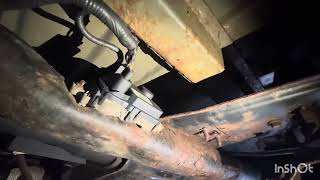
- Faulty Fuel Pump Driver Module (FPDM) or Fuel Pump Control Module (FPCM) (Common) — Especially on Ford, GM, and Mazda vehicles, this module controls the fuel pump's speed. Mounted on the frame rail, it is highly susceptible to corrosion from road salt and moisture. A failing module defaults to commanding the pump to run at 100% duty cycle, creating genuine excessive fuel pressure that the sensor correctly reports.
- Stuck-Closed Fuel Pressure Regulator (Less Common) — In return-style fuel systems, the mechanical pressure regulator gets stuck in the closed position. This blocks the return of excess fuel to the tank, causing pressure in the rail to build until it exceeds the upper limit, triggering the code.
- Failing High-Pressure Fuel Pump (HPFP) (Less Common) — On Gasoline Direct Injection (GDI) and modern diesel engines, a malfunctioning high-pressure fuel pump creates excessive pressure in the system, which the sensor accurately reports.
- Kinked or Clogged Fuel Return Line (Rare) — Similar to a stuck regulator, if the fuel return line is pinched, kinked, or clogged with debris, excess fuel cannot return to the tank. This causes a rapid and dangerous increase in fuel rail pressure.
- Fuel Contamination (Rare) — Water or debris in the fuel damages the sensitive diaphragm inside the FRP sensor or causes the fuel pressure regulator to stick, leading to pressure spikes and the P0193 code.
- Faulty Powertrain Control Module (PCM) (Very Rare) — In extremely rare cases, the PCM itself fails. An internal short in the PCM's 5V reference circuit or a faulty analog-to-digital converter causes it to misread the signal from a perfectly good sensor. This is the absolute last item to consider.
Symptoms
- Engine Stalling — The engine stalls unexpectedly, particularly when coming to a stop or during deceleration, as the PCM struggles to maintain a stable fuel supply.
- Poor Engine Performance and Limp Mode — Expect severe hesitation during acceleration, rough idling, engine misfires, and a significant lack of power. The vehicle enters a reduced-power 'limp mode' to prevent engine damage.
- Hard Starting or No Start Condition — The engine cranks excessively before starting, or fails to start entirely. Seeing a false high-pressure signal, the PCM commands the fuel injectors to deliver little or no fuel.
- Decreased Fuel Economy — Fuel consumption increases as the PCM fails to manage fuel delivery efficiently based on the faulty sensor input.
- Strong Fuel Smell or Black Smoke from Exhaust — If the system experiences a true mechanical over-pressure condition, the PCM's attempts to compensate lead to an overly rich mixture, causing a noticeable fuel odor or black smoke from the tailpipe.
- Check Engine Light is On (also visible on scanner) — The PCM illuminates the Malfunction Indicator Lamp (MIL) as soon as the fault is detected.
Diagnostic Flowchart
Tap your situation to follow the diagnostic path that matches what you're seeing on this code.
Common Fixes & Costs
- Replace Fuel Rail Pressure (FRP) Sensor — Parts: $50-$200, Labor: $100-$300, ~1.5 hr book time (Intermediate)
- Repair or Replace Damaged Wiring/Connector — Parts: $20-$60, Labor: $150-$400, ~2.5 hr book time (Intermediate)
- Replace Fuel Pump Driver Module (FPDM) — Parts: $80-$250, Labor: $100-$200, ~1 hr book time (Intermediate)
- Replace Fuel Pressure Regulator — Parts: $50-$250, Labor: $75-$250, ~1.8 hr book time (Professional)
- Replace Fuel Pump Assembly — Parts: $250-$800, Labor: $350-$650, ~4 hr book time (Professional)
Used vs. New Parts: Buying Guide
When a used part is worth it: For the most common fix (FRP sensor), buying used is not recommended. The part is a sensitive electronic component with a finite lifespan, and the cost savings are minimal compared to the risk of premature failure and repeated labor costs.
Donor-vehicle mileage cap: roughly under 40000 miles for the part to have meaningful remaining life.
Donor quality checklist:
- For related mechanical parts like a fuel pump module, verify the donor vehicle was not scrapped for a fuel system or electrical issue.
- Avoid parts from regions with heavy road salt usage due to high risk of corrosion.
- Ensure the part number is an exact match; 'similar' parts are not calibrated correctly.
Decision logic:
- If The part is an electronic sensor like the FRP sensor. → Always buy new from an OEM or reputable aftermarket brand (e.g., Bosch, Denso, Standard Motor Products). The risk of a faulty used part is too high.
- If The part is a simple mechanical or structural component related to the fix. → A used part from a low-mileage, non-corroded donor is a reasonable option to save money.
- If The vehicle is high-mileage (>150k) and the budget is extremely tight. → A used sensor is a last resort, but understand it fails again soon.
Warranty tradeoff: Used parts from a salvage yard typically have a 30-90 day warranty, covering only the part itself, not labor. New aftermarket parts offer 1-year to limited lifetime warranties. New OEM parts offer a 1-2 year warranty.
Worst-case if a used part fails: $250-$500 if a used sensor fails after installation, primarily due to the cost of repeat diagnostic and labor charges.
What Happens If You Wait — Timeline
- 0-1 week: Check Engine Light is on with code P0193. The vehicle experiences intermittent hard starting, hesitation, or stalling, especially when cold. The risk of stalling in traffic is immediate. (MPG impact: 0-5%% · Added cost: $0)
- 1 week - 2 months: Engine performance degrades noticeably. Rough idling becomes consistent, and limp mode activates frequently. A distinct fuel smell is present from the exhaust due to a rich condition. (MPG impact: 5-15%% · Added cost: $50-$150 in wasted fuel and potentially fouled spark plugs.)
- 2-4 months: The sustained rich condition from high fuel pressure overheats and damages the catalytic converter. The internal honeycomb structure melts, leading to a partial exhaust restriction. (MPG impact: 15-25%% · Added cost: $1200-$2800 as catalytic converter replacement becomes necessary. A P0420 or P0430 code appears.)
- 4+ months: Complete catalytic converter meltdown occurs, causing a major exhaust blockage, severe power loss, and possible no-start conditions. Prolonged rich conditions wash cylinder walls, diluting engine oil and causing accelerated internal engine wear. (MPG impact: >25%% · Added cost: $2500+ for catalytic converter and potential engine repairs.)
Cost of Not Fixing It
- Immediate: Unpredictable engine stalling creates a severe safety risk. Vehicle enters 'limp mode' with drastically reduced power. (Added cost: 0)
- 0-1 month: Noticeable drop in fuel economy (5-15%). Potential for fouled spark plugs due to a rich fuel mixture. (Added cost: $50-$200)
- 1-6 months: Sustained rich condition overheats and damages the catalytic converter, leading to failure and a much more expensive repair. (Added cost: $1200-$2800)
- 6+ months: Internal engine damage occurs, including washed cylinder walls or diluted engine oil, leading to accelerated wear. (Added cost: $2500+)
Diagnosis Steps
- Scan for Codes & Analyze Freeze Frame Data
Use an OBD-II scanner to confirm P0193 is present and check for other codes. Critically, analyze the 'Freeze Frame' data. This snapshot shows engine conditions (RPM, load, etc.) when the code was set. This reveals if the fault occurred at startup (cold) or while driving (hot), providing valuable clues.
Tools: OBD-II Scanner (Beginner) - PRO TIP: The KOEO (Key On, Engine Off) Voltage Test
With an advanced scanner, view the live data PID for 'Fuel Rail Pressure Sensor Voltage'. Turn the key on but do not start the engine. The voltage should be low, typically around 0.5V. If it immediately reads 4.5V or higher, you have a 'hard fault'. Unplug the sensor. If the voltage drops to 0V, the sensor is internally shorted and bad. If the voltage stays high (e.g., 5.0V), the signal wire is shorted to power somewhere in the harness.
Tools: Advanced OBD-II Scanner (Intermediate) - PRO TIP: Circuit Integrity Test at the Connector
Disconnect the FRP sensor connector. Using a multimeter, probe the terminals on the harness side. You must find: 1) A 5-volt reference signal from the PCM. 2) A good ground (less than 100mV or 0.1V). 3) The signal wire, which must read 0 volts. If you measure 5V or 12V on the signal wire with the sensor unplugged, there is a short-to-power in the wiring harness that requires repair.
Tools: Multimeter (Intermediate) - Verify Actual Fuel Pressure with a Mechanical Gauge
If the electrical circuit tests are inconclusive, verify the actual fuel pressure. Connect a mechanical fuel pressure gauge to the fuel rail's Schrader valve (test port). Compare the reading to the manufacturer's specifications. For port-injected cars, expect 50-60 PSI. For GDI engines, the high-pressure side is 300-700 PSI at idle. If the mechanical gauge shows excessively high pressure, the problem is mechanical (fuel pump, FPDM, regulator), not the sensor.
Tools: Mechanical Fuel Pressure Gauge (Advanced) - Visual Inspection of Fuel System Components
Thoroughly inspect the Fuel Rail Pressure sensor, its connector, and the wiring harness. Look for obvious signs of damage like melted plastic, frayed wires, or fluid contamination. Follow the harness as far as possible, checking for chafing against other components. On Ford trucks, inspect the Fuel Pump Driver Module on the frame rail for heavy corrosion.
Tools: Flashlight, Inspection Mirror (Beginner) - PRO TIP: Wiggle Test for Intermittent Faults
If the code is intermittent, have a helper watch the live FRP voltage on the scanner while you start the engine and carefully wiggle the wiring harness at the sensor connector, along the fuel rail, and near the PCM. If the voltage spikes or drops out as you move the harness, you found the location of the wiring fault.
Tools: Advanced OBD-II Scanner (Intermediate) - Isolate and Confirm the Root Cause
Synthesize the data: If KOEO voltage is high and drops to zero when unplugged, replace the sensor. If voltage stays high when unplugged, repair the shorted wire. If electrical tests are normal but a mechanical gauge confirms high pressure, diagnose the FPDM/FPCM, fuel pump, or regulator. Only suspect the PCM if all other tests pass.
Tools: All previously mentioned tools (Advanced) - PRO TIP: Scope Pattern Analysis
For advanced diagnosis, use an oscilloscope to graph the FRP sensor's signal wire. A healthy sensor produces a relatively stable line at idle that rises smoothly with throttle application. A P0193 fault often shows the signal pegged at the top of the scale (5V). A noisy or erratic pattern that doesn't correspond to engine RPM indicates a failing sensor or electrical interference.
Tools: Automotive Oscilloscope (Professional) - ADVANCED: Sensor Resistance Test (When Applicable)
For older sensor types, perform a resistance test. Most modern FRP sensors are 3-wire active transducers and cannot be accurately tested with a simple ohmmeter. Always consult the vehicle's specific service manual before attempting. If specs are provided, measure resistance between the sensor's terminals and compare to the specified ranges at a given temperature. An out-of-spec reading indicates a faulty sensor.
Tools: Multimeter, Service Manual (Advanced)
When This Code Triggers (Freeze-Frame Conditions)
- Engine Coolant Temp: 180-210°F (Fully warmed up during steady driving.)
- RPM: 700-2500 (Occurs at idle or during steady cruise, not typically during heavy acceleration.)
- Engine Load: 20-50% (Low to moderate engine load, consistent with cruising or light acceleration.)
- Vehicle Speed: 0 mph or 40-65 mph (Fault is present at key-on (0 mph) or triggers during steady highway driving.)
Related Codes
- P0192 — This is the direct opposite: 'Fuel Rail Pressure Sensor Circuit Low Input.' P0193 is a short to power (>4.5V), while P0192 indicates a short to ground, an open circuit, or a bad sensor ground (<0.5V). Unplugging the sensor and seeing 0V on the signal wire points toward a P0192 fault condition.
- P0191 — This is 'Fuel Rail Pressure Sensor Circuit Range/Performance.' While P0193 is a constant high electrical signal, P0191 sets when the signal is erratic, intermittent, or doesn't match the expected value based on engine load and RPM. P0191 requires a test drive while graphing live data to spot irrational glitches, whereas a P0193 fault is usually present with the key on.
- P0088 — This is 'Fuel Rail/System Pressure - Too High.' P0193 is an electrical circuit code, while P0088 is a mechanical pressure code. If you have P0193 without P0088, the cause is almost certainly electrical (sensor/wiring). If you have both codes, the PCM believes the sensor's high reading is plausible and confirms a mechanical overpressure condition. Diagnosis must focus on the fuel pump, FPDM/FPCM, or regulator.
- P0172 / P0175 — These are 'System Too Rich (Bank 1 / Bank 2).' These codes are an indirect consequence. If a mechanical fault causes genuinely high fuel pressure, the PCM cannot shorten the injector pulse width enough to compensate, leading to a rich condition. Always diagnose and fix the specific fuel pressure circuit code (P0193) first.
Climate & Environmental Factors
- Road Salt / High Humidity: This is a major contributing factor in 'Salt Belt' regions. Moisture and salt cause severe corrosion on frame-mounted components like the Ford FPDM and GM FPCM, leading to module failure. It also corrodes wiring harness connectors, causing the high-resistance shorts that trigger P0193.
- Extreme Cold/Hot Cycles: Extreme temperature fluctuations accelerate the degradation of plastic wiring insulation and rubber O-rings on the sensor, making them brittle and prone to cracking. This leads to wiring faults or fuel leaks over time.
How to Talk to a Mechanic About This Code
Say this: "I have a P0193 code and I'd like to schedule a diagnostic. I authorize one hour of diagnostic time to determine if the cause is the sensor, the wiring, or a mechanical pressure issue. Do not replace any parts without showing me the diagnostic proof."
This signals you've done research and want a proper diagnosis, not just a part swap. It sets clear boundaries, authorizes a specific and reasonable diagnostic charge, and prevents a shop from immediately replacing the most common part (the sensor) without confirming it is the root cause.
Avoid saying:
- 'Just fix whatever's wrong'
- 'My check engine light is on, can you look at it?' (too vague — invites upsell)
- 'I think it's the fuel sensor, can you just replace it?'
Questions to ask before authorizing the repair:
- Did you perform a Key-On, Engine-Off test? What was the sensor voltage before and after unplugging it?
- Did you test the wiring harness for a short to power between the sensor and the PCM?
- Did you verify the actual fuel pressure with a mechanical gauge? What was the reading compared to the spec?
- If the cause is the Fuel Pump Driver Module (on a Ford/GM), can you show me the corrosion on the old part?
Where to Take It: Dealer vs Independent vs Chain
- Dealer:
Recommended for in-warranty or complex, newer vehicles where specific technical service bulletins (TSBs) apply.
Best for: Vehicles still under powertrain or emissions warranty, Complex, newer vehicles (GDI, turbo) where manufacturer-specific tools are required, Known manufacturer-specific quirks (e.g., Ford FPDM, Hyundai wiring issues)
Downsides: Highest labor rates, typically 1.5-2x more than an independent shop., Recommends replacing a larger assembly when only a small component failed. (Typical cost: +50% vs. baseline) - Independent Shop:
Best overall fit for most out-of-warranty vehicles, provided you choose a reputable shop with experience in fuel system and electrical diagnostics.
Best for: Out-of-warranty vehicles where cost is a major factor., Common vehicles (Ford, GM, Toyota) where the P0193 issue is well-documented.
Downsides: Diagnostic skill and equipment quality vary widely. Vet the shop by checking for ASE certifications and reviews mentioning diagnostic capabilities. (Typical cost: +0% vs. baseline) - Chain Shop:
AVOID for initial diagnosis. High risk of misdiagnosis (e.g., replacing a good sensor) which costs you more in the long run.
Best for: Simple, straightforward repairs where the diagnosis is already confirmed (e.g., 'I've confirmed the sensor is bad and accessible, please replace it').
Downsides: Technician skill varies dramatically. Less likely to perform the comprehensive electrical and mechanical diagnosis required for P0193. High pressure to upsell unnecessary services., Lacks advanced diagnostic tools or the training to use them effectively for complex electrical faults. (Typical cost: -10% vs. baseline)
When to Walk Away From the Repair
If the total estimated repair cost exceeds 40-50% of the car's private-party market value (e.g., from Kelley Blue Book), it's time to seriously consider selling or trading in the vehicle.
- Car worth $4000, fix is $1800: Borderline. The repair is 45% of the car's value. Get a second opinion before authorizing, and consider if there's other deferred maintenance.
- Car worth $12000, fix is $800: Fix it. The repair is well below the threshold and restores a critical safety and performance function.
- Car worth $2500, fix is $1500: Walk away. The repair cost is 60% of the vehicle's value. This is not a sound financial decision.
What Scan Tool You Need for This Code
Minimum: A scanner that reads and graphs live data, specifically the Fuel Rail Pressure (FRP) sensor voltage PID.
A basic $20 code reader only shows you the P0193 code. It cannot display the live sensor voltage, which is essential for performing the 'Key On, Engine Off' test to distinguish a bad sensor from a wiring short. Without live data, you are just guessing.
Budget: BlueDriver Pro or FOXWELL NT301 (~$70) — Connects to your smartphone via Bluetooth (BlueDriver) or as a standalone unit (NT301) and allows you to view and graph the live Fuel Rail Pressure sensor voltage. This is the minimum required tool to properly start diagnosing P0193 yourself.
Mid-range: Innova 5610 (~$350) — Offers bi-directional control, which is a major advantage for this code. It allows you to command the fuel pump on and off to test the response of the entire system, helping to isolate the pump, driver module, and sensor.
Professional: Autel MaxiCOM MK808 / XTOOL D7 (~$500-800) — Provides full bi-directional control, advanced data graphing, and access to manufacturer-specific codes and data. These tools perform active tests on the fuel pump and provide detailed information to quickly distinguish between mechanical and electrical faults.
How to Clear the Code After You Fix It
- Reconnect battery if disconnected for repair
- Use an OBD-II scan tool to formally clear the diagnostic trouble codes
- Perform a complete OBD-II drive cycle to allow readiness monitors to run.
Drive cycle (~30 minutes): A generic drive cycle includes: 1) Cold start (sit for 8+ hours). 2) Idle for 2-3 minutes. 3) Drive 15 minutes in mixed city/stop-and-go traffic. 4) Drive 15 minutes at a steady highway speed (55-60 mph). 5) Let the vehicle cool down.
Readiness monitors affected: Catalyst Monitor, Evaporative System Monitor, O2 Sensor Monitor
Before emissions retest: drive at least 100 miles to fully set monitors.
Watch out for:
- Simply disconnecting the battery does not guarantee readiness monitors reset and fails to clear the code from permanent memory.
- The code returns immediately if the underlying electrical or mechanical fault is not correctly repaired.
- Not driving long enough or under the right conditions (e.g., steady highway speed) leaves monitors 'Not Ready'.
Will This Fail Emissions / State Inspection?
Yes — this code typically fails an OBD-II emissions inspection.
- California: An active Check Engine Light for P0193 is an automatic test failure. After repair, a full drive cycle must be completed to set all required readiness monitors before a re-test is possible.
- New York: The NYS DMV inspection includes an OBD-II scan. An illuminated MIL (Check Engine Light) and a P0193 code result in an automatic failure.
- Texas: In counties requiring emissions testing, a vehicle fails the OBD portion of the inspection if the Check Engine Light is on due to code P0193.
Most Commonly Affected Vehicles
- Ford F-150, Explorer, Focus (2004-2018) — Extremely common issue. On F-150s and Explorers, the Fuel Pump Driver Module (FPDM) mounted to the frame is a primary failure point due to corrosion. On many 2005-2010 models, the sensor is located under the upper intake manifold, requiring significant labor to replace. The 2011-2018 Focus with the 2.0L GDI engine also commonly experiences sensor failure.
- Hyundai / Kia Sonata, Elantra, Santa Fe, Optima, Sorento (2010-2020) — Often related to faulty wiring harnesses or poor connections at the sensor. On GDI engines, the sensor is on the high-pressure rail, and access is difficult, sometimes requiring alternator removal. A broken wire inside the harness loom is a known issue.
- Chevrolet / GMC Silverado, Sierra, Equinox, Traverse (2007-2018) — These trucks and SUVs experience P0193 due to sensor failure or issues with the Fuel Pump Control Module (FPCM), which corrodes similarly to Ford's FPDM.
- Mazda 3, 6, CX-7 (especially Mazdaspeed models) (2007-2013) — Wiring and connector corrosion are known weak points. On Mazdaspeed models, a failed sensor causes the ECU to read a fixed high pressure, resulting in a limp mode condition.
- Dodge / Jeep / Chrysler Ram 1500, Grand Cherokee, 300 (2011-2018) — Failures are typically linked to the sensor itself. In some cases, a failing fuel pump within the tank causes erratic pressure readings that trigger the code.
- BMW 3-Series, 5-Series, X5 (especially with N54, N55, N63 engines) (2007-2016) — Common on direct injection models. The cause ranges from a failed high-pressure fuel rail sensor to a failing high-pressure fuel pump (HPFP).
- Toyota Tacoma (3.5L V6) (2016-2023) — A known issue on this platform. Causes include sensor failure (Part #89458-04010), wiring harness damage (sometimes related to aftermarket lift kit installations pinching the harness), and corroded connectors.
- Volkswagen / Audi Jetta, Golf, Passat, A4 (TDI and TSI/TFSI engines) (2009-2016) — On TDI diesel and TSI gasoline engines, the high-pressure fuel system is complex. P0193 often points to a failed sensor on the fuel rail, but the high-pressure fuel pump (HPFP) and its volume control valve are also potential causes.
Manufacturer-Specific Notes
- Ford: Always inspect the Fuel Pump Driver Module (FPDM) on the rear frame rail or above the spare tire. It is made of aluminum and bolts directly to the steel frame, causing severe galvanic corrosion that cracks the housing, allows water intrusion, and causes failure. An aftermarket spacer kit prevents this on the replacement part.
- Ford: RECALL/TSB: Ford issued recall 18S35 (NHTSA ID 18V-807) for some 2018 Ford Explorer models with 2.3L or 3.5L GTDI engines due to improperly assembled fuel pressure sensors that leak fuel, increasing fire risk.
- Hyundai / Kia: On GDI engines, the high-pressure fuel sensor is buried under the intake manifold, requiring significant labor to access. Before extensive disassembly, thoroughly perform the 'wiggle test' on the wiring harness, as intermittent breaks within the loom are a known issue that mimics sensor failure.
- General Motors (GM): Similar to Ford, the Fuel Pump Control Module (FPCM) on many GM trucks and SUVs is mounted on the frame and is highly susceptible to water and salt corrosion, leading to erratic fuel pump command and pressure spikes. Check this component carefully before condemning the fuel pump.
- Mazdaspeed: On these turbocharged direct-injection platforms, the fuel system is critical. A P0193 code often indicates a failed rail sensor. When diagnosing, check the small ground wire on the coil harness, as a poor ground causes erratic sensor readings.
Real Owner Stories
2005 Ford F-150 with 230K miles - The Misdiagnosis
Truck showed P0193 and very high pressure (78.9 PSI) on scanner at key-on, then almost stalled after starting with pressure dropping to 7-10 PSI before stabilizing.
What they tried:
- Initially suspected the Fuel Rail Pressure sensor due to the code.
- Tested the wiring and found a broken ground wire inside the harness loom near the sensor connector.
Outcome: Spliced and repaired the broken ground wire. The P0193 code resolved and proper fuel pressure restored. The original sensor was not faulty.
Lesson: Don't assume the sensor is bad just because of the code. A wiring fault perfectly mimics a sensor failure. A 'wiggle test' or careful harness inspection saves you from buying unnecessary parts.
2011 Peugeot Partner 1.6 HDi - The Intermittent Stall
Van lost power and cut out after 10-30 minutes of driving. Restarted after cooling down but ran rough. Codes P0193 and P0088 were present.
What they tried:
- A mechanic replaced the diesel filter, the high-pressure sensor (with a used part), and the low-pressure fuel pump, but the problem persisted.
Outcome: The combination of P0193 (electrical high input) and P0088 (mechanical pressure too high) strongly pointed to a genuine overpressure situation, not just a sensor electrical fault. The diagnosis needed to focus on the high-pressure fuel pump or its regulation.
Lesson: When P0193 is paired with P0088, the sensor is likely telling the truth. The problem is mechanical, not electrical. Focus diagnosis on what creates pressure (fuel pump, regulator) instead of what measures it.
Owner of an unspecified car - The Cheap Aftermarket Part
Car threw a P0193 code. Owner replaced the fuel rail pressure sensor with an aftermarket part.
What they tried:
- The new aftermarket sensor worked for about a month before the car began idling rough at stops.
- After a few days, the car struggled to start and the same P0193 code returned.
Outcome: The aftermarket sensor failed prematurely, causing the original symptoms to return. The owner had to diagnose the problem again.
Lesson: Using cheap, low-quality aftermarket sensors is a gamble. They fail quickly, forcing you to do the job twice. It is more cost-effective in the long run to use OEM or high-quality OEM-equivalent parts.
How to Prevent This Code From Triggering
- Use High-Quality, Top-Tier Fuel (Every fill-up) — Minimizes the risk of contaminants and water entering the fuel system. Debris and water damage the sensitive diaphragm inside the FRP sensor or cause the fuel pressure regulator to stick.
- Replace Fuel Filter at Recommended Intervals (Per manufacturer's schedule (typically every 30,000 miles)) — A clean filter ensures smooth fuel flow and prevents the fuel pump and FPDM from being overworked, which leads to erratic behavior and pressure spikes.
- Perform Periodic Fuel System Cleaning (Every 30,000 miles or as recommended) — Using a professional-grade cleaning service or quality fuel additive removes carbon deposits and buildup from injectors and valves, ensuring the entire system operates efficiently and preventing stress on pressure components.
- Inspect Frame-Mounted Modules (Ford/GM) (Every 2 years, especially in 'Salt Belt' regions) — Proactively check the FPDM/FPCM for corrosion. If caught early, cleaning the area and installing a spacer kit (like Dorman's 'OE Fix') creates an air gap that prevents the galvanic corrosion that destroys the module.
- Apply Dielectric Grease to Connectors (When replacing a sensor or if working nearby) — Applying a small amount of dielectric grease to the FRP sensor connector and FPDM/FPCM connector seals out moisture and prevents the corrosion that leads to circuit-high faults.
Frequently Asked Questions
What's the most common misdiagnosis mistake when fixing P0193?
The most common mistake is immediately replacing the fuel rail pressure sensor without testing the circuit. A short in the wiring harness perfectly mimics a bad sensor, causing the code to return instantly. Always verify actual fuel pressure with a mechanical gauge to avoid replacing a sensor that is correctly reporting a real mechanical problem.
Can a vacuum leak cause a P0193 code?
No, a vacuum leak does not directly cause a P0193 code. This code is specific to the fuel pressure sensor circuit reading high. A vacuum leak typically causes lean condition codes like P0171 or P0174.
Can I just clear the code and keep driving?
You can clear the code, but it returns immediately because it indicates a hard electrical or mechanical fault. Ignoring it is unsafe; the engine stalls unpredictably, and running with incorrect fuel pressure quickly damages expensive components like the catalytic converter.
How much does it cost to diagnose a P0193 code at a shop?
Most repair shops charge a diagnostic fee ranging from $120 to $200. This covers the first hour of labor to perform systematic tests with professional tools. This pinpoints the exact cause of the code before replacing parts.
Is the fuel rail pressure sensor the same as the fuel tank pressure sensor?
No. The Fuel Rail Pressure (FRP) sensor measures the high pressure of liquid fuel delivered to the injectors. The Fuel Tank Pressure (FTP) sensor is part of the evaporative emissions (EVAP) system and measures low-pressure fuel vapor inside the gas tank.
My car has two fuel pumps. Which one causes P0193?
Modern GDI vehicles have a low-pressure in-tank pump and a high-pressure mechanical pump (HPFP) on the engine. P0193 refers to the high-pressure side. While a failing HPFP is a cause, the low-pressure pump sometimes fails by over-supplying the high-pressure pump.
Can a clogged fuel filter cause P0193?
Indirectly, yes. A severely restricted filter strains the fuel pump or FPDM, causing erratic behavior. This creates momentary pressure spikes high enough to trigger a P0193 code before a low-pressure code appears.
Key Takeaways
- P0193 triggers when the fuel rail pressure sensor sends a constant voltage signal above 4.5V to the engine computer.
- A failed sensor or a shorted wiring harness causes 80% of P0193 codes, though a corroded Fuel Pump Driver Module (FPDM) is a primary culprit on Ford and GM vehicles.
- Do not drive with an active P0193 code; the incorrect fuel delivery causes sudden engine stalling and unpredictable power loss in traffic.
- Never replace the sensor without performing a Key-On, Engine-Off (KOEO) voltage test and verifying actual fuel pressure with a mechanical gauge to rule out wiring shorts.
Helpful Videos
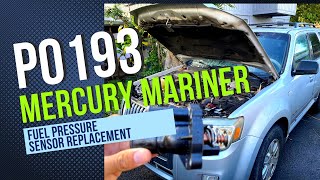
Shop the Parts Behind P0193
Below are the parts most often responsible for code P0193, ranked by how frequently each one is the actual culprit (per the diagnosis above). Tap any to see what we have for your vehicle.




The information in this article is provided for general reference and educational purposes only. Vehicle specifications, procedures, and part compatibility can vary by production date, trim level, and region. Always consult your vehicle's factory service manual and verify part numbers before purchasing or performing repairs. Safety-critical components such as airbags, seat belts, and braking systems should be installed by a qualified professional.
- 🧭 Diagnostic Flowchart
- 🎬 Helpful Videos
- 🛍️ Shop This Part
- What Does P0193 Mean?
- Can I Drive With P0193?
- Common Causes
- Symptoms
- Common Fixes & Costs
- Used vs. New Parts: Buying Guide
- What Happens If You Wait — Timeline
- Cost of Not Fixing It
- Diagnosis Steps
- When This Code Triggers (Freeze-Frame Conditions)
- Related Codes
- Climate & Environmental Factors
- How to Talk to a Mechanic About This Code
- Where to Take It: Dealer vs Independent vs Chain
- When to Walk Away From the Repair
- What Scan Tool You Need for This Code
- How to Clear the Code After You Fix It
- Will This Fail Emissions / State Inspection?
- Most Commonly Affected Vehicles
- Manufacturer-Specific Notes
- Real Owner Stories
- 2005 Ford F-150 with 230K miles - The Misdiagnosis
- 2011 Peugeot Partner 1.6 HDi - The Intermittent Stall
- Owner of an unspecified car - The Cheap Aftermarket Part
- How to Prevent This Code From Triggering
- Frequently Asked Questions
- What's the most common misdiagnosis mistake when fixing P0193?
- Can a vacuum leak cause a P0193 code?
- Can I just clear the code and keep driving?
- How much does it cost to diagnose a P0193 code at a shop?
- Is the fuel rail pressure sensor the same as the fuel tank pressure sensor?
- My car has two fuel pumps. Which one causes P0193?
- Can a clogged fuel filter cause P0193?
- Key Takeaways
- 🎟️ Get 5% Off