

P0193 on 2008-2015 BMW 7-Series N63: Fuel Rail Pressure Sensor Circuit High Causes and Fixes
On a 2008-2015 BMW 7-Series with the N63 engine, code P0193 almost always indicates a failed high-pressure fuel rail sensor on Bank 1 or a wiring issue. The fix is typically replacing the sensor (OEM Part No. 13537620946, Bosch No. 0261545071). Before replacing, check that the sensor connector is securely plugged in, as this is a surprisingly common cause. Expect to pay around $60-$150 for an OEM-quality sensor.
- P0193 on the N63 engine is an electrical fault for the Bank 1 high-pressure fuel sensor, not a mechanical fuel pressure problem.
- The most likely cause is a failed sensor, followed by damaged wiring due to the engine's high heat.
- Before ordering parts, use a scan tool to check live data. A maxed-out pressure reading or a 5V signal with the engine off is a definitive sign of a bad sensor or circuit.
- Always check that the sensor is plugged in correctly before assuming it has failed, especially if recent work has been done in the engine valley.
- Bosch (part #0261545071) is the original equipment manufacturer (OEM) for this part, making it a reliable and more affordable choice than the Genuine BMW part.
What's Unique About the 2008-2015 BMW 7-Series
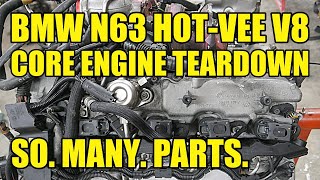
The N63 is a twin-turbo V8 with two high-pressure fuel pumps and two fuel rails, each with its own pressure sensor. P0193 specifically points to the sensor on Bank 1 (the passenger side in the US). The 'hot-vee' design of this engine, with turbos in the valley, exposes 🎬 See a complete teardown of the N63 Hot-Vee engine wiring harnesses to extreme heat. This constant heat cycling makes the wiring insulation and plastic connectors brittle and prone to damage over time, which can be a direct cause of this electrical fault code. While the high-pressure fuel pumps (HPFPs) can fail on this engine, P0193 is more often an electrical issue with the sensor circuit rather than a mechanical pump failure.
Symptoms You May Notice
- 'Drivetrain Malfunction' warning on the iDrive screen
- Check Engine Light is on
- Reduced engine power (limp mode)
- Engine hesitation or stumbling on acceleration
- Rough or unstable idle
- Long crank time or difficulty starting
- Engine stalling
- Strong fuel smell from the exhaust
- Replacing the High-Pressure Fuel Pump (HPFP). P0193 is an electrical circuit code, not a pressure-too-high code (like P0088) or a pressure-too-low code (like P0087). While HPFPs can fail on the N63, they are not the primary cause for a 'circuit high' fault.
Most Likely Causes
- Failed High-Pressure Fuel Rail Sensor (Bank 1) 🔴 High Probability The sensor operates in a high-heat, high-pressure environment and can fail electronically over time, sending a constant high voltage signal. Internal failure is the most common reason for this code.
How to confirm: Using a BMW-specific scan tool, observe the live data for fuel rail pressure on Bank 1. If the reading is maxed out (e.g., over 200 bar / 3000 PSI) or the sensor voltage is stuck at 5.0V even with the engine off (ignition on), the sensor has failed internally.
Typical fix: Replace the high-pressure fuel sensor on the Bank 1 fuel rail. It is highly recommended to use a Genuine BMW or OEM Bosch part.
Est. part cost: $60-$150 - Wiring Harness or Connector Issue 🟡 Medium Probability The N63's 'hot-vee' engine layout places wiring harnesses in an area of extreme heat, which can degrade insulation, leading to shorts to power, open circuits, or corrosion in the connector. Oil leaks from valve cover gaskets can also saturate the harness, further degrading the wires.
How to confirm: Visually inspect the wiring harness and connector for the Bank 1 fuel pressure sensor. Check for brittle/cracked insulation, melted plastic, or corroded pins. Check for 5V reference, ground, and signal continuity with a multimeter. Wiggling the harness while watching live data can also reveal intermittent connections.
Typical fix: Repair the damaged section of the wiring harness or replace the connector pigtail. In severe cases of heat damage, the entire engine harness may need replacement.
Est. part cost: $20-$100 for a pigtail, significantly more for a full harness. - Unplugged Sensor Connector ⚪ Low Probability Vibrations or recent service work in the engine valley (e.g., replacing spark plugs, ignition coils, or valve cover gaskets) could leave the connector loose or completely disconnected.
How to confirm: Physically inspect the sensor and ensure the connector is securely plugged in. A disconnected sensor can cause a 'circuit high' fault as the signal wire floats to 5V. This is a common real-world cause found by DIYers.
Typical fix: Securely reconnect the sensor's electrical connector.
Est. part cost: $0
Rare But Worth Checking
- Failed Engine Control Module (DME): This is very rare. Before condemning the expensive DME, all other possibilities, including the sensor and wiring, must be exhaustively ruled out. A faulty DME might misinterpret a normal sensor signal or have a failed internal pull-up resistor.
Diagnosis Steps
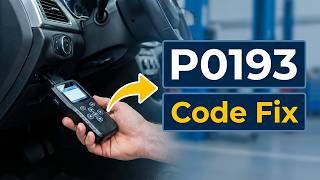
- Connect a BMW-capable OBD-II scanner and confirm the presence of P0193 or the BMW-specific code 119001. 🎬 Watch this N63-specific P0193 diagnostic and repair guide
- Access live data and monitor the fuel rail pressure for Bank 1. A reading that is stuck at its maximum value (e.g., 200 bar) or shows 5V, even with the engine off, points directly to a sensor or circuit issue.
- Turn the engine off and allow it to cool. Locate the Bank 1 high-pressure fuel sensor. It is on the passenger-side fuel rail, deep in the 'hot-V' of the engine, often requiring removal of engine covers for access.
- Visually inspect the sensor connector and wiring harness. Check first if the connector is simply unplugged. Look for any signs of heat damage, cracked plastic, oil saturation, or corroded pins.
- If the wiring looks good, test the circuit. Disconnect the sensor and, with the ignition on, use a multimeter to check for a 5-volt reference and a good ground at the connector.
- If the 5V reference and ground are present, the fuel rail pressure sensor is the most likely culprit.
- If the reference voltage or ground is missing, or if the signal wire shows a short to power, the wiring harness between the sensor and the DME is faulty and needs repair.
- After replacing the sensor or repairing the wiring, clear the codes and perform a test drive to ensure the fault does not return.
Parts You'll Likely Need
- High-Pressure Fuel Sensor
(OEM #13537620946)— This sensor is the most common failure point for a P0193 code, as it fails internally and sends a constant high voltage signal to the DME.
Trusted brands: Bosch, Genuine BMW
OEM price range: $120-$200
Aftermarket price range: $60-$150
Related Codes That Often Appear With This One
- 119001 — This is the BMW-specific manufacturer code that corresponds directly to the generic P0193 OBD-II code, meaning 'Rail pressure sensor, signal: Short circuit to B+'.
- P0194 — This code for 'Fuel Rail Pressure Sensor Circuit Intermittent' can sometimes accompany P0193 if the wiring issue is not a constant short but rather a loose or frayed connection.
Technical Service Bulletins (TSBs) & Recalls
- SI B12 18 12: This TSB addresses BSD communication faults on the N63 engine due to an improper ground connection on the ignition coil harness duct. While not directly for P0193, it highlights the sensitivity of the N63's electrical system and the importance of proper grounding during any repair.
- B001314: This is the bulletin for the 'N63 Customer Care Package'. It involved inspection and potential replacement of numerous engine components to improve reliability, including timing chains, injectors, and various sensors.
Platform-Specific Known Issues
- The N63 engine was subject to a 'Customer Care Package' (CCP), detailed in BMW bulletin B001314. This was a comprehensive service campaign to address multiple known issues, including checking/replacing timing chains, fuel injectors, MAF sensors, and various vent lines. While it addressed the low-pressure fuel sensor, not the high-pressure one for P0193, it highlights the engine's sensitivity to fuel system and electronic component failures. An owner should verify if their vehicle had this service performed.
Diagnostic Flowchart
Other Known Issues on This Vehicle
Issues unrelated to this code that are worth knowing about as an owner of this generation:
- Excessive Oil Consumption / Valve Stem Seal Failure 🔴 High — Very common, often starting around 50,000-80,000 miles. The primary symptom is blue smoke from the exhaust after idling. (Ref: Addressed in class-action lawsuits (e.g., Bang v. BMW) and partially by the N63 Customer Care Package.)
- Timing Chain Stretch and Guide Failure 🔴 High — Common, particularly on earlier models. Symptoms include a rattling noise on cold starts. Failure can be catastrophic to the engine. (Ref: Timing chain inspection was a key component of the N63 Customer Care Package (B001314).)
- Premature Fuel Injector Failure 🔴 High — Injectors were known to fail early, sometimes under 30,000 miles, causing misfires and rough running. Later index injectors are more reliable. (Ref: Injector replacement was part of the N63 Customer Care Package (B001314).)
- Rapid Battery Drain 🟠 Medium — A common complaint where the battery requires frequent replacement, sometimes annually. This was also a subject of the class-action lawsuits. (Ref: Battery replacement was often performed as part of the N63 Customer Care Package.)
- Cracked Crankcase Ventilation (CCV) Hoses 🟠 Medium — The plastic CCV hoses become brittle from the high heat in the engine valley and crack, leading to vacuum leaks and oil consumption issues. (Ref: These hoses were part of the inspection/replacement list in the N63 Customer Care Package.)
Real Owner Stories
Aggregated from forums and TSBs cited above. Mileages and costs reflect what owners reported in those sources.
2011 BMW 750Li N63
Symptoms: The car displayed a 'Drivetrain Malfunction' warning on the iDrive screen and threw codes P0193 and 119001.
What fixed it: Replacement of the Bank 1 high-pressure fuel sensor located on the passenger side.
Source hint: Bimmerfest (ID: www.bimmerfest.com)
2011 BMW 550i N63
Symptoms: Owner reported P0193 and BMW code 119001; in some cases, the sensor was found to be disconnected after other engine work.
What fixed it: Replacing the Bank 1 sensor or simply reconnecting the plug if it was left loose during maintenance.
Source hint: Bimmerpost - F10 Forum (ID: f10.bimmerpost.com)
Related OBD-II Codes
Frequently Asked Questions
Does the N63 Customer Care Package (B001314) cover the high-pressure fuel sensor for my 7-Series?
Where is the Bank 1 fuel pressure sensor located on the 2008-2015 BMW 750i?
Can I use an aftermarket sensor to fix the P0193 code on my N63 engine?
Could a recent spark plug or valve cover service cause a P0193 code?
Is there a BMW-specific fault code that corresponds to P0193?
Why is the wiring harness for the fuel sensor prone to failure on the 7-Series?
Helpful Videos

The information in this article is provided for general reference and educational purposes only. Vehicle specifications, procedures, and part compatibility can vary by production date, trim level, and region. Always consult your vehicle's factory service manual and verify part numbers before purchasing or performing repairs. Safety-critical components such as airbags, seat belts, and braking systems should be installed by a qualified professional.
- BMW 7-Series:
- 🧭 Diagnostic Flowchart
- 🎬 Helpful Videos
- What's Unique About the 2008-2015 BMW 7-Series
- Symptoms You May Notice
- Most Likely Causes
- Rare But Worth Checking
- Diagnosis Steps
- Parts You'll Likely Need
- Related Codes That Often Appear With This One
- Technical Service Bulletins (TSBs) & Recalls
- Platform-Specific Known Issues
- Other Known Issues on This Vehicle
- Real Owner Stories
- 2011 BMW 750Li N63
- 2011 BMW 550i N63
- Related OBD-II Codes
- Frequently Asked Questions
- 🎟️ Get 5% Off