

P0193 on 2014-2019 BMW X6 N63: Fuel Rail Pressure Sensor Circuit High Causes and Fixes
On a 2014-2019 BMW X6 with the N63 engine, P0193 almost always indicates a failed fuel rail pressure sensor or a bad electrical connection to it. The N63 has two sensors, one for each bank. Before replacing any parts, check for a loose connector as per BMW TSB SI B12 14 13, which recommends securing the harness with a special zip tie. Expect to pay around $80-$120 for an OEM Bosch sensor, with a total repair cost of $280-$400 at a shop.
- P0193 on your X6 is an electrical fault with the fuel rail pressure sensor circuit, not a mechanical fuel pressure issue.
- The N63 engine has two fuel rail pressure sensors; the code could refer to either bank.
- Always check the electrical connector and apply the TSB zip-tie fix before replacing the sensor.
- If replacement is necessary, use a high-quality OEM (Bosch) or Genuine BMW sensor to avoid premature failure.
What's Unique About the 2014-2019 BMW X6
For the N63TU (Technical Update) engine in this generation of X6 (F16), the P0193 code is frequently tied to a known issue with the sensor's wiring harness. The N63 is a 'hot-vee' design, placing the turbos and catalytic converters in the valley of the engine, which generates immense heat and can make surrounding electronics and wiring brittle over time. BMW released a Technical Service Bulletin (SIB B12 14 13) explaining that engine vibrations can cause a poor electrical connection at the sensor. The official fix is often as simple as securing the wiring harness with a special zip tie, rather than replacing the sensor itself. This makes checking the connector a mandatory first step before buying any parts. The N63 engine has two high-pressure fuel rails and two corresponding pressure sensors, one for each bank (Bank 1: cylinders 1-4, Bank 2: cylinders 5-8).
Symptoms You May Notice
- Check Engine Light is on
- "Drivetrain Malfunction" message on the iDrive screen
- Engine enters 'limp mode' with significantly reduced power
- Engine hesitation or stumbling during acceleration
- Rough or unstable idle
- Engine may stall, especially at stops
- Difficulty starting the engine or a no-start condition
- Long crank times before the engine starts
- Replacing the High-Pressure Fuel Pump (HPFP). A failing HPFP typically causes low fuel pressure codes, such as P0087, not a 'Circuit High' code like P0193. The P0193 code indicates an electrical fault, not a mechanical pressure problem.
Most Likely Causes
- Poor Electrical Connection at Sensor 🔴 High Probability BMW issued Service Information Bulletin (SIB) B12 14 13 specifically for the N63T engine, stating that engine vibration can cause a poor connection between the sensor and the harness. The 'hot-vee' engine design also contributes to harness and connector degradation.
How to confirm: Visually inspect the fuel rail pressure sensor connector for looseness or damage. Disconnect and reconnect it several times to clean the contacts. Wiggle the harness while monitoring live data on a scan tool to see if the reading changes. A YouTube video by 'I.E. Euros' shows a case on a 550i where the sensor was simply unplugged, causing the code.
Typical fix: Secure the harness to the fuel rail using a cable tie as described in the TSB. The BMW part number for this special tie is 12-52-8-624-375. This should be performed on both sensors.
Est. part cost: $1-$5 - Failed Fuel Rail Pressure Sensor 🔴 High Probability → Shop Fuel Pressure Sensor The sensor operates in a high-heat, high-vibration environment due to the N63's 'hot-vee' layout, leading to eventual electronic failure. Aftermarket sensors have a reputation for premature failure, so sticking with OEM/Bosch is highly recommended.
How to confirm: Use a scan tool to view live data for 'Fuel Rail Pressure'. With the ignition on but the engine off, the pressure reading should be very low. If it shows an impossibly high, fixed value (e.g., 3000 psi), the sensor has failed internally. Test both sensors, as the fault could be on either bank.
Typical fix: Replace the fuel rail pressure sensor. It is highly recommended to use a Genuine BMW or OEM Bosch part to avoid leaks or premature failure. The sensors are located under the engine airboxes towards the rear of the engine and can be difficult to access.
Est. part cost: $80-$120 - Damaged Wiring Harness 🟡 Medium Probability The engine wiring harness can become brittle from heat cycles, leading to chafed or broken wires. A short circuit to a 5V power source will trigger this code. The intense heat in the engine valley of the N63 makes this a more common issue than on other engines.
How to confirm: Perform a continuity test on the signal, reference, and ground wires between the sensor connector and the DME. Check for a short to power on the signal wire using a multimeter. This requires tracing the wires from the sensor back to the DME.
Typical fix: Repair the damaged section of the wiring harness. This may involve soldering in a new section of wire and protecting it with heat-shrink tubing.
Est. part cost: $10-$50
Rare But Worth Checking
- Faulty Engine Control Module (DME): This is very rare. Before condemning the DME, all other possibilities (sensor, wiring, connections) must be exhaustively ruled out. A faulty DME might misinterpret a correct sensor signal.
Diagnosis Steps
- Connect a BMW-compatible OBD-II scanner and confirm the presence of P0193 and/or the BMW codes 119001 or 119101.
- Access live data and observe the 'Fuel Rail Pressure' readings for both Bank 1 and Bank 2 with the ignition on, engine off. A maxed-out, unchanging high value on one bank strongly suggests a sensor or circuit fault for that specific sensor.
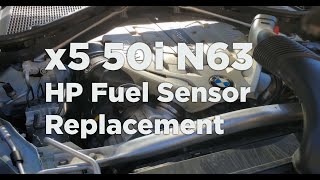
- Turn the vehicle off. Locate the fuel rail pressure sensors. They are on the fuel rails for each bank, under the airboxes toward the rear of the engine. 🎬 See this walkthrough on accessing the fuel sensor
- Inspect the electrical connector for the suspect sensor. Check if it is fully seated. Disconnect it, inspect the pins for corrosion or damage, and reconnect it firmly several times.
- Follow BMW TSB SI B12 14 13: Secure the wiring harness to the fuel rail near the sensor with a zip tie (BMW P/N 12-52-8-624-375) to prevent vibration-induced connection issues. Do this for both sensors.
- Clear the codes and perform a test drive. If the code returns, proceed with testing the sensor circuit.
- Disconnect the sensor and use a multimeter to check for a 5V reference voltage and a good ground at the connector with the ignition on.
- If voltage and ground are correct, the sensor is the most likely culprit. Replace the fuel rail pressure sensor for the corresponding bank.
- If voltage or ground is missing, inspect the wiring harness between the sensor and the DME for breaks, chafing, or shorts.
Parts You'll Likely Need
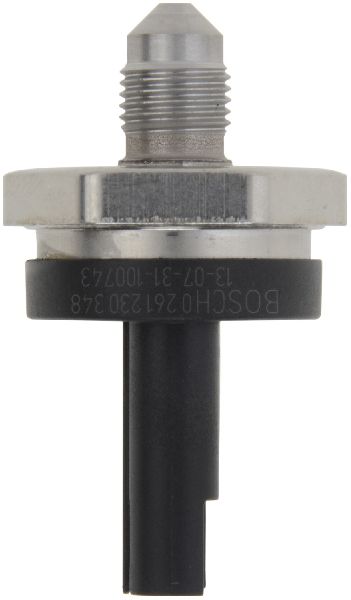
- Fuel Rail Pressure Sensor
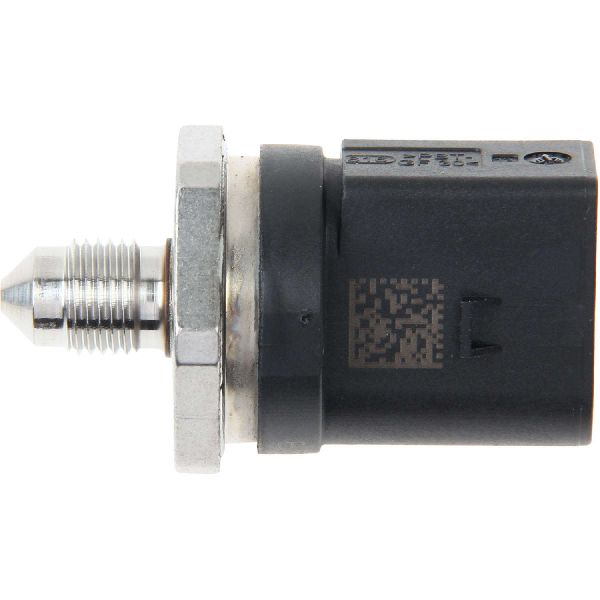
(OEM #13538643665)— This sensor is the most common point of failure for the P0193 code, either through internal failure or a poor connection. The N63 engine uses two of these sensors, one per bank.
Trusted brands: Genuine BMW, Bosch
OEM price range: $98-$125
Aftermarket price range: $30-$80 - Sensor Harness Cable Tie
(OEM #12528624375)— This specific part is called for in a BMW TSB to prevent the wiring harness from vibrating and causing a poor connection at the sensor. Two are required.
Trusted brands: Genuine BMW
OEM price range: $1-$5
Related Codes That Often Appear With This One
- 119001 — This is the manufacturer-specific BMW code that directly corresponds to the generic P0193 code for the Bank 1 sensor.
- 119101 — This is the BMW-specific code for 'Rail pressure sensor 2, electrical: Short circuit to positive', indicating the same fault but on the Bank 2 sensor.
- P0171/P0174 (System Too Lean) — If the DME receives a false high-pressure signal, it may incorrectly reduce the amount of fuel injected, leading to a lean running condition.
- P0300-P0308 (Cylinder Misfires) — Incorrect fueling based on the faulty sensor reading can cause misfires in one or more cylinders.
Technical Service Bulletins (TSBs) & Recalls
- SI B12 14 13: N63T: Rail Pressure Sensor with Mixture Faults Are Stored. This TSB notes that faults 119001 (P0193) and 119101 can be caused by a poor electrical connection from vibration and advises securing the harness with two cable ties (P/N 12 52 8 624 375) before replacing parts.
Platform-Specific Known Issues
- A known issue documented in BMW TSB SI B12 14 13 points to engine vibrations causing a poor electrical connection at the fuel rail pressure sensor, which triggers P0193/119001/119101. The recommended fix is to secure the harness with a specific cable tie, not to replace the sensor itself.
Diagnostic Flowchart
Other Known Issues on This Vehicle
Issues unrelated to this code that are worth knowing about as an owner of this generation:
- Valve Stem Seal Failure 🔴 High — Very common, typically after 60,000-80,000 miles. Causes significant oil consumption and blue/white smoke from the exhaust, especially after idling.
- Timing Chain Stretch 🔴 High — A known issue, particularly on earlier N63 engines but still a concern on the N63TU. Can lead to catastrophic engine failure if the chain skips. BMW issued service bulletins for earlier models. (Ref: TSB No. 111614 (for earlier N63))
- Excessive Oil Consumption 🟠 Medium — Widespread issue often linked to valve stem seals or piston ring design. Many owners report needing to add a quart of oil every 750-1500 miles. (Ref: Part of the N63 Customer Care Package for earlier models.)
- Fuel Injector Failure 🟠 Medium — Injectors can fail, sometimes as early as 20,000-30,000 miles, leading to rough idle, misfires, and stalling.
- Carbon Buildup on Intake Valves 🟡 Low — Common to all direct-injection engines, including the N63. Typically requires walnut blasting service every 50,000-75,000 miles to restore performance.
Real Owner Stories
Aggregated from forums and TSBs cited above. Mileages and costs reflect what owners reported in those sources.
2020 BMW M550i N63 variant — 21000 miles
Symptoms: Experienced the P0193 code at low mileage, indicating the issue persists across newer N63 engine updates.
What fixed it: Diagnosis of the fuel rail pressure sensor circuit.
Source hint: Bimmerpost - 2020 M550i code P0193
BMW 550i N63TU
Symptoms: The vehicle threw a code because the fuel rail pressure sensor was simply unplugged.
What fixed it: Reconnecting the sensor.
Source hint: YouTube video by 'I.E. Euros'
BMW N63 engine
Symptoms: P0193 code (fuel rail pressure sensor) returned shortly after a repair.
What fixed it: The owner had previously used an aftermarket part which failed within a month; the recommended fix is switching to an OEM part.
Source hint: Reddit r/MechanicAdvice - P0193 code (fuel rail pressure sensor)
Related OBD-II Codes
Frequently Asked Questions
Does BMW TSB SI B12 14 13 apply to my 2014-2019 X6 with the N63T engine?
Should I replace the sensor immediately if I see code P0193 on my X6?
Where are the fuel rail pressure sensors located on the N63 engine?
Can I use an aftermarket sensor to fix the P0193 fault?
What is the specific BMW part number for the zip tie fix mentioned in the service bulletin?
Why is the N63 engine in my X6 more prone to these sensor wiring issues?
Helpful Videos
We Have This Part in Stock

The information in this article is provided for general reference and educational purposes only. Vehicle specifications, procedures, and part compatibility can vary by production date, trim level, and region. Always consult your vehicle's factory service manual and verify part numbers before purchasing or performing repairs. Safety-critical components such as airbags, seat belts, and braking systems should be installed by a qualified professional.
- BMW X6:
- 🧭 Diagnostic Flowchart
- 🎬 Helpful Videos
- 🛍️ Shop This Part
- What's Unique About the 2014-2019 BMW X6
- Symptoms You May Notice
- Most Likely Causes
- Rare But Worth Checking
- Diagnosis Steps
- Parts You'll Likely Need
- Related Codes That Often Appear With This One
- Technical Service Bulletins (TSBs) & Recalls
- Platform-Specific Known Issues
- Other Known Issues on This Vehicle
- Real Owner Stories
- 2020 BMW M550i N63 variant — 21000 miles
- BMW 550i N63TU
- BMW N63 engine
- Related OBD-II Codes
- Frequently Asked Questions
- 🎟️ Get 5% Off