

P0193 on 2014-2016 Chevrolet Corvette: Fuel Rail Pressure Sensor High Input Causes & Fixes
On a 2014-2016 Corvette, code P0193 almost always points to a faulty Fuel Rail Pressure Sensor. The engine's computer is seeing a voltage from the sensor that is too high, typically over 4.5-4.8V. Replacing the sensor, located at the back of the driver's side fuel rail, is the most common and recommended fix, even per a GM TSB.
What's Unique About the 2014-2016 Chevrolet CORVETTE
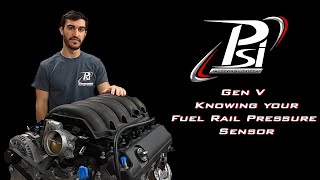
The C7 Corvette's 6.2L LT1 engine uses a high-pressure direct injection fuel system operating at pressures far exceeding traditional port injection, making the fuel rail pressure sensor critical. While P0193 is a generic code, its diagnosis on this platform is heavily influenced by GM Technical Service Bulletin (TSB) #PIP5279A. This TSB covers the Corvette and its platform mates (like the Camaro and Silverado) for a cluster of fuel system codes, including P0193. Crucially, it advises that if standard diagnostics are inconclusive, the fix is to replace the fuel rail pressure sensor, indicating a known failure point for this specific component on Gen V engines. The sensor itself is tucked under the intake manifold at the rear of the driver's side fuel rail, making access somewhat challenging.
Diagnostic Flowchart
Tap your situation to follow the diagnostic path that matches what you're seeing on this vehicle.
- Replacing the high-pressure fuel pump when the issue is only a faulty sensor or a wiring short. This is a much more expensive and labor-intensive repair that won't solve the P0193 code if the sensor is the root cause.
- Replacing the fuel rail pressure sensor without first checking if the wiring harness is shorted to voltage. 🎬 Watch: Why you should check the wiring before buying a sensor. If the wiring is the problem, the new sensor will not fix the code.
Most Likely Causes
- Faulty Fuel Rail Pressure Sensor 🔴 High Probability → Shop Fuel Pressure Sensor The sensor can fail internally, causing it to send a constant high voltage signal (short to voltage) regardless of actual fuel pressure. This is the most common cause, with an estimated 80% probability. TSB #PIP5279A implicitly confirms this by recommending sensor replacement if other diagnostics fail.
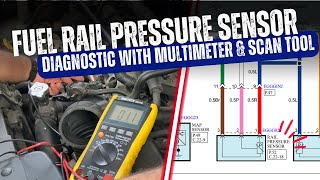
How to confirm: With the ignition on and engine off, use a scan tool to read the fuel rail pressure sensor voltage. If it reads near 5 volts, the sensor is likely shorted internally. Disconnecting the sensor should cause the voltage to drop to 0V on the scan tool; if it does, the sensor is confirmed bad. If the voltage stays high, the problem is in the wiring.
Typical fix: Replace the fuel rail pressure sensor.
Est. part cost: $50-$150 - Wiring or Connector Issue 🟡 Medium Probability The wiring harness to the sensor is routed in a tight, hot area near the back of the engine. Engine heat and vibration can cause the harness insulation to become brittle and chafe, leading to the signal wire shorting to the 5-volt reference wire. Corrosion or damage to the connector pins can also cause this issue.
How to confirm: Visually inspect the wiring harness and connector for any signs of melting, chafing, or corrosion. Perform a continuity test and check for shorts between the signal, ground, and voltage reference wires at the sensor connector with a multimeter.
Typical fix: Repair the damaged section of the wiring harness or replace the connector pigtail.
Est. part cost: $20-$60 - High Fuel Pressure Condition ⚪ Low Probability Less commonly, a mechanical issue could cause fuel pressure to spike, such as a failing high-pressure fuel pump (HPFP) or a restriction in the fuel return system. This would cause the sensor to report a legitimately high voltage. While less common for this specific code, C7s have had documented fuel pump failures.
How to confirm: Use a scan tool to monitor both the desired fuel rail pressure and the actual fuel rail pressure. If the actual pressure is significantly and consistently higher than the desired pressure, a mechanical fault is likely. This may be accompanied by codes like P0089 or P228D.
Typical fix: Diagnose the high-pressure fuel system, which may involve checking the high-pressure fuel pump and related components. This is often a job for a professional.
Est. part cost: $500-$1500+
Rare But Worth Checking
- Powertrain Control Module (ECM) Fault: This is very rare, but an internal failure in the ECM can cause it to misinterpret the sensor's signal or fail to process it correctly. This should only be considered after all other possibilities, especially the sensor and wiring, have been exhaustively ruled out.
Diagnosis Steps
- Check for other DTCs: Use an OBD-II scanner to see if any other codes are present. The TSB #PIP5279A specifically mentions P0089, P0192, P0193, P228C, and P228D as a related group.
- Analyze Live Data: Use a scan tool to view live data for 'Fuel Rail Pressure Sensor Voltage'. With the key on and engine off, the voltage should be low (around 0.5V). If it is stuck at or near 5 volts, this strongly suggests a faulty sensor or a short circuit.
- Test the Sensor Circuit: If the voltage is stuck high, disconnect the sensor's electrical connector. Check the voltage on the scan tool again. If the voltage drops to 0V, the sensor is internally shorted and must be replaced. If the voltage stays high with the sensor disconnected, there is a short to voltage in the wiring harness that must be found and repaired.
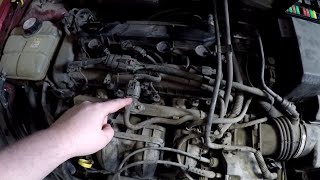
- Inspect Wiring and Connector: The sensor is located at the back of the driver's side fuel rail, underneath the intake manifold. Visually inspect the wiring harness and connector as best as possible for signs of damage, melting from heat, or corrosion. Ensure the connector is seated firmly.
- Verify Mechanical Fuel Pressure: If the sensor voltage appears to be reading correctly (i.e., not stuck at 5V but still triggering the code), compare the actual fuel rail pressure to the desired fuel rail pressure on your scan tool. If the actual pressure is significantly higher than desired, further diagnosis of the high-pressure fuel pump and system is needed.
Parts You'll Likely Need
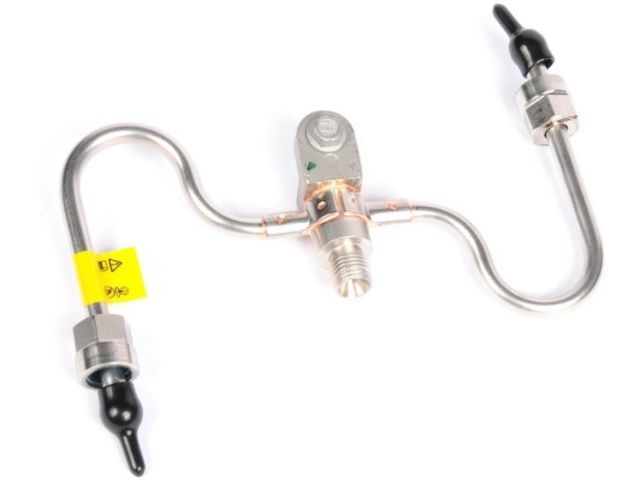
- Fuel Rail Pressure Sensor
(OEM #12705503)— This is the most frequent cause of a P0193 code, as the sensor's internal electronics fail and create a short, sending a constant high voltage signal. TSB #PIP5279A recommends its replacement. This part number supersedes the older part number 12672582.
Trusted brands: ACDelco, GM Genuine
OEM price range: $80-$150
Aftermarket price range: $50-$100
Related Codes That Often Appear With This One
- P0192 — This code is for 'Fuel Rail Pressure Sensor Circuit Low Input'. Seeing it with P0193 can indicate an intermittent wiring problem or a failing sensor that is fluctuating between high and low voltage readings. It is also mentioned in TSB #PIP5279A.
- P0089 — This code relates to 'Fuel Pressure Regulator Performance'. It can appear alongside P0193 if there is a genuine mechanical issue causing high fuel pressure. It is also mentioned in TSB #PIP5279A.
- P228C — This code is for 'Fuel Pressure Regulator 1 Exceeded Control Limits - Pressure Too Low'. While it seems contradictory, complex fuel system faults can sometimes trigger multiple, seemingly conflicting codes. It is also mentioned in TSB #PIP5279A.
- P228D — This code is for 'Fuel Pressure Regulator 1 Exceeded Control Limits - Pressure Too High'. This code directly supports the condition that P0193 indicates and points towards a potential mechanical over-pressure issue. It is also mentioned in TSB #PIP5279A.
Technical Service Bulletins (TSBs) & Recalls
- PIP5279A: Mentions that DTCs P0089, P0192, P0193, P228C, P228D, and others can be found. Directs technicians to follow published service information for diagnosis, and to replace the fuel rail pressure sensor if diagnostics are inconclusive.
- PIP5189B: Discusses the normal operation of the direct injection system during a cold start, which can cause black smoke/soot. While not directly related to the P0193 fault, it provides context on the vehicle's fuel system characteristics.
Platform-Specific Known Issues
- TSB #PIP5279A - SES Lamp with Fuel Rail Pressure Codes: A Technical Service Bulletin, #PIP5279A, was issued for 2014-2016 Corvettes and other GM vehicles with Gen V engines regarding a Check Engine Light with several fuel system codes, including P0193. The bulletin advises technicians to follow standard diagnostics, but if a root cause is not found, they should replace the fuel rail pressure sensor. This strongly indicates it's a known failure item.
- Sensor Location and Access: The fuel rail pressure sensor on the LT1 is located at the rear of the driver's side fuel rail, tucked underneath the intake manifold. While the intake does not need to be removed for access, the space is tight, which can make disconnecting the electrical connector and unthreading the sensor somewhat difficult.
Mechanic-Grade Diagnostic Values
- Fuel Rail Pressure Sensor Voltage (Key On, Engine Off) — expected: ~0.5V - 1.7V. Failure: A reading at or near 5.0V indicates a short to voltage, either in the sensor or wiring.
- Fuel Rail Pressure Sensor 5V Reference Circuit — expected: 4.8V - 5.2V. Failure: Voltage outside this range indicates a problem with the ECM or the wiring harness.
- Fuel Rail Pressure (at idle) — expected: 1.9 - 6.0 MPa (276 - 870 psi). Failure: Pressure significantly above or below this range when the sensor voltage is not fixed high suggests a mechanical fuel system issue.
- Fuel Rail Pressure Sensor Installation Torque — expected: 24 lb-ft. Failure: Improper torque can lead to fuel leaks or damage to the sensor or fuel rail.
Scan Tool Commands That Help
- GDS2 (GM Global Diagnostic System 2): Fuel Rail Pressure Control — To command an increase or decrease in fuel rail pressure while monitoring the sensor's voltage and pressure readings. This helps verify if the sensor responds correctly to pressure changes, isolating it from a mechanical issue.
- GDS2 or equivalent professional scan tool: Live Data Comparison: Desired vs. Actual Fuel Rail Pressure — To determine if a true over-pressure condition exists. If 'Actual' pressure is significantly higher than 'Desired' pressure, it points towards a mechanical fault (like the high-pressure pump) rather than a sensor electrical fault.
- GDS2 (GM Global Diagnostic System 2): Fuel Pump Driver Control Module activation — Used to prime the fuel system and check for leaks after a repair. Note: The C7 uses a control module, not a simple relay, and requires the ignition to be in 'Service Only Mode' to activate.
Wiring & Ground Locations
- B52 Fuel Rail Pressure Sensor Connector — Rear of the driver's side fuel rail, under the intake manifold.. This is the primary connection point to test. A short between the 5V reference wire and the signal wire at this connector or in the harness leading to it will cause a P0193 code.
- Engine Block Grounds — General locations for LT engines include a ground strap from the driver's side frame rail to the block and a main ground on the passenger side motor mount bolt.. A poor engine ground can cause erratic behavior in various sensors, including the fuel rail pressure sensor, as the ECM may not have a stable reference. While not a direct cause of a 'Circuit High' code, it can create unpredictable electrical issues.
OEM Part Supersession History
12672582→12705503— Standard part update/revision by the manufacturer.
Model Year Variations Within This Range
- 2014-2016: These models use a 4-pin analog fuel rail pressure sensor. Starting in 2017, GM switched to a 3-pin digital sensor. The sensors and their corresponding harnesses are not interchangeable, and using the wrong one will cause issues.
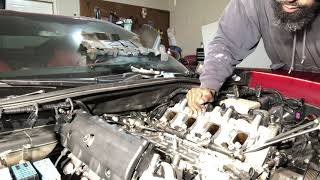
Helpful Videos
We Have This Part in Stock

The information in this article is provided for general reference and educational purposes only. Vehicle specifications, procedures, and part compatibility can vary by production date, trim level, and region. Always consult your vehicle's factory service manual and verify part numbers before purchasing or performing repairs. Safety-critical components such as airbags, seat belts, and braking systems should be installed by a qualified professional.
- Chevrolet CORVETTE:
- 🧭 Diagnostic Flowchart
- 🎬 Helpful Videos
- 🛍️ Shop This Part
- What's Unique About the 2014-2016 Chevrolet CORVETTE
- Most Likely Causes
- Rare But Worth Checking
- Diagnosis Steps
- Parts You'll Likely Need
- Related Codes That Often Appear With This One
- Technical Service Bulletins (TSBs) & Recalls
- Platform-Specific Known Issues
- Mechanic-Grade Diagnostic Values
- Scan Tool Commands That Help
- Wiring & Ground Locations
- OEM Part Supersession History
- Model Year Variations Within This Range
- 🎟️ Get 5% Off