

P0193 on 2014-2019 Chevrolet Corvette: Fuel Rail Pressure Sensor Circuit High Causes and Fixes
For a C7 Corvette with a P0193 code, the most likely cause is a failed fuel rail pressure sensor, a known issue referenced in GM Technical Service Bulletin PIP5279. The second most likely cause is a damaged wiring harness near the sensor. The correct OEM replacement part is GM Part #12705503. Expect to pay $50-$150 for a new sensor.
- P0193 on a C7 Corvette is almost always caused by either a bad fuel rail pressure sensor or the wiring leading to it.
- A GM Technical Service Bulletin (PIP5279) acknowledges this as a known issue, often recommending sensor replacement.
- Before replacing the sensor, test the wiring harness for a short-to-voltage to avoid a misdiagnosis.
- Do not replace the expensive high-pressure fuel pump unless it has been definitively diagnosed as the problem.
- The job is accessible to a skilled DIYer, but the high-pressure fuel system must be safely depressurized before starting work to prevent serious injury.
What's Unique About the 2014-2019 Chevrolet Corvette
The C7 Corvette's LT1 engine uses a high-pressure direct injection fuel system where the fuel rail pressure sensor is a critical component. The sensor and its wiring are located in a very hot, tight space at the rear of the driver's side fuel rail, making them susceptible to heat-related failures and wiring damage. General Motors issued Technical Service Bulletin (TSB) #PIP5279, which applies to the 2014-2015 Corvette, advising technicians to replace the fuel rail pressure sensor if standard diagnostics don't pinpoint another cause for code P0193, indicating it's a recognized failure point. This TSB covers a range of Gen V engines, including the LT1, L83, L86, and LT4.
Symptoms You May Notice
- Check Engine Light is on
- Reduced engine power or 'limp mode' activation
- Hesitation or stumbling during acceleration
- Hard starting or failure to start
- Rough idle or stalling
- Increased fuel consumption
- Strong fuel smell
- Replacing the high-pressure fuel pump. This is a very expensive and labor-intensive repair that will not fix a P0193 code caused by a sensor or wiring fault.
- Replacing the fuel rail pressure sensor without first testing the wiring. If the harness is shorted to voltage, a new sensor will not resolve the issue and may also be damaged.
Most Likely Causes
- Faulty Fuel Rail Pressure Sensor 🔴 High Probability → Shop Fuel Pressure Sensor This is a known failure item on Gen V GM engines, as acknowledged by TSB PIP5279. The sensor is subjected to high heat and pressure cycles, leading to internal failure where it shorts and sends a constant high voltage signal, often near the 5V reference voltage.
How to confirm: With the ignition on and engine off (KOEO), use a scan tool to monitor 'Fuel Rail Pressure Sensor Voltage'. A reading near 5V is a strong indicator. To confirm, disconnect the sensor. If the voltage on the scan tool drops to 0V, the sensor is internally shorted and faulty. If liquid fuel is present in the electrical connector when disconnected, the sensor has failed internally and must be replaced.
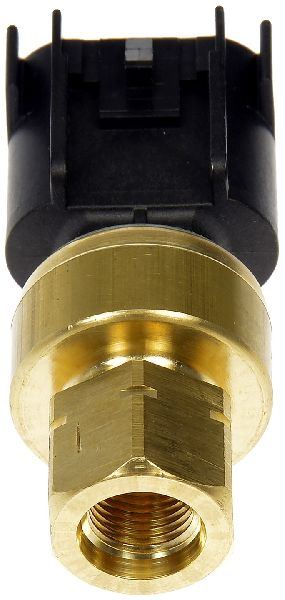
Typical fix: Replace the fuel rail pressure sensor. It is recommended to use a high-quality OEM or equivalent part, such as GM Part #12705503. Since this is a direct injection high-pressure system, the fuel system must be properly depressurized according to the factory service manual before replacement to prevent serious injury. The sensor should be torqued to 24 ft-lbs.
Est. part cost: $50-$150 - Wiring Harness or Connector Issue 🟡 Medium Probability The sensor harness is routed in a tight space near the back of the engine and firewall, where it is exposed to significant heat. This can cause insulation to become brittle and crack, leading to the signal wire chafing and shorting to the 5-volt reference wire or another power source. The connector pins can also suffer from corrosion or damage.
How to confirm: Visually inspect the wiring harness leading to the sensor for any signs of melting, chafing, or damage. With the sensor disconnected (KOEO), check the signal wire at the harness connector for voltage. If it reads above 0V (e.g., 5V), there is a short to voltage in the harness that must be located and repaired.
Typical fix: Repair the damaged section of the wiring harness, ensuring proper insulation with heat-shrink tubing. If the connector itself is damaged, it may need to be replaced with a new pigtail connector.
Est. part cost: $15-$50
Rare But Worth Checking
- Faulty Engine Control Module (ECM): This is very rare. The ECM should only be considered after definitively ruling out the sensor and wiring harness as the cause. An internal ECM fault can cause it to misinterpret a normal signal as high. Before condemning the ECM, all other possibilities must be exhausted.
- Swapped Harness Connectors: On Gen V engines, there are several physically identical connectors at the rear of the engine for the fuel injector rails and sensors. If the engine has been recently serviced or replaced, it's possible for these connectors to be swapped, leading to incorrect voltage readings. A technician on YouTube documented this exact scenario on a 2016 Silverado with a 5.3L V8, which shares a similar architecture, causing a no-start and fuel pressure sensor codes.
Diagnosis Steps
- Connect an OBD-II scanner and confirm the P0193 code is present. Check for any other related fuel system codes and freeze frame data.
- Using the scanner's live data function, observe the 'Fuel Rail Pressure' and 'Fuel Rail Pressure Sensor Voltage' with the Key On, Engine Off (KOEO). A reading of ~5 volts or a pressure reading of over 4000 PSI points towards the circuit high fault.
- Locate the fuel rail pressure sensor at the rear of the driver's side fuel rail, under the intake manifold area.
- Visually inspect the sensor's wiring harness and connector for any obvious signs of damage, melting, chafing, or corrosion. Ensure the connector is securely plugged in.
- Disconnect the sensor's electrical connector. Re-check the live data or use a multimeter to measure the voltage on the signal wire in the harness-side connector. If the voltage is still high (~5V), there is a short-to-voltage in the wiring harness that needs to be located and repaired. If the voltage drops to 0V, the wiring is likely okay, and the sensor itself is the problem.
- If the sensor is determined to be faulty, the high-pressure fuel system MUST be depressurized according to the factory service procedure before attempting to remove and replace the sensor. Failure to do so can result in high-pressure fuel spray, causing serious injury or fire.
- After replacing the sensor or repairing the wiring, clear the codes and perform a drive cycle, including cold starts and acceleration, to ensure the fault does not return.
Parts You'll Likely Need
- Fuel Rail Pressure Sensor
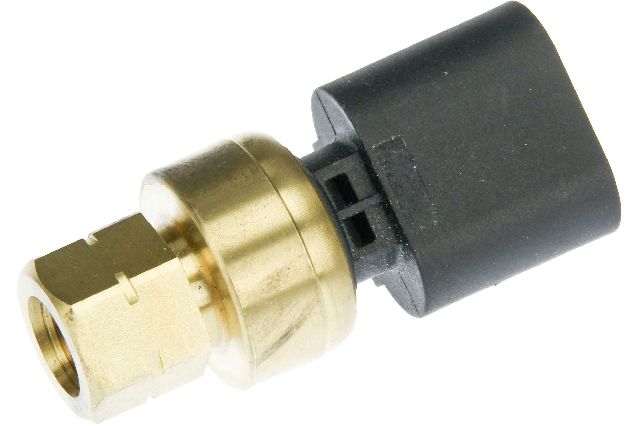
(OEM #12705503)— This is the most common cause of a P0193 code on this vehicle, as identified by owner experiences and GM's own Technical Service Bulletin (PIP5279). This part number supersedes the previous number, 12672582.
Trusted brands: ACDelco, GM Genuine Parts
OEM price range: $80-$150
Aftermarket price range: $45-$100
Related Codes That Often Appear With This One
- P0192 — This code for 'Fuel Rail Pressure Sensor Circuit Low' can appear with P0193 if there's an intermittent wiring problem causing the voltage to fluctuate wildly between a short to ground and a short to voltage.
- P0089 — This code for 'Fuel Pressure Regulator Performance' can be set alongside P0193. Both are mentioned in TSB PIP5279 as related fuel system codes that can point to the same faulty sensor.
- P228C — This code for 'Fuel Pressure Regulator 1 Exceeded Control Limits' is also mentioned in TSB PIP5279 and points to a general fuel pressure control problem, often triggered by the faulty sensor data from the P0193 condition.
- P0641 — This code for 'Sensor Reference Voltage 'A' Circuit/Open' can appear if the fuel rail pressure sensor shorts in such a way that it affects the entire 5V reference circuit shared by other sensors. A CorvetteForum user experienced this when a faulty A/C pressure sensor shorted the circuit, causing a P0192.
Technical Service Bulletins (TSBs) & Recalls
- PIP5279 - SES Lamp With Fuel Rail Pressure Codes
- TSB Bulletin #PIP5279A - This updated bulletin notes that vehicles may have a Service Engine Soon Malfunction Indicator Lamp with codes P0193, P0192, P0089, P228C, and others stored, advising technicians to follow published Service Information diagnostics.
Platform-Specific Known Issues
- TSB PIP5279: GM issued this bulletin for 2014-2015 Corvettes (and other vehicles with Gen V engines) for various fuel pressure codes, including P0193. It advises that if normal diagnostics are inconclusive, the fuel rail pressure sensor should be replaced, confirming it as a known problematic part.
- Harness Chafing: Due to the tight packaging and high heat at the rear of the engine bay, the wiring harness for the sensor is prone to chafing against the engine block or firewall, which can cause a short to voltage.
Mechanic-Grade Diagnostic Values
- Fuel Rail Pressure Sensor Signal Voltage (KOEO) — expected: ~0.5V. Failure: A reading near 5.0V indicates a 'Circuit High' fault, triggering P0193.
- Fuel Rail Pressure Sensor 5V Reference Voltage — expected: 4.8V - 5.2V. Failure: Voltage outside this range indicates a problem with the ECM or the 5V reference circuit, possibly shared with other sensors.
- Fuel Rail Pressure Sensor Installation Torque — expected: 24 ft-lbs. Failure: Overtightening can damage the sensor or rail; undertightening can cause a high-pressure fuel leak.
- Fuel Rail Pressure Sensor Low Reference Circuit to Ground — expected: Less than 5 ohms. Failure: Resistance greater than 5 ohms indicates an open or high resistance in the ground circuit, which can cause incorrect sensor readings.
Scan Tool Commands That Help
- GDS2 (GM Global Diagnostic System 2): Fuel Pump Control / Fuel System Tests — After replacing a component, a technician can use GDS2 to command the low-pressure fuel pump on to prime the system and check for leaks before starting the engine. It can also be used to monitor desired vs. actual fuel pressure readings during diagnosis.
Wiring & Ground Locations
- B52 Fuel Rail Pressure Sensor Connector — At the rear of the driver's side fuel rail, under the intake manifold area.. This is the primary connection point for the sensor. All electrical testing (5V reference, signal, ground) begins here. Damage or corrosion at this connector is a common cause of P0193.
- G303 — On the frame rail, where the main negative battery cable connects to the chassis.. While not a direct cause of a 'circuit high' fault, a poor main ground can cause a host of intermittent and strange electrical issues across the vehicle, including affecting ECM operation and sensor readings. Ensuring this connection is clean and tight is a foundational step in any electrical diagnosis.
- Engine Block Ground Strap — Typically runs from the driver's side frame rail to the engine block.. This is the primary ground path for the engine block and all sensors mounted to it. A loose or corroded strap can lead to erratic sensor behavior, although it's more likely to cause multiple seemingly unrelated codes rather than just P0193.
Real Owner Repair Stories
- CorvetteForum Member (2014 C7 Corvette Z51) — Check Engine Light with P0193, car running rough.
❌ Tried (didn't work) Initially suspected a tuning issue after recent modifications.
✅ What actually fixed it The owner used a scan tool to observe the Fuel Rail Pressure Sensor voltage at 4.99V with the key on, engine off. This confirmed the sensor was outputting a constant high signal. Replacing the fuel rail pressure sensor (GM Part #12705503) resolved the code and the rough running condition.
OEM Part Supersession History
12672582→12705503— Standard part evolution for improved reliability or manufacturing process. The original part was identified as a common failure point in TSB PIP5279.
Heads up: The parts are directly interchangeable.
Model Year Variations Within This Range
- 2014-2016 vs 2017-2019: Around 2016-2017, GM transitioned from a 4-pin analog fuel rail pressure sensor to a 3-pin digital (SENT protocol) sensor on some Gen V platforms. While the C7 LT1 seems to have used a 3-pin design for most of its run, it is critical to verify the connector on the specific vehicle before ordering a replacement, as the connectors are physically identical but electrically incompatible.
- 2014: The 2014 model year used a 6-speed automatic transmission (6L80) whereas 2015+ models used an 8-speed (8L90E). While not directly related to the P0193 code, it's a significant model year difference to be aware of when sourcing parts or information.
Diagnostic Flowchart
Other Known Issues on This Vehicle
Issues unrelated to this code that are worth knowing about as an owner of this generation:
- Cracked/Bent Wheels (Grand Sport & Z06) 🔴 High — Very common on Z06/Grand Sport models, leading to multiple class-action lawsuits. Can occur under normal driving conditions. (Ref: A special reimbursement program was announced, but not a formal recall.)
- 8-Speed Automatic Transmission Shudder (A8) 🟠 Medium — Common on 2015-2019 models with the 8L90 automatic transmission. Often described as driving over rumble strips. (Ref: TSB #18-NA-355 advises a specific fluid flush procedure ('Triple Flush') with an updated Mobil 1 fluid.)
- Infotainment Screen Failure / Black Screen 🟡 Low — Frequently reported issue where the screen flickers, goes black, or becomes unresponsive. (Ref: TSB PI1375C was issued to address software issues, but many problems are hardware-related (loose wires, faulty HMI module).)
- Overheating on Track (Z06) 🔴 High — Early (2015-2016) Z06 models were prone to overheating and entering limp mode during track use, leading to a class-action lawsuit. (Ref: GM later offered a revised hood with improved cooling and a different supercharger cover to help mitigate the issue.)
- Lifter Failure (LT1) 🟠 Medium — Some owners report engine ticking that progresses to lifter failure, which can cause significant engine damage if not addressed. This is often linked to the Active Fuel Management (AFM) system.
Used vs. New Parts: Buying Guide for This Vehicle
When a used part is the smart pick: A used part is almost never a smart choice for the fuel rail pressure sensor itself. Given that this is a known failure item according to a TSB, a used sensor has an unknown and likely limited remaining lifespan. However, sourcing a used wiring harness pigtail from a salvage yard is a perfectly acceptable and cost-effective way to repair a damaged connector.
Donor-vehicle mileage cap: roughly under 30000 miles for the part to have meaningful remaining life.
What to inspect on the donor part:
- For a wiring pigtail, inspect for at least 6 inches of clean, uncut wire.
- Ensure the connector's locking tab is intact and not brittle.
- Check for any signs of corrosion, melting, or stretched/damaged pins inside the connector.
OEM-only on this vehicle (don't cheap out):
- Fuel Rail Pressure Sensor
Aftermarket brands forum-validated for this vehicle:
- ACDelco
- GM Genuine Parts
Brands owners have reported issues with on this vehicle:
- Unbranded or 'white-box' sensors from online marketplaces are strongly discouraged due to the critical nature of this component in a high-pressure direct injection system.
Real Owner Stories
Aggregated from forums and TSBs cited above. Mileages and costs reflect what owners reported in those sources.
2015 Chevrolet Corvette Z06 6.2L
Symptoms: The owner observed live data showing the fuel rail pressure sensor stuck at 4.99V with the key on and engine off.
What fixed it: Diagnosis confirmed a faulty sensor; the owner used live data to verify the high voltage signal before replacement.
Source hint: CorvetteForum - C7 Z06 Discussion: A thread titled 'Fuel Rail pressure sensor issue or ECM?????'
2014-2019 Chevrolet Corvette 6.2L LT1
Symptoms: Wiring harness damage due to tight packaging and high heat at the rear of the engine bay.
What fixed it: Repairing a broken or chafed wire in the harness that was affecting vehicle components.
Source hint: CorvetteForum - C7 Tech/Performance: A thread about a broken wire
2015 Chevrolet Suburban 6.2L L86
Symptoms: The owner experienced frustration after replacing multiple expensive fuel system parts without resolving the issue.
What fixed it: Properly identifying an electrical circuit issue rather than mechanical fuel component failure.
Source hint: Tahoe Yukon Forum - A user experience on a related platform (2015 Suburban)
Related OBD-II Codes
Frequently Asked Questions
Does TSB PIP5279 apply to my 2015 Corvette with the LT1 engine?
What part number should I use to replace the fuel rail pressure sensor on my C7 Corvette?
Can I use a used fuel rail pressure sensor from a salvage yard to save money?
Is there a specific torque spec for the new sensor installation?
Why is my Corvette entering 'limp mode' with code P0193?
Where is the sensor located on the 6.2L LT1 engine?
Helpful Videos
We Have This Part in Stock

The information in this article is provided for general reference and educational purposes only. Vehicle specifications, procedures, and part compatibility can vary by production date, trim level, and region. Always consult your vehicle's factory service manual and verify part numbers before purchasing or performing repairs. Safety-critical components such as airbags, seat belts, and braking systems should be installed by a qualified professional.
- Chevrolet Corvette:
- 🧭 Diagnostic Flowchart
- 🎬 Helpful Videos
- 🛍️ Shop This Part
- What's Unique About the 2014-2019 Chevrolet Corvette
- Symptoms You May Notice
- Most Likely Causes
- Rare But Worth Checking
- Diagnosis Steps
- Parts You'll Likely Need
- Related Codes That Often Appear With This One
- Technical Service Bulletins (TSBs) & Recalls
- Platform-Specific Known Issues
- Mechanic-Grade Diagnostic Values
- Scan Tool Commands That Help
- Wiring & Ground Locations
- Real Owner Repair Stories
- OEM Part Supersession History
- Model Year Variations Within This Range
- Other Known Issues on This Vehicle
- Used vs. New Parts: Buying Guide for This Vehicle
- Real Owner Stories
- 2015 Chevrolet Corvette Z06 6.2L
- 2014-2019 Chevrolet Corvette 6.2L LT1
- 2015 Chevrolet Suburban 6.2L L86
- Related OBD-II Codes
- Frequently Asked Questions
- 🎟️ Get 5% Off