

P0193 on 2011-2019 Ford Explorer 3.5L EcoBoost: Causes and Fixes for Fuel Pressure Sensor Circuit High
On a 2011-2019 Explorer with the 3.5L EcoBoost, P0193 almost always means the Fuel Rail Pressure (FRP) sensor has failed. The sensor is located under the intake manifold, making it a labor-intensive repair. This is an electrical fault code, not a mechanical pressure problem. Expect a shop to charge between $450 and $800 for the fix, with a significant portion of the cost being labor.
- P0193 on a 3.5L EcoBoost Explorer is almost certainly a failed Fuel Rail Pressure (FRP) sensor.
- Do not drive the vehicle. The risk of the engine stalling creates a major safety hazard.
- This is an advanced, labor-intensive repair due to the sensor's location under the intake manifold.
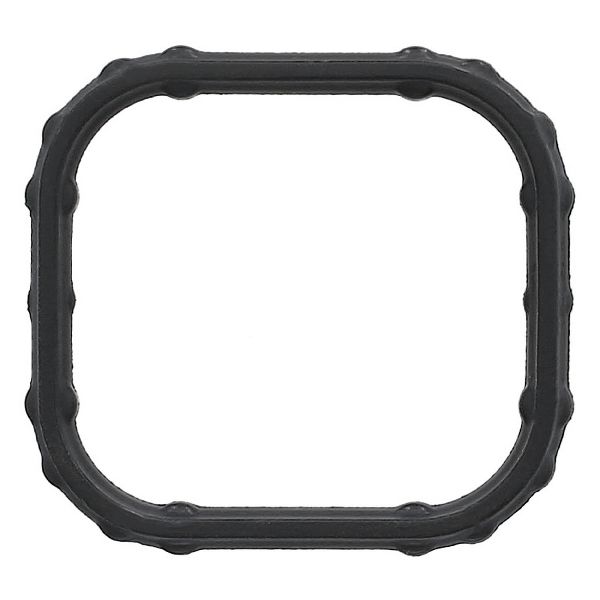
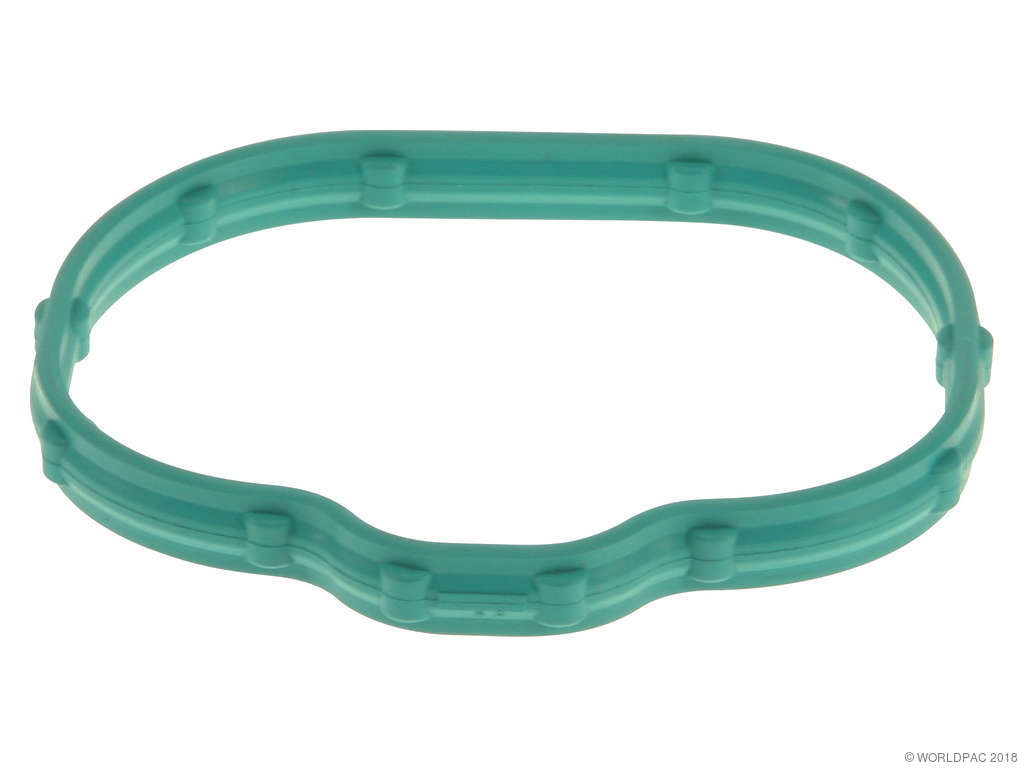
- Always replace the single-use intake manifold gaskets when performing this repair.
- Confirm the diagnosis with a scan tool before starting the repair to rule out a simple wiring issue.
What's Unique About the 2011-2019 Ford Explorer
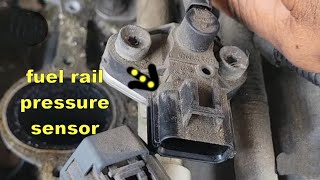
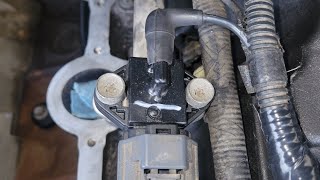
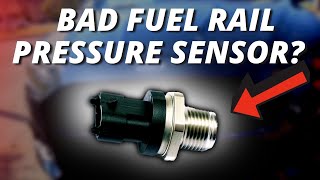
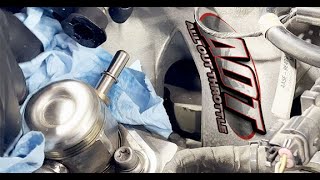
The 3.5L EcoBoost engine's direct injection system operates at very high pressures, making the FRP sensor's accuracy critical. Unlike many vehicles where this sensor is easily accessible, on this specific transversely-mounted Explorer engine, it is buried under the upper intake manifold against the firewall. This location 🎬 Watch: Locate the hidden fuel rail pressure sensor makes replacement a significantly more complex and labor-intensive job, turning a simple sensor swap into a multi-hour project that requires removing major engine components like the intake plenum.
Symptoms You May Notice
- Check Engine Light is on
- Engine hesitation or stumbling, especially during acceleration
- Reduced engine power or the vehicle entering 'limp mode'
- Difficulty starting the engine, requiring extended cranking
- Rough or erratic idle
- Engine stalling unexpectedly, sometimes while driving
- Decreased fuel economy
- Sputtering at higher speeds (45+ mph) when pressing the gas.
- Replacing the high-pressure fuel pump (HPFP). P0193 is an electrical circuit code, not a mechanical pressure code. A scan tool reading pegged at maximum pressure points to a sensor/circuit fault, not an actual over-pressure condition.
- Replacing fuel injectors. While fuel system issues can cause performance problems, P0193 points specifically to the sensor circuit, not injector function.
- Replacing the fuel filter. While a clogged fuel filter can cause drivability issues, it would typically cause low pressure codes, not a 'Circuit High' fault.
Most Likely Causes
- Faulty Fuel Rail Pressure (FRP) Sensor 🔴 High Probability → Shop Fuel Pressure Sensor The FRP sensor is a known failure point on this platform, likely due to the high-heat, high-vibration environment under the intake manifold. The sensor can short internally, causing the signal voltage to peg high.
How to confirm: With a scan tool, observe the Fuel Rail Pressure sensor voltage (FRP V) with the key on, engine off (KOEO). A reading that is stuck high (typically >4.5V) or a pressure reading that is pegged at its maximum value (e.g., 2500+ PSI) points to a failed sensor or circuit fault. A normal KOEO voltage should be around 0.5V.
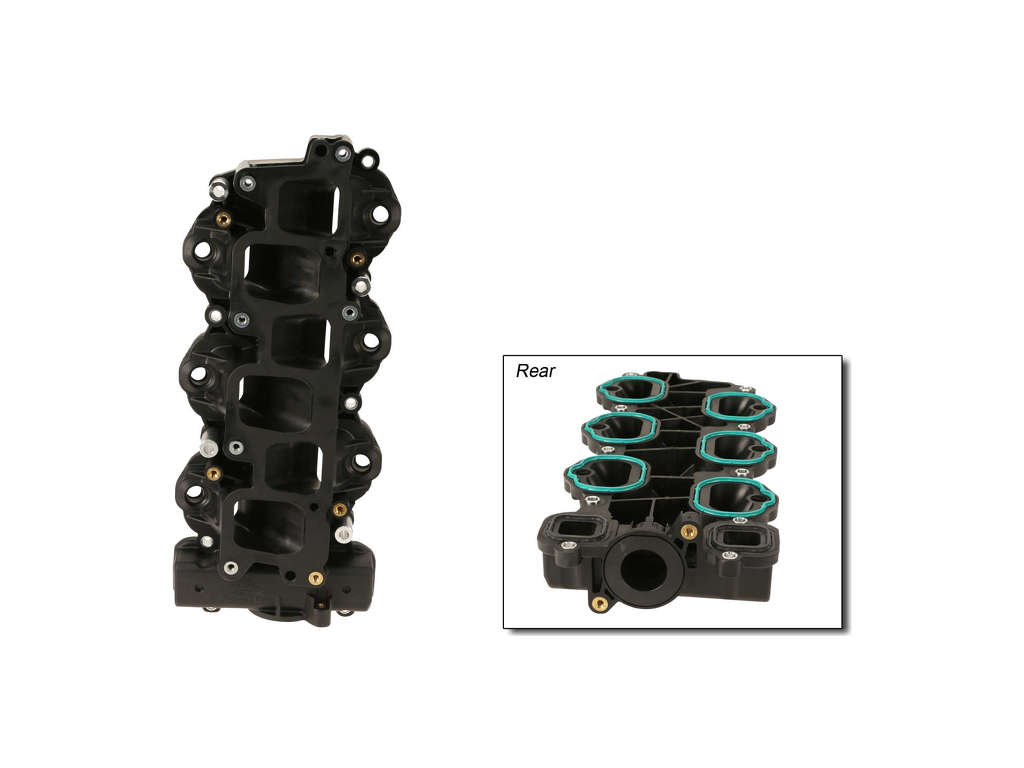
Typical fix: Replace the Fuel Rail Pressure sensor. Due to its location, the upper intake manifold must be removed, and the manifold gaskets must also be replaced. It is highly recommended to use a high-quality OEM (Motorcraft) or premium aftermarket sensor to avoid repeating this labor-intensive repair.
Est. part cost: $70-$180 - Damaged Wiring or Connector 🟡 Medium Probability The wiring harness leading to the sensor is exposed to extreme engine heat and vibration. This can make wires brittle, cause insulation to melt, or lead to corrosion and loose pins in the connector, resulting in a short-to-voltage or an open circuit. A manufacturer service bulletin, SSM 47337, notes that a rough run condition with P0193 can be caused by engine harness chafing at the cylinder head near connector C1056.
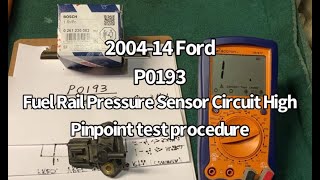
How to confirm: Visually inspect the wiring harness for signs of melting, chafing, or damage. Perform a 'wiggle test' on the harness and connector while monitoring the sensor's voltage on a scan tool to see if the reading fluctuates. Use a multimeter to check for a 5V reference signal, a good ground, and for a short-to-voltage on the signal wire at the sensor connector (with the sensor unplugged).
Typical fix: Repair the damaged section of the wiring harness. If the connector is damaged, it may need to be replaced with a new pigtail. Protect the new harness from heat with appropriate loom or shielding.
Est. part cost: $20-$50
Rare But Worth Checking
- Faulty Powertrain Control Module (PCM): This is extremely rare and should only be considered after the sensor and its entire circuit have been thoroughly tested and proven to be good. A PCM failure is a last-resort diagnosis.
- Corroded Fuel Pump Driver Module (FPDM): → Shop Fuel Pump While FPDM failure more commonly causes low pressure (P0087) or no-start conditions, corrosion can lead to erratic behavior that could potentially trigger a P0193 code. The module is often mounted on the vehicle's frame and exposed to road salt and moisture, which can corrode its aluminum housing and internal electronics.
- Reference Voltage Issues: Manufacturer bulletin SSM 46456 (and similarly SSM 46351) indicates that P0193 can sometimes be triggered by concerns with the reference voltage or signal return circuit of other sensors, such as the crankshaft position sensor, which share the circuit.
Diagnosis Steps
- Connect an OBD-II scanner and confirm P0193 is the active code. Note any other codes present.
- Use the scanner's live data function to monitor the 'Fuel Rail Pressure' (FRP) and 'FRP Sensor Voltage' PIDs.
- With the Key On, Engine Off (KOEO), check the voltage. A normal reading is ~0.5V. A reading stuck above 4.5V strongly suggests a sensor or circuit issue.
- If possible, perform a 'wiggle test' by gently moving the wiring harness near the sensor while watching the live data for any changes. This can indicate a wiring fault.
- If the sensor is accessible (or after removing the intake), disconnect the sensor's electrical connector.
- With the key on, use a multimeter to test the connector terminals: check for a 5-volt reference wire, a proper ground wire, and check the signal wire for any voltage (it should be near zero with the sensor disconnected).
- If the 5V reference is missing or the ground is bad, trace the wiring back to the PCM. If the reference and ground are good, and the signal wire is not shorted to voltage, the sensor itself is the most likely culprit.
- If the sensor and wiring test good, the issue could be an extremely rare PCM fault.
Parts You'll Likely Need
- Fuel Rail Pressure Sensor
(OEM #CM5229 (also cross-references to BU5Z9F972B, 3F2Z-9G756-AC))— This is the most common failure item for code P0193 on this specific engine.
Trusted brands: Motorcraft, Bosch, Standard Motor Products, Dorman
OEM price range: $80-$135
Aftermarket price range: $60-$120 - Upper Intake Manifold Gasket Set
(OEM #AA5Z9439A (Intake Plenum Gasket), 7T4Z-9439-D (Coolant Port Gaskets, set of 2))— These are single-use gaskets that must be replaced anytime the intake manifold is removed to access the FRP sensor. The 3.5L EcoBoost uses multiple gaskets for this job.
Trusted brands: Fel-Pro, Mahle
OEM price range: $40-$70
Aftermarket price range: $20-$50
Related Codes That Often Appear With This One
- P0192 — If there is an intermittent short or open in the wiring, the signal could fluctuate between being too high (P0193) and too low (P0192 - Fuel Rail Pressure Sensor 'A' Circuit Low).
Technical Service Bulletins (TSBs) & Recalls
- TSB 15-0137: While for the F-150, this TSB is relevant as it highlights a weak point in the era's Ford fuel system design. It addresses a melting fuel pump fuse (Fuse 27) causing stalling, with a fix involving a fuse relocation kit (P/N EL3Z-14293-A).
- SSM 47337: This bulletin describes how engine harness chafing near the cylinder head can lead to an illuminated MIL and rough running conditions specifically associated with DTC P0193.
- SSM 46456 / SSM 46351: These manufacturer bulletins note that P0193 may be triggered by reference voltage or signal return circuit concerns related to the crankshaft position sensor.
Platform-Specific Known Issues
- Recall 18S35 (NHTSA ID 18V-807): A small number of 2018 Explorer models with the 3.5L GTDI engine were recalled because an improperly assembled fuel pressure sensor could leak fuel, increasing fire risk. The remedy was a full replacement of the fuel line assembly.
Mechanic-Grade Diagnostic Values
- FRP Sensor Signal Voltage (KOEO) — expected: ~0.5V. Failure: A reading stuck at or above 4.5V indicates a hard fault, such as an internal sensor short or a short-to-voltage in the wiring.
- FRP Sensor Connector VREF (5V Reference) — expected: 4.8V to 5.2V between the 5V reference pin and the ground (Signal Return) pin.. Failure: Voltage outside this range points to a problem with the PCM or the wiring providing power/ground to the sensor.
- FRP Signal Circuit Resistance to Ground — expected: Greater than 10,000 ohms (10kΩ) with the sensor disconnected.. Failure: Resistance less than 10kΩ indicates a short to ground in the signal wire, which would typically cause a P0192 (Circuit Low) but is a key wiring health check.
- FRP Signal Circuit End-to-End Resistance — expected: Less than 5.0 ohms between the sensor connector pin and the corresponding PCM connector pin (with both ends disconnected).. Failure: Resistance greater than 5.0 ohms indicates an open or high resistance in the signal wire itself.
- High-Pressure Fuel System (at idle) — expected: 250-450 PSI.. Failure: A scan tool reading pegged at a maximum value (e.g., 2500+ PSI) that doesn't change with RPM points to a sensor/circuit fault, not a true pressure problem.
- Low-Pressure Fuel System (in-tank pump) — expected: 40 - 60 PSI.. Failure: Low pressure here would typically set a P0087 code, not P0193.
Scan Tool Commands That Help
- Ford IDS (Integrated Diagnostic System): Fuel System Test — This function allows for advanced diagnostics, including potential bidirectional control of fuel system components. It should be used by a professional if a simple sensor replacement and wiring check do not resolve the P0193 code, to help isolate a more complex fault.
OEM Part Supersession History
BU5Z-9F972-A (also sold as CM-5226)→BU5Z-9F972-B (also sold as CM-5250)— Standard part revision and update by the manufacturer.CM5229 (also sold as 3F2Z-9G756-AC)→Not explicitly superseded by BU5Z-9F972-B, but is often listed as a cross-reference. CM5229 appears to be a broader part number for many Ford applications, while BU5Z-9F972-B is more specific to the EcoBoost and modern GDI engines.— Part consolidation and specific application updates.
Heads up: Technicians should verify the correct part using the vehicle's VIN. While they may cross-reference, using the latest specific part number (BU5Z-9F972-B) is recommended for this engine.
Model Year Variations Within This Range
- 2016-2019: A significant mid-cycle refresh occurred for the 2016 model year. This included revised exterior styling, suspension updates, and the replacement of the often-criticized MyFord Touch infotainment system with the much-improved SYNC 3 system. A new 2.3L EcoBoost I4 engine option was also introduced, but the 3.5L EcoBoost V6 remained the performance option in Sport and Platinum trims.
- 2011-2015: These earlier models of the fifth generation feature the original styling and are equipped with the MyFord Touch infotainment system, which was known for being slower and less intuitive than the later SYNC 3 system.
Diagnostic Flowchart
Other Known Issues on This Vehicle
Issues unrelated to this code that are worth knowing about as an owner of this generation:
- Internal Water Pump Failure 🔴 High — Common failure, often between 80k-150k miles. The pump is driven by the timing chain, and a failure can cause coolant to mix with engine oil, leading to catastrophic engine damage if not addressed immediately.
- Power Transfer Unit (PTU) Overheating and Failure 🔴 High — Very common on AWD models. The PTU is located next to the hot exhaust, cooking the 'lifetime' fluid, leading to breakdown, leaks, and eventual failure of the unit. Preventative fluid changes every 30k miles are recommended. (Ref: TSB 19-2017 (addresses fluid leak from seal))
- Timing Chain Stretch and Phaser Rattle 🟠 Medium — Common on the first-generation (pre-2017) 3.5L EcoBoost. Symptoms include a distinct rattling noise on cold starts. Often requires a costly replacement of the timing chain, tensioners, and VCT phasers. (Ref: TSB 18-2305 (for F-150, but relevant))
- Carbon Buildup on Intake Valves 🟠 Medium — An inherent issue with all direct-injection (GDI) engines. Since fuel is injected directly into the cylinder, it doesn't wash over the intake valves, allowing carbon deposits to build up over time, which can restrict airflow and cause performance issues.
- Cracked Exhaust Manifolds 🟠 Medium — The cast iron exhaust manifolds are prone to cracking due to thermal stress from the turbochargers, causing exhaust leaks and a ticking noise.
Used vs. New Parts: Buying Guide for This Vehicle
When a used part is the smart pick: For this specific repair, using used parts is generally not recommended. The primary failure part is an electronic sensor located in a high-heat, high-labor area. The risk of a used sensor failing shortly after installation outweighs the cost savings.
Donor-vehicle mileage cap: roughly under 80000 miles for the part to have meaningful remaining life.
What to inspect on the donor part:
- If considering a used wiring harness pigtail, inspect for any signs of brittleness, melting, or corrosion on the pins.
- Avoid any parts from a vehicle with signs of a major engine fire or flood damage.
OEM-only on this vehicle (don't cheap out):
- Fuel Rail Pressure Sensor (FRP): Given the high labor cost to access this sensor, using a new, high-quality OEM (Motorcraft) or top-tier OEM-equivalent (like Bosch) part is critical to avoid a repeat repair.
- Upper Intake Manifold Gaskets: These are single-use items and must always be replaced with new gaskets to prevent vacuum leaks. Reusing old gaskets will lead to new problems.
Aftermarket brands forum-validated for this vehicle:
- Motorcraft (OEM)
- Bosch
- Standard Motor Products (SMP)
- Fel-Pro (for gaskets)
- Mahle (for gaskets)
Brands owners have reported issues with on this vehicle:
- Unbranded, no-name sensors from online marketplaces should be avoided. The potential for premature failure is high, and the cost of re-doing the labor-intensive job negates any initial savings.
Real Owner Stories
Aggregated from forums and TSBs cited above. Mileages and costs reflect what owners reported in those sources.
2007 Ford Explorer
Symptoms: Intermittent Check Engine Light, engine hesitation, and eventual stalling.
What fixed it: Diagnosis and replacement of the fuel rail pressure sensor to resolve the P0193 code.
Source hint: Ford Truck Enthusiasts Forums - 'P0193 Code - Questions'
2011-2017 Ford F-150 3.5L EcoBoost
Symptoms: Non-rational electronic reading for fuel pressure; code P0193 triggered by a circuit issue.
What fixed it: Tracing the signal wire all the way to the PCM to confirm a non-rational electronic reading.
Source hint: Ford F150 Forum - 'Need help with a p0193 code'
Ford Escape
Symptoms: The engine light had been on for several months with a P0193 generic code for fuel rail pressure sensor high input.
What fixed it: Replacement of the fuel rail pressure sensor at a reported cost of $275.
Source hint: NHTSA ODI #10593745
Ford Five Hundred
Symptoms: Owner reported an inability to reset driver controls until doors showed closed, despite no door codes; the only active code found was P0193 for the fuel rail pressure sensor.
What fixed it: Identified P0193 as the sole fault code during a diagnostic scan.
Source hint: NHTSA ODI #11234304
Related OBD-II Codes
Frequently Asked Questions
Is there a recall for the fuel pressure sensor on my 2018 Ford Explorer 3.5L EcoBoost?
My Explorer is stalling; could this be related to the fuel pump fuse issue mentioned in TSB 15-0137?
Why is the Fuel Rail Pressure (FRP) sensor so prone to failure on the 3.5L EcoBoost engine?
What specific part should I use to fix the P0193 code on my Explorer?
Are there other major issues I should look out for on my 2011-2019 Explorer while fixing this code?
Can I just replace the sensor, or do I need other parts for the repair?
Helpful Videos
We Have This Part in Stock


The information in this article is provided for general reference and educational purposes only. Vehicle specifications, procedures, and part compatibility can vary by production date, trim level, and region. Always consult your vehicle's factory service manual and verify part numbers before purchasing or performing repairs. Safety-critical components such as airbags, seat belts, and braking systems should be installed by a qualified professional.
- Ford Explorer:
- 🧭 Diagnostic Flowchart
- 🎬 Helpful Videos
- 🛍️ Shop This Part
- What's Unique About the 2011-2019 Ford Explorer
- Symptoms You May Notice
- Most Likely Causes
- Rare But Worth Checking
- Diagnosis Steps
- Parts You'll Likely Need
- Related Codes That Often Appear With This One
- Technical Service Bulletins (TSBs) & Recalls
- Platform-Specific Known Issues
- Mechanic-Grade Diagnostic Values
- Scan Tool Commands That Help
- OEM Part Supersession History
- Model Year Variations Within This Range
- Other Known Issues on This Vehicle
- Used vs. New Parts: Buying Guide for This Vehicle
- Real Owner Stories
- 2007 Ford Explorer
- 2011-2017 Ford F-150 3.5L EcoBoost
- Ford Escape
- Ford Five Hundred
- Related OBD-II Codes
- Frequently Asked Questions
- 🎟️ Get 5% Off