

P0193 on 2012-2018 Ford Focus 2.0L: Fuel Rail Pressure Sensor High Input Causes and Fixes
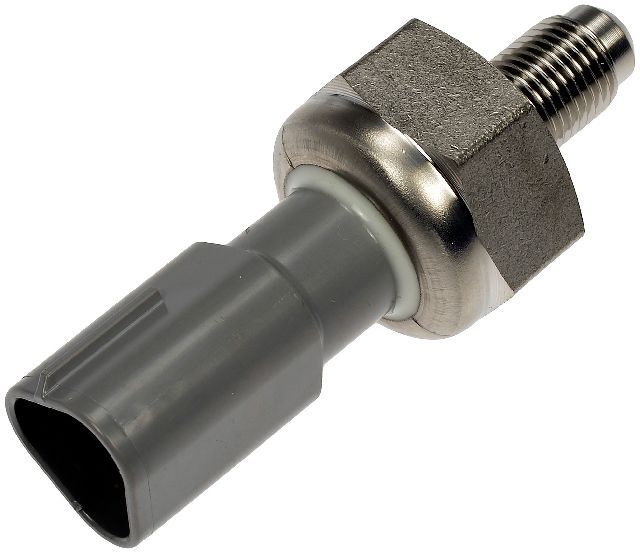
This code on a 2012-2018 Ford Focus 2.0L GDI almost always points to a failed Fuel Rail Pressure (FRP) sensor. The sensor itself is the most common failure point, often failing internally and sending a constant high voltage signal. A key symptom is a car that cranks but won't start, but starts immediately if the sensor is unplugged. Expect to pay around $50-$100 for an aftermarket sensor and $100-$180 for an OEM Motorcraft part (CM5229). DIY difficulty is 2/5, but requires care when working with
- P0193 on your Focus almost always means you need a new Fuel Rail Pressure (FRP) sensor.
- This is an electrical fault code, not a mechanical pressure problem. Don't replace the expensive high-pressure fuel pump.
- Symptoms include stalling, hard starting, and poor acceleration. Driving should be avoided due to the risk of stalling in traffic.
- Before replacing the sensor, perform a quick visual check of the wiring harness near the intake manifold for any signs of damage or chafing.
- This is a manageable DIY repair for those with basic tools, but remember to relieve fuel system pressure and take safety precautions.
What's Unique About the 2012-2018 Ford Focus
The 2.0L GDI (Gasoline Direct Injection) engine in the third-generation Ford Focus operates with a very high-pressure fuel system, making the Fuel Rail Pressure (FRP) sensor a critical component for engine performance and efficiency. Unlike older port-injection systems, this GDI system's sensor is a frequent failure point. While the code points to a circuit issue, on this specific platform, the sensor itself is the most common culprit, often failing internally and sending a false high voltage signal to the computer. This issue is also prevalent in other Ford vehicles using the 2.0L GDI/EcoBoost engine, such as the Escape and Fusion.
Symptoms You May Notice
- Check Engine Light is on
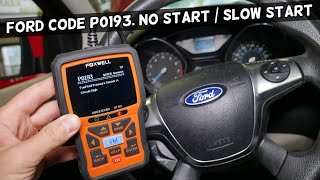
- Difficulty starting the engine, or it won't start at all 🎬 See how a faulty sensor causes these hard start symptoms.
- Engine cranks but will not fire, but starts when the FRP sensor is unplugged
- Engine stalls unexpectedly, particularly at idle or low speeds
- Hesitation or sluggish acceleration
- Rough idle
- Reduced fuel economy
- Replacing the high-pressure fuel pump. The P0193 code is an electrical circuit code, not a mechanical pressure code. While a faulty pump can cause other fuel pressure codes (like P0087 - low pressure), it is not the cause of a 'circuit high' fault. Always diagnose the sensor and wiring first.
- Replacing the fuel filter. A clogged fuel filter would typically cause low fuel pressure and a different trouble code.
Most Likely Causes
- Failed Fuel Rail Pressure (FRP) Sensor 🔴 High Probability → Shop Fuel Pressure Sensor The sensor is a known common failure item on this platform, often failing internally and causing a short that sends a maximum voltage signal (typically 5V) to the PCM. This is the most frequent cause for P0193 on the 2.0L GDI engine and its variants.
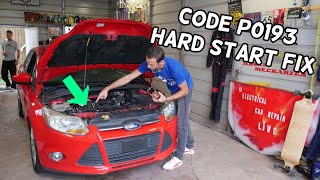
How to confirm: Using an OBD-II scanner, check the live data for the FRP sensor. With the key on and engine off, the reading should be a low, stable pressure. If the scanner shows a pressure reading that corresponds to a 5-volt signal (often displayed as a very high, nonsensical PSI value), the sensor has likely failed. A definitive test is to unplug the sensor; if the engine then starts (it will run rough and set a 'circuit low' code), the sensor is bad. This works because the PCM uses a default fuel map when it receives no signal, allowing the engine to run. 🎬 Watch: How to diagnose and fix a P0193 no-start condition.
Typical fix: Replace the Fuel Rail Pressure sensor. It is located on the high-pressure fuel rail on the passenger side of the engine. Before replacement, the fuel system pressure must be relieved using the Schrader valve on the fuel rail. The new sensor's O-ring should be lubricated with clean engine oil or silicone paste before installation. 🎬 Watch this step-by-step guide to replacing the fuel pressure sensor.
Est. part cost: $50 - $180 - Wiring Harness or Connector Issue 🟡 Medium Probability The engine harness can be subject to heat and vibration. TSB 18-2062 for 2012-2014 models notes potential for wiring harness chafing near the intake manifold, which can damage circuits in that area. While P0193 is not listed in the TSB, the location is relevant. A manufacturer service bulletin for other Ford models, SSM 47337, also notes that P0193 can be caused by engine harness chafing at the cylinder head. A forum user also reported a P0193 on a Ford Fiesta was caused by a chafed injector wiring loom causing a short.
How to confirm: Visually inspect the wiring harness leading to the FRP sensor for any signs of chafing, melting, or corrosion, especially where it might rub against other components. With a multimeter, check for a 5V reference signal and a good ground at the connector with the key on. Test the signal wire for a short to voltage by checking for voltage with the sensor unplugged; there should be near 0 volts. If you read 5V, there is a short in the wiring harness that needs to be found and repaired.
Typical fix: Repair the damaged section of the wiring harness and secure it away from any potential chafing points using loom or tape. Replace the connector pigtail if it is corroded or damaged.
Est. part cost: $10 - $50
Rare But Worth Checking
- Faulty Powertrain Control Module (PCM): This is extremely rare. Before condemning the PCM, all other possibilities, including the sensor and wiring, must be exhaustively ruled out. A PCM failure is almost never the cause of this code.
- Crankshaft Position Sensor Circuit Issues: According to manufacturer bulletin SSM 46456 and SSM 46351, a concern with the reference voltage or signal return circuit of the crankshaft position sensor can sometimes trigger P0193 alongside other codes.
Diagnosis Steps
- Connect an OBD-II scanner and confirm the presence of the P0193 code. Note any other codes.
- View live data on the scanner. Observe the Fuel Rail Pressure (FRP) PID with the Key On, Engine Off (KOEO). A reading that is maxed out (often corresponding to a 5V signal) strongly suggests a sensor or circuit fault.
- Safety First: Locate the Schrader valve on the fuel rail (it looks like a tire valve stem). Place a rag over it and depress the pin to relieve any stored fuel pressure.
- Visually inspect the Fuel Rail Pressure sensor and its connector for any obvious damage, corrosion, or loose connection. The sensor is on the fuel rail on the passenger side of the engine.
- Inspect the wiring harness leading to the sensor for any signs of chafing, melting, or breaks, paying close attention to areas where it might rub against the intake manifold or other components.
- The Unplug Test: Disconnect the sensor's electrical connector. Attempt to start the engine. If the engine now starts (though it may run rough), this is a very strong confirmation that the sensor itself has failed and needs replacement.
- Wiring Verification: If the unplug test is inconclusive, use a multimeter on the harness-side connector with the key on. Verify a 5-volt reference wire, a ground wire (near 0V), and check the signal wire. The signal wire should read near 0V with the sensor unplugged. If it reads 5V, there is a short to power in the harness.
- If all wiring checks out and the 'unplug test' points to the sensor, replace the Fuel Rail Pressure sensor. Lubricate the new sensor's O-ring before installation.
- After replacement, clear the codes with the OBD-II scanner and start the vehicle to confirm the fix.
Parts You'll Likely Need
- Fuel Rail Pressure Sensor
(OEM #CM5229 (Motorcraft Service Part #), 3F2Z-9G756-AC (Ford Engineering #))— This is the most common failure point for code P0193 on this specific vehicle and engine combination.
Trusted brands: Motorcraft, Bosch (P/N: 0261230093), Standard Motor Products (P/N: FPS505), Delphi
OEM price range: $100-$180
Aftermarket price range: $50-$100
Related Codes That Often Appear With This One
- P0192 — If you unplug the faulty P0193-causing sensor to test if the engine will start, the PCM will immediately log P0192 (Fuel Rail Pressure Sensor 'A' Circuit Low) because the signal wire is now open. This is a normal part of the diagnostic process.
- P0087 — If the PCM is receiving a false high signal from the FRP sensor, it may command the fuel pump to lower pressure drastically, which can sometimes trigger a P0087 (Fuel Rail/System Pressure - Too Low) code as a secondary effect.
- P1450 — While not directly related, issues with the canister purge valve (related to recall 18S32) can cause stalling and rough running symptoms that may be confused with an FRP sensor issues. It's possible to have both issues present.
- P06A6, P0335, P0532 — As noted in SSM 46456, these codes related to reference voltage and the crankshaft sensor may appear concurrently with P0193 if there is a shared circuit fault.
Technical Service Bulletins (TSBs) & Recalls
- TSB 18-2062 - For 2012-2014 Focus, addresses potential wiring harness chafing near the intake manifold which could affect various sensor circuits, including potentially the FRP sensor.
- SSM 47337 - Notes that vehicles may exhibit an illuminated MIL and rough running condition with DTC P0193 due to engine harness chafing at the cylinder head near connector C1056.
- SSM 46456 / SSM 46351 - Manufacturer bulletins indicating that P0193 may be triggered by concerns with the reference voltage or signal return circuit of the crankshaft position sensor.
Platform-Specific Known Issues
- Recall 18S32: This recall addresses a faulty canister purge valve that can stick open, causing a vacuum in the fuel tank, stalling, and an inaccurate fuel gauge. While it sets different codes, the stalling symptom can be confused with an FRP sensor issue. It's important to verify if this recall has been performed on the vehicle.
- TSB 18-2062: This bulletin, for 2012-2014 Focus models built before early 2014, mentions the potential for the wiring harness to chafe near the intake manifold. While P0193 is not explicitly listed, the location of the chafe could affect the FRP sensor circuit and cause this code.
Mechanic-Grade Diagnostic Values
- FRP Sensor Signal Voltage (Key On, Engine Off) — expected: ~0.5 V. Failure: Voltage is stuck high, near 4.7V - 5.0V. This indicates an internal sensor short or a short to power in the signal wire.
- FRP Sensor Reference Voltage (at connector, sensor unplugged, Key On) — expected: ~5.0 V. Failure: Voltage is significantly lower than 5.0V or is 0V, indicating a problem with the PCM or the reference voltage circuit.
- FRP Sensor Ground Circuit (at connector, sensor unplugged, Key On) — expected: Near 0 V. Failure: Voltage is present on the ground wire, indicating a bad ground connection.
- FRP Sensor Signal Wire (at connector, sensor unplugged, Key On) — expected: Near 0 V. Failure: Voltage (especially 5V or 12V) is present, indicating a short to power in the wiring harness between the sensor and the PCM.
Scan Tool Commands That Help
- Ford IDS (Integrated Diagnostic System): Fuel System Test — The Ford IDS software has a 'Fuel System Test' function which can include bidirectional control of fuel pumps and solenoids. This would be used in advanced diagnostics if a simple sensor swap and wiring check does not resolve the issue, allowing a technician to command specific parts to isolate a fault that isn't the sensor itself.
Wiring & Ground Locations
- Main Engine/Transmission Ground — A primary ground strap connects from the negative battery terminal area to a post on the driver's side strut tower, and another connects to the transmission bell housing.. A poor main ground connection to the engine/transmission can cause floating voltages and erratic behavior from multiple sensors, including the FRP sensor. A user reported a no-start condition was resolved by finding a loose ground on the transmission bell housing.
- G104 (or similar engine bay ground) — Typically located on the chassis frame rail, often under the air filter box or near the battery tray.. The PCM and its associated sensors rely on clean ground points. Corrosion or looseness at a key engine bay ground can introduce resistance and cause incorrect sensor readings, potentially triggering a high circuit code like P0193.
- FRP Sensor Connector — On the high-pressure fuel rail, passenger side of the engine.. This is the primary point of failure. The connector itself or the three wires leading to it (5V reference, signal, ground) can be damaged by heat and vibration, causing a short or open circuit.
Real Owner Repair Stories
- 2CarPros Forum User (Ford vehicle with P0193 (model not specified, but symptoms match Focus GDI)) — Cranks but will not start, smell of gas when cranking.
❌ Tried (didn't work) Replaced fuel pump motor and filter/screens, Replaced in-line fuel filter, Replaced Fuel Rail Pressure Sensor (FRP), Replaced the FRP sensor connector pigtail, Swapped the Fuel Pump Driver Module with a used one
✅ What actually fixed it The forum thread ends before a final fix is confirmed by the original poster, but the consulting mechanic advises to stop replacing parts and perform electrical tests to verify fuel pressure and check for correct voltage at the sensor, as the code indicates an electrical fault, not a mechanical one. - YouTube channel 'Electrical Car Repair LIVE' (2013 Ford Focus 2.0L) — Hard start, Check Engine Light on with code P0193.
❌ Tried (didn't work) The video directly diagnoses the issue without trying other fixes first.
✅ What actually fixed it The Fuel Rail Pressure sensor was replaced. After replacement and clearing the code, the car started immediately and the Check Engine Light stayed off. - NHTSA ODI #10593745 — An owner of a Ford vehicle reported that the engine light had been on for several months with the only code being P0193 (Fuel Rail Pressure Sensor High Input).
OEM Part Supersession History
3F2E-9G756-AA, 3F2E-9G756-AB→3F2Z-9G756-AC (Ford), CM5229 (Motorcraft Service #)— Part revision and update by the manufacturer.
Heads up: The Bosch equivalent part is 0261230093, which is often cross-referenced and may have originally been superseded by Bosch part 0261230094. These parts are generally interchangeable for this application.
Model Year Variations Within This Range
- 2015-2018: The Ford Focus received a significant facelift for the 2015 model year, including revised styling and the introduction of new engine options like the 1.0L EcoBoost. However, the 2.0L GDI engine, its fuel system, and the associated P0193 fault remained fundamentally the same as the 2012-2014 models.
Diagnostic Flowchart
Used vs. New Parts: Buying Guide for This Vehicle
When a used part is the smart pick: A used Fuel Rail Pressure sensor is generally not recommended. Because it is a common failure item and a relatively inexpensive electronic sensor, the risk of getting a part that has already failed or is near the end of its life is high. The labor to replace it is minimal, making the savings from a used part not worth the potential for a repeat failure.
Donor-vehicle mileage cap: roughly under 40000 miles for the part to have meaningful remaining life.
What to inspect on the donor part:
- Ensure the donor vehicle was not in a front-end collision.
- Check the connector pins for any signs of corrosion, bending, or moisture.
- Avoid parts that show signs of extreme heat exposure or have brittle plastic.
OEM-only on this vehicle (don't cheap out):
- While not strictly 'OEM-only', using a Motorcraft (OEM) or Bosch (original supplier) sensor is highly recommended for reliability.
Aftermarket brands forum-validated for this vehicle:
- Bosch (Often the original equipment manufacturer)
- Motorcraft (Ford's OEM parts brand)
- Standard Motor Products (SMP)
Brands owners have reported issues with on this vehicle:
- Unnamed, no-brand sensors from online marketplaces should be avoided due to a high likelihood of premature failure or incorrect readings out of the box.
Real Owner Stories
Aggregated from forums and TSBs cited above. Mileages and costs reflect what owners reported in those sources.
Ford Focus 2.0L
Symptoms: The car had a hard start or would not start at all.
What fixed it: The Fuel Rail Pressure sensor was replaced.
Source hint: youtube_comment from Electrical Car Repair LIVE
2014 Ford Fiesta ST 1.6T
Symptoms: The car would not start, but would start and run roughly immediately after unplugging the high-pressure fuel sensor. Plugging it back in while running allowed the car to operate correctly until the next start attempt.
What fixed it: The 'unplug test' confirmed a bad sensor, which was then replaced.
Source hint: Reddit r/MechanicAdvice - 2014 Fiesta ST 1.6T - P0193
Ford Fiesta
Symptoms: The vehicle set a P0193 code.
What fixed it: The cause was a chafed injector wiring loom that was shorting out; repairing the wiring fixed the issue.
Source hint: Ford Owners Club - P0193 on Ford Fiesta
Documented NHTSA Reports
Ford Five Hundred
Symptoms: The owner reported that the only code present in the car was P0193 Fuel Rail Pressure Sensor, though they were also experiencing issues with door controls.
Source hint: NHTSA ODI #11234304
Related OBD-II Codes
Frequently Asked Questions
My 2013 Focus is stalling unexpectedly. Could this be related to Recall 18S32?
I have a 2014 Focus with code P0193. Is TSB 18-2062 relevant to my problem?
My Focus cranks but won't start. How can I quickly test if the Fuel Rail Pressure sensor is the cause?
Where is the Fuel Rail Pressure (FRP) sensor located on the 2.0L GDI engine?
My scanner shows a maxed-out fuel pressure reading with the engine off. What does that indicate?
I'm planning to replace the FRP sensor myself. Are there any important steps I shouldn't miss?
Helpful Videos

We Have This Part in Stock


The information in this article is provided for general reference and educational purposes only. Vehicle specifications, procedures, and part compatibility can vary by production date, trim level, and region. Always consult your vehicle's factory service manual and verify part numbers before purchasing or performing repairs. Safety-critical components such as airbags, seat belts, and braking systems should be installed by a qualified professional.
- Ford Focus:
- 🧭 Diagnostic Flowchart
- 🎬 Helpful Videos
- 🛍️ Shop This Part
- What's Unique About the 2012-2018 Ford Focus
- Symptoms You May Notice
- Most Likely Causes
- Rare But Worth Checking
- Diagnosis Steps
- Parts You'll Likely Need
- Related Codes That Often Appear With This One
- Technical Service Bulletins (TSBs) & Recalls
- Platform-Specific Known Issues
- Mechanic-Grade Diagnostic Values
- Scan Tool Commands That Help
- Wiring & Ground Locations
- Real Owner Repair Stories
- OEM Part Supersession History
- Model Year Variations Within This Range
- Used vs. New Parts: Buying Guide for This Vehicle
- Real Owner Stories
- Ford Focus 2.0L
- 2014 Ford Fiesta ST 1.6T
- Ford Fiesta
- Documented NHTSA Reports
- Ford Five Hundred
- Related OBD-II Codes
- Frequently Asked Questions
- 🎟️ Get 5% Off