

P0193 on 2015-2019 Ford Transit 3.5L EcoBoost: Fuel Rail Pressure Sensor Circuit High Causes and Fixes
On a 2015-2019 Ford Transit with the 3.5L EcoBoost engine, code P0193 is almost always caused by a failed Fuel Rail Pressure (FRP) sensor. This is an electrical fault, not a fuel pressure problem. The sensor is difficult to access, making labor a significant cost. Expect to pay $60-$100 for an OEM Motorcraft sensor (CM-5250), with DIY replacement being challenging but possible. Careful depressurization of the fuel system is required.
- P0193 is an electrical code, not a mechanical one. Do not replace the expensive fuel pumps before diagnosing the sensor and wiring.
- The most likely cause is a failed Fuel Rail Pressure (FRP) sensor, part number CM-5250 / BU5Z-9F972-B.
- Symptoms often include a no-start, hard start, or sudden stalling condition, which is a major safety risk.
- Safety is critical: you must depressurize the high-pressure fuel system before attempting to replace the sensor to avoid injury and fire risk.
- Diagnosis can be confirmed with a scan tool by checking if the sensor's voltage is stuck near 5 volts with the key on, engine off.
What's Unique About the 2015-2019 Ford Transit
The 3.5L EcoBoost is a direct-injection engine, meaning it has a high-pressure fuel system that operates at thousands of PSI. The Fuel Rail Pressure (FRP) sensor is a critical input for managing this pressure. While the P0193 code is generic, on Ford's EcoBoost platforms, it is very commonly associated with the electronic failure of the sensor itself rather than more complex wiring or fuel pump issues. Owners often experience sudden and severe symptoms like stalling or a no-start condition, which can be alarming but typically point back to this single, common-failure component.
Symptoms You May Notice
- Check Engine Light is on.
- Engine is hard to start or will not start at all.
- Engine stalls, especially at idle, when coming to a stop, or during acceleration.
- Rough or erratic idle.
- Hesitation or loss of power during acceleration.
- Reduced fuel economy.
- Engine may enter 'limp mode' with severely restricted power.
- Replacing the high-pressure fuel pump (HPFP). P0193 is an electrical circuit code, not a mechanical pressure code, making the pump an unlikely cause.
- Replacing the low-pressure in-tank fuel pump or the Fuel Pump Driver Module (FPDM). These components are part of the low-pressure fuel system and are not directly related to a high-pressure sensor circuit fault.
Most Likely Causes
- Faulty Fuel Rail Pressure (FRP) Sensor 🔴 High Probability → Shop Fuel Pressure Sensor The FRP sensor is a known common failure item on Ford EcoBoost engines across multiple platforms like the F-150 and Explorer. It can fail internally, creating an electrical short that results in a constant high-voltage signal being sent to the PCM.
How to confirm: Using a scan tool, observe the live data for Fuel Rail Pressure voltage (FRP V). With the key on and engine off, if the voltage is stuck at or near 5.0 volts, the sensor has almost certainly failed. The pressure reading may also be pegged at an impossibly high number (e.g., 2500+ PSI). You can also backprobe the sensor connector to verify the high signal voltage with a multimeter.
Typical fix: Replace the Fuel Rail Pressure sensor. The fuel system must be safely depressurized before removal. The sensor is located on the passenger side fuel rail, toward the rear of the engine, and is notoriously difficult to access.
Est. part cost: $60-$100 - Wiring Harness or Connector Damage 🟡 Medium Probability The engine bay's heat and vibrations can cause wiring insulation to become brittle or connectors to corrode over time, leading to shorts or poor connections. A short between the signal wire and the 5V reference wire would cause this code. A manufacturer service bulletin, TSB Bulletin #SSM 47337, notes that an illuminated MIL and/or rough running condition with P0193 may be due to engine harness chafing at the right cylinder head near connector C1056.
How to confirm: Visually inspect the wiring harness and connector for the FRP sensor. Look for any signs of chafing, melting, corrosion, or backed-out pins. With the sensor unplugged and key on, check for 5V reference and a good ground at the connector. If voltage is present on the signal wire terminal with the sensor unplugged, there is a short to power in the harness.
Typical fix: Repair the damaged section of the wiring harness or replace the connector pigtail.
Est. part cost: $15-$50
Rare But Worth Checking
- Powertrain Control Module (PCM) Fault: This is very rare, but a faulty PCM can misinterpret the sensor's signal. This should only be considered after the sensor and wiring have been definitively ruled out as the cause.
- Crankshaft Position Sensor Reference Issues: According to TSB Bulletin #SSM 46456 and TSB Bulletin #SSM 46351, some Ford vehicles may exhibit P0193 due to a concern with the reference voltage or signal return circuit of the crankshaft position sensor.
Diagnosis Steps
- Connect an OBD-II scanner and confirm P0193 is the primary code. Check for any other related fuel system codes.
- View the freeze frame data to see the conditions under which the code was set.
- Using the scanner's live data function, monitor the 'Fuel Rail Pressure' (FRP) and 'Fuel Rail Pressure Sensor Voltage' readings with the key on, engine off. A voltage reading stuck near 5.0V, or a pressure reading pegged at its maximum value, points directly to a sensor or wiring short.
- Perform a thorough visual inspection of the FRP sensor connector and its wiring harness. Look for any signs of damage, corrosion, melting, or loose pins.
- Safety First: Before proceeding, relieve the pressure in the high-pressure fuel system. This can be done by disabling the fuel pump and running the engine until it stalls, or by following the specific procedure in the factory service manual. Failure to do so can result in a dangerous, high-pressure fuel spray.
- Disconnect the FRP sensor. With the key on, use a multimeter to test the connector terminals. You should find approximately 5 volts (reference), a good ground (near 0 volts), and the signal wire (which should be near 0V with the sensor unplugged).
- If the 5V reference and ground are good, and the live data voltage was stuck high, the FRP sensor is faulty and should be replaced.
- If the reference voltage or ground is missing, or if you find voltage on the signal wire with the sensor unplugged, the problem is in the wiring harness or PCM. Trace the wiring to find the short or open circuit.
- After replacing the sensor or repairing the wiring, clear the trouble codes and perform a test drive to ensure the repair was successful.
Parts You'll Likely Need
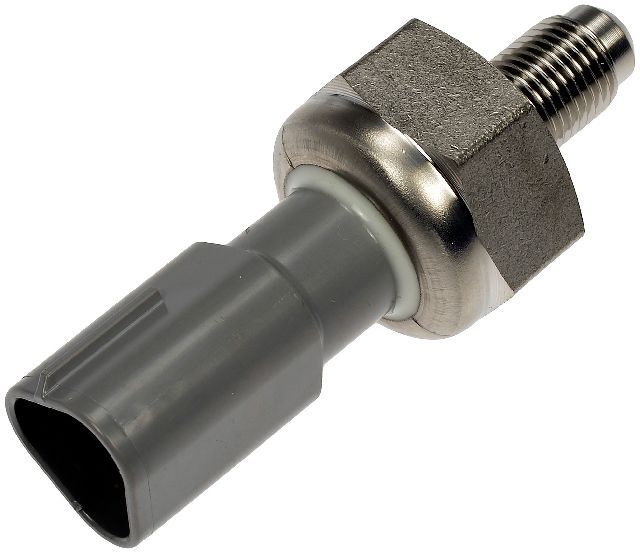
- Fuel Rail Pressure Sensor
(OEM #CM-5250 (also BU5Z-9F972-B))— This sensor is the most common point of failure for a P0193 code on this engine, typically failing internally and causing an electrical short.
Trusted brands: Motorcraft, Bosch
OEM price range: $60-$100
Aftermarket price range: $30-$70
Related Codes That Often Appear With This One
- P0191 — P0191 (Fuel Rail Pressure Sensor Circuit Range/Performance) can sometimes accompany P0193 if the sensor is failing intermittently before it shorts completely high.
- P0087 — P0087 (Fuel Rail/System Pressure - Too Low) could appear if the sensor is providing erratic readings, causing the PCM to command incorrect fuel pump operation before the sensor ultimately fails with a high signal.
Technical Service Bulletins (TSBs) & Recalls
- SSM 47337: A Special Service Message for some 2018 F-150s that mentions P0193, indicating it's a known issue in the 3.5L EcoBoost family.
- TSB Bulletin #SSM 47337: Notes that P0193 may be caused by engine harness chafing at the right cylinder head near connector C1056.
- TSB Bulletin #SSM 46456: Indicates that P0193 may be due to a concern with the reference voltage or signal return circuit of the crankshaft position sensor.
- TSB Bulletin #SSM 46351: Describes how a concern with the reference voltage or signal return circuit of the crankshaft position sensor can trigger P0193.
Platform-Specific Known Issues
- The FRP sensor on the 3.5L EcoBoost in the Transit is located on the rear of the passenger-side fuel rail, against the firewall. Its location is extremely difficult to access, significantly increasing the labor time and difficulty of the replacement compared to other vehicles.
Mechanic-Grade Diagnostic Values
- FRP Sensor Signal Voltage (Key On, Engine Off) — expected: ~0.5V. Failure: A reading stuck at or near 5.0V indicates a short to voltage or an internally failed sensor.
- FRP Sensor Signal Voltage (Warm Idle) — expected: ~1.5V - 2.5V. Failure: A static reading near 5.0V that does not change with engine RPM.
- FRP Sensor 5V Reference (KOEO, Connector Unplugged) — expected: ~5.0 Volts. Failure: Significantly lower or no voltage indicates a wiring issue or PCM fault.
- High-Pressure Fuel System (Warm Idle) — expected: 200-450 PSI. Failure: A scan tool reading pegged at a maximum value (e.g., 2500+ PSI) that doesn't change points to a sensor/circuit fault, not a true pressure issue.
- High-Pressure Fuel System (Under Load) — expected: Up to 2,150+ PSI. Failure: This code is electrical; the scan tool will show a false maximum reading regardless of actual pressure.
- Low-Pressure Fuel System Pressure — expected: 40 - 60 PSI. Failure: This code is not typically caused by a low-pressure system fault.
- PCM Fault Threshold for P0193 — expected: Signal voltage must remain below ~4.7V - 4.9V. Failure: The PCM will set code P0193 if the FRP sensor voltage exceeds this upper limit for a specified duration.
Scan Tool Commands That Help
- Ford IDS / High-End Scan Tool: Wiggle Test on FRP PID — While observing the live Fuel Rail Pressure (FRP) voltage PID, gently wiggle the wiring harness at the sensor and along its path. If the voltage reading jumps, drops, or normalizes, it confirms an intermittent wiring or connector fault, saving you from replacing a good sensor.
Wiring & Ground Locations
- FRP Sensor Connector — On the passenger side fuel rail, towards the rear of the engine against the firewall.. This is the primary connection to test for the 5V reference, ground, and signal wires. Corrosion or damage here is a common cause of the code.
- G203 — Located by the passenger side kick panel, underneath the plastic trim.. This is a major ground point for the instrument panel and several PCM-related circuits, including the data link connector. While not a direct ground for the FRP sensor itself, a poor connection here can cause a wide range of bizarre electrical issues and communication errors that could mimic sensor faults.
- FRP Sensor Pinout (Typical) — At the sensor connector.. Based on similar Ford models, the pinout is likely: Red wire (5V Power), Orange wire (Signal), Green wire (Ground). Verifying these with a multimeter is a key diagnostic step.
OEM Part Supersession History
BU5Z-9F972-A (also CM-5226)→BU5Z-9F972-B (also CM-5250)— Standard part revision and improvement by the manufacturer.
Heads up: None. The new part (BU5Z-9F972-B) is a direct replacement for the old one.
Diagnostic Flowchart
Other Known Issues on This Vehicle
Issues unrelated to this code that are worth knowing about as an owner of this generation:
- Driveshaft Flexible Coupling Failure 🔴 High — Extremely common on 2015-2017 models, leading to a major recall. The coupling cracks, causing vibration and can lead to driveshaft separation, loss of power, and damage to fuel/brake lines. (Ref: Ford Safety Recall 19S38 (supersedes 17S15). The final repair involves replacing the flexible coupling with a mechanical U-joint.)
- Timing Chain Rattle on Cold Start 🟠 Medium — Common on first-generation 3.5L EcoBoost engines, typically appearing after 60,000 miles. A rattle for 2-5 seconds on cold start indicates a stretched primary timing chain or failing VCT phasers. (Ref: TSB 18-2305 addresses this issue for 2011-2015 models, recommending replacement of the timing chain and all four VCT phasers.)
- Intake Valve Carbon Buildup 🟠 Medium — A systemic issue for all gasoline direct injection (GDI) engines, including the 3.5L EcoBoost. Over time (50k-100k miles), carbon deposits form on intake valves, restricting airflow and causing rough idle, misfires, and power loss. (Ref: No TSB or recall, as it's considered a maintenance issue. The fix is a manual cleaning (walnut blasting).)
- Cracked Rear Brake Rotors / Rapid Pad Wear 🟡 Low — Many owners report unusually fast wear of rear brake pads and a tendency for the rear rotors to crack, sometimes requiring replacement as early as 30,000-50,000 miles.
- EcoBoost Shudder/Misfire Under Load 🟠 Medium — Often occurs under hard acceleration or when going uphill. It's typically caused by moisture/oil buildup in the intercooler (CAC) being ingested by the engine, or by worn spark plugs with an excessive gap.
Used vs. New Parts: Buying Guide for This Vehicle
When a used part is the smart pick: For this specific repair, a used part is generally NOT recommended. The Fuel Rail Pressure sensor is a high-failure, electronic component with a finite lifespan determined by heat cycles and pressure fluctuations. The cost savings of a used part are minimal compared to the high labor cost to access and replace it, making it a poor value proposition if it fails prematurely.
What to inspect on the donor part:
- Not applicable as used parts are not recommended.
OEM-only on this vehicle (don't cheap out):
- Fuel Rail Pressure Sensor
Aftermarket brands forum-validated for this vehicle:
- Bosch (often the original equipment manufacturer for Ford)
Brands owners have reported issues with on this vehicle:
- Generic, unbranded sensors from online marketplaces. Forum discussions frequently mention that cheap aftermarket sensors can be dead-on-arrival, fail quickly, or provide inaccurate readings, leading to a repeat of the same P0193 code and drivability issues.
Real Owner Stories
Aggregated from forums and TSBs cited above. Mileages and costs reflect what owners reported in those sources.
2016 Ford Transit 3.5L EcoBoost
Symptoms: The owner experienced engine stalling and the Check Engine Light came on with code P0193.
What fixed it: Replacement of the Fuel Rail Pressure (FRP) sensor.
Source hint: https://www.fordtransitusaforum.com/threads/2016-p0193-and-stalling.89145/
2015 Ford Transit 3.5L EcoBoost
Symptoms: The van died while driving at highway speeds and would not restart; the scan tool reported code P0193.
What fixed it: A new fuel pressure sensor was installed to resolve the no-start condition.
Source hint: https://www.fordtransitusaforum.com/threads/help-van-died-on-the-freeway-code-p0193.82525/
Documented NHTSA Reports
NHTSA ODI #10593745
Symptoms: An owner reported that the engine light had been on for several months with the only code being the fuel rail pressure sensor high input (P0193 generic).
NHTSA ODI #11234304
Symptoms: A report describes a situation where the driver could not reset controls until doors showed closed, yet the only code present was P0193 for the fuel rail pressure sensor.
Related OBD-II Codes
Frequently Asked Questions
Where is the Fuel Rail Pressure (FRP) sensor located on my 3.5L EcoBoost Transit?
Does SSM 47337 apply to my Ford 3.5L EcoBoost engine?
Can a failed driveshaft coupling cause fuel system issues on my 2015-2017 Transit?
Is there a TSB for the cold start rattle I'm hearing along with my fuel codes?
How can I confirm if the FRP sensor has failed using a scan tool?
Is the carbon buildup on my intake valves covered by a Ford TSB?
Helpful Videos
We Have This Part in Stock


The information in this article is provided for general reference and educational purposes only. Vehicle specifications, procedures, and part compatibility can vary by production date, trim level, and region. Always consult your vehicle's factory service manual and verify part numbers before purchasing or performing repairs. Safety-critical components such as airbags, seat belts, and braking systems should be installed by a qualified professional.
- Ford Transit:
- 🧭 Diagnostic Flowchart
- 🎬 Helpful Videos
- 🛍️ Shop This Part
- What's Unique About the 2015-2019 Ford Transit
- Symptoms You May Notice
- Most Likely Causes
- Rare But Worth Checking
- Diagnosis Steps
- Parts You'll Likely Need
- Related Codes That Often Appear With This One
- Technical Service Bulletins (TSBs) & Recalls
- Platform-Specific Known Issues
- Mechanic-Grade Diagnostic Values
- Scan Tool Commands That Help
- Wiring & Ground Locations
- OEM Part Supersession History
- Other Known Issues on This Vehicle
- Used vs. New Parts: Buying Guide for This Vehicle
- Real Owner Stories
- 2016 Ford Transit 3.5L EcoBoost
- 2015 Ford Transit 3.5L EcoBoost
- Documented NHTSA Reports
- NHTSA ODI #10593745
- NHTSA ODI #11234304
- Related OBD-II Codes
- Frequently Asked Questions
- 🎟️ Get 5% Off