

P0193 on 2007-2012 Hyundai Santa Fe: Fuel Rail Pressure Sensor Circuit High Causes and Fixes
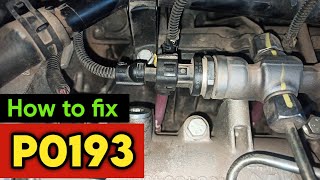
On a 2007-2012 Hyundai Santa Fe, P0193 almost always means the Fuel Rail Pressure Sensor (FRPS) has failed. The sensor sends an abnormally high voltage signal to the computer. Replacement is the common fix, but the sensor is often under the intake manifold on V6 and GDI models, making it a labor-intensive job.
- P0193 on a 2007-2012 Santa Fe is an electrical fault code, almost always caused by a failed Fuel Rail Pressure Sensor or a wiring issue.
- Do not replace the expensive high-pressure fuel pump; it is not the cause of this specific code.
- Confirm the diagnosis with a scan tool: a sensor voltage reading stuck near 5V is the key piece of evidence.
- The repair is labor-intensive on V6 and GDI models because the sensor is located under the intake manifold, requiring several hours of work.
- Due to the need to open the high-pressure fuel system, this repair carries a risk of fuel spills and fire; proper safety precautions are essential.
What's Unique About the 2007-2012 Hyundai Santa Fe
The 2007-2012 Hyundai Santa Fe (CM generation) offered several engines: the 2.7L Mu V6, 3.3L Lambda V6, 3.5L Lambda II V6, and the 2.4L Theta II (initially MPI, later GDI). On the V6 models (3.3L/3.5L) and the GDI 2.4L engine, the Fuel Rail Pressure Sensor is located on the fuel rail underneath the intake manifold. This placement makes a common electronic failure a much more labor-intensive repair than on engines where the sensor is easily accessible, like the 2.7L V6. The underlying cause is almost always an electrical failure of the sensor, not a failure of the high-pressure fuel pump.
Symptoms You May Notice
- Check Engine Light is on
- Engine stalling or shutting off while driving
- Hesitation or stumbling during acceleration
- Loss of engine power
- Hard starting or no-start condition
- Vehicle enters 'limp mode' with reduced speed
- Rough idle
- Increased fuel consumption
- Slight hesitation on cold starts before the code appears
- Replacing the high-pressure fuel pump. P0193 is an electrical circuit code, not a mechanical pressure code. 🎬 Watch: Understanding P0193 causes and fixes Replacing the expensive fuel pump will not fix a sensor circuit fault.
Most Likely Causes
- Faulty Fuel Rail Pressure Sensor (FRPS) 🔴 High Probability → Shop Fuel Pressure Sensor This is a common failure point across many Hyundai/Kia models of this era using GDI or V6 engines. The sensor is an electronic component that can fail internally, causing it to short to its own 5V reference and send a constant high voltage signal.
How to confirm: Use a scan tool to monitor live data for the Fuel Rail Pressure Sensor voltage with the key on, engine off. A reading stuck near 5.0 volts is a definitive sign of a failed sensor or a short in the signal wire. If the sensor is disconnected and the scan tool voltage drops to 0V, the sensor is confirmed bad. If it remains at 5V, the wiring is shorted to power.
Typical fix: Replace the Fuel Rail Pressure Sensor. On the 3.3L, 3.5L, and 2.4L GDI engines, this requires removing the intake manifold to gain access.
Est. part cost: $60-$250 - Wiring Harness or Connector Issue 🟡 Medium Probability Engine vibration and heat, especially under the intake manifold, can cause wires to break or insulation to wear, leading to shorts to power or an open ground. The connector at the sensor can also become loose, corroded, or damaged. A particularly common failure point is an intermediate harness connector located under the intake manifold, which is subject to heat and vibration.
How to confirm: Visually inspect the wiring harness leading to the sensor for any signs of damage, melting, or corrosion. Disconnect the sensor and check for 5V reference and a good ground at the connector with the key on. A 'wiggle test' of the harness, especially the intermediate connector under the intake, while watching live data can also reveal intermittent connection problems.
Typical fix: Repair the damaged section of the wiring harness or replace the connector pigtail. The intermediate connector may need to be cleaned and re-seated securely.
Est. part cost: $10-$50
Rare But Worth Checking
- Faulty Powertrain Control Module (ECM): This is extremely rare. The ECM should only be considered after definitively ruling out the sensor and all wiring issues with thorough testing. An internal ECM fault could misinterpret the sensor's signal.
Diagnosis Steps
- Connect a scan tool and verify P0193 is the active code. Note any other codes present, like P0191 or P0088.
- Access the live data stream on the scan tool. Observe the 'Fuel Rail Pressure Sensor' voltage.
- With the Key On, Engine Off (KOEO), check the voltage. If it reads at or near 5 volts, the sensor has likely failed or the signal wire is shorted to power.
- If the voltage is stuck high, disconnect the sensor connector.
- With the sensor disconnected, the signal voltage on the scan tool should drop to 0V. If it does, the sensor is faulty and needs replacement.
- If the voltage stays at 5V with the sensor disconnected, there is a short to power in the wiring harness between the sensor and the ECM. You must trace and repair this short.
- If you suspect a wiring issue, check for ~5 volts (reference) and a good ground at the sensor's electrical connector (with the key on). If either is missing, trace and repair the wiring from the ECM. Pay special attention to the intermediate harness connector under the intake manifold.
- After replacing the sensor, it may be necessary to perform a 'COMPONENT CHANGE ROUTINE' with a Hyundai-compatible scan tool to ensure the ECM learns the new sensor's values.
- If the sensor and wiring test good, the problem may be an extremely rare internal ECM fault.
Parts You'll Likely Need
- Fuel Rail Pressure Sensor
(OEM #35342-2GGA0 (For 2.4L GDI) 🎬 See this 2.4L GDI sensor replacement walkthrough or 35340-3C100 (For 3.3L/3.5L V6))— This is the most common failure point for code P0193. The sensor's internal electronics fail, causing it to send a continuous high voltage signal.
Trusted brands: Hyundai (OEM), Bosch, Delphi
OEM price range: $150-$250
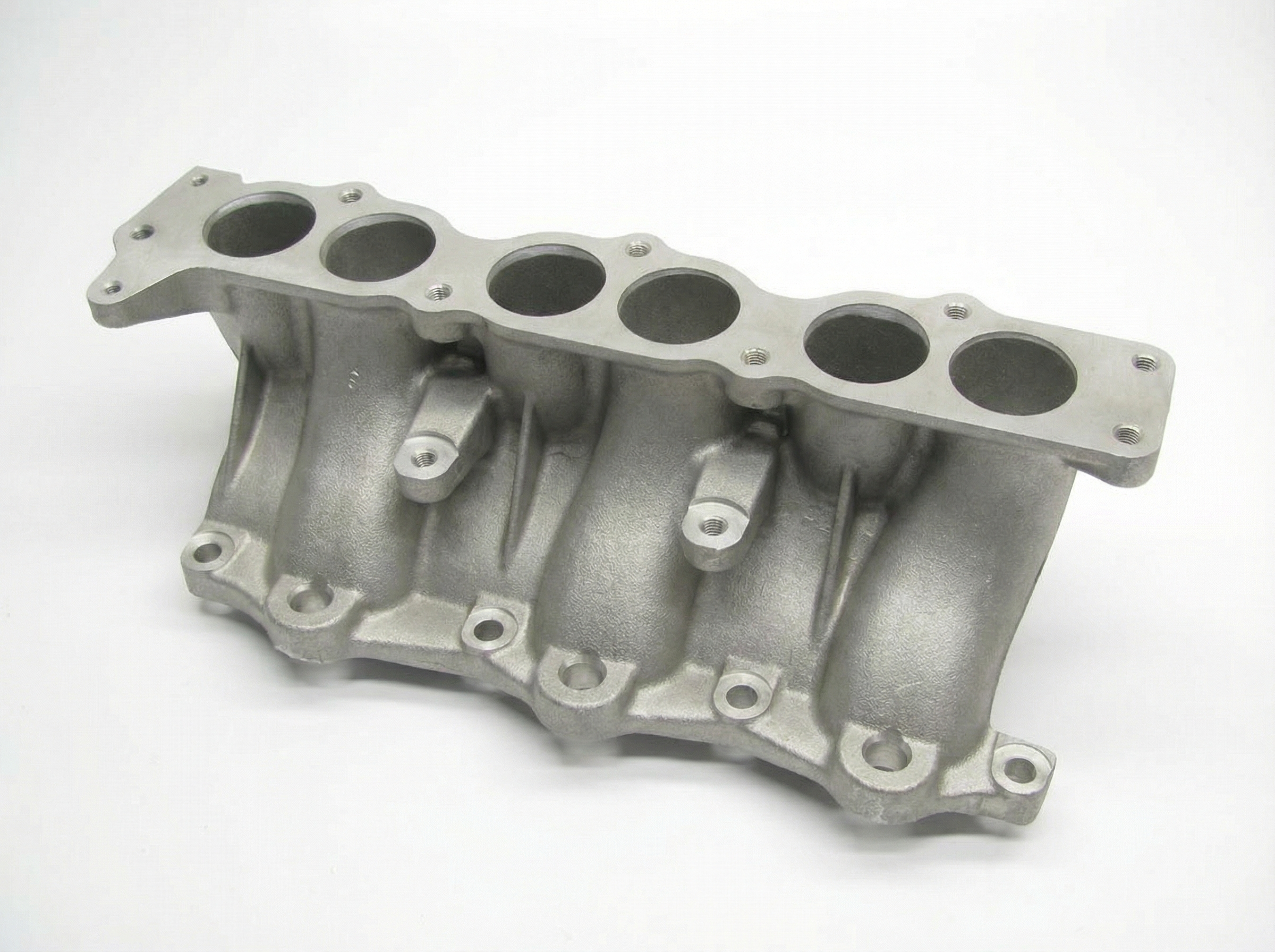
Aftermarket price range: $60-$150 - Intake Manifold Gasket — On the V6 and 2.4L GDI engines, the intake manifold must be removed to access the fuel rail pressure sensor. The gasket is a single-use part and must be replaced to prevent vacuum leaks.
Trusted brands: Hyundai (OEM), Fel-Pro, Mahle
OEM price range: $20-$40
Aftermarket price range: $10-$25
Related Codes That Often Appear With This One
- P0191 — This code indicates a range/performance issue with the same sensor. An intermittent wiring problem or a failing sensor can trigger both codes as the signal fluctuates between being erratic (P0191) and being stuck high (P0193).
- P0088 — This code means 'Fuel Rail/System Pressure - Too High'. A faulty sensor sending a high voltage signal can trick the ECM into thinking the pressure is actually too high, potentially setting both codes.
Platform-Specific Known Issues
- Sensor Location Varies by Engine: On the 3.3L and 3.5L V6 engines, as well as the 2.4L GDI engine, the sensor is located on the fuel rail underneath the upper intake manifold, requiring significant disassembly. 🎬 Watch: Hyundai Santa Fe fuel rail pressure sensor location guide On the earlier 2.7L V6 (a port-injected engine), the sensor is typically more accessible on the end of the fuel rail.
Mechanic-Grade Diagnostic Values
- FRPS Signal Voltage (Key On, Engine Off) — expected: Approx. 0.5V. Failure: A static reading of 4.75V or higher indicates an internal sensor short or a short-to-power in the signal wire.
- FRPS Signal Voltage (Engine at Idle) — expected: Approx. 1.2V - 1.8V. Failure: Voltage remains static and high (near 5V), not responding to the engine running.
- FRPS Connector 5V Reference Pin — expected: Steady 5.0 Volts with Key On, Engine Off.. Failure: No voltage or significantly lower voltage points to an issue with the ECM's 5V supply circuit or the wiring from the ECM.
- FRPS Connector Ground Pin Voltage — expected: Near 0 Volts (less than 500mV).. Failure: Significant voltage on the ground wire indicates a poor ground connection for the sensor circuit.
Scan Tool Commands That Help
- Hyundai GDS (or equivalent professional scanner): COMPONENT CHANGE ROUTINE / Rail Pressure Reset — This function must be performed after replacing the Fuel Rail Pressure Sensor or high-pressure fuel pump. It resets the learned fuel pressure offset values in the ECM to zero, ensuring the module correctly calibrates to the new component.
Wiring & Ground Locations
- FRPS Connector Pinout (GDI Engines) — On the sensor itself, located on the fuel rail under the intake manifold.. Knowing the typical pinout is critical for accurate multimeter testing. For similar Theta II engines, it is often Pin 1: Power (Red), Pin 2: Signal (Pink), Pin 3: Ground (Brown).
- Intermediate Harness Connector — Under the intake manifold, situated between the FRPS pigtail and the main engine harness.. This connector is a documented common failure point due to heat and vibration. Corrosion or a loose connection here can cause an intermittent open or short, triggering P0193 and perfectly mimicking a failed sensor.
- ECM Signal Wire Pin — On some models, the FRPS signal wire terminates at Pin 27 of the right-hand ECM connector.. This allows for a definitive end-to-end continuity and short-to-power test of the signal wire, completely bypassing any intermediate connectors to isolate the fault.
- GE01 / GE03 — Engine bay ground points, typically on the left side of the engine compartment, bolted to the chassis or inner fender.. The FRPS requires a solid ground to function. A corroded or loose main engine ground can cause floating voltages and trigger sensor circuit codes like P0193.
Real Owner Repair Stories
- YouTube channel 'GoPro Auto' (similar 2.0L GDI engine) (2015 Hyundai Elantra 2.0L GDI) — Rough acceleration, hard starting, intermittent bucking, and codes P0191 and P0193.
❌ Tried (didn't work) The owner initially suspected the fuel pumps or the FRPS sensor itself as the primary cause.
✅ What actually fixed it The root cause was an intermittent open circuit traced to a poor connection at the intermediate harness connector located under the intake manifold. A 'wiggle test' on this specific connector while measuring resistance confirmed the fault. Simply re-seating the connector securely resolved the codes and symptoms. - Cross-Manufacturer Reference (Hyundai Kona) — An owner reported that after visiting a local dealership, their OBDII code read P0193 (NHTSA ODI #11258755).
- Cross-Manufacturer Reference (Hyundai Sonata) — A report filed in NHTSA ODI #11480564 describes a vehicle reading code P0193 for the fuel rail pressure sensor, with the owner being told it could possibly be an engine issue.
OEM Part Supersession History
35342-2GGA0→N/A— This is the commonly cited part number for the 2.4L GDI engine's FRPS.
Heads up: While this part is for the 2.4L GDI, many parts catalogs list it for 2015+ models, creating confusion. Verify fitment with VIN. The part number for the V6 (35340-3C100) is inconsistently referenced in catalogs and is sometimes associated with other sensors, so extra diligence is required when ordering for the V6.
Model Year Variations Within This Range
- 2007-2009 (2.7L V6 MPI): On the port-injected 2.7L V6, the fuel rail pressure sensor is typically located on the end of the fuel rail and is significantly more accessible, not requiring intake manifold removal.
- 2010-2012 (2.4L GDI, 3.3L/3.5L V6): On these GDI and larger V6 engines, the sensor is located under the upper intake manifold, making replacement a much more labor-intensive job requiring several hours and replacement of the intake gasket.
Diagnostic Flowchart
Other Known Issues on This Vehicle
Issues unrelated to this code that are worth knowing about as an owner of this generation:
- Faulty Fuel Level Sending Unit 🟠 Medium — Very common on 2007-2009 models. Causes erratic fuel gauge readings, showing empty when full, and can trigger a Check Engine Light.
- Leaking Valve Cover Gaskets (V6 Engines) 🔴 High — Common on the 3.3L and 3.5L V6 engines. The front gasket is notorious for leaking oil directly onto the alternator, causing alternator failure. (Ref: A recall was issued for some vehicles, but the problem is widespread.)
- Engine Stalling/Failure 🔴 High — Reported across multiple engine types, particularly in 2010-2012 models around 80,000+ miles. This led to a class-action lawsuit. (Ref: Related to NHTSA Campaign 18V-934 for some models.)
- Rapidly Wearing Suspension Components 🟠 Medium — Ball joints, control arm bushings, and tie rods are known to wear prematurely, leading to suspension noise and alignment issues.
Used vs. New Parts: Buying Guide for This Vehicle
When a used part is the smart pick: For this repair, using a used part is not recommended. The primary failure is an electronic sensor with a finite lifespan, and a used part carries a high risk of premature failure. The labor to access the sensor on V6/GDI models is significant, making it unwise to risk having to do the job twice.
What to inspect on the donor part:
- Not applicable as used parts are not advised.
OEM-only on this vehicle (don't cheap out):
- While not strictly OEM-only, using a high-quality OEM or reputable aftermarket sensor is critical. Avoid unbranded, no-name parts from online marketplaces due to the high labor cost of replacement if the part is faulty.
Aftermarket brands forum-validated for this vehicle:
- Bosch (often the OEM supplier for Hyundai fuel systems)
- Delphi
- Standard Motor Products (SMP)
Brands owners have reported issues with on this vehicle:
- Unverified, low-cost brands from third-party marketplaces that lack warranties or a history of reliability.
Real Owner Stories
Aggregated from forums and TSBs cited above. Mileages and costs reflect what owners reported in those sources.
2011 Hyundai Santa Fe 2.4L — 156000 miles
Symptoms: The vehicle would stall when the engine was warm. It would restart after waiting a minute. The issue became more frequent over time. The check engine light was on with code P0192.
What fixed it: The issue was traced to two shorted wires located between the computer and the fuel pressure sensor.
Source hint: Opinautos (via Go-Parts.com article)
2007-2022 Hyundai Santa Fe (General)
Symptoms: Intermittent fuel pressure sensor codes P0191 and P0193.
What fixed it: The fault was traced to a loose harness connector located under the intake manifold.
Source hint: Go-Parts.com (summary of owner reports)
Related OBD-II Codes
Frequently Asked Questions
Where is the Fuel Rail Pressure Sensor located on my 3.3L or 3.5L V6 Santa Fe?
Is there a recall for the stalling issues associated with my 2010-2012 Santa Fe?
Could my P0193 code be caused by a wiring issue instead of a bad sensor?
Do I need to do anything special after replacing the sensor on my Hyundai?
I have a V6 Santa Fe; should I check anything else while the intake manifold is off for the P0193 fix?
Why is my Santa Fe entering 'limp mode' with this code?
Helpful Videos

We Have This Part in Stock

The information in this article is provided for general reference and educational purposes only. Vehicle specifications, procedures, and part compatibility can vary by production date, trim level, and region. Always consult your vehicle's factory service manual and verify part numbers before purchasing or performing repairs. Safety-critical components such as airbags, seat belts, and braking systems should be installed by a qualified professional.
- Hyundai Santa Fe:
- 🧭 Diagnostic Flowchart
- 🎬 Helpful Videos
- 🛍️ Shop This Part
- What's Unique About the 2007-2012 Hyundai Santa Fe
- Symptoms You May Notice
- Most Likely Causes
- Rare But Worth Checking
- Diagnosis Steps
- Parts You'll Likely Need
- Related Codes That Often Appear With This One
- Platform-Specific Known Issues
- Mechanic-Grade Diagnostic Values
- Scan Tool Commands That Help
- Wiring & Ground Locations
- Real Owner Repair Stories
- OEM Part Supersession History
- Model Year Variations Within This Range
- Other Known Issues on This Vehicle
- Used vs. New Parts: Buying Guide for This Vehicle
- Real Owner Stories
- 2011 Hyundai Santa Fe 2.4L — 156000 miles
- 2007-2022 Hyundai Santa Fe (General)
- Related OBD-II Codes
- Frequently Asked Questions
- 🎟️ Get 5% Off