

P0193 on 2011-2015 Kia Optima 2.4L GDI: Causes and Fixes for Fuel Rail Pressure Sensor Circuit High
On a 2011-2015 Optima 2.4L GDI, P0193 is almost always a failed Fuel Rail Pressure Sensor (FRPS). The sensor is located under the intake manifold, making it a labor-intensive repair. Expect shop costs of $450-$850, while the part itself is around $70-$150. This is a very common failure on the Theta II engine family.
- P0193 on your Optima almost certainly means the Fuel Rail Pressure Sensor has failed.
- The repair is labor-intensive because the sensor is under the intake manifold.
- This is a job for a professional or a very experienced DIYer due to the high-pressure GDI fuel system.
- Always use a high-quality OEM or Bosch sensor; cheap aftermarket parts are known to be faulty out of the box.
- While you're replacing the sensor, you must also replace the intake manifold gasket.
What's Unique About the 2011-2015 Kia Optima
The Theta II GDI engine in this generation of Optima is well-known for this specific issue. The primary cause is a very high failure rate for the Fuel Rail Pressure Sensor (FRPS) itself. Unlike many cars where this code might point to various issues, on this platform, the sensor is the prime suspect. The repair is complicated by the sensor's location under the intake manifold, turning a simple sensor swap into a more involved job requiring several hours of labor.
Symptoms You May Notice
- Check Engine Light is on
- Engine is hard to start, has a long crank time, or won't start at all
- Stalling, especially at idle or when coming to a stop
- Rough idle and engine hesitation during acceleration
- Reduced engine power and poor acceleration (Limp Mode)
- Decreased fuel economy
- A noticeable smell of raw fuel from the tailpipe
- Replacing the High-Pressure Fuel Pump (HPFP) before confirming the Fuel Rail Pressure Sensor and its wiring are good. The sensor is far more likely to be the cause of a P0193 code.
- Using a cheap, low-quality aftermarket sensor. There are multiple reports of new aftermarket sensors being faulty out of the box, leading to the code returning immediately. One well-documented case showed a brand new aftermarket sensor was the cause of both P0193 and P0087 codes.
Most Likely Causes
- Failed Fuel Rail Pressure Sensor (FRPS) 🔴 High Probability → Shop Fuel Pressure Sensor This sensor is a very common failure point on the Theta II GDI engine family across multiple Hyundai and Kia models due to heat and high pressure cycles. The sensor fails internally, causing it to short to its 5V reference and send a constant high voltage signal.
How to confirm: Use a scan tool to observe live data. With the key on, engine off, the fuel pressure reading may be abnormally high or the sensor voltage will be stuck near 5V. This confirms the sensor is sending a false high signal.
Typical fix: Replace the Fuel Rail Pressure Sensor. Since the intake manifold must be removed, it is mandatory to replace the intake manifold gasket at the same time.
Est. part cost: $70-$150 - Wiring Harness or Connector Issue 🟡 Medium Probability The wiring and an intermediate connector are located under the intake manifold, where they are exposed to significant heat and vibration, which can lead to corrosion, loose pins, or broken wires over time.
How to confirm: After removing the intake manifold, visually inspect the sensor connector and harness for damage. Perform a "wiggle test" on the harness while monitoring voltage with a multimeter to check for intermittent shorts or opens. Test for 5V reference, good ground, and signal wire continuity back to the ECM.
Typical fix: Repair the damaged section of the wiring harness or clean/replace the faulty connector.
Est. part cost: $20-$100
Rare But Worth Checking
- Failing High-Pressure Fuel Pump (HPFP): → Shop Fuel Pump While possible, HPFP failure on these cars more commonly sets low-pressure (P0087) or high-pressure (P0088) codes. P0193 points specifically to a circuit fault, making the pump itself an unlikely, but not impossible, cause.
- Faulty Engine Control Module (ECM): This is extremely rare and should only be considered after all other possibilities, including the sensor and all wiring, have been exhaustively tested and ruled out.
Diagnosis Steps
- Connect an OBD-II scanner and confirm P0193 is the active code. Check for any other related fuel system codes.
- View live data on the scanner. Observe the 'Fuel Rail Pressure' and 'Fuel Rail Pressure Sensor Voltage'. If the voltage is stuck high (e.g., ~4.8-5.0V) and pressure reads an impossibly high number with the key on and engine off, the sensor or its circuit is faulty.
- Follow safety procedures outlined in TSB ENG083 to release residual fuel pressure. Disconnect the battery.
- Remove the intake manifold to gain access to the Fuel Rail Pressure Sensor. This involves removing five bolts—three visible nuts on top and two hidden bolts underneath.
- Visually inspect the sensor's electrical connector and the nearby harness for any signs of melting, corrosion, or physical damage. Pay close attention to the intermediate connector under the manifold.
- Disconnect the sensor. Test the harness connector for a 5-volt reference signal and a proper ground.
- If power and ground are good, the sensor is the most likely culprit. Replacing it is the next logical step.
- If power or ground is missing, you must trace the wiring back to the ECM to find the break or short.
- After repair, clear all DTCs and perform a test drive to ensure the issue is resolved.
Parts You'll Likely Need
- Fuel Rail Pressure Sensor
(OEM #35340-2G710)— This is the most common failure point for code P0193 on this specific engine.
Trusted brands: Bosch, Delphi, Genuine Hyundai/Kia
OEM price range: $120-$160
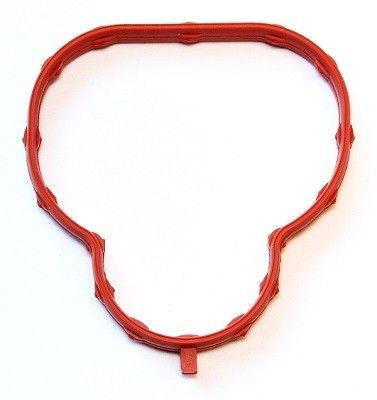
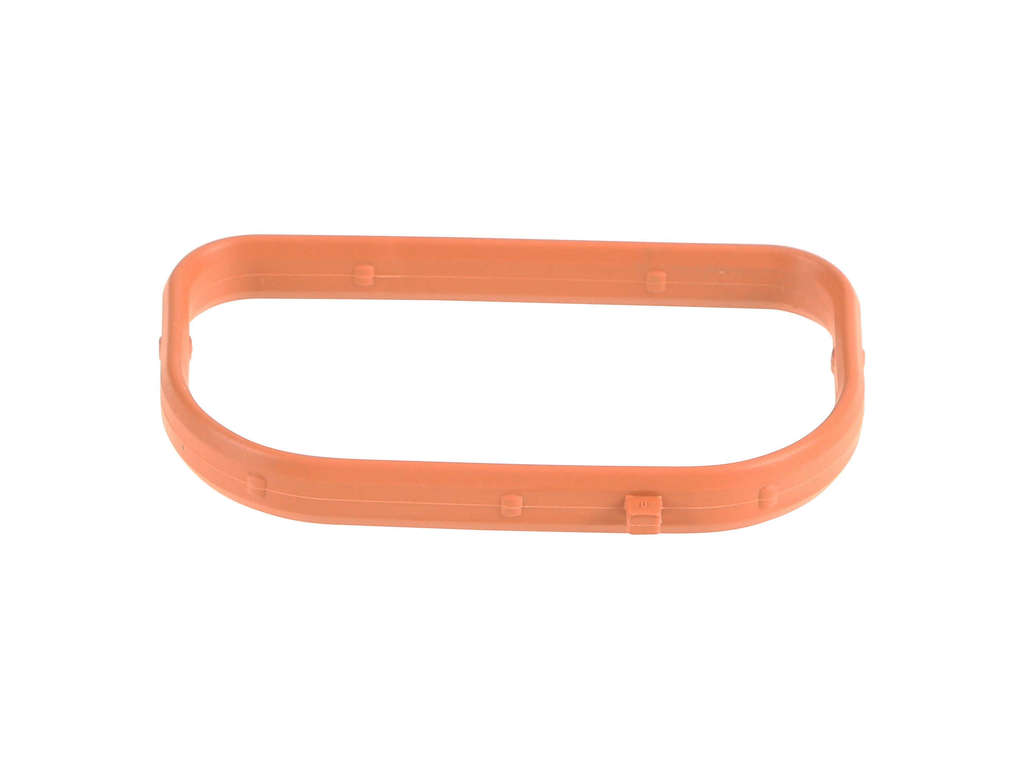
Aftermarket price range: $60-$100 - Intake Manifold Gasket
(OEM #28313-2G700)— The intake manifold must be removed to access the sensor, and the gasket is a single-use part that should always be replaced to prevent vacuum leaks.
Trusted brands: Fel-Pro (MS97100), Mahle (MS19577), Genuine Hyundai/Kia
OEM price range: $20-$30
Aftermarket price range: $10-$20
Related Codes That Often Appear With This One
- P0087 — A faulty sensor or intermittent wiring issue can cause the signal to fluctuate wildly, sometimes triggering both 'Circuit High' (P0193) and 'Pressure Too Low' (P0087) codes, especially if a faulty aftermarket sensor is used.
- P0191 — This code for 'Fuel Rail Pressure Sensor Circuit Range/Performance' often appears with P0193 as both point to a fault in the same sensor or its circuit.
Technical Service Bulletins (TSBs) & Recalls
- ENG083 - Special Service Information & Specifications for GDI High Pressure Fuel System. This TSB details the safety procedures required when working on the high-pressure fuel components.
Platform-Specific Known Issues
- Safety Recall SC172 was issued for 2011-2017 Optimas concerning the high-pressure fuel pipe, which could leak if damaged or misaligned during a prior engine replacement, increasing fire risk. While not a direct cause of P0193, it underscores the importance of careful work on this high-pressure system.
Mechanic-Grade Diagnostic Values
- Fuel Rail Pressure Sensor (FRPS) 5V Reference Wire — expected: 4.9V - 5.1V with key on, engine off (KOEO). Failure: 0V indicates an open in the reference circuit; voltage significantly higher or lower indicates a short or ECM issue.
- Fuel Rail Pressure Sensor (FRPS) Ground Wire — expected: Less than 100 millivolts (0.1V) when tested against battery negative (KOEO). Failure: High voltage or no continuity to ground indicates an open or corroded ground circuit.
- Fuel Rail Pressure Sensor (FRPS) Signal Wire Voltage (KOEO) — expected: Approximately 0.5V with no pressure in the system. A known-good replacement sensor showed ~1.7V KOEO after installation in one documented case, corresponding to residual rail pressure.. Failure: A reading stuck near 5.0V indicates the sensor has failed internally or the signal wire is shorted to the 5V reference.
- Scan Tool 'Fuel Rail Pressure Absolute' (KOEO) — expected: Should be near 0 PSI if the system has been depressurized. A reading of ~800 PSI with the engine off pointed to a faulty sensor providing a plausible but incorrect reading in one case study.. Failure: An impossibly high reading (e.g., thousands of PSI) or a reading of exactly 0 PSI when pressure is known to exist can indicate a sensor or wiring fault.
Scan Tool Commands That Help
- Kia GDS (Global Diagnostic System): Actuator Test -> Purge Control Solenoid Valve (PCSV) — While not directly for P0193, this test can be used to verify the functionality of related fuel vapor system components that might be inspected or disturbed during intake manifold removal. It confirms the technician can command components on and off.
- Advanced OBD-II Scanner (e.g., XTOOL D7): Clear Codes / Drive Cycle Reset — After replacing the sensor, a specific drive cycle may be needed to confirm the fix if simply clearing codes doesn't extinguish the Check Engine Light. One described method is: Idle for 3 mins, accelerate smoothly to highway speed, cruise for 20+ mins, decelerate without braking, then shut off and wait 1 hour before restarting.
Wiring & Ground Locations
- FRPS Connector Pinout — On the Fuel Rail Pressure Sensor, under the intake manifold.. Knowing the pinout is essential for testing. Pin 1 (Red wire in one example) is the 5V reference. Pin 3 (Black wire) is the ground. The center pin (White/Tan wire) is the signal wire back to the ECM.
- Engine Block Ground — Main ground strap from the engine block to the chassis frame. Additional grounds are often located on the intake manifold itself.. A poor engine ground can cause floating voltages and erratic sensor readings across multiple systems, including the FRPS. Verifying this main ground is clean and tight is a crucial step in diagnosing any electrical fault.
- ECM/PCM Connector — The Engine Control Module, typically located in the engine bay.. The FRPS signal, reference, and ground wires terminate here. A wiring diagram is needed to identify the specific pins (e.g., Pin 39 for RPS Signal, Pin 38 for RPS Ground in one 2.0T diagram) to perform a continuity test from the sensor connector, ruling out a wiring break.
Real Owner Repair Stories
- Go-Parts.com article citing a YouTube technician (2012 Kia Optima 2.4L GDI) — Intermittent crank-no-start, long crank times, codes P0087 and P0193.
❌ Tried (didn't work) A new, genuine Hyundai High-Pressure Fuel Pump (HPFP) was installed., An aftermarket Fuel Rail Pressure Sensor was installed.
✅ What actually fixed it The brand-new aftermarket Fuel Rail Pressure Sensor was faulty out of the box. Replacing it with the original (old) sensor temporarily, and then presumably a new OEM sensor, resolved the codes. The aftermarket sensor was causing both the high circuit (P0193) and low pressure (P0087) codes. - Go-Parts.com article (Hyundai/Kia with 2.4L GDI (shared platform)) — P0191 (related range/performance code), stalling, hesitation.
❌ Tried (didn't work) Replacing the Fuel Rail Pressure Sensor based on forum advice.
✅ What actually fixed it The problem was a loose harness-to-harness connector located under the intake manifold. A continuity test showed an open circuit when the harness was wiggled. Cleaning and reseating the connector provided a permanent fix, indicating the sensor itself was not faulty.
OEM Part Supersession History
35340-2G700→35340-2G710— Part revision or supplier change. 35340-2G710 is the correct fit for the 2011-2015 Optima 2.4L.
Heads up: While other sensors like 35342-2E500 or 35342-2GGA0 exist for other Kia/Hyundai engines, 35340-2G710 is the specific part for this application. Using a sensor for a different engine family may result in incorrect pressure readings.
Model Year Variations Within This Range
- 2014-2015: The Kia Optima received a facelift for the 2014 model year, which included revised front and rear fascias and interior updates. However, the 2.4L GDI Theta II engine and its core fuel system components, including the FRPS (P/N 35340-2G710), remained the same through 2015. The diagnosis and repair for P0193 are identical for all 2011-2015 models.
Diagnostic Flowchart
Other Known Issues on This Vehicle
Issues unrelated to this code that are worth knowing about as an owner of this generation:
- Catastrophic Engine Failure (Rod Bearing Failure) 🔴 High — Widespread across the entire 2011-2015 range. Manufacturing debris from the crankshaft can block oil passages, leading to connecting rod bearing failure and engine seizure, often with little warning. Failures can occur at any mileage, but are common between 60,00-100,000 miles. (Ref: Recall SC147; A class-action lawsuit resulted in an extended warranty (15 years/150,000 miles) and potential engine replacement for affected vehicles.)
- Steering Column Failure / Clicking Noise 🟠 Medium — Very common. A flexible rubber coupler in the steering column deteriorates over time, causing a distinct clicking or knocking sound when turning the wheel and leading to excessive play in the steering. (Ref: While no universal recall was issued, Kia addressed this with TSB-CHA064 and a warranty extension program (10 years/100,000 miles) for the coupler replacement in some cases.)
- High-Pressure Fuel Pipe Leak (Fire Risk) 🔴 High → Shop Fuel Line — Less common than engine failure, but a critical safety issue. The pipe connecting the high-pressure fuel pump to the fuel rail could be damaged, misaligned, or improperly torqued during engine work, leading to a high-pressure fuel leak onto a hot engine. (Ref: Safety Recall SC172 was issued to inspect and replace the fuel pipe if necessary.)
- Excessive Oil Consumption 🟠 Medium — Frequently reported by owners, often as a precursor to more serious engine issues. The problem can be related to piston ring design or cylinder wall scoring. (Ref: Related to the broader Theta II engine issues covered by lawsuits and warranty extensions.)
Used vs. New Parts: Buying Guide for This Vehicle
When a used part is the smart pick: For this specific repair, a used part is NOT recommended. The Fuel Rail Pressure Sensor is a known high-failure-rate item. The risk of getting a used sensor that is already failing or has a short remaining life is very high. The labor to replace it is significant, making it unwise to gamble on a used part.
What to inspect on the donor part:
- Not applicable, as used part purchase is not advised.
OEM-only on this vehicle (don't cheap out):
- Fuel Rail Pressure Sensor (FRPS)
Aftermarket brands forum-validated for this vehicle:
- Bosch
- Delphi
Brands owners have reported issues with on this vehicle:
- Unnamed or 'white-box' brands from online marketplaces. There is a well-documented case where a brand-new, non-branded aftermarket sensor was faulty out of the box, causing the return of P0193 and the introduction of a new P0087 code.
Real Owner Stories
Aggregated from forums and TSBs cited above. Mileages and costs reflect what owners reported in those sources.
2012 Kia Optima 2.4L GDI
Symptoms: The vehicle tends to have either a long crank or a crank-no-start condition at moments.
What fixed it: The technician found that a brand new, faulty aftermarket fuel pressure sensor was the cause, emphasizing the need for OEM parts.
Source hint: YouTube (Eli TheOBDTech) - Faulty Aftermarket Sensor
2012 Kia Optima 2.4L GDI
Symptoms: P0193 code triggered; required removal of the intake manifold to access the sensor located on the fuel rail.
What fixed it: Replaced the Fuel Rail Pressure Sensor (P/N 35340-2G710) and the intake manifold gasket (P/N 28313-2G700) using 10mm, 12mm, and a 27mm deep socket.
Source hint: Kia-Forums.com - P0193 Fuel Rail Pressure Sensor DIY
Related OBD-II Codes
Frequently Asked Questions
Is there a specific safety procedure I should follow before replacing the fuel rail pressure sensor on my 2.4L GDI Optima?
Does the 2011-2015 Kia Optima have a recall related to the fuel system that I should check while fixing P0193?
What is the specific part number for the Fuel Rail Pressure Sensor on my 2.4L GDI engine?
Do I need to replace any other parts when I pull the intake manifold to reach the sensor?
My Optima is also making a clicking noise in the steering; is this related to the P0193 code?
Could my P0193 code be related to the widespread engine failure issues on the Theta II engine?
Helpful Videos
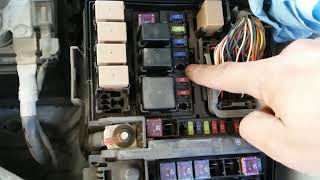
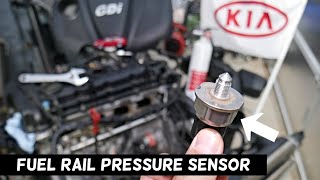
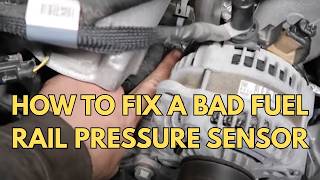
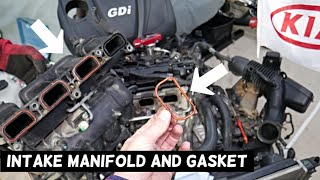
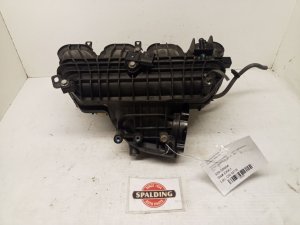
Used OEM Parts in Stock
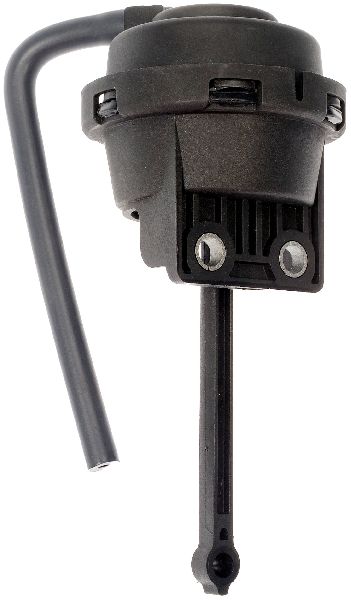
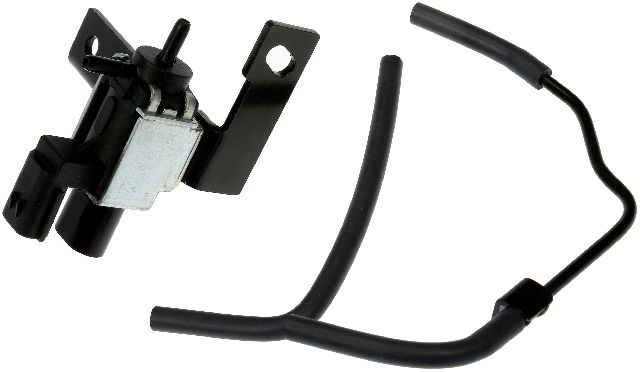
New Aftermarket Parts Available


The information in this article is provided for general reference and educational purposes only. Vehicle specifications, procedures, and part compatibility can vary by production date, trim level, and region. Always consult your vehicle's factory service manual and verify part numbers before purchasing or performing repairs. Safety-critical components such as airbags, seat belts, and braking systems should be installed by a qualified professional.
- Kia Optima:
- 🧭 Diagnostic Flowchart
- 🎬 Helpful Videos
- 🛍️ Shop This Part
- What's Unique About the 2011-2015 Kia Optima
- Symptoms You May Notice
- Most Likely Causes
- Rare But Worth Checking
- Diagnosis Steps
- Parts You'll Likely Need
- Related Codes That Often Appear With This One
- Technical Service Bulletins (TSBs) & Recalls
- Platform-Specific Known Issues
- Mechanic-Grade Diagnostic Values
- Scan Tool Commands That Help
- Wiring & Ground Locations
- Real Owner Repair Stories
- OEM Part Supersession History
- Model Year Variations Within This Range
- Other Known Issues on This Vehicle
- Used vs. New Parts: Buying Guide for This Vehicle
- Real Owner Stories
- 2012 Kia Optima 2.4L GDI
- 2012 Kia Optima 2.4L GDI
- Related OBD-II Codes
- Frequently Asked Questions
- 🎟️ Get 5% Off