

P0196 on 2016-2018 Volkswagen Golf: Engine Oil Temperature Sensor Causes and Fixes
On a 2016-2018 VW Golf, code P0196 is most often a faulty Engine Oil Temperature/Level Sensor (G266) located in the oil pan. Before replacing it, check for coolant leaks from the water pump/thermostat housing, as VW TSBs indicate leaking coolant can drip onto and contaminate the sensor's wiring, causing the fault. A new sensor costs between $40 and $150.
- P0196 means the oil temperature sensor is providing illogical data.
- For this specific Golf, a coolant leak from the water pump is a known cause and should be inspected. [VIN-4-A-PIN-2018]
- The most likely fix is replacing the Engine Oil Temperature/Level Sensor, which is located on the oil pan.
- Always check that the sensor's electrical connector is clean, dry, and securely fastened before replacing parts.
What's Unique About the 2016-2018 Volkswagen GOLF
For the Mk7 Volkswagen Golf and its platform mates (Audi A3, VW GTI), this code has a very specific and documented link to the cooling system. Manufacturer Technical Service Bulletins (TSBs) explicitly connect fault code P0196 with a coolant leak at the coolant pump and thermostat housing assembly. [VIN-4-A-PIN-2018] This is a critical distinction, as a coolant leak might not be an obvious diagnostic step for an oil temperature code on other vehicles. The leaking pink G12/G13 coolant can drip down the engine and contaminate the oil temperature sensor's wiring or connector, causing the implausible signal that triggers the code.
Diagnostic Flowchart
Tap your situation to follow the diagnostic path that matches what you're seeing on this vehicle.
Generation note: The 2016-2018 model years cover the Volkswagen Golf Mk7 generation, including the 2017/2018 'Mk7.5' facelift. The issues and fixes for P0196, particularly the link to water pump failures, are consistent across all EA888 Gen 3 powered vehicles on the MQB platform.
Symptoms You May Notice
- Check Engine Light illuminated
- Yellow oil warning light on the dashboard, sometimes with an 'Oil Sensor: Workshop!' message [VIN-4-A-PIN-2018, 2]
- Inaccurate or fluctuating oil temperature gauge, may display '---'
- Slightly reduced fuel economy
- Engine may hesitate or run rough in some cases
- Auto Start/Stop system may be disabled
- Replacing the oil pressure switch instead of the oil temperature/level sensor. They are different sensors with different functions.
- Replacing the oil temperature sensor without first checking for and repairing a coolant leak from the water pump. The new sensor's wiring will just get contaminated again.
Most Likely Causes
- Faulty Engine Oil Temperature/Level Sensor (G266) 🔴 High Probability The sensor is a common failure item over time. Aftermarket quality can be inconsistent, leading to premature failure; using an OEM or reputable brand like Hella is highly recommended.
How to confirm: Monitor the oil temperature reading on a scan tool as the engine warms up. If the reading is stuck, jumps erratically, or doesn't rise logically with coolant temperature, the sensor is likely bad. You can also test the sensor's resistance with a multimeter; it should decrease smoothly as it heats up.
Typical fix: Replace the sensor on the bottom of the oil pan. 🎬 See this walkthrough for replacing the oil level and temperature sensor. This is often done during an oil change as the oil must be drained.
Est. part cost: $40-$150 - Coolant Leak from Water Pump / Thermostat Housing 🔴 High Probability → Shop Integrated Thermostat Housing Assembly The EA888 engine's water pump and thermostat housing assembly is notoriously prone to failure, often at mileages as low as 30-50k. The plastic housing can warp or crack, causing leaks. A VW Technical Service Bulletin (TSB) specifically identifies this leak as a cause for code P0196. [VIN-4-A-PIN-2018]
How to confirm: Visually inspect the water pump (front of the engine, passenger side) and surrounding area for signs of pink or white crusty residue (dried G12/G13 coolant). Check the wiring harness for the oil temperature sensor (at the bottom of the oil pan) for signs of moisture or contamination from the dripping coolant.
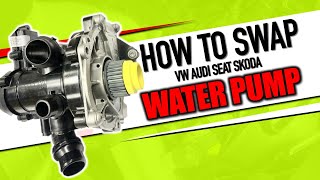
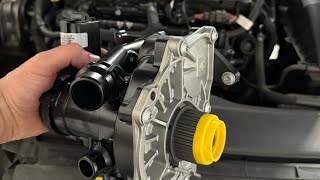
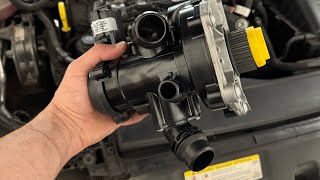
Typical fix: Repair the coolant leak, which typically involves replacing the entire water pump and thermostat housing assembly. 🎬 Watch: How to replace the EA888 Gen 3 water pump. The oil temperature sensor connector and harness must be thoroughly cleaned and dried. If the connector is corroded, it should be replaced.
Est. part cost: $250-$600 for a water pump assembly - Damaged Wiring or Loose Connector 🟡 Medium Probability The sensor is located at the bottom of the engine, making its wiring vulnerable to road debris, corrosion, and fluid contamination from either oil or coolant leaks. Internal shorts in the sensor can also melt the connector.
How to confirm: Visually inspect the wiring harness leading to the oil pan sensor. Check that the connector is fully seated and the locking tab is intact. Test for battery voltage on pin 1, ground on pin 2, and a 5V signal on pin 3 with a multimeter.
Typical fix: Repair the damaged section of wiring. If the connector is broken or corroded, replace it with a new pigtail.
Est. part cost: $15-$40 for a connector pigtail - Low or Severely Degraded Engine Oil ⚪ Low Probability
How to confirm: Check the engine oil level and condition using the dipstick. If the oil is extremely low or has turned to sludge, it can affect the sensor's ability to get an accurate reading.
Typical fix: Perform an engine oil and filter change with the correct specification oil (e.g., VW 502 00). If sludge is present, an engine flush may be necessary.
Est. part cost: $60-$100 for oil and filter
Rare But Worth Checking
- Faulty Engine Control Module (ECM): This is very rare. The ECM should only be considered after all other possibilities, including the sensor, wiring, and related systems, have been thoroughly tested and ruled out.
- Blown Fuse: A shorted sensor or wiring can blow the fuse that powers the sensor circuit. On many VW/Audi models, this is a 5-amp fuse located in the fuse box at the side of the dashboard. This can cause P0196 along with an 'open circuit' code.
Diagnosis Steps
- Read all fault codes from all modules using a VAG-compatible scanner (like VCDS or OBDeleven). Note codes in the Engine (01), Instruments (17), and other modules.
- Visually inspect the water pump/thermostat housing for any signs of a pink/white crusty coolant leak. This is a top priority on this platform.
- If no coolant leak is visible, proceed to the oil sensor. Inspect the sensor connector at the bottom of the oil pan. Ensure it is securely connected and free of corrosion or fluid contamination (coolant or oil).
- Inspect the wiring harness leading to the sensor for any visible damage, chafing, or breaks, especially where it might be exposed to dripping fluids.
- Using a scan tool, monitor the live data for both Engine Coolant Temperature and Engine Oil Temperature from a cold start. Both should rise steadily. If the oil temperature is stuck (e.g., at -40°C), jumps erratically, or stays cold while the coolant warms up, the sensor or its circuit is faulty.
- If the signal is suspect, test the sensor's wiring. With the key on, check for battery voltage at pin 1 and a good ground at pin 2 of the connector. Pin 3 is the signal wire to the instrument cluster.
- If wiring and power/ground are confirmed to be good, the sensor itself is faulty and should be replaced.
- If a coolant leak was found in Step 2, repair it by replacing the water pump/thermostat assembly, then thoroughly clean the oil sensor connector before re-testing.
Parts You'll Likely Need
- Engine Oil Level and Temperature Sensor
(OEM #06L907660C (for many 1.8T/2.0T engines). Supersedes older part numbers like 1J0907660C. Always verify with VIN.)— This sensor's internal thermistor fails over time or its wiring gets damaged, causing the illogical readings that trigger P0196. It is the most common part replaced to fix this code.
Trusted brands: Hella (often the OEM supplier), Bosch, Meyle, Vemo
OEM price range: $100-$180
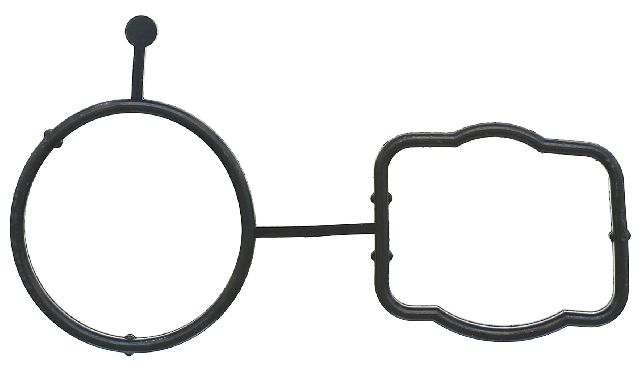
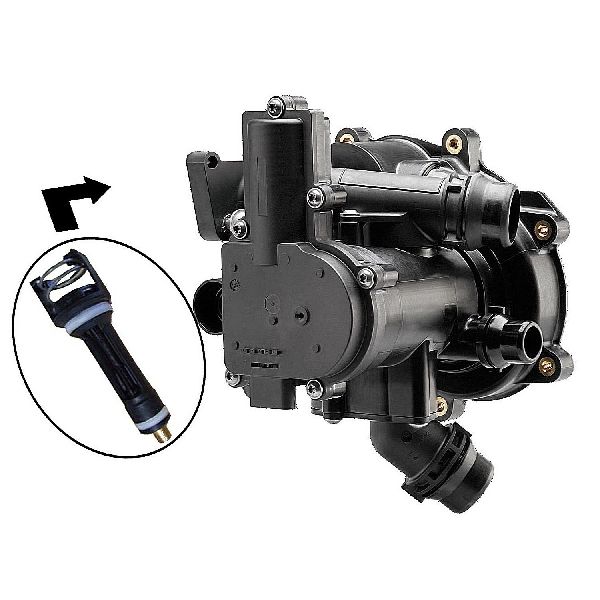
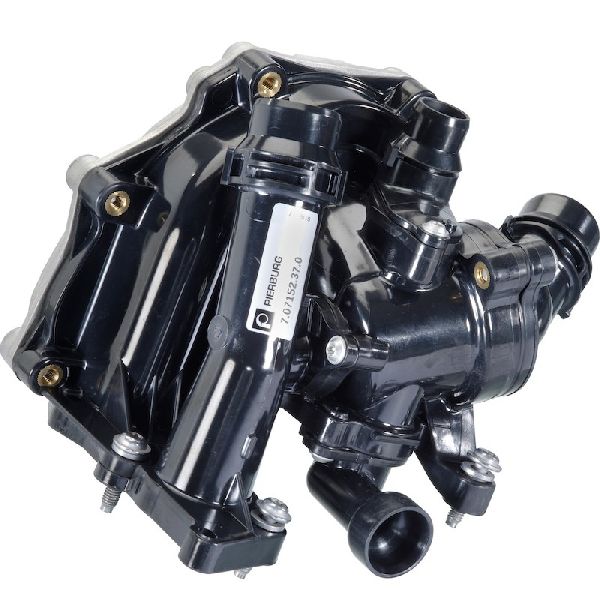
Aftermarket price range: $40-$90 - Water Pump & Thermostat Housing Assembly
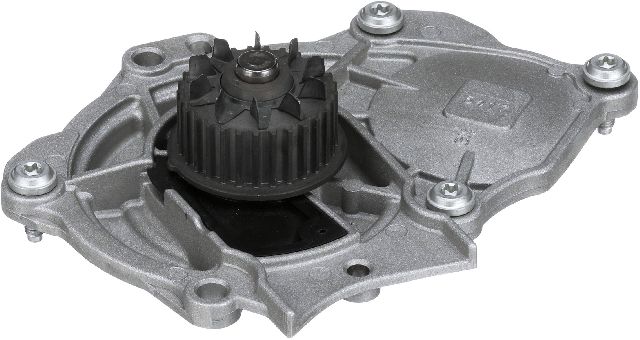
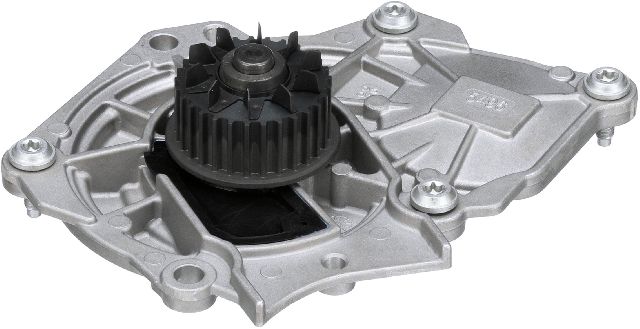
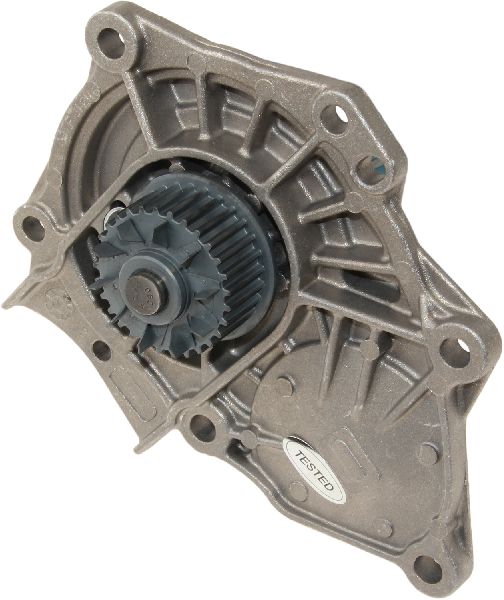
(OEM #06L121111H (or later revisions like J, K, M). Verify with VIN.)— A very common failure point on the Mk7 platform. Leaking coolant from this assembly is a primary cause of P0196 due to wiring contamination.
Trusted brands: VW Genuine, INA, Graf
OEM price range: $400-$600
Aftermarket price range: $250-$450
Related Codes That Often Appear With This One
- P0198 — P0198 indicates 'Engine Oil Temperature Sensor Circuit High'. A loose or damaged connector can cause both a 'Range/Performance' fault (P0196) and a 'Circuit High' fault (P0198) to be stored simultaneously.
- B104129, B104135 — These are Body Control Module codes for 'Oil Level Thermal Sensor: Range/Performance' and 'Signal Too Long High', respectively. They are the manufacturer-specific equivalents of the generic P-codes and are often stored in the Instrument Cluster Control Module. The TSB for the coolant leak lists these codes alongside P0196. [VIN-4-A-PIN-2018, 17]
- 00562 — This is an older VAG-specific fault code for 'Sensor for Oil Level/Temperature (G266): Open or Short to Plus'. It points directly to a wiring or sensor electrical fault and often accompanies P0196.
Technical Service Bulletins (TSBs) & Recalls
- VIN-4-A-PIN-2018: Mentions that a coolant leak at the pump or a yellow oil warning light can be associated with fault code P0196, P0198, B104129, and B104135.
Platform-Specific Known Issues
- A Technical Service Bulletin (TSB #VIN-4-A-PIN-2018) for 2016-2017 Golfs explicitly links P0196 to a coolant leak at the coolant pump, which can also cause a yellow oil warning light and B-prefix fault codes. [VIN-4-A-PIN-2018]
- The water pump/thermostat housing on the EA888 engine is a widely acknowledged weak point. Many owners on forums like GOLFMK7 and Reddit report failures well before 60,000 miles, making it a primary suspect for any related electrical fault codes like P0196.
Mechanic-Grade Diagnostic Values
- G266 Sensor Connector Pin Voltages (Key On, Engine Off) — expected: Pin 1: ~12V (Battery Voltage); Pin 2: < 1 Ω to ground; Pin 3: ~5V (Signal wire to instrument cluster).. Failure: No voltage on Pin 1 suggests a fuse or power supply issue. High resistance on Pin 2 indicates a bad ground. Incorrect voltage on Pin 3 points to a wiring or sensor fault.
- Scan Tool Live Data - Oil Temperature (Open Circuit) — expected: A plausible temperature that rises with the engine running.. Failure: A reading of -40°C or -48°C is a typical default value the ECU displays when there is an open circuit to the sensor.
- Scan Tool Live Data - Oil Temperature (Implausible Signal) — expected: Oil temperature should logically track coolant temperature, typically lagging slightly behind during warm-up.. Failure: A reading that is stuck at a high value (e.g., 155°C) even when the engine is cold is a clear sign of a faulty sensor or circuit.
Scan Tool Commands That Help
- VCDS (VAG-COM): Coding out the oil level sensor in Instrument Cluster (17) — On some older VAG models, if the car is switched to fixed service intervals, the oil level sensor monitoring can be disabled by changing the adaptation channel. For a Mk7, this is less common but can be used as a diagnostic step or if a sensor is permanently removed on a modified vehicle. For example, in some models, changing Adaptation channel 'SIE-TOG' from 'connected' to 'not connected' will disable the warning.
Wiring & Ground Locations
- G266 Sensor Connector — On the bottom of the engine's oil pan, secured by three 10mm nuts.. This is the primary connection point. It is vulnerable to road debris, oil leaks, and, most critically on this platform, dripping coolant from a leaking water pump, which can cause corrosion or short circuits.
- Main Engine Bay Earth Point — A metal post with several brown wires attached, located on the bulkhead behind the battery.. A poor ground connection at this main point can cause a variety of intermittent and difficult-to-diagnose electrical faults, including sensor errors. While not a primary cause for a single P0196 code, it should be checked if multiple, seemingly unrelated electrical codes are present.
- Fuse SC15 or similar — In the fuse box located at the driver's side of the dashboard, accessible when the door is open.. On many VW models, a 5A or 10A fuse in this location powers the G266 sensor circuit. An internal short in the sensor can blow this fuse, leading to an open circuit fault (like P0198 or 00562) along with P0196.
Real Owner Repair Stories
- Ross-Tech Forums user MrNomad105 (2015 VW Golf MKVII) — P0196 and P0198 fault codes, scan tool showing oil temp of 90°C and oil fill level of 120mm with engine barely run.
❌ Tried (didn't work) Initial diagnosis pointed towards a bad sensor.
✅ What actually fixed it Upon inspection, the locking tab on the sensor's electrical connector was broken and the connector was halfway off. Pushing the connector on fully and securing it with safety wire resolved the fault codes and restored correct sensor readings. - Ross-Tech Forums user Barnitz (Golf V 2.0 FSI BVY) — P0196 and 00562 (Open or Short to Plus) for G266, along with cooling fans running constantly after engine shutoff.
❌ Tried (didn't work) Replaced the oil level sensor, but the problem persisted. The user also accidentally damaged the connector wiring during the replacement attempt.
✅ What actually fixed it The root cause was a damaged pin connector for the G266 sensor. After repairing the connector and clearing DTCs, the issue was resolved.
OEM Part Supersession History
06L121111H→06L121111J, 06L121111K, 06L121111L, 06L121111M, 06L121111P— Revisions to the EA888 Gen 3 water pump and thermostat assembly to improve reliability and address the common plastic housing leak issue.
Heads up: While later revisions are generally better, it is critical to ensure the entire assembly (water pump, thermostat housing, and seals) is compatible. Always verify the correct part number for the specific vehicle VIN.1J0907660C→06L907660C— Updated sensor design for newer engine platforms like the EA888 Gen 3.
Heads up: The older 1J0-prefix sensors are for previous generation vehicles and are not compatible with the 2016-2018 Golf, which requires the 06L-prefix part.
Model Year Variations Within This Range
- 2017-2018 (Mk7.5 Facelift): The 'Mk7.5' facelift was introduced for the 2017 model year in some markets and 2018 in others. While the engine and P0196 causes are the same, some external components changed. For example, on models with Adaptive Cruise Control (ACC), the radar sensor was moved from the lower grille on the Mk7 to being integrated into the front VW emblem on the Mk7.5. This doesn't directly affect P0196 but is a key identifier of the vehicle's generation.
Helpful Videos

Used OEM Parts in Stock
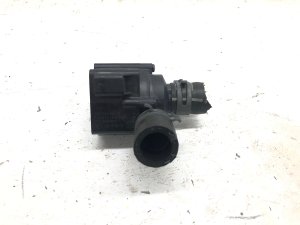
New Aftermarket Parts Available

The information in this article is provided for general reference and educational purposes only. Vehicle specifications, procedures, and part compatibility can vary by production date, trim level, and region. Always consult your vehicle's factory service manual and verify part numbers before purchasing or performing repairs. Safety-critical components such as airbags, seat belts, and braking systems should be installed by a qualified professional.
- Volkswagen GOLF:
- 🧭 Diagnostic Flowchart
- 🎬 Helpful Videos
- 🛍️ Shop This Part
- What's Unique About the 2016-2018 Volkswagen GOLF
- Symptoms You May Notice
- Most Likely Causes
- Rare But Worth Checking
- Diagnosis Steps
- Parts You'll Likely Need
- Related Codes That Often Appear With This One
- Technical Service Bulletins (TSBs) & Recalls
- Platform-Specific Known Issues
- Mechanic-Grade Diagnostic Values
- Scan Tool Commands That Help
- Wiring & Ground Locations
- Real Owner Repair Stories
- OEM Part Supersession History
- Model Year Variations Within This Range
- 🎟️ Get 5% Off