

P0196 on 2017 Volkswagen Golf R: Engine Oil Temperature Sensor Causes and Fixes
On a 2017 VW Golf R, code P0196 is most often caused by a faulty oil level/temperature sensor or its wiring. However, a very common root cause is a leaking water pump dripping coolant onto the sensor's wiring, causing the fault. Always inspect for coolant leaks from the water pump/thermostat housing before replacing the sensor.
- P0196 on a 2017 Golf R means the oil temperature sensor signal is illogical.
- Before replacing any parts, you MUST inspect the water pump for coolant leaks, as this is a very common root cause of this specific code on this engine.
- Check the sensor's electrical connector on the oil pan for looseness, corrosion, or fluid contamination.
- If no leaks or wiring issues are found, the oil level/temperature sensor itself is the likely culprit and should be replaced during your next oil change.
What's Unique About the 2017-2017 Volkswagen GOLF R
For the Mk7 Volkswagen Golf R, which uses the EA888 Gen 3 engine, P0196 is frequently linked to a notorious platform issue: a leaking water pump/thermostat housing. This is one of the most well-documented problems for this engine, with failures sometimes occurring in as few as 15,000 miles. Volkswagen's own Technical Service Bulletins (TSBs) explicitly connect P0196 with a "coolant leak at the coolant pump". [VIN-4-A-PIN-2018] The plastic housing can become brittle and crack, allowing pink G13 coolant to drip directly onto the wiring for the oil level/temperature sensor located below on the oil pan. This contamination damages the wiring and connector, causing the fault, even if the sensor itself is still functional.
Diagnostic Flowchart
Tap your situation to follow the diagnostic path that matches what you're seeing on this vehicle.
Symptoms You May Notice
- Check Engine Light is on
- Yellow oil warning light may illuminate on the dashboard [VIN-4-A-PIN-2018]
- Oil temperature gauge on the instrument cluster is inaccurate, stuck, or reads "---"
- Reduced fuel economy
- Engine may enter a reduced power or "limp" mode
- Sweet smell of burning coolant from the engine bay.
- Visible pink/red coolant residue on the engine block below the intake manifold or on the under-engine belly pan.
- Low coolant warning light may illuminate repeatedly.
- Replacing the oil temperature sensor without checking for a coolant leak. If coolant contamination is the root cause, the new sensor or its wiring will eventually fail again.
- Replacing the oil pressure switch. The P0196 code relates to the oil temperature/level sensor (G266) on the bottom of the oil pan, not the oil pressure switch.
Most Likely Causes
- Leaking Water Pump / Thermostat Housing Damaging Wiring 🔴 High Probability → Shop Integrated Thermostat Housing Assembly The EA888 Gen 3 engine's water pump/thermostat housing is made of a plastic polymer that is known to become brittle and crack after repeated heat cycles. Its location under the intake manifold and directly above the oil pan allows leaking coolant to drip onto the oil temperature sensor's wiring harness, causing corrosion and signal faults.
How to confirm: Visually inspect the area under the intake manifold and around the water pump for signs of pink/red dried coolant residue. A flashlight and mirror can help. Check the oil temperature sensor connector for moisture or corrosion. Often a puddle of coolant will be found on the garage floor after the car has cooled down.
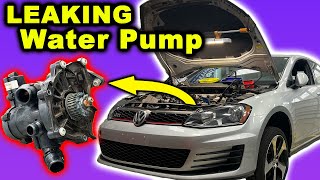
Typical fix: Replace the entire water pump and thermostat housing assembly with the latest revised parts. 🎬 Watch: How to replace your MK7 water pump and housing. The damaged section of the wiring harness or the pigtail connector for the oil sensor may also need to be repaired or replaced.
Est. part cost: $250-$700 - Faulty Engine Oil Level / Temperature Sensor (G266) 🟡 Medium Probability This sensor is a common failure item across many VW/Audi models using the EA888 engine. It can fail electronically or develop leaks through its housing. Some owners report issues with non-OEM sensors, suggesting that using a genuine or high-quality Hella/Bosch replacement is best.
How to confirm: Use a scan tool (like VCDS) to monitor live oil temperature data. If the reading is stuck at an illogical value (e.g., -48°C) or doesn't rise with engine temperature, the sensor is likely bad. This assumes wiring has been confirmed to be intact.
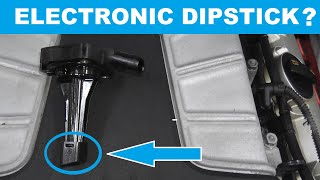
Typical fix: Replace the oil level/temperature sensor. This requires draining the engine oil, so it's best performed during an oil change. The sensor is held in by three 10mm nuts. 🎬 See this walkthrough for replacing the oil temperature sensor.
Est. part cost: $40-$150 - Damaged Wiring or Loose/Corroded Connector 🟡 Medium Probability Aside from coolant leaks, the sensor's low position on the oil pan makes its wiring vulnerable to road debris, water, and oil saturation. The connector's locking tab is also known to break, causing a loose connection which can be resolved by securing it with a zip tie or safety wire.
How to confirm: Inspect the wiring harness leading to the sensor for chafing, breaks, or fluid contamination. Unplug the connector and check for bent or corroded pins. Ensure the connector is fully seated. A Ross-Tech forum user fixed P0196/P0198 on a 2015 Golf by finding the connector was halfway off due to a broken locking tab.
Typical fix: Repair the damaged wire section or replace the pigtail connector. If the connector is just loose, securing it may resolve the issue.
Est. part cost: $15-$50
Rare But Worth Checking
- Faulty Engine Control Module (ECM): This is very rare. Before suspecting the ECM, all other possibilities, including the sensor, wiring, and related system faults (like coolant leaks), must be exhaustively ruled out.
Diagnosis Steps
- Check the engine oil level and condition to rule out basic issues.
- Scan the ECM (Address 01) and Instrument Cluster (Address 17) for all fault codes using a VAG-specific tool like VCDS. Note any codes that appear alongside P0196.
- Thoroughly inspect the water pump and thermostat housing area for any signs of a coolant leak (pink residue). This is a critical first step on this platform. Use a flashlight and mirror to look under the intake manifold.
- Inspect the oil temperature sensor's electrical connector (at the bottom of the oil pan) and its wiring harness. Look for coolant contamination, oil saturation, corrosion, or physical damage.
- Ensure the connector is securely fastened. A loose connection is a known cause. One owner found the locking tab broken and the connector halfway off, fixing it by securing it with safety wire.
- Use a scan tool to observe the live data for Engine Oil Temperature (G8). Watch the reading as the engine warms up from cold. It should rise smoothly and logically. A stuck value (like -40°F or -48°C) points to a circuit or sensor fault.
- If wiring appears damaged, test for continuity, power (approx. 12V on Pin 1), and ground (Pin 2) at the sensor connector. Pin 3 is the signal wire to the instrument cluster.
- If the water pump is not leaking and the wiring is confirmed to be good, the oil level/temperature sensor itself is the most likely culprit.
Parts You'll Likely Need
- Engine Oil Level / Temperature Sensor
(OEM #06L907660C, 03F907660E)— This sensor (VW designation G266) is the component that provides the reading. It is a common failure point if wiring and coolant leaks are ruled out.
Trusted brands: Hella, Bosch, Meyle, Genuine VW/Audi
OEM price range: $90-$150
Aftermarket price range: $40-$80 - Water Pump and Thermostat Assembly
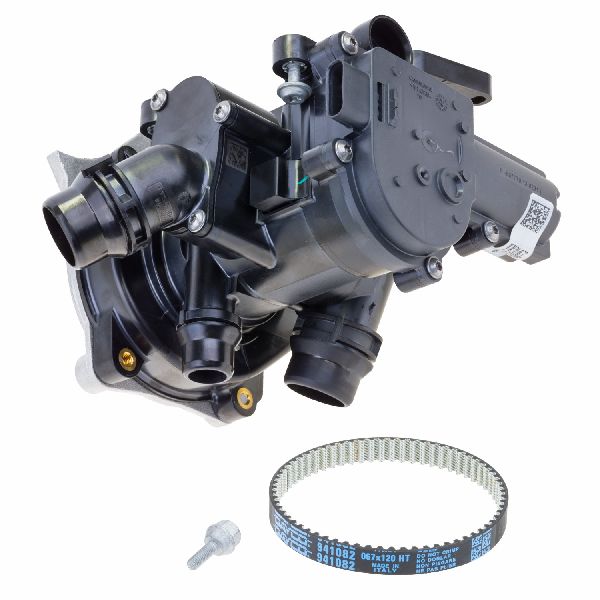
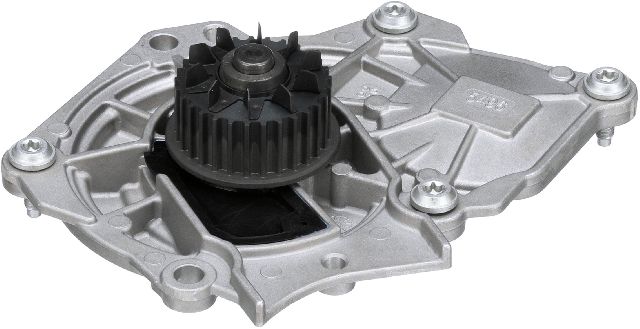
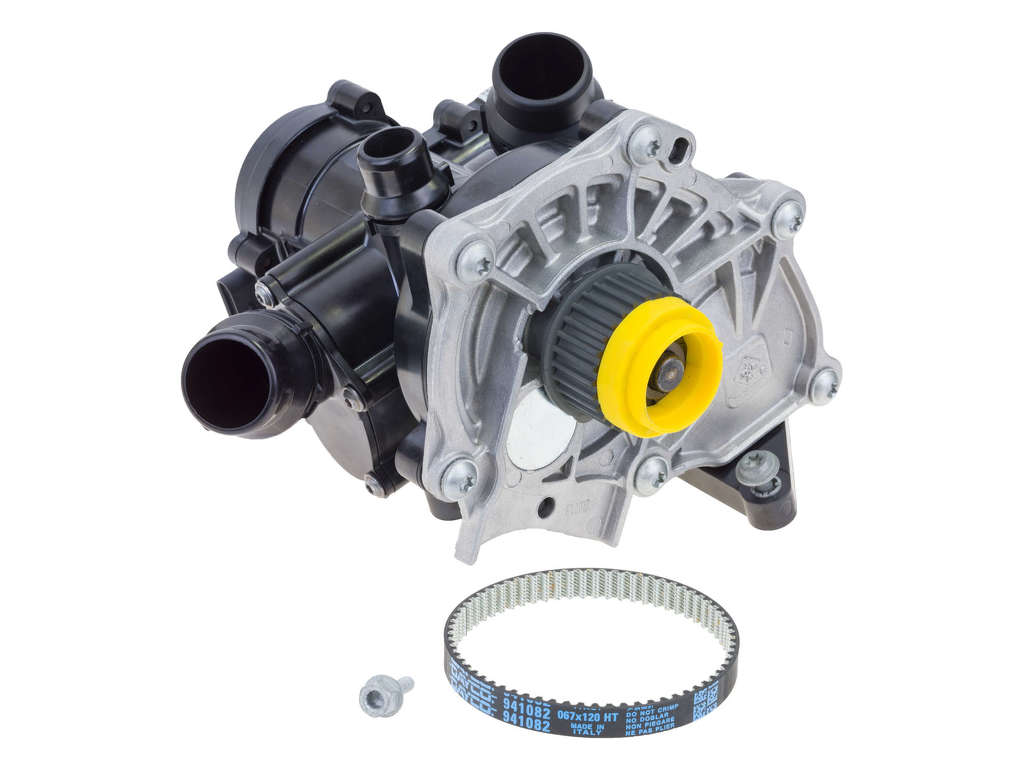
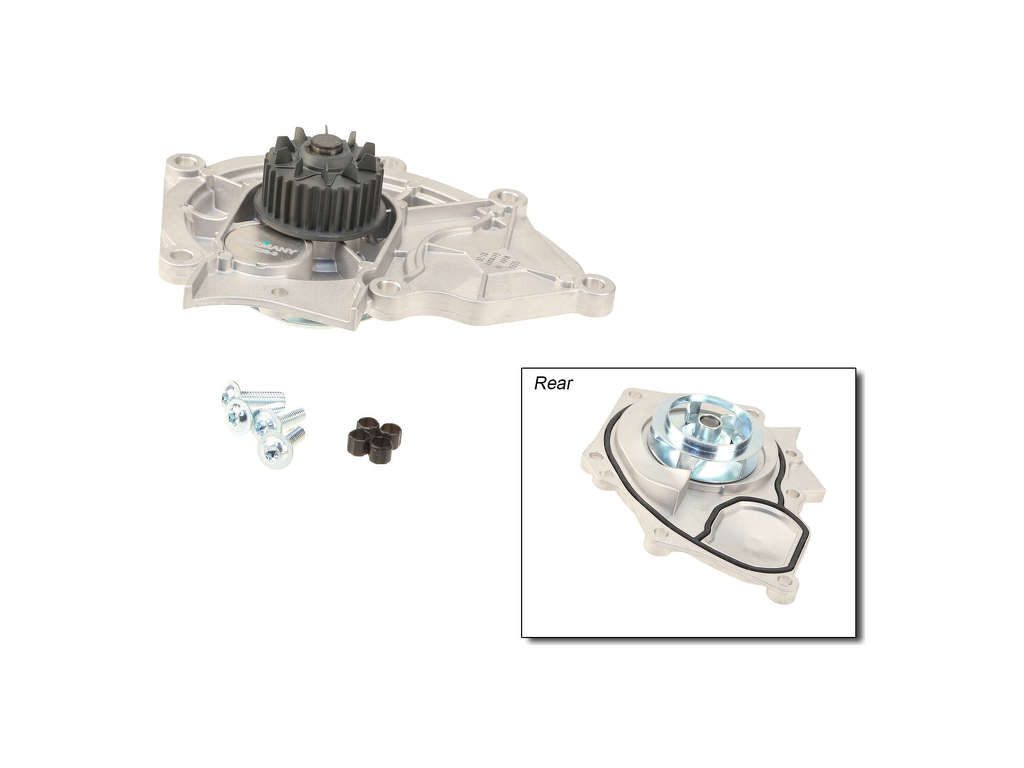
(OEM #06L121012L, 06L121111P (latest revisions))— A leaking water pump is a very common root cause of P0196 on this engine, as dripping coolant damages the sensor wiring below it. It is critical to replace with the latest revised part numbers to prevent premature failure.
Trusted brands: Continental, Graf, INA, Genuine VW/Audi
OEM price range: $400-$700
Aftermarket price range: $250-$450 - Oil Temperature Sensor Connector Pigtail
(OEM #1J0973081 (verify connector shape))— If the original connector is damaged by coolant, heat, or a broken locking tab, replacing the pigtail is necessary to ensure a solid connection.
Trusted brands: Standard Motor Products, Dorman, URO Parts
OEM price range: $25-$40
Aftermarket price range: $15-$25
Related Codes That Often Appear With This One
- P0198 — Indicates 'Engine Oil Temperature Sensor Circuit High'. It often appears with P0196 as both can be caused by the same fault, such as a damaged wire or a failed sensor.
- B104129 — A VW-specific code for 'Oil Level Thermal Sensor: Range/Performance' stored in the instrument cluster. It directly corroborates the P0196 fault. [VIN-4-A-PIN-2018]
- B104135 — A VW-specific code for 'Oil Level Thermal Sensor: Signal Too Long High', also pointing to the same sensor or circuit fault. [VIN-4-A-PIN-2018]
Technical Service Bulletins (TSBs) & Recalls
- VIN-4-A-PIN-2018: Mentions that a coolant leak at the pump can cause a yellow oil warning light with fault P0196.
- 2049924/5: Details the diagnosis and repair procedure for the leaking EA888 Gen 3 water pump, a common root cause of P0196.
Platform-Specific Known Issues
- Volkswagen TSB #VIN-4-A-PIN-2018 explicitly links a "Coolant leak at the coolant pump" and a "Yellow oil warning light" with fault code P0196, confirming the connection between these issues. [VIN-4-A-PIN-2018, 1]
- Another relevant TSB is 2049924/5, which details the diagnosis and repair for the leaking water pump assembly on the EA888 Gen 3 engine, the root cause for many P0196 faults.
Mechanic-Grade Diagnostic Values
- G266 Sensor Connector Voltage (Key On, Engine Off) — expected: Pin 1: ~12V (Battery Voltage), Pin 2: ~0V (Good continuity to ground), Pin 3: Signal wire to instrument cluster.. Failure: No voltage on Pin 1 indicates a power supply issue (e.g., blown fuse). High resistance on Pin 2 indicates a bad ground. An open circuit (disconnected sensor) will result in a ~5V reading on the signal wire due to the internal pull-up resistor, while a short to ground will read 0V.
- Scan Tool Live Data (Engine Oil Temperature) — expected: Should start near ambient temperature and rise smoothly as the engine warms up.. Failure: A static, illogical value such as -48°C or 155°C indicates an open or shorted circuit or a failed sensor.
Hidden / Shadow Codes Worth Checking
- 00562: This is a VAG-specific fault code for 'Sensor for Oil Level/Temperature (G266): Open or Short to Plus' or 'Implausible Signal'. It is often found in the Instrument Cluster (Address 17) and is the direct equivalent of the generic P0196 code, providing more specific diagnostic information. (see via VCDS, ODIS, or other VAG-specific diagnostic scan tools.)
Scan Tool Commands That Help
- VCDS or similar VAG-specific tool: Live Data Monitoring in [17-Instruments] — Use this to monitor the raw data for oil level and oil temperature as seen by the instrument cluster. This helps differentiate between a sensor/wiring issue and a problem with the gauge itself. A static, incorrect value here points directly to the G266 sensor circuit.
- VCDS or similar VAG-specific tool: Output Tests in [17-Instruments] — If live data appears correct but the physical gauge in the cluster is not working, run the output test to command a full sweep of the gauge. If the gauge moves correctly during the test, the issue is likely with data communication; if it fails to move, the gauge motor itself may be faulty.
Wiring & Ground Locations
- G266 Connector — On the bottom of the engine's plastic oil pan. It is a 3-pin connector.. This is the primary connection point for the sensor. It is highly vulnerable to coolant contamination from a leaking water pump above it, as well as road debris. The pins are: Pin 1 (Power), Pin 2 (Ground), Pin 3 (Signal).
- Ground Point 18 — On the engine block.. This is a primary engine ground. A loose or corroded connection here can cause a poor ground for multiple sensors, including the G266 oil sensor (via Pin 2), leading to erratic or implausible readings.
- Ground Connection 652 — Main ground strap between the transmission/engine and the vehicle body.. This is the main ground path for the entire engine assembly. If this strap is corroded or loose, it can cause a host of seemingly unrelated electrical faults, including sensor performance codes like P0196.
Real Owner Repair Stories
- Ross-Tech Forums user 'MrNomad105' (2015 VW Golf MKVII) — P0196 (Implausible Signal) and P0198 (Signal too High). Scan tool showed incorrect oil temperature (90°C when cold) and oil level (120mm).
❌ Tried (didn't work) Initial assumption was a bad sensor.
✅ What actually fixed it The locking tab on the G266 sensor connector was broken, causing it to be halfway off. Pushing the connector on fully and securing it with aviation safety wire resolved all fault codes and restored correct live data readings (oil temp dropped to 49.0°C, oil level to 92mm). - Reddit user 'Tubtruck' (Golf GTI (Mk7)) — Intermittent P019600 code (Oil Temp Sensor Range/Performance) that would appear and disappear while driving.
❌ Tried (didn't work) Visual check of wiring looked fine, leading to uncertainty about replacing the sensor.
✅ What actually fixed it Replacing the sensor with a new OEM part completely solved the problem, despite the wiring appearing visually okay. - GOLFMK7 forum user (2015 Mk7 GTI 6MT) — Multiple databus and crankshaft position sensor faults, limp mode, and stumbling acceleration immediately after a DIY water pump replacement.
❌ Tried (didn't work) Clearing codes, assuming they were from disconnecting the battery.
✅ What actually fixed it The user found a wire had been pulled loose from its socket on an unspecified connector during the water pump installation. Re-seating the wire fixed the issue. This highlights the risk of creating wiring faults while performing the common water pump repair.
When the Usual Fixes Don't Work
- While the most common causes are a leaking water pump or a failed sensor, a significant number of cases are resolved by addressing simple connection issues. Before ordering parts, it is critical to physically inspect the G266 sensor connector at the bottom of the oil pan. As documented in a Ross-Tech forum thread, the connector's locking tab can break, causing it to vibrate loose. The resulting 'open circuit' perfectly mimics the symptoms of a failed sensor, throwing both P0196 and P0198 codes. The fix was simply to push the connector on securely and hold it in place with safety wire. This costs nothing in parts and should be checked before draining the oil to replace the sensor.
OEM Part Supersession History
06L121111F, 06L121111G, 06L121111H, 06L121111J, 06L121111K, 06L121111L, 06L121111M→06L121111P— The thermostat/water pump housing is a known failure point due to the original plastic material becoming brittle. Successive revisions aimed to improve material durability and design to prevent cracking and coolant leaks.
Heads up: Using an older revision part is not recommended as it is prone to the same premature failure. Always install the latest available revision ('P' as of early 2026).03F907660E, 03F907660D→06L907660C— Part consolidation and potential minor revisions for reliability across different EA888 applications.
Heads up: While multiple part numbers may be listed, 06L907660C is the most commonly cited replacement for the 2017 Golf R. Always verify fitment with VIN.
Helpful Videos


We Have This Part in Stock


The information in this article is provided for general reference and educational purposes only. Vehicle specifications, procedures, and part compatibility can vary by production date, trim level, and region. Always consult your vehicle's factory service manual and verify part numbers before purchasing or performing repairs. Safety-critical components such as airbags, seat belts, and braking systems should be installed by a qualified professional.
- Volkswagen GOLF R:
- 🧭 Diagnostic Flowchart
- 🎬 Helpful Videos
- 🛍️ Shop This Part
- What's Unique About the 2017-2017 Volkswagen GOLF R
- Symptoms You May Notice
- Most Likely Causes
- Rare But Worth Checking
- Diagnosis Steps
- Parts You'll Likely Need
- Related Codes That Often Appear With This One
- Technical Service Bulletins (TSBs) & Recalls
- Platform-Specific Known Issues
- Mechanic-Grade Diagnostic Values
- Hidden / Shadow Codes Worth Checking
- Scan Tool Commands That Help
- Wiring & Ground Locations
- Real Owner Repair Stories
- When the Usual Fixes Don't Work
- OEM Part Supersession History
- 🎟️ Get 5% Off