

P0197 on 2009-2016 Hyundai Genesis 3.8L: Engine Oil Temperature Sensor Low Input Fixes
P0197 on a Hyundai Genesis 3.8L almost always means the Engine Oil Temperature Sensor has failed. This is a labor-intensive repair (4-6 hours) because the sensor is located under the intake manifold. It's highly recommended to replace the oil pressure sensor and its harness at the same time to avoid repeating the labor.
- P0197 on the Genesis 3.8L points directly to a problem with the Engine Oil Temperature (EOT) sensor or its circuit.
- The sensor is located under the intake manifold, making this a labor-intensive repair (4-6 hours).
- It is critical to use an OEM EOT sensor (P/N 39220-3C100) for a lasting repair.
- Due to the difficult access, you should always replace the Oil Pressure Sensor (OEM P/N 94750-2A000) and its harness (P/N 94760-3C801) at the same time to prevent future failures and redundant labor costs.
What's Unique About the 2009-2016 Hyundai Genesis
On the 3.8L Lambda V6 engine, Hyundai placed the Engine Oil Temperature (EOT) sensor deep in the engine valley (the 'V' between the cylinder banks), underneath the entire upper and lower intake manifold assembly. This design turns what would be a simple sensor replacement on most vehicles into a significant, 4-6 hour repair job. Because of the high labor cost to access this area, it is a very common and highly recommended practice to also replace the nearby oil pressure sensor and its wiring harness at the same time, as they are also known failure points that require the same disassembly to access.
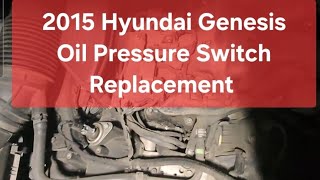
Generation note: This guide covers the first generation (2009-2014) and the start of the second generation (2015-2016) of the Hyundai Genesis sedan. The 3.8L Lambda II V6 engine was available in both, with a shift from Multi-Port Injection (MPI) to Gasoline Direct Injection (GDI) starting in the 2012 model year. While the code's meaning is the same, the intake manifold design and removal procedure differ slightly, affecting the repair process. 🎬 Watch this step-by-step 3.8L sensor replacement walkthrough GDI engines are known to be harder on oil, which may contribute to the conditions in the engine valley.
Symptoms You May Notice
- Check Engine Light is on
- Inaccurate or non-functional oil temperature gauge (if equipped)
- Reduced engine performance or 'limp mode'
- Poor fuel economy
- Cooling fans may run constantly or not at all
- Replacing the Engine Coolant Temperature sensor, as some owners mistakenly believe they are the same part. The ECT is typically located on the thermostat housing, while the EOT for this engine is under the intake manifold.
Most Likely Causes
- Failed Engine Oil Temperature (EOT) Sensor 🔴 High Probability The sensor is located in a high-heat area in the engine valley, which can lead to premature failure of the sensor's internal electronics due to constant heat soak.
How to confirm: Using a scan tool, observe the live data for the EOT sensor. If the reading is nonsensical (e.g., extremely low, like -40°F) even when the engine is warm, the sensor is likely bad. The signal voltage will be below the specified threshold, often less than 0.1V.
Typical fix: Replace the Engine Oil Temperature Sensor. This requires removing the upper and lower intake manifolds.
Est. part cost: $40-$65 - Wiring or Connector Issue 🟡 Medium Probability The wiring harness in the engine valley is exposed to significant heat, which can make the wires brittle and prone to cracking or shorting to ground over time. Oil from a leaking pressure switch can also contaminate the harness.
How to confirm: After accessing the sensor, perform a visual inspection of the wiring and connector for damage. With the sensor disconnected and key on, use a multimeter to check for a 5V reference at one pin and a good ground at the other.
Typical fix: Repair the damaged section of the wiring harness or replace the connector pigtail. It is common to replace the oil pressure sensor harness (P/N 94760-3C801) preventatively during this repair.
Est. part cost: $20-$40
Rare But Worth Checking
- Faulty Powertrain Control Module (PCM): → Shop Engine Control Module (ECM) This is very uncommon. All other possibilities, especially the sensor and wiring, should be exhaustively ruled out before considering a PCM failure.
Diagnosis Steps
- Connect an OBD-II scanner and confirm P0197 is present. Note any other codes, especially P0196.
- View live data on the scanner. Check the Engine Oil Temperature reading. A reading that is stuck at a very low temperature (e.g., -40°F) or does not change as the engine warms up points to a sensor or circuit fault.
- Perform a 'cold soak' test. Let the vehicle sit for several hours (5+ hours recommended) until completely cold. Turn the key to the 'ON' position (engine off) and compare the Intake Air Temp, Coolant Temp, and Oil Temp readings. They should all be within a few degrees of each other. If the oil temp is significantly different, it confirms a fault in the EOT sensor circuit.
- If the sensor reading is suspect, the next step is to access the sensor itself, which requires removing the upper and lower intake manifolds.
- Once accessed, inspect the sensor connector and wiring for any signs of damage, melting, corrosion, or oil contamination from the nearby pressure switch.
- Disconnect the sensor. With the ignition on, use a multimeter to test the connector terminals. You should find a 5-volt reference signal on one wire and a good ground on the other.
- If the voltage and ground are correct, the sensor itself is the most likely culprit. Test the sensor's resistance with a multimeter and compare it to the specifications at various temperatures. If they are not, there is an issue in the wiring harness leading back to the ECM.
Parts You'll Likely Need
- Engine Oil Temperature Sensor
(OEM #39220-3C100)— This is the primary component that fails and causes the P0197 code.
Trusted brands: Hyundai (OEM)
OEM price range: $40-$65
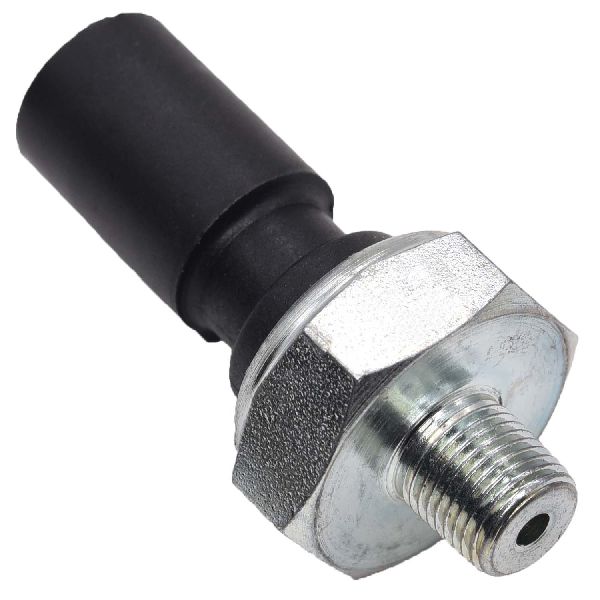
Aftermarket price range: $25-$50 - Oil Pressure Sensor / Switch
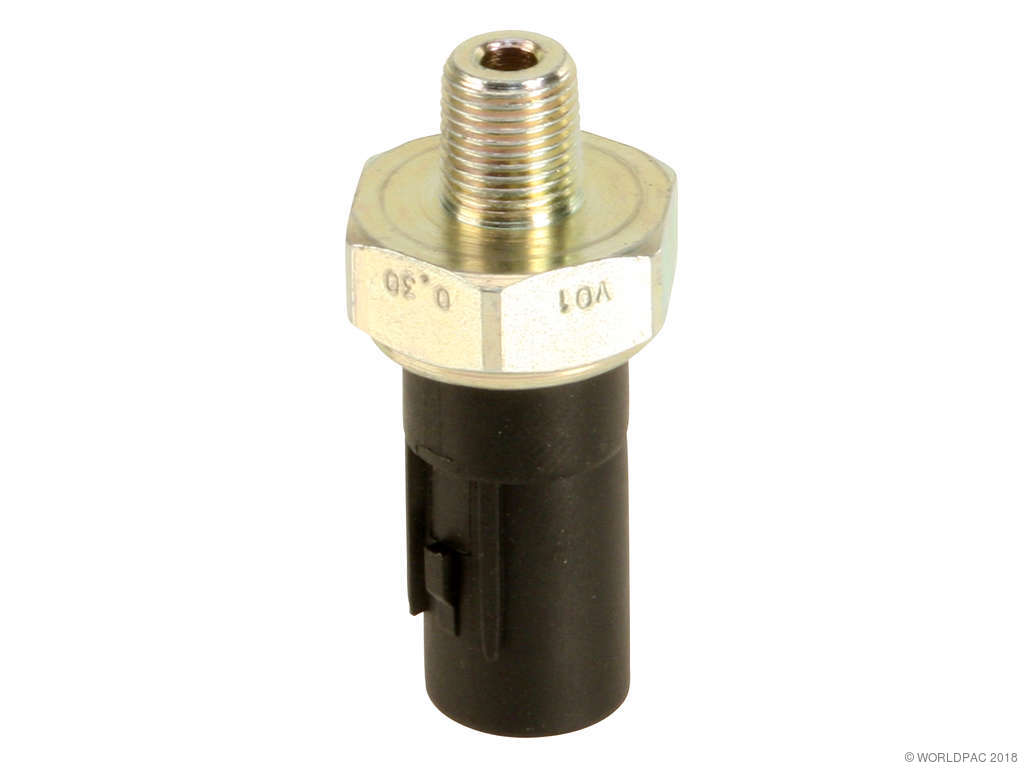
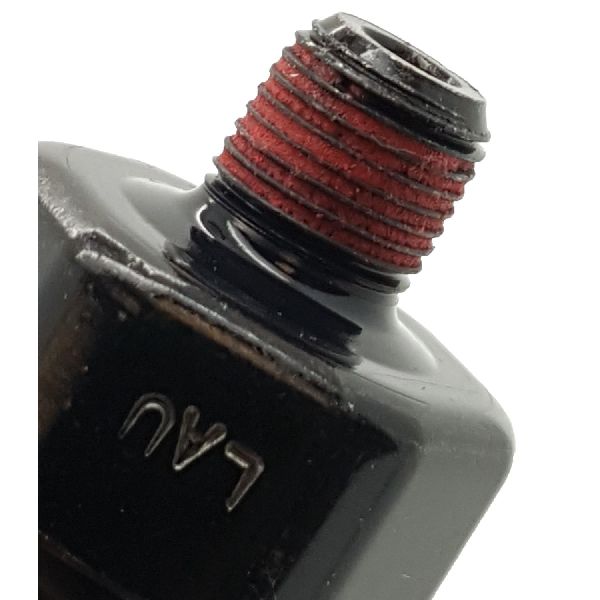
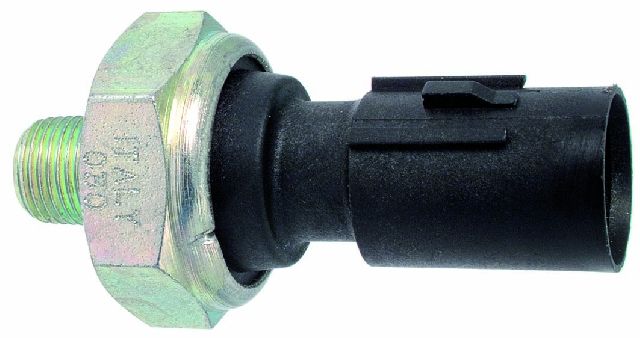
(OEM #94750-2A000)— This sensor is located next to the EOT sensor and is another common failure point, often leaking oil. Due to the high labor cost to access this area, it is strongly recommended to replace it at the same time. Owner experiences show aftermarket versions fail quickly; use OEM only. 🎬 See how to fix a flickering oil light
Trusted brands: Hyundai (OEM)
OEM price range: $30-$50
Aftermarket price range: $15-$30 - Oil Pressure Sensor Wiring Harness
(OEM #94760-3C801)— The original harness can become brittle from heat and contaminated by leaking oil. It's inexpensive and wise to replace while the intake manifold is off.
Trusted brands: Hyundai (OEM)
OEM price range: $20-$40
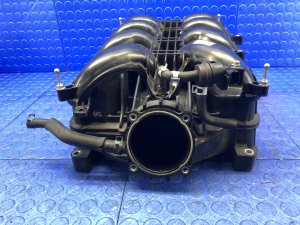
Aftermarket price range: N/A - Upper Intake Manifold Gasket (Plenum Gasket)
(OEM #28411-3C110)— This is a single-use gasket that must be replaced when the upper intake manifold (plenum) is removed.
Trusted brands: Hyundai (OEM), Fel-Pro
OEM price range: $20-$40
Aftermarket price range: $15-$30 - Lower Intake Manifold Gaskets
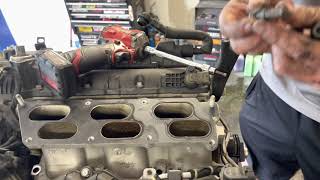
(OEM #29215-3CFA1)— These are single-use gaskets that must be replaced anytime the lower intake manifold is removed to prevent vacuum leaks. 🎬 Watch a complete 3.8L engine teardown video
Trusted brands: Hyundai (OEM), Fel-Pro, Mahle
OEM price range: $30-$50
Aftermarket price range: $20-$40
Related Codes That Often Appear With This One
- P0196 — P0196 (Engine Oil Temperature Sensor Range/Performance) is often triggered along with P0197. The ECM compares the EOT reading to the coolant and intake air temperatures after a cold soak. A failed sensor providing a low signal (P0197) will also be an illogical or out-of-range reading (P0196).
- P0198 — P0198 (Engine Oil Temperature Sensor Circuit High) can also be triggered by a faulty sensor or wiring, representing an open circuit instead of a short. It's part of the same family of diagnostic codes for this sensor.
- P0524 — P0524 (Engine Oil Pressure Too Low) is often seen because the oil pressure sensor is located right next to the EOT sensor and is another very common failure point. It is highly recommended to replace both sensors at the same time.
Mechanic-Grade Diagnostic Values
- Engine Oil Temperature Sensor (EOTS) Resistance — expected: The resistance should change with temperature. At -40°C (-40°F), expect ~52.15 kΩ. At 20°C (68°F), expect ~2.45 kΩ. At 80°C (176°F), expect ~0.29 kΩ.. Failure: An open circuit (infinite resistance) or a short (near zero resistance) regardless of temperature indicates a failed sensor. Readings that don't correspond to the temperature chart also indicate failure.
- EOTS Signal Voltage at ECM — expected: Voltage varies with temperature, typically from ~4.5V cold to ~0.5V at operating temperature.. Failure: The ECM will set code P0197 if the signal voltage is less than 0.1V for more than 12.5 seconds.
- EOTS Connector Voltage (Sensor Disconnected, Key On) — expected: One pin should show a 5V reference signal from the ECM. The other pin should have good continuity to ground.. Failure: Absence of the 5V reference or a poor ground points to a wiring or ECM issue, not a sensor failure.
Wiring & Ground Locations
- Engine Ground Strap — There is a primary ground strap located on the engine mount. On some models, additional grounds are located on the intake manifold and near the starter bell housing bolts.. A poor or corroded main engine ground can cause floating ground issues, leading to incorrect voltage readings from various sensors, including the EOT sensor. Ensuring these connections are clean and tight is a crucial step in diagnosing any electrical fault.
- ECU Ground — The main ECU/ECM ground point is typically located on the chassis in the engine bay, often near the battery.. The EOT sensor circuit relies on a stable ground reference provided by the ECU. A compromised ECU ground can directly cause incorrect sensor readings and trigger codes like P0197.
Real Owner Repair Stories
- Reddit r/Hyundai user post (2016 Hyundai Genesis 3.8 Sedan) — Check Engine Light with codes P0196 and P0197.
✅ What actually fixed it The user noted that four months prior to the P0197 code, they had replaced a leaking engine oil pressure sensor, its wire, spark plugs, and associated gaskets. This highlights the common failure of adjacent parts in the engine valley; the heat and oil contamination from the failing pressure switch likely contributed to the subsequent failure of the EOT sensor or its wiring.
Model Year Variations Within This Range
- 2012-2016: Starting in the 2012 model year, the 3.8L Lambda II engine switched from Multi-Port Injection (MPI) to Gasoline Direct Injection (GDI). While the location of the EOT sensor and the general repair procedure remain the same, the intake manifold design and removal process have slight differences. GDI engines are also known to cause more fuel dilution and soot in the engine oil, which could potentially impact the operating environment of sensors in the engine valley over the long term.
Diagnostic Flowchart
Other Known Issues on This Vehicle
Issues unrelated to this code that are worth knowing about as an owner of this generation:
- Intake Valve Carbon Buildup 🟠 Medium — Common on GDI models (2012+), typically becoming noticeable around 80,000-100,000 miles. Leads to rough idle, misfires, and power loss.
- Timing Chain Tensioner Wear 🟠 Medium — Can occur at higher mileage (80,000-120,000+ miles), causing a brief rattling noise on cold startups that lasts for a few seconds. (Ref: Some earlier models may have had recalls or service campaigns related to tensioners; owners should check their VIN.)
- Early 8-Speed Transmission Problems 🟠 Medium — Some issues with slipping or harsh shifting were reported, primarily on 2012 models which introduced the new 8-speed automatic transmission. (Ref: Hyundai addressed many of these issues under warranty and through service campaigns.)
- Valve Cover Gasket Oil Leaks 🟡 Low — A common maintenance item as the vehicle ages. Gaskets can become brittle and leak oil onto the exhaust manifolds, causing a burning smell.
Used vs. New Parts: Buying Guide for This Vehicle
When a used part is the smart pick: For this specific repair, using used parts is generally not recommended due to the high labor cost. The risk of a used sensor failing prematurely outweighs the small cost savings. It only makes sense if you are obtaining a complete low-mileage engine assembly that includes the sensors.
Donor-vehicle mileage cap: roughly under 40000 miles for the part to have meaningful remaining life.
What to inspect on the donor part:
- Verify the donor vehicle was not in a front-end collision.
- Check for any signs of oil leaks or sludge around the engine valley area if visible.
- Ensure the wiring connectors are not brittle, cracked, or oil-soaked.
OEM-only on this vehicle (don't cheap out):
- Engine Oil Temperature Sensor
- Oil Pressure Sensor / Switch
Aftermarket brands forum-validated for this vehicle:
- Fel-Pro (for intake manifold gaskets)
- Victor Reinz (for intake manifold gaskets)
Brands owners have reported issues with on this vehicle:
- Unnamed or 'white box' sensors. Forum discussions frequently mention premature failure of non-OEM oil pressure sensors, and the same logic applies to the EOT sensor given the shared difficult location.
Real Owner Stories
Aggregated from forums and TSBs cited above. Mileages and costs reflect what owners reported in those sources.
2016 Hyundai Genesis 3.8L Sedan
Symptoms: Check engine light came on with codes P0196 and P0197.
What fixed it: Replacement of the engine oil temperature sensor (which is the same part as the coolant temperature sensor), the oil pressure sensor, the harness, and various gaskets.
Source hint: Reddit r/Hyundai - 2016 Genesis 3.8 Sedan: P0196 and P0197
2015 Hyundai Genesis 3.8L
Symptoms: Reported getting codes P0196 and P0197.
What fixed it: Performed a DIY repair over approximately 5 hours, replacing the EOT sensor, oil pressure switch, and the associated harness located under the intake manifold.
Source hint: GenesisOwners.com thread titled 'P0196 and P0197'
2011 Genesis Coupe 3.8 RS
Symptoms: After hitting a speed bump which cracked the oil pan, the check engine light came on with code P0197 and the car was overheating.
What fixed it: The owner was replacing the oil pan and chassis components and had purchased a new oil temperature sensor to address the code.
Source hint: r/genesiscoupe
Related OBD-II Codes
Frequently Asked Questions
Where is the Engine Oil Temperature (EOT) sensor located on my 3.8L Genesis?
Is there a specific wiring harness I should replace while fixing P0197?
Can I use an aftermarket sensor to fix this code?
Why did my Genesis go into 'limp mode' with code P0197?
Are there other Hyundai or Genesis models that have this same EOT sensor issue?
How can I confirm the sensor is bad before taking the intake manifold apart?
Helpful Videos


Used OEM Parts in Stock
New Aftermarket Parts Available


The information in this article is provided for general reference and educational purposes only. Vehicle specifications, procedures, and part compatibility can vary by production date, trim level, and region. Always consult your vehicle's factory service manual and verify part numbers before purchasing or performing repairs. Safety-critical components such as airbags, seat belts, and braking systems should be installed by a qualified professional.
- Hyundai Genesis:
- 🧭 Diagnostic Flowchart
- 🎬 Helpful Videos
- 🛍️ Shop This Part
- What's Unique About the 2009-2016 Hyundai Genesis
- Symptoms You May Notice
- Most Likely Causes
- Rare But Worth Checking
- Diagnosis Steps
- Parts You'll Likely Need
- Related Codes That Often Appear With This One
- Mechanic-Grade Diagnostic Values
- Wiring & Ground Locations
- Real Owner Repair Stories
- Model Year Variations Within This Range
- Other Known Issues on This Vehicle
- Used vs. New Parts: Buying Guide for This Vehicle
- Real Owner Stories
- 2016 Hyundai Genesis 3.8L Sedan
- 2015 Hyundai Genesis 3.8L
- 2011 Genesis Coupe 3.8 RS
- Related OBD-II Codes
- Frequently Asked Questions
- 🎟️ Get 5% Off