

P0197 on 2013-2016 Hyundai Genesis Coupe 3.8L: Engine Oil Temperature Sensor Fixes
On the 3.8L Genesis Coupe, P0197 almost always means the Engine Oil Temperature (EOT) sensor has failed. The sensor is buried under the intake manifold, making it a 4-6 hour job. It is critical to replace the oil pressure sensor (a known high-failure part) at the same time to avoid doing the labor twice. Use only OEM sensors for this repair.
- P0197 on the Genesis Coupe 3.8L points to a problem with the Engine Oil Temperature sensor circuit, usually a failed sensor with OEM part number 39220-3C100.
- The sensor is located under the intake manifold, making this a very labor-intensive and expensive repair for a relatively cheap part.
- It is critical to replace the oil pressure sensor (P/N 94750-2A000), its harness (P/N 94760-3C801), and all intake gaskets at the same time to avoid future repairs that require the same difficult disassembly.
- Use only genuine Hyundai OEM sensors for this repair. Aftermarket sensors are known to fail prematurely, forcing a repeat of the 4-6 hour job.
- Due to the complexity of the repair, professional service is strongly recommended for most owners.
What's Unique About the 2013-2016 Hyundai Genesis Coupe
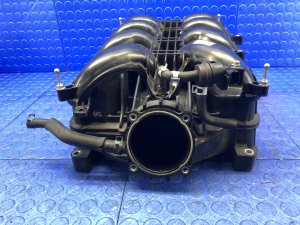
The defining issue for the 3.8L Lambda V6 engine is the physical location of the Engine Oil Temperature (EOT) sensor. Hyundai placed it deep in the 'V' of the engine valley, underneath the entire upper and lower intake manifold assembly. This design transforms a simple sensor replacement into a significant, labor-intensive repair requiring removal of the fuel rail and injectors. Consequently, the high labor cost is the primary concern for this code, and it makes 'while you're in there' replacements, like the oil pressure sensor, extremely important to avoid a repeat job.
Symptoms You May Notice
- Check Engine Light is on
- Inaccurate or non-functional oil temperature gauge (if equipped)
- Potential for reduced engine performance or 'limp mode'
- Slightly increased fuel consumption
- Oil temperature warning light may illuminate on the dash
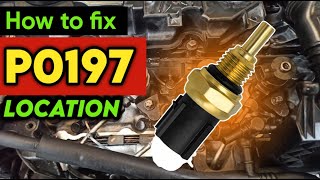
- Replacing the Engine Coolant Temperature sensor. Owners sometimes confuse the two, but they are separate sensors with different functions and locations. The EOT sensor is under the intake, while the ECT is typically on the thermostat housing. 🎬 Watch: Locate the engine oil temperature sensor
Most Likely Causes
- Failed Engine Oil Temperature (EOT) Sensor 🔴 High Probability The sensor is located in the hot engine valley, subjecting it to extreme heat cycles which can lead to internal failure over time. This is a common failure point on the 3.8L Lambda engine.
How to confirm: After gaining access to the sensor, test its resistance with a multimeter; it should change with temperature. A more practical confirmation is finding the signal wire shorted to ground or having a voltage reading below the specified threshold (e.g., < 0.1V) with a scan tool.
Typical fix: Replace the Engine Oil Temperature sensor. This requires removing the upper and lower intake manifolds.
Est. part cost: $40-$80 - Wiring or Connector Issue 🟡 Medium Probability The wiring harness in the engine valley is exposed to the same high heat as the sensor, which can make wires brittle and insulation crack over time, leading to a short to ground. Oil from a leaking oil pressure sensor (a very common issue) can also contaminate and damage the EOT sensor's wiring.
How to confirm: Visually inspect the sensor's connector and wiring for any signs of damage, melting, or corrosion. Perform a continuity test on the signal wire to check for a short to ground.
Typical fix: Repair the damaged section of the wiring harness or replace the connector pigtail. In some cases, the oil pressure sensor harness, which is nearby, may need replacement.
Est. part cost: $15-$50
Rare But Worth Checking
- Faulty Powertrain Control Module (PCM): → Shop Engine Control Module (ECM) This is very uncommon. The PCM should only be considered after thoroughly testing the sensor and its entire circuit. A failed PCM might not correctly process the incoming signal from the sensor.
Diagnosis Steps
- Connect an OBD-II scanner and confirm P0197 is the active code. Check for any other related codes like P0196 or P0198.
- Using the scanner's live data function, observe the Engine Oil Temperature reading. With a cold engine, it should be very close to the ambient air and coolant temperature readings. A reading that is stuck at an extreme low (e.g., -40°F) or doesn't change as the engine warms up points to a circuit or sensor fault.
- Service manuals specify that the ECM sets P0197 when the sensor signal is less than 0.1V for more than 12.5 seconds. Confirm this low voltage reading on your scan tool.
- If possible, gain access to the EOT sensor connector under the intake manifold. This is labor-intensive.
- Disconnect the sensor and inspect the connector and wiring for damage, corrosion, or oil contamination.
- With the key on and engine off, check for 5V reference voltage at the connector.
- Test the signal wire for a short to ground using a digital multimeter.
- If the wiring is confirmed to be good, the EOT sensor itself is the most likely culprit and should be replaced. It is highly recommended to use an OEM sensor to prevent premature failure.
Parts You'll Likely Need
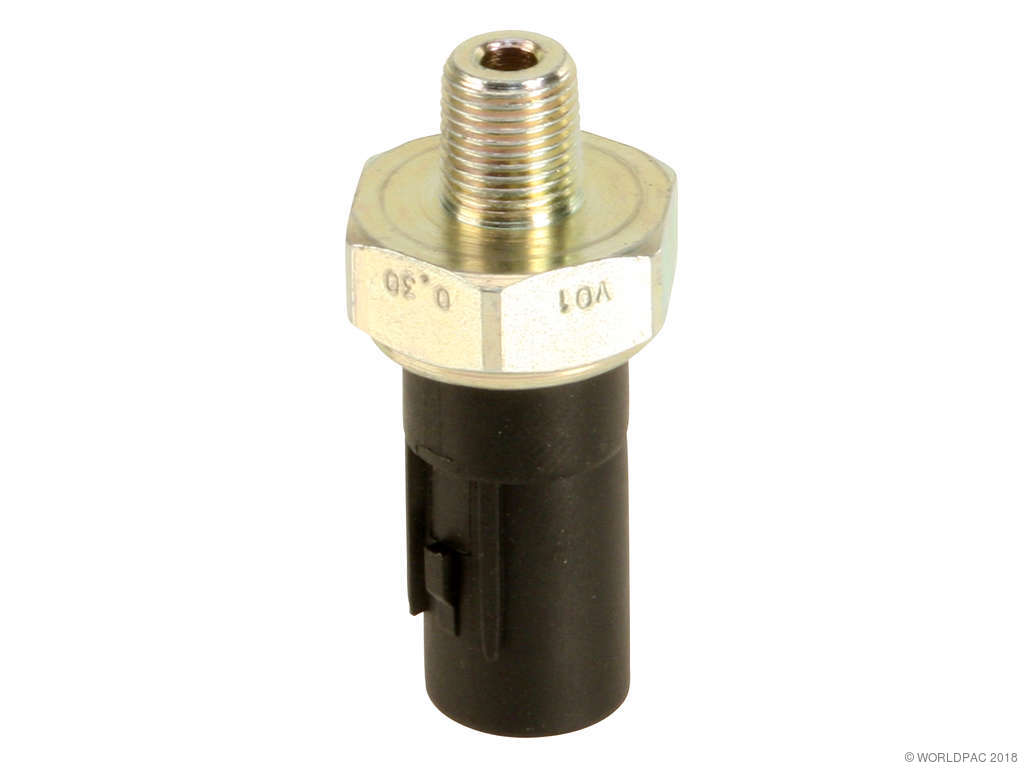
- Engine Oil Temperature Sensor
(OEM #39220-3C100)— This is the primary component that fails and directly causes the P0197 code.
Trusted brands: Hyundai Genuine
OEM price range: $45-$65
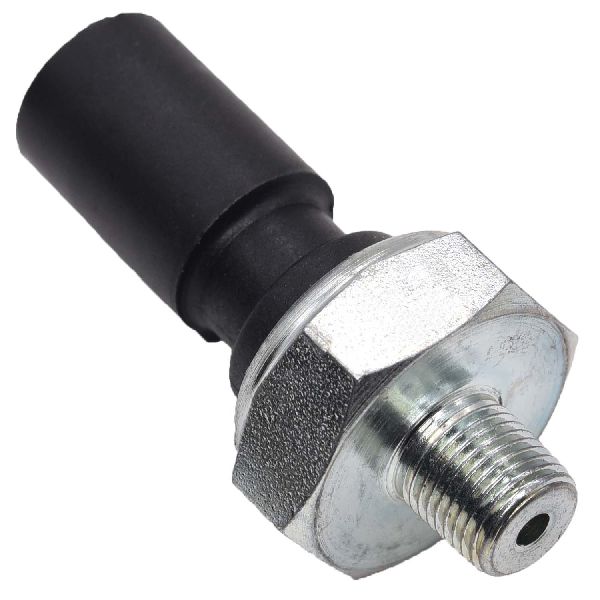
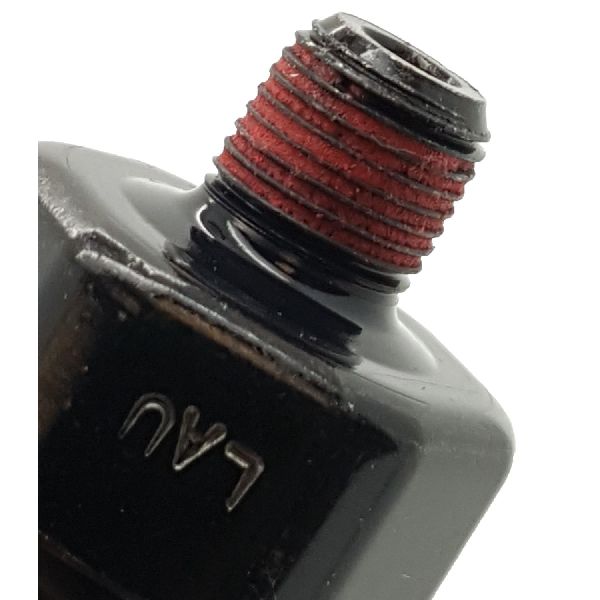
Aftermarket price range: $30-$50 - Engine Oil Pressure Sensor / Switch
(OEM #94750-2A000)— This sensor is located next to the EOT sensor and is a very common failure point, often leaking oil. It is highly recommended to replace it at the same time to avoid repeating the 4-6 hours of labor to remove the intake manifold.
Trusted brands: Hyundai Genuine
OEM price range: $60-$100
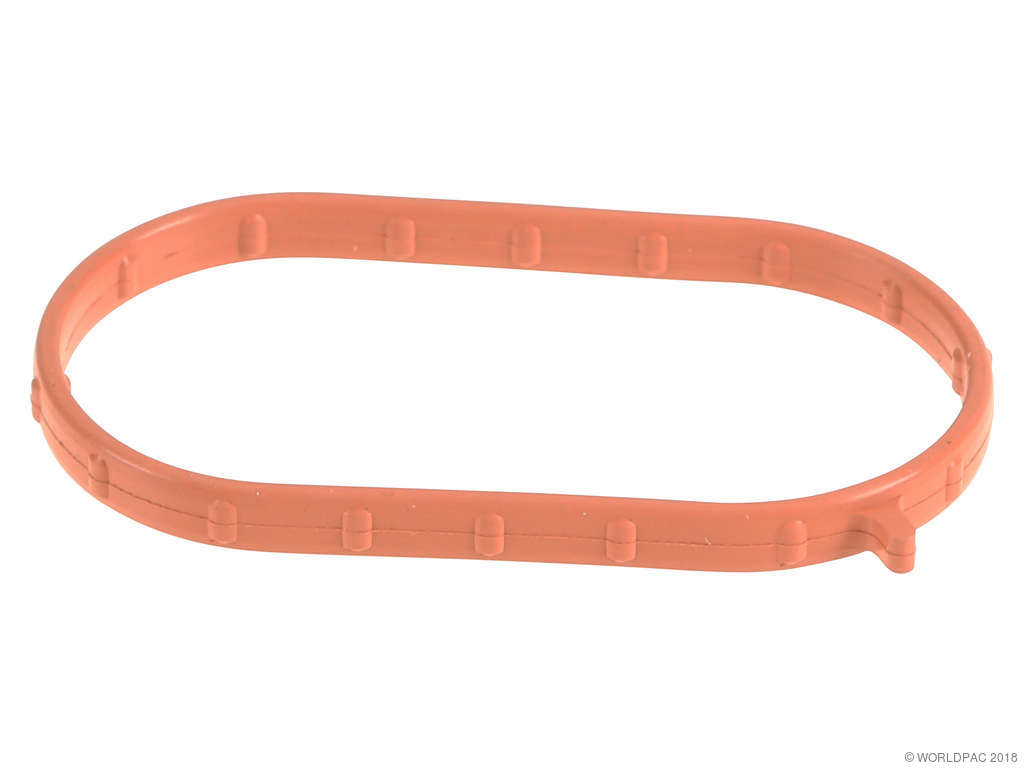
Aftermarket price range: $30-$60 - Upper and Lower Intake Manifold Gaskets
(OEM #29215-3CFA1 (Upper/Plenum Gasket for GDI))— These gaskets must be replaced anytime the intake manifold is removed to prevent vacuum leaks.
Trusted brands: Hyundai Genuine, Fel-Pro, Mahle
OEM price range: $50-$80
Aftermarket price range: $30-$60 - Oil Pressure Sensor Harness
(OEM #94760-3C801)— Often recommended for replacement along with the oil pressure sensor, as it can become brittle from heat or contaminated by leaking oil.
Trusted brands: Hyundai Genuine
OEM price range: $20-$35
Related Codes That Often Appear With This One
- P0196 — P0196 indicates an 'Engine Oil Temperature Sensor Range/Performance' issue. It's common to see this code alongside P0197 as they both relate to implausible signals from the same sensor.
- P0521 — This code is for the 'Engine Oil Pressure Sensor/Switch Range/Performance'. The oil pressure sensor is located next to the EOT sensor under the intake manifold and is a known failure item. It's often replaced preventatively when addressing P0197.
- P0198 — P0198 indicates 'Engine Oil Temperature Sensor Circuit High', which is the opposite of P0197. It can be triggered by the same faulty sensor or wiring harness, just with an open circuit instead of a short.
Platform-Specific Known Issues
- OEM Parts are Critical: Forum users and repair guides strongly advise against using aftermarket oil temperature or oil pressure sensors for this repair. A user on Reddit reported their aftermarket oil pressure sensor failed shortly after installation, requiring them to repeat the entire labor-intensive job.
Mechanic-Grade Diagnostic Values
- EOT Sensor Resistance — expected: Approximately 2.45 kΩ at 20°C (68°F), and 0.29 kΩ at 80°C (176°F). Resistance should decrease as temperature increases.. Failure: Resistance is infinite (open circuit), near zero (short circuit), or does not change with temperature.
- EOT Sensor Connector Voltage (Key On, Engine Off, Connector Disconnected) — expected: One pin should have a 5V reference signal from the ECM. The other pin should be ground (< 0.1V).. Failure: Absence of the 5V reference or voltage present on the ground pin indicates a wiring or ECM issue, not a faulty sensor.
- Live Data Cold Soak Rationality Check — expected: After the vehicle has sat for 5+ hours, the Engine Oil Temperature, Engine Coolant Temperature, and Intake Air Temperature readings should all be within a few degrees of each other.. Failure: The EOT reading is more than 35°C (63°F) different from the other two sensors at startup, indicating a fault in the EOT sensor or circuit.
Scan Tool Commands That Help
- Hyundai GDS (Global Diagnostic System): DTC Guide — When a P0197 code is present, the GDS OEM tool provides a specific, step-by-step diagnostic guide for that fault code, which includes wiring diagrams, component locations, and test procedures.
- Hyundai GDS (Global Diagnostic System): Data Analysis / Current Data — This function is used to monitor the live data stream from the EOT sensor. A technician would watch for the temperature to rise smoothly as the engine warms up and compare it against other temperature sensors for rationality checks.
Diagnostic Flowchart
Other Known Issues on This Vehicle
Issues unrelated to this code that are worth knowing about as an owner of this generation:
- Manual Transmission Issues (2nd Gear Lockout) 🟠 Medium — Common complaint among owners of manual transmission models, especially during aggressive driving or when the transmission is hot.
- Differential-to-Crossmember Bolt Loosening (Manual Transmission) 🔴 High — Subject of NHTSA recall #15V759000 for 2013-2015 models. Improper assembly could lead to the differential separating from the driveshaft. (Ref: Hyundai Recall #135 / NHTSA #15V759000)
- Carbon Buildup on Intake Valves 🟠 Medium — A common issue for all Gasoline Direct Injection (GDI) engines, including the Lambda II. Can cause misfires, rough idle, and loss of power, typically noticeable after 80,000-100,000 miles.
- Paint Chipping and Flaking 🟡 Low — Some owners, particularly of 2013 models, have reported premature and severe paint chipping on bumpers, hoods, and roofs.
- Water Leaks into Trunk 🟡 Low — A known issue where water can enter the trunk, often due to poorly sealed tail light gaskets. Mentioned frequently in owner forums.
- Passenger OCS Connector Dislodging 🟠 Medium — Subject of NHTSA recall #16V469000 for 2010-2016 models. The Occupant Classification System connector under the passenger seat could disconnect, disabling the passenger airbag. (Ref: Hyundai Recall #151 / NHTSA #16V469000)
Used vs. New Parts: Buying Guide for This Vehicle
When a used part is the smart pick: For this specific repair, using a used part is almost never a smart choice. The labor to access the sensors (4-6 hours) is the most expensive part of the job. The risk of a used sensor failing shortly after installation far outweighs the small cost savings on the part itself.
What to inspect on the donor part:
- Not applicable, as used sensors are not recommended for this repair.
OEM-only on this vehicle (don't cheap out):
- Engine Oil Temperature Sensor
- Engine Oil Pressure Sensor
Brands owners have reported issues with on this vehicle:
- All non-OEM brands for the Engine Oil Temperature and Engine Oil Pressure sensors. Forum consensus is that aftermarket sensors have a high failure rate for this application, leading to a repeat of the expensive labor.
Real Owner Stories
Aggregated from forums and TSBs cited above. Mileages and costs reflect what owners reported in those sources.
2016 Hyundai Genesis 3.8 Sedan
Symptoms: Check engine light came on with codes P0196 and P0197.
What fixed it: The owner was advised to replace the engine oil sensor (EOT), oil pressure sensor, and the associated harness and gaskets using OEM parts.
Source hint: Reddit r/Hyundai - 2016 Genesis 3.8 Sedan: P0196 and P0197
2013-2016 Hyundai Genesis Coupe 3.8L
Symptoms: Aftermarket oil pressure sensor failed shortly after installation.
What fixed it: Replacement with an OEM sensor to avoid repeating the labor-intensive job.
Source hint: Vehicle-specific issues: OEM Parts are Critical
Related OBD-II Codes
Frequently Asked Questions
Where is the Engine Oil Temperature (EOT) sensor located on the 3.8L Lambda II GDI V6?
Can I use an aftermarket sensor to fix the P0197 code on my Genesis Coupe?
Is there a recall for the 2013-2015 Genesis Coupe that I should be aware of while fixing this?
Why is my EOT sensor failing on my 3.8L Lambda engine?
What voltage should the ECM see for the P0197 code to trigger?
Are there any other common issues with the 2010-2016 Genesis Coupe safety systems?
Helpful Videos

Used OEM Parts in Stock
New Aftermarket Parts Available


The information in this article is provided for general reference and educational purposes only. Vehicle specifications, procedures, and part compatibility can vary by production date, trim level, and region. Always consult your vehicle's factory service manual and verify part numbers before purchasing or performing repairs. Safety-critical components such as airbags, seat belts, and braking systems should be installed by a qualified professional.
- Hyundai Genesis Coupe:
- 🧭 Diagnostic Flowchart
- 🎬 Helpful Videos
- 🛍️ Shop This Part
- What's Unique About the 2013-2016 Hyundai Genesis Coupe
- Symptoms You May Notice
- Most Likely Causes
- Rare But Worth Checking
- Diagnosis Steps
- Parts You'll Likely Need
- Related Codes That Often Appear With This One
- Platform-Specific Known Issues
- Mechanic-Grade Diagnostic Values
- Scan Tool Commands That Help
- Other Known Issues on This Vehicle
- Used vs. New Parts: Buying Guide for This Vehicle
- Real Owner Stories
- 2016 Hyundai Genesis 3.8 Sedan
- 2013-2016 Hyundai Genesis Coupe 3.8L
- Related OBD-II Codes
- Frequently Asked Questions
- 🎟️ Get 5% Off