

P0198 on 2003-2024 Honda Accord: Engine Oil Temperature Sensor Circuit High Causes and Fixes
On a Honda Accord, code P0198 is most often caused by a failed engine oil temperature sensor. Replacing the sensor is the most common fix, with the part typically costing between $20 and $60 for an aftermarket replacement. Before replacing, always check the wiring and connector for damage, as this is a frequent and cheaper fix.
- P0198 means the Engine Oil Temperature sensor circuit has a fault, usually an open circuit with voltage above 4.7V.
- The most likely cause is a failed Engine Oil Temperature sensor or, on many V6 Accords, a combination oil pressure/temperature switch.
- Before replacing any parts, inspect the sensor's wiring and connector for obvious damage, as this is a common and inexpensive fix.
- Driving with this code is possible, but should be limited as the engine's protective systems (like cooling fans) may be compromised.
- On many Accords, the sensor may be part of the oil pressure switch assembly, particularly part number 37260-PZA-003 on V6 models with VCM.
What's Unique About the 2003-2024 Honda Accord
For many Honda Accord models, particularly those with the popular K-series (K24) four-cylinder and some J-series V6 engines, the P0198 code can be confusing because a dedicated Engine Oil Temperature (EOT) sensor is not always present. Instead, oil temperature data may be inferred or the function is integrated with another component. On some V6 models with VCM (Variable Cylinder Management), an oil pressure switch located on the spool valve assembly (Part No. 37260-PZA-003) is a 3-pin sensor that provides oil pressure and temperature data. Failure of this combination switch is a known issue and can trigger P0198. On other models, the primary temperature sensor the PCM relies on is the Engine Coolant Temperature (ECT) sensor, and oil temperature is calculated based on ECT and other engine parameters.
Generation note: This guide covers the 7th (2003-2007), 8th (2008-2012), 9th (2013-2017), 10th (2018-2022), and 11th (2023-2024) generations of the Honda Accord. While the meaning of P0198 is the same across all years, the location and identity of the responsible sensor vary significantly. On many K24 (I4) engines, you may be looking for the oil pressure switch near the back of the engine block. On some J-series (V6) models, a combination pressure/temperature switch is part of the VCM spool valve assembly. Always verify the sensor configuration for your specific engine and year.
Symptoms You May Notice
- Check Engine Light is on
- Engine may enter a reduced power or 'limp mode'
- Inaccurate or blank oil temperature reading on the instrument cluster (if equipped)
- Potential for engine to run hotter than normal if cooling fans are not activated correctly
- Slight decrease in fuel economy
- In some diesel applications, the glow plug operation may be affected
- Replacing the Engine Coolant Temperature (ECT) sensor instead of the Engine Oil Temperature (EOT) sensor or the correct oil pressure/temperature switch.
- Replacing the sensor without first testing the wiring and connector, which can lead to the code returning if the fault is in the circuit.
Most Likely Causes
- Failed Engine Oil Temperature (EOT) Sensor or Combination Oil Pressure/Temperature Switch 🔴 High Probability Sensors are exposed to extreme heat cycles and oil contamination, leading to internal failure over time. On V6 models with VCM, the combination switch (e.g., part 37260-PZA-003) is a known failure point.
How to confirm: With the engine off, unplug the sensor. The resistance across the sensor's terminals should match the specifications in the service manual for the ambient temperature. A reading of infinite resistance indicates an open circuit and a failed sensor. 🎬 Watch: How to test and replace the oil temperature sensor For a 'Circuit High' code, you can also jump the two pins on the connector pigtail with a paperclip; if the code changes to a 'Circuit Low' (like P0197), the wiring is likely good and the sensor is bad.
Typical fix: Replace the Engine Oil Temperature sensor or the oil pressure/temperature switch. This often involves draining a small amount of oil and may require a special socket (e.g., 24mm deep socket for some oil pressure switches).
Est. part cost: $20-$70 - Wiring or Connector Issue 🟡 Medium Probability The wiring harness near the engine is exposed to heat and vibration, which can cause wires to fray, break, or connectors to become corroded or loose. The connector itself can become brittle and fail to make a secure connection.
How to confirm: Visually inspect the wiring harness leading to the EOT sensor for any signs of damage, melting, or corrosion. Check the connector for a secure fit and clean pins. Use a multimeter to check for the correct reference voltage (usually 5V) and ground at the connector with the key on, engine off. Wiggle the harness while observing voltage on a scan tool to see if the reading fluctuates, indicating an intermittent break.
Typical fix: Repair the damaged section of wire or replace the connector pigtail. Ensure the connection is secure and protected from heat with loom or tape.
Est. part cost: $5-$30
Rare But Worth Checking
- Faulty Powertrain Control Module (PCM): → Shop Engine Control Module (ECM) This is the least likely cause. Before condemning the PCM, all other possibilities, including the sensor and the entire circuit, must be thoroughly tested and ruled out. A PCM failure for a single sensor circuit is uncommon.
Diagnosis Steps
- Verify the code with an OBD-II scanner. Note any other codes present and check freeze frame data to see engine conditions when the code was set.
- Check the engine oil level and condition to rule out any fundamental issues. Extremely low oil can cause overheating, though P0198 is an electrical fault code.
- Use a scan tool to view the live data for the EOT sensor. With a P0198 code, the reading will likely be stuck at a very low default value (e.g., -40°F), even when the engine is warm.
- Locate the correct sensor for your engine (EOT or combination pressure/temp switch). Visually inspect the sensor and its electrical connector for broken wires, loose connections, or signs of oil contamination.
- Disconnect the sensor connector with the Key On, Engine Off. Use a multimeter to check for a 5-volt reference signal from the PCM on one wire and a good ground on another.
- If voltage and ground are present, test the sensor itself. Measure the resistance between the sensor's pins and compare it to the specifications in your vehicle's service manual. The resistance should change with temperature. An infinite reading indicates an open, faulty sensor.
- As a quick test, you can use a jumper wire on the harness-side connector pins. This should cause the scan tool reading to change from -40°F to a very high temperature and may set a P0197 (Circuit Low) code. This confirms the wiring to the PCM is intact.
- If the sensor and wiring all check out, the issue may be with the PCM, but this is extremely rare.
Parts You'll Likely Need
- Engine Oil Temperature Sensor / Oil Pressure Switch
(OEM #37260-PZA-003 (Common V6 VCM combination switch))— This sensor is responsible for measuring the oil temperature/pressure and is the most common failure point for code P0198.
Trusted brands: Denso, Hitachi, Standard Motor Products, Genuine Honda
OEM price range: $50-$100
Aftermarket price range: $20-$60
Platform-Specific Known Issues
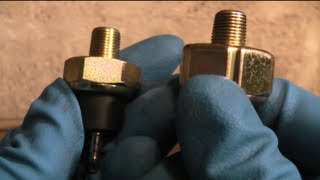
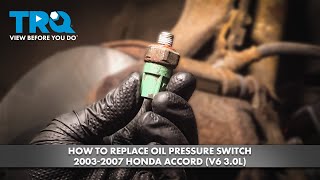
- On 7th Gen (2005-2007) and other Accords with the J-series V6 Hybrid or VCM systems, the 3-pin oil pressure switch (part 37260-PZA-003) located on the spool valve assembly is a frequent cause. 🎬 See this walkthrough for replacing the V6 oil pressure switch This part serves multiple functions and its failure can trigger P0198.
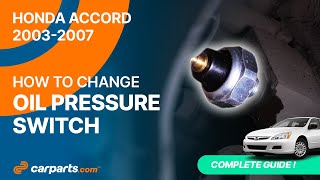
- On 7th Gen (2003-2007) Accords with the 2.4L K24 engine, the relevant sensor is typically the single-pin oil pressure switch located on the back of the engine block, near the passenger side. A video by 1A Auto shows its replacement. 🎬 Watch: How to replace the oil pressure switch on 2.4L engines
Mechanic-Grade Diagnostic Values
- EOT Sensor Signal Voltage (at sensor connector, back-probed) — expected: 0.5V (hot oil, ~212°F) to 4.0V (cold oil, ~32°F).. Failure: A fixed reading above 4.5V - 4.7V confirms the 'Circuit High' condition.
- Engine Coolant Temperature (ECT) Sensor Resistance — expected: At 68°F (20°C): ~2.0 kΩ. At 176°F (80°C): ~0.4 kΩ.. Failure: Infinite resistance (open circuit) or very low resistance when cold. While not the EOT, these values are typical for Honda thermistors and can be used as a reference if EOT specs are unavailable.
- Torque Specification for Oil Pressure/Temperature Switch — expected: 13 ft-lbs.. Failure: Over-tightening can damage the threads in the aluminum engine block; under-tightening will cause an oil leak.
Scan Tool Commands That Help
- Professional Scan Tool (e.g., Honda HDS, iCarsoft): Bi-Directional EOT Test / Engine System Validation Test — Some advanced scan tools can send voltage commands to the sensor circuit to verify responsiveness, helping to distinguish a wiring fault from a sensor fault without manual testing. After a repair, a system validation test can confirm the fix.
Wiring & Ground Locations
- G101 — For many 4-cylinder Accords, this main engine harness ground is located on the intake manifold plenum on the driver's side. For V6 models, it's typically on the left side of the engine.. G101 is the primary ground point for the PCM and many engine sensors. A corroded or loose G101 can cause a floating ground, leading to incorrect voltage readings and triggering codes like P0198.
- Oil Pressure Switch Connector (K-series, single-pin) — Located on the back of the engine block, often near the oil filter. It's a single-pin connector with a large rubber boot.. The single wire is the signal wire. The sensor grounds through its threads into the engine block. A break in this single wire will cause an open circuit and a P0198 code.
- VCM Oil Pressure/Temp Switch Connector (J-series, 3-pin) — Located on the VCM spool valve assembly.. This is a 3-pin connector carrying reference voltage, ground, and the signal wire. Knowing the pinout is critical for testing. Damage to any of these three wires can cause the code.
Model Year Variations Within This Range
- 2003-2007 (7th Gen): On the 2.4L K24A4 engine, the relevant sensor is a single-pin oil pressure switch on the rear of the engine block, accessible with a 24mm deep socket. On the 3.0L J30A4/J30A5 V6, the key sensor is often the 3-pin combination switch (37260-PZA-003) on the VCM spool valve assembly.
- 2013-2017 (9th Gen): The 2.4L K24W1 engine continues to use a single-pin oil pressure switch near the oil filter, accessible from underneath the vehicle in the passenger side wheel well area. The V6 models continue with the VCM system and its associated multi-function oil pressure switches.
Diagnostic Flowchart
Other Known Issues on This Vehicle
Issues unrelated to this code that are worth knowing about as an owner of this generation:
- Automatic Transmission Failure (V6 Models) 🔴 High — Very common on 2003-2004 V6 models. An internal filter would clog, and insufficient cooling led to failure, often before 100,000 miles. (Ref: Recall issued (TSB 04-037) to install an oil jet kit for better cooling, but many transmissions still failed.)
- Excessive Oil Consumption (K24 I4 & J35 V6) 🟠 Medium — Widespread on 2008-2012 models. Caused by sticking piston rings on K24 engines and VCM software issues on J35 V6 engines. (Ref: Honda TSB #12-087 and TSB #13-077 addressed the issue, and a class-action lawsuit extended warranties for some owners.)
- VTC Actuator Rattle on Cold Start (K24 Engine) 🟠 Medium — Extremely common on K24 engines (2008-2012+). A brief, loud rattle for 1-2 seconds upon cold startup due to a faulty locking pin in the VTC gear. (Ref: Honda TSB 16-012 / 16-088 documents the issue. Ignoring it can lead to a stretched timing chain.)
- Premature Starter Failure / Grinding Start (V6 Models) 🟠 Medium — Common on 2013-2017 V6 models. A grinding noise upon startup due to poor clearance between the starter and torque converter ring gear. (Ref: Honda TSB 16-002 involves replacing the starter with an updated part and rotating the torque converter.)
- Infotainment System Glitches (10th Gen) 🟡 Low — Frequently reported on 2018-2022 models. Issues include screen freezing, black screens, and Apple CarPlay/Android Auto connectivity problems. (Ref: No specific recall, but owners report fixes ranging from software resets to head unit replacement.)
Used vs. New Parts: Buying Guide for This Vehicle
When a used part is the smart pick: For this repair, a used part is generally not recommended. The primary failure parts are low-cost electronic sensors that fail from heat cycles and contamination over time. A used sensor from a junkyard has unknown remaining life and offers minimal cost savings compared to a new aftermarket part.
Donor-vehicle mileage cap: roughly under 60000 miles for the part to have meaningful remaining life.
What to inspect on the donor part:
- If buying a used sensor is unavoidable, choose one from a lower-mileage, accident-damaged vehicle rather than a high-mileage engine.
- Inspect the connector pins for any signs of corrosion, bending, or oil contamination.
- Avoid parts that are covered in heavy oil residue, as this may indicate long-term leaks and heat exposure.
OEM-only on this vehicle (don't cheap out):
- While not strictly required, using a Genuine Honda or OEM-supplier (Denso, Hitachi) oil pressure/temperature switch is highly recommended, especially for the 3-pin VCM switch (37260-PZA-003). Forum users and mechanics report better fitment and longevity compared to cheaper, no-name aftermarket brands.
Aftermarket brands forum-validated for this vehicle:
- Denso
- Standard Motor Products (SMP)
- Hitachi
- NTK
Brands owners have reported issues with on this vehicle:
- Unbranded, 'white-box' parts from online marketplaces should be avoided. They often have poor thread quality, incorrect resistance values, and high premature failure rates.
Real Owner Stories
Aggregated from forums and TSBs cited above. Mileages and costs reflect what owners reported in those sources.
2006 Honda Accord V6
Symptoms: Check Engine Light came on, triggering code P0198.
What fixed it: Replacing the 3-pin oil pressure switch (part 37260-PZA-003) on the spool valve assembly.
Source hint: vehicle_specific_issues
2004 Honda Accord 2.4L K24
Symptoms: Check Engine Light was on with code P0198.
What fixed it: Replacing the single-pin oil pressure switch located on the back of the engine block.
Source hint: vehicle_specific_issues
Related OBD-II Codes
Frequently Asked Questions
I have a 2006 Accord V6 with a P0198 code. Is there a specific part I should check first?
Where is the sensor for P0198 located on my 2005 Accord 4-cylinder (K24)?
Is there a quick way to test if the sensor is bad or if it's a wiring problem on my Accord?
My Accord has a P0198 code and is in 'limp mode'. Is this a normal symptom?
My wife's 2007 Honda Odyssey has the same P0198 code. Is the cause likely the same as on my Accord?
What is the typical cost to fix a P0198 code on a Honda Accord?
Helpful Videos

We Have This Part in Stock


The information in this article is provided for general reference and educational purposes only. Vehicle specifications, procedures, and part compatibility can vary by production date, trim level, and region. Always consult your vehicle's factory service manual and verify part numbers before purchasing or performing repairs. Safety-critical components such as airbags, seat belts, and braking systems should be installed by a qualified professional.
- Honda Accord:
- 🧭 Diagnostic Flowchart
- 🎬 Helpful Videos
- 🛍️ Shop This Part
- What's Unique About the 2003-2024 Honda Accord
- Symptoms You May Notice
- Most Likely Causes
- Rare But Worth Checking
- Diagnosis Steps
- Parts You'll Likely Need
- Platform-Specific Known Issues
- Mechanic-Grade Diagnostic Values
- Scan Tool Commands That Help
- Wiring & Ground Locations
- Model Year Variations Within This Range
- Other Known Issues on This Vehicle
- Used vs. New Parts: Buying Guide for This Vehicle
- Real Owner Stories
- 2006 Honda Accord V6
- 2004 Honda Accord 2.4L K24
- Related OBD-II Codes
- Frequently Asked Questions
- 🎟️ Get 5% Off