

OBD-II Code P0200: Injector Circuit Malfunction
The Ultimate 2026 Guide to Diagnosing and Fixing P0200
- P0200 is an electrical circuit code, not a mechanical fuel problem; always test the wiring harness and connectors before replacing a $150+ fuel injector.
- Look for specific cylinder codes (P0201-P0212) paired with P0200, as they pinpoint the exact wire or injector causing the fault.
- Stop driving immediately; continuing to drive with a P0200 misfire dumps raw fuel into the exhaust, destroying a $1,500 catalytic converter in under 50 miles.
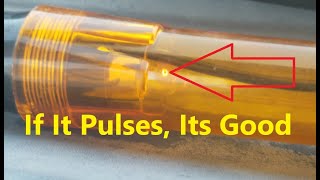
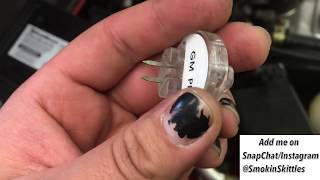
- Use a $20 noid light set to test the injector connector; if the light flashes while cranking, the wiring is good and the injector itself is the culprit.
- Measure injector resistance with a multimeter; a healthy port injector typically reads 11-18 ohms, while an infinite (OL) reading confirms a dead internal coil.
What Does P0200 Mean?
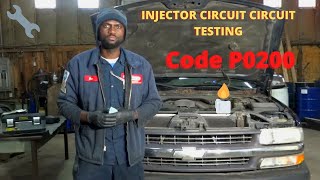
P0200 means the Powertrain Control Module (PCM) detected an electrical fault in the fuel injector circuit. The PCM sends precisely timed electrical pulses to open each fuel injector. This code triggers when the PCM commands an injector to fire but does not see the expected voltage or resistance response, indicating an open circuit, a short, or high resistance.
Technical definition: The SAE/OBD-II definition for P0200 is "Injector Circuit/Open". The PCM uses an internal transistor switch (driver) to provide a pulsing ground to activate each injector. It monitors the circuit's voltage. If the PCM expects high voltage (injector off) but sees low, or expects low voltage (injector on) but sees high, it sets P0200.
Can I Drive With P0200?
No — Do Not Drive. Do not drive. A P0200 fault causes sudden stalling, which is dangerous in traffic. Continuing to drive with a misfire dumps unburned fuel into the exhaust, destroying the catalytic converter—a repair costing $1,100 to $3,300+. In severe cases, a stuck-open injector causes engine hydro-lock, bending connecting rods and destroying the engine.
Common Causes
- Wiring Harness Damage (Very Common) — Engine heat and vibration cause injector wires to chafe, break, or short to ground. Rodent damage is also a primary culprit for chewed wires on top of the engine block.
- Faulty Fuel Injector (Very Common) — The electronic coil winding inside a fuel injector fails over time, creating an internal open or short circuit.
- Bad Electrical Connector (Common) — Plastic injector connectors become loose, corroded, or develop bent pins from heat and vibration, creating high resistance that blocks the PCM signal.
- Poor Ground Connection (Common) — A loose or corroded ground wire for the injector circuit or PCM causes erratic voltage readings. This is the most frequent point of misdiagnosis.
- Faulty Injector Driver Module (FICM/EDU) (Common) — Diesel engines (like the Ford 6.0L Power Stroke) and some gas engines use a separate module to step up injector voltage. Module failure cuts power to the injectors entirely.
- Blown Fuse or Faulty Relay (Less Common) — A shorted wire or injector blows the circuit fuse or damages the relay, cutting power to all injectors on that bank.
- Faulty Powertrain Control Module (PCM) (Rare) — The internal driver circuit in the PCM fails. Only consider this after exhaustively ruling out wiring, grounds, and external modules.
Symptoms
- Check Engine Light On — The PCM illuminates the Malfunction Indicator Lamp (MIL). The light flashes if the misfire is severe enough to damage the catalytic converter.
- Rough Idle and Engine Misfires — The engine shakes, runs unevenly, or makes popping sounds because one or more cylinders are not receiving fuel.
- Engine Stalling or No-Start — The engine shuts off while driving or cranks but refuses to start if the electrical fault affects multiple injectors or blows the main fuel system fuse.
- Poor Engine Performance — The vehicle feels sluggish, hesitates on acceleration, and lacks power under load.
- Worse Fuel Economy — Gas mileage decreases by 15-30% because the engine runs inefficiently and the PCM cannot control the air-fuel mixture.
- Raw Fuel Smell — If an electrical short sticks an injector open, you will smell unburned gasoline from the exhaust pipe or engine bay.
Diagnostic Flowchart
Tap your situation to follow the diagnostic path that matches what you're seeing on this code.
Common Fixes & Costs
- Repair Damaged Wiring or Connector — Parts: $10 - $100, Labor: $150 - $700, ~1.5-5.0 hr book time (Professional)
- Replace a Faulty Fuel Injector — Parts: $50 - $600, Labor: $100 - $400, ~1.5-3.0 hr book time (Intermediate)
- Replace Blown Fuse and Repair Short — Parts: $1 - $20, Labor: $100 - $500, ~1.0-4.0 hr book time (Intermediate)
- Replace a Fuel Injector Driver Module (FICM/EDU) — Parts: $200 - $900, Labor: $100 - $300, ~1.0-2.0 hr book time (Intermediate)
- Replace the PCM — Parts: $800 - $2,000+, Labor: $150 - $300, ~1.5-2.5 hr book time (Professional)
Used vs. New Parts: Buying Guide
When a used part is worth it: Used injectors are a budget option but carry risk. Remanufactured injectors, rebuilt with new internal components and tested to OEM specs, offer the best balance of cost and reliability.
Donor-vehicle mileage cap: roughly under 100000 miles for the part to have meaningful remaining life.
Donor quality checklist:
- Distinguish between 'refurbished' (cleaned used part) and 'remanufactured' (rebuilt with new components).
- Purchase from a reputable supplier providing flow-testing results and a warranty.
- Ensure the part number is an exact match for your vehicle.
Decision logic:
- If The part is a simple port fuel injector and the budget is extremely tight. → A used/refurbished injector from a trusted source is a viable short-term option.
- If The part is for a diesel or gasoline direct injection (GDI) system. → Buy new or high-quality remanufactured injectors due to the high pressures involved.
- If The vehicle is high-value or reliability is paramount. → Buy new OEM parts to ensure longevity.
Warranty tradeoff: Used parts have a 30-90 day warranty. Remanufactured injectors often come with a 1-3 year warranty, matching new parts.
Worst-case if a used part fails: 500-2000 if a faulty used injector fails, requiring repeat labor and potential diagnostic time.
What Happens If You Wait — Timeline
- 0-2 weeks: Code sets, Check Engine Light illuminates. The fault is intermittent, causing a slight rough idle on cold starts but no major drivability issues. (MPG impact: 0-5%% · Added cost: $0-25 in wasted fuel)
- 2 weeks - 3 months: The fault becomes constant. The engine misfires noticeably, hesitates on acceleration, and dumps unburned fuel into the exhaust system. (MPG impact: 10-20%% · Added cost: $50-200 in wasted fuel)
- 3-6 months: Sustained misfiring overheats the catalytic converter. The internal ceramic honeycomb melts and clogs, causing severe power loss and a glowing red converter. (MPG impact: 20-35%% · Added cost: $1,100 - $3,300 (Catalytic converter replacement required))
- 6+ months: Catastrophic failure. A stuck-open injector causes cylinder washdown (stripping oil from walls) or hydro-lock, bending connecting rods. (MPG impact: N/A (vehicle undrivable)% · Added cost: $4,000 - $10,000+ (Engine replacement required))
Cost of Not Fixing It
- Immediate (0-1 month): Reduced fuel economy (15-30% drop), rough idle, poor acceleration, and risk of stalling in traffic. (Added cost: 50-150)
- Short Term (1-6 months): Overheating and destroying the catalytic converter due to unburned fuel entering the exhaust. (Added cost: 1100-3300)
- Long Term (6+ months): Catastrophic engine damage. A stuck-open injector causes cylinder washdown or hydro-lock, bending connecting rods. (Added cost: 4000-10000+)
Diagnosis Steps
- Scan for All Codes & Review Freeze Frame Data
Read the P0200 code. Look for codes P0201-P0212, which pinpoint the exact cylinder at fault. Review freeze-frame data to see engine conditions (RPM, load) when the fault occurred.
Tools: ['OBD-II Scanner'] (Beginner) - Thorough Visual Inspection
Inspect the entire fuel injector wiring harness for chafed, burnt, melted, or rodent-chewed wires. Ensure connectors on each injector are secure and free of corrosion.
Tools: ['Flashlight'] (Beginner) - Check Fuses and Relays
Locate the fuse and relay for the fuel injector circuit. A blown fuse guarantees a short circuit in the wiring or a shorted injector. Swap the injector relay with an identical known-good relay (like the horn relay) to test it.
Tools: ['Fuse Puller', 'Multimeter'] (Beginner) - Perform a Noid Light Test
Plug a noid light into the injector's electrical connector. Crank the engine. If the light flashes rapidly, the PCM and wiring are good; the injector is faulty. If it stays dark, the problem is in the wiring or PCM.
Tools: ['Noid Light Set'] (Intermediate) - Test Injector Resistance
Unplug the fuel injector and use a multimeter set to Ohms (Ω) to measure resistance across its two pins. Compare to spec (typically 11-18 ohms). An infinite reading (OL) means an open circuit; under 5 ohms means a short.
Tools: ['Multimeter'] (Intermediate) - Check for Power and Ground at the Connector
With the key on (engine off), check for battery voltage (12V) on the power supply pin in the injector connector. A lack of constant voltage points to a blown fuse, bad relay, or broken power wire.
Tools: ['Multimeter'] (Intermediate) - Pro Tip: Perform a Voltage Drop Test
Set the multimeter to DC Volts. Connect one lead to the battery positive and the other to the power wire pin at the injector connector. With the key on, the reading must be under 0.2 volts. Higher readings indicate hidden wire resistance.
Tools: ['Multimeter'] (Advanced) - Advanced: Ford 6.0L Power Stroke FICM Voltage Test
For 2003-2007 Ford 6.0L diesels, monitor the FICM Main Power (FICM_MPWR) PID with a scan tool while cranking. Voltage must be 45-48 volts. If it drops below 45V, the FICM is failing.
Tools: ['Advanced Scan Tool', 'Multimeter'] (Advanced) - Advanced: Check Fuel Pressure
Connect a fuel pressure gauge to the fuel rail test port. With the key on, engine off, pressure should meet spec (typically 35-55 PSI) and hold steady. This rules out a weak fuel pump masquerading as an injector issue.
Tools: ['Fuel Pressure Gauge'] (Advanced) - Pro Tip: Analyze with an Oscilloscope
Connect an oscilloscope to the injector's ground-side wire. A healthy waveform shows a sharp drop to near zero when the injector opens, followed by a 60-80V inductive spike when it closes. A malformed pattern identifies PCM driver issues.
Tools: ['Oscilloscope'] (Professional)
When This Code Triggers (Freeze-Frame Conditions)
- Engine Coolant Temp: 180-210°F (The fault often appears once the engine is fully warmed up and enters closed-loop fuel control.)
- RPM: 1500-3000 (The code frequently sets during steady-state cruising or light acceleration.)
- Engine Load: 20-50% (Moderate engine load is common, as the PCM actively manages fuel trims and injector pulse width.)
- Vehicle Speed: 40-65 mph (Often triggered during highway or suburban driving speeds.)
Related Codes
- P0201-P0212 — P0200 is a general fault. Codes P0201-P0212 pinpoint the electrical fault to a specific cylinder (e.g., P0204 means cylinder #4). Always diagnose the specific cylinder code first.
- P0300 — Random/Multiple Cylinder Misfire. P0300 is a direct symptom of P0200. The electrical fault prevents fuel delivery, causing the misfire. Fix P0200 first.
- P0301-P0312 — Indicates a misfire on a specific cylinder. If you have P0201 and P0301 together, the electrical fault on cylinder #1 is causing the misfire on cylinder #1.
- P0171, P0172, P0174, P0175 — System Too Lean or Too Rich. An injector circuit fault causes a cylinder to get no fuel (lean) or too much fuel (rich), throwing off the engine's air/fuel ratio.
Climate & Environmental Factors
- High Humidity: Moisture accelerates corrosion on electrical connectors and wiring grounds, increasing resistance in the injector circuit and triggering P0200.
- Cold Climates / Winter: Rodents seeking warmth chew on soy-based wiring insulation, causing opens and shorts. Cold temperatures also make older wiring insulation brittle and prone to cracking.
- Road Salt (Winter/Coastal): Corrosive salt spray compromises weather packs and seeps into connectors, rapidly destroying electrical pins.
How to Talk to a Mechanic About This Code
Say this: "I have a P0200 code and I'd like to schedule a diagnostic. I want to authorize one hour of diagnostic time to test the injector circuit. Please start by checking the wiring harness and connectors for power, ground, and signal before condemning an injector."
This signals you understand P0200 is an electrical code and prevents a shop from replacing an expensive injector without proper diagnosis. It focuses their labor on finding the true source of the fault.
Avoid saying:
- 'Just fix whatever's wrong'
- 'My check engine light is on, can you look at it?'
- 'I think I need a new fuel injector.'
Questions to ask before authorizing the repair:
- Did you test the injector's resistance and did it pass or fail?
- Did a noid light confirm the injector is getting a pulse from the computer?
- If you're recommending a wiring repair, can you show me the damaged section?
- What is your warranty on this specific repair, including parts and labor?
Where to Take It: Dealer vs Independent vs Chain
- Dealer:
Best for: Vehicles still under powertrain warranty, Known manufacturer-specific issues covered by a TSB, Repairs requiring PCM replacement and programming
Downsides: Highest labor rates., May default to replacing an entire harness instead of repairing a single wire. (Typical cost: +50% vs. baseline) - Independent Shop:
Best fit. A reputable independent shop with strong electrical skills is ideal for diagnosing the root cause of a P0200.
Best for: Out-of-warranty vehicles where cost is a factor., Accurate electrical diagnosis, focusing on repairing circuits rather than parts swapping., Getting a second opinion on a costly dealer quote.
Downsides: Quality varies; look for shops with ASE-certified diagnostic technicians. (Typical cost: +0% vs. baseline) - Chain Shop:
AVOID for this code. P0200 requires careful electrical diagnosis, not just code reading and parts swapping.
Best for: Simple, unrelated maintenance like oil changes or tires.
Downsides: Technicians lack the advanced electrical diagnostic training needed for P0200., High pressure to sell parts leads to unnecessary injector replacements. (Typical cost: -10% vs. baseline)
When to Walk Away From the Repair
If the estimated repair cost exceeds 40-50% of the car's private-party value, seriously consider selling or trading it in.
- Car worth $8000, fix is $750: Fix it. A wiring repair or single injector replacement is well below the threshold.
- Car worth $4000, fix is $2200: Walk away. A PCM replacement costing over 50% of the car's value is not a sound investment.
- Car worth $3000, fix is $1200: Borderline. Get a second opinion before authorizing the repair.
What Scan Tool You Need for This Code
Minimum: A code reader that displays and clears codes, shows freeze-frame data, and views live data PIDs.
A $20 reader just gives you the code. For P0200, you need freeze-frame data to know when the fault happened and bidirectional control to command injectors on and off.
Budget: BlueDriver Pro Scan Tool (~$99) — Reads codes, provides freeze-frame data, and graphs live data PIDs on your smartphone.
Mid-range: Foxwell NT809 / Autel MaxiCOM MK808S (~$300-400) — Offers bidirectional controls to perform an injector 'buzz test' or 'balance test', confirming if the injector or circuit is the problem.
Professional: Launch X431 Series / XTOOL D7 (~$450-600) — Provides professional-grade bidirectional control and advanced ECU coding for replacing modules like the PCM.
Rent vs buy: AutoZone's Loan-A-Tool program allows you to borrow a basic scanner for free. However, since P0200 is an electrical issue, owning a scanner to re-check codes after a repair is highly beneficial.
How to Clear the Code After You Fix It
- Use an OBD-II scan tool to clear all Diagnostic Trouble Codes (DTCs).
- Ensure the fuel tank is between 30% and 70% full.
- Perform a complete OBD-II drive cycle to allow readiness monitors to run.
Drive cycle (~30 minutes): Start the engine cold and idle for 3 minutes. Drive in mixed city/highway conditions, including steady-speed driving at 55-60 mph for 10 minutes. Allow the vehicle to coast down and experience stop-and-go traffic.
Readiness monitors affected: Catalyst Monitor, Misfire Monitor, Oxygen (O2) Sensor Monitor, Fuel System Monitor
Before emissions retest: drive at least 100 miles to fully set monitors.
Watch out for:
- Clearing the code resets all readiness monitors to 'Not Ready.' You must complete a drive cycle before an emissions test.
- Disconnecting the battery clears the code but resets all learned adaptations, causing an automatic smog test failure.
- The code returns immediately if the underlying electrical fault was not repaired.
Will This Fail Emissions / State Inspection?
Yes — this code typically fails an OBD-II emissions inspection.
- California: An active P0200 code is an automatic failure. All OBD readiness monitors must be set to 'Ready,' requiring a full drive cycle after repairs.
- New York: The NYS DMV inspection includes an OBD-II scan. A check engine light with code P0200 results in an automatic failure.
- Texas: An illuminated check engine light results in an automatic failure. After clearing the code, you can only have one monitor 'Not Ready' to pass.
Most Commonly Affected Vehicles
- Dodge/RAM Ram with Cummins Diesel (1998-2018) — The injector wiring harness under the valve cover becomes brittle from heat and oil exposure, leading to open circuits.
- Chevrolet/GMC Trucks with Duramax Diesel (2001-2016) — The wiring harness chafes near the alternator. LLY models (2004.5-2005) have a specific TSB for broken connectors at cylinders #2 and #7.
- Ford Trucks with 6.0L Power Stroke Diesel (2003-2007) — The Fuel Injector Control Module (FICM) frequently fails to provide the required 45-48 volts to the injectors.
- Hyundai/Kia Elantra, Sorento, Optima (2006-2016) — Injector wiring harnesses become damaged or individual injectors fail, often accompanied by specific misfire codes.
- Toyota Hilux, Innova (with D4D Diesel) (2005-2015) — P0200 traces to a faulty injector driver unit (EDU) or breaks in the wiring harness between the EDU and injectors.
- Subaru Impreza, Forester, Legacy (2000-2018) — Wiring connectors become brittle and fail to make a secure connection, leading to intermittent faults.
- Jeep Wrangler, Cherokee (with 4.0L I6) (1997-2006) — The wiring harness suffers heat soak from the exhaust manifold, causing wires to crack and short.
- Chevrolet Silverado, S-10, Blazer (1999-2007) — Wiring harnesses are easily disturbed during alternator replacements, leading to pinched wires and a no-start condition.
Manufacturer-Specific Notes
- GM (Duramax): TSB 05-06-04-047B addresses 2004-2005 LLY Duramax engines where unsupported injector wiring for cylinders #2 and #7 breaks from vibration. Fix requires GM harness upgrade kit 98017958.
- Ford (6.0L Power Stroke): A failing Fuel Injector Control Module (FICM) is the primary cause. Diagnosis must include checking FICM voltage during key-on and cranking. Readings below 45V confirm a bad FICM.
- Dodge (Cummins): The injector wiring harness under the valve cover is a primary failure point. Heat and oil exposure cause the insulation to become brittle and fail.
- General: If P0200 appears immediately after an alternator or intake manifold replacement, the cause is almost certainly a pinched harness or a loose ground wire.
Real Owner Stories
2006 Dodge Ram 2500 w/ Cummins Diesel
Truck suddenly ran rough with a severe misfire and a P0200 code. The issue was intermittent at first but quickly became constant.
What they tried:
- Suspected a bad injector.
- Visually inspected the main engine harness.
- Tested resistance on all injectors; all tested within specification.
Outcome: The problem was the injector wiring harness located under the valve cover. Heat and oil exposure made the wiring brittle, causing an open circuit. Replacing the under-cover harness resolved the code.
Lesson: On Cummins engines, the under-valve-cover harness is a primary failure point. Check it before replacing expensive injectors.
2005 Chevy Silverado w/ Duramax LLY
Check engine light illuminated with codes P0200 and P0207. The truck had a rough idle pointing to cylinder #7.
What they tried:
- Replaced the fuel injector for cylinder #7, but the code returned immediately.
- Inspected the wiring harness closely.
Outcome: The wiring for the #7 injector chafed and broke near the alternator bracket—a known issue for LLY engines. Repairing the broken wire and securing the harness fixed the problem.
Lesson: Always check Technical Service Bulletins (TSBs). GM issued a TSB for injector wiring chafing at cylinders #2 and #7. Knowing this saves the cost of an unnecessary injector replacement.
2011 Ford F-150 with 5.0L V8
Truck developed a rough idle and threw a P0200 code after sitting outdoors for a week.
What they tried:
- Checked all fuel system fuses (all intact).
- Performed a visual inspection of the engine bay.
Outcome: Found a small nest and chewed wires on top of the fuel rail. Rodents chewed through the wiring for two injectors, causing a short. Repairing the harness and wrapping it in capsaicin-laced rodent tape solved the issue.
Lesson: If P0200 appears suddenly on a vehicle parked outdoors, rodent damage is highly probable. Look for physical evidence before starting complex electrical diagnostics.
2001 Camaro with LS1 V8
Car cranked but would not start. When it did, it ran with a dead miss and threw a P0200 code.
What they tried:
- Checked for physical harness damage (none found).
- Tested resistance of all eight injectors (all in spec).
- Used a noid light and found no pulse at any injector connector.
Outcome: Because no injectors received a pulse signal and main power was good, the owner suspected a failed PCM. Replacing and reprogramming the PCM fixed the no-start condition.
Lesson: If ALL injectors lose their pulse signal simultaneously (confirmed with a noid light) and the main power fuse is good, the PCM's internal driver circuit is the culprit.
How to Prevent This Code From Triggering
- Use a quality fuel system cleaner with PEA detergents (Every 5,000 miles) — Polyetheramine (PEA) removes carbon deposits from injector tips, preventing clogs that alter spray patterns and stress the injector's electrical coil.
- Protect wiring harnesses from heat and abrasion (During any under-hood maintenance) — Use high-temperature wire harness tape or silicone heat sleeves to protect vulnerable wires near exhaust components from melting and chafing.
- Apply dielectric grease to injector connectors (When replacing an injector) — Dielectric grease seals the electrical connector from moisture, preventing pin corrosion that causes high resistance and intermittent faults.
- Implement rodent deterrents if parking outdoors (As needed in fall/winter) — Rodents chew soy-based wiring insulation. Capsaicin-laced tape (like Honda's rodent tape) prevents them from destroying the injector harness.
Frequently Asked Questions
What are common misdiagnosis mistakes with P0200?
The biggest mistake is replacing fuel injectors without testing the circuit. P0200 is an electrical fault, meaning the issue is often in the wiring or connectors. Always test the circuit with a multimeter and noid light before buying parts.
A P0200 code appeared right after a different repair. What should I check first?
Re-inspect the work area immediately. It is highly likely a wiring harness was pinched, a connector was not fully seated, or a ground wire was left loose during reassembly.
What is the difference between code P0200 and P0201?
P0200 is a general code indicating a fault somewhere in the entire injector circuit system. P0201 specifically pinpoints the fault to cylinder number 1. Specific codes like P0201-P0212 drastically narrow down your diagnostic search area.
Is it safe to keep driving with a P0200 code?
No. An engine misfiring or stalling is dangerous in traffic. Driving dumps unburned fuel into the exhaust, which quickly destroys the catalytic converter and adds over $2,000 to your repair bill.
Can I fix a P0200 code myself?
Checking fuses and visually inspecting wiring are easy DIY tasks. However, properly testing circuits with a multimeter or replacing wiring harnesses requires intermediate electrical skills. If you cannot confidently use a multimeter, take the vehicle to a professional.
My car shows P0200 but runs fine. What should I do?
Do not ignore it. The code indicates a real electrical anomaly detected by the PCM, likely an intermittent open or short. Diagnose it immediately before it worsens and leaves you stranded.
Can a bad battery or alternator cause a P0200 code?
Yes, indirectly. Low or unstable system voltage stresses the PCM's injector driver circuits, causing erratic behavior that triggers a P0200. On Ford 6.0L diesels, low battery voltage is the primary cause of FICM failure.
Key Takeaways
- P0200 is an electrical circuit code, not a mechanical fuel problem; always test the wiring harness and connectors before replacing a $150+ fuel injector.
- Look for specific cylinder codes (P0201-P0212) paired with P0200, as they pinpoint the exact wire or injector causing the fault.
- Stop driving immediately; continuing to drive with a P0200 misfire dumps raw fuel into the exhaust, destroying a $1,500 catalytic converter in under 50 miles.
- Use a $20 noid light set to test the injector connector; if the light flashes while cranking, the wiring is good and the injector itself is the culprit.
- Measure injector resistance with a multimeter; a healthy port injector typically reads 11-18 ohms, while an infinite (OL) reading confirms a dead internal coil.
Helpful Videos
Shop the Parts Behind P0200
Below are the parts most often responsible for code P0200, ranked by how frequently each one is the actual culprit (per the diagnosis above). Tap any to see what we have for your vehicle.



The information in this article is provided for general reference and educational purposes only. Vehicle specifications, procedures, and part compatibility can vary by production date, trim level, and region. Always consult your vehicle's factory service manual and verify part numbers before purchasing or performing repairs. Safety-critical components such as airbags, seat belts, and braking systems should be installed by a qualified professional.
- 🧭 Diagnostic Flowchart
- 🎬 Helpful Videos
- 🛍️ Shop This Part
- What Does P0200 Mean?
- Can I Drive With P0200?
- Common Causes
- Symptoms
- Common Fixes & Costs
- Used vs. New Parts: Buying Guide
- What Happens If You Wait — Timeline
- Cost of Not Fixing It
- Diagnosis Steps
- When This Code Triggers (Freeze-Frame Conditions)
- Related Codes
- Climate & Environmental Factors
- How to Talk to a Mechanic About This Code
- Where to Take It: Dealer vs Independent vs Chain
- When to Walk Away From the Repair
- What Scan Tool You Need for This Code
- How to Clear the Code After You Fix It
- Will This Fail Emissions / State Inspection?
- Most Commonly Affected Vehicles
- Manufacturer-Specific Notes
- Real Owner Stories
- 2006 Dodge Ram 2500 w/ Cummins Diesel
- 2005 Chevy Silverado w/ Duramax LLY
- 2011 Ford F-150 with 5.0L V8
- 2001 Camaro with LS1 V8
- How to Prevent This Code From Triggering
- Frequently Asked Questions
- What are common misdiagnosis mistakes with P0200?
- A P0200 code appeared right after a different repair. What should I check first?
- What is the difference between code P0200 and P0201?
- Is it safe to keep driving with a P0200 code?
- Can I fix a P0200 code myself?
- My car shows P0200 but runs fine. What should I do?
- Can a bad battery or alternator cause a P0200 code?
- Key Takeaways
- 🎟️ Get 5% Off