

P0201 on 2008-2016 Audi A4 2.0T: Cylinder 1 Injector Circuit Causes and Fixes
On a 2008-2016 Audi A4 2.0T, code P0201 is most often caused by a failed fuel injector for cylinder 1. A faulty injector wiring harness is the second most likely cause. Expect to pay $50-$120 for a quality aftermarket injector (Bosch is OEM) and plan for 2-3 hours of labor due to the intake manifold needing removal for access.
- P0201 is an electrical circuit code for the cylinder 1 injector, not a fuel flow or pressure code.
- The most likely cause is a bad fuel injector, which can be confirmed by swapping it with another cylinder to see if the fault follows.
- If the fault does not move with the injector, the injector wiring harness is the next most likely culprit, especially if the intake manifold was recently removed.
- Accessing the injectors requires removing the intake manifold, making the repair more involved than on many other engines.
- Unlike some direct injection systems, new injectors do not need to be coded to the ECM on this engine.
What's Unique About the 2008-2016 Audi A4
On the Audi A4 2.0T (EA888 engine), the fuel injectors and their wiring harness are located underneath the plastic intake manifold. This means any injector-related job requires removing the manifold, adding to the labor time and complexity. Because this engine is also prone to significant carbon buildup which requires manifold removal for cleaning, it's common for the injector harness to get pinched, stressed, or damaged during reassembly, causing a P0201 code to appear immediately after other service has been performed. The harness is subjected to intense heat cycles, which can make the wiring brittle over time, leading to cracks and open circuits.
Generation note: The 2008-2016 model years cover the Audi A4 B8 (2008-2012) and B8.5 (2013-2016) generations. Both use the 2.0T EA888 Gen 2 engine (CAEB/CDNC) and share the same common causes and repair procedures for a P0201 code. There are no significant differences between the generations regarding this specific fault.
Symptoms You May Notice
- Check Engine Light is on.
- Rough or shaking idle.
- Noticeable loss of power and poor acceleration.
- Engine misfiring, which may feel like a stumble or hesitation.
- Reduced fuel economy.
- Engine may be hard to start or crank for longer than usual.
- Replacing the spark plug or ignition coil for cylinder 1. While these parts can cause a misfire (code P0301), the P0201 code specifically points to an electrical fault in the fuel injector circuit, not the ignition system.
- Assuming new injectors need to be coded. On the EA888 engine, injector coding or adaptation is not required. This procedure is typically for Audi/VW TDI (diesel) engines.
Most Likely Causes
- Failed Cylinder 1 Fuel Injector 🔴 High Probability → Shop Fuel Injector The direct-injection (GDI) fuel injectors on this engine operate under extreme heat and pressure directly inside the combustion chamber. The internal electronic coil can fail over time, creating an open circuit that triggers P0201.
How to confirm: Swap the cylinder 1 fuel injector with the injector from another cylinder (e.g., cylinder 2). Clear the codes and run the engine. If the fault code changes to P0202, the injector is confirmed to be faulty. You can also measure the resistance across the injector's two pins with a multimeter; it should be between 1.4 and 2.6 Ohms at room temperature. A reading of infinity (OL - Open Line) confirms an internal open circuit and a failed injector.
Typical fix: Replace the failed fuel injector. It is highly recommended to replace all four injectors at the same time, especially on higher mileage vehicles, to ensure balanced fuel delivery and prevent future failures. Always replace the one-time-use Teflon seals and retaining clips when an injector is removed.
Est. part cost: $50-$120 per injector - Faulty Injector Wiring Harness or Connector 🟡 Medium Probability → Shop Engine Wiring Harness The harness is located under the intake manifold and is subjected to constant heat. Wires can become brittle and crack, or the harness can be easily pinched, stressed, or improperly connected during other repairs like carbon cleaning or intake manifold replacement. The pins in the main 8-pin connector can also become loose or corroded.
How to confirm: If the P0201 code remains after swapping the injector, the problem is in the wiring. Visually inspect the harness for any signs of damage, especially where it connects to the main engine harness. Use a multimeter to check for continuity from the injector connector back to the ECM connector. A 'noid light' can be used on the cylinder 1 connector while cranking the engine; a flashing light indicates the ECM is sending a signal, suggesting the wiring is likely intact.
Typical fix: Repair the damaged section of wire or replace the entire fuel injector sub-harness. Ensure the new harness is routed correctly and not under stress.
Est. part cost: $70-$110 for a new harness
Rare But Worth Checking
- Faulty Powertrain Control Module (PCM/ECM): → Shop Engine Control Module (ECM) This is very rare. The internal driver circuit for the injector can fail. This should only be considered after definitively ruling out the injector and the entire wiring harness with continuity and load tests.
Diagnosis Steps
- Read the fault codes with an OBD-II scanner to confirm P0201 is present. Check for other codes 🎬 Watch: A quick overview of what the P0201 code means. like P0301.
- Using scanner live data, monitor misfire counts for all cylinders. Confirm cylinder 1 is the source of the misfire.
- Relieve fuel system pressure. Disconnect the battery.
- Remove the intake manifold to access the fuel rail and injectors. 🎬 See this walkthrough for removing the intake manifold and injectors.
- Swap the fuel injector from cylinder 1 with the injector from cylinder 2. Be sure to replace the Teflon seals on both injectors before reinstalling.
- Reassemble the intake manifold, reconnect all sensors and the battery.
- Start the engine, let it run for a minute, and scan for codes again.
- If the code is now P0202, the fuel injector is bad and must be replaced.
- If the code remains P0201, the injector is good. The problem is in the wiring harness or ECM.
- Disconnect the injector harness and test the resistance of the cylinder 1 injector pins on the harness side. It should be 1.4-2.6 Ohms. If it's open (OL), the injector has failed.
- Inspect the injector wiring harness for any visible damage, pinched wires, or loose connector pins, especially at the main 8-pin connector.
- Use a 'noid light' on the cylinder 1 connector. It should flash while cranking, confirming the ECM is sending a pulse. If it does not flash, check for constant 12V power at one pin with the key on.
- If the noid light doesn't flash and power is present, use a multimeter to test for continuity on the ground/signal wire for cylinder 1 between the injector connector and the ECM connector. If there is no continuity, repair or replace the harness.
- If the wiring and injector are confirmed to be good, the issue may be the ECM, which requires professional diagnosis.
Parts You'll Likely Need
- Fuel Injector
(OEM #06H906036P)— This is the most common cause of a P0201 code. Part number 06H906036P is the latest revision, superseding 06H906036G and 06H906036E. Using the latest revision is critical for reliability.
Trusted brands: Bosch (OEM), Volkswagen Genuine
OEM price range: $80-$120
Aftermarket price range: $50-$90 - Fuel Injector Wiring Harness
(OEM #06L971627A)— The second most common cause, this harness can be damaged by heat or during other engine repairs, causing an open or short in the cylinder 1 circuit. An updated version, 06L971627AB, may be available and is recommended.
Trusted brands: Volkswagen Genuine
OEM price range: $70-$110
Aftermarket price range: $40-$70 - Fuel Injector Seal Kit
(OEM #06J998907D)— The Teflon tip seal is a one-time-use part and MUST be replaced any time an injector is removed and reinstalled to prevent combustion leaks and fuel leaks. Special tools are required to properly size the seal onto the injector tip. 🎬 Watch: How to properly install new Teflon injector seals. Most new injectors include them.
Trusted brands: Bosch, Elring, Genuine VW/Audi
OEM price range: $15-$25 per injector
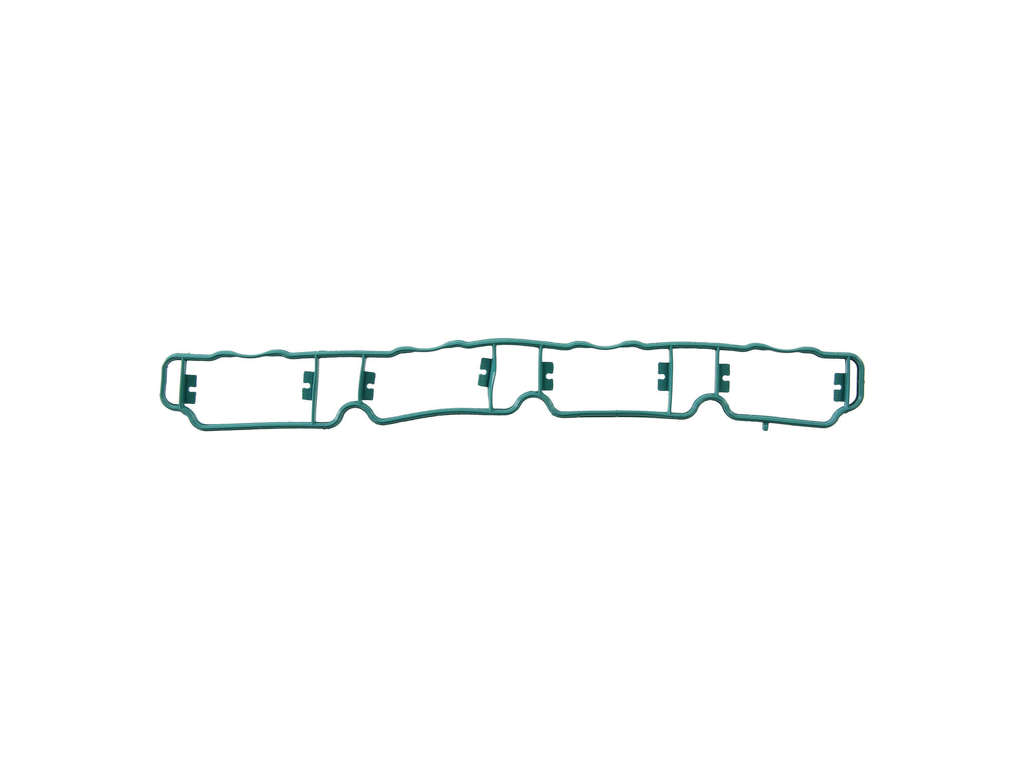
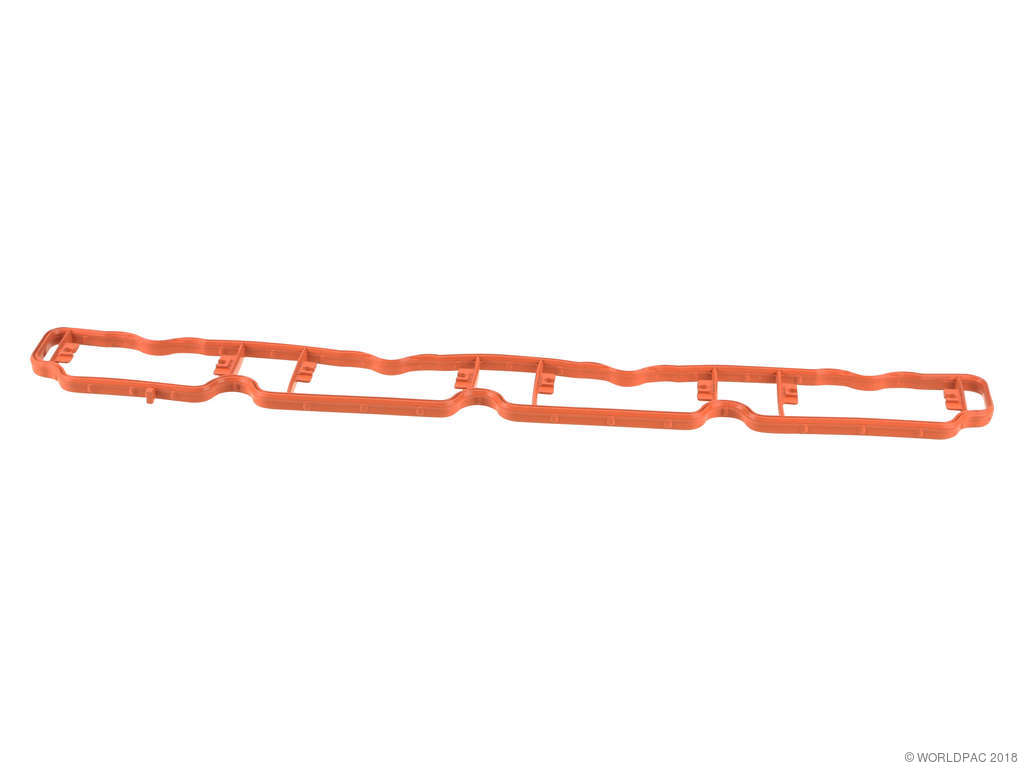
Aftermarket price range: $10-$20 per injector - Intake Manifold Gasket
(OEM #06F129717D)— This gasket should be replaced whenever the intake manifold is removed to prevent vacuum leaks upon reassembly.
Trusted brands: Victor Reinz, Elring, Genuine VW/Audi
OEM price range: $20-$35
Aftermarket price range: $10-$20
Related Codes That Often Appear With This One
- P0301 — P0301 means 'Cylinder 1 Misfire Detected'. Since P0201 indicates the injector isn't firing due to an electrical issue, the cylinder receives no fuel, which the ECM immediately detects as a misfire.
- P0202, P0203, P0204 — If multiple injector circuit codes appear at once, it strongly suggests a problem with the shared wiring harness, its main connector, or the power supply to the harness, rather than several injectors failing simultaneously.
Platform-Specific Known Issues
- P0201 Immediately After Carbon Cleaning Service: A common real-world scenario is the P0201 code appearing right after a carbon cleaning service or intake manifold replacement. In a documented case on an Audi Q5 with the same engine, a user performed a carbon clean and replaced the injectors, only to get a P0201 code. The discussion pointed towards a likely pinched wire in the injector harness during re-installation of the intake manifold, highlighting the fragility of this part during major service.
Mechanic-Grade Diagnostic Values
- Fuel Injector Internal Resistance — expected: 1.4 - 2.6 Ohms at room temperature. Failure: A reading of infinity (OL) indicates an open circuit. A reading outside the specified range indicates a faulty coil.
- Injector Wiring Harness Continuity (at harness connector) — expected: 1.4 - 2.6 Ohms (testing through the injector from the main harness connector). Failure: A reading of infinity (OL) indicates a break in the wiring between the main connector and the injector.
- High Pressure Fuel Rail (HPFP) Pressure Rise Test (Hot Engine Off) — expected: Pressure should steadily climb to 90-120 bar over 10-15 minutes after shutting down a hot engine.. Failure: If pressure plateaus early (e.g., 50-80 bar) and does not continue to rise, it can indicate a leaking injector which may cause other running issues, though it is not a direct cause of the P0201 electrical code.
- Injector Power Supply Voltage (Key On, Engine Off) — expected: Should be battery voltage (approx. 12V) on one of the two pins at the injector connector.. Failure: Low or no voltage (e.g., 0.45V) indicates a problem with the power supply relay or wiring from the fuse box.
Scan Tool Commands That Help
- VCDS (VAG-COM): Selective Output Test for Fuel Injectors — Use this with the engine off. VCDS can command each injector to cycle on and off. A healthy injector will make an audible 'click'. If an injector does not click, it confirms an electrical failure in either the injector itself or the wiring, helping to pinpoint the issue before removing the intake manifold.
- VCDS (VAG-COM): Advanced Measuring Blocks - Misfire Counter — While the P0301 code identifies a misfire, the live misfire counter can show the severity and frequency of the misfire events on cylinder 1 in real-time, confirming the issue is active.
- VCDS (VAG-COM): Advanced Measuring Blocks - Fuel Rail Pressure — While not a direct test for the P0201 electrical fault, monitoring fuel rail pressure can help rule out or identify related issues like a leaking injector that might be present alongside the electrical fault.
Wiring & Ground Locations
- ECM Pin 56 (T94 connector) — On the larger 94-pin connector at the Engine Control Module (ECM/J623), located in the plenum chamber (under the plastic cowl near the windshield).. This is the specific pin that provides the ground pulse signal to the cylinder 1 fuel injector (N30). When diagnosing a persistent P0201 where the injector and harness have been tested, a continuity check from pin 2 of the injector connector to pin 56 of the ECM connector is the definitive wiring test. Lack of continuity proves a broken wire.
- Injector Harness Connector (T8x or T10p) — This is the main 8-pin or 10-pin rectangular connector for the fuel injector sub-harness. It is located under the rear passenger side of the intake manifold.. This connector is a common failure point. All injector signals pass through it. Corrosion on the pins or a loose connection here can cause a P0201 (or multiple injector codes). It's a key place to test from when checking resistance/continuity back to the injectors without removing the manifold.
- Engine Block Ground Strap — Primary ground strap connects the engine block to the chassis, often near the driver-side engine mount or firewall.. While a bad engine ground usually causes multiple, widespread electrical issues, a corroded or loose ground can create intermittent voltage problems that could potentially affect injector operation. It's a foundational check for any electrical fault.
Real Owner Repair Stories
- AudiWorld Forums (2012 Audi A4 2.0T (CAEB)) — P0201 and P0301, rough running.
❌ Tried (didn't work) Swapped fuel injector from cylinder 1 to cylinder 2.
✅ What actually fixed it The fault code remained P0201 after swapping the injector, proving the injector was good. The final fix was replacing the fuel injector wiring harness (Part No. 06L971627A). The old harness was noted to be extremely brittle and cracked upon removal. - Reddit r/Audi (2012 Audi A4 B8) — P2015 (intake manifold runner), P0201, P0203, P0204 immediately after replacing the intake manifold.
❌ Tried (didn't work) Re-checking all connections visually.
✅ What actually fixed it The user suspected the injector harness was faulty. Forum consensus confirmed that it is extremely common to pinch or damage the injector harness during intake manifold re-installation, causing multiple injector circuit codes to appear at once. The fix is to carefully inspect the harness where the manifold sits on it and repair any crushed wires or replace the harness. - Independent Repair Shop Forum (2010 Audi A4 2.0T) — Persistent P0201 and P0301.
❌ Tried (didn't work) Replaced fuel injector for cylinder 1., Replaced the entire fuel injector wiring harness.
✅ What actually fixed it After both the injector and wiring harness were replaced and the code persisted, the fault was traced to the Engine Control Module (ECM). The internal driver circuit for the cylinder 1 injector had failed. Replacing the ECM and performing the necessary immobilizer adaptation resolved the fault.
OEM Part Supersession History
06H906036E, 06H906036G→06H906036P— Improved internal components and manufacturing process for better reliability and longevity. Earlier revisions were more prone to internal coil failure.
Heads up: All revisions are physically and functionally compatible, but it is strongly recommended to use the latest 'P' revision and replace all four injectors as a set to ensure balanced performance.06L971627A→06L971627AB— The 'AB' revision may feature improved heat-resistant wrapping or slight changes to connector materials for better durability against engine heat.
Heads up: The parts are fully interchangeable. If replacing, the 'AB' version is preferred if available.
Diagnostic Flowchart
Other Known Issues on This Vehicle
Issues unrelated to this code that are worth knowing about as an owner of this generation:
- Excessive Oil Consumption 🔴 High — Very common on 2009-2012 models with the CAEB engine. Caused by faulty piston rings and/or PCV system. Consumption can be as high as 1 quart per 600-1000 miles. (Ref: A class-action lawsuit (Asghari v. Volkswagen Group of America Inc.) resulted in an extended warranty (8 years/80,000 miles) and a repair protocol for affected 2009-2011 vehicles.)
- Timing Chain Tensioner Failure 🔴 High — Common on earlier (pre-2013) EA888 Gen 2 engines. The original tensioner design can fail, allowing the timing chain to jump, which can cause catastrophic engine damage (piston-to-valve contact). (Ref: No official recall, but multiple TSBs exist regarding checking chain stretch (e.g., TSB 2027920/10). An updated tensioner part is the fix. A rattling noise on cold start is the primary warning sign.)
- Intake Valve Carbon Buildup 🟠 Medium — An inherent issue with all direct-injection engines, including the 2.0T. Carbon accumulates on the back of the intake valves over 50,000-80,000 miles, causing misfires (especially on cold starts), rough idle, and reduced performance.
- Water Pump / Thermostat Housing Failure 🟠 Medium — The water pump assembly is made of plastic and is prone to cracking and leaking coolant, typically between 60,000 and 90,000 miles. Failure can lead to overheating.
- PCV Valve Failure 🟠 Medium — The Positive Crankcase Ventilation (PCV) valve diaphragm can tear, leading to a large vacuum leak. Symptoms include a rough idle, a whistling noise from the engine bay, and fault codes for lean conditions or crankcase pressure. It can also contribute to high oil consumption. (Ref: This was often the 'Stage 1' fix for the oil consumption issue before piston replacement was authorized.)
Used vs. New Parts: Buying Guide for This Vehicle
When a used part is the smart pick: A used fuel injector wiring harness can be a cost-effective option if it is sourced from a low-mileage, non-accident vehicle. It must be inspected thoroughly before purchase.
Donor-vehicle mileage cap: roughly under 60000 miles for the part to have meaningful remaining life.
What to inspect on the donor part:
- For a wiring harness, check for any signs of cracking, brittleness, or heat damage on the plastic conduit and wire insulation.
- Ensure all connector locking tabs are intact and not broken.
- Inspect the connector pins for any corrosion, discoloration, or signs of being bent or pushed out.
OEM-only on this vehicle (don't cheap out):
- Fuel Injector: Due to the high pressures and precision of GDI systems, used injectors are a significant gamble. They can be partially clogged, have a poor spray pattern, or have limited life remaining. The labor cost to re-do the job outweighs the savings.
- Engine Control Module (ECM): Never buy a used ECM unless it comes from a specialist who can properly virginize it and handle the immobilizer programming. A mismatched ECM will result in a no-start condition.
Aftermarket brands forum-validated for this vehicle:
- Bosch (for Fuel Injectors - they are the Original Equipment Manufacturer)
- Victor Reinz (for Gaskets)
- Elring (for Gaskets)
Brands owners have reported issues with on this vehicle:
- Unbranded, no-name fuel injectors from online marketplaces like eBay or Amazon. These are frequently reported by owners to be dead-on-arrival, have incorrect flow rates, or fail within a very short period.
Real Owner Stories
Aggregated from forums and TSBs cited above. Mileages and costs reflect what owners reported in those sources.
Audi Q5 2.0T (EA888 Gen 2)
Symptoms: The owner performed a carbon cleaning service and replaced the injectors, but immediately received a P0201 code afterward.
What fixed it: The issue was identified as a pinched wire in the injector harness that occurred during the re-installation of the intake manifold.
Source hint: vehicle_specific_issues: P0201 Immediately After Carbon Cleaning Service
Related OBD-II Codes
Frequently Asked Questions
Do I need to program or code the new fuel injectors on my EA888 engine after replacement?
I just had a carbon cleaning service done and now I have a P0201 code. What happened?
Can I just replace the cylinder 1 injector, or do I need to do all four?
What should the resistance reading be for a healthy injector on my 2.0T CAEB engine?
Is there a TSB for the high oil consumption I'm noticing along with my misfire codes?
Can a faulty PCV valve cause the rough idle associated with P0201?
Helpful Videos

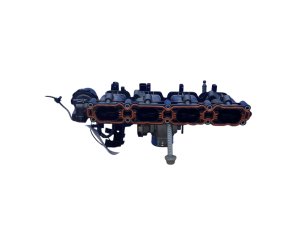
Used OEM Parts in Stock
New Aftermarket Parts Available



The information in this article is provided for general reference and educational purposes only. Vehicle specifications, procedures, and part compatibility can vary by production date, trim level, and region. Always consult your vehicle's factory service manual and verify part numbers before purchasing or performing repairs. Safety-critical components such as airbags, seat belts, and braking systems should be installed by a qualified professional.
- Audi A4:
- 🧭 Diagnostic Flowchart
- 🎬 Helpful Videos
- 🛍️ Shop This Part
- What's Unique About the 2008-2016 Audi A4
- Symptoms You May Notice
- Most Likely Causes
- Rare But Worth Checking
- Diagnosis Steps
- Parts You'll Likely Need
- Related Codes That Often Appear With This One
- Platform-Specific Known Issues
- Mechanic-Grade Diagnostic Values
- Scan Tool Commands That Help
- Wiring & Ground Locations
- Real Owner Repair Stories
- OEM Part Supersession History
- Other Known Issues on This Vehicle
- Used vs. New Parts: Buying Guide for This Vehicle
- Real Owner Stories
- Audi Q5 2.0T (EA888 Gen 2)
- Related OBD-II Codes
- Frequently Asked Questions
- 🎟️ Get 5% Off