

P0201 on 2010-2014 Cadillac CTS: Injector Circuit Malfunction Causes and Fixes
Code P0201 on a 2010-2014 Cadillac CTS most often points to a chafed or damaged fuel injector wiring harness, a known issue highlighted in GM Technical Service Bulletin #PIP4924D. Before replacing the fuel injector, thoroughly inspect the harness for damage, especially where it might rub against the engine, such as against the intake plenum, valve cover bolts, or fuel lines.
- P0201 on a 2010-2014 CTS means there is an electrical fault in the cylinder 1 fuel injector circuit.
- Before buying a new fuel injector, thoroughly inspect the wiring harness for damage, as this is a known weak point according to GM TSB #PIP4924D.
- A P0201 code will almost always be accompanied by a P0301 misfire code.
- Diagnosis can be performed with basic tools like a multimeter and a noid light to test the circuit and the injector's resistance.
- Do not drive extensively with this code, as it can lead to catalytic converter damage.
What's Unique About the 2010-2014 Cadillac CTS
For this generation of Cadillac CTS with the 3.0L and 3.6L direct injection engines, a P0201 code is frequently not the injector itself. General Motors issued a Technical Service Bulletin (TSB #PIP4924D) that applies to a wide range of vehicles using these engines, including the CTS, Camaro, Acadia, and more. It specifically calls out a tendency for the fuel injector wiring harness to chafe and develop opens or shorts. This harness can rub against the intake plenum, valve cover bolts, fuel lines, and the side of the cylinder head, making a wiring inspection the critical first step before condemning the injector.
Diagnostic Flowchart
Tap your situation to follow the diagnostic path that matches what you're seeing on this vehicle.
Symptoms You May Notice
- Check Engine Light is on.
- Engine misfire, which may feel like a rough or shaky idle.
- Hesitation or loss of power during acceleration.
- Reduced fuel economy.
- The engine may enter a limited power "limp mode".
- Hard starting or extended cranking.
- Replacing the cylinder 1 spark plug or ignition coil. While these can cause a misfire (P0301), they do not cause an injector circuit code like P0201, which is specifically an electrical fault.
Most Likely Causes
- Damaged Fuel Injector Wiring Harness 🔴 High Probability → Shop Engine Wiring Harness As documented in GM TSB #PIP4924D, the harness routing on these V6 engines makes it susceptible to rubbing against engine components. Specific chafe points mentioned are against the intake plenum, at valve cover bolts, against the fuel line, and on the side of the cylinder head under the plenum.
How to confirm: Visually inspect the entire fuel injector harness for cylinder 1, paying close attention to the contact points listed in the TSB. The harness is located under the intake manifold. Check for continuity on both wires from the injector connector back to the ECM connector using a multimeter. Resistance should be less than 0.5 ohms.
Typical fix: Repair the damaged section of wire with a new pigtail or solder and heat shrink. Protect the repaired area with loom or re-route to prevent future rubbing. If damage is extensive, the entire injector harness may need replacement.
Est. part cost: $10-$250 - Failed Fuel Injector (Cylinder 1) 🟡 Medium Probability → Shop Fuel Injector Direct injection (DI) injectors like those in the LF1, LLT, and LFX engines operate under extreme heat and pressure, making them more prone to failure from carbon buildup or internal coil issues than traditional port injectors.
How to confirm: Measure the internal resistance of the fuel injector with a multimeter (typical range is 10-18 ohms, but verify spec for your model). A more definitive test is to swap the cylinder 1 injector with another cylinder (e.g., cylinder 3). Clear the codes and run the engine. If the code changes to P0203, the injector is faulty.
Typical fix: Replace the failed fuel injector. Due to the labor involved in accessing the injectors under the intake manifold, it is often recommended to replace all injectors on that bank (or all six) at the same time, especially on high-mileage vehicles.
Est. part cost: $70-$200 - Loose or Corroded Injector Connector ⚪ Low Probability
How to confirm: Disconnect the connector for the cylinder 1 injector and inspect the terminals for corrosion, moisture, or bent pins. Ensure it clicks securely back into place.
Typical fix: Clean the connector terminals with electrical contact cleaner or replace the connector pigtail if it's damaged.
Est. part cost: $5-$25
Rare But Worth Checking
- Faulty Engine Control Module (ECM): → Shop Engine Control Module (ECM) This is rare. The ECM's internal injector driver can fail, but all other possibilities (wiring, injector) should be exhaustively ruled out before considering ECM replacement.
Diagnosis Steps
- Scan the vehicle for all stored DTCs. Note if P0201 is accompanied by a P0301 misfire code 🎬 Watch: A mechanic's walkthrough of diagnosing P0201 and P0301 codes. or other injector codes.
- Identify Cylinder 1: On the 3.0L and 3.6L V6 engines, it is the front-most cylinder on the passenger side.
- Visually inspect the cylinder 1 fuel injector connector and its wiring harness. Per TSB #PIP4924D, you must remove the intake manifold to properly inspect for chafing, melting, or corrosion, especially where the harness touches the intake, valve covers, or fuel lines.
- Use a noid light to test for a signal at the injector connector. The light should flash while the engine is cranking or running, indicating the ECM is sending a pulse. If it doesn't flash or is steady on/off, the problem is in the wiring or the ECM.
- Disconnect the injector and measure its internal resistance with a multimeter. Compare the reading to the OEM specification. An open circuit (infinite resistance) or a reading far from spec indicates a bad injector.
- If the injector resistance is good, check the wiring. Test for continuity on both wires from the injector connector back to the ECM. Also, check for shorts to ground or power.
- If the wiring and injector test good, consider swapping the cylinder 1 injector with one from another cylinder (e.g., cylinder 3). Clear the codes and run the engine. If the fault code moves to the new cylinder (e.g., P0203), the injector is confirmed to be the problem.
- If the code remains P0201 after the swap, the issue is almost certainly in the wiring harness or, rarely, the ECM itself.
Parts You'll Likely Need
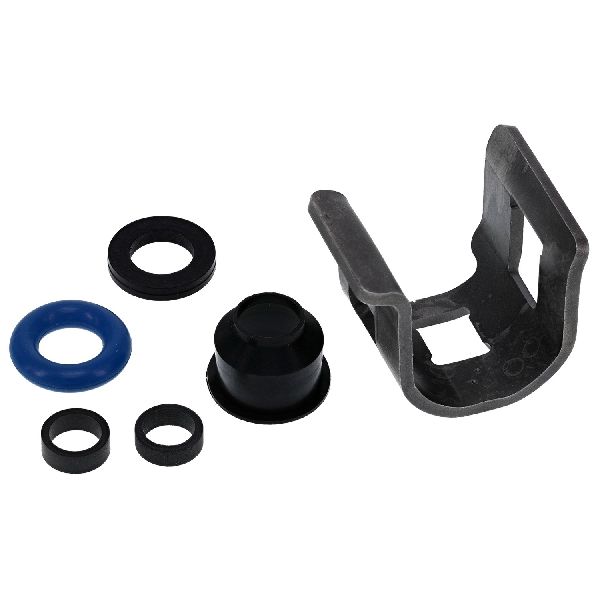
- Fuel Injector
(OEM #12638530 (superseded by 12669384))— This is the most likely component to have failed if the wiring harness is found to be in good condition. The original part number 12638530 has been replaced by GM with part number 12669384.
Trusted brands: ACDelco, Bosch
OEM price range: $120-$180
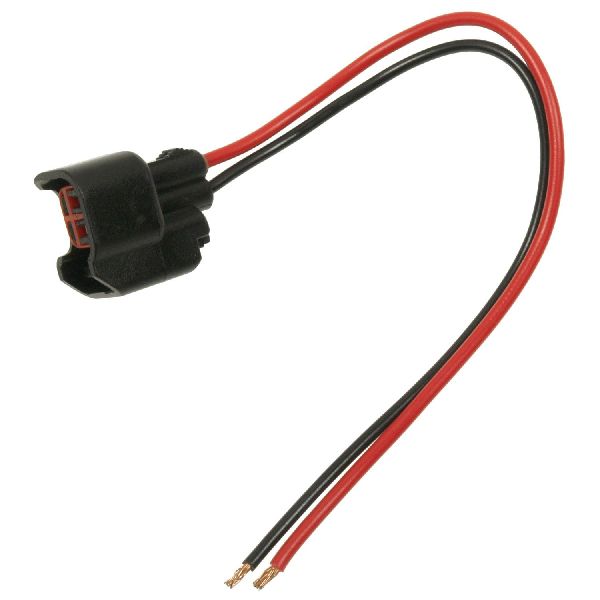
Aftermarket price range: $70-$120 - Fuel Injector Wiring Harness or Connector Pigtail — A very common failure point on this platform, as documented by GM TSB #PIP4924D. Damage from chafing can cause an open or short in the circuit.
Trusted brands: ACDelco, Dorman
OEM price range: $150-$250
Aftermarket price range: $20-$50
Related Codes That Often Appear With This One
- P0301 — P0301 means "Cylinder 1 Misfire Detected." Since P0201 indicates a problem with the fuel supply to cylinder 1, a misfire is a direct and expected consequence.
- P0202, P0203, P0204, etc. — The presence of multiple injector circuit codes simultaneously, as mentioned in TSB #PIP4924D, strongly suggests a common wiring harness problem (like a chafed power or ground wire shared by multiple injectors) or a failure in the ECM's injector driver bank.
- P0300 — P0300 indicates a random or multiple cylinder misfire. This can occur alongside P0201 if the wiring issue is intermittent or affects the harness in a way that causes issues on other cylinders as well.
Technical Service Bulletins (TSBs) & Recalls
- PIP4924D: SES Light And Misfire With Injector Codes - This bulletin is the most critical piece of information for this issue. It points to the fuel injector wiring harness rubbing through as a primary cause for a range of injector circuit codes, including P0201, across many GM vehicles with the 3.0L and 3.6L engines.
Platform-Specific Known Issues
- GM Technical Service Bulletin #PIP4924D specifically addresses P0201 and other injector codes on 2010-2014 CTS models. It advises technicians to carefully inspect the fuel injector wiring harness for rubbing against the intake plenum, valve cover bolts, fuel lines, and the side of the cylinder head, as this is a known failure point.
Mechanic-Grade Diagnostic Values
- Fuel Injector Resistance (2012-2014 3.6L LFX engine) — expected: 1.2 - 1.8 Ohms. Failure: A reading outside this narrow range, or an open circuit (OL), indicates a failed injector. This is a low-impedance injector.
- Fuel Injector Resistance (2010-2011 3.0L LF1 / 3.6L LLT engines) — expected: ~11 - 15 Ohms. Failure: A significant deviation from this range, an open circuit (OL), or a short (near 0 Ohms) indicates a failed injector. This is a high-impedance injector.
- Injector Pulse Width (at warm idle) — expected: 2 - 4 milliseconds (ms). Failure: A value of 0 ms for cylinder 1 while other cylinders show a normal pulse width points to the ECM not commanding the injector or a complete circuit failure.
- Injector Pulse Width (during cold start) — expected: Nearly double the normal idle pulse width (e.g., 4-8 ms) for the first ~60 seconds.. Failure: This is a normal condition. GM uses a dual-pulse strategy on cold starts to heat the catalytic converter faster. The engine may run slightly rough during this time.
- Injector Circuit Voltage (Key On, Engine Off) — expected: 11V - 14.5V (Battery Voltage) on the power supply pin of the connector.. Failure: 0V or significantly low voltage indicates a problem in the power supply circuit, such as a fuse, relay, or wiring.
Scan Tool Commands That Help
- GDS2 / Tech2: Fuel Injector Balance Test — This bidirectional test is used to functionally check an injector when electrical tests (resistance, wiring continuity) are inconclusive. The tool commands each injector to fire individually and measures the resulting drop in fuel rail pressure. An injector with a significantly different pressure drop compared to the others is likely faulty (clogged or leaking).
- GDS2 / Tech2: Cylinder Power Balance — This test disables one cylinder at a time to observe the change in engine RPM. If disabling cylinder 1 causes no change in engine roughness or RPM, it confirms that cylinder was not contributing, which is expected with a P0201 code.
Wiring & Ground Locations
- Injector Harness Chafe Point — The rear of the engine, where the main injector harness bends around the intake manifold and driver's side cylinder head.. This is the most common failure location cited in TSB #PIP4924D. The harness rubs through on sharp edges of the engine, causing an open or short in the injector control wire.
- ECM Connector X1 — The main harness connector at the Engine Control Module (ECM).. The control signal (ground pulse) for the fuel injector originates at the ECM. A pushed-out pin, corrosion, or harness damage near this connector can cause an open circuit identical to a break further down the line.
OEM Part Supersession History
12638530→12669384— Standard part revision by manufacturer.
Heads up: This part number is for the high-impedance injectors used in 2010-2011 3.0L LF1 and 3.6L LLT engines ONLY. It is NOT compatible with 2012-2014 LFX engines.12634126→N/A— N/A
Heads up: This part number is for the low-impedance injectors used in 2012-2014 3.6L LFX engines ONLY. It is NOT compatible with 2010-2011 LF1/LLT engines. Installing the wrong injector type can cause severe driveability issues and potential damage to the ECM injector driver circuit.
Model Year Variations Within This Range
- 2010-2011: These models are equipped with the 3.0L LF1 or 3.6L LLT V6. Both engines use high-impedance fuel injectors (~12 Ohms, PN 12638530). The LLT features an aluminum intake manifold and uses a Bosch ECM.
- 2012-2014: These models use the updated 3.6L LFX V6. This engine features a composite intake manifold, integrated exhaust manifolds, and crucially, uses low-impedance fuel injectors (~1.2-1.8 Ohms, PN 12634126). This fundamental difference in injector resistance is a critical diagnostic detail.
Helpful Videos
We Have This Part in Stock


The information in this article is provided for general reference and educational purposes only. Vehicle specifications, procedures, and part compatibility can vary by production date, trim level, and region. Always consult your vehicle's factory service manual and verify part numbers before purchasing or performing repairs. Safety-critical components such as airbags, seat belts, and braking systems should be installed by a qualified professional.
- Cadillac CTS:
- 🧭 Diagnostic Flowchart
- 🎬 Helpful Videos
- 🛍️ Shop This Part
- What's Unique About the 2010-2014 Cadillac CTS
- Symptoms You May Notice
- Most Likely Causes
- Rare But Worth Checking
- Diagnosis Steps
- Parts You'll Likely Need
- Related Codes That Often Appear With This One
- Technical Service Bulletins (TSBs) & Recalls
- Platform-Specific Known Issues
- Mechanic-Grade Diagnostic Values
- Scan Tool Commands That Help
- Wiring & Ground Locations
- OEM Part Supersession History
- Model Year Variations Within This Range
- 🎟️ Get 5% Off