

P0201 on 2009-2011 Cadillac STS: Injector Circuit Malfunction Causes and Fixes
P0201 on a Cadillac STS indicates an electrical fault with the cylinder 1 fuel injector or its wiring. The most common causes are a bad fuel injector or damaged wiring, with a less common cause being a faulty Engine Control Module (ECM). Expect to pay $50-$150 for a new injector and it is a moderately difficult DIY repair.
- P0201 is an electrical fault for the cylinder 1 injector, not a fuel pressure problem.
- The most likely causes are a bad injector or damaged wiring/connector. TSB PIP4924D strongly suggests checking for a chafed wiring harness first.
- A simple way to test the injector is to swap it with another cylinder and see if the trouble code follows the injector.
- Driving with this code can lead to poor performance and may cause damage to the catalytic converter over time.
- Always inspect the wiring and connector carefully before buying a new injector, as wiring repairs are cheaper.
What's Unique About the 2009-2011 Cadillac STS
For the 2009-2011 Cadillac STS, equipped with either the 3.6L LLT V6 or the 4.6L Northstar LH2 V8, the P0201 code is a straightforward electrical fault code. The 3.6L LLT engine is a direct-injection design, which can have its own set of fuel system considerations, though P0201 remains an electrical fault. GM has issued a Technical Service Bulletin (TSB PIP4924D) that applies to the STS and many other GM vehicles, which points to wiring harness chafing as a common cause for injector circuit codes. This suggests that inspecting the harness for damage, particularly where it might rub against the engine or other components, is a critical first step on these vehicles.
Diagnostic Flowchart
Tap your situation to follow the diagnostic path that matches what you're seeing on this vehicle.
Symptoms You May Notice
- Check Engine Light is on
- Engine misfire or rough idle
- Loss of power and poor acceleration
- Reduced fuel economy
- Fuel smell
- Service Stabilitrak message may appear
- Replacing the spark plug or ignition coil for cylinder 1. While these can cause a misfire (P0301), they will not cause an injector circuit code like P0201.
Most Likely Causes
- Damaged Wiring or Loose Connector 🔴 High Probability Engine vibrations and heat cycles can cause wiring insulation to become brittle and crack, or connectors to become loose or corroded. TSB PIP4924D specifically calls out inspecting the fuel injector wiring harness for rubbing against the intake plenum, valve cover bolts, fuel lines, and the side of the cylinder head.
How to confirm: Visually inspect the wiring harness and connector for cylinder 1's injector. Look for any signs of chafing, breaks, melting, or corrosion on the pins. Wiggle the connector with the engine running to see if it affects the idle. Check for continuity and shorts in the wiring between the ECM and the injector connector using a multimeter. 🎬 See how to test the injector circuit with a meter.
Typical fix: Repair the damaged section of wire or replace the injector pigtail connector.
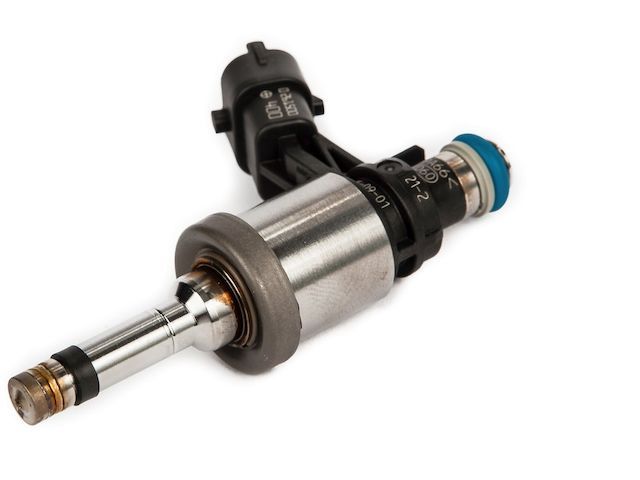
Est. part cost: $15-$40 - Faulty Fuel Injector 🟡 Medium Probability → Shop Fuel Injector The internal coil of the fuel injector can fail, creating an open or short circuit. This is a common failure mode for electronic components. Direct injection injectors on the 3.6L LLT engine operate under high pressure and can be susceptible to failure over time.
How to confirm: Use a multimeter to check the resistance of the injector. Compare the reading to the manufacturer's specification (typically 11-14 ohms for many GM vehicles). An infinite reading means an open circuit, while a near-zero reading indicates a short. A more definitive test is to swap the cylinder 1 injector with another cylinder (e.g., cylinder 3). Clear the codes and drive the vehicle. If the code changes to P0203, the injector is faulty.
Typical fix: Replace the cylinder 1 fuel injector.
Est. part cost: $50-$150 - Faulty Powertrain Control Module (PCM) ⚪ Low Probability → Shop Engine Control Module (ECM) While not common, the internal driver circuit within the PCM that controls the injector can fail. This is typically a last-resort diagnosis after ruling out the injector and wiring.
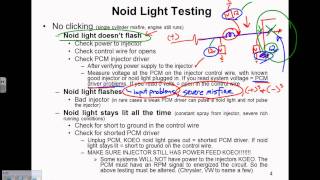
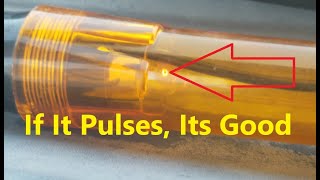
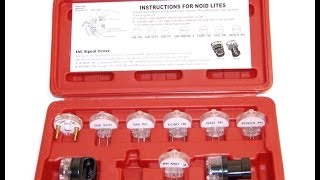
How to confirm: This should be the last item to check after confirming the injector and wiring are both good. Use a 'noid light' to test for a pulse signal at the injector connector. If the noid light does not flash while cranking the engine, 🎬 Watch: How to use a noid light to check signals. it points to an issue with the PCM's injector driver circuit or the wiring from the PCM. A technician may also use a scan tool to command the injector on and off to verify PCM function.
Typical fix: The PCM will need to be repaired or replaced and programmed to the vehicle.
Est. part cost: $200-$800
Diagnosis Steps
- Read the trouble codes with an OBD-II scanner to confirm P0201 is present.
- Locate cylinder 1. For the 3.6L V6, it is the front cylinder on the passenger side (right bank). For the 4.6L V8, it is the front cylinder on the passenger side (right bank).
- Visually inspect the wiring harness and connector for the cylinder 1 fuel injector. Per TSB PIP4924D, pay close attention to areas where the harness may rub against the intake, valve covers, or fuel lines.
- If the wiring looks good, disconnect the injector and use a multimeter to measure the resistance across its two pins. Compare this to the manufacturer's specification (typically 11-14 ohms). A reading that is out of range indicates a bad injector.
- To confirm a bad injector, swap the cylinder 1 injector with an adjacent one on the same bank (e.g., cylinder 3). Clear the codes and drive the vehicle. If the code returns as P0203, the injector is confirmed to be faulty.
- If the code remains P0201 after swapping the injector, the problem is in the wiring or the PCM.
- Test the circuit for a pulse signal using a noid light. Disconnect the injector and plug the noid light into the connector. Crank the engine. The light should flash, indicating the PCM is sending a signal. If it doesn't flash, the problem is either in the wiring between the PCM and the injector, or the PCM itself.
- If the noid light flashes and the injector has tested good, perform a continuity test on the control wire from the PCM connector to the injector connector to rule out an open or short in the harness.
Parts You'll Likely Need
- Fuel Injector
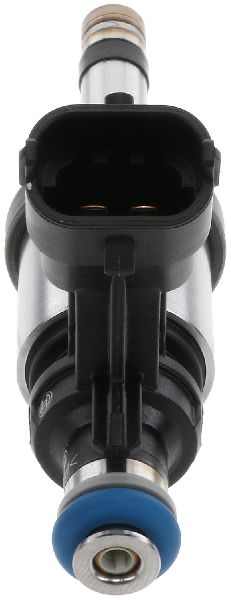
(OEM #ACDelco 12638530 (for 3.6L V6), ACDelco 217-2443 (for 4.6L V8))— This is the most likely component to have failed if the wiring is intact. The internal coil winding can short out or break.
Trusted brands: ACDelco, Bosch, Standard Motor Products
OEM price range: $100-$180
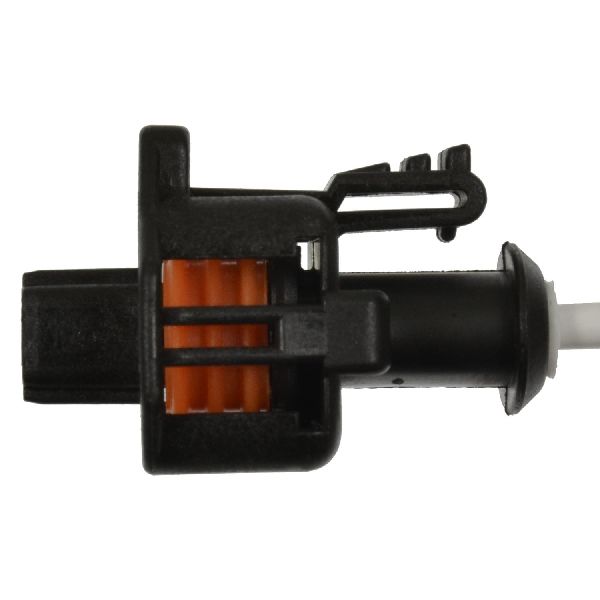
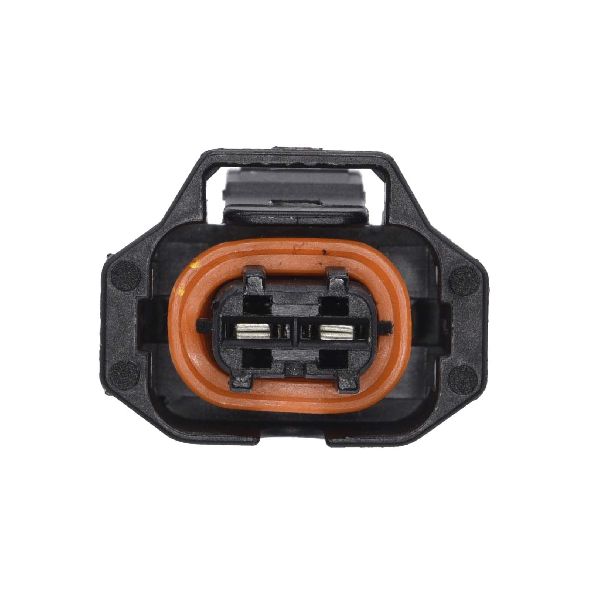
Aftermarket price range: $50-$120 - Fuel Injector Connector Pigtail — If the connector itself or the wires immediately leading to it are corroded, brittle, or broken, replacing the pigtail is the standard repair. The locking tab is also known to become brittle and break.
Trusted brands: ACDelco, Dorman
OEM price range: $25-$50
Aftermarket price range: $15-$30
Related Codes That Often Appear With This One
- P0301 — P0301 means "Cylinder 1 Misfire Detected." Since the P0201 code indicates the injector isn't firing correctly, the cylinder won't combust properly, leading to a misfire.
- P0300 — P0300 indicates random or multiple cylinder misfires. While P0201 is specific to cylinder 1, the resulting rough running can sometimes be misinterpreted by the ECM as a multiple-cylinder issue initially.
Technical Service Bulletins (TSBs) & Recalls
- PIP4924D: Mentions P0201 in a list of DTCs related to engine misfires and Service Engine Soon light illumination. It specifically points to inspecting the wiring harness for chafing against engine components as a primary diagnostic step.
Platform-Specific Known Issues
- A Technical Service Bulletin (TSB) #PIP4924D was issued for 2009-2011 STS models (among many other GM vehicles) for injector circuit codes (P0201-P0206). The bulletin advises technicians to carefully inspect the fuel injector wiring harness for rubbing (chafing) against engine components like the intake plenum, valve cover bolts, and fuel lines, which can cause an open or short in the circuit.
- For the 3.6L LLT V6 engine, the fuel injectors are located under the intake manifold, requiring its removal for injector replacement. 🎬 Watch this walkthrough for removing the intake and injectors. This increases the labor time and complexity compared to some other engines.
Mechanic-Grade Diagnostic Values
- Fuel Injector Coil Resistance (3.6L V6 & 4.6L V8) — expected: 11-14 ohms is a typical GM range. Some sources point to a tighter spec of 11.4-13.4 ohms or exactly 12 ohms for specific injectors. All injectors should be within 0.5 ohms of each other.. Failure: A reading of infinite ohms indicates an open circuit. A reading near zero ohms indicates a short circuit. Any reading significantly outside the expected range or different from the other injectors suggests a faulty injector.
- Injector Connector Voltage (Key On, Engine Off) — expected: 10-12+ Volts on the power supply wire.. Failure: Low or no voltage indicates a problem in the power supply circuit to the injector, possibly a blown fuse, faulty relay, or wiring issue.
- Low-Pressure Fuel System Pressure (3.6L LLT V6 at idle) — expected: 55-60 psi (380-410 kPa).. Failure: Pressure significantly outside this range points to a fuel supply issue (pump or regulator), not an injector electrical fault, but is useful context for overall fuel system health.
- Injector Circuit Voltage Spike (via Oscilloscope) — expected: A sharp voltage spike of approximately 50 volts when the ECM commands the injector to close.. Failure: The absence of this spike is what the ECM detects to set the P0201 code, indicating an open or short in the control circuit.
Scan Tool Commands That Help
- GM Tech 2 / GDS2: Injector Balance Test — This bidirectional test allows a technician to command each fuel injector to fire for a set duration while monitoring fuel pressure drop. If cylinder 1's pressure drop is significantly different from the others, it confirms a flow issue with that injector (either clogged or leaking). This is a definitive test to isolate a faulty injector.
- Professional Scan Tool: Monitor Output Driver Module (ODM) Data — While wiggling the wiring harness with the engine running, a technician can monitor the ODM status on a scan tool. If the status changes from 'OK' to 'Fault' while manipulating a specific part of the harness, it pinpoints the location of an intermittent open or short.
Wiring & Ground Locations
- ECM (3.6L V6) — On the front of the engine, mounted to the right side valve cover.. This is the source of the control signal for the fuel injector. All wiring tests for the injector circuit will originate or terminate at this module's connector.
- ECM (4.6L V8) — On the left front frame rail, located below the left headlamp assembly.. This is the source of the control signal for the fuel injector. All wiring tests for the injector circuit will originate or terminate at this module's connector.
- G101 — Located at the lower front of the engine block or on the left front strut tower.. This is a primary engine ground point that provides a ground path for the Engine Control Module (ECM). A poor connection here can cause a wide range of erratic engine management issues, including injector circuit codes.
- G102 — Located at the left rear of the engine.. This ground serves multiple engine components. While not directly for the injector circuit, ensuring all engine grounds are clean and tight is a crucial step in diagnosing any electrical fault.
- Injector Harness Chafe Points — Per TSB PIP4924D, inspect where the harness may rub against the intake plenum, valve cover bolts, fuel lines, and the side of the cylinder head.. These are the most likely locations to find a short or open circuit in the injector wiring, as identified by the manufacturer.
Real Owner Repair Stories
- Camaro5 Forums (Chevrolet Camaro with LS3 V8 (similar GM V8 architecture)) — Sudden engine misfire, Service Stabilitrak message, and P0201 code.
❌ Tried (didn't work) Initial visual inspection did not reveal obvious wiring damage.
✅ What actually fixed it The owner tested the resistance of the cylinder 1 injector and found it was less than 1 ohm (a dead short), while other injectors were within specification. Replacing the single faulty fuel injector resolved all symptoms and the code did not return.
OEM Part Supersession History
12638530 (for 3.6L V6)→12669384— Standard part lifecycle update by GM.
Heads up: The original part number and other numbers like 12611545 and 12632255 are often listed as interchangeable with the newest part.12597871 (for 4.6L V8)→ACDelco 217-2443— Standard part lifecycle update by GM/ACDelco.
Model Year Variations Within This Range
- 2011: The 4.6L Northstar V8 engine was discontinued for the 2011 model year. Therefore, a 2011 Cadillac STS with a P0201 code will always have the 3.6L LLT V6 engine.
Helpful Videos
We Have This Part in Stock


The information in this article is provided for general reference and educational purposes only. Vehicle specifications, procedures, and part compatibility can vary by production date, trim level, and region. Always consult your vehicle's factory service manual and verify part numbers before purchasing or performing repairs. Safety-critical components such as airbags, seat belts, and braking systems should be installed by a qualified professional.
- Cadillac STS:
- 🧭 Diagnostic Flowchart
- 🎬 Helpful Videos
- 🛍️ Shop This Part
- What's Unique About the 2009-2011 Cadillac STS
- Symptoms You May Notice
- Most Likely Causes
- Diagnosis Steps
- Parts You'll Likely Need
- Related Codes That Often Appear With This One
- Technical Service Bulletins (TSBs) & Recalls
- Platform-Specific Known Issues
- Mechanic-Grade Diagnostic Values
- Scan Tool Commands That Help
- Wiring & Ground Locations
- Real Owner Repair Stories
- OEM Part Supersession History
- Model Year Variations Within This Range
- 🎟️ Get 5% Off