

P0201 on 2011-2014 Chevrolet Camaro: Injector Circuit Malfunction Causes & Fixes
Code P0201 on a 2011-2014 Camaro indicates an electrical fault in the cylinder 1 fuel injector circuit. The most common causes are a failed fuel injector, a damaged wiring connector, or a bad wire. Expect to pay $60-$110 for a new OEM injector, with diagnosis often involving a multimeter to check resistance.
- P0201 specifically points to an electrical problem in the cylinder 1 injector circuit, not a fuel pressure or ignition issue.
- The most likely cause is a failed fuel injector, which can be confirmed by measuring its resistance (spec: 11-14 ohms) or swapping it with another cylinder.
- Always inspect the wiring and connector at the injector for damage, corrosion, or scorching before replacing parts.
- The "Service StabiliTrak" light is a common side effect of this engine code and does not indicate a problem with the stability control system itself.
- This is a DIY-friendly repair for those comfortable with basic tools and a multimeter.
What's Unique About the 2011-2014 Chevrolet CAMARO
For the fifth-generation Camaro, the P0201 code is a straightforward electrical fault that doesn't point to widespread, unique design flaws. However, the included Technical Service Bulletin (TSB) #PIP4924D indicates that GM has recognized a pattern of various injector circuit codes, including P0201, often associated with misfires across a wide range of vehicles using the same V6 engines. This suggests that wiring harness or connector issues could be a notable concern for this platform, warranting a close inspection during diagnosis, as the bulletin specifically calls out checking for rub-through or internal wire opens.
Diagnostic Flowchart
Tap your situation to follow the diagnostic path that matches what you're seeing on this vehicle.
Symptoms You May Notice
- Check Engine Light is on
- Engine runs rough and misfires, especially at idle
- Noticeable loss of power and poor acceleration
- Reduced fuel economy
- "Service StabiliTrak" message may appear on the dash. This is a common secondary warning when an engine performance issue is detected.
- Engine stalling or hard-start condition.
- Replacing spark plugs or ignition coils. While these can cause a misfire (P0301), the P0201 code specifically points to an electrical issue in the fuel injector circuit, not the ignition system.
- Blaming the StabiliTrak system. The "Service StabiliTrak" message is a symptom, not the cause. The system is often disabled by the PCM when a significant engine fault is detected to prevent erratic vehicle behavior.
Most Likely Causes
- Faulty Cylinder 1 Fuel Injector 🔴 High Probability → Shop Fuel Injector Injectors are wear-and-tear components. The internal solenoid coil can fail, creating an open or short circuit, or developing high resistance. This is the most frequent cause reported by owners.
How to confirm: Using a digital multimeter, measure the resistance of the injector with the engine cold. The expected range is typically 11-14 ohms. A reading of less than 1 ohm or infinite resistance (open circuit) confirms a failed injector. A quick way to confirm is to swap the cylinder 1 injector with another cylinder's injector (e.g., cylinder 3) and see if the trouble code follows (e.g., changes to P0203).
Typical fix: Replace the faulty fuel injector.
Est. part cost: $60-$110 for an OEM ACDelco injector. - Wiring or Connector Issue 🟡 Medium Probability Engine vibration and heat can cause wires to fray or the plastic connector to become brittle, corroded, and fail over time. Forum users have noted scorched connectors as evidence of a bad connection. The TSB #PIP4924D for this vehicle lists multiple injector codes, suggesting wiring harness integrity is a known area to check.
How to confirm: Visually inspect the wiring harness and connector leading to the cylinder 1 injector for any signs of damage, melting, corrosion, or loose pins. A 'noid light' can be plugged into the connector to see if the PCM is sending the firing signal (a flashing light). If the light doesn't flash, the problem is in the wiring or the PCM. You can also use a multimeter to check for 12V power at the connector with the key on.
Typical fix: Repair the damaged wire or replace the injector pigtail connector.
Est. part cost: $10-$25 for a new connector pigtail. - Faulty Powertrain Control Module (PCM) ⚪ Low Probability → Shop Engine Control Module (ECM) While not common, the internal driver circuit in the PCM that controls the injector can fail. This is considered a last resort after all other possibilities are exhausted.
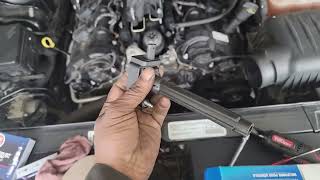
How to confirm: This should be the last step after confirming the injector and wiring are both good. A professional technician would use advanced scan tools and oscilloscopes to verify that the PCM is not sending a signal to the injector. If a noid light test fails and the wiring shows continuity, the PCM driver is the likely suspect. 🎬 See how a mechanic diagnoses and fixes injector circuit codes.
Typical fix: The PCM needs to be repaired or replaced and programmed to the vehicle.
Est. part cost: $300-$800+ for a new or remanufactured PCM.
Diagnosis Steps
- Read the code with an OBD-II scanner to confirm P0201 is present.
- Check for other codes, particularly P0301 (Cylinder 1 Misfire), which is a common companion code.
- Locate cylinder 1. On V6 and V8 Camaros, it is the front-most cylinder on the driver's side (left bank).
- Visually inspect the wiring and connector for the cylinder 1 fuel injector. Look for any obvious signs of damage, melting, scorching, or corrosion.
- Disconnect the injector and test its internal resistance with a multimeter. The engine should be cold. Compare the reading to the manufacturer's spec (typically 11-14 ohms). A reading that is significantly different, infinite (OL), or near zero indicates a failed injector.
- To definitively confirm a bad injector, swap the cylinder 1 injector with one from another cylinder (e.g., cylinder 3). Clear the codes and run the engine. If the code changes to P0203, the injector is faulty.
- If the code remains P0201 after the swap, the problem is in the wiring or PCM. Use a 'noid light' on the injector connector to check for a signal from the PCM. With the engine running, the light should flash. If it does not flash, there is an issue in the wiring harness or the PCM itself.
- If the noid light does not flash, check for constant 12V power on one pin of the connector with the key on. If power is present, the issue is on the ground/control side of the circuit leading back to the PCM. If power is absent, check the fuse and power supply wire.
- If the wiring is confirmed to be good (continuity check from connector to PCM) and the noid light test fails, the PCM's injector driver is the likely culprit, which is a rare failure.
Parts You'll Likely Need
- Fuel Injector (Cylinder 1)
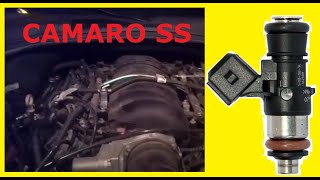
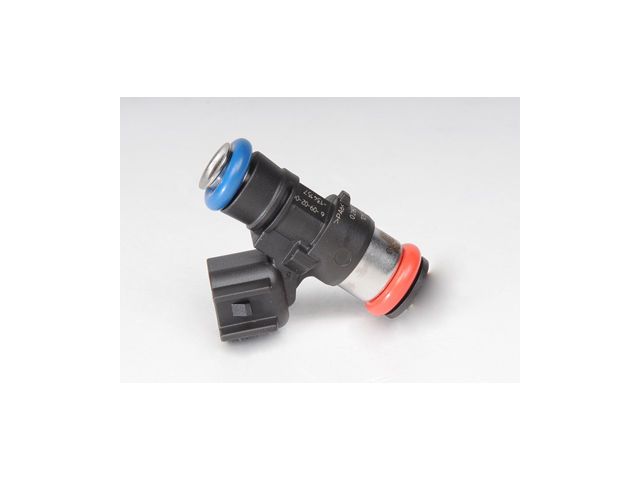
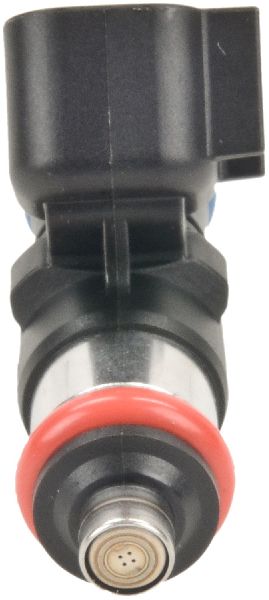
(OEM #12638530 (for 3.6L LLT V6), 🎬 Watch this video for a detailed look at V6 injector service. 12634126 (for 6.2L LS3/L99 V8))— This is the most common component to fail, either due to an internal short or open circuit in its solenoid.
Trusted brands: ACDelco (OEM), Bosch, Standard Motor Products
OEM price range: $90-$110
Aftermarket price range: $40-$80 - Fuel Injector Connector Pigtail
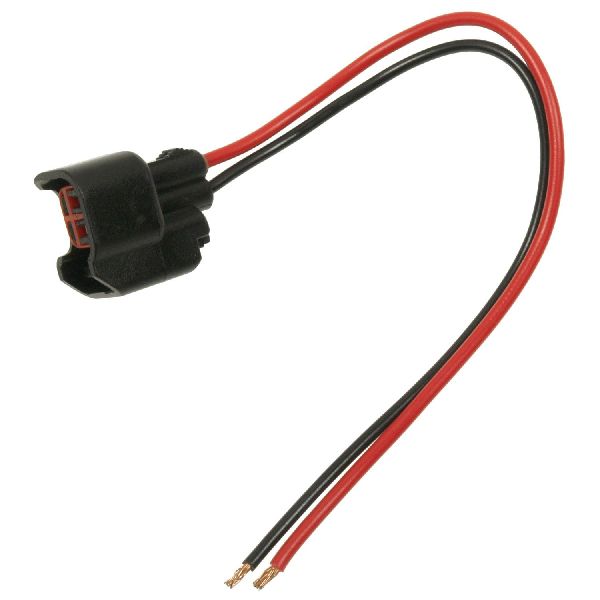
(OEM #ACDelco PT2160 (or equivalent))— The connector is exposed to heat and vibration, which can make it brittle and cause a poor connection. A visual inspection may reveal scorching or damage.
Trusted brands: ACDelco, Dorman (645-106), Standard Motor Products (HP3945)
OEM price range: $20-$30
Aftermarket price range: $10-$20
Related Codes That Often Appear With This One
- P0301 — P0301 means "Cylinder 1 Misfire Detected." Since P0201 indicates a fault that prevents the cylinder 1 injector from delivering fuel, a misfire is an expected and direct consequence.
- P0300 — P0300 indicates a "Random or Multiple Cylinder Misfire." While P0201 is specific to cylinder 1, a severe issue or intermittent fault could sometimes be misinterpreted or accompanied by misfires on other cylinders, triggering a P0300.
Technical Service Bulletins (TSBs) & Recalls
- PIP4924D: Mentions P0201 in a list of DTCs related to engine misfires, applicable to 2011 models and other GM vehicles with the HFV6 engine. It advises technicians to inspect the injector wiring harness for damage.
Platform-Specific Known Issues
- Technical Service Bulletin #PIP4924D was issued by GM for 2011 models regarding the Service Engine Soon light and misfires, which lists P0201 among many other injector circuit codes. This indicates a known pattern of these faults and directs technicians to perform standard diagnostics for injector circuit issues, specifically checking for chafed or open wiring.
- On L99 V8 engines (automatic transmission), issues with the Active Fuel Management (AFM) system can sometimes cause complex diagnostic scenarios, though P0201 is typically unrelated to AFM lifter failure. However, it's a known system on these engines that can cause other driveability problems.
Mechanic-Grade Diagnostic Values
- Fuel Injector Coil Resistance — expected: 11-16 Ohms for high-impedance injectors, with all injectors reading within 0.5 Ohms of each other.. Failure: A reading of near-zero ohms indicates a shorted injector. A reading of infinite ohms (OL) indicates an open circuit. A reading significantly different from other injectors suggests it is failing.
- Injector Circuit Voltage (at connector) — expected: One pin should have 12V+ with the key on, engine off. The other pin (control) will be pulsed to ground by the ECM when the engine is running.. Failure: Absence of 12V+ power points to a fuse or power supply issue. If power is present but a noid light does not flash while cranking, the issue is in the control wire or the ECM driver.
Scan Tool Commands That Help
- GDS2 (GM Tech Tool): Fuel Injector Balance Test — This bidirectional test is used to confirm if an injector is mechanically flowing fuel correctly. The ECM disables injectors one by one and records the corresponding drop in fuel rail pressure. While P0201 is an electrical code, this test is useful to run after an electrical repair to ensure the injector is functioning properly and not clogged. The test is found under 'Control Functions' -> 'Fuel System'.
- Professional Bidirectional Scan Tool: Injector Kill / Cylinder Power Balance — This function allows the technician to manually disable one cylinder at a time. When cylinder 1 is disabled, there should be a noticeable drop in RPM. If disabling cylinder 1 causes no change in how the engine runs, it confirms that cylinder is not contributing power, which is expected with a P0201 code.
Wiring & Ground Locations
- Cylinder 1 Injector Circuit (V6 LLT/LFX) — The control wire for injector 1 is a Yellow wire that goes to Pin 36 of the X1 connector at the Engine Control Module (ECM). Power is supplied to the odd-numbered injectors via the 'INJ ODD FUSE 20A' in the underhood fuse block.. When diagnosing a persistent P0201 where the injector and connector are good, a continuity test must be performed on this specific wire between the injector connector and the ECM pin to check for an open or short.
- Cylinder 1 Injector Circuit (V8 LS3/L99) — The control wire for injector 1 is typically located at Pin 72 of the J2 (or X2) connector at the ECM. Power is supplied via a shared fuse for that cylinder bank.. Knowing the specific pin allows for targeted testing of the circuit without having to unwrap the entire harness. It is crucial for confirming if the fault lies in the wiring or the ECM itself.
- G107 / G108 — On the 3.6L V6, grounds G107 and G108 are located on the left rear and left side of the engine, respectively.. The ECM and its related sensors rely on clean ground connections. A corroded or loose engine ground can cause a variety of erratic electrical issues and codes, including injector circuit faults. These grounds should be inspected, cleaned, and tightened during diagnosis.
OEM Part Supersession History
12611545, 12632255→12638530— Standard part evolution, likely for improved reliability or manufacturing efficiency.
Heads up: Part 12638530 is specified for the 2010-2011 3.6L LLT V6 engine. It is not directly compatible with the 2012-2014 LFX engine, which uses different injectors as part of its updated design.N/A→12634126— This is the primary injector for the 6.2L V8 engines (LS3/L99) in this year range.
Model Year Variations Within This Range
- 2011 vs 2012-2014 (V6 Models): The 2011 model year used the 3.6L LLT V6 engine. Starting in 2012, this was replaced by the updated 3.6L LFX V6. The LFX features redesigned cylinder heads with integrated exhaust manifolds, a composite intake manifold, and different fuel injectors. While the P0201 diagnostic process is similar, the part numbers for the injectors and some related components are different between these engines.
Helpful Videos
We Have This Part in Stock


The information in this article is provided for general reference and educational purposes only. Vehicle specifications, procedures, and part compatibility can vary by production date, trim level, and region. Always consult your vehicle's factory service manual and verify part numbers before purchasing or performing repairs. Safety-critical components such as airbags, seat belts, and braking systems should be installed by a qualified professional.
- Chevrolet CAMARO:
- 🧭 Diagnostic Flowchart
- 🎬 Helpful Videos
- 🛍️ Shop This Part
- What's Unique About the 2011-2014 Chevrolet CAMARO
- Symptoms You May Notice
- Most Likely Causes
- Diagnosis Steps
- Parts You'll Likely Need
- Related Codes That Often Appear With This One
- Technical Service Bulletins (TSBs) & Recalls
- Platform-Specific Known Issues
- Mechanic-Grade Diagnostic Values
- Scan Tool Commands That Help
- Wiring & Ground Locations
- OEM Part Supersession History
- Model Year Variations Within This Range
- 🎟️ Get 5% Off