

P0201 on 2012-2019 Chevrolet Sonic 1.4L: Cylinder 1 Injector Circuit Causes and Fixes
P0201 on a 1.4L Turbo Sonic means an electrical problem with the cylinder 1 fuel injector. The most likely causes are a bad fuel injector or damaged wiring. Expect to pay $40-$90 for a new injector and spend about an hour on the repair. Before replacing parts, check the wiring harness near the injector for damage, as this is a common point of failure.
- P0201 specifically points to an electrical issue with the cylinder 1 injector or its wiring, not other common Sonic misfire causes like the ignition coil.
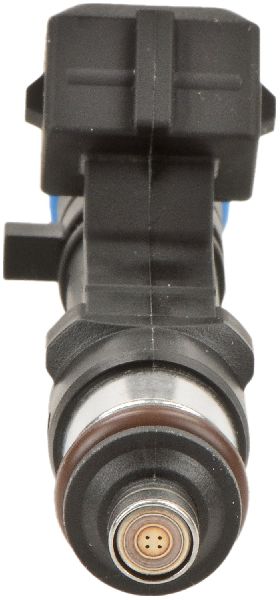
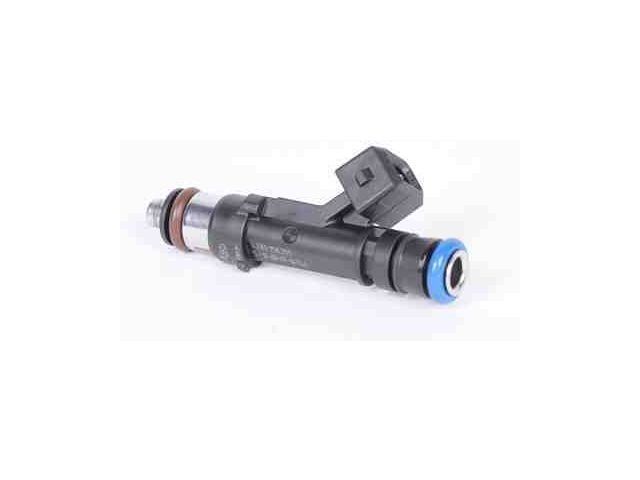
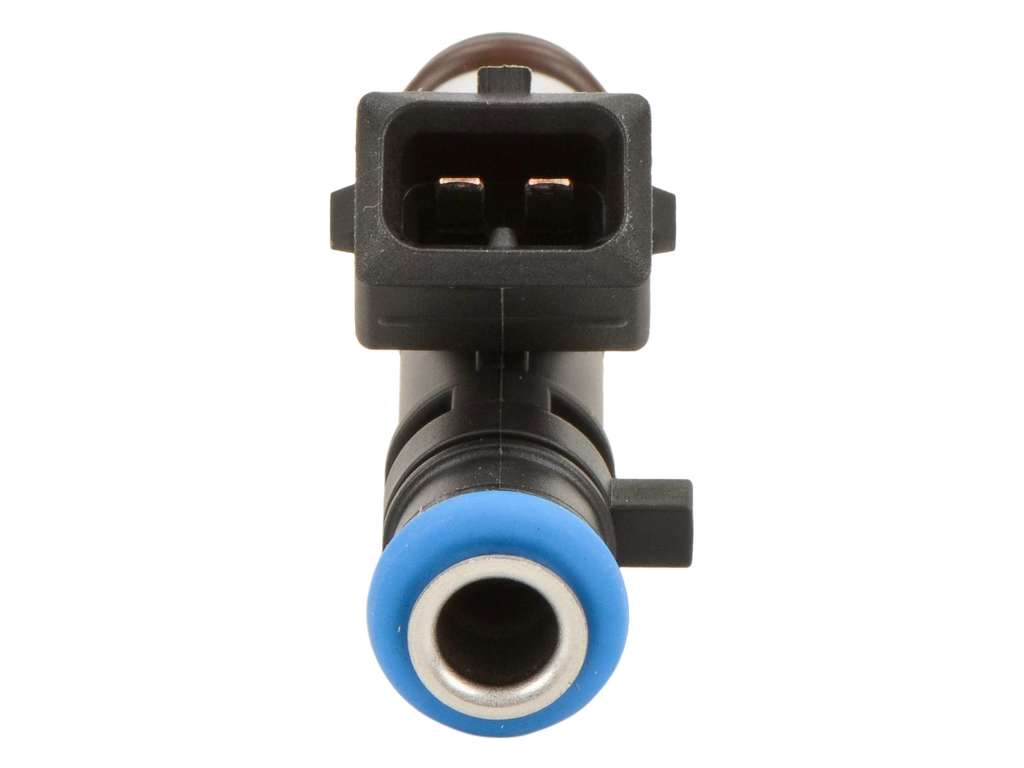
- The most likely fix is replacing the cylinder 1 fuel injector (Part No. 55577403).
- Before buying parts, inspect the wiring harness for visible damage, as a simple wire repair may solve the problem.
- A definitive DIY test is to swap the cylinder 1 and cylinder 2 injectors and see if the trouble code moves to P0202.
- Do not drive extensively with this code, as it can lead to expensive catalytic converter damage.
What's Unique About the 2012-2019 Chevrolet Sonic
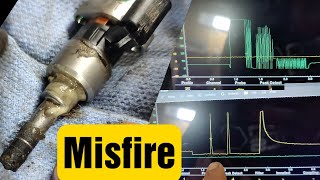
While the Chevrolet Sonic 1.4L Turbo is well-known for misfire codes (like P0301) caused by its ignition coil and systemic PCV system failures, the P0201 code is different. This code specifically points to an electrical fault in the injector circuit, not just a general misfire. Therefore, diagnosis should focus directly on the cylinder 1 injector and its wiring harness. The wiring harness in the engine bay is susceptible to damage from chafing or even rodents, which can cause the open or shorted circuit condition that triggers this specific code. A diagnostic video on a 2018 Cruze with the same engine and code P0201 showed a bad injector was the ultimate cause, confirming this is not just a wiring issue.
Generation note: The 2012-2019 Chevrolet Sonic is all part of the first generation, which received a facelift in 2017. The 1.4L Turbo engine (RPO codes LUJ/LUV) and its fuel system remained consistent, so this guide applies to all years in the specified range. This issue is also common on platform mates like the Chevy Cruze, Trax, and Buick Encore with the same engine.
Symptoms You May Notice
- Check Engine Light is on (may be flashing)
- Engine running rough or vibrating (misfire)
- Hesitation or lack of power during acceleration
- Poor fuel economy
- Audible engine stumble at idle
- Stability/Traction Control light may illuminate due to the misfire.
- Replacing the ignition coil or spark plugs. While these are common causes for a general misfire code like P0301 on a Sonic, they do not cause an injector circuit code like P0201. The presence of P0201 strongly points to a fuel injector electrical issue, either the injector itself or its wiring.
Most Likely Causes
- Faulty Cylinder 1 Fuel Injector 🔴 High Probability → Shop Fuel Injector The fuel injectors on the 1.4L engine, while generally reliable, can fail electrically. An internal coil winding can break, creating an open circuit that the ECM immediately detects.
How to confirm: Unplug the injector and measure the resistance between its two pins with a multimeter. A good injector should have a resistance between 11 and 14 ohms, though the key is consistency. A reading of 'OL' (Over Limit) indicates an open circuit and a bad injector. You can also compare the resistance reading to the other injectors; it should be very similar. The most definitive test is to swap the cylinder 1 injector with the cylinder 2 injector. Clear the codes and drive the vehicle. If the code changes to P0202, the injector is confirmed bad. A professional diagnosis might involve using a lab scope to view the injector's electrical pattern, which can definitively show if the injector is firing.
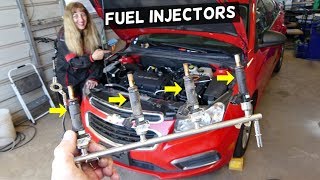
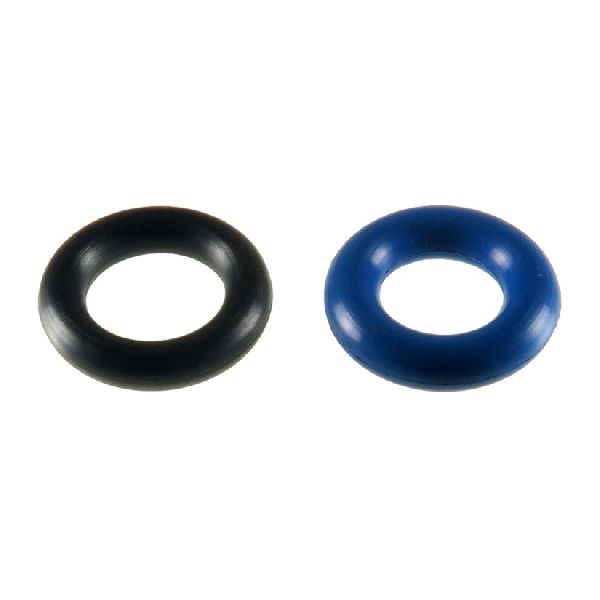
Typical fix: Replace the faulty fuel injector. It is often recommended to replace all four injectors as a set to ensure balanced fuel delivery, but replacing just the failed one will resolve the code. 🎬 Watch: Step-by-step guide to removing and replacing the fuel injectors. New O-rings should always be used.
Est. part cost: $40-$90 for one aftermarket injector, $70-$120 for an OEM ACDelco injector. - Damaged Injector Wiring or Connector 🟡 Medium Probability The engine wiring harness can become brittle from heat cycles or be damaged by rodents, leading to broken wires or loose connections. The plastic connector itself can also become brittle and crack, causing a poor connection at the injector pins. Manufacturer service bulletin #22-NA-087 for other Chevrolet models specifically outlines a procedure to replace both the fuel injector and the wiring harness to correct MIL illumination involving DTC P0201 through P0206.
How to confirm: Visually inspect the wiring harness leading to the cylinder 1 injector. Look for any signs of chafing, melting, or breaks. Wiggle the connector and wiring with the engine running to see if the idle changes. Unplug the connector and check for corrosion or damage on the pins. Use a 'noid light' plugged into the injector connector; it should flash when the engine is cranked, indicating the ECM is sending a signal. If it doesn't flash, the problem is in the wiring or the ECM.
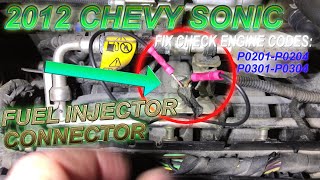
Typical fix: If the connector is damaged, replace it with a new pigtail connector. If a wire is broken, it must be repaired with a quality butt connector and heat shrink tubing 🎬 See how to replace a damaged fuel injector connector pigtail. to protect it from the elements. About 42% of P0201 cases are reportedly fixed with simple wiring repairs.
Est. part cost: $10-$25 for a connector pigtail.
Rare But Worth Checking
- Faulty Engine Control Module (ECM): → Shop Engine Control Module (ECM) This is the least likely cause. The ECM contains driver circuits that control each injector. While a driver can fail, you should exhaust all other possibilities before condemning the ECM. This is a last-resort diagnosis and requires advanced testing to confirm. In some instances, such as described in NHTSA ODI #10705647, a manufacturer may recommend replacing the ECM after multiple injector circuit codes (P0201-P0204) and misfires are detected.
Diagnosis Steps
- Read the codes with an OBD-II scanner to confirm P0201 and note any other codes like P0301.
- Perform a thorough visual inspection of the wiring harness and connector for fuel injector #1 (the first cylinder on the passenger side). Look for obvious damage, chafing, rodent chew marks, or loose connections.
- Disconnect the electrical connector from the cylinder 1 injector. Check for corrosion or bent/damaged pins inside the connector.
- Use a multimeter set to Ohms (Ω) to measure the resistance across the two pins on the fuel injector itself. A reading between 11-14 ohms is typical. If it reads as an open circuit ('OL') or has significantly different resistance than the other injectors, the injector has failed internally.
- If the injector resistance is good, test the circuit signal. Plug a 'noid light' into the injector's electrical connector. Crank the engine. The light should flash steadily. If it does not flash, there is a problem with the wiring between the ECM and the injector, or a rare ECM fault.
- If the noid light flashes and the injector resistance is good, the injector may be mechanically stuck or have an intermittent electrical fault. A definitive test is to swap the cylinder 1 injector with the cylinder 2 injector. Clear the codes and run the engine. If the code returns as P0202, the injector is faulty and needs to be replaced.
- If the code remains P0201 after swapping the injector, the problem lies within the wiring harness or the ECM. At this point, a continuity test of the injector wires back to the ECM is necessary.
Parts You'll Likely Need
- Fuel Injector
(OEM #55577403)— This is the most common part to fail internally, causing an open circuit that triggers code P0201. This part number is for the direct injection engine, which may supersede older part numbers like 12644767.
Trusted brands: ACDelco (OEM), Bosch, Standard Motor Products
OEM price range: $70-$120
Aftermarket price range: $30-$60 - Fuel Injector Connector Pigtail — The plastic connector or its wiring can be damaged by heat, vibration, or rodents, requiring replacement. This is a common repair for injector circuit codes.
Trusted brands: Dorman, ACDelco
OEM price range: $20-$35
Aftermarket price range: $10-$20
Related Codes That Often Appear With This One
- P0301 — P0301 means 'Cylinder 1 Misfire Detected'. Since P0201 indicates the cylinder 1 injector circuit is malfunctioning, the cylinder isn't receiving the correct amount of fuel, which directly causes a misfire.
- P0300 — This code for 'Random/Multiple Cylinder Misfire' can sometimes appear if the electrical issue is intermittent or if the resulting engine imbalance is severe enough to affect the crankshaft's rotational speed in a way the ECM interprets as multiple misfires.
Platform-Specific Known Issues
- While not a widespread TSB-level issue, owner forums and repair videos show that the fuel injector wiring harness can be a point of failure, either from chafing against other components or from rodent damage.
- A YouTube video by 'Dotterer's Auto Service' on a 2018 Chevy Cruze with the same 1.4L engine and P0201/P0300 codes provides a detailed professional diagnosis using a lab scope, ultimately finding a bad fuel injector. 🎬 Watch: Professional diagnostic steps for P0201 on the 1.4L engine.
Mechanic-Grade Diagnostic Values
- Fuel Injector Coil Resistance — expected: 11-14 Ohms. The OEM Bosch injector is specified at 12 Ohms. Consistency across all four injectors is the most critical factor.. Failure: A reading of 'OL' (Over-Limit) indicates an open coil. A reading significantly different (more than 1 Ohm) from the other injectors indicates a failing injector.
- Injector Connector Voltage (Key On, Engine Off) — expected: 12V+ (Battery Voltage) on the power supply wire (typically common to all injectors).. Failure: Low or no voltage indicates a problem with the power supply circuit, potentially a fuse or wiring issue upstream of the injector.
- Injector Pulse Width (at idle) — expected: 2.0ms - 3.0ms. A real-world scope reading showed 2.45ms at idle.. Failure: A pulse width significantly different from other cylinders on a scan tool, or a missing pulse, indicates a fueling command or execution problem.
- Injector Inductive Voltage Spike (Lab Scope) — expected: A sharp voltage spike of approximately 40-60V immediately after the injector is turned off. One example showed a 52.3V spike.. Failure: A missing or severely diminished spike on one cylinder compared to the others is a strong indication of a faulty injector coil. This is a definitive test.
Scan Tool Commands That Help
- GDS2 (GM Tech Tool) or equivalent professional scanner: Fuel Injector Balance Test / Injector Flow Test — This bidirectional command allows the tech to fire each injector individually and measure the corresponding drop in fuel pressure. It can help identify a weak or clogged injector that may not have a hard electrical fault. It's also useful for verifying a new injector is performing correctly.
- GDS2 (GM Tech Tool) or equivalent professional scanner: Injector Balance Learn Procedure — After replacing a fuel injector, this procedure may be required to reset learned values and ensure the ECM correctly controls the new component for optimal fuel trim.
Wiring & Ground Locations
- ECM Connector X2, Pin 2 — At the Engine Control Module (ECM), which is located on the left side of the engine compartment.. This is the specific pin for the 'Fuel Injector Control 1' signal wire. The wire color is typically Light Green/Yellow. A continuity test from this pin to the injector connector will confirm if the control wire is intact.
- Main Engine-to-Chassis Ground — A cable that runs from the engine block and attaches to a stud on the chassis frame rail, located underneath the battery tray and in front of the transmission mount.. A poor ground at this location can cause a wide range of electrical issues, including erratic sensor readings and incorrect voltages in the fuel injector circuits. It should be checked for corrosion and tightness.
- Injector Harness Common Power Wire — Within the fuel injector wiring harness, one wire is common to all four injectors and provides battery voltage.. This wire provides the 12V power to the injector. If this wire is broken or shorted before it reaches cylinder 1, the injector cannot function. A voltage test at the connector's power pin confirms its integrity.
Real Owner Repair Stories
- YouTube video 'How to Fix P0201 P0202 P0203 P0204 Injector Circuit Malfunction' (Chevrolet Cruze (same platform/engine)) — Check engine light, misfiring, P0204 code (same fault, different cylinder).
✅ What actually fixed it The connector was not fully seated and the retaining clip was missing, causing a loose connection. The final fix was securing the connector properly with a new spring clip. - YouTube video 'FIX CODE P0201 P0202 P0203 P0204 CHEVROLET CRUZE CHEVY SONIC' (Chevrolet Cruze (video applicable to Sonic)) — Blinking check engine light, misfire, P0203 and misfire codes.
❌ Tried (didn't work) Checking the connector (it was secure).
✅ What actually fixed it The fuel injector for the corresponding cylinder was faulty and was replaced. After replacement and clearing the codes, the misfire and CEL were resolved. - NHTSA ODI #10860704 — An owner reported that their vehicle began misfiring on cylinder 1 with codes P0201 and P0301, which was followed by the car jerking and losing power while driving.
OEM Part Supersession History
12644767→55577403— Standard part revision and update by the manufacturer.
Heads up: None. 55577403 is the correct and current replacement for 12644767 on this vehicle.
Model Year Variations Within This Range
- 2012-2019: The 1.4L Turbo engine came with RPO codes LUJ and LUV. While there are internal differences, the fuel injection system for the purpose of a P0201 diagnosis is functionally identical. Both use a port-injection system with the same style 'EV1' electrical connectors, meaning diagnostic procedures and common parts are consistent across the entire model year range.
Diagnostic Flowchart
Other Known Issues on This Vehicle
Issues unrelated to this code that are worth knowing about as an owner of this generation:
- PCV System Failure (Valve Cover & Intake Manifold) 🔴 High — Extremely common. The check valve in the intake manifold fails, which then causes the diaphragm in the valve cover to rupture, creating a massive vacuum leak. (Ref: TSB #PIP5197M, Special Coverage N202299080)
- Leaking Water Pump 🔴 High — Very common failure item, leading to coolant loss and overheating. (Ref: Special Coverage Adjustment 14329 / SB-10057265-3557 extends warranty to 10 years/150,000 miles for this part.)
- Turbocharger Failure / Underboost (P0299) 🟠 Medium — Common, but often misdiagnosed. The root cause is frequently a boost leak from the failed PCV system, not the turbo itself. (Ref: TSB #PIP5495N warns against misdiagnosing the turbo. Special Coverage N232395330 for some 2017-2018 models.)
- Leaking Valve Cover Gasket 🟠 Medium → Shop Engine Valve Cover — Common. The gasket becomes brittle and leaks oil into the spark plug tubes, which then destroys the ignition coil boots and causes misfires (P0300, P0301, etc.).
- Cracked Ignition Coil Pack 🟠 Medium — A very frequent cause of misfires (P0300-P0304). The plastic housing cracks, allowing spark to arc to the cylinder head. Often fails as a result of oil contamination from a leaking valve cover gasket.
Used vs. New Parts: Buying Guide for This Vehicle
When a used part is the smart pick: A used injector wiring harness or a pigtail connector from a salvage yard is a good, cost-effective option if the original is damaged. It is a simple electrical component with low failure rates if not physically damaged.
Donor-vehicle mileage cap: roughly under 80000 miles for the part to have meaningful remaining life.
What to inspect on the donor part:
- For a connector/pigtail: Inspect for brittle or cracked plastic, ensure the locking tab is intact, and check for corrosion on the metal pins.
- For a used fuel injector: Visually inspect for cracks on the plastic body and corrosion. Resistance should be tested with a multimeter before purchase if possible; it should be within the 11-14 Ohm range.
OEM-only on this vehicle (don't cheap out):
- Engine Control Module (ECM) - Used ECMs are often VIN-locked to the donor vehicle and require specialized dealer tools for reprogramming, making them a poor choice for DIY replacement.
Aftermarket brands forum-validated for this vehicle:
- Bosch (OEM supplier)
- ACDelco
- Standard Motor Products (SMP)
Brands owners have reported issues with on this vehicle:
- Unbranded or 'no-name' injectors from online marketplaces. Forum and tuning community wisdom warns that cheap replica injectors often have poor manufacturing tolerances, leading to idle misfires and inconsistent fuel flow even when new.
Real Owner Stories
Aggregated from forums and TSBs cited above. Mileages and costs reflect what owners reported in those sources.
2018 Chevrolet Cruze 1.4L Turbo
Symptoms: Engine throwing P0201 and P0300 codes; professional diagnosis required a lab scope to view the electrical pattern.
What fixed it: Replacement of the faulty fuel injector.
Source hint: YouTube video by 'Dotterer's Auto Service'
Chevrolet Sonic 1.4L Turbo
Symptoms: Vehicle sat for two years; P0201 and P0301 codes present, traction control light illuminated, and engine missing.
What fixed it: Diagnostic plan involved swapping injectors between cylinders to confirm the fault moved.
Source hint: SonicOwnersForum.com - Thread 'Sat 2 years P0201, traction control light, and missing'
Chevrolet Malibu (Cross-Model Reference)
Symptoms: Owner reported sputtering of the engine and losing power. Diagnostic testing returned codes P0300, P0204, P0203, P0202, and P0201.
What fixed it: Per NHTSA ODI #10705647, the manufacturer recommended replacing the ECM to resolve the multiple injector circuit faults.
Related OBD-II Codes
Frequently Asked Questions
Is there a TSB or special coverage for the fuel injector failure on my 1.4L Sonic?
Can a bad ignition coil cause the P0201 code on my Chevrolet Sonic?
Why did my Stability and Traction Control lights come on along with the P0201 code?
How can I tell if the P0201 code is the injector or the wiring harness?
What is the correct resistance for a fuel injector on the 1.4L Turbo engine?
Should I replace all four injectors if only Cylinder 1 is failing?
Helpful Videos

We Have This Part in Stock


The information in this article is provided for general reference and educational purposes only. Vehicle specifications, procedures, and part compatibility can vary by production date, trim level, and region. Always consult your vehicle's factory service manual and verify part numbers before purchasing or performing repairs. Safety-critical components such as airbags, seat belts, and braking systems should be installed by a qualified professional.
- Chevrolet Sonic:
- 🧭 Diagnostic Flowchart
- 🎬 Helpful Videos
- 🛍️ Shop This Part
- What's Unique About the 2012-2019 Chevrolet Sonic
- Symptoms You May Notice
- Most Likely Causes
- Rare But Worth Checking
- Diagnosis Steps
- Parts You'll Likely Need
- Related Codes That Often Appear With This One
- Platform-Specific Known Issues
- Mechanic-Grade Diagnostic Values
- Scan Tool Commands That Help
- Wiring & Ground Locations
- Real Owner Repair Stories
- OEM Part Supersession History
- Model Year Variations Within This Range
- Other Known Issues on This Vehicle
- Used vs. New Parts: Buying Guide for This Vehicle
- Real Owner Stories
- 2018 Chevrolet Cruze 1.4L Turbo
- Chevrolet Sonic 1.4L Turbo
- Chevrolet Malibu (Cross-Model Reference)
- Related OBD-II Codes
- Frequently Asked Questions
- 🎟️ Get 5% Off