

P0201 on 2009-2014 Chevrolet Traverse: Injector Circuit Malfunction Causes and Fixes
P0201 on a Chevy Traverse indicates an electrical fault with the cylinder 1 fuel injector circuit. The most common causes are a failed fuel injector or a damaged wiring harness connector. Expect to pay $70-$150 for a new injector and tackle this as a moderate DIY job, though accessing the rear bank injector is challenging.
- P0201 on your Traverse means there is an electrical problem with the cylinder 1 fuel injector circuit, not a spark or compression issue.
- The most likely cause is a failed fuel injector, followed by damaged wiring/connector.
- Cylinder 1 is on the rear bank against the firewall, making access difficult and requiring removal of the upper intake manifold.
- Do not drive for extended periods with this code, as you risk damaging your catalytic converter.
- Diagnosis involves checking wiring, testing injector resistance (11.4-13.4 ohms), and potentially swapping injectors to confirm the failure.
What's Unique About the 2009-2014 Chevrolet TRAVERSE
On the 2009-2014 Traverse, this code is often linked to the 3.6L V6 direct injection (LLT) engine. Unlike simpler port injection systems, these direct injectors and their wiring live in a harsher environment under the intake manifold. Cylinder 1 is located on the rear bank of the engine against the firewall, making access significantly more challenging than for the front cylinders and requiring removal of the upper intake manifold. GM has issued a Technical Service Bulletin (TSB #PIP4924D) that includes P0201 among a list of codes related to misfires, indicating it's a recognized issue on this platform. Furthermore, wiring harness chafing is a known issue on some GM vehicles, which can lead to intermittent open or short circuits in the injector wiring.
Diagnostic Flowchart
Tap your situation to follow the diagnostic path that matches what you're seeing on this vehicle.
Symptoms You May Notice
- Check Engine Light is on
- Rough or shaking idle
- Engine misfire, which may be more noticeable under load
- Hesitation or stumbling during acceleration
- Reduced engine power
- Poor fuel economy
- Replacing the spark plug or ignition coil for cylinder 1. While these can cause a misfire (P0301), they do not cause an injector circuit code like P0201. The code P0201 specifically points to an electrical issue with the fuel injector circuit, not a lack of spark.
Most Likely Causes
- Faulty Cylinder 1 Fuel Injector 🔴 High Probability → Shop Fuel Injector Direct injectors operate under high pressure and temperature, and internal coil failure is a common wear item. Carbon buildup on the injector tip is also a frequent issue on GM direct injection engines. Given the age of the vehicle, it's often recommended to replace all injectors on the same bank, or the full set, at the same time.
How to confirm: Swap the cylinder 1 fuel injector with another cylinder (e.g., cylinder 3 on the same bank). Clear the codes and drive. If the code changes to P0203, the injector is faulty. Alternatively, use a multimeter to check the resistance of the injector. For the LLT engine (2009-early 2012), it should be 11.8-12.6 ohms. For the LFX engine (late 2012-2014), it is 1.2-1.8 ohms. A reading of infinite resistance (open) or near-zero (short) indicates a failed injector.
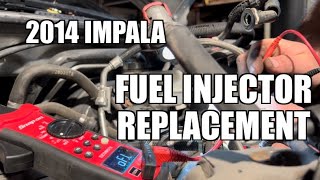
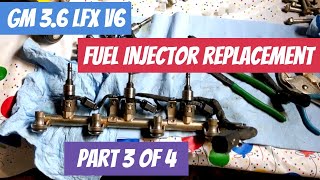
Typical fix: Replace the failed fuel injector. This requires removing the intake manifold to access the fuel rail. 🎬 Watch this walkthrough of the 3.6L fuel injector replacement process. New Teflon seals and O-rings must be installed on the new injector, and special tools are needed to resize the seal correctly.
Est. part cost: $70 - $180 - Damaged Injector Wiring or Connector 🟡 Medium Probability The wiring harness connector can become brittle from heat cycles. Wires can chafe against the engine block or other components, causing an open or short circuit. This is a known issue on some GM platforms, as noted in GM Preliminary Information Bulletins.
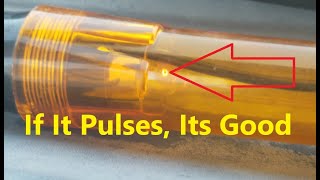
How to confirm: Visually inspect the wiring and connector for cylinder 1 for any signs of damage, corrosion, or loose pins. Perform a 'wiggle test' on the connector and wiring with the engine running to see if it affects the idle. Use a noid light to confirm if the connector is receiving a pulse signal from the ECM. 🎬 Watch: How to test the injector circuit with a test light. If the noid light flashes, the ECM is sending a signal, and the problem is likely the injector or the connection at the injector.
Typical fix: Repair the damaged wire or replace the injector connector pigtail. In some cases, the entire bank's injector harness may need replacement.
Est. part cost: $15 - $70
Rare But Worth Checking
- Faulty Engine Control Module (ECM): → Shop Engine Control Module (ECM) This is the least likely cause. The ECM's internal driver for the injector circuit can fail, but all other possibilities should be exhausted before replacing the ECM. Diagnosis often requires an oscilloscope to verify the ECM is not sending the ground pulse to the injector.
- Cracked Solder Joint in Fuse Box: An internal cracked solder joint or corrosion within the underhood fuse box (electrical center) can cause an intermittent open circuit to an entire bank of injectors, triggering P0201 along with other codes. This can be difficult to diagnose and may require disassembly and inspection of the fuse box itself.
Diagnosis Steps
- Verify the code with a reliable OBD-II scanner.
- Check for other related codes, such as P0301.
- Locate Cylinder 1. On the Traverse 3.6L, 🎬 See this video for help diagnosing Traverse misfire codes. it is on the rear bank (against the firewall), on the passenger side.
- Visually inspect the wiring harness and connector for cylinder 1. Look for any obvious signs of damage, melting, chafing, or corrosion.
- Perform a 'wiggle test' on the connector and nearby wiring with the engine idling. If the misfire changes, you likely have a wiring issue.
- Use a noid light to test for a signal at the injector connector. The light should flash steadily as the engine runs, indicating the ECM is sending a pulse.
- If the noid light test passes, the next step is to test the injector itself. Turn off the engine and disconnect the injector.
- Measure the resistance of the fuel injector using a multimeter. Compare the reading to the vehicle's specifications. For the LLT engine (2009-early 2012), expect 11.8-12.6 ohms. For the LFX engine (late 2012-2014), expect 1.2-1.8 ohms. An open circuit (infinite resistance) or a short (zero resistance) indicates a bad injector.
- For confirmation, swap the cylinder 1 injector with the cylinder 3 injector (on the same bank). This is labor-intensive as it requires removing the intake manifold. Clear the codes and run the engine. If the code returns as P0203, the injector is confirmed to be the problem.
- If the code remains P0201 after the swap, the problem is in the wiring or the ECM.
- If all wiring and the injector are confirmed good, the final, least likely causes are a faulty ECM driver circuit or a problem within the underhood fuse box.
Parts You'll Likely Need
- Direct Fuel Injector
(OEM #12638530)— This is the most common failure point for a P0201 code. The internal coil windings can fail, creating an open circuit.
Trusted brands: ACDelco, Bosch, Delphi
OEM price range: $120-$180
Aftermarket price range: $70-$110 - Upper Intake Manifold Gasket Set
(OEM #12647263)— Must be replaced when removing the intake manifold to access the Bank 1 (rear) fuel injectors. These are single-use gaskets.
Trusted brands: ACDelco, Fel-Pro
OEM price range: $30-$50
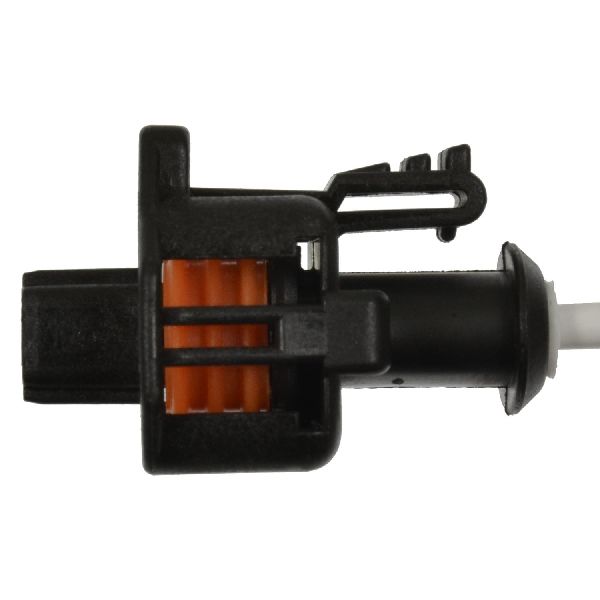
Aftermarket price range: $15-$30 - Fuel Injector Connector Pigtail — The plastic connector and its locking tab can become brittle and break, or the terminals can corrode, leading to a poor connection.
Trusted brands: ACDelco, Dorman
OEM price range: $25-$40
Aftermarket price range: $15-$25 - Bank 1 (Right Side) Fuel Injector Wiring Harness
(OEM #12621096)— If wiring damage is extensive or close to the main harness, replacing the sub-harness for the entire bank may be necessary.
Trusted brands: GM Genuine
OEM price range: $50-$80 - Direct Fuel Injector Seal Kit
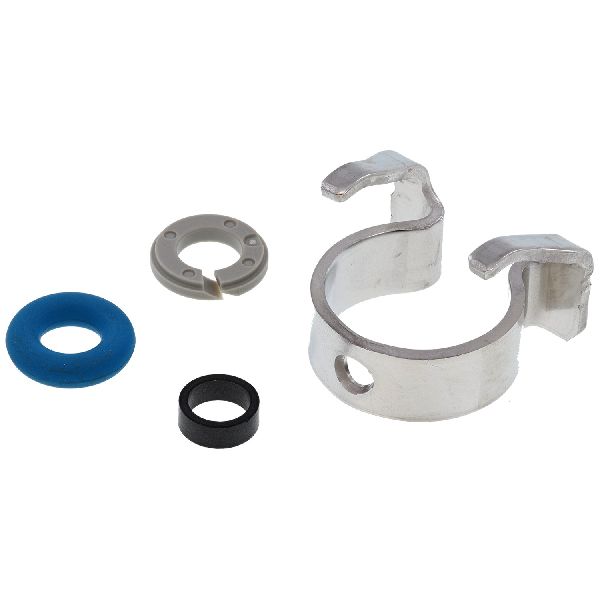
(OEM #12622699)— The Teflon seal at the tip of the direct injector is a single-use part and must be replaced whenever an injector is removed and reinstalled.
Trusted brands: ACDelco
OEM price range: $10-$15 per injector
Related Codes That Often Appear With This One
- P0301 — P0301 means 'Cylinder 1 Misfire Detected'. Since the P0201 fault prevents the injector from delivering fuel, the cylinder will not fire correctly, logging a misfire code for the same cylinder.
- P2146 — This code indicates a fault in the 'Fuel Injector Group A Supply Voltage Circuit'. On the Traverse's V6, Group A often corresponds to Bank 1 (the rear bank, cylinders 1-3-5). A problem affecting the power supply to the entire bank could trigger P0201 along with other codes for that bank.
Technical Service Bulletins (TSBs) & Recalls
- PIP4924D: Mentions DTC P0201 in a list of codes that may be present with an engine misfire condition.
Platform-Specific Known Issues
- The provided NHTSA Technical Service Bulletin #PIP4924D lists P0201 as one of many potential DTCs related to engine misfires on the 2009-2014 Traverse, confirming it is a known issue.
- Accessing cylinder 1 on the rear bank is labor-intensive, requiring the removal of the upper intake manifold. This adds 1-2 hours of labor time compared to a front-bank injector and necessitates replacing the intake gaskets.
- Replacement of the direct injectors requires special tools. A tool like GM's EN-48266-2 is needed to properly size the new Teflon seal on the injector tip, and a slide hammer (J-2619-01) may be needed to remove stubborn injectors.
Mechanic-Grade Diagnostic Values
- Fuel Injector Coil Resistance (2009-early 2012 3.6L LLT Engine) — expected: 11.8 - 12.6 Ohms. Failure: A reading of infinity (Open Loop), near-zero (short), or significantly outside this range.
- Fuel Injector Coil Resistance (late 2012-2014 3.6L LFX Engine) — expected: 1.2 - 1.8 Ohms. Failure: A reading outside this very narrow range. Note: This value is much lower than the LLT engine's.
- Injector Pulse Width (at normal idle) — expected: 2 - 4 milliseconds (ms). Failure: A value of 0 ms on cylinder 1 while other cylinders show a normal pulse width indicates the ECM is not commanding the injector.
- Injector Circuit Voltage (Key On, Engine Off) — expected: ~12 Volts (Battery Voltage). Failure: Voltage below 10V points to an upstream wiring or power supply problem.
Scan Tool Commands That Help
- GDS2 (GM Global Diagnostic System 2) / Tech2: Injector Test / Fuel Injector Balance — This bidirectional command allows a technician to individually disable injectors one by one while monitoring engine RPM drop. If disabling cylinder 1 causes no change in RPM, but disabling other cylinders does, it confirms cylinder 1 is not contributing. This helps verify the fault location before physical disassembly.
Wiring & Ground Locations
- G110 — Right rear of the engine, mounted to the back of the cylinder head, possibly on a bracket above the power steering pump pressure hose.. This is a primary engine component ground shared by the ECM and other critical systems. A loose or corroded G110 ground can cause a wide range of erratic electrical issues, including injector circuit faults and communication DTCs.
- ECM Connector X1/X2 — The Engine Control Module is located on the left side of the engine compartment.. These are the main harness connectors at the ECM. Technicians can test for the injector control signal directly at the ECM pin for cylinder 1 to determine if the fault is with the ECM itself or downstream in the wiring harness.
- Injector Harness Connectors X160 / X161 — Multi-pin connectors located at the rear of the intake manifold.. These connectors join the main engine harness to the injector sub-harness. They are a logical place to test circuits to isolate a wiring fault between the ECM and the injectors without having to remove the intake manifold first.
Real Owner Repair Stories
- GMTNation forum user (2007 GM Vehicle (similar 4.2L engine, but diagnostic process is identical)) — Codes P0201, P0301, and P0300.
❌ Tried (didn't work) Swapped coils and spark plugs., Replaced all fuel injectors., Replaced the fuel injector wiring harness despite it testing good for continuity.
✅ What actually fixed it The Powertrain Control Module (PCM) was faulty. A free check with a Tech2 scanner at a local shop confirmed the bad PCM. Replacing the PCM and performing a case relearn resolved all codes and the misfire.
OEM Part Supersession History
12611545, 12632255→12638530, which is then superseded by 12669384— Standard part evolution, likely for improved reliability or manufacturing process updates.
Heads up: These part numbers are for the high-impedance injectors used in the 2009-early 2012 LLT engine ONLY. They are not compatible with the late 2012+ LFX engine, which requires different low-impedance injectors.
Model Year Variations Within This Range
- 2009-early 2012: These models use the 3.6L LLT V6 engine. This engine is equipped with high-impedance fuel injectors with a resistance of ~11.8-12.6 Ohms and uses a Bosch ECM.
- late 2012-2014: The Traverse switched to the updated 3.6L LFX V6 engine. This engine uses low-impedance fuel injectors with a resistance of ~1.2-1.8 Ohms and a Delphi ECM. Using the resistance specification from the LLT engine on an LFX will lead to an incorrect diagnosis.
Helpful Videos

We Have This Part in Stock


The information in this article is provided for general reference and educational purposes only. Vehicle specifications, procedures, and part compatibility can vary by production date, trim level, and region. Always consult your vehicle's factory service manual and verify part numbers before purchasing or performing repairs. Safety-critical components such as airbags, seat belts, and braking systems should be installed by a qualified professional.
- Chevrolet TRAVERSE:
- 🧭 Diagnostic Flowchart
- 🎬 Helpful Videos
- 🛍️ Shop This Part
- What's Unique About the 2009-2014 Chevrolet TRAVERSE
- Symptoms You May Notice
- Most Likely Causes
- Rare But Worth Checking
- Diagnosis Steps
- Parts You'll Likely Need
- Related Codes That Often Appear With This One
- Technical Service Bulletins (TSBs) & Recalls
- Platform-Specific Known Issues
- Mechanic-Grade Diagnostic Values
- Scan Tool Commands That Help
- Wiring & Ground Locations
- Real Owner Repair Stories
- OEM Part Supersession History
- Model Year Variations Within This Range
- 🎟️ Get 5% Off