

P0201 on 2011-2014 Chrysler 200 2.4L: Injector Circuit Causes and Fixes
P0201 on a Chrysler 200 2.4L usually means a failed cylinder 1 fuel injector or a wiring issue. Before replacing parts, check for a loose connector and ask a dealer about potential software updates, as a glitch can sometimes cause this code. A new injector costs about $40-$80 for an aftermarket part or $100-$150 for OEM.
- P0201 points to an electrical issue with the cylinder 1 injector, not a spark plug or coil.
- Always check the injector's electrical connector first for a secure fit; this is a common and free fix.
- The most definitive DIY test is to swap the cylinder 1 injector with another cylinder (like #2) and see if the code follows (changes to P0202).
- Before paying for parts, ask a Chrysler dealer if your VIN has an open software update, as a known glitch can cause this code (related to TSB 18-014-14).
- Do not drive extensively with this code, as you risk damaging your catalytic converter due to unburnt fuel.
What's Unique About the 2011-2014 Chrysler 200
For the 2011-2014 Chrysler 200 with the 2.4L engine, injector circuit codes can sometimes be triggered by a software glitch in the Powertrain Control Module (PCM). Chrysler released a Technical Service Bulletin (TSB 18-014-14) for a similar code (P0204) on this platform that is resolved with a PCM update, indicating a history of this type of issue. Therefore, it's a known possibility for this engine family. Additionally, the plastic locking clips on the injector connectors are known to become brittle and break, leading to a loose connection that is a commonly reported simple fix.
Symptoms You May Notice
- Check Engine Light is on
- Rough or shaking idle
- Engine misfire (may feel like a stumble or hesitation)
- Poor acceleration and loss of power
- Reduced fuel economy
- Strong fuel smell from the engine bay if the injector is leaking externally
- Replacing the spark plug or ignition coil for cylinder 1. While these parts can cause a misfire (P0301), they will not cause an injector circuit code like P0201, which is specifically an electrical fault detected by the PCM in the injector circuit.
Most Likely Causes
- Faulty Cylinder 1 Fuel Injector 🔴 High Probability → Shop Fuel Injector Injectors are wear items and can fail electrically over time by developing an open circuit in their internal coil. This is a common failure mode across many Chrysler products using this engine family.
How to confirm: Swap the cylinder 1 fuel injector with the cylinder 2 injector. Clear the codes and run the engine. If the code changes to P0202, the injector is confirmed bad. Alternatively, test the injector's resistance with a multimeter; it should be between 11 and 18 Ohms. An 'open' or infinite resistance reading means it has failed internally.
Typical fix: Replace the failed fuel injector. It is often recommended to replace all four as a set on higher mileage vehicles to ensure balanced performance.
Est. part cost: $40-$150 - Wiring Harness or Connector Issue 🟡 Medium Probability The wiring harness in the engine bay is exposed to constant heat and vibration, which can make wires brittle or cause the injector connector's locking tab to break, leading to a poor connection. This is a frequently cited issue in owner forums.
How to confirm: Visually inspect the wiring going to the cylinder 1 injector for any signs of chafing, melting, or breaks. Ensure the connector is fully seated and 'clicks' into place. Wiggle the connector with the engine running to see if it causes the misfire to change. Use a noid light in the connector; it should flash steadily when the engine is running, confirming a signal from the PCM.
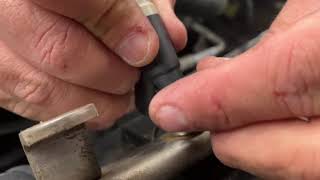
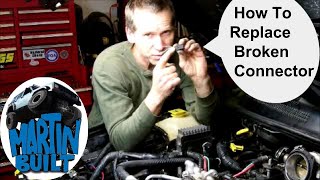
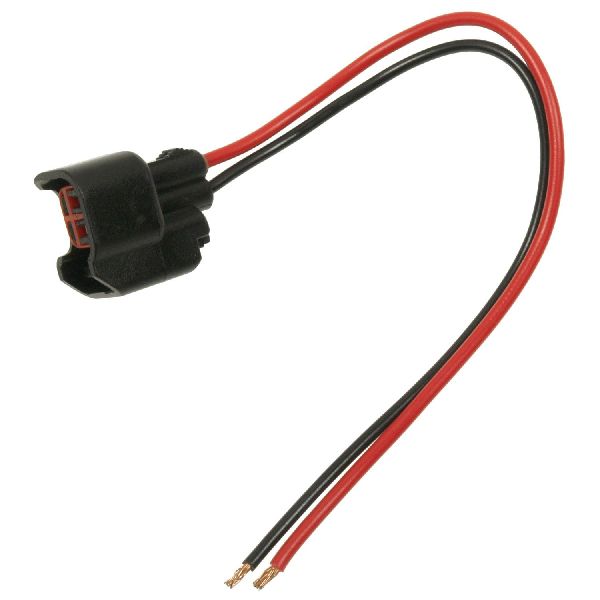
Typical fix: Repair the damaged section of wire or replace the injector pigtail connector. The pigtail part number is often a variant of 5183448AA. 🎬 See this quick guide on replacing a broken injector connector
Est. part cost: $15-$40 - PCM Software Glitch ⚪ Low Probability Chrysler has issued TSBs for this engine family to correct false injector circuit codes. TSB #18-014-14 specifically addresses P0204 on the 2.4L engine by reprogramming the PCM, making it a plausible cause for P0201 as well.
How to confirm: Contact a Chrysler dealership with your vehicle's VIN. They can check their system to see if TSB #18-014-14 or any other software updates related to injector circuit faults are open and applicable to your specific vehicle.
Typical fix: Have the dealership reflash (update) the Powertrain Control Module to the latest software version. This typically costs one hour of shop labor.
Est. part cost: $0-$150
Rare But Worth Checking
- Failed Powertrain Control Module (PCM): → Shop Engine Control Module (ECM) This is rare and should only be considered after the injector, wiring, and software have all been ruled out. The internal driver circuit in the PCM that controls the injector can fail, which would be confirmed if a noid light does not flash at the injector connector, and the wiring between the PCM and connector is verified to be intact.
Diagnosis Steps
- Verify the code P0201 is present using an OBD-II scanner. Check for any other codes, especially P0301 (Cylinder 1 Misfire), which is expected to accompany P0201.
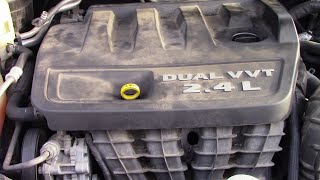
- Locate cylinder 1. On the 2.4L transverse engine, it is the cylinder on the far left when facing the engine from the front of the car (the side with the accessory belts).
- Visually inspect the electrical connector and wiring harness for the cylinder 1 fuel injector. Look for loose connections, broken locking tabs, corrosion, or damaged wires.
- With the engine idling, carefully wiggle the connector and wiring to see if the engine's idle changes, which would indicate a bad connection.
- To test the circuit signal from the PCM, disconnect the injector and plug a 'noid light' into the connector. Start the engine; the light should flash steadily. If it doesn't flash or is solid, the problem is in the wiring or the PCM. If it does flash, the problem is almost certainly the injector itself.
- To confirm a bad injector, swap the fuel injector from cylinder 1 with the one from cylinder 2. Clear the codes and run the engine. If the code returns as P0202, the fuel injector is faulty 🎬 Watch: Step-by-step fuel injector replacement on this engine and needs to be replaced. If P0201 returns, the problem is in the wiring or PCM.
- As an alternative to swapping, you can test the injector's resistance using a multimeter. Disconnect the injector and measure across its two pins. A good injector for this engine should have a resistance between 11 and 18 Ohms. A reading of infinity (OL) indicates an open circuit and a failed injector.
Parts You'll Likely Need
- Fuel Injector
(OEM #04891577AC)— This is the most common hardware failure for a P0201 code after ruling out a simple connection issue.
Trusted brands: Mopar, Bosch, Standard Motor Products, GB Remanufacturing
OEM price range: $100-$170
Aftermarket price range: $40-$80 - Fuel Injector Connector Pigtail
(OEM #5183448AA)— If the wiring or connector itself is damaged, replacing the pigtail is the standard repair. The plastic locking clip is a common point of failure.
Trusted brands: Mopar, Dorman, Standard Motor Products
OEM price range: $25-$40
Aftermarket price range: $15-$25
Related Codes That Often Appear With This One
- P0301 — P0301 means 'Cylinder 1 Misfire Detected'. Since P0201 indicates the injector circuit for cylinder 1 has failed, no fuel is being delivered, which directly causes a misfire on that cylinder.
Technical Service Bulletins (TSBs) & Recalls
- TSB #18-014-14 (for P0204): While not explicitly for P0201, this TSB addresses a PCM software update to fix a false injector circuit code on the same 2.4L engine, making a software check highly relevant.
- TSB #18-034-14 REV. A: Addresses a faulty oil pressure sensor on 2013-2014 models, which can cause various engine performance issues, though not directly linked to P0201.
Platform-Specific Known Issues
- A known software glitch can cause the PCM to falsely report an injector circuit fault. TSB #18-014-14 was issued for P0204 on this platform, indicating a history of such issues that may also affect P0201.
- The plastic locking clips on the fuel injector connectors can become brittle and break, leading to a loose connection that triggers the code. This is a very common first check.
- Some owners on forums like the 'Chrysler Sebring / 200 Convertible Club' have documented chasing this code, with the ultimate fix often being either a wiring repair or a new injector.
Mechanic-Grade Diagnostic Values
- Fuel Injector Coil Resistance — expected: 11 - 18 Ohms. Failure: A reading of OL (Open Loop/infinite) or near zero indicates a failed injector.
- Injector Pulse Width (at idle) — expected: 2.0 - 4.0 milliseconds (ms). Failure: A value of 0 ms or a wildly different value compared to other cylinders indicates a problem.
- Injector Control Wire Voltage (KOEO, Unplugged) — expected: ~4.6V (Bias Voltage). Failure: A reading of 0V or 12V could be normal on other systems, but on this platform, a ~4.6V bias is expected. A technician not aware of this might misdiagnose the circuit.
- Injector Power Supply Wire Voltage (KOEO) — expected: ~12V (Battery Voltage). Failure: 0V indicates a problem with the ASD (Auto Shutdown) relay or the power feed wire.
- Control Wire Continuity (from Injector Connector to PCM) — expected: < 1.0 Ohm. Failure: A high resistance or OL (Open Loop) reading indicates a break in the wire.
Hidden / Shadow Codes Worth Checking
- Mode $06, Test ID $0D: This is not a DTC, but a diagnostic monitor that provides raw test data for misfire counts per cylinder before they are significant enough to set a P030x code. Viewing this can help confirm if the misfire is isolated to cylinder 1. (see via Requires a professional scan tool that can access Mode $06 diagnostic data.)
Scan Tool Commands That Help
- wiTECH (or equivalent professional scanner): Injector Kill / Cylinder Contribution Test — This bidirectional command allows a technician to manually disable the cylinder 1 injector while the engine is running. If disabling the injector causes no change in the engine's idle quality, it confirms that cylinder was not contributing, pointing to a fault in that circuit.
Wiring & Ground Locations
- PCM Connector C2, Pin 8 — The Powertrain Control Module (PCM) is located in the engine bay, typically on the driver's side firewall. C2 is one of the large multi-pin connectors.. This is the specific pin for the Cylinder 1 Injector Control circuit. The wire color is typically Brown with a Yellow tracer (BR/YL). Testing for the ground pulse signal here can definitively isolate a problem to the PCM or the wiring harness.
- Injector Power Supply Wire — At the fuel injector connector for cylinder 1.. This wire, typically Brown with a White tracer (BR/WT), provides 12V power from the ASD (Auto Shutdown) relay. A lack of voltage here points to a power supply issue, not a PCM or control wire fault.
- G308 — Right rear of the engine block.. This is a primary engine ground. A corroded or loose connection here can cause unstable voltage and erratic behavior for multiple engine components, including the injector circuits.
- G321 — Left side of the engine compartment.. This is another critical engine compartment ground. Poor grounding at this point can lead to intermittent and hard-to-diagnose electrical faults, including false injector codes.
Diagnostic Flowchart
Other Known Issues on This Vehicle
Issues unrelated to this code that are worth knowing about as an owner of this generation:
- Electronic Throttle Body Failure 🔴 High — Common issue across 2.4L and 3.6L models. Often presents with a red lightning bolt symbol on the dash, erratic idle, stalling, or entering limp mode.
- Alternator Failure 🔴 High — Alternators can fail suddenly, causing the vehicle to stall while driving. Symptoms include dimming/flickering lights, a battery warning light, and whining noises. (Ref: While no specific recall exists for the 200, other Chrysler vehicles with similar alternators were recalled for this issue (NHTSA #17V-435).)
- 62TE Transmission Problems 🟠 Medium — The 6-speed automatic can experience hard shifting, slipping, delayed engagement, or a whining noise indicating a failing pump or loss of hydraulic pressure.
- Clogged Heater Core 🟡 Low — A common complaint is a lack of heat from the vents, especially on the driver's side, due to sediment clogging the heater core.
- Engine Stalling / Oil Pressure Loss 🔴 High — Some 2013 models with the 2.4L engine were recalled for potential loss of oil pressure due to balance shaft bearing debris, which could lead to engine stall or failure. (Ref: NHTSA Recall #13V043000)
Used vs. New Parts: Buying Guide for This Vehicle
When a used part is the smart pick: For this repair, a used OEM fuel injector from a reputable salvage yard is a reasonable choice, especially if cost is a primary concern. Used wiring pigtails or sections of harness are also excellent candidates, as OEM wiring is often higher quality than cheap aftermarket connectors.
Donor-vehicle mileage cap: roughly under 80000 miles for the part to have meaningful remaining life.
What to inspect on the donor part:
- For injectors, look for a donor vehicle with documented low mileage and no signs of a major engine failure or fire.
- Ask the seller if the injectors were tested or if they can provide the resistance reading before purchase.
- For wiring, inspect the connector's locking tab to ensure it's intact. Check for any brittleness, cracking, or previous splice repairs on the wires.
OEM-only on this vehicle (don't cheap out):
- Powertrain Control Module (PCM) - While a used PCM can be purchased, it absolutely requires professional programming to match your vehicle's VIN and security information. It is not a plug-and-play part.
Aftermarket brands forum-validated for this vehicle:
- Bosch (often the OEM supplier)
- Standard Motor Products (SMP)
- Continental
Brands owners have reported issues with on this vehicle:
- Unbranded, no-name injectors from online marketplaces should be avoided. Forum discussions frequently mention issues with inconsistent flow rates and premature failure with ultra-low-cost injectors.
Real Owner Stories
Aggregated from forums and TSBs cited above. Mileages and costs reflect what owners reported in those sources.
2011-2014 Chrysler 200 2.4L
Symptoms: Rough running and a P0201 code appearing specifically when the engine is warm.
What fixed it: The fix involved either a wiring repair or a new injector, as documented by owners chasing the code.
Source hint: Chrysler Sebring / 200 Convertible Club (convertibleclub.com) thread titled 'Rough running and a P0201 code'
2013 Chrysler 200
Symptoms: Issues with the electronic throttle control light (red lightning bolt symbol) and sensitive electronics.
What fixed it: Electronic throttle body failure is a common high-severity issue on this platform that often requires component replacement.
Source hint: Reddit (r/MechanicAdvice)
Chrysler Owner Experience
Symptoms: An owner reported seeing smoke and checking a diagnostic code which indicated P0201: #1 fuel injector open circuit.
What fixed it: The owner, being handy with repairs, identified the open circuit fault as described in NHTSA ODI #10339808.
Source hint: NHTSA ODI #10339808
Related OBD-II Codes
Frequently Asked Questions
Could a software update fix the P0201 code on my Chrysler 200 2.4L?
Where is the Cylinder 1 fuel injector located on the 2.4L World I4 engine?
What is the correct electrical resistance for a fuel injector on a 2011-2014 Chrysler 200 2.4L?
My injector connector is loose; is there a specific part to fix this without replacing the whole harness?
Should I replace all four injectors if only the Cylinder 1 injector has failed?
Can a faulty oil pressure sensor cause engine performance issues on my 2013 Chrysler 200?
Helpful Videos

We Have This Part in Stock


The information in this article is provided for general reference and educational purposes only. Vehicle specifications, procedures, and part compatibility can vary by production date, trim level, and region. Always consult your vehicle's factory service manual and verify part numbers before purchasing or performing repairs. Safety-critical components such as airbags, seat belts, and braking systems should be installed by a qualified professional.
- Chrysler 200:
- 🧭 Diagnostic Flowchart
- 🎬 Helpful Videos
- 🛍️ Shop This Part
- What's Unique About the 2011-2014 Chrysler 200
- Symptoms You May Notice
- Most Likely Causes
- Rare But Worth Checking
- Diagnosis Steps
- Parts You'll Likely Need
- Related Codes That Often Appear With This One
- Technical Service Bulletins (TSBs) & Recalls
- Platform-Specific Known Issues
- Mechanic-Grade Diagnostic Values
- Hidden / Shadow Codes Worth Checking
- Scan Tool Commands That Help
- Wiring & Ground Locations
- Other Known Issues on This Vehicle
- Used vs. New Parts: Buying Guide for This Vehicle
- Real Owner Stories
- 2011-2014 Chrysler 200 2.4L
- 2013 Chrysler 200
- Chrysler Owner Experience
- Related OBD-II Codes
- Frequently Asked Questions
- 🎟️ Get 5% Off