

P0201 on 1998-2003 Dodge RAM 1500: Injector Circuit Causes and Fixes
On a 1998-2003 RAM 1500, P0201 is frequently caused by a faulty injector wiring harness that passes through the valve cover gasket, not the injector itself. Always inspect this harness, as warned in manufacturer TSB 18-024-03, before replacing the fuel injector. This is a well-documented issue on Magnum V8 engines.
- P0201 on a 1998-2003 RAM 1500 indicates an electrical fault in the cylinder 1 injector circuit.
- **Check the wiring first!** The most common cause on Magnum engines is a failed wiring harness inside the valve cover gasket, a known issue confirmed by TSB 18-024-03.
- Do not replace the fuel injector until you have used a noid light and multimeter to confirm the injector itself is bad or that the wiring is good.
- This issue is often paired with a P0301 misfire code for the same cylinder.
- Platform mates like the Dodge Dakota, Dodge Durango, and Jeep Grand Cherokee with the 5.2L or 5.9L Magnum V8 engines experience the exact same issue.
What's Unique About the 1998-2003 Dodge RAM 1500
For this specific generation of Dodge RAM with Magnum V8 engines (5.2L and 5.9L), a P0201 code is very often a red herring. While the code points to the injector, the most common failure point is the wiring harness that is integrated into the valve cover gasket. As documented in Technical Service Bulletin (TSB) 18-024-03 and NHTSA bulletin #9002688, engine heat and oil exposure cause this internal harness to become brittle and fail. This makes a thorough wiring inspection a critical first step, saving owners from the common mistake of replacing a perfectly good fuel injector. Forum discussions widely corroborate that this harness is the primary culprit.
Diagnostic Flowchart
Tap your situation to follow the diagnostic path that matches what you're seeing on this vehicle.
Generation note: This year range covers the end of the 2nd generation (1998-2001) and the start of the 3rd generation (2002-2003) RAM 1500. The Magnum V8 engines (5.2L, 5.9L) are particularly known for the injector wiring issue within the valve cover gasket, as highlighted in TSB 18-024-03. While the 3rd generation introduced new engines like the 4.7L V8, wiring faults remain a primary suspect for this code across all powerplants in this era, though the integrated harness is specific to the Magnum engines. A key change occurred in 2002-2003 with the transition from the JTEC (3-plug) to the NGC (4-plug) PCM for the 4.7L V8, which affects engine wiring and component compatibility.
Symptoms You May Notice
- Check Engine Light is on
- Noticeable engine misfire or shaking, especially at idle
- Rough or unstable idle that may smooth out at higher RPM.
- Poor acceleration and loss of power, sometimes described as hesitation.
- Reduced fuel economy, potentially by 0.5-1 MPG or more.
- Engine may enter a limited power "limp mode" to prevent damage.
- Immediately replacing the fuel injector without testing the circuit. The TSB for this vehicle explicitly warns that the wiring harness inside the valve cover gasket is a more common failure point, and replacing the injector alone will not fix the issue if the harness is at fault.
Most Likely Causes
- Faulty Injector Wiring Harness (in Valve Cover Gasket) 🔴 High Probability → Shop Engine Wiring Harness Per Dodge TSB 18-024-03 and NHTSA bulletin #9002688, the wiring that passes through the valve cover gasket is a known weak point on Magnum engines. Constant exposure to engine heat and oil causes the insulation to degrade, leading to cracks, breaks, or shorts in the circuit.
How to confirm: Use a noid light at the injector connector; if it doesn't flash, the problem is upstream. Wiggle the main harness connector at the valve cover while testing to see if the connection is intermittent. A more definitive test is to use a multimeter to check for continuity and resistance on the specific pins for cylinder 1 through the valve cover pass-through connector. An open circuit (OL) or high resistance points to a bad harness.
Typical fix: Replace the valve cover gasket assembly that includes the new integrated wiring harness. Popular aftermarket brands like Fel-Pro offer direct replacements.
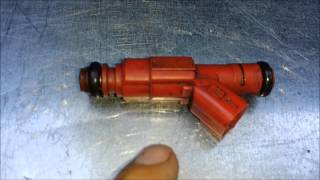
Est. part cost: $50-$100 - Failed Cylinder 1 Fuel Injector 🟡 Medium Probability → Shop Fuel Injector Injectors can fail over time due to internal coil windings breaking or shorting out.
How to confirm: If the wiring and signal are confirmed good with a noid light, test the injector itself. Disconnect it and measure the resistance across its two terminals with a multimeter. A typical good injector for this truck should read between 10.8-15.7 ohms, depending on the year. A reading of infinity (OL) indicates an open coil, while a reading near zero indicates a short. The most definitive test is to swap the cylinder 1 injector with an adjacent one (like cylinder 3). Clear the codes. If the code returns as P0203, the injector is faulty. If P0201 returns, the problem is in the wiring or PCM.
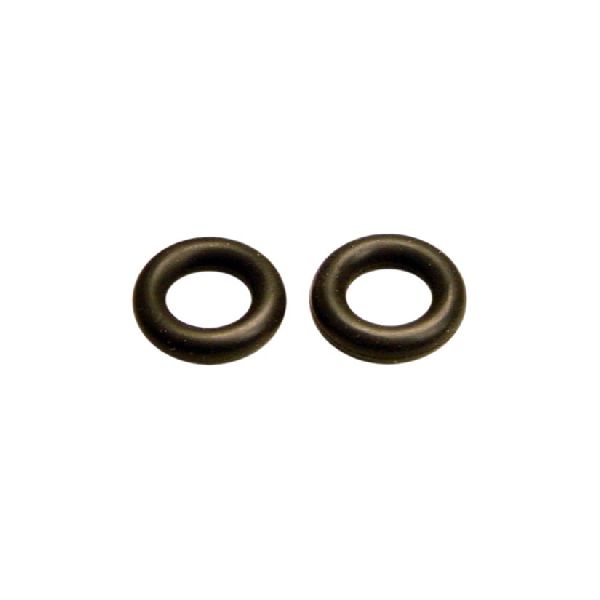
Typical fix: Replace the faulty fuel injector. It is often recommended to replace the O-rings on adjacent injectors that are removed for access.
Est. part cost: $40-$90 - Corroded or Loose Electrical Connector ⚪ Low Probability The connector at the injector or the main pass-through connector at the valve cover can accumulate dirt and oil, or the locking tab can break, leading to a poor connection.
How to confirm: Visually inspect the connector at the fuel injector and where the harness connects to the main engine harness. Look for green or white corrosion, bent pins, or a loose fit. One owner on DodgeForum.com found the code was caused by a connector that was pushed on but not fully snapped into place after a spark plug change.
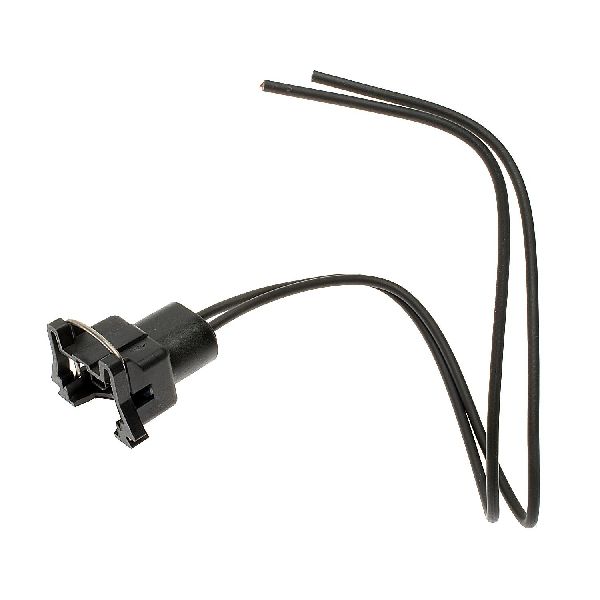
Typical fix: Clean the connector terminals with an electrical contact cleaner and apply dielectric grease to prevent future corrosion. If the connector or its pins are damaged, replace the pigtail connector.
Est. part cost: $5-$20
Rare But Worth Checking
- Faulty Powertrain Control Module (PCM): → Shop Engine Control Module (ECM) This is the least likely cause. The internal driver circuit for the injector within the PCM can fail, but you must exhaustively rule out all wiring, connectors, and the injector itself before condemning the PCM. Misdiagnosing a PCM is a costly mistake.
Diagnosis Steps
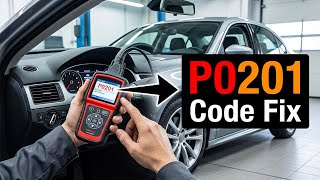
- Verify P0201 is the active code 🎬 Watch: How to diagnose and fix a P0201 injector circuit code. using an OBD-II scanner. Note any other codes, especially P0301.
- Visually inspect the wiring harness leading to the cylinder 1 injector. Check for obvious damage like burns, chafing, or loose connections. Ensure the connector is fully seated and locked.
- Disconnect the electrical connector from the cylinder 1 injector. Attach a noid light to the connector.
- Have a helper crank or start the engine. A properly flashing noid light indicates the PCM and wiring to the connector are good, pointing to a bad injector. No light or a steady light indicates a problem in the wiring or PCM.
- Crucial Step for Magnum Engines: Based on TSB 18-024-03, carefully inspect and wiggle the main wiring harness where it connects at the valve cover. If the noid light flickers or changes behavior, the fault is almost certainly in the valve cover's internal harness.
- If the noid light test points to a wiring issue, disconnect the battery and the connectors at the PCM and valve cover. Use a multimeter on the continuity setting to test the injector control wire from the PCM connector pin to the valve cover connector pin, and then from the other side of the valve cover connector to the injector connector pin. This will isolate the break.
- If the noid light flashes correctly, test the injector. Turn the ignition off and disconnect the injector. Measure its resistance with a multimeter. For 1998-2000 models, expect 10.8-13.2 Ohms; for earlier models, 13.3-15.7 Ohms is typical. An out-of-spec reading means the injector is bad.
- As a final confirmation, swap the cylinder 1 injector with another cylinder (e.g., cylinder 3). If the code moves to P0203, you have a confirmed bad injector. If P0201 returns, the fault is definitively in the wiring.
- Only consider replacing the PCM if all wiring and components have been tested and proven to be good.
Parts You'll Likely Need
- Valve Cover Gasket with Integrated Injector Harness
(OEM #56027067AC (This is a common Mopar part number, but always verify with VIN. Replaces earlier versions.))— This is the most common failure point for a P0201 code on this platform, as documented by Dodge TSB 18-024-03. The harness degrades from heat and oil, causing an open circuit.
Trusted brands: Mopar, Fel-Pro (Part #VS50522R is a popular, high-quality aftermarket option), Dorman
OEM price range: $80-$120
Aftermarket price range: $50-$90 - Fuel Injector
(OEM #53030778 (For 5.2L/5.9L, but verify with VIN))— If the wiring harness and circuit are confirmed to be good, the injector itself is the next most likely component to have failed.
Trusted brands: Bosch, Standard Motor Products (SMP), Mopar
OEM price range: $70-$110
Aftermarket price range: $40-$80
Related Codes That Often Appear With This One
- P0301 — P0301 means 'Cylinder 1 Misfire Detected'. This code is a direct result of P0201, as the injector circuit failure prevents fuel from being delivered to cylinder 1, causing it to misfire. It is extremely common to see both codes together.
Technical Service Bulletins (TSBs) & Recalls
- Bulletin #18-024-03: Advises technicians to inspect the wiring loom and connector in the valve cover gasket before replacing fuel injectors for codes P0201 through P0208 on 1997-2003 trucks with 5.2L and 5.9L gasoline engines.
- Bulletin #9002688: This appears to be an internal NHTSA reference ID for a summary of the TSB, not the official Dodge bulletin number.
Platform-Specific Known Issues
- TSB 18-024-03 (supercedes previous versions) explicitly calls out the injector wiring loom inside the valve cover gasket as a primary cause for P0201-P0208 codes on Magnum engines. It advises checking this component before replacing any fuel injectors, as heat and oil contamination lead to wiring failure.
Mechanic-Grade Diagnostic Values
- Fuel Injector Coil Resistance (1998-2000 5.2L/5.9L) — expected: 10.8 - 13.2 Ohms. Failure: A reading of infinity (OL) indicates an open coil; near zero indicates a short.
- Fuel Injector Coil Resistance (pre-1998 5.2L/5.9L) — expected: 13.3 - 15.7 Ohms. Failure: A reading of infinity (OL) indicates an open coil; near zero indicates a short.
- Fuel Pressure (Key On, Engine Off) — expected: 44 - 54 PSI. Failure: Pressure below this range can indicate a weak fuel pump or clogged filter, though it typically would not cause a single injector circuit code.
- Injector Circuit Resistance (at PCM) — expected: Less than 5.0 Ohms. Failure: Resistance above 5.0 Ohms points to high resistance or an open in the wiring between the PCM and the injector.
- Injector Inductive Spike — expected: Approx. 50 volts. Failure: If the PCM does not detect this voltage spike after de-energizing the injector, it will set the P0201 code.
Scan Tool Commands That Help
- DRB III or equivalent professional scan tool: Injector Kill / Actuation Test — This bidirectional command allows a technician to individually disable or fire a specific injector while the engine is running. If killing cylinder 1 has no effect on the engine's idle, it confirms that cylinder is not contributing. If the injector can be activated via the scan tool but doesn't fire when running normally, it points towards a PCM driver issue or intermittent wiring fault.
Wiring & Ground Locations
- Engine Block Ground — A large 2/0 gauge black wire from the negative battery terminal connects to the left front of the engine block.. A poor main engine ground can cause a host of bizarre electrical issues, including erratic sensor and actuator behavior. While not a direct cause of a single injector code, it should be confirmed clean and tight.
- Body/Chassis Ground — A 10-gauge black wire from the negative battery terminal connects to the body above the driver's side headlight.. This is a primary ground point for the chassis and many electrical components. Corrosion here can create floating grounds and unpredictable electrical problems.
- Firewall/Wiper Motor Ground — A ground conductor is located at the rear of the windshield wiper motor on the firewall.. This ground is for various cab and engine bay components. A user on a forum noted that forgetting to connect grounds near the steering column caused gauge and light issues, demonstrating the importance of these secondary grounds.
- PCM Connector C1 — This is one of the main connectors on the Powertrain Control Module (PCM).. The control circuit for the fuel injector runs from a specific pin on this connector to the injector. Testing for continuity and shorts must be done at this connector to rule out a PCM or wiring harness issue.
Real Owner Repair Stories
- DodgeForum.com user 'kap258' (2000 Dodge Durango 4.7L V8) — Intermittent rough running with codes P0201 and P0205. The issue would sometimes clear up on its own while driving.
❌ Tried (didn't work) Reseating the injector connector (temporary fix), Tune-up with new plugs and air filter.
✅ What actually fixed it Another user in the thread with a similar issue reported that replacing both the camshaft and crankshaft position sensors resolved the problem and the truck ran great afterward. This suggests that erratic cam/crank signals can sometimes be misinterpreted by the PCM as an injector circuit fault. - DodgeForum.com user 'Idahodakota' (2001 Dodge Dakota 4.7L V8) — Truck sputtered and died, would not restart. Pulled all injector codes from P0201 through P0208.
❌ Tried (didn't work) Replaced Throttle Position Sensor (TPS), Replaced fuel pump.
✅ What actually fixed it The thread ended without a definitive confirmed fix from the original poster, but another user with the exact same symptoms (stalled, no start, all injector codes) chimed in to say they had just replaced the cam sensor with no luck, pointing towards a more complex wiring or PCM issue when all injectors fail simultaneously. This highlights that when ALL injector codes are present, the cause is likely a common power or ground issue, or the PCM itself.
OEM Part Supersession History
4669938→04669938AB, 53030778, RL669938AB— Standard part revisions and updates by the manufacturer over time.
Heads up: Bosch aftermarket part number 0280155784 is listed as a compatible 4-hole nozzle upgrade for the stock injector, potentially improving fuel atomization.
Model Year Variations Within This Range
- 2002-2003 (4.7L V8): A transition from the JTEC (Jeep/Truck Engine Controller) to the NGC (Next Generation Controller) PCM occurred. JTEC systems have 3 plugs on the PCM, while NGC systems have 4. This change affects the entire engine management system, including the crank and cam tone wheels (16-tooth for JTEC, 32-tooth for NGC), wiring harnesses, and sensor compatibility. An engine swap between these systems requires swapping the tone wheels and using the correct harness and PCM.
- 1998-2000 vs. earlier: The specified resistance for the stock fuel injectors changed. 1998-2000 5.9L engines require an injector with 10.8-13.2 Ohms of resistance, while pre-1998 models used injectors with 13.3-15.7 Ohms. Using the wrong injector could affect fuel delivery and performance.
Helpful Videos
We Have This Part in Stock


The information in this article is provided for general reference and educational purposes only. Vehicle specifications, procedures, and part compatibility can vary by production date, trim level, and region. Always consult your vehicle's factory service manual and verify part numbers before purchasing or performing repairs. Safety-critical components such as airbags, seat belts, and braking systems should be installed by a qualified professional.
- Dodge RAM 1500:
- 🧭 Diagnostic Flowchart
- 🎬 Helpful Videos
- 🛍️ Shop This Part
- What's Unique About the 1998-2003 Dodge RAM 1500
- Symptoms You May Notice
- Most Likely Causes
- Rare But Worth Checking
- Diagnosis Steps
- Parts You'll Likely Need
- Related Codes That Often Appear With This One
- Technical Service Bulletins (TSBs) & Recalls
- Platform-Specific Known Issues
- Mechanic-Grade Diagnostic Values
- Scan Tool Commands That Help
- Wiring & Ground Locations
- Real Owner Repair Stories
- OEM Part Supersession History
- Model Year Variations Within This Range
- 🎟️ Get 5% Off