

P0201 on 1998-2005 Dodge RAM 2500: Injector Circuit Malfunction Causes and Fixes
On a 1998-2005 Dodge RAM 2500 with the 5.9L Cummins, P0201 is most often caused by a faulty wiring harness under the valve cover or a bad connection at the injector. Before replacing the expensive injector, thoroughly inspect the wiring and connectors, as this is a very common and cheaper fix. The injector solenoid itself can also fail, which can be tested with a multimeter.
- P0201 on a 1998-2005 Ram 2500 with a 5.9L Cummins points to an electrical issue in the cylinder 1 injector circuit.
- Before buying a new injector, ALWAYS inspect the wiring harness under the valve cover first. This is a known weak point confirmed by a TSB and is a cheaper, more likely fix.
- Symptoms will be immediate and obvious: a rough idle, engine shaking, and a major loss of power.
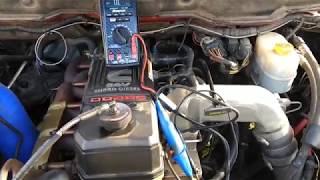
- You can test the injector itself with a multimeter; a resistance reading of less than 1 ohm is good, while an open circuit means the injector is bad.
- If you must drive, do so for a very limited time. Continued driving with a misfiring cylinder can cause further engine damage.
What's Unique About the 1998-2005 Dodge RAM 2500
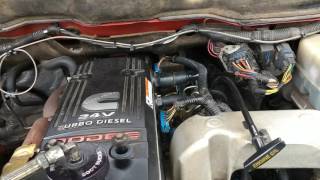
On the 5.9L Cummins engine found in this generation of Ram trucks, the injector wiring is a known weak point. The wiring harness passes through the valve cover gasket to reach the injectors, and years of intense heat and vibration can cause the wires to become brittle, crack, or short out. This is so common that Dodge issued a Technical Service Bulletin (TSB #9002688) advising technicians to check this specific wiring loom before condemning the fuel injector itself. This makes a wiring issue a higher-probability cause on these trucks compared to others. Forum users frequently cite this under-cover harness as the culprit for P0201-P0206 codes.
Diagnostic Flowchart
Tap your situation to follow the diagnostic path that matches what you're seeing on this vehicle.
Generation note: The 1998-2005 model years span the end of the 2nd Generation (1998.5-2002) and the beginning of the 3rd Generation (2003-2005) Ram. While both generations used a 5.9L Cummins, the engine received a significant update to a high-pressure common-rail fuel system in 2003. However, the underlying cause for P0201—often related to the injector wiring harness under the valve cover—is a common issue on both variants within this year range. The diagnostic procedure for the injector itself and the wiring remains very similar.
Symptoms You May Notice
- Check Engine Light is on
- Rough, shaking, or uneven idle
- Significant loss of power and poor acceleration
- Engine misfire or stumbling
- Increased fuel consumption
- Hard starting condition
- White smoke from exhaust, indicating unburnt fuel
- Replacing the fuel injector before checking the wiring. Given the TSB and common owner experiences, the wiring harness under the valve cover is a more frequent culprit and a much cheaper part to replace.
Most Likely Causes
- Faulty Injector Wiring Harness / Valve Cover Pass-Through Connector 🔴 High Probability → Shop Engine Wiring Harness As documented in TSB #9002688, the wiring harness that runs under the valve cover is a known failure point. Constant exposure to engine heat and vibration causes the wires and connectors to degrade, leading to open or short circuits. This is the most discussed failure point in owner forums.
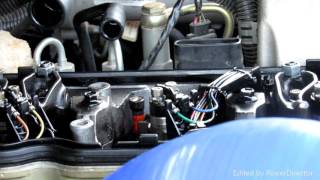
How to confirm: Remove the valve cover and visually inspect the wiring harness leading to injector #1 for signs of brittle insulation, cracks, breaks, or oil saturation. Check the pass-through connector where the harness goes through the valve cover gasket for damage or loose pins. Test continuity of the injector circuit wires from the injector connector back to the main engine harness connector. 🎬 Watch: Step-by-step diagnostic procedure for the P0201 circuit A popular DIY test is the "ice pick trick," where a sharp probe is used to carefully test for continuity at the back of the connector pins.
Typical fix: Replace the valve cover pass-through wiring harness. This part often integrates with the valve cover gasket. 🎬 See how to replace the valve cover gasket and harness
Est. part cost: $50-$150 - Failed Cylinder 1 Fuel Injector 🟡 Medium Probability → Shop Fuel Injector High-pressure common-rail injectors operate under extreme stress. The internal solenoid coil, which actuates the injector, can fail over time, creating an open or shorted circuit.
How to confirm: Disconnect the injector's electrical connector and measure the resistance across its two pins with a multimeter. The resistance should be very low, typically between 0 and 1 ohm. An infinite reading (Open Line) means the injector's internal coil has failed. A definitive test is to swap the #1 injector with the #2 injector; if the code changes to P0202, the injector is confirmed bad.
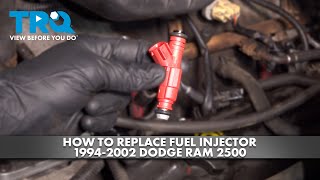
Typical fix: Replace the failed fuel injector. It is often recommended to replace the high-pressure connector tube 🎬 Watch: How to replace a fuel injector on 24v engines at the same time.
Est. part cost: $250-$500 - Poor Connection at Injector or PCM ⚪ Low Probability Vibrations from the diesel engine can sometimes cause electrical connectors to loosen or the terminal pins within them to back out over time. The nuts on the injector solenoid studs can also become loose.
How to confirm: Disconnect and inspect the electrical connector at the #1 fuel injector and the corresponding connectors at the Powertrain Control Module (PCM). Look for any signs of corrosion, pushed-out pins, or a loose fit. Check that the nuts on the injector studs are tight (torque spec is very low, around 8.8 in-lbs). Apply a small amount of dielectric grease and ensure a snug reconnection.
Typical fix: Clean the connector terminals and ensure a secure connection. If the connector housing or terminals are damaged, they may need to be repaired or replaced.
Est. part cost: $5-$50
Rare But Worth Checking
- Faulty Powertrain Control Module (PCM): → Shop Engine Control Module (ECM) This is the least likely cause. The PCM's internal driver for the injector circuit can fail, but all other possibilities, especially wiring and the injector itself, should be exhaustively ruled out before considering PCM replacement. This is typically only suspected if codes for an entire bank of injectors (e.g., P0201, P0202, P0203) appear simultaneously and cannot be traced to a wiring short.
- Blown Fuel Injector Fuse: → Shop Fuel Injector Though less common for a single injector code, a short circuit in one injector's wiring can potentially blow a fuse that powers multiple injectors, leading to several codes at once. Always check the fuse box before extensive wiring repairs.
Diagnosis Steps
- Read the code with an OBD-II scanner and note any other codes present, especially P0301 or other P020x codes.
- Visually inspect the main engine wiring harness leading to the valve cover for any obvious signs of damage, chafing, or melting.
- Disconnect the electrical connector for fuel injector #1. Inspect the connector and pins for corrosion or damage.
- Test the fuel injector: Measure the resistance between the two pins on the injector itself. It should be very low, between 0 and 1 ohm. An infinite reading (OL) means the injector is open and needs replacement.
- The Swap Test (Definitive Injector Test): If you suspect the injector, swap it with an adjacent one (e.g., move injector #1 to cylinder #2's position). Clear the codes and run the engine. If the code changes to P0202, the injector is faulty. If P0201 returns, the problem is in the wiring or PCM.
- If the injector tests good, the next step is to inspect the internal harness. Remove the valve cover.
- Carefully inspect the wiring harness that connects to all injectors, paying close attention to the section for cylinder #1. Look for brittle, cracked, or broken wires, especially where they might rub against engine components.
- Test the continuity of the two wires for injector #1 from the injector connector back to the main pass-through connector on the valve cover gasket. Resistance should be less than 1 ohm.
- If the internal harness is damaged, replace it. This part is often sold with a new valve cover gasket.
- If both the injector and internal harness are good, the issue may be in the external harness between the valve cover and the PCM, or, rarely, the PCM itself.
Parts You'll Likely Need
- Valve Cover Gasket with Injector Wiring Harness
(OEM #5367847 (Cummins), 5179091AD (Mopar))— This is the most common point of failure for a P0201 code on this platform, as noted in TSB #9002688. The integrated wiring becomes brittle and fails from heat and vibration.
Trusted brands: Mopar, Cummins, MAHLE, Dorman
OEM price range: $100-$180
Aftermarket price range: $50-$120 - Fuel Injector
(OEM #1998.5-2002 (24v): 0432193630 (Auto), 0432193629 (Manual) | 2003-2004.5 (Common Rail): 0986435503 (Bosch Reman), R8004082AC (Mopar))— If the injector's internal coil has failed (tested as an open circuit), it must be replaced. This is the second most likely cause after wiring.
Trusted brands: Bosch, Mopar, Industrial Injection
OEM price range: $400-$550
Aftermarket price range: $250-$400
Related Codes That Often Appear With This One
- P0301 — P0301 indicates a misfire on cylinder 1. Since P0201 means the injector isn't firing correctly, a misfire is the direct result.
- P0202, P0203 — On some Cummins engine control systems, the injectors are grouped into banks (e.g., 1-3 and 4-6). A severe short in one injector circuit can cause the PCM to shut down the entire driver bank to protect itself, setting codes for all injectors in that group.
- P2146 — This code stands for 'Fuel Injector Group 'A' Supply Voltage Circuit/Open'. It often appears alongside P0201, P0202, and P0203, pointing to a fault in the shared power supply or ground circuit for the front bank of injectors, reinforcing the likelihood of a wiring harness issue.
Technical Service Bulletins (TSBs) & Recalls
- 9002688: Advises checking the wiring loom/connector in the valve cover gasket before replacing injectors for P0201-P0206 codes.
Platform-Specific Known Issues
- The TSB #9002688 specifically calls out the wiring loom and/or connector in the valve cover gasket as a primary root cause for P0201 through P0206 codes, advising against immediate injector replacement.
- A user on Dodge Diesel - Diesel Truck Resource Forums reported getting a P0201 code along with white smoke, with other users imm
Mechanic-Grade Diagnostic Values
- Fuel Injector Solenoid Resistance (2003-2005 Common Rail) — expected: Between 0 and 1 ohm.. Failure: An infinite reading (OL) indicates an open coil. A reading significantly higher than 1 ohm suggests a failing injector.
- Injector Circuit to Ground Resistance — expected: Greater than 10,000 ohms (10 kΩ).. Failure: A resistance value below 10 kΩ indicates a short to ground in the injector wiring or harness.
- Injector Circuit Voltage (Key On, Engine Off) — expected: Less than 1.0 Volt.. Failure: Voltage above 1.0V on the driver circuit at the ECM connector indicates a short to voltage in the wiring harness.
- Injector Solenoid Terminal Nut Torque — expected: 8.8 in-lbs (0.99 Nm).. Failure: This value is extremely low. Over-tightening can damage the injector solenoid, while under-tightening will cause a poor connection and an intermittent open circuit, leading to a P0201 code.
Scan Tool Commands That Help
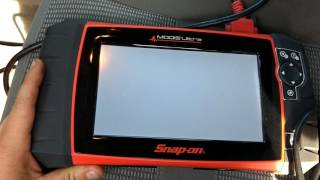
- DRB III, Witech, or equivalent professional scan tool (Snap-on, Autel): Injector Kill Test / Cylinder Contribution Test — This is a primary bidirectional test to confirm the effect of a P0201 code. The technician commands the scan tool to disable the #1 injector while the engine is idling. If there is no change in engine RPM or smoothness, it confirms that cylinder 1 was not contributing power, validating that a fault exists in that circuit.
Wiring & Ground Locations
- ECM Connector C1 (2003+) — The Engine Control Module (ECM) is located on the driver's side of the engine block. C1 is one of the main multi-pin connectors.. This connector contains the driver circuits for the injectors. For P0201, you would test the Injector 1 High and Low side driver circuits at the pins of this connector. For example, on some diagrams, this is circuit K11 (High) and K611 (Low). On others, it may be listed as K69 (Control Signal). Always verify with a model-year specific diagram.
- Valve Cover Pass-Through Connector — The large, multi-pin connector on the side of the valve cover where the main engine harness connects to the internal injector harness.. This is a major point of failure. It's the transition from the external to the internal harness and is a key place to perform continuity and resistance checks to isolate a wiring problem to either the engine harness or the under-cover harness.
- Engine Block Grounds — The main battery negative cable grounds to a large stud on the driver's side of the engine block. There is also a ground stud near the ECM with multiple ground wires attached that is critical for the engine electronics.. A poor engine ground can cause a floating voltage potential and create a wide range of electrical issues, including erratic behavior of the injector driver circuits in the ECM, potentially triggering false codes.
- Body and Frame Grounds — A ground wire runs from the negative battery terminal to the body sheet metal near the driver's side headlight. Another wire grounds the battery to the frame, typically on the side of the frame rail in front of the driver's side wheel.. While less direct, poor body or frame grounds can contribute to overall electrical system instability. Ensuring all main grounds are clean and secure is a foundational step in diagnosing any electrical fault.
Real Owner Repair Stories
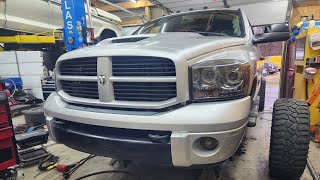
- YouTube channel 'ScannerDanner' (2007 Dodge Ram 5.9L Cummins) — Check engine light with code P0201, engine misfire.
❌ Tried (didn't work) The vehicle had a new valve cover gasket/harness already installed, suggesting a previous repair attempt did not fix the issue.
✅ What actually fixed it The technician performed a resistance test directly at the injector #1 connector pins. A known good injector (#3) measured ~0.3 ohms (after accounting for meter lead resistance). The faulty injector #1 measured over 40 ohms, indicating an internal failure of the injector's solenoid coil. The injector itself was the confirmed point of failure and required replacement. - Dodge Diesel - Diesel Truck Resource Forums (3rd Gen 5.9L Cummins) — P0201 code and white smoke from the exhaust.
❌ Tried (didn't work) User was asking for initial advice before starting work.
✅ What actually fixed it The consensus from senior forum members was that the cause was either a bad injector or a wiring issue, and the first step was to use a DVOM (Digital Volt-Ohm Meter) to test the injector resistance and wiring continuity, following the factory service manual procedure. This reinforces the standard diagnostic path.
OEM Part Supersession History
5179091AA, 5179091AB, 5179091AC→5179091AD— Standard part revision and improvement by the manufacturer.
Heads up: The newest part number (5179091AD) is the correct service replacement for all previous versions and fits the 5.9L common rail engines in this range.
Model Year Variations Within This Range
- 2003-2005 (Common Rail): There was a significant mid-generation change in 2004.5. The 2003-2004 injectors have nozzles with 8 holes and a wider spray angle designed for a specific piston bowl shape. The 2004.5-2007 injectors have nozzles with 5 holes and a narrower spray angle to match a redesigned piston bowl. While the injector bodies are physically interchangeable, installing the wrong year injector will cause incorrect fuel spray, leading to poor performance, smoke, and potential engine damage.
- 2003-2005: The ECM and engine wiring harness have subtle but important differences between model years. For example, the circuit used to control the fuel lift pump relay is on pin 45 of the 60-pin connector for 2003-2004 models, but on pin 7 of the 50-pin connector for 2005 models. This highlights the need to use a wiring diagram specific to the exact model year when diagnosing circuit issues at the ECM.
Helpful Videos

We Have This Part in Stock



The information in this article is provided for general reference and educational purposes only. Vehicle specifications, procedures, and part compatibility can vary by production date, trim level, and region. Always consult your vehicle's factory service manual and verify part numbers before purchasing or performing repairs. Safety-critical components such as airbags, seat belts, and braking systems should be installed by a qualified professional.
- Dodge RAM 2500:
- 🧭 Diagnostic Flowchart
- 🎬 Helpful Videos
- 🛍️ Shop This Part
- What's Unique About the 1998-2005 Dodge RAM 2500
- Symptoms You May Notice
- Most Likely Causes
- Rare But Worth Checking
- Diagnosis Steps
- Parts You'll Likely Need
- Related Codes That Often Appear With This One
- Technical Service Bulletins (TSBs) & Recalls
- Platform-Specific Known Issues
- Mechanic-Grade Diagnostic Values
- Scan Tool Commands That Help
- Wiring & Ground Locations
- Real Owner Repair Stories
- OEM Part Supersession History
- Model Year Variations Within This Range
- 🎟️ Get 5% Off