

P0201 on 2007-2014 Ford Edge 3.5L: Injector Circuit Malfunction Causes and Fixes
P0201 on a Ford Edge 3.5L V6 indicates an electrical fault in the cylinder 1 fuel injector circuit. The most likely cause is a failed fuel injector, followed by a wiring or connector issue. Cylinder 1 is on the rear bank against the firewall, requiring removal of the upper intake manifold for access. Expect to pay $50-$120 for a single injector and plan for a moderately difficult DIY repair.
- P0201 points to an electrical problem with the cylinder 1 fuel injector, not a spark or compression issue.
- The most likely culprit is a bad fuel injector, which can be confirmed by measuring its resistance or swapping it with another cylinder.
- Accessing cylinder 1 on the 3.5L V6 is difficult, as it's on the rear bank against the firewall and requires removing the upper intake manifold.
- Always replace the upper intake manifold gaskets when performing this repair.
- If replacing one high-mileage injector, it's best practice to replace all six to ensure balanced engine performance.
What's Unique About the 2007-2014 Ford Edge
On the Ford Edge with the transversely mounted 3.5L V6, the key challenge for this code is physical access. Cylinder 1 is located on the rear bank of the engine, up against the firewall. This means the upper intake manifold must be removed to access the injector, its connector, and wiring, making the diagnosis and repair more involved than for injectors on the front bank (cylinders 4, 5, 6). While there are no major recalls for this specific issue, the problem is a common point of failure as these vehicles age, and the intake removal adds several hours and required replacement gaskets to the job.
Generation note: The 2007-2014 model years cover the entire first generation of the Ford Edge. A significant facelift occurred in 2011, but the 3.5L V6 'Cyclone' engine and its port fuel injection system remained fundamentally the same. The information in this guide applies to all vehicles in this year range, as well as many other Ford and Lincoln models using this engine.
Symptoms You May Notice
- Check Engine Light is on (may be flashing)
- Rough, shaky, or vibrating idle
- Engine misfire, which may feel like a stumble or hesitation during acceleration.
- Noticeable loss of power and poor acceleration
- Poor fuel economy
- Strong smell of raw gasoline if the injector is stuck open or leaking externally
- Replacing the spark plug or ignition coil for cylinder 1. While these parts can cause a misfire (P0301), they will not cause an injector circuit code like P0201. 🎬 Watch: How to diagnose a misfire on the 3.5L engine. The P0201 code is specifically for an electrical fault in the fuel injector circuit, not a combustion failure.
Most Likely Causes
- Failed Cylinder 1 Fuel Injector 🔴 High Probability → Shop Fuel Injector The internal electronic coil of the injector can develop an open or short circuit over time due to millions of activation cycles, heat, and age. This is the most common failure mode for a P020x code.
How to confirm: After gaining access to the injector, measure its resistance with a multimeter. A good injector for the 3.5L V6 should read between 11 and 14 ohms. A reading of infinity (open circuit) or near zero (short circuit) confirms a failed injector. The most definitive test is to swap the cylinder 1 injector with another (e.g., cylinder 2). If the code changes to P0202, the injector is faulty.
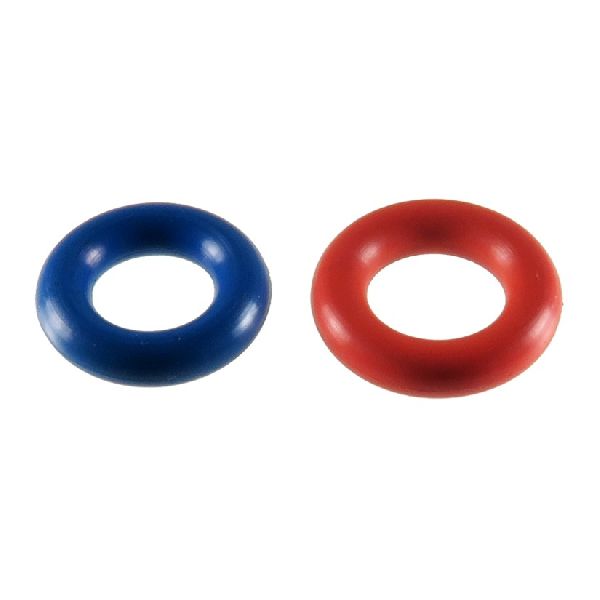
Typical fix: Replace the fuel injector. It is highly recommended to replace all three injectors on the same bank (or all six) as a set to ensure balanced fuel flow and prevent future failures, especially on vehicles with over 75,000 miles. Always lubricate new injector O-rings with clean engine oil before installation.
Est. part cost: $40-$120 for a single Motorcraft or Bosch injector, $250-$600 for a set of six. - Wiring Harness or Connector Fault 🟡 Medium Probability The injector wiring harness is routed in a hot, vibration-prone environment. Wires can chafe against the engine block, brackets, or other components, leading to an open or short circuit. The injector connector's locking tab can become brittle and break, leading to a poor connection.
How to confirm: Visually inspect the wiring going to the cylinder 1 injector for any signs of melting, chafing, or exposed copper. Check that the connector is securely plugged in and the lock is engaged. Use a noid light at the injector connector; 🎬 Watch: How to test an injector circuit with a noid light. it should flash steadily when the engine is cranked. If there is no flash, check for 12V power on one pin (Key On Engine Off) and then check continuity of the ground/signal wire back to the PCM.
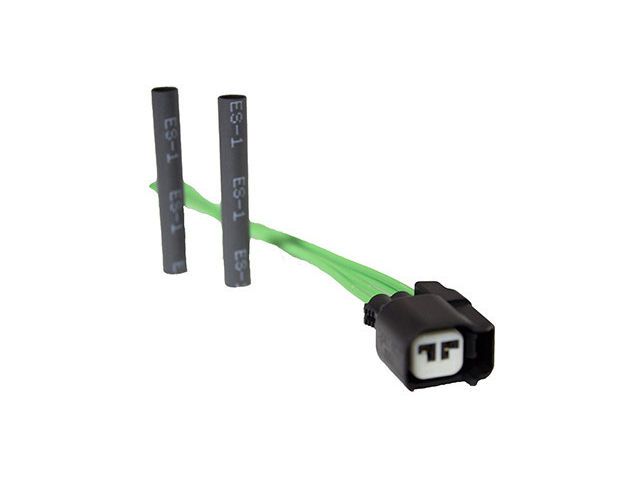
Typical fix: If the connector is damaged, replace it with a new pigtail connector (e.g., Motorcraft WPT-1051). If a wire is broken or chafed, repair the section using a weatherproof butt connector or by soldering and sealing with heat shrink tubing.
Est. part cost: $15-$35 for a connector pigtail. - Faulty Powertrain Control Module (PCM) ⚪ Low Probability → Shop Engine Control Module (ECM) While less common, the injector driver circuit within the PCM can fail. This is typically a result of a shorted injector or wiring harness sending excessive voltage back to the PCM, damaging the internal driver.
How to confirm: This is a last resort after the injector and wiring have been confirmed to be good. If a noid light shows no pulse at the connector, and the wiring shows good continuity with no shorts to power or ground, the PCM is the likely culprit. This diagnosis is best left to a professional with advanced diagnostic tools.
Typical fix: The PCM must be repaired by a specialist or replaced. A replacement PCM requires programming to the vehicle's VIN and security system (PATS).
Est. part cost: $200-$600 for a remanufactured PCM plus programming and labor costs.
Diagnosis Steps
- Safety First: Before starting any work, relieve the fuel system pressure. This can be done by pulling the fuel pump fuse or relay and running the engine until it stalls. Disconnect the negative battery terminal.
- Confirm the cylinder numbering. On the 3.5L Edge, Bank 1 (cylinders 1-2-3) is against the firewall. Bank 2 (cylinders 4-5-6) is at the front by the radiator. Cylinder 1 is on the passenger side of the rear bank.
- To access the rear injectors, the upper intake manifold must be removed. This involves disconnecting the air intake tube, throttle body, various vacuum lines, and electrical connectors. Be careful with plastic clips and hoses, which can be brittle. Always use new intake gaskets during reassembly. 🎬 See this walkthrough for replacing the rear bank fuel injectors.
- Once the manifold is off, visually inspect the wiring harness and connector for cylinder 1. Look for any obvious damage, corrosion, or loose connections. Check for potential chafing points where the harness may rub against the engine.
- Disconnect the injector and test its resistance with a multimeter set to ohms (Ω). It should be between 11 and 14 ohms. If it's near zero (shorted) or shows 'OL' (open), the injector has failed.
- While the connector is off, plug in a 'noid light'. Reconnect the battery, have a helper crank the engine, and watch the light. A steady, rhythmic flashing indicates the PCM and wiring are sending the signal correctly, pointing to a bad injector. No flash or a very weak flash points to a wiring or PCM issue.
- If the noid light doesn't flash, use a multimeter to check for battery voltage (12V) on one of the pins in the connector with the key in the 'On' position. If voltage is present, the issue is on the ground/signal wire or the PCM. If no voltage is present, there is an open in the power supply wire.
- If tests are inconclusive, the 'injector swap' is the most reliable DIY test. Swap the cylinder 1 injector with the cylinder 2 injector. Reassemble everything, clear the codes, and run the engine. If the code returns as P0202, the injector is confirmed bad. If P0201 returns, the problem is in the wiring or PCM.
Parts You'll Likely Need
- Fuel Injector
(OEM #Motorcraft CM-5165 (for 2007-2010 models), Motorcraft CM-5188 (for 2011-2014 models))— This is the most common failure point for a P0201 code, where the internal coil of the injector fails electrically.
Trusted brands: Motorcraft (OEM), Bosch, Standard Motor Products (SMP)
OEM price range: $90-$140
Aftermarket price range: $40-$90 - Upper Intake Manifold Gasket Set
(OEM #Motorcraft 7T4Z-9E436-A or Fel-Pro MS96684)— These are single-use, 'crush' style gaskets that must be replaced anytime the upper intake manifold is removed to access the fuel injectors on the rear bank.
Trusted brands: Motorcraft (OEM), Fel-Pro, Mahle
OEM price range: $25-$40
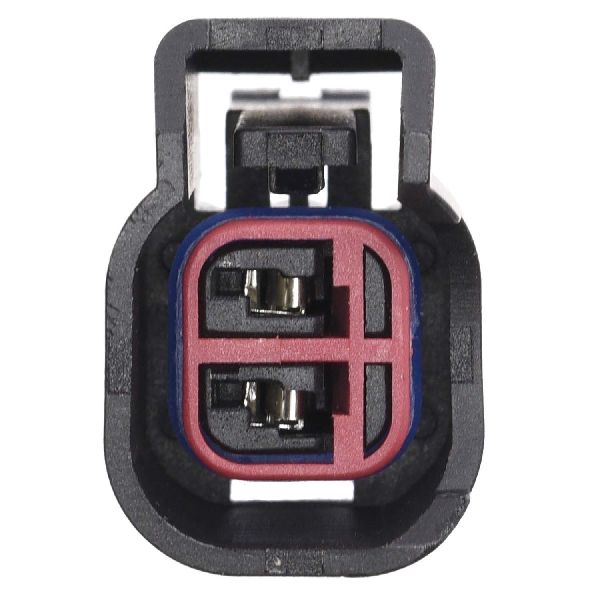
Aftermarket price range: $15-$30 - Fuel Injector Connector Pigtail
(OEM #Motorcraft WPT-1051)— Needed if the original connector's locking tab is broken, or if the connector or its wires are corroded or melted.
Trusted brands: Motorcraft, Dorman
OEM price range: $25-$40
Aftermarket price range: $10-$25
Related Codes That Often Appear With This One
- P0301 — P0301 means 'Cylinder 1 Misfire Detected'. Since a P0201 fault prevents the injector from delivering fuel, the cylinder cannot fire, which the PCM detects as a misfire. It is very common to see both codes together.
- P0171 — P0171 means 'System Too Lean (Bank 1)'. If the cylinder 1 injector isn't firing, that entire bank (the rear bank) will have too much unburnt oxygen in the exhaust. The upstream O2 sensor reports this as a lean condition.
Platform-Specific Known Issues
- Wiring Harness Chafing: On some Ford platforms with V-engines, the engine wiring harness can be routed tightly and may chafe against sharp edges on brackets (like the ECM/TCM bracket), the cylinder head, or the upper control arm. While performing the P0201 diagnosis, it is critical to carefully inspect the entire length of the injector sub-harness, especially where it bends around the back of the cylinder head to reach the rear bank.
Mechanic-Grade Diagnostic Values
- Fuel Injector Resistance — expected: 11-14 Ohms. Failure: A reading of infinity (Open Loop) or significantly outside the expected range indicates a failed injector coil.
- Injector Pulse Width (at idle) — expected: 0.8 ms to 2.5 ms. Failure: A pulse width on cylinder 1 that is zero or significantly different from the other cylinders points to a control or injector issue. Requires a scan tool with live data.
- Injector Connector Voltage (Key On, Engine Off) — expected: Greater than 10 Volts DC. Failure: Voltage below 10V or no voltage indicates an open circuit in the VPWR (Vehicle Power) wire from the PCM power relay.
Scan Tool Commands That Help
- Ford IDS (or equivalent professional scanner): Power Balance Test — This active test allows the technician to disable each cylinder one by one to observe the RPM drop. If disabling cylinder 1 causes no change in RPM, it confirms that the cylinder was not contributing in the first place. This is a powerful tool to verify the fault is active and isolated to cylinder 1 before disassembly.
- Ford IDS (or equivalent professional scanner): KOER (Key On, Engine Running) Self-Test — After a repair, running the KOER self-test is a quick way to verify that the PCM's circuit monitors are now passing and the fault has been rectified without waiting for a full drive cycle.
Wiring & Ground Locations
- Injector #1 Connector (C157) — On the fuel injector for cylinder 1, located on the rear bank (firewall side), passenger side of the engine. Requires upper intake manifold removal for access.. This is the primary connection point for testing. Pin 1 is the control (ground pulse) wire from the PCM. Pin 2 is the 12V+ power supply (VPWR) from the PCM Power Relay.
- PCM Connector C175B — This is one of the main connectors at the Powertrain Control Module (PCM), typically located in the engine bay near the firewall or battery.. The control wire for the cylinder 1 injector originates here. Specifically, Pin 48 (Yellow/Violet wire) is the injector #1 control signal (INJ1). Checking for continuity between this pin and Pin 1 of the injector connector can diagnose a broken wire.
- Known Chafe Point — A known issue on some Ford engines involves the injector wiring harness chafing near the alternator and the upper radiator cooling hose connection at the engine.. Vibrations can cause the harness insulation to wear through, shorting the injector control wire to ground or causing an open circuit. A TSB for a similar engine suggests inspecting this area and protecting the harness with convoluted tubing.
Real Owner Repair Stories
- Ford Edge Forum user 'Michael Walsh' (2008 Ford Edge SE 3.5L) — Check engine light on, rough running, and difficulty starting in cold weather. Codes P0201, P0301, and P0171 were present.
❌ Tried (didn't work) The user initially researched multiple possibilities including oxygen sensors, spark plugs, and the mass air flow sensor.
✅ What actually fixed it Another forum member advised that the P0201 (injector fault) would cause the other two codes (misfire and lean condition) and to start diagnosis with the fuel injector. The user confirmed the fix was replacing the cylinder 1 fuel injector.
OEM Part Supersession History
Motorcraft CM-5165→N/A— This is the specified injector for the 2007-2010 model year Ford Edge 3.5L.Motorcraft CM-5188→N/A— This is the specified injector for the 2011-2014 model year Ford Edge 3.5L, corresponding with the mid-cycle refresh.
Heads up: While they may appear physically similar, using the wrong part number for the model year can result in incorrect fuel flow rates and trigger fuel trim-related trouble codes. Always verify the part number for the specific vehicle year.
Model Year Variations Within This Range
- 2011-2014: The fuel injector part number changes from Motorcraft CM-5165 to CM-5188 starting with the 2011 model year refresh. While the core engine architecture is the same, there may be slight differences in the injector's flow characteristics or internal design to match PCM calibration updates for the facelifted models.
Diagnostic Flowchart
Real Owner Stories
Aggregated from forums and TSBs cited above. Mileages and costs reflect what owners reported in those sources.
2008 Ford Edge SE 3.5L V6
Symptoms: Experienced a check engine light with three simultaneous codes: P0171 (lean condition), P0201 (injector circuit), and P0301 (cylinder 1 misfire).
What fixed it: Identified the P0201 injector fault as the root cause; addressing the cylinder 1 injector resolved the misfire and lean codes.
Source hint: FordEdgeForum.com - Thread: '2008 Ford Edge SE, Error Code P0171, P0201, P0301'
Ford Edge 3.5L V6
Symptoms: Diagnosing a similar injector circuit code (P0204) and found no voltage at the injector connector.
What fixed it: Followed factory diagnostic steps to test the circuit and measure injector resistance, confirming the 11-18 ohms specification for the 3.5L engine.
Source hint: FordEdgeForum.com - Thread: 'Injector issue - 3.5L'
2007 Ford Edge 3.5L V6
Symptoms: Needed clarification on cylinder numbering to locate the correct injector for diagnosis.
What fixed it: Confirmed via the community that Bank 1 is on the firewall side and Cylinder 1 is closest to the passenger side.
Source hint: Reddit.com/r/Ford - Thread: '07 Ford edge firing order'
Related OBD-II Codes
Frequently Asked Questions
Where is cylinder 1 located on my 2007-2014 Ford Edge 3.5L?
What should the fuel injector resistance be when testing my 3.5L V6?
Do I need to replace all the fuel injectors if only cylinder 1 is throwing the P0201 code?
What replacement part do I need if the injector connector is broken?
Are there specific places the wiring harness chafes on the Ford Edge?
I have codes P0171 and P0301 along with P0201. Are they related?
Helpful Videos


We Have This Part in Stock



The information in this article is provided for general reference and educational purposes only. Vehicle specifications, procedures, and part compatibility can vary by production date, trim level, and region. Always consult your vehicle's factory service manual and verify part numbers before purchasing or performing repairs. Safety-critical components such as airbags, seat belts, and braking systems should be installed by a qualified professional.
- Ford Edge:
- 🧭 Diagnostic Flowchart
- 🎬 Helpful Videos
- 🛍️ Shop This Part
- What's Unique About the 2007-2014 Ford Edge
- Symptoms You May Notice
- Most Likely Causes
- Diagnosis Steps
- Parts You'll Likely Need
- Related Codes That Often Appear With This One
- Platform-Specific Known Issues
- Mechanic-Grade Diagnostic Values
- Scan Tool Commands That Help
- Wiring & Ground Locations
- Real Owner Repair Stories
- OEM Part Supersession History
- Model Year Variations Within This Range
- Real Owner Stories
- 2008 Ford Edge SE 3.5L V6
- Ford Edge 3.5L V6
- 2007 Ford Edge 3.5L V6
- Related OBD-II Codes
- Frequently Asked Questions
- 🎟️ Get 5% Off