

P0201 on 2010-2014 GMC Terrain: Injector Circuit Malfunction Causes and Fixes
P0201 on a 2010-2014 GMC Terrain indicates an electrical fault with the cylinder 1 fuel injector. The most common cause is a failed fuel injector, a known issue on these engines. A wiring harness issue is also a strong possibility. Expect to pay $50-$120 for a replacement injector.
- P0201 is an electrical circuit code for the cylinder 1 fuel injector, not a misfire code, though it will cause a misfire.
- The most likely cause on a 2010-2014 Terrain is a failed fuel injector, but wiring should be inspected carefully.
- A simple way to confirm a bad injector is to swap it with an adjacent cylinder and see if the trouble code follows the injector to the new cylinder.
- These vehicles use low-resistance GDI injectors; do not misdiagnose them as shorted based on resistance values from older port-injected cars.
What's Unique About the 2010-2014 Gmc TERRAIN
The 2010-2014 GMC Terrain, with either the 2.4L Ecotec or the 3.0L/3.6L V6, uses a direct injection (GDI) fuel system. These systems operate under very high pressure and the injectors are a known point of failure. Unlike older port injectors which have a resistance of 11-16 ohms, these GDI injectors have a much lower resistance, typically around 1.1 to 2.0 ohms. This can lead to misdiagnosis by technicians unfamiliar with GDI systems. While TSB #PIP4924D lists P0201 among many misfire-related codes, other bulletins for similar GM platforms specifically call out chafing wiring harnesses as a primary cause for injector circuit codes.
Diagnostic Flowchart
Tap your situation to follow the diagnostic path that matches what you're seeing on this vehicle.
Symptoms You May Notice
- Check Engine Light is on
- Rough or shaking idle
- Engine misfiring or stumbling
- Hesitation and loss of power during acceleration
- Reduced fuel economy
- Engine may stall 🎬 Watch: Diagnosing a rough idle and bad injector codes
- Replacing the spark plug or ignition coil for cylinder 1. While these parts can cause a misfire code (P0301), the P0201 code specifically indicates an electrical fault in the fuel injector's circuit, not the ignition system.
- Misdiagnosing a good GDI injector as bad. Technicians accustomed to older port injectors with 12-16 ohm resistance may see a 1.5-ohm reading on a V6 GDI injector and incorrectly assume it is shorted.
Most Likely Causes
- Faulty Cylinder 1 Fuel Injector 🔴 High Probability → Shop Fuel Injector Direct injectors on this platform are a widely documented failure point, leading to various fuel and misfire codes.
How to confirm: Swap the cylinder 1 injector with another cylinder (e.g., cylinder 2). If the code changes to P0202, the injector is confirmed bad. Alternatively, check the injector's internal resistance with a multimeter. For the 3.0L/3.6L V6 GDI injectors, the resistance should be very low, between 1.5 and 2.5 ohms. For the 2.4L GDI engine, the spec is typically higher, around 11-14 ohms. An open circuit (OL) or a reading significantly different from the other injectors indicates failure. A standard port injector reading (11-16 ohms) would be incorrect for the V6 engines.
Typical fix: Replace the failed fuel injector. 🎬 Watch: Step-by-step fuel injector replacement for GMC Terrain It is often recommended to replace all injectors as a set if they are original and have high mileage, as others may fail soon.
Est. part cost: $50-$120 - Wiring Harness or Connector Issue 🟡 Medium Probability GM has issued service bulletins for other models with similar engines regarding chafed wiring harnesses causing injector circuit codes. The harness can rub against brackets or other engine components, eventually breaking the wire or causing a short.
How to confirm: Visually inspect the wiring and connector at the cylinder 1 injector for corrosion, pushed-out pins, or physical damage like chafing. Trace the harness as far back as possible. Use a 'noid light' to verify the PCM is sending a pulse signal to the connector. If the noid light doesn't flash, the problem is in the wiring or PCM.
Typical fix: Repair the damaged section of the wire or replace the injector connector pigtail. Protect the repaired harness from future damage using convoluted tubing or by rerouting it.
Est. part cost: $15-$30 - Faulty Powertrain Control Module (PCM) ⚪ Low Probability → Shop Engine Control Module (ECM)
How to confirm: This is diagnosed by exclusion. If the injector and wiring have both been tested and are known to be good (i.e., the injector has correct resistance and the wiring has continuity with no shorts to ground or power), the injector driver circuit inside the PCM is the likely culprit.
Typical fix: Replace and reprogram the PCM.
Est. part cost: $300-$800
Diagnosis Steps
- Connect an OBD-II scanner to confirm P0201 is the primary code and check for other related codes like P0301.
- Identify Cylinder 1. On the 2.4L 4-cylinder, it is the cylinder on the passenger side. On the 3.0L/3.6L V6, it is the front-most cylinder on the firewall side (Bank 1).
- Visually inspect the electrical connector and wiring going to the cylinder 1 fuel injector. Look for any signs of corrosion, damage, or loose connections. Pay close attention to where the harness might rub against brackets or hoses, as noted in GM TSBs for similar platforms.
- Test for a pulse signal from the PCM using a noid light. Disconnect the injector connector and plug in the noid light. Start the engine. If the light flashes, the PCM and wiring are likely sending the signal correctly, pointing towards a bad injector. 🎬 See this guide on how to test and fix injectors
- If the noid light does not flash, test the injector resistance. Disconnect the injector and use a multimeter set to ohms. A good GDI injector for the V6 engine should read between 1.5 and 2.5 ohms. The 2.4L engine injector should read between 11 and 14 ohms. If it reads as an open loop (OL) or is significantly different from the other injectors, it has failed.
- The simplest confirmation test is to swap the cylinder 1 fuel injector with the cylinder 2 injector. Clear the codes, run the engine, and re-scan. If the code changes to P0202, the fuel injector is faulty and must be replaced.
- If the code P0201 returns after the swap, the problem is in the wiring or the PCM. Test the wiring harness for continuity from the injector connector to the PCM connector and check for shorts to ground or power.
- If the injector and wiring are confirmed to be good, the fault likely lies within the PCM's injector driver circuit.
Parts You'll Likely Need
- Direct Fuel Injector (2.4L L4)
(OEM #12633784, 12633789)— This is the most common failure point for a P0201 code on the 4-cylinder engine. Part numbers can supersede each other; always verify with VIN.
Trusted brands: ACDelco, Hitachi, Standard Motor Products
OEM price range: $70-$120
Aftermarket price range: $40-$90 - Direct Fuel Injector (3.0L/3.6L V6)
(OEM #12634126)— This is the most common failure point for a P0201 code on the V6 engine.
Trusted brands: ACDelco, Bosch, Delphi
OEM price range: $70-$120
Aftermarket price range: $50-$90
Related Codes That Often Appear With This One
- P0301 — P0301 means 'Cylinder 1 Misfire Detected'. Since the P0201 code indicates the injector isn't firing, a misfire on that same cylinder is a direct and expected consequence.
- P0300 — This code means 'Random/Multiple Cylinder Misfire'. It can appear alongside P0201 if the underlying electrical issue (like a bad ground or harness chafe) is intermittently affecting other cylinders or if the engine is running very poorly.
- P2146, P2149 — These codes relate to the injector group supply voltage (e.g., 'Fuel Injector Group A Supply Voltage Circuit/Open'). TSB PIP4924D mentions these codes in conjunction with individual injector circuit codes, suggesting a wiring harness issue could affect an entire bank of injectors.
Technical Service Bulletins (TSBs) & Recalls
- PIP4924D: Mentions that DTCs P0201-P0206 can be set in relation to a Service Engine Soon light and an engine misfire, indicating it's a recognized issue by the manufacturer.
- 22-NA-087 / 21-NA-149 / PIT5751: While for newer trucks, these TSBs show a history of GM identifying injector circuit codes (like P0201) being caused by wiring harness issues, establishing a pattern of what to look for.
Platform-Specific Known Issues
- High Rate of Injector Failure: Both the 2.4L and V6 engines in this generation of Terrain and its Chevy Equinox sibling are known for fuel injector problems that can cause misfires and set various codes, including P0201.
- Carbon Buildup (2.4L Engine): The 2.4L direct injection engine is susceptible to heavy carbon buildup on the intake valves. While this does not directly cause an electrical code like P0201, it frequently causes misfires (P0300) and can be discovered at the same time as a faulty injector.
- Wiring Harness Chafing: On similar GM platforms with related engines, the engine wiring harness has been known to chafe on brackets, particularly near the rear of the engine or near the ECM, causing shorts or open circuits that trigger injector codes.
Mechanic-Grade Diagnostic Values
- Fuel Injector Coil Resistance (3.0L/3.6L V6 GDI) — expected: 1.5 - 2.5 ohms. Failure: A reading near zero (short), infinity/OL (open), or a value significantly different from other injectors.
- Fuel Injector Coil Resistance (2.4L I4 GDI) — expected: 11 - 14 ohms. Failure: A reading near zero (short), infinity/OL (open), or a value significantly different from other injectors.
- Injector Power Wire Voltage (Key On, Engine Off) — expected: ~12 Volts (Battery Voltage). Failure: Voltage significantly below battery voltage points to high resistance in the power supply circuit or a fuse issue.
- Low-Side Fuel Pressure (Engine Idling) — expected: 345-690 kPa (50-100 psi). Failure: Pressure outside this range indicates a problem with the in-tank fuel pump module or its control circuit.
Scan Tool Commands That Help
- GDS2 (GM Dealer Software): Fuel Injector Balance Test — This command individually fires each injector while monitoring fuel rail pressure drop. It can help identify a mechanically faulty (clogged/leaking) injector that may not have a clear electrical fault, or confirm a flow issue after an electrical fix. A pressure drop for one injector that varies more than 20% from the average indicates a problem.
Wiring & Ground Locations
- G112 — On the 2.4L engine, it's at the lower left front of the engine. On the 3.0L V6, it's at the left rear of the engine.. This is a primary engine ground point used by the Engine Control Module (ECM) and various sensors. A poor connection here can cause erratic behavior and incorrect readings, potentially leading to false injector circuit codes.
- G105 — On the 2.4L engine, it's at the rear of the engine. On the 3.0L V6, it's at the left rear of the engine.. This is another critical engine ground. Verifying it is clean and tight is a key step in diagnosing any electrical fault on the engine, including injector circuits.
- Injector Connector (X160 on 3.0L) — Directly on each fuel injector.. The control signal from the ECM for injector 1 ('Fuel inj 1 ctrl') terminates here. This is the primary point for testing with a noid light, checking for power, and measuring injector resistance. The connector itself or its terminals can corrode or break.
Real Owner Repair Stories
- GMTNation Forum User (GMC Envoy (similar GM platform and logic)) — Codes P0201, P0301, and P0300.
❌ Tried (didn't work) Swapped coils 1 and 3., Swapped spark plugs 1 and 2., Checked injector resistance (ohms were good)., Checked wiring harness for continuity and shorts all the way to the PCM (tested good)., Replaced the injector wiring harness as a precaution because it looked crispy.
✅ What actually fixed it The problem was ultimately solved by replacing the fuel injectors. The user noted that next time, they would swap the injectors between cylinders first to confirm the fault before replacing them.
OEM Part Supersession History
12633789→12633784— Part number consolidation and potential design update by the manufacturer.
Heads up: ACDelco part 12633784 is listed as the replacement for many 2.4L Ecotec engines in this timeframe. Always verify the correct part number with the vehicle's VIN before ordering.
Model Year Variations Within This Range
- 2010-2012 vs 2013-2014: For the 2013 model year, the optional V6 engine was changed from a 264-hp 3.0L (LF1) to a more powerful 301-hp 3.6L (LFX). While the P0201 diagnostic logic is the same, technicians should be aware of which V6 they are working on as some components may differ.
Helpful Videos
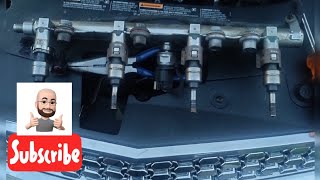
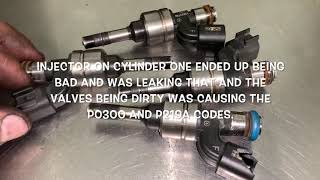
![Chevrolet Equinox Engine Rough Idle BAD INJECTOR [ P0201 P0202 P0203 P0300 ]](https://img.youtube.com/vi/ZmLJt6_r6Tc/mqdefault.jpg)
We Have This Part in Stock



The information in this article is provided for general reference and educational purposes only. Vehicle specifications, procedures, and part compatibility can vary by production date, trim level, and region. Always consult your vehicle's factory service manual and verify part numbers before purchasing or performing repairs. Safety-critical components such as airbags, seat belts, and braking systems should be installed by a qualified professional.
- Gmc TERRAIN:
- 🧭 Diagnostic Flowchart
- 🎬 Helpful Videos
- 🛍️ Shop This Part
- What's Unique About the 2010-2014 Gmc TERRAIN
- Symptoms You May Notice
- Most Likely Causes
- Diagnosis Steps
- Parts You'll Likely Need
- Related Codes That Often Appear With This One
- Technical Service Bulletins (TSBs) & Recalls
- Platform-Specific Known Issues
- Mechanic-Grade Diagnostic Values
- Scan Tool Commands That Help
- Wiring & Ground Locations
- Real Owner Repair Stories
- OEM Part Supersession History
- Model Year Variations Within This Range
- 🎟️ Get 5% Off