

P0201 on 2011-2015 Honda Civic: Injector Circuit Malfunction Causes and Fixes
This code means there is an electrical problem with the fuel injector in cylinder 1. The most common fix is replacing the faulty fuel injector itself. Expect to pay between $85-$125 for a single OEM injector and around 1-2 hours of labor. Before replacing, swap the injector with another cylinder to confirm it's the problem.
- P0201 on a 2011-2015 Civic points to an electrical fault with the cylinder 1 fuel injector.
- The most likely cause is a failed fuel injector, which can be confirmed by measuring its resistance or swapping it with another cylinder.
- This vehicle range spans two generations (2011 and 2012-2015) which use different engines and fuel injectors. Ensure you buy the correct part for your year and engine size.
- This is a DIY-friendly repair for those with basic tools, with a difficulty of 2 out of 5.
- Ignoring this code will lead to poor performance and can cause expensive damage to your catalytic converter over time.
What's Unique About the 2011-2015 Honda Civic
For the 2011-2015 Civic, this code is straightforward and almost always points to a problem with the injector itself or its wiring. There are no widespread, unique design flaws that make this platform prone to P0201. The key detail for this vehicle range is that it spans two different generations of the Civic (8th and 9th), which use different engines and, therefore, different fuel injectors. Verifying the correct part number for your specific model year and engine (1.8L R18A1/R18Z1, 2.0L K20Z3, or 2.4L K24Z7) is critical. The R18A1 (2011) and R18Z1 (2012-2015) engines are very similar, but the R18Z1 was tuned for better fuel economy.
Generation note: The 2011-2015 year range covers two generations of the Honda Civic: - 2011 (8th Generation): Primarily uses the 1.8L (R18A1) or 2.0L (K20Z3 for Si) engine. Fuel injectors are specific to this generation. - 2012-2015 (9th Generation): Uses an updated 1.8L (R18Z1) or a larger 2.4L (K24Z7 for Si) engine. These models use different fuel injectors than the 8th generation.
Symptoms You May Notice
- Check Engine Light is on
- Engine misfiring, which may feel like a shudder or stumble
- Rough or unstable idle
- Noticeable loss of power and poor acceleration
- Reduced fuel economy
- Engine may be difficult to start or may stall
- Replacing the spark plug or ignition coil for cylinder 1. While these parts can cause a misfire (P0301), they will not cause a P0201 code, which is specific to the injector's electrical circuit. P0201 points directly to an electrical fault in the injector circuit.
Most Likely Causes
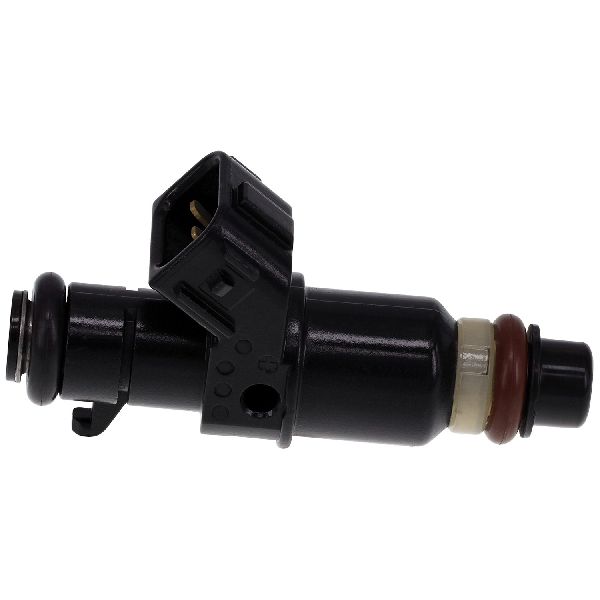
- Faulty Cylinder 1 Fuel Injector 🔴 High Probability → Shop Fuel Injector The internal coil windings of the injector can fail over time due to heat and vibration, creating an open or short circuit. This is the most common point of failure in the circuit for a P0201 code.
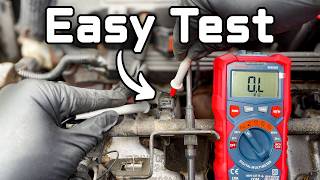
How to confirm: Measure the resistance across the two terminals of the injector using a multimeter. 🎬 Watch: A quick guide on testing fuel injectors with a multimeter. A good injector should read between approximately 9.78-10.82 Ohms according to Honda service data, though a general range of 10-13 Ohms is also cited. A reading of infinity (OL) indicates an open circuit. The most definitive DIY test is to swap the cylinder 1 injector with the cylinder 2 injector. Clear the codes and run the engine. If the code changes to P0202, the injector is confirmed to be bad. If P0201 returns, the problem is in the wiring or PCM.
Typical fix: Replace the faulty fuel injector. It is often recommended to replace all four injectors at the same time for balanced performance and to prevent future failures, but it's not strictly necessary if only one has failed.
Est. part cost: $85-$125 for a single OEM injector. - Damaged Wiring or Connector 🟡 Medium Probability The wiring harness and plastic connectors in the engine bay are exposed to constant heat and vibration, which can cause wires to break or insulation to become brittle and crack over time. Corrosion can also form on the connector pins, leading to a poor connection.
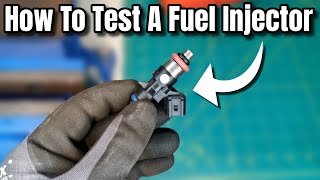
How to confirm: Visually inspect the wiring going to the cylinder 1 injector for any signs of cracking, melting, or breaks. Unplug the connector and check for corrosion or bent/loose pins. A 'noid light' can be plugged into the injector connector to verify if the electrical pulse from the PCM is reaching it; the light should flash while the engine is cranking or running. 🎬 See these 5 simple DIY methods for testing your fuel injectors. If the noid light doesn't flash, it confirms a problem in the wiring or the PCM.
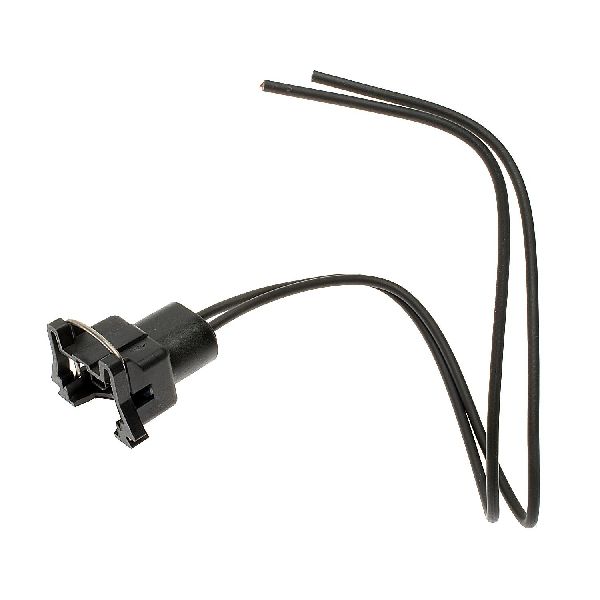
Typical fix: Repair the broken section of wire or replace the damaged connector pigtail. Ensure any repairs are properly soldered and sealed with heat-shrink tubing to prevent future moisture intrusion.
Est. part cost: $10-$30 for a new connector pigtail.
Rare But Worth Checking
- Powertrain Control Module (PCM) Fault: → Shop Engine Control Module (ECM) This is very rare. The internal driver circuit in the PCM that controls the injector can fail. Before condemning the PCM, all other possibilities (injector, wiring) must be exhaustively ruled out. A PCM fault should only be considered after confirming the injector is good (via swap test) and the wiring has perfect continuity from the PCM connector to the injector connector. Swapping the PCM requires programming it to the vehicle.
Diagnosis Steps
- Read the code with an OBD-II scanner and confirm P0201 is present. Note any other codes, especially P0301.
- Visually inspect the wiring harness and connector for the cylinder 1 fuel injector (it's the first one from the left when facing the engine). Look for obvious damage, melting, rodent damage, or corrosion.
- Disconnect the electrical connector from the cylinder 1 injector. Turn the ignition to the 'ON' position (engine off). Use a multimeter to check for battery voltage at one of the pins on the connector side (typically a Yellow/Black wire on these models).
- Test the injector's resistance. With the connector still unplugged, set your multimeter to Ohms (Ω) and measure the resistance between the two pins on the fuel injector itself. The reading should be between approximately 9.78 and 10.82 Ohms. If it's out of spec or shows an open loop (OL), the injector is bad.
- (Recommended DIY step) If the resistance is good, swap the cylinder 1 injector with the cylinder 2 injector. Clear the codes and run the engine. If the code returns as P0202 (Cylinder 2 Injector Circuit Malfunction), the injector is faulty. If P0201 returns, the problem is in the wiring or PCM.
- If the injector is confirmed good but the problem persists, use a 'noid light' on the injector connector to verify if the PCM is sending a pulse signal. If the noid light flashes, the wiring is likely good and the issue might be an intermittent injector fault. If it does not flash, there is a wiring or PCM issue.
- If no pulse is detected, check for continuity on the signal wire (Brown wire for cylinder 1) between the injector connector and the PCM connector (Connector C, terminal 5 on some models). If there is no continuity, repair the open wire. If continuity is good, the fault is likely within the PCM, which is rare.
Parts You'll Likely Need
- Fuel Injector (2011 1.8L)
(OEM #16450-RNA-A01)— This is the most common failure point for a P0201 code on the 8th generation Civic with the 1.8L R18A1 engine.
Trusted brands: Honda (Genuine), Hitachi, Standard Motor Products
OEM price range: $85-$130
Aftermarket price range: $40-$70 - Fuel Injector (2012-2015 1.8L)
(OEM #16450-R2E-L01)— This is the most common failure point for a P0201 code on the 9th generation Civic with the 1.8L R18Z1 engine.
Trusted brands: Honda (Genuine), Bosch, Standard Motor Products
OEM price range: $90-$140
Aftermarket price range: $50-$80 - Fuel Injector (2012-2015 2.4L Si)
(OEM #16450-R40-Y01)— This is the most common failure point for a P0201 code on the 9th generation Civic Si with the 2.4L K24Z7 engine.
Trusted brands: Honda (Genuine), Keihin
OEM price range: $90-$125
Aftermarket price range: $40-$75
Related Codes That Often Appear With This One
- P0301 — P0301 means 'Cylinder 1 Misfire Detected.' Since P0201 indicates the cylinder 1 injector isn't firing correctly, that cylinder cannot combust fuel properly, which the PCM detects as a misfire. A P0201 fault will almost always cause a P0301. 🎬 Watch: How to diagnose and fix a Honda P0301 misfire code.
Platform-Specific Known Issues
- Real-World Repair Story: A user on a Honda forum with a 2012 Civic reported getting P0201 along with a P0301 misfire code. After verifying the wiring looked okay, they swapped the #1 and #2 fuel injectors. Upon clearing the codes and restarting the car, the code changed to P0202. This confirmed the injector was the culprit. They replaced the single faulty injector and resolved the issue.
Mechanic-Grade Diagnostic Values
- Fuel Injector Coil Resistance — expected: 9.78 - 10.82 Ω. Failure: A reading of infinity (OL) indicates an open circuit; a reading significantly outside this range indicates a faulty injector coil.
- Injector Connector Power Supply Voltage (Key On, Engine Off) — expected: Battery Voltage (~12V) on the YEL/BLK wire.. Failure: Low or no voltage indicates a problem with the PGM-FI main relay or the power supply wire.
- Wiring Continuity (Injector Connector to PCM) — expected: Less than 1.0 Ω. Failure: High resistance or an open circuit (OL) indicates a break in the wire that needs to be repaired.
Scan Tool Commands That Help
- Honda HDS (Honda Diagnostic System): INJECTOR TEST (in the INSPECTION MENU) — This is a bidirectional test that allows the technician to command each injector to operate individually. It's used to confirm if the PCM driver and wiring are capable of firing the injector after clearing the DTC. If the test runs and the code does not immediately return, it can point towards an intermittent connection or a failing injector.
Wiring & Ground Locations
- G101 — Bolted to the engine block or thermostat housing, near the upper radiator hose connection.. This is a primary ground point for the engine control system. While not directly in the injector circuit, a corroded or loose G101 ground can cause a host of intermittent electrical issues and voltage fluctuations, potentially leading to false codes or erratic component behavior. It's a common source of difficult-to-diagnose electrical problems on Hondas.
- PCM Connector C, Pin 5 — This is the specific pin on the Powertrain Control Module (PCM) that sends the ground pulse to the cylinder 1 fuel injector.. When diagnosing a wiring fault where a noid light doesn't flash, this is the final destination for a continuity test. The wire for cylinder 1 is typically Brown (BRN). Testing continuity between the injector connector and this pin definitively confirms if the control wire is intact.
Real Owner Repair Stories
- Honda-Tech Forum (2000 Honda Civic (similar engine architecture and grounding scheme)) — Cranks but no start, no Check Engine Light, no fuel pump prime.
❌ Tried (didn't work) Replacing main relay, Checking all fuses
✅ What actually fixed it The user found no continuity between the main relay and the G101 thermostat ground bolt. The wire in the harness had failed. Running a new ground wire from the main relay's ground circuit to a clean chassis ground point resolved the no-start and electrical issues. This highlights how a bad primary ground can mimic component failure.
Model Year Variations Within This Range
- 2011 vs 2012-2015: The 2011 model is the last year of the 8th generation, primarily using the R18A1 engine and part number 16450-RNA-A01 for the injector. The 2012-2015 models are the 9th generation, using the updated R18Z1 engine and a different injector, part number 16450-R2E-L01. The parts are not interchangeable.
Diagnostic Flowchart
Other Known Issues on This Vehicle
Issues unrelated to this code that are worth knowing about as an owner of this generation:
- VTC Actuator Rattle on Cold Start (K-series engines) 🟠 Medium — Common on K24Z7 engines (Si models). A loud rattle for ~2 seconds on a cold start after sitting for 6+ hours. (Ref: Honda TSB 09-010 (multiple revisions) addresses this by recommending replacement of the VTC actuator.)
- Cracked Engine Block (2011 models with R18 engine) 🔴 High — Affected some 2006-early 2009 Civics, with the 2011 model being largely outside the main problem years but still using a related R18 engine. The issue involves a coolant leak from a hairline crack in the block. By the 2011 model year, this was much less common, but worth noting for the 8th gen platform. (Ref: Honda issued a warranty extension (not a recall) for 10 years/unlimited miles for affected 2006-2009 models (TSB 10-048), which has since expired.)
- Prematurely Worn Rear Tires / Defective Rear Upper Control Arms 🟡 Low — More prevalent on the 8th generation (including 2011), causing uneven inner tire wear or 'cupping'. (Ref: Honda TSB 13-047 recommended installing a new rear upper control arm kit to correct suspension geometry.)
- Excessive Oil Consumption 🟡 Low — Some owners of the 1.8L engine report higher than expected oil consumption, though it is not as widespread or severe as on other manufacturer's engines from the same period. Honda considers some consumption normal and advises checking the oil level at every refueling.
- Failing Air Conditioning Compressor Clutch/Relay 🟠 Medium — A common complaint across both 8th and 9th generations is the A/C blowing warm air intermittently or failing completely. The cause is often a faulty A/C compressor clutch relay or the clutch itself wearing out.
Used vs. New Parts: Buying Guide for This Vehicle
When a used part is the smart pick: A used fuel injector from a reputable salvage yard is a reasonable choice for this repair, especially if on a tight budget. Since it's an external electrical failure rather than internal clogging, a used part often works perfectly. It's a good way to confirm the diagnosis without spending on a new part; if the used injector fixes the issue, you can choose to keep it or buy a new one.
Donor-vehicle mileage cap: roughly under 80000 miles for the part to have meaningful remaining life.
What to inspect on the donor part:
- Check for any physical damage to the plastic connector.
- Ensure the pintle (nozzle) end is clean and free of heavy carbon buildup.
- Ask the salvage yard for the donor vehicle's mileage if possible.
- Test the resistance of the used injector with a multimeter before installation; it should be within the 9.78-10.82 Ohm spec.
OEM-only on this vehicle (don't cheap out):
- Powertrain Control Module (PCM) - Aftermarket or improperly matched used PCMs can cause a host of issues and often won't work due to the immobilizer system.
Aftermarket brands forum-validated for this vehicle:
- Bosch
- Hitachi
- Standard Motor Products (SMP)
- DeatschWerks (for performance applications)
Brands owners have reported issues with on this vehicle:
- Unnamed, no-brand injectors from online marketplaces. Forum discussions frequently warn that these can have poor spray patterns, incorrect flow rates, and high failure rates, even if they are cheap.
Real Owner Stories
Aggregated from forums and TSBs cited above. Mileages and costs reflect what owners reported in those sources.
2012 Honda Civic
Symptoms: Check engine light on with P0201 and P0301 misfire codes; wiring appeared visually okay.
What fixed it: Swapped the #1 and #2 fuel injectors to see if the code followed the part. The code changed to P0202, confirming a faulty injector. Replaced the single cylinder 1 fuel injector.
Source hint: vehicle_specific_issues - Real-World Repair Story
2012 Honda Civic
Symptoms: P0201 and P0301 codes present.
What fixed it: Performed an injector swap between cylinders to diagnose the failure, which successfully identified the bad injector.
Source hint: civicforums.com - A thread from 2014 on a 2012 Civic with P0201 and P0301
Related OBD-II Codes
Frequently Asked Questions
What is the correct resistance for a fuel injector on a 2011-2015 Honda Civic?
Which wire should I test for power at the Cylinder 1 injector connector?
How can I tell if the P0201 code is caused by the injector or the PCM wiring?
Is there a TSB for the engine rattle I hear on my Civic Si along with this code?
What color is the signal wire for the Cylinder 1 injector on these models?
Does my 2011 Civic have the cracked engine block issue mentioned in some bulletins?
Helpful Videos

We Have This Part in Stock


The information in this article is provided for general reference and educational purposes only. Vehicle specifications, procedures, and part compatibility can vary by production date, trim level, and region. Always consult your vehicle's factory service manual and verify part numbers before purchasing or performing repairs. Safety-critical components such as airbags, seat belts, and braking systems should be installed by a qualified professional.
- Honda Civic:
- 🧭 Diagnostic Flowchart
- 🎬 Helpful Videos
- 🛍️ Shop This Part
- What's Unique About the 2011-2015 Honda Civic
- Symptoms You May Notice
- Most Likely Causes
- Rare But Worth Checking
- Diagnosis Steps
- Parts You'll Likely Need
- Related Codes That Often Appear With This One
- Platform-Specific Known Issues
- Mechanic-Grade Diagnostic Values
- Scan Tool Commands That Help
- Wiring & Ground Locations
- Real Owner Repair Stories
- Model Year Variations Within This Range
- Other Known Issues on This Vehicle
- Used vs. New Parts: Buying Guide for This Vehicle
- Real Owner Stories
- 2012 Honda Civic
- 2012 Honda Civic
- Related OBD-II Codes
- Frequently Asked Questions
- 🎟️ Get 5% Off