

P0201 on 2014-2016 Mazda CX-5: Injector Circuit Malfunction Causes and Fixes
P0201 on a 2014-2016 Mazda CX-5 indicates an electrical fault in the cylinder 1 fuel injector circuit. Before replacing the injector, inspect the engine wiring harness and check TSBs. A known Mazda TSB (#01-017/16) points to internal failure of DENSO-made PCMs as a common cause, especially if P0204 appears simultaneously. A faulty injector is the next most likely culprit.
- P0201 means an electrical problem with the cylinder 1 fuel injector circuit.
- For this specific Mazda, check for TSB 01-017/16 first, as a known DENSO PCM defect can cause this code, especially if paired with P0204.
- Common symptoms include a rough idle, engine misfire, and loss of power.
- Diagnosis involves checking the wiring, testing the injector's resistance, and potentially swapping the injector to another cylinder.
- Do not immediately replace the injector without ruling out the more common PCM or wiring issues on this specific platform.
What's Unique About the 2014-2016 Mazda CX-5
For this generation of Mazda CX-5 (specifically Japan-built models with VINs lower than JM3KE**820183, produced before May 23, 2016), the P0201 code is frequently linked to a specific issue outlined in manufacturer Technical Service Bulletins (TSBs). Mazda identified that an internal failure within certain DENSO-made PCMs could cause this code, often paired with P0204 (or P0202 with P0203). This makes checking for applicable TSBs a critical first step, as the problem may lie with the PCM itself rather than the injector or its immediate wiring.
Diagnostic Flowchart
Tap your situation to follow the diagnostic path that matches what you're seeing on this vehicle.
Symptoms You May Notice
- Check Engine Light is on
- Rough or unstable idle
- Engine stumbling or hesitating during acceleration
- Noticeable loss of engine power
- Reduced fuel economy
- Engine may stall
- Engine misfire is felt or heard
- Replacing the spark plug or ignition coil for cylinder 1. 🎬 Watch: How to diagnose misfires and rough idling on your CX-5. While these parts can cause a misfire (P0301), the P0201 code specifically points to an electrical fault in the fuel injector circuit, not the ignition system. The PCM has directly detected an electrical issue with the injector's control.
Most Likely Causes
- Internal PCM Failure 🔴 High Probability Mazda TSBs #01-004-17-3317a and #01-017/16 specifically identify an internal failure in DENSO-produced PCMs as a cause for this code, often paired with another injector code (P0204). This affects Japan-built 2013-16 CX-5s with VINs lower than JM3KE**820183.
How to confirm: Check if the vehicle falls within the VIN range of the TSB. Inspect the PCM label to confirm it is a "DENSO" unit. The issue almost always presents with paired codes (P0201 & P0204, or P0202 & P0203). A dealership can confirm the diagnosis and order the correct replacement PCM.
Typical fix: Replacement of the Powertrain Control Module (PCM). This requires programming to the specific vehicle. The TSB notes that the replacement PCMs have been internally corrected to eliminate the failure.
Est. part cost: $800-$1200 for a new, programmed PCM from a dealer. - Faulty Fuel Injector 🟡 Medium Probability → Shop Fuel Injector Injectors are wear-and-tear components. The internal solenoid coil can fail over time, creating an open or short circuit.
How to confirm: After ruling out wiring, swap the cylinder 1 injector with another cylinder (e.g., cylinder 2). If the code changes to P0202, the injector is faulty. You can also test the injector's internal resistance with a multimeter; it should be within the manufacturer's specified range (typically 12.3-12.9 ohms 🎬 See this quick guide on testing injector resistance with a multimeter. for many Mazda vehicles).
Typical fix: Replace the faulty fuel injector. 🎬 Watch: Step-by-step walkthrough for removing and replacing a Mazda CX-5 injector.
Est. part cost: $60-$150 - Wiring Harness or Connector Issue 🟡 Medium Probability Engine vibration and heat cycles can cause wires to fatigue and break over time, especially near the injector connector. Wires can also chafe against engine components, leading to a short circuit.
How to confirm: Visually inspect the wiring harness leading to the cylinder 1 injector for any signs of chafing, breaks, or corrosion at the connector. Use a noid light to confirm if the injector connector is receiving a pulse signal from the PCM. Use a multimeter to check for continuity between the injector connector and the PCM connector.
Typical fix: Repair the broken or shorted wire. Clean or replace the damaged connector.
Est. part cost: $5-$50 for wiring repair supplies.
Rare But Worth Checking
- Bent or Corroded Pins at PCM Connector: A poor connection at the main computer can mimic a wiring or component failure. It's worth inspecting the PCM connectors if other tests are inconclusive.
Diagnosis Steps
- Read all stored fault codes with an OBD-II scanner. Note if P0301 or other P020x codes (especially P0204) are present.
- Check your vehicle's VIN against Mazda TSB 01-017/16. If your VIN is lower than JM3KE**820183 and you have paired codes (P0201/P0204), a PCM failure is the most likely cause. Visually inspect the PCM to confirm it is a DENSO unit.
- Perform a visual inspection of the wiring harness and connector for the cylinder 1 fuel injector. Look for obvious damage, corrosion, loose connections, or chafing against other components.
- Disconnect the injector and use a 'noid light' to test for a signal from the PCM. The light should flash consistently when the engine is cranked or running. If it flashes, the PCM and wiring are likely sending a signal. If it does not flash, the problem is in the wiring or the PCM itself.
- If the noid light doesn't flash, check for continuity in the two wires between the injector connector and the PCM connector using a multimeter to rule out a broken wire.
- If the noid light does flash, the injector itself is suspect. Turn the engine off and disconnect the injector. Measure its internal resistance with a multimeter. Compare the reading to the manufacturer's specification (typically 12.3-12.9 ohms). An open circuit (infinite resistance) or a reading far out of spec indicates a bad injector.
- As a final confirmation, swap the cylinder 1 injector with the cylinder 2 injector. Clear the codes and run the engine. If the code returns as P0202, the injector is confirmed to be the fault. If P0201 returns, the issue is in the wiring or PCM.
Parts You'll Likely Need
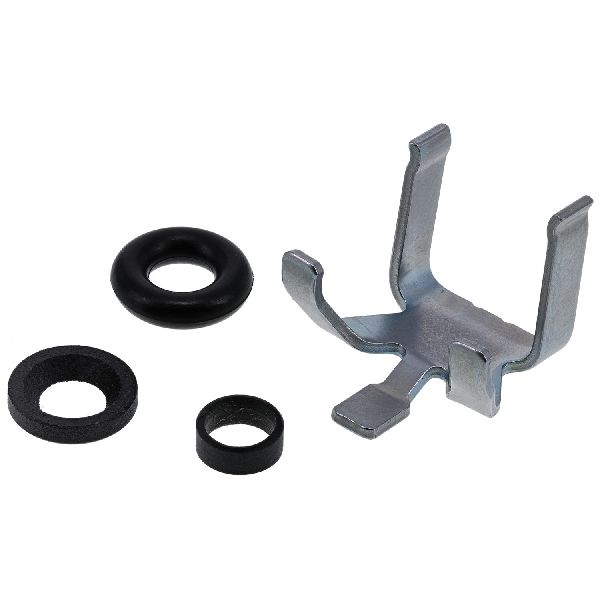
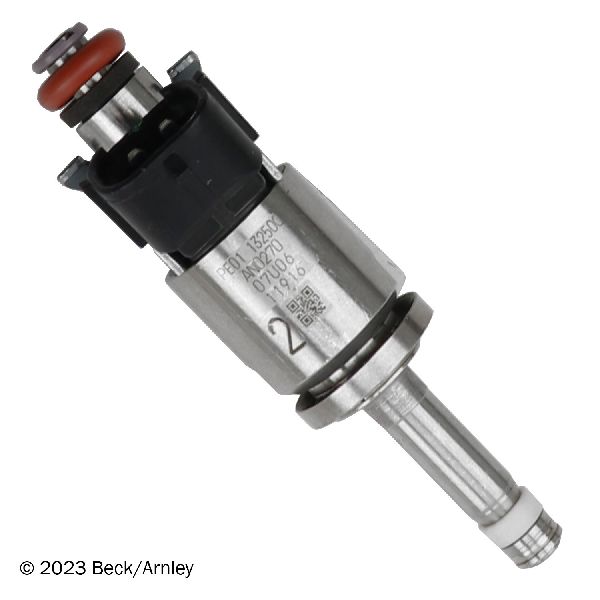
- Fuel Injector
(OEM #PY01-13-250)— If the TSB for PCM failure does not apply, a failed injector is the next most common cause.
Trusted brands: Mazda (OEM), Bosch, Denso, Standard Motor Products
OEM price range: $120-$180
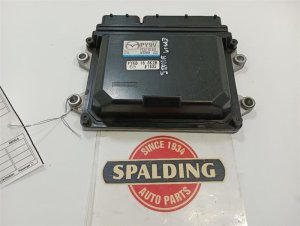
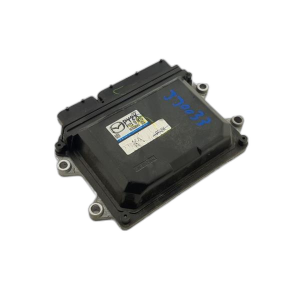
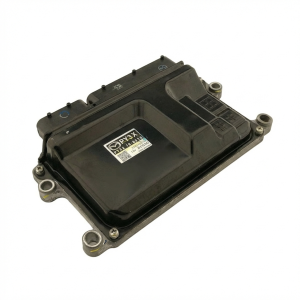
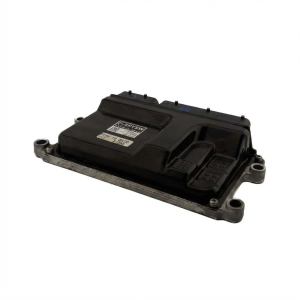
Aftermarket price range: $60-$110 - Powertrain Control Module (PCM) — A known issue documented in Mazda TSB 01-017/16 for this vehicle can cause an internal PCM failure, leading to this code, typically paired with P0204. Part number must be verified by VIN at the dealership.
Trusted brands: Mazda (OEM)
OEM price range: $800-$1200
Aftermarket price range: $300-$600 (Remanufactured)
Related Codes That Often Appear With This One
- P0301 — This code means "Cylinder 1 Misfire Detected." Since the P0201 code indicates the injector isn't firing correctly, the cylinder won't have the proper fuel-air mixture, leading to a misfire. The Mazda TSB confirms misfire codes are usually stored at the same time.
- P0204, P0202, P0203 — Mazda TSBs state that due to the nature of the specific PCM failure on these vehicles, P0201 will almost always appear alongside another injector code, most commonly P0204. If you see P0201 and P0204 together, the PCM is highly suspect.
Technical Service Bulletins (TSBs) & Recalls
- 01-017/16: The most current bulletin for this issue. It specifies that on certain 2013-16 CX-5, 2014-16 Mazda3, and 2014-16 Mazda6 models, paired injector codes (P0201/P0204 or P0202/P0203) are caused by an internal failure of the DENSO PCM. It provides specific VIN ranges and a production cutoff date of May 23, 2016.
- 01-004-17-3317a: A later-dated but superseded bulletin that describes the same issue: a rough running engine with P0201 & P0204 or P0202 & P0203 caused by an internal PCM failure on some vehicles. Misfire codes are also usually stored.
Platform-Specific Known Issues
- Mazda TSB #01-017/16 (which supersedes 01-004-17) notes that some 2013-2016 Japan-built CX-5 models with VINs lower than JM3KE**820183 (produced before May 23, 2016) may experience a rough running engine with P0201 and P0204 (or P0202 and P0203) due to an internal failure of the DENSO-produced PCM. The fix is to replace the PCM with an updated part.
Mechanic-Grade Diagnostic Values
- Fuel Injector Internal Resistance — expected: 12.3 to 12.9 ohms (when cold). Failure: A reading of 0 ohms (short) or infinite/OL (open). A new OEM injector measures around 12.8 ohms.
- Injector Pulse Width (at normal idle, warm engine) — expected: 1.5ms - 2.9ms. Failure: Significantly higher values (e.g., 2.9ms - 5.5ms) can indicate a clogged injector that the PCM is trying to hold open longer to compensate.
- Injector Connector Voltage (Key On, Engine Off) — expected: 11 to 14 V (Battery Voltage). Failure: Low or no voltage indicates a problem in the power supply circuit to the injector, possibly a fuse or the fuel injector relay.
- Wiring Harness Continuity (Injector to PCM) — expected: Less than 2.0 ohms. Failure: High resistance or an open circuit (OL) indicates a break in the wire between the PCM and the injector connector.
Hidden / Shadow Codes Worth Checking
- P0201:00: This is the full code format often displayed on Mazda's dealer-level scanner (IDS). The ':00' suffix doesn't typically add new diagnostic information for this specific code but confirms it's the primary fault type (Circuit/Open). (see via Mazda IDS, some advanced aftermarket scanners like FORScan.)
Scan Tool Commands That Help
- Mazda IDS / FORScan: Power Balance / Cylinder Contribution Test — This active test allows the user to individually disable each fuel injector while monitoring engine RPM drop. If disabling cylinder 1 causes no change in engine speed, it confirms that cylinder is not contributing, pointing strongly to an issue with its fuel or spark. This helps isolate the misfire.
- Mazda IDS: Fuel Injector Correction Factors — This function is primarily for Skyactiv-D (diesel) engines, which require a unique calibration code to be programmed into the PCM for each new injector. While the gasoline CX-5 in this article does not require this step, it is a critical procedure on diesel counterparts that mechanics should be aware of.
Wiring & Ground Locations
- PCM Connector Pin 1EE — At the Powertrain Control Module (PCM) connector.. This is the specific terminal on the PCM for the Cylinder 1 fuel injector control circuit on Skyactiv-D models. A continuity test should be performed between this pin and terminal B at the injector connector to check for an open or shorted wire. While from a diesel manual, gasoline engine pinouts are often similar but should be verified.
- Engine Compartment Ground Points — Key grounds are located on the engine block, transmission case, and bolted directly to the chassis/body near components like the power steering reservoir or strut towers.. A poor engine or PCM ground can introduce electrical noise or voltage drops, potentially causing the PCM to misinterpret the injector circuit's status and trigger a P0201 code. Verifying main grounds are clean and tight is a crucial step when diagnosing elusive electrical faults.
- Fuel Injector Relay — Located in the under-hood relay and fuse block.. This relay supplies battery voltage to the fuel injectors' power circuit. A failure of this relay would typically cause codes for multiple or all injectors, not just P0201, but it is a key part of the overall circuit.
Real Owner Repair Stories
- Mazdas247 Forum user 'texas_cx9' (2009 Mazda CX-9 (different model, but same diagnostic principle and similar component values)) — Check engine light, loss of power, vehicle went into limp mode. Codes P0204 and P0304 stored.
❌ Tried (didn't work) Initially unsure of the cause.
✅ What actually fixed it The owner tested the resistance of the fuel injectors. Injector #4 read 0 ohms (a dead short), while the others were between 12.3 and 12.6 ohms. Replacing the single faulty fuel injector resolved the codes and restored engine performance. A new injector measured 12.8 ohms.
OEM Part Supersession History
****-18-881*→Varies by VIN— The original DENSO-produced PCMs were prone to an internal failure causing paired injector codes. The replacement parts have been internally corrected.
Heads up: According to TSB 01-017/16, the part numbers for the PCM were not changed despite the internal production change. A dealer must look up the latest applicable PCM part number using the vehicle's VIN to ensure the corrected version is ordered.
Model Year Variations Within This Range
- 2013-2016 (Japan-built): Vehicles produced before May 23, 2016 (with VINs lower than JM3KE**820183) are susceptible to the PCM failure described in TSB 01-017/16. Vehicles produced after this date should have the corrected PCM from the factory, making this specific cause of P0201 much less likely.
Helpful Videos
Used OEM Parts in Stock
New Aftermarket Parts Available



The information in this article is provided for general reference and educational purposes only. Vehicle specifications, procedures, and part compatibility can vary by production date, trim level, and region. Always consult your vehicle's factory service manual and verify part numbers before purchasing or performing repairs. Safety-critical components such as airbags, seat belts, and braking systems should be installed by a qualified professional.
- Mazda CX-5:
- 🧭 Diagnostic Flowchart
- 🎬 Helpful Videos
- 🛍️ Shop This Part
- What's Unique About the 2014-2016 Mazda CX-5
- Symptoms You May Notice
- Most Likely Causes
- Rare But Worth Checking
- Diagnosis Steps
- Parts You'll Likely Need
- Related Codes That Often Appear With This One
- Technical Service Bulletins (TSBs) & Recalls
- Platform-Specific Known Issues
- Mechanic-Grade Diagnostic Values
- Hidden / Shadow Codes Worth Checking
- Scan Tool Commands That Help
- Wiring & Ground Locations
- Real Owner Repair Stories
- OEM Part Supersession History
- Model Year Variations Within This Range
- 🎟️ Get 5% Off