

P0201 on 2014-2016 Mazda MAZDA3: Injector Circuit Fault Causes and Fixes
On a 2014-2016 Mazda3, P0201 is often accompanied by P0204 (or P0202 by P0203) and is most likely caused by an internal failure of a specific DENSO-made Powertrain Control Module (PCM), as outlined in Mazda TSB #01-017/16. The fix is to identify the DENSO PCM and replace it with an updated unit. This issue also affects other Mazda models from the same era.
- For a 2014-2016 Mazda3, P0201 is very often not a simple injector or wiring problem.
- Always check for paired codes. If you see P0201 with P0204, the problem is almost certainly the DENSO PCM, as documented in Mazda TSB #01-017/16.
- This specific PCM failure also affects 2013-2016 CX-5 and 2014-2016 Mazda6 models with Skyactiv engines.
- Do not replace the injector if the paired codes are present, as this is a common misdiagnosis that will not solve the root cause.
What's Unique About the 2014-2016 Mazda MAZDA3
For this specific generation of Mazda3, a P0201 code has a very high probability of being part of a larger, documented issue. Mazda issued technical service bulletins explaining that P0201 often appears with P0204 (and P0202 with P0203) due to an internal failure in certain Powertrain Control Modules (PCMs) supplied by DENSO. This is not a typical wiring or injector failure, making it a critical platform-specific diagnosis that also affects other Mazda models like the CX-5 and Mazda6.
Diagnostic Flowchart
Tap your situation to follow the diagnostic path that matches what you're seeing on this vehicle.
Symptoms You May Notice
- Check Engine Light is on (may be flashing if misfire is severe)
- Rough or shaking engine idle
- Engine misfires, which may be felt as hesitation or stumbling during acceleration
- Reduced engine power and performance
- Poor fuel economy
- Hard starting or stalling
- Replacing the fuel injector when the actual cause is the PCM. If P0201 is present with P0204, the PCM is the most likely culprit per the TSB.
- Replacing spark plugs or ignition coils. While these are common causes for misfire codes (P0301), they do not cause an injector circuit code like P0201.
Most Likely Causes
- Internal PCM Failure (DENSO-produced units) 🔴 High Probability Mazda identified an internal failure within specific DENSO-made PCMs affecting 2014-2016 Mazda3 models (among others) produced before May 23, 2016. This failure specifically causes paired injector circuit codes (P0201/P0204 or P0202/P0203). The TSB applies to Japan-built Mazda3s with VINs lower than JM1BM**352403.
How to confirm: Scan for codes and confirm that P0201 is paired with P0204 and misfire codes like P0301/P0304 are also present. Visually inspect the PCM to see if it is a DENSO unit as described in TSB #01-017/16. A dealer can confirm TSB applicability with your VIN.
Typical fix: Replace the Powertrain Control Module (PCM). This must be done by a dealer or qualified shop as the new unit requires programming to the vehicle. 🎬 Watch a professional technician program a replacement Mazda PCM.
Est. part cost: $800-$1300 - Faulty Cylinder 1 Fuel Injector 🟡 Medium Probability → Shop Fuel Injector
How to confirm: Swap the cylinder 1 fuel injector with another cylinder (e.g., cylinder 2). Clear the codes and drive the vehicle. If the code changes to P0202, the injector is faulty. You can also test the injector's resistance with a multimeter; for the Skyactiv engine, it should be between 1.0-1.2 ohms. If it's open (infinite resistance) or out of this spec, it has failed.
Typical fix: Replace the faulty fuel injector.
Est. part cost: $70-$150 - Wiring or Connector Issue ⚪ Low Probability
How to confirm: Visually inspect the wiring harness and connector at the cylinder 1 fuel injector for damage, corrosion, or loose pins. A loose connector clip is a simple but possible cause. Use a noid light to check if the injector is receiving a pulse signal from the PCM. Use a multimeter to check for continuity and proper voltage at the connector.
Typical fix: Repair the damaged section of the wiring harness or replace the connector.
Est. part cost: $10-$50
Rare But Worth Checking
- Frozen Condensation in Exhaust:
Diagnosis Steps
- Scan the PCM for all stored trouble codes. Note if P0201 is accompanied by P0204 (or P0202 by P0203) and corresponding misfire codes (P0301, P0304).
- If paired injector codes are present, consult Mazda TSB #01-017/16. The next step is to identify the PCM manufacturer by inspecting its label. If it is a DENSO unit on a vehicle produced before May 23, 2016, the PCM is the likely cause.
- If only P0201 is present, proceed with standard diagnostics. Perform a visual inspection 🎬 Watch: What to check first when diagnosing a P0201 code. of the cylinder 1 fuel injector wiring and connector for any signs of damage, corrosion, or loose connections.
- Disconnect the injector and use a multimeter to check the internal resistance of the fuel injector. It should be between 1.0 and 1.2 ohms. An infinite reading means it's open and needs replacement.
- Use a 'noid light' to test the injector connector. The light should flash when the engine is cranked or running, indicating the PCM is sending a signal. If it doesn't flash, the problem is in the wiring or the PCM itself.
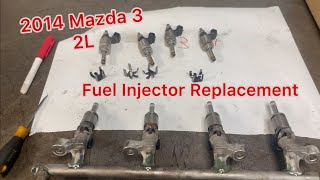
- As a final test, swap the cylinder 1 injector with the cylinder 2 injector. Clear the codes and run the engine. If the code returns as P0202, the injector is confirmed to be faulty. 🎬 See this walkthrough on how to change the fuel injectors. If P0201 returns, the issue is in the wiring or the PCM.
Parts You'll Likely Need
- Powertrain Control Module (PCM)
(OEM #PE07-18-881M (and subsequent revisions, VIN specific))— This is the most common cause for this specific vehicle and code combination (P0201/P0204) as identified by Mazda's own service bulletins. Part numbers are VIN-dependent, but many supersede to a final version like PE07-18-881M.
Trusted brands: Mazda (OEM)
OEM price range: $1100-$1300
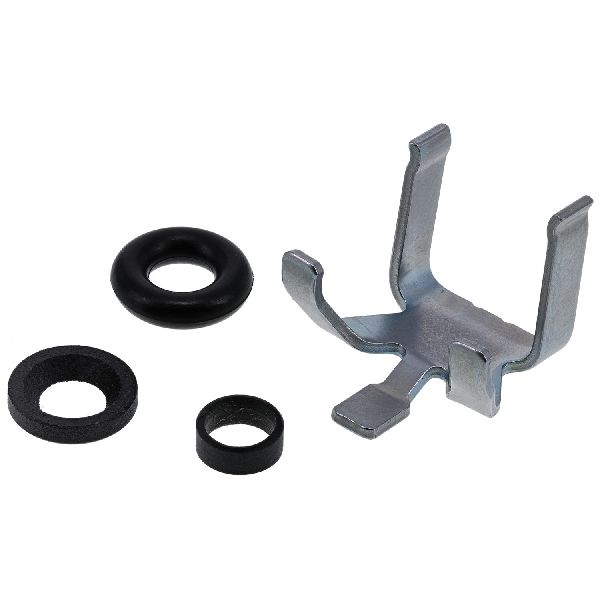
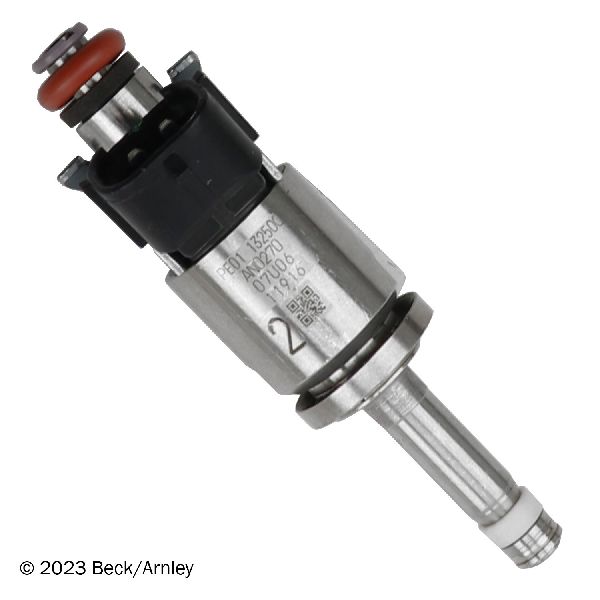
Aftermarket price range: $400-$800 (Remanufactured/Programmed) - Fuel Injector — If the PCM is not the cause and the code P0201 appears alone, a failed injector is the next most likely component.
Trusted brands: Bosch, Denso, Standard Motor Products
OEM price range: $150-$250
Aftermarket price range: $70-$150
Related Codes That Often Appear With This One
- P0204 — According to Mazda TSB #01-017/16, an internal PCM failure causes these two codes to appear together as a pair.
- P0301 — A malfunction in the cylinder 1 injector circuit (P0201) will prevent proper combustion, leading to a misfire in that cylinder.
- P0304 — If P0204 is also present due to the PCM fault, a cylinder 4 misfire code is also likely to be stored.
- P0300 — This 'Random Misfire' code can appear if the PCM detects misfires on multiple cylinders, which is common with the paired injector fault.
Technical Service Bulletins (TSBs) & Recalls
- 01-017/16 (superseded by 01-004/17): A multi-model TSB that provides the detailed repair procedure for the paired injector code issue, which involves identifying the DENSO PCM and replacing it if necessary. It specifies affected models as 2013-16 CX-5, 2014-16 Mazda3, and 2014-16 Mazda6 produced before May 23, 2016.
- 01-004/17: Supersedes the previous TSB with the same information, confirming the fix for a rough running engine with DTCs P0201 & P0204 (or P0202 & P0203) is a PCM replacement.
Platform-Specific Known Issues
- Mazda TSB #01-017/16 explicitly states that on 2014-2016 Mazda3 models (and other models) built before May 23, 2016, a combination of codes P0201/P0204 or P0202/P0203 is likely caused by an internal failure of the DENSO-produced PCM.
Mechanic-Grade Diagnostic Values
- Injector Pulse Width (IPW) at idle — expected: Typically 1-5 milliseconds (ms), but can range from 1-10 ms depending on engine load and temperature.. Failure: A value of 0 ms on one injector while others show a normal reading indicates a lack of command from the PCM or a complete circuit failure.
- Injector connector voltage (Key On, Engine Off) — expected: Approximately 12V (battery voltage) on the power supply wire.. Failure: No voltage indicates a break in the power supply from the fuse/relay.
- Injector control circuit voltage (Engine Cranking/Running) — expected: A flashing signal between battery voltage and near-zero volts as the PCM pulses the ground.. Failure: A constant voltage or no voltage change indicates the PCM is not commanding the injector to fire.
- High-Pressure Fuel Pump Cranking Pressure (Scan Tool Data) — expected: A known-good vehicle may show around 6.74 MPa (977 PSI) while cranking.. Failure: Significantly lower pressure could indicate a fuel delivery issue upstream of the injectors, although this would likely set other codes.
Hidden / Shadow Codes Worth Checking
- P0201:00: The ':00' is a Failure Type Code (FTC) defined by the ISO 15031-6 standard. For injector circuit DTCs, it typically specifies a 'Circuit/Open' fault, which is what the PCM has detected. (see via Most professional scan tools, including the Mazda IDS, will display this two-digit suffix.)
Scan Tool Commands That Help
- Mazda IDS / High-End Scanners: Active Test / Injector Deactivation — When the engine is running, a technician can use this function to individually turn off each fuel injector. If turning off cylinder 1 causes no change in engine RPM or smoothness, while turning off other cylinders causes a noticeable drop, it confirms the fault is isolated to the cylinder 1 injector or its circuit.
- FORScan: Injector Buzz Test — With the engine off, this test individually pulses each injector, creating an audible 'buzz'. A technician can listen for a weak or absent buzz from injector 1 compared to the others, which would indicate a failing injector coil or a wiring issue.
- Mazda IDS / FORScan: Fuel Injector Correction Factors / Injector Coding — This is required after replacing a fuel injector on many modern engines. Each injector has a unique calibration code printed on it that must be programmed into the PCM to ensure precise fuel delivery and stable engine operation.
Wiring & Ground Locations
- PCM Injector 1 Pin — On the main PCM electrical connector. For example, on some Mazda models, the control wire for injector #1 is at pin 1EE.. This is the specific pin where a technician can test for continuity between the PCM and the injector connector to rule out a broken wire in the harness.
- Engine/Transaxle Grounds — Key ground points are typically located on the passenger side motor mount, on top of the transaxle housing, and from the main wiring harness to the chassis near the strut towers.. A poor or corroded engine ground can cause a variety of electrical issues, including erratic behavior in the injector circuits. Ensuring these grounds are clean and tight is a crucial step in diagnosing any electrical fault.
Real Owner Repair Stories
- Mazda6 Forums user (2011 Mazda 6 2.2D (Diesel engine, but demonstrates a relevant diagnostic process)) — Engine misfire, engine light on, flashing glow plug light after a failed calibration attempt.
❌ Tried (didn't work) Manual injector calibration procedure (jump cable method)., Using a cheap WiFi OBD2 scanner that failed to connect to the ECU.
✅ What actually fixed it The owner purchased a Vgate vLinker FS OBD2 adapter and used FORScan software. FORScan revealed a misfire on cylinder 4. The owner replaced the faulty injector with a used part, then successfully used FORScan to code the new injector and re-calibrate all injectors, which resolved the issue.
OEM Part Supersession History
PE07-18-881E, PE07-18-881G, PE07-18-881H, PE07-18-881J, PE07-18-881K, PE07-18-881L→PE07-18-881M— Internal revisions by the manufacturer to correct faults and improve reliability. The TSB for the P0201/P0204 issue requires replacing older PCMs with an updated version.
Heads up: Using an older, un-revised part number will likely result in the same fault returning. The final part number in the supersession chain should always be used.
Model Year Variations Within This Range
- 2014-2016 (pre-May 23, 2016 production): Vehicles produced before this date may be equipped with the faulty DENSO PCM that is prone to the internal failure causing paired injector codes (P0201/P0204). Vehicles produced after this date have an updated PCM, making this specific cause much less likely.
Helpful Videos
We Have This Part in Stock



The information in this article is provided for general reference and educational purposes only. Vehicle specifications, procedures, and part compatibility can vary by production date, trim level, and region. Always consult your vehicle's factory service manual and verify part numbers before purchasing or performing repairs. Safety-critical components such as airbags, seat belts, and braking systems should be installed by a qualified professional.
- Mazda MAZDA3:
- 🧭 Diagnostic Flowchart
- 🎬 Helpful Videos
- 🛍️ Shop This Part
- What's Unique About the 2014-2016 Mazda MAZDA3
- Symptoms You May Notice
- Most Likely Causes
- Rare But Worth Checking
- Diagnosis Steps
- Parts You'll Likely Need
- Related Codes That Often Appear With This One
- Technical Service Bulletins (TSBs) & Recalls
- Platform-Specific Known Issues
- Mechanic-Grade Diagnostic Values
- Hidden / Shadow Codes Worth Checking
- Scan Tool Commands That Help
- Wiring & Ground Locations
- Real Owner Repair Stories
- OEM Part Supersession History
- Model Year Variations Within This Range
- 🎟️ Get 5% Off