

P0201 on 1999-2004 Oldsmobile Alero 3.4L V6: Injector Circuit Malfunction Causes and Fixes
P0201 on a 3.4L Alero means there's an electrical problem with the fuel injector in cylinder 1. The most likely cause is a failed fuel injector, but the wiring is also suspect. Cylinder 1 is on the difficult-to-reach rear bank, making this a challenging DIY repair.
- P0201 indicates an electrical problem with the cylinder 1 fuel injector, not an ignition or mechanical problem.
- The most likely fix is replacing the fuel injector for cylinder 1.
- Cylinder 1 is on the rear bank of the engine, against the firewall, making the repair significantly more labor-intensive than a front-bank injector.
- Because the intake manifold must be removed, it is critical to also replace the intake gaskets with an upgraded metal design (e.g., Fel-Pro MS 98014 T) to prevent a common and separate failure.
What's Unique About the 1999-2004 Oldsmobile Alero
On the Alero's transverse-mounted 3.4L V6 engine, the cylinders are divided into two banks. The front bank (cylinders 2, 4, 6) is easy to access, but the rear bank (cylinders 1, 3, 5) is pressed up against the firewall. Since P0201 points to cylinder 1, the repair involves working on this hard-to-reach rear bank, which significantly increases the difficulty and labor time. This requires removing the upper intake manifold (plenum) to gain access to the rear fuel rail and injector, a task not necessary for front-bank injectors.
Symptoms You May Notice
- Check Engine Light is on
- Rough, shaky engine idle
- Engine misfiring, which may feel like a stutter or hesitation during acceleration
- Noticeable loss of power and sluggish performance
- Poor fuel economy
- Engine may be hard to start or stall intermittently
- Possible smell of raw fuel from the engine bay or exhaust
- Replacing the spark plug or ignition coil for cylinder 1. While these parts can cause a misfire (P0301), the P0201 code specifically points to an electrical fault in the fuel injector circuit, not the ignition system. Always diagnose the circuit code first.
Most Likely Causes
- Faulty Cylinder 1 Fuel Injector 🔴 High Probability → Shop Fuel Injector Injectors on the 3.4L LA1 V6, like many vehicles of this era, can fail electrically when the internal solenoid coil opens or shorts out. Given the age of these vehicles, injector failure is a very common root cause for a P0201 code.
How to confirm: After verifying the wiring is okay, swap the cylinder 1 injector with another cylinder (e.g., cylinder 3). Clear the codes and drive. If the code changes to P0203, the injector is confirmed bad. You can also test the injector's resistance with a multimeter; it should typically be between 11.4-12.6 ohms. A reading of infinity (OL) means it's open, and a reading near zero means it's shorted.
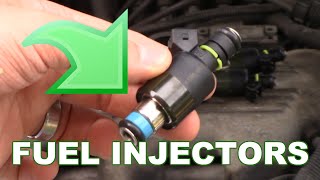
Typical fix: Replace the faulty fuel injector. It is highly recommended to replace all six injectors at the same time, or at least the three on the rear bank, as they have all experienced the same conditions and labor to access them is high. 🎬 Watch this step-by-step guide on replacing injectors on the 3.4L engine.
Est. part cost: $40-$130 for a single injector, $170-$600 for a set of six. - Damaged Wiring or Connector 🟡 Medium Probability The engine bay wiring harness is exposed to constant heat and vibration, which can cause wires to become brittle, chafe, or break over time. The plastic connector itself can also become brittle and crack, or the terminals inside can corrode or loosen.
How to confirm: Visually inspect the wiring going to the cylinder 1 injector for any signs of melting, chafing, or breaks. Wiggle the connector while the engine is running to see if it causes a change in the idle. Use a 'noid light' to confirm if the connector is receiving a pulse signal from the PCM while the engine is cranking; a flashing light is a good sign. No light or a steady light points to a wiring or PCM issue.
Typical fix: Repair the broken section of wire or replace the damaged pigtail connector. This often involves soldering in a new section of wire and using heat-shrink tubing for protection.
Est. part cost: $10-$30 for a new pigtail connector. - Faulty Powertrain Control Module (PCM) ⚪ Low Probability → Shop Engine Control Module (ECM) While not common, the internal driver circuit within the PCM that controls the injector can fail. This is a rare occurrence and should be the last item to suspect.
How to confirm: This is diagnosed by exclusion. If the injector and the wiring have both been tested and are known to be good (including checking for shorts to power/ground), the PCM is the likely culprit. A professional shop can perform advanced diagnostics to confirm this before replacement.
Typical fix: Replace and reprogram the Powertrain Control Module. A used or remanufactured PCM will need to be programmed to the vehicle's VIN and security system.
Est. part cost: $200-$500 for a remanufactured PCM.
Rare But Worth Checking
- Wiring Harness Chafing Near A/C Compressor or P/S Pump:
Diagnosis Steps
- Identify Cylinder 1: On the 3.4L V6, cylinder 1 is on the rear bank (against the firewall), on the passenger side of the engine.
- Inspect the Wiring: Carefully inspect the wiring harness and electrical connector for the #1 fuel injector. Look for any visible damage, melting, or corrosion. Wiggle the connector with the engine idling to see if the misfire changes.
- Use a Noid Light: Disconnect the injector and plug a noid light into the connector. Crank the engine. A rhythmic flashing light indicates the PCM is sending a signal and the wiring is likely okay. No light or a steady light points to a wiring or PCM issue.
- Test the Injector Resistance: Disconnect the injector and use a multimeter set to Ohms to measure the resistance across its two terminals. A reading between 11.4-12.6 Ohms is correct for this engine. A reading of infinity (OL) means it's open, and a reading near zero means it's shorted. In either case, the injector is bad.
- Swap the Injector (If Accessible): If you have already removed the intake manifold, swap the #1 injector with the #3 or #5 injector on the same rear bank. Reassemble, clear the codes, and run the engine. If the code returns as P0203 or P0205, the injector is faulty. If P0201 returns, the problem is in the wiring or PCM.
- Check for Power and Ground Pulse: Using a multimeter, check for constant 12V power on the Pink (PNK) wire of the injector connector with the key on. The other wire is the ground pulse from the PCM, which is what the noid light tests. Lack of constant power could indicate a blown fuse or relay. 🎬 See how to troubleshoot a crank-no-start when injectors lack power.
- Prep for Intake Removal: If the injector must be replaced, you will need to remove the upper intake manifold. Before removal, thoroughly clean the area to prevent debris from falling into the engine. Once the manifold is off, stuff clean rags into the lower intake ports to prevent anything from dropping in.
- Test the PCM: If the injector and wiring are confirmed good, the PCM's injector driver is the final suspect. This step is best left to a professional.
Parts You'll Likely Need
- Fuel Injector
(OEM #217-1602)— This is the most common failure point for a P0201 code. The internal coil windings can break or short out, causing an electrical fault.
Trusted brands: ACDelco (GM Original Equipment), Delphi, Standard Motor Products (SMP), Bosch
OEM price range: $85-$130
Aftermarket price range: $40-$80 - Upper and Lower Intake Manifold Gaskets
(OEM #Fel-Pro P/N: MS 98014 T)— To access the rear fuel rail and injectors on the 3.4L V6, the upper and lower intake manifolds must be removed. The gaskets are single-use and MUST be replaced. The original GM gaskets were a faulty plastic design; the Fel-Pro MS 98014 T is a widely recommended, superior metal-framed replacement that prevents common coolant leaks.
Trusted brands: Fel-Pro (Highly Recommended), ACDelco, Mahle
OEM price range: $70-$120
Aftermarket price range: $50-$90
Related Codes That Often Appear With This One
- P0301 — P0301 indicates a misfire on cylinder 1. Since the P0201 code means the injector isn't firing correctly, the cylinder isn't getting fuel, which directly causes a misfire.
- P0300 — This code means 'Random/Multiple Cylinder Misfire Detected'. It can sometimes appear alongside P0201 if the injector issue is intermittent or causing broader engine stability problems that the PCM interprets as multiple misfires.
Technical Service Bulletins (TSBs) & Recalls
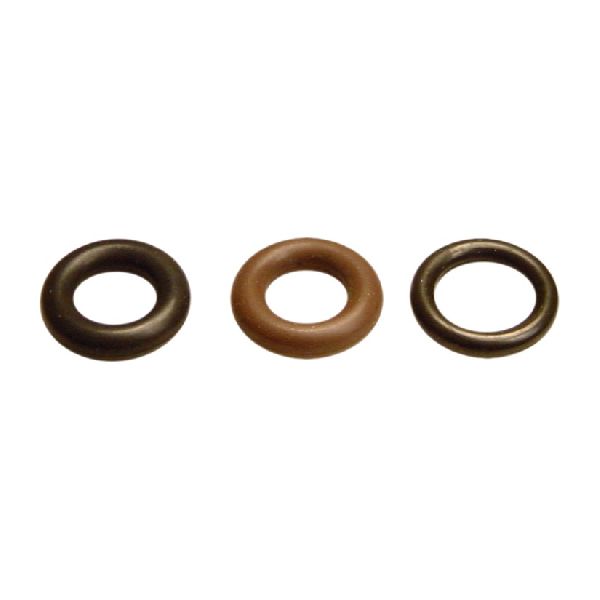
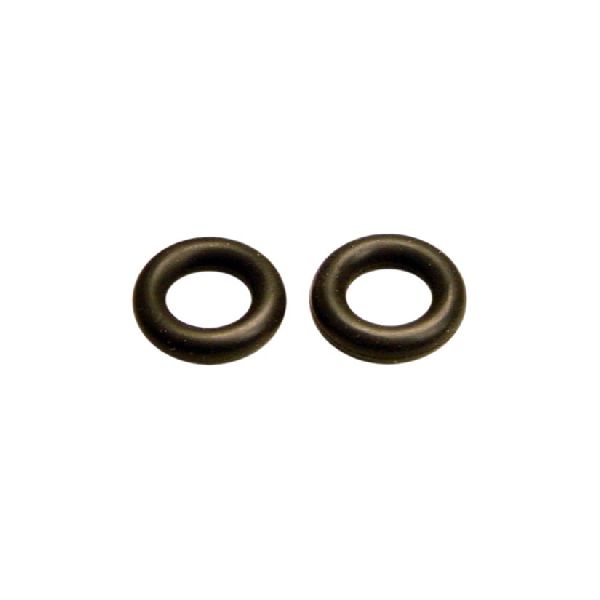
- TSB 18-NA-137: While not for a specific code, this GM TSB notes that fuel leaks can occur from torn or misaligned injector O-rings and that injectors must be rebuilt with new seals whenever they are removed from the fuel rail, which is a required step for this repair.
Platform-Specific Known Issues
- Accessing the #1 fuel injector is significantly more difficult than accessing the front injectors (2, 4, 6) due to its location on the rear bank against the firewall. This turns a simple repair into a more involved job that requires removing the upper intake manifold.
- The original lower intake manifold gaskets on the 3.4L LA1 V6 are a known failure point, made of a plastic composite that degrades from exposure to Dex-Cool coolant. Since the intake must be removed for this job, it is critical to replace these gaskets with an upgraded metal-frame set (like Fel-Pro MS 98014 T) to prevent a future, separate repair.
Mechanic-Grade Diagnostic Values
- Fuel Injector Coil Resistance — expected: 11.4 to 12.6 Ohms. Failure: A reading of infinity (OL) indicates an open coil, while a reading near zero indicates a shorted coil. Any reading outside the specified range suggests a faulty injector.
- Injector Connector Power Supply — expected: Approximately 12 Volts (Battery Voltage) on the pink wire with Key On, Engine Off.. Failure: Low or no voltage indicates a problem with the power supply circuit, such as a blown fuse, faulty relay, or broken wire before the injector.
- Injector Pulse Width (at idle) — expected: 3.3 ms to 4.0 ms on a scan tool for a healthy, warm engine at idle.. Failure: A pulse width of 0 ms for cylinder 1 indicates the PCM is not commanding the injector to fire. An unusually high or erratic value could suggest a compensation for other issues, but the P0201 code points to an electrical fault preventing the command from working.
Scan Tool Commands That Help
- GM Tech 2: Injector Balance Test — This test is used to identify a clogged or mechanically failing injector that might not have a hard electrical fault. The tool fires each injector for a set duration and measures the corresponding drop in fuel rail pressure. A cylinder with a significantly different pressure drop points to a faulty injector.
- GM Tech 2: Power Balance / Injector Disable — This is a primary bidirectional test for a P0201. A technician can command the PCM to stop firing the cylinder 1 injector. If the engine's idle quality does not change, it confirms that cylinder 1 was not contributing in the first place. The command path is typically: Powertrain > Special Functions > Fuel System > Injector Disable.
Wiring & Ground Locations
- G103 — For the 3.4L V6, this ground is located on a transmission stud on the left (driver's) side of the engine.. This is a key engine component ground. Corrosion or a loose connection at G103 can cause numerous intermittent electrical issues, including erratic signals for the ignition and fuel systems that could potentially be misinterpreted by the PCM.
- G102 — For the 3.4L V6, this ground is located in front of the starter motor.. This is another primary engine ground point. Like G103, ensuring it is clean and tight is a crucial step in ruling out simple causes for complex electrical codes before replacing expensive components like the PCM.
- Injector Connector Pinout — The 2-pin connector on the fuel injector itself.. One pin receives 12V+ power (typically a Pink wire on GM vehicles), and the other pin is the control wire that the PCM pulses to ground to fire the injector. Knowing this allows for correct testing with a multimeter or noid light to determine if power is present and if the PCM is sending the ground signal.
Real Owner Repair Stories
- YouTube channel 'World Mechanics' (Vehicle with a similar style injector connector and a P0204 code (Cylinder 4 Injector Circuit).) — Check Engine Light on, rough running engine.
❌ Tried (didn't work) The video implies that one might immediately suspect a bad injector or wiring damage.
✅ What actually fixed it The metal retaining clip on the injector's electrical connector had come loose or was not installed correctly. This caused a poor connection that triggered the circuit fault code. The fix was to simply remove the connector, install a new retaining clip, and securely plug it back in until it clicked, which resolved the code.
OEM Part Supersession History
GM plastic-carrier intake manifold gaskets→Fel-Pro MS 98014 T (metal carrier)— The original OEM plastic/nylon intake manifold gaskets were a notorious failure point on the 3.4L LA1 engine. They would degrade from exposure to Dex-Cool coolant, causing severe coolant and vacuum leaks.
Heads up: This is a case where the aftermarket 'supersession' is a mandatory upgrade. Re-installing with OEM-style plastic gaskets will lead to a repeat failure. The Fel-Pro metal-framed gasket is the industry-standard fix.GM 12586554→ACDelco 217-1602— This is the standard GM to ACDelco part number cross-reference for the fuel injector.
Heads up: No known incompatibility issues. These numbers refer to the same OEM part.
Model Year Variations Within This Range
- 1999-2004: There were no significant changes to the 3.4L LA1 V6 engine, its fuel system, or wiring that would alter the diagnosis or repair of a P0201 code across the entire model year range for the Oldsmobile Alero. The procedure is consistent for all years.
Diagnostic Flowchart
Used vs. New Parts: Buying Guide for This Vehicle
When a used part is the smart pick: Used parts from a salvage yard are a viable option for static components like a wiring harness pigtail/connector if the original is broken, or engine brackets that may have been lost. A used PCM is a possibility only if it's from an identical vehicle (year, model, engine) and you have access to tools like a Tech 2 for the security relearn procedure.
Donor-vehicle mileage cap: roughly under 120000 miles for the part to have meaningful remaining life.
What to inspect on the donor part:
- For wiring: Check for flexibility. Avoid any harness that is brittle, cracked, or has obviously been repaired before.
- For injectors: Inspect the plastic connector for cracks. Ensure the metal body has no significant rust or damage. The tip should be free of heavy carbon buildup.
- For a PCM: Check that the case is not damaged and all connector pins are straight and free of corrosion.
OEM-only on this vehicle (don't cheap out):
- While no part is strictly OEM-only, using a properly programmed, high-quality remanufactured PCM with a warranty is strongly recommended over a used salvage yard unit to avoid programming headaches and premature failure.
Aftermarket brands forum-validated for this vehicle:
- Intake Manifold Gaskets: Fel-Pro (specifically the MS 98014 T metal-frame set) is widely considered superior to the original OEM design.
- Fuel Injectors: ACDelco (OEM), Delphi, Bosch, and Standard Motor Products (SMP) are reputable brands with a history of reliable performance.
Brands owners have reported issues with on this vehicle:
- Avoid unbranded, generic fuel injectors from online marketplaces. These often have inconsistent flow rates, poor spray patterns, and high failure rates, which can cause persistent performance issues even after 'fixing' the P0201 code.
Real Owner Stories
Aggregated from forums and TSBs cited above. Mileages and costs reflect what owners reported in those sources.
Oldsmobile Alero 3.4L V6
Symptoms: An owner performing a related repair noted the significant difficulty and time commitment required for the DIY job, specifically due to the complexity of accessing components on the rear bank of the engine.
What fixed it: The owner performed a lower intake manifold gasket replacement, a job that requires the same disassembly as replacing a rear-bank fuel injector.
Source hint: Acurazine - GM 3.4V6-Lower Intake Manifold gasket repair
Related OBD-II Codes
Frequently Asked Questions
Where is the cylinder 1 fuel injector located on my 3.4L Alero? It's not obvious.
Since I have to remove the intake manifold to fix P0201, is there anything else I should replace at the same time?
My mechanic says the #1 injector is bad. Should I replace just that one or all of them?
How can I test the fuel injector myself to confirm it's bad?
I used a 'noid light' on the cylinder 1 connector and it's not flashing. What does that mean?
Does TSB 18-NA-137 apply to this repair?
Helpful Videos

We Have This Part in Stock


The information in this article is provided for general reference and educational purposes only. Vehicle specifications, procedures, and part compatibility can vary by production date, trim level, and region. Always consult your vehicle's factory service manual and verify part numbers before purchasing or performing repairs. Safety-critical components such as airbags, seat belts, and braking systems should be installed by a qualified professional.
- Oldsmobile Alero:
- 🧭 Diagnostic Flowchart
- 🎬 Helpful Videos
- 🛍️ Shop This Part
- What's Unique About the 1999-2004 Oldsmobile Alero
- Symptoms You May Notice
- Most Likely Causes
- Rare But Worth Checking
- Diagnosis Steps
- Parts You'll Likely Need
- Related Codes That Often Appear With This One
- Technical Service Bulletins (TSBs) & Recalls
- Platform-Specific Known Issues
- Mechanic-Grade Diagnostic Values
- Scan Tool Commands That Help
- Wiring & Ground Locations
- Real Owner Repair Stories
- OEM Part Supersession History
- Model Year Variations Within This Range
- Used vs. New Parts: Buying Guide for This Vehicle
- Real Owner Stories
- Oldsmobile Alero 3.4L V6
- Related OBD-II Codes
- Frequently Asked Questions
- 🎟️ Get 5% Off