

P0202 on 2008-2017 Buick Enclave 3.6L: Injector Circuit Malfunction Causes and Fixes
On a 2009-2017 Buick Enclave, code P0202 is most often caused by a faulty cylinder 2 fuel injector or a chafed wiring harness. For the 2008 model, the cause is similar but diagnosis is easier. Expect to pay $80-$150 for a new OEM injector. The wiring harness should always be inspected first, as this is a known GM issue with specific chafe points near the intake and valve covers.
- P0202 indicates an electrical problem with the cylinder 2 injector circuit, not a spark or mechanical issue.
- Always inspect the wiring harness for chafing before buying parts. This is a very common failure point on this specific engine, as documented in a GM service bulletin.
- A good diagnostic step is to swap the #2 injector with another one (like #4) to see if the code follows the injector.
- On 2009-2017 models, replacing an injector is a difficult (DIY 4/5) job because the upper intake manifold must be removed.
- Do not immediately assume the PCM is bad; it is the least likely cause and the most expensive to replace.
What's Unique About the 2008-2017 Buick Enclave
The 2008-2017 Enclave's 3.6L V6 engine has a known weakness documented in GM Technical Service Bulletin (TSB) PIP4924D. The fuel injector wiring harness is prone to rubbing against engine components like the intake plenum, valve cover bolts, the side of the cylinder head, or even the sharp metal tab of an EGR valve gasket, causing wires to break and triggering a P0202 code. For 2009 and newer models with direct injection (DI), accessing the injectors is a significant job that requires removing the upper intake manifold, increasing labor time compared to the more accessible port-injected 2008 model.
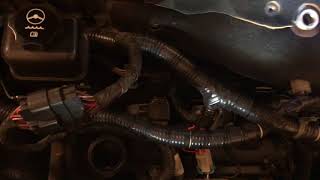
🎬 Watch: How to replace fuel injectors on early 3.6L enginesSymptoms You May Notice
- Check Engine Light is on
- Flashing Check Engine Light (indicating a severe misfire)
- Rough or unstable idle
- Engine misfiring, which may feel like a shudder or jerking
- Hesitation or lack of power during acceleration
- Reduced fuel economy
- Vehicle may enter a reduced power "limp mode"
- Strong smell of raw gasoline from the engine bay or exhaust
- Visible white or black smoke from the exhaust, especially if an injector is stuck open
- Replacing the spark plug or ignition coil for cylinder 2. While these parts can cause a misfire code (P0302), they will not cause an injector circuit code like P0202, which specifically points to an electrical fault in the injector's control circuit.
Most Likely Causes
- Damaged Fuel Injector Wiring Harness 🔴 High Probability → Shop Engine Wiring Harness A well-documented issue covered by GM TSB PIP4924D. The harness routing can cause it to chafe against the intake manifold, cylinder head, fuel lines, or a sharp tab on the EGR gasket, leading to an open or short circuit.
How to confirm: Carefully inspect the entire wiring harness leading to the cylinder 2 injector and its associated bank. Pay close attention to any point where it contacts other engine components, especially under the intake plenum and near the valve covers. A common failure point is where the harness rubs against a bracket or the edge of the cylinder head.
Typical fix: Repair the damaged section of wire using a weatherproof butt connector or solder and heat shrink. If the damage is extensive or in a difficult-to-reach spot, the injector harness pigtail or entire harness section may need to be replaced.
Est. part cost: $5-$50 for wire repair supplies - Faulty Cylinder 2 Fuel Injector 🔴 High Probability → Shop Fuel Injector Direct injectors on the 2009+ models operate under very high pressure and can fail electrically over time. Carbon buildup is also a common issue that can affect performance.
How to confirm: After confirming the wiring is okay, test the injector. For 2009-2011 LLT models, measure resistance; it should be 11-14 ohms. For 2012-2017 LFX models, it should be 1.2-1.8 ohms. A reading of infinity (open) or near zero (short) indicates failure. The most definitive test is to swap the cylinder 2 injector with another (e.g., cylinder 4). If the code changes to P0204, the injector is bad.
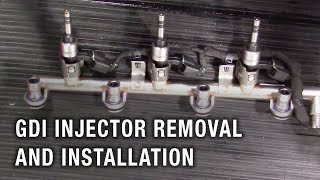
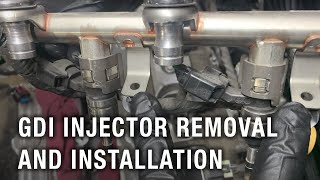
Typical fix: Replace the faulty fuel injector. On 2009-2017 models, this requires removing the intake manifold and replacing the single-use Teflon injector seals. 🎬 Watch this walkthrough for GDI injector removal and installation It is often recommended to replace all six injectors at once due to the high labor cost of the job.
Est. part cost: $80-$160 - Corroded or Loose Injector Connector 🟡 Medium Probability
How to confirm: Disconnect the electrical connector at the cylinder 2 fuel injector. Inspect the pins for any signs of corrosion (green or white powder), moisture, or damage. Ensure it fits securely with a click when reconnected.
Typical fix: Clean the connector terminals with an electrical contact cleaner. If the connector housing or lock is damaged, it may need to be replaced with a new pigtail.
Est. part cost: $10-$30
Rare But Worth Checking
- Faulty Powertrain Control Module (PCM): → Shop Engine Control Module (ECM) This is the least likely cause. The PCM's internal driver circuit for the injector can fail. All other possibilities, especially wiring and the injector itself, should be exhaustively ruled out before considering PCM replacement.
- Poor Connection at Main Harness Connector (X160/X161): The main engine harness connects to the injector harness via large multi-pin connectors (X160/X161) at the rear of the intake manifold. Corrosion or a backed-out pin in this connector can cause an open circuit for one or more injectors. Service procedures involve disconnecting these to isolate the circuit for testing.
Diagnosis Steps
- Read the trouble codes with an OBD-II scanner. Note if any other codes, like P0302 or other P020x codes, are present.
- Locate cylinder 2. On the 3.6L V6, it is the middle cylinder on the front bank (the bank closer to the radiator).
- Thoroughly inspect the wiring harness going to the cylinder 2 injector. Check for chafing, melting, or broken wires, especially where the harness touches the intake manifold, valve covers, fuel lines, or the side of the cylinder head, as noted in TSB PIP4924D. Use a mirror and flashlight.
- Inspect the electrical connector at the injector for corrosion, damage, or loose pins.
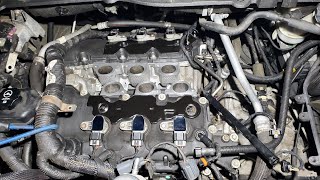
- Use a 'noid light' to test for an electrical signal. 🎬 See how to perform advanced fuel injection testing and removal Unplug the injector, plug in the noid light, and start the engine. The light should flash steadily, indicating the PCM is sending a signal. If it doesn't flash, the problem is in the wiring or PCM.
- If a signal is present, test the injector itself. Disconnect the injector and measure its resistance with a multimeter. For 2009-2011 LLT engines, expect 11-14 Ohms. For 2012-2017 LFX engines, expect 1.2-1.8 Ohms. If it is significantly higher (open) or lower (short), it has failed.
- For a definitive diagnosis, swap the cylinder 2 injector with the cylinder 4 injector (on the same bank). This requires removing the intake manifold on 2009+ models. Clear the codes and run the engine. If the code returns as P0204, the injector is confirmed to be faulty. If P0202 returns, the issue is in the wiring or PCM.
- If the injector and wiring to the injector are confirmed good, the issue may be further up the harness. Advanced diagnosis involves checking for continuity and shorts between the injector connector and the main harness connectors (X160/X161) and between those connectors and the PCM.
- If all wiring and the injector are confirmed good, the final possibility is a faulty PCM, though this is rare.
Parts You'll Likely Need
- Fuel Injector (Direct Injection, 2012-2017 LFX)
(OEM #12663380)— This is the most common part to fail internally for the later model years, causing the P0202 code.
Trusted brands: ACDelco (OEM)
OEM price range: $100-$150
Aftermarket price range: $60-$100 - Fuel Injector (Direct Injection, 2009-2011 LLT)
(OEM #12638530)— This is the most common part to fail internally for the early direct injection models, causing the P0202 code.
Trusted brands: ACDelco (OEM), Bosch
OEM price range: $100-$150
Aftermarket price range: $60-$100 - Fuel Injector (Port Injection, 2008 LY7)
(OEM #12602223 (also sold as ACDelco 217-3021))— The 2008 model uses a different, port-injected engine. This is the correct injector if it fails.
Trusted brands: ACDelco (OEM), Bosch
OEM price range: $60-$90
Aftermarket price range: $35-$50 - Upper Intake Manifold Gasket Set — Must be replaced anytime the intake manifold is removed to access the fuel injectors on 2009-2017 models.
Trusted brands: ACDelco, Fel-Pro
OEM price range: $30-$50
Aftermarket price range: $20-$40
Related Codes That Often Appear With This One
- P0302 — P0302 means "Cylinder 2 Misfire Detected." A fault in the injector circuit (P0202) prevents proper fueling of cylinder 2, directly causing it to misfire. P0202 is the cause, and P0302 is the effect.
- P0201, P0203, P0204, etc. — If multiple injector circuit codes are present at the same time, it strongly suggests a widespread wiring harness issue (like the chafing problem) or a fault in the power/ground supply common to the injectors, such as a bad pin at the main X160 connector.
- P2149, P2152, P2155 — These codes indicate a fault in the supply voltage circuit for a specific group of injectors (e.g., Group B, C, or D). Seeing one of these alongside P0202 reinforces the likelihood of a wiring harness problem affecting the shared power supply for that bank of injectors.
Technical Service Bulletins (TSBs) & Recalls
- Bulletin #PIP4924D: "SES Light And Misfire With Injector Codes" - Advises technicians that vehicles may have a Service Engine Soon Malfunction Indicator Lamp on and a misfire, with Diagnostic Trouble Codes including P0201, P0202, P0203, P0204, P0205, and P0206. It recommends inspecting the fuel injector wiring harness for chafing against the intake plenum, valve cover bolts, fuel line, and cylinder head.
- PI1067: "Various DTCs and/or Intermittent No Start/Stall" - Points to the main ECM wiring harness chafing on the ECM bracket, which can cause various electrical faults including injector circuit codes.
- PIT5424: "Engine Misfire with Injector DTCs" - A related bulletin for other GM vehicles with the 3.6L engine that also points to harness routing and chafing issues as a cause for injector codes.
Platform-Specific Known Issues
- A primary issue documented in GM TSB #PIP4924D is the fuel injector wiring harness chafing against engine components, causing an open or short circuit. This should be the first inspection point for any P020x code on this vehicle. Specific chafe points are against the intake plenum, valve cover bolts, fuel lines, and the side of the cylinder head under the plenum.
- A related TSB, PI1067, notes that the main ECM wiring harness can also chafe on the ECM's own metal bracket, causing similar issues.
- Owner reports have identified other specific chafe points, such as on the sharp metal tab of the EGR valve gasket, requiring wire repair and bending the tab for clearance.
Mechanic-Grade Diagnostic Values
- Fuel Injector Coil Resistance (2012-2017 LFX Engine) — expected: 1.2 - 1.8 Ohms. Failure: A reading of 0 ohms (short), OL/infinity (open), or a value outside this narrow range indicates a failed injector coil.
- Fuel Injector Coil Resistance (2009-2011 LLT Engine) — expected: 11 - 14 Ohms. Failure: A reading of 0 ohms (short), OL/infinity (open), or significant deviation indicates a failed injector. Note the much higher resistance compared to the LFX engine.
- High-Pressure Fuel System Pressure (at idle) — expected: 3.5 - 5.5 MPa (508 - 798 psi). Failure: While not a direct cause of P0202, pressure outside this range indicates a wider fuel system problem with the HPFP or sensor.
- Low-Pressure Fuel System Pressure (Key On, Engine Off) — expected: 300 - 410 kPa (43 - 60 psi). Failure: Low pressure suggests a problem with the in-tank fuel pump, not the injector circuit.
- Injector Circuit Continuity (harness side) — expected: < 0.5 Ohms. Failure: Resistance greater than 0.5 Ohms between the ECM connector and the injector connector indicates high resistance or an open in the wiring.
Scan Tool Commands That Help
- GDS2 / Tech2: Injector Test / Cylinder Power Balance — After confirming the electrical circuit is intact (e.g., with a noid light), this command can help identify a mechanically stuck, weak, or clogged injector by individually firing it and observing engine response or by measuring the drop in fuel rail pressure.
- GDS2 / Tech2: Active Fuel Injector Test (AFIT) — This is a more advanced version of the balance test. The scan tool commands each injector to fire and precisely measures the corresponding drop in fuel rail pressure. A cylinder with a pressure drop significantly different from others points to a malfunctioning injector, helping to differentiate a wiring fault from a mechanical injector issue.
Wiring & Ground Locations
- X160 / X161 — At the rear of the intake manifold. These are the large, multi-pin connectors for the fuel injector harness.. These connectors are a critical test point. A fault can be isolated to either the main engine harness (ECM side) or the injector harness (injector side) by testing here, potentially avoiding intake manifold removal for initial diagnosis. TSBs also note to check for poor pin tension here.
- ECM Pin (Cyl 2, LFX Engine) — For a 2012 LFX engine, the control circuit for the cylinder 2 injector is Pin 48 (Dark Green/Black wire) on the X1 connector at the ECM.. This is the origin of the control signal. Testing for a signal here can definitively prove if the ECM's driver circuit is functioning, isolating the fault to the external wiring or the injector itself.
- G110 — On the right rear of the engine, mounted to the back of the cylinder head.. This is a critical ground point shared by the ECM. A loose or corroded G110 can cause an unstable ground reference for the injector drivers, leading to intermittent and difficult-to-diagnose injector circuit faults.
- G101 — Located at the left front of the engine on the lower block, sometimes with a jumper to the frame.. This is a primary ground for the Engine Control Module (ECM). A poor connection here can cause a wide range of erratic electrical behaviors, including injector fault codes.
Real Owner Repair Stories
- traverseforum.com user report (sister vehicle) (2011 Chevrolet Traverse 3.6L V6) — Check Engine Light with P0302 (Cylinder 2 Misfire) and other injector codes, rough idle, and stumbling on acceleration.
❌ Tried (didn't work) Initial diagnosis suggested replacing the fuel injector.
✅ What actually fixed it Owner found a chafed wire in the injector wiring harness where it was rubbing against a bracket near the back of the engine, as described in TSB PIP4924D. The wire was repaired and the harness was protected, which resolved all codes and symptoms. - Aggregated from forum reports and TSBs (2009-2014 GM 3.6L V6) — Simultaneous P0203 and P0303 codes (Cylinder 3, but same root cause applies to P0202).
❌ Tried (didn't work) Replacing spark plugs and ignition coils.
✅ What actually fixed it Upon removing the intake manifold to access the injectors, the owner discovered the injector wiring harness had rubbed completely through on the engine block itself. Repairing the damaged wire and re-securing the harness away from the block fixed the issue.
OEM Part Supersession History
12638530 (also 12632255, 12611545)→12669384— Standard part update and consolidation by GM.
Heads up: CRITICAL: This is a high-resistance injector (~11-14 Ohms) for the LLT engine ONLY. It is NOT compatible with 2012+ LFX engines.12633330→12663380— Standard part update by GM.
Heads up: CRITICAL: This is a low-resistance injector (~1.2-1.8 Ohms) for the LFX engine ONLY. Using this on an earlier LLT engine will cause immediate running issues and likely damage the ECM injector driver.
Model Year Variations Within This Range
- 2009-2011: These models use the 3.6L LLT V6 engine with a Bosch ECM. The direct fuel injectors are a high-resistance type, measuring approximately 11-14 Ohms.
- 2012-2017: These models use the updated 3.6L LFX V6 engine with a Delphi ECM. The direct fuel injectors are a low-resistance type, measuring approximately 1.2-1.8 Ohms. Using the wrong injector or resistance specification for testing will lead to misdiagnosis or component damage.
Diagnostic Flowchart
Used vs. New Parts: Buying Guide for This Vehicle
When a used part is the smart pick: A used wiring harness from a reputable salvage yard can be a cost-effective solution if your original harness has extensive, hard-to-repair damage. Ensure the donor vehicle is a low-mileage, non-collision vehicle to minimize the chance of pre-existing damage.
Donor-vehicle mileage cap: roughly under 80000 miles for the part to have meaningful remaining life.
What to inspect on the donor part:
- Inspect the entire length of the harness for any signs of prior repairs, cuts, or abrasion.
- Check all connector housings for cracks or broken locking tabs.
- Look inside connectors for any green/white corrosion or bent pins.
- Ensure the plastic conduit is flexible and not brittle or heat-cracked.
OEM-only on this vehicle (don't cheap out):
- Direct Fuel Injector: Given the high labor cost to access the injectors (intake manifold removal), using non-OEM injectors is a significant gamble. Aftermarket DI injectors have a reputation for premature failure. Stick with ACDelco (OEM).
- Fuel Injector Teflon Seals: These are single-use seals and are critical for preventing high-pressure fuel leaks. Always use new OEM seals when an injector is removed or replaced.
Aftermarket brands forum-validated for this vehicle:
- Fel-Pro: A trusted brand for the required upper and lower intake manifold gaskets.
Brands owners have reported issues with on this vehicle:
- Generic / no-name fuel injectors from online marketplaces. While cheap, they are a common source of repeat failures on direct injection engines.
Real Owner Stories
Aggregated from forums and TSBs cited above. Mileages and costs reflect what owners reported in those sources.
2012 Buick Enclave 3.6L V6
Symptoms: A persistent misfire that was not fixed by new plugs and coils, accompanied by a large amount of white smoke from the exhaust.
What fixed it: Replacing all six fuel injectors, which were found to have significant carbon buildup on the tips.
Source hint: YouTube, 'Repair story by user \'Prince\' (2012 Buick Enclave)'
Chevrolet Traverse / GMC Acadia 3.6L V6
Symptoms: Engine misfiring and injector codes caused by the fuel injector wiring harness rubbing through on a sharp metal tab.
What fixed it: The successful repair involved fixing the damaged wires and physically bending the EGR valve gasket tab to create clearance and prevent a recurrence.
Source hint: GM Bulletin / Forum Reports, 'Traverse/Acadia Harness Chafing on EGR Gasket'
2009 GMC Acadia 3.6L V6
Symptoms: Injector group fault codes (P2152 and P2155) were present and there was no voltage at the injectors, even though wiring continuity tests passed.
What fixed it: After exhausting all wiring checks, a faulty ECM was suspected as the final, albeit rare, possibility.
Source hint: MHH Auto Forum, '2009 GMC Acadia P2152 and P2155'
Related OBD-II Codes
Frequently Asked Questions
I have a P0202 code on my 2011 Enclave. Is there a specific TSB I should check first?
Where is cylinder 2 located on the 3.6L V6 in my Buick Enclave?
My mechanic says the injector is bad. How can I be sure before replacing it?
What is the correct resistance for the fuel injector on my 2014 Enclave?
Is it true that the main computer wiring harness can also cause this code?
My mechanic wants to replace all six injectors for a single P0202 code. Is this necessary?
Does this P0202 wiring problem affect the GMC Acadia or Chevy Traverse too?
Helpful Videos
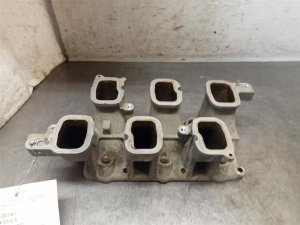
Used OEM Parts in Stock
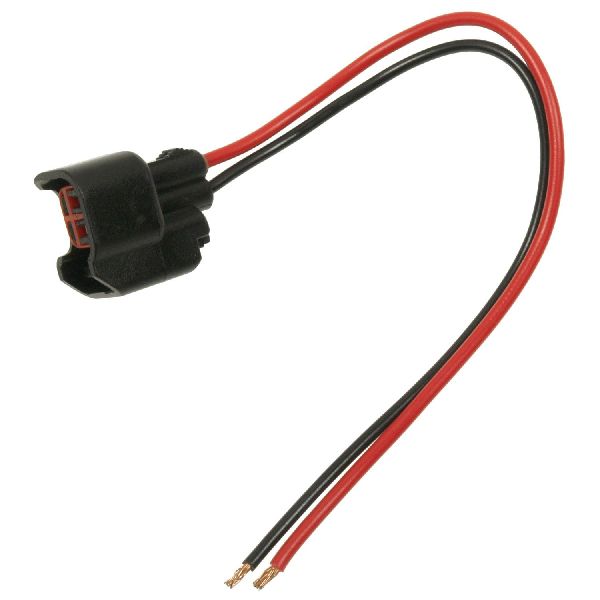
New Aftermarket Parts Available


The information in this article is provided for general reference and educational purposes only. Vehicle specifications, procedures, and part compatibility can vary by production date, trim level, and region. Always consult your vehicle's factory service manual and verify part numbers before purchasing or performing repairs. Safety-critical components such as airbags, seat belts, and braking systems should be installed by a qualified professional.
- Buick Enclave:
- 🧭 Diagnostic Flowchart
- 🎬 Helpful Videos
- 🛍️ Shop This Part
- What's Unique About the 2008-2017 Buick Enclave
- Symptoms You May Notice
- Most Likely Causes
- Rare But Worth Checking
- Diagnosis Steps
- Parts You'll Likely Need
- Related Codes That Often Appear With This One
- Technical Service Bulletins (TSBs) & Recalls
- Platform-Specific Known Issues
- Mechanic-Grade Diagnostic Values
- Scan Tool Commands That Help
- Wiring & Ground Locations
- Real Owner Repair Stories
- OEM Part Supersession History
- Model Year Variations Within This Range
- Used vs. New Parts: Buying Guide for This Vehicle
- Real Owner Stories
- 2012 Buick Enclave 3.6L V6
- Chevrolet Traverse / GMC Acadia 3.6L V6
- 2009 GMC Acadia 3.6L V6
- Related OBD-II Codes
- Frequently Asked Questions
- 🎟️ Get 5% Off