

P0202 on 2010-2016 Buick LaCrosse 3.6L: Injector Circuit Malfunction Fixes
P0202 on a 2010-2016 LaCrosse 3.6L almost always means the cylinder 2 fuel injector has failed or its wiring is damaged. Cylinder 2 is on the front bank (closest to the radiator), making access easier than the rear. Expect to pay $60-$150 for a new injector. Before replacing the injector, a thorough inspection of the wiring harness for chafing is critical, as this is a well-documented issue on this engine per GM TSB PIP4924D.
- P0202 points specifically to an electrical problem in the cylinder 2 fuel injector circuit.
- The most likely causes are a bad fuel injector or a damaged wire/connector.
- On the 3.6L V6, cylinder 2 is the front-most cylinder on the driver's side, making it easier to access than rear cylinders.
- Always inspect the wiring harness for chafing, a known GM issue (TSB PIP4924D), before replacing the injector.
- Verify your engine type (LLT for 2010-2011, LFX for 2012-2016) before ordering parts, as the injectors are different.
What's Unique About the 2010-2016 Buick LaCrosse
For the 3.6L V6 in the LaCrosse, the key challenge is often physical access and a known wiring vulnerability. While cylinder 2 is fortunately on the easier-to-reach front bank, the wiring harness is a known weak point that can chafe against other engine components like the intake plenum, valve cover bolts, or fuel lines. The 2010-2016 year range also includes two versions of this engine: the LLT (2010-2011) and the LFX (2012-2016), which use different fuel injectors, ECMs (Bosch vs. Delphi), and have different injector resistance specifications. Verifying the correct part for your specific year is critical, as LLT and LFX injectors are not interchangeable.
Symptoms You May Notice
- Check Engine Light is on
- Engine running rough or vibrating (misfire).
- Poor acceleration and hesitation.
- Reduced fuel economy.
- Engine may enter a reduced power or "limp mode".
- Engine may be hard to start.
- Raw fuel smell from the engine bay if the injector is physically cracked or leaking.
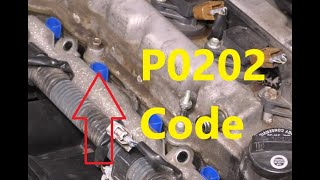
- Replacing the spark plug or ignition coil for cylinder 2. While these parts can cause a misfire code (P0302), they will not cause an injector circuit code like P0202, which is specifically an electrical fault. 🎬 Watch: Understanding the causes and fixes for the P0202 code. A P0202 indicates the ECM is not seeing the correct electrical signature from the injector circuit itself.
Most Likely Causes
- Faulty Cylinder 2 Fuel Injector 🔴 High Probability → Shop Fuel Injector The internal electronic coil of the direct fuel injector can fail over time, creating an open or short circuit that the ECM detects. While durable, they are a common failure point after many years and miles.
How to confirm: Swap the cylinder 2 fuel injector with an adjacent one (e.g., cylinder 4). Clear the codes and run the engine. If the code changes to P0204, the injector is faulty. Alternatively, test the injector's resistance with a multimeter. For LLT (2010-2011), it should be ~1.5-2.5 Ohms. For LFX (2012-2016), it should be ~1.2-1.8 Ohms. A reading of infinity (OL) indicates an open circuit and a bad injector.
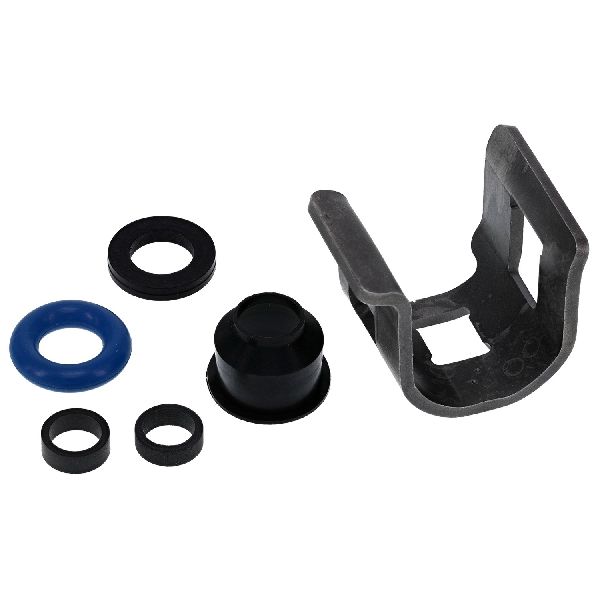
Typical fix: Replace the faulty fuel injector. Since accessing the injectors requires removing the upper intake manifold, it is highly recommended to replace all three injectors on the front bank at the same time, along with their Teflon seals and the upper intake gaskets.
Est. part cost: $60-$150 - Damaged Fuel Injector Wiring Harness 🟡 Medium Probability → Shop Engine Wiring Harness GM has noted in service bulletin PIP4924D that the wiring harness on the 3.6L V6 can chafe against the intake plenum, valve cover bolts, or fuel lines, causing wires to break or short out. This is a very common cause for injector circuit codes on this platform.
How to confirm: Carefully inspect the wiring harness leading to the cylinder 2 injector. Look for any signs of rubbing, melting, or exposed copper wires, especially where the harness bends around the cylinder head or touches brackets. Check the electrical connector for corrosion, bent pins, or a loose connection. A "wiggle test" on the harness while the engine is running may change the misfire, confirming a wiring fault.
Typical fix: Repair the damaged section of the wiring harness using solder and heat-shrink tubing for a durable fix. Secure the repaired harness away from sharp edges or hot surfaces with zip ties or protective loom. If the connector is damaged, it will need to be replaced with a new pigtail.
Est. part cost: $20-$50 for a connector pigtail
Rare But Worth Checking
- Faulty Engine Control Module (ECM): → Shop Engine Control Module (ECM) This is the least likely cause. The ECM contains a driver circuit for each injector. While this circuit can fail, you should exhaust all other diagnostic possibilities (wiring and injector) before considering ECM replacement. A user on the ScannerDanner forum with a 2011 LaCrosse confirmed a bad ECM was the cause for multiple injector codes after extensive testing proved the wiring and injectors were good. Replacement requires professional programming.
Diagnosis Steps
- Scan the vehicle for all stored trouble codes. Note if P0302 or other injector codes are present.
- Locate cylinder 2. On the transverse 3.6L V6, the cylinders on the front bank (closest to the radiator) are, from driver's side to passenger's side, 2, 4, and 6. Cylinder 2 is the first one on the driver's side of the front bank.
- Visually inspect the wiring harness and electrical connector for cylinder 2. Look for obvious signs of damage, chafing, or corrosion, paying close attention to areas where the harness touches the engine per TSB PIP4924D.
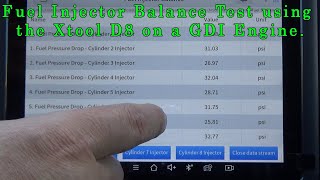
- Use a noid light to test the signal at the injector connector. With the engine cranking or running, the light should flash steadily. If there is no flash, the problem is in the wiring or the ECM. If it flashes, the injector itself is the likely problem. 🎬 See how to perform a fuel injector balance test.
- If the noid light flashes, test the injector resistance with a multimeter. Compare the reading to the specification for your engine (LLT ~1.5-2.5 Ohms, LFX ~1.2-1.8 Ohms) and to the other injectors.
- For a definitive test, swap the cylinder 2 injector with the cylinder 4 injector. This requires removing the upper intake manifold and replacing the gaskets. Clear the codes and drive the vehicle. If the code returns as P0204, the injector is confirmed to be faulty.
- If the noid light does not flash, perform a continuity test on the two wires from the injector connector back to the ECM connector to check for breaks or shorts in the harness.
- If the injector and wiring are confirmed to be good, the final possibility is a faulty injector driver in the ECM.
Parts You'll Likely Need
- Fuel Injector (Cylinder 2)
(OEM #12638530 (for LLT engine, 2010-2011, superseded by 12669384) or 12634126 (for LFX engine, 2012-2016))— This is the most common failure point that causes a P0202 code when its internal coil fails.
Trusted brands: ACDelco, Bosch, Standard Motor Products, Hitachi
OEM price range: $90-$150.
Aftermarket price range: $50-$100. - Fuel Injector Wire Connector Pigtail
(OEM #ACDelco PT2385 or 13576410 (verify connector style))— If the plastic connector or its locking tab is broken, or if the terminals inside are corroded from chafing, it must be replaced to ensure a solid electrical connection.
Trusted brands: ACDelco, Dorman
OEM price range: $30-$50
Aftermarket price range: $15-$30. - Upper Intake Manifold Gasket Set
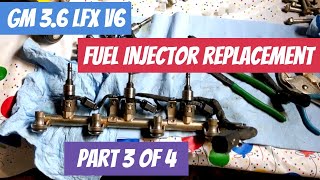
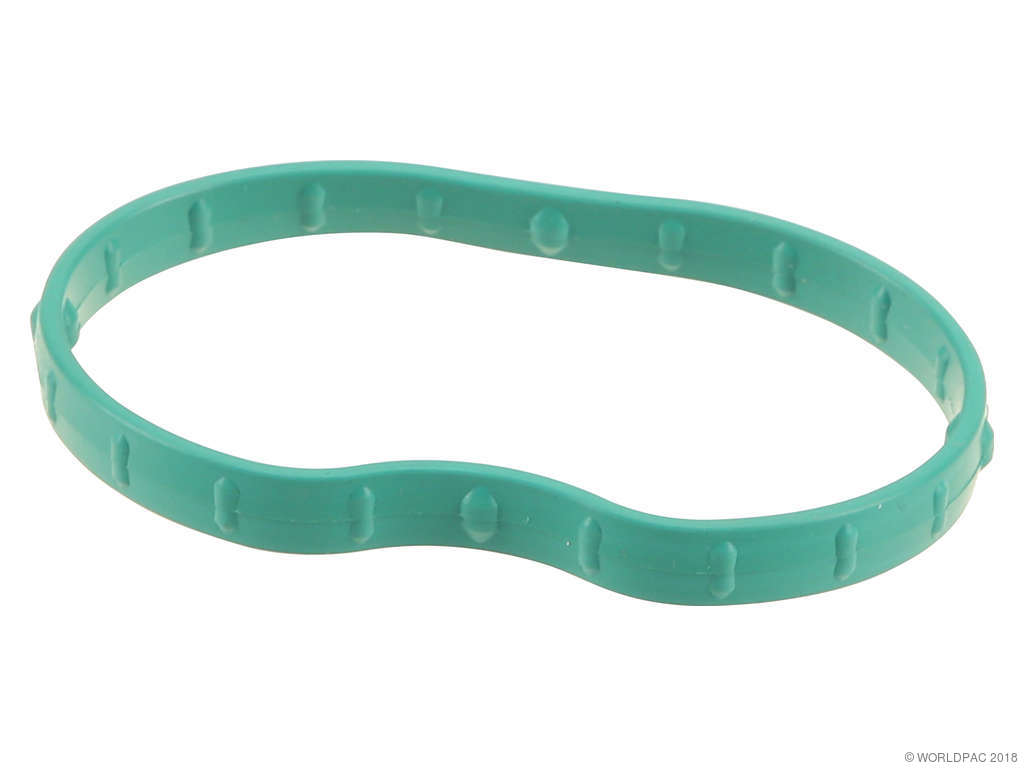
(OEM #12609260 (example, verify by VIN))— Required for reassembly. The upper intake manifold must be removed to access the fuel injectors on the 3.6L V6 engine. These gaskets are single-use and must be replaced to prevent vacuum leaks. 🎬 Watch this walkthrough for replacing fuel injectors on the 3.6L.
Trusted brands: Fel-Pro, ACDelco, Mahle
OEM price range: $40-$60.
Aftermarket price range: $25-$45.
Related Codes That Often Appear With This One
- P0302 — P0302 means "Cylinder 2 Misfire Detected." Since P0202 indicates a fault in the fuel delivery circuit for cylinder 2, a misfire is the direct and expected result. P0202 is the cause, and P0302 is the symptom.
- P0201, P0203, P0204, P0205, P0206 — If multiple injector circuit codes appear at once, it strongly suggests a widespread wiring harness issue (like a damaged section affecting multiple wires), a bad ground, or a problem with the power/ground supply common to the injectors, rather than multiple injectors failing simultaneously.
- P0171 / P0174 — These codes indicate a lean condition on Bank 1 and Bank 2, respectively. A user on a GM forum with a 2013 LaCrosse reported these codes alongside a P0302, which was ultimately diagnosed as a bad injector. A malfunctioning injector can disrupt the overall fuel trim, leading to these codes.
- P2152 / P2155 — These codes indicate a fault in the fuel injector group voltage supply circuit for Bank 2 (which includes cylinder 2). If one of these appears with P0202, it points strongly toward a wiring issue affecting the entire bank of injectors, such as a problem with the power feed wire or a main ground for that bank, as noted in TSB PIP4924D.
Technical Service Bulletins (TSBs) & Recalls
- PIP4924D: This TSB is highly relevant, noting that multiple injector codes (P0201-P0206) can be caused by a chafed wiring harness on various GM V6 engines, including the 3.6L. It advises technicians to inspect for rubbing against the intake plenum, valve cover bolts, and fuel lines. Manufacturer TSB Bulletin #PIP4924D specifically notes that technicians may find Diagnostic Trouble Codes P0201 through P0206, as well as circuit-specific codes like P0264, P2152, and P2155, associated with a misfire and the Malfunction Indicator Lamp.
Platform-Specific Known Issues
- A known issue on GM 3.6L V6 engines is the potential for the fuel injector wiring harness to chafe against engine components, leading to shorts or open circuits. A GM Technical Service Bulletin (TSB PIP4924D) addresses this possibility across many models and years.
- A user on the GM-Trucks.com forum reported a P0202 code on their 2013 LaCrosse 3.6L along with multiple other codes (P0171, P0174, P0300). The discussion centered on whether it was a coil or injector, highlighting the diagnostic challenge. The shop diagnosed it as a bad injector and
Mechanic-Grade Diagnostic Values
- Fuel Injector Coil Resistance (2012-2016 LFX Engine) — expected: 1.2 - 1.8 Ohms. Failure: A reading of OL (infinity), near 0 Ohms, or significantly outside the expected range.
- Fuel Injector Coil Resistance (2010-2011 LLT Engine) — expected: 1.5 - 2.5 Ohms. Failure: A reading of OL (infinity), near 0 Ohms, or significantly outside the expected range. Note: Many sources incorrectly list a higher ~12 Ohm value typical of older port-injected engines.
- Injector Circuit Inductive Spike (Lab Scope) — expected: A sharp voltage spike to ~65V immediately after the injector control signal ends.. Failure: A missing or weak voltage spike. This is what the ECM primarily looks for to confirm the injector circuit is electrically sound. A P0202 is set when this spike is absent.
- Injector Pulse Width at Idle (Scan Tool Live Data) — expected: 2.0 - 4.0 milliseconds (ms). Failure: A value of 0 ms for cylinder 2 indicates the ECM has disabled the injector due to the detected circuit fault.
- Wiring Harness Continuity (Multimeter) — expected: < 0.5 Ohms. Failure: A reading of OL (Open Line) or high resistance indicates a break in the wire between the ECM and the injector connector.
Scan Tool Commands That Help
- GDS2 (GM Dealer Tool) or high-end bidirectional scanner: Injector Balance Test / Active Fuel Injector Test (AFIT) — This is a definitive functional test. The tool commands each injector to fire and measures the corresponding drop in fuel rail pressure. If the pressure drop for cylinder 2 is significantly different from the others (GM specifies less than 20% variance), it confirms a flow issue or a complete failure of that injector to fire.
- GDS2 (GM Dealer Tool) or high-end bidirectional scanner: Injector Kill / Disable — While the engine is idling, you can command the ECM to stop firing the cylinder 2 injector. If there is no change in engine RPM or sound, it confirms that cylinder was not contributing in the first place, validating the P0202/P0302 fault.
- GDS2 (GM Dealer Tool) or high-end bidirectional scanner: Fuel Trim Reset — After replacing a fuel injector or repairing a wiring issue, this function must be used to clear the ECM's long-term learned fuel trim values. This forces the ECM to relearn from a baseline of zero and helps confirm the fix more quickly.
Wiring & Ground Locations
- Injector #2 Control Wire — On similar GM 3.6L platforms, this wire runs from Pin 37 in the black X1 ECM connector to the control pin on the fuel injector #2 connector. The ECM is located in the engine bay.. This is the specific wire the ECM grounds to fire the injector. A continuity test from the ECM pin to the injector connector pin is the final step to confirm if a wiring break exists.
- G103 / G105 / G107 — These are critical engine and ECM grounds. G103 is often on the cowl above the brake booster, G105 on the instrument panel bulkhead, and G107 on the driver's side cylinder head.. The ECM and injectors rely on clean ground connections. A loose or corroded ground at these points can create a floating reference voltage, causing the ECM to misinterpret the injector circuit's health and set false codes.
- TSB Chafe Points — The injector wiring harness where it runs over valve cover bolts, touches the side of the cylinder head, or makes contact with the intake plenum and fuel lines.. These are the most common locations for the wiring harness to rub through its insulation, causing a short or open circuit that directly triggers P0202. This is documented in GM TSB PIP4924D.
Real Owner Repair Stories
- acadiaforum.net user report (2011 GMC Acadia 3.6L V6 (shared platform/engine)) — Check Engine Light with codes P0264 (Injector Circuit Low Cyl 2) and P0302 (Misfire Cyl 2).
❌ Tried (didn't work) Initial diagnosis pointed to a bad fuel injector.
✅ What actually fixed it A technician performed a 'wiggle test' on the wiring harness while the engine was running and found a spot that would cause the misfire. The cause was a broken wire inside the insulation with no visible external damage, as described in TSB PIP4924D. The harness was repaired. - ScannerDanner Forum user report (2011 Buick LaCrosse 3.6L V6) — Misfire on cylinders 3, 4, and 6 with corresponding injector circuit codes.
❌ Tried (didn't work) Cleaned all fuel injectors., Performed resistance test on all injectors (all tested good)., Performed continuity test on the injector wiring harness (all tested good).
✅ What actually fixed it The ECM was not providing the ground signal to fire the injectors on the affected cylinders. Replacing and reprogramming the Engine Control Module (ECM) resolved the issue.
When the Usual Fixes Don't Work
- In one documented case on a similar GM vehicle, a P0202 code returned immediately after a shop replaced both the fuel injector and the ECM. This strongly indicates the actual root cause was an intermittent wiring fault (per TSB PIP4924D) that was missed during the initial diagnosis. This highlights the importance of performing a thorough 'wiggle test' and continuity check on the harness before replacing expensive components.
OEM Part Supersession History
12638530→12669384— Updated part design for the LLT (2010-2011) engine.
Heads up: This part is for the LLT engine ONLY and is not compatible with the 2012-2016 LFX engine, which uses part number 12634126.
Model Year Variations Within This Range
- 2010-2011: Uses the 3.6L LLT V6 engine with higher resistance (~1.5-2.5 Ohm) injectors (PN 12669384) and the E69 ECM.
- 2012-2016: Uses the updated 3.6L LFX V6 engine with lower resistance (~1.2-1.8 Ohm) injectors (PN 12634126) and the E78 ECM.
Diagnostic Flowchart
Used vs. New Parts: Buying Guide for This Vehicle
When a used part is the smart pick: A used wiring harness from a low-mileage donor vehicle can be a cost-effective solution if the original harness has extensive, hard-to-find damage. Used fuel injectors are generally not recommended due to the risk of them being clogged or having a different flow rate, but can be used for temporary diagnosis (like an injector swap).
Donor-vehicle mileage cap: roughly under 80000 miles for the part to have meaningful remaining life.
What to inspect on the donor part:
- For a wiring harness, inspect for any signs of previous repair (tape, butt connectors).
- Check that all connector locking tabs are intact and not brittle.
- Ensure there is no visible corrosion on connector pins.
- For an injector, check that the tip is not heavily caked with carbon and the plastic connector is not cracked.
OEM-only on this vehicle (don't cheap out):
- Fuel Injector: Due to the precise nature of direct injection, ACDelco (OEM) injectors are strongly recommended to ensure correct flow rates and spray patterns. Aftermarket injectors can cause fuel trim issues.
- Engine Control Module (ECM): Must be a new or professionally remanufactured unit that is programmed specifically to the vehicle's VIN.
Aftermarket brands forum-validated for this vehicle:
- ACDelco (for injectors and pigtails)
- Bosch (often the OEM manufacturer for ACDelco)
- Fel-Pro (for intake gaskets)
Brands owners have reported issues with on this vehicle:
- Dorman: While their connector pigtails may be acceptable, forum consensus often advises against using their more complex electronic or mechanical parts like fuel injectors due to inconsistent quality.
- Unbranded/No-Name eBay/Amazon injectors: These are a significant gamble and frequently fail or perform poorly, leading to repeat repairs.
Real Owner Stories
Aggregated from forums and TSBs cited above. Mileages and costs reflect what owners reported in those sources.
2013 LaCrosse 3.6L LFX
Symptoms: The car set a P0302 misfire code along with lean codes P0171/P0174 and some EVAP codes. The owner was unsure if the cause was a bad injector or an ignition coil.
What fixed it: A repair shop diagnosed the problem as a bad cylinder 2 fuel injector.
Source hint: GM Forum - '2013 Lacrosse, bad injector or just a coil?'
2011 Buick LaCrosse 3.6L V6
Symptoms: The vehicle had multiple injector codes present.
What fixed it: After testing confirmed the injectors and wiring were good, the root cause was found to be a failed Engine Control Module (ECM) that was not properly grounding the injectors.
Source hint: ScannerDanner Forum - '2011 Buick LaCrosse 3.6L V6'
Related OBD-II Codes
Frequently Asked Questions
Where is cylinder 2 located on my 2012 LaCrosse 3.6L V6?
I heard about a TSB for wiring problems. Does TSB PIP4924D apply to my LaCrosse for a P0202 code?
What should the resistance be for the fuel injector on my 2014 LaCrosse 3.6L?
My mechanic confirmed the cylinder 2 injector is bad. Should I replace just that one?
My LaCrosse has both a P0202 and a P0302. Could the problem be an ignition coil?
Helpful Videos
We Have This Part in Stock



The information in this article is provided for general reference and educational purposes only. Vehicle specifications, procedures, and part compatibility can vary by production date, trim level, and region. Always consult your vehicle's factory service manual and verify part numbers before purchasing or performing repairs. Safety-critical components such as airbags, seat belts, and braking systems should be installed by a qualified professional.
- Buick LaCrosse:
- 🧭 Diagnostic Flowchart
- 🎬 Helpful Videos
- 🛍️ Shop This Part
- What's Unique About the 2010-2016 Buick LaCrosse
- Symptoms You May Notice
- Most Likely Causes
- Rare But Worth Checking
- Diagnosis Steps
- Parts You'll Likely Need
- Related Codes That Often Appear With This One
- Technical Service Bulletins (TSBs) & Recalls
- Platform-Specific Known Issues
- Mechanic-Grade Diagnostic Values
- Scan Tool Commands That Help
- Wiring & Ground Locations
- Real Owner Repair Stories
- When the Usual Fixes Don't Work
- OEM Part Supersession History
- Model Year Variations Within This Range
- Used vs. New Parts: Buying Guide for This Vehicle
- Real Owner Stories
- 2013 LaCrosse 3.6L LFX
- 2011 Buick LaCrosse 3.6L V6
- Related OBD-II Codes
- Frequently Asked Questions
- 🎟️ Get 5% Off