

P0202 on 2010-2014 Cadillac CTS: Injector Circuit Malfunction Causes and Fixes
P0202 on a 2010-2014 Cadillac CTS most often means the fuel injector for cylinder #2 has failed internally. A simple diagnostic is to swap the cylinder 2 injector with another (like cylinder 4). If the code changes to P0204, you need a new injector. The injector's resistance can also be tested with a multimeter; for the 3.6L LFX engine, it should be between 1.2 and 1.8 ohms. Expect to pay $50-$100 for a single OEM ACDelco injector, part number 12669384 (which supersedes 12638530).
- P0202 on your CTS means there's an electrical fault with the cylinder 2 fuel injector circuit, which almost always points to a failed injector.
- The most effective and simple diagnostic is to swap the cylinder 2 injector with another one and see if the code follows the injector.
- This is a common failure on GM's 3.0L and 3.6L V6 engines, and cylinder 2 is the easiest to access.
- Driving with this code can damage your catalytic converter, so it should be addressed promptly.
- The correct, updated OEM part number for the injector is likely 12669384.
What's Unique About the 2010-2014 Cadillac CTS
On the V6 engines in the second-generation CTS (3.0L LF1 and 3.6L LLT/LFX), this code is a straightforward electrical fault. The cylinder layout places cylinder #2 on the driver's side (Bank 2), closest to the front of the car, making it the most accessible injector to diagnose and replace. While wiring issues can occur, the direct fuel injectors themselves are the most common point of failure. A GM Technical Service Bulletin (PIP4924D) acknowledges a pattern of injector-related DTCs (including P0202) causing misfires on these engines, confirming this is a known issue across multiple GM models with these engines.
Diagnostic Flowchart
Tap your situation to follow the diagnostic path that matches what you're seeing on this vehicle.
Generation note: The 2010-2014 range covers the end of the second generation (2010-2013 sedans, through 2014 for coupe/wagon) and the start of the third generation (2014 sedan). The common V6 engines (3.0L LF1, 3.6L LLT, and 3.6L LFX) share a similar design and cylinder layout, making the diagnosis for P0202 consistent across these models. The LFX engine, introduced around 2012, featured some design updates but shares the same fundamental injector system architecture.
Symptoms You May Notice
- Check Engine Light is on (can be steady or flashing)
- Rough, shaking idle
- Noticeable loss of power and poor acceleration
- Engine misfiring, which may feel like a stumble, shudder, or tapping sound
- Reduced fuel economy
- The StabiliTrak service light may also illuminate, often concurrently with the Check Engine Light
- A raw fuel smell from the exhaust
- Replacing the spark plug or ignition coil for cylinder 2. While these parts can cause a misfire (P0302), they will not cause an injector circuit code (P0202). P0202 is specifically an electrical fault related to the fuel injector's control circuit. If you have P0202, the problem is almost certainly the injector, wiring, or ECM.
Most Likely Causes
- Faulty Cylinder 2 Fuel Injector 🔴 High Probability → Shop Fuel Injector The internal electronic coil within the direct fuel injector can fail over time from heat cycles and vibration, creating an open or short circuit. This is a well-documented failure on the GM High Feature V6 engine family.
How to confirm: Swap the cylinder 2 fuel injector with another cylinder's injector (e.g., cylinder 4). Clear the codes and run the engine. If the trouble code changes to P0204 (for cylinder 4), the injector is confirmed to be faulty. You can also check the injector's resistance with a multimeter. Disconnect the injector and measure across its two pins. For the 3.6L LFX engine, a good injector should read between 1.2 and 1.8 ohms. An infinite reading means an open circuit, while a reading near zero means a short.
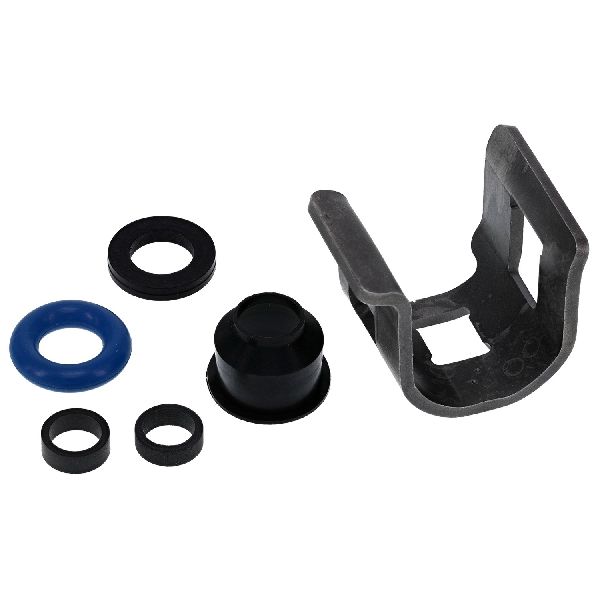
Typical fix: Replace the faulty fuel injector. It is often recommended to replace all injectors on the same bank (or all six) if they are original and high-mileage, but only the failed one is necessary to fix the code. 🎬 Watch: Step-by-step guide to replacing a faulty CTS fuel injector. Always use new seals and lubricate the O-rings with engine oil before installation to prevent damage.
Est. part cost: $50-$150 - Wiring Harness or Connector Issue 🟡 Medium Probability Engine vibrations and heat can cause wires in the engine harness to fray, break, or short out, particularly where the harness might rub against the engine block or other components. The plastic connector at the injector can also become brittle and fail, or its pins can corrode, leading to a poor connection.
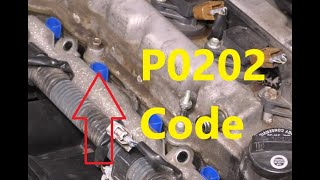
How to confirm: Visually inspect the wiring going to the cylinder 2 injector for any signs of damage, melting, or corrosion. Disconnect the connector and check for a clean, tight connection. Use a noid light to verify that the ECM is sending a pulse signal to the connector while cranking the engine. If the noid light doesn't flash, check for continuity on both wires from the injector connector back to the ECM connector using a multimeter to rule out a broken wire. 🎬 See this video for a deep dive into P0202 causes and fixes.
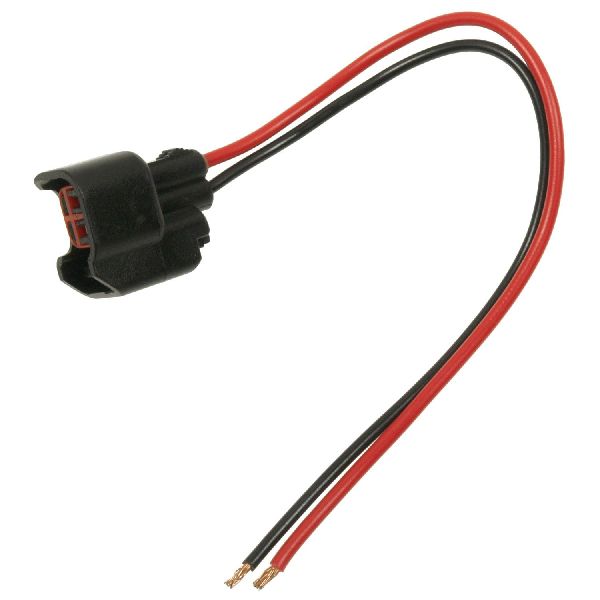
Typical fix: If the connector is damaged, replace it with a new pigtail connector. If a wire is broken, repair the wire. This may involve soldering and heat-shrinking the damaged section. In some cases of extensive damage, the entire engine wiring harness may need replacement.
Est. part cost: $15-$30 for a pigtail, much higher for a full harness.
Rare But Worth Checking
- Failed Engine Control Module (ECM): → Shop Engine Control Module (ECM) This is the least likely cause, but it is possible. The internal driver circuit for the #2 injector can fail within the ECM. This should only be considered after the injector and wiring have been definitively ruled out. A real-world example on a ScannerDanner forum post for a 2005 CTS showed an ECM replacement ultimately fixed the P0202 after a new injector and wiring checks failed to solve the issue. A similar failure was documented on a Holden with a related engine, where the PCM driver was confirmed bad using an oscilloscope.
- Heavy Carbon Buildup on Intake Valves: On Direct Injection (DI) engines like the LF1, LLT, and LFX, fuel is injected directly into the cylinder. This means there is no fuel washing over the back of the intake valves to keep them clean. Over time, oil vapor from the PCV system can bake onto the valves, causing significant carbon buildup. While this typically causes misfire codes (P030x) due to restricted airflow, in some edge cases, the resulting poor combustion and engine imbalance could potentially be misinterpreted by the ECM, or accompany an injector fault.
Diagnosis Steps
- Read the trouble codes with an OBD-II scanner. Confirm P0202 is present. Note any other codes, such as P0302, and the StabiliTrak warning light.
- Locate cylinder 2. On the V6 engines, it is the front-most cylinder on the driver's side bank (Bank 2).
- To quickly determine the fault, swap the cylinder 2 fuel injector with the cylinder 4 injector (middle cylinder, driver's side). This requires relieving fuel rail pressure first.
- Clear the codes, start the engine, and let it run for a minute.
- Re-scan for codes. If the code is now P0204, the fuel injector you moved is bad and needs to be replaced.
- If the code remains P0202, the problem is in the wiring or ECM. The injector is good.
- Visually inspect the wiring harness and connector for cylinder 2. Look for any breaks, chafing, or corrosion. Wiggle the harness with the engine running to see if the idle changes.
- Use a noid light in the cylinder 2 injector connector to check for a pulse from the ECM while cranking the engine. If it flashes, the wiring and ECM are likely okay, pointing back to an intermittent injector issue. If it does not flash, there is a problem with the wiring or the ECM driver.
- If the noid light does not flash, use a multimeter to check for continuity on both wires from the injector connector back to the ECM connector. If continuity is good, the ECM is the most likely culprit.
- When replacing the injector, it's good practice to tape over the open intake ports to prevent anything from falling into the engine. Also, ensure new O-rings are lubricated before installation. 🎬 Watch: How to remove the intake and replace GM V6 injectors.
Parts You'll Likely Need
- Fuel Injector
(OEM #12669384)— This is the most common failure part for a P0202 code. This part number (ACDelco 217-3445) supersedes the older part numbers 12638530, 12632255, and 12611545. It fits the 3.6L V6 engines. Always verify with your VIN.
Trusted brands: ACDelco (OEM), Bosch, Standard Motor Products
OEM price range: $70-$120
Aftermarket price range: $40-$80 - Fuel Injector Connector Pigtail
(OEM #ACDelco PT2183 (example, verify fitment))— If the wiring or connector is found to be the issue, this part is used to replace the damaged connector end.
Trusted brands: ACDelco, Dorman
OEM price range: $20-$40
Aftermarket price range: $10-$25
Related Codes That Often Appear With This One
- P0302 — P0302 means 'Cylinder 2 Misfire Detected.' Since P0202 indicates the cylinder 2 injector isn't working, that cylinder cannot combust properly, which the ECM detects as a misfire. A P0202 will almost always cause a P0302.
- P0300 — P0300 indicates a 'Random or Multiple Cylinder Misfire.' While P0202 is specific to cylinder 2, the resulting rough running and engine imbalance can sometimes be misinterpreted by the ECM as a multiple-cylinder misfire, logging P0300 as well.
Technical Service Bulletins (TSBs) & Recalls
- PIP4924D: Mentions a collection of injector and misfire related codes (including P0202) and advises technicians on diagnosis for Service Engine Soon lights and misfires. It also warns that the fuel injector wiring harness may rub through on engine components.
Mechanic-Grade Diagnostic Values
- Fuel Injector Resistance (3.6L LFX V6) — expected: 1.2 - 1.8 Ohms. Failure: A reading outside this range, or an open (OL) / short (near 0) reading, indicates an internal injector fault.
- Fuel Injector Resistance (3.0L LF1 V6) — expected: Approximately 12 Ohms. Failure: A significant deviation from 12 Ohms, an open circuit (OL), or a short (near 0 Ohms) indicates a failed high-impedance injector.
- Injector Circuit Voltage (Key On, Engine Off) — expected: Near 0V (e.g., ~160 mV). Failure: Expecting 12V on this circuit is a common misdiagnosis. These are high-voltage, capacitor-driven circuits controlled by the ECM; they do not rest at 12V.
- Injector Pulse Width at Idle — expected: 1.5 - 4.5 milliseconds (ms). Failure: While not a direct failure indicator for P0202, a pulse width that is excessively high or low can indicate underlying fueling issues or large injectors that are difficult to control at idle.
Scan Tool Commands That Help
- GDS2 / Tech2: Fuel Injector Balance Test — This bidirectional test commands each injector to fire for a set duration while the engine is running, then measures the drop in fuel rail pressure. It can identify a mechanically sticking, clogged, or electrically weak injector that isn't flowing correctly, even if it passes a basic resistance test.
- GDS2 / Tech2: Injector Control Circuit Status — This live data parameter is useful for diagnosing the circuit. With the injector disconnected, the status should read 'Open'. Connecting a test lamp between the two terminals of the connector should change the status to 'OK'. If it does not change, it points to a wiring or ECM issue rather than an injector fault.
Wiring & Ground Locations
- G131 / G136 — Located on the rear of the left cylinder head (Bank 2, driver's side).. These are critical ground points for the engine block and cylinder head. Since the fuel injectors are seated in the head, a loose or corroded ground here can create electrical noise or a poor ground path for the injector circuits, potentially causing intermittent open circuits or high resistance faults like P0202.
- ECM Connector X1 (LFX) / C2 (General) — The Engine Control Module (ECM) is located below the left headlamp assembly. The injector wiring runs to a large connector at the ECM.. The control wire for the #2 fuel injector terminates at a specific pin in the ECM connector (e.g., Pin 32, L-GN/BK wire on some GM ECMs). To perform a definitive end-to-end continuity test and rule out a broken wire, you must test from the injector connector pin to the corresponding pin at this ECM connector.
Real Owner Repair Stories
- ScannerDanner Forum (2005 Cadillac CTS 3.6L) — Injector #2 stops working when the engine gets warm, triggering P0202 and P0302.
❌ Tried (didn't work) Replaced the fuel injector, Replaced the coil pack, Replaced the spark plug, Verified wiring was okay
✅ What actually fixed it The ECM was dropping the injector driver. The final resolution, though not explicitly stated by the original poster, was strongly implied to be a faulty ECM, as all other components and wiring were ruled out. - YouTube video by Christopher Kleman (2005 Cadillac SRX (with similar engine architecture)) — P0202 and P0302, injector #2 verified not firing.
❌ Tried (didn't work) A full circuit test from the fuse box, through the injector, and back to the ECM connector showed the injector resistance was correct and the wiring had continuity.
✅ What actually fixed it The diagnosis concluded the wiring and injector were good, meaning the transistor (driver) inside the ECM for that injector circuit had failed. The required fix was to replace or remanufacture the ECM.
OEM Part Supersession History
12638530, 12632255, 12611545→12669384— Standard part evolution for improved reliability or manufacturing process changes.
Heads up: While this part is listed for the 3.6L engines, there are significant differences between the LLT (pre-2012) and LFX (2012+) engines, including different fuel pumps, injectors, and ECMs. The LFX injectors are designed for E85 capability and flow differently. Using the wrong injector type between these engine versions will cause performance issues and codes. Always verify the correct part number by VIN.
Model Year Variations Within This Range
- 2010-2011 (LLT Engine) vs. 2012-2014 (LFX Engine): The 2012 model year marked the switch from the LLT to the LFX 3.6L V6. The LFX features different, higher-volume fuel injectors for E85 capability, a composite intake manifold (vs. aluminum), and uses a Delphi ECM instead of the Bosch unit on the LLT. While the P0202 diagnosis is similar, the injectors themselves are not directly interchangeable without tuning, and the ECM pinouts may differ.
Helpful Videos
We Have This Part in Stock


The information in this article is provided for general reference and educational purposes only. Vehicle specifications, procedures, and part compatibility can vary by production date, trim level, and region. Always consult your vehicle's factory service manual and verify part numbers before purchasing or performing repairs. Safety-critical components such as airbags, seat belts, and braking systems should be installed by a qualified professional.
- Cadillac CTS:
- 🧭 Diagnostic Flowchart
- 🎬 Helpful Videos
- 🛍️ Shop This Part
- What's Unique About the 2010-2014 Cadillac CTS
- Symptoms You May Notice
- Most Likely Causes
- Rare But Worth Checking
- Diagnosis Steps
- Parts You'll Likely Need
- Related Codes That Often Appear With This One
- Technical Service Bulletins (TSBs) & Recalls
- Mechanic-Grade Diagnostic Values
- Scan Tool Commands That Help
- Wiring & Ground Locations
- Real Owner Repair Stories
- OEM Part Supersession History
- Model Year Variations Within This Range
- 🎟️ Get 5% Off