

P0202 on 2006-2011 Chevrolet Impala 5.3L V8: Injector Circuit Fixes
For the 2006-2011 Impala SS with the 5.3L V8, code P0202 is most often a bad fuel injector for cylinder 2 or a wiring problem. Before replacing the injector, check the wiring harness for damage, especially where it might rub against engine components. A new injector costs around $40-$90 for an aftermarket part or $100-$150 for an OEM ACDelco part.
- P0202 on your Impala SS means there is an electrical problem with the cylinder 2 fuel injector circuit.
- The most likely causes are a bad fuel injector or a damaged wire/connector. Cylinder 2 is the hardest to access, located under the alternator.
- Always inspect the wiring harness for damage before buying parts. A simple visual check can save you from a misdiagnosis.
- A quick way to confirm a bad injector is to swap it with another cylinder and see if the trouble code follows the injector.
- Do not ignore this code. A persistent misfire can cause expensive damage to your catalytic converter.
What's Unique About the 2006-2011 Chevrolet Impala
The Impala SS with the transverse-mounted LS4 V8 has unique packaging constraints. While the P0202 code itself is a standard electrical fault, accessing components can be challenging. On this V8, cylinder 2 is the front-most cylinder on the passenger side, located underneath the alternator, making it the most difficult injector to access. While no specific TSBs for the Impala LS4 were found for this exact code, numerous GM bulletins for other vehicles from this era (like TSB PIP4924D) point to wiring harness chafing as a common cause. Furthermore, GM engineering document PIE0802 specifically requests data on P0202 codes, investigating contact between the wiring harness and the Cam Shaft Housing Cover Insulator as a potential root cause.
Symptoms You May Notice
- Check Engine Light is on
- Engine runs rough or vibrates, especially at idle
- Noticeable engine misfire (may feel like a stumble or shake)
- Hesitation or lack of power during acceleration
- Reduced fuel economy
- Engine may stall
- Occasional 'rotten egg' smell from the exhaust due to unburnt fuel in the catalytic converter
- Replacing the spark plug or ignition coil for cylinder 2. While these parts can cause a misfire (P0302), they do not cause an electrical circuit code like P0202. The problem is with the fuel injector's electrical circuit, not spark.
Most Likely Causes
- Faulty Cylinder 2 Fuel Injector 🔴 High Probability → Shop Fuel Injector Injectors are a common wear item that can fail electrically (coil winding opens or shorts) or mechanically (clogging). Injector failures are frequently reported on this platform.
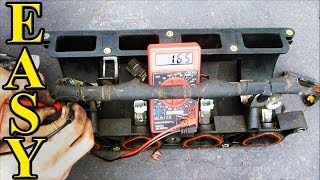
How to confirm: Swap the cylinder 2 fuel injector with another cylinder (e.g., cylinder 4). If the code changes to P0204, the injector is bad. You can also test the injector's resistance with a multimeter; a service manual for a 2007 Impala 5.3L specifies a resistance of 11-14 ohms. A reading outside this range, or an open circuit, indicates a failed injector. 🎬 Watch: How to check fuel injector resistance with a multimeter
Typical fix: Replace the faulty fuel injector. It is often recommended to replace injectors as a set, or at least the full bank of four, to ensure balanced fueling, especially on higher mileage vehicles.
Est. part cost: $40-$150 - Wiring Harness or Connector Issue 🟡 Medium Probability GM vehicles from this era are known to have issues with wiring harnesses chafing against engine brackets, the intake manifold, or other components, leading to an open or short circuit. GM document PIE0802 specifically investigates harness contact with the Cam Shaft Housing Cover Insulator for this code. The connector itself can also become corroded or have a broken pin.
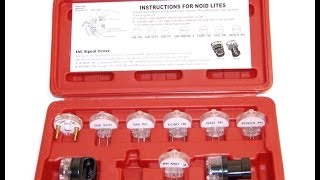
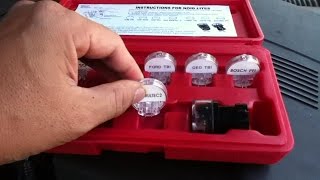
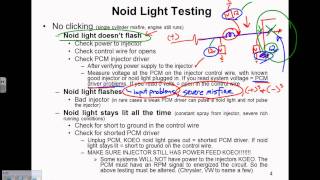
How to confirm: Visually inspect the wiring harness leading to the cylinder 2 injector for any signs of melting, chafing, or breaks. Check the connector for corrosion or damage. Use a noid light in the injector connector; if it flashes while cranking the engine, the wiring and PCM driver are likely good.
Typical fix: Repair the damaged section of wire or replace the injector pigtail connector. If the harness is severely damaged, it may need to be replaced.
Est. part cost: $15-$50 - Faulty Powertrain Control Module (PCM) ⚪ Low Probability → Shop Engine Control Module (ECM) This is not a common failure mode for this platform, but it is possible for the internal injector driver transistor to fail.
How to confirm: This is a diagnosis of exclusion. If the injector, wiring, and connectors have all been tested and confirmed to be good, the internal injector driver in the PCM may be at fault. This should be confirmed by a professional with advanced diagnostic tools that can command the injector and monitor the driver circuit directly.
Typical fix: Replace and reprogram the PCM.
Est. part cost: $200-$500
Diagnosis Steps
- Connect an OBD-II scanner to verify the P0202 code and check for any other codes, such as P0302.
- Turn the engine off. Visually inspect the wiring harness and connector for cylinder 2 (front passenger side, under the alternator). Look for obvious signs of damage, such as chafing against engine parts, melting, or corrosion. Pay close attention to where the harness may contact the cam housing cover.
- Disconnect the injector connector. Use a noid light to test for a signal. Have a helper crank the engine; the noid light should flash steadily. 🎬 Watch: How to test a fuel injector circuit with a noid light If it flashes, the PCM and wiring are likely okay, pointing to a bad injector. If it does not flash, there is a problem with the wiring or the PCM.
- If the noid light test fails, check for 12V power on one pin of the connector (typically a pink wire) with the key on. Then, check for continuity on the ground control wire between the injector connector and the PCM.
- If the noid light test passes, test the fuel injector itself. Measure the resistance across the two pins of the injector with a multimeter. It should be between 11-14 ohms. Compare the reading to an adjacent injector to ensure consistency. A reading that is significantly different (very high/open or very low/shorted) indicates a faulty injector.
- As a final confirmation, swap the cylinder 2 injector with the cylinder 4 injector (the next one over on the same bank). Clear the codes and run the engine. If the code returns as P0204, the injector is confirmed to be the problem. If P0202 returns, the issue is in the wiring.
- Pro Tip: Before removing the fuel rail or injectors, use compressed air to thoroughly clean the area around the base of the injectors to prevent dirt and debris from falling into the engine cylinders.
Parts You'll Likely Need
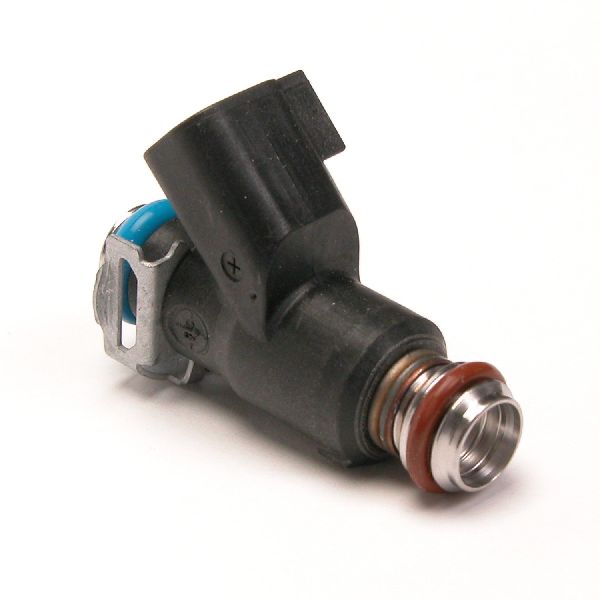
- Fuel Injector
(OEM #12580426)— This is the most common failure point for a P0202 code after wiring has been ruled out. This part may also be listed under ACDelco part number 217-3028.
Trusted brands: ACDelco, Delphi, Bosch
OEM price range: $100-$150
Aftermarket price range: $40-$90 - Fuel Injector Connector Pigtail — If the wiring is damaged at the connector, or if the connector's locking tab is broken, replacing the pigtail is the standard repair.
Trusted brands: ACDelco, Dorman
OEM price range: $25-$40
Aftermarket price range: $15-$25
Related Codes That Often Appear With This One
- P0302 — P0302 means 'Cylinder 2 Misfire Detected.' Since P0202 indicates a problem with the fuel supply to cylinder 2, a misfire is the direct result. A P0202 will almost always be accompanied by a P0302.
- P0200 — P0200 is a more general 'Injector Circuit Malfunction' code. It may appear alongside a specific cylinder code like P0202 if the fault is intermittent or affects the entire injector system.
Technical Service Bulletins (TSBs) & Recalls
- TSB Bulletin #PIP4924D: This manufacturer bulletin notes that technicians may find Diagnostic Trouble Codes including P0202 and a misfire, often resulting in the Service Engine Soon Malfunction Indicator Lamp being illuminated.
- PIP4924D / PIP4924C: While not for the Impala specifically, these GM TSBs for other models address injector circuit codes (including P0202) caused by wiring harness chafing, indicating a known issue pattern on GM vehicles of this era.
- PIE0802: A GM Preliminary Information bulletin specifically for P0202. It directs technicians to gather information about potential wiring harness chafing against the Cam Shaft Housing Cover Insulator, indicating this is a known area of concern for GM engineers.
Platform-Specific Known Issues
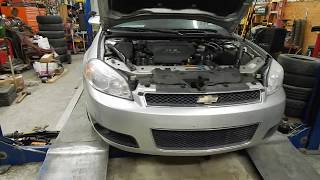
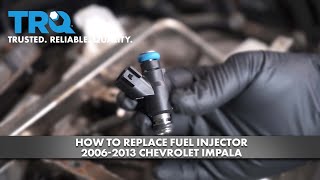
- Real-World Repair Story: Injector Replacement: A YouTube video by 'The Car Store Sales and Leasing' documents the process of changing the cylinder 2 injector on an Impala SS. The owner confirms the difficulty of the job, noting the injector is 'the hardest one of all...way down there underneath the alternator.' The video shows how to release the fuel rail and use bungee cords to hold it up for access without disconnecting the main fuel line, providing a practical guide for the repair. 🎬 Watch: Changing an injector in an Impala SS LS4
Mechanic-Grade Diagnostic Values
- Fuel Pressure (Key On, Engine Off) — expected: 55-62 PSI. Failure: Pressure below 55 PSI may indicate a weak fuel pump or faulty regulator.
- Injector Pulse Width (at idle, fully warm) — expected: 2-4 milliseconds (ms). Failure: Values significantly outside this range on a scan tool can indicate a compensation for other issues, but for P0202, the value for cylinder 2 may be zero or erratic.
- Injector Circuit Voltage (at connector) — expected: One pin should show battery voltage (approx. 12V) with key on, engine off. The other pin is the ground control from the PCM.. Failure: No voltage on the power pin indicates a wiring issue upstream (fuse, relay, or harness).
- Injector Coil Resistance — expected: 11-14 ohms. Failure: A reading of infinity (Open Loop) or near zero (short) indicates a failed injector coil.
Scan Tool Commands That Help
- Tech2 / GDS2 (or equivalent professional scanner): Injector Balance Test / Cylinder Power Balance — This bidirectional command allows the technician to disable injectors one by one. When cylinder 2 is disabled, if there is no change in engine RPM, it confirms that cylinder was not contributing in the first place, strengthening the P0202 diagnosis. It helps differentiate a weak cylinder from a completely dead one.
Wiring & Ground Locations
- Injector Power Wire — In the harness connector for the #2 fuel injector.. This wire, typically pink or pink/black on GM vehicles, supplies 12V+ to the injector. A lack of power here points to a break in the harness or a problem with the fuse/relay that powers the injector bank, not the injector itself.
- Injector Control Wire — In the harness connector for the #2 fuel injector, running back to a specific pin on the PCM.. The PCM pulses the ground on this wire to fire the injector. A break or short-to-ground on this wire will cause P0202. A continuity test from this wire's pin at the injector to the corresponding pin at the PCM connector is a critical diagnostic step.
- G102 — Typically located at the left rear of the engine; grounds the ignition coils.. While not directly for the injector circuit, a poor engine ground can cause electrical noise and erratic behavior in multiple systems. Ensuring all major engine grounds are clean and tight is a foundational step in diagnosing any electrical fault.
- G103 / G105 — G103 is often on the cowl above the brake booster; G105 is at the left front of the engine compartment.. These grounds serve the ECM/PCM and other critical engine compartment components. A compromised ground here can lead to unpredictable PCM behavior, including false codes or faulty driver operation.
OEM Part Supersession History
88894361→12580426— Standard part number update by GM. The replacement is a direct fit.
Heads up: The ACDelco service part number is 217-3028, which corresponds to the OEM part. No incompatibilities are noted for this specific supersession.
Diagnostic Flowchart
Other Known Issues on This Vehicle
Issues unrelated to this code that are worth knowing about as an owner of this generation:
- Active Fuel Management (AFM/DoD) Lifter Failure 🔴 High — Very common, especially as mileage exceeds 60,000-80,000 miles. Can cause misfires, ticking noises, and catastrophic engine damage if ignored. (Ref: Multiple TSBs exist for related oil consumption, but no direct recall for lifter failure. AFM delete kits are a common aftermarket solution.)
- Excessive Oil Consumption 🟠 Medium — Widespread issue, often appearing after 30,000-40,000 miles. GM's acceptable limit is 1 quart per 2,000 miles. Caused by oil spray from the AFM pressure relief valve coking up piston rings. (Ref: TSB #07-06-01-018B and others address this by installing an AFM oil deflector and cleaning cylinders.)
- 4T65E-HD Transmission Failure 🔴 High — Considered the platform's main weak link. The transmission is often overwhelmed by the V8's torque, with failures common between 60,000 and 100,000 miles. Symptoms include harsh shifts, slipping, and complete loss of movement. (Ref: TSB P1811 addresses harsh shifts, but widespread failure often requires a rebuild with upgraded components.)
Used vs. New Parts: Buying Guide for This Vehicle
When a used part is the smart pick: Used parts are a viable option for major mechanical components like the fuel rail itself or for a replacement PCM, provided it's from a reputable seller who guarantees it's tested and functional. Given the high failure rate of injectors, buying a single used injector is generally not recommended.
Donor-vehicle mileage cap: roughly under 100000 miles for the part to have meaningful remaining life.
What to inspect on the donor part:
- For a PCM: Check for zero corrosion on pins, no cracks in the casing, and a guarantee from the seller.
- For an injector: Visually inspect for cracks in the plastic body, clean nozzle end, and intact O-rings. However, internal electrical or mechanical condition cannot be verified visually.
OEM-only on this vehicle (don't cheap out):
- Fuel Injector
Aftermarket brands forum-validated for this vehicle:
- ACDelco (OEM)
- Bosch
- Delphi
- Fuel Injector Clinic (FIC) (for high-performance/quality builds)
Brands owners have reported issues with on this vehicle:
- Unbranded 'white-box' injectors from online marketplaces like eBay or Amazon are frequently cited in forums as being poorly manufactured, having inconsistent flow rates, and a high rate of early failure.
Real Owner Stories
Aggregated from forums and TSBs cited above. Mileages and costs reflect what owners reported in those sources.
2006-2009 Chevrolet Impala SS 5.3L V8
Symptoms: The owner noted the injector was 'the hardest one of all' to reach because it is located 'way down there underneath the alternator.'
What fixed it: Replacement of the cylinder 2 fuel injector by releasing the fuel rail and securing it with bungee cords to gain access without disconnecting the main fuel line.
Source hint: YouTube - The Car Store Sales and Leasing: A video titled 'Changing an injector in an Impala SS LS4'
2006-2011 Chevrolet Impala 5.3L V8
Symptoms: The vehicle exhibited both P0202 and P0302 codes simultaneously, resulting in a noticeable engine misfire.
What fixed it: Diagnosis confirmed the P0202 injector circuit code was the root cause of the P0302 misfire; the fix involved focusing on the injector and its associated wiring.
Source hint: Reddit - r/MechanicAdvice
Related OBD-II Codes
Frequently Asked Questions
Where is the cylinder 2 fuel injector located on my Impala SS LS4 engine?
Is there a specific TSB for the P0202 code on my Impala?
What is the correct resistance for a new fuel injector on a 2007 Impala 5.3L?
Could my P0202 code be related to the common oil consumption issues on the LS4?
Can I test the injector wiring myself without expensive tools?
Do I have to remove the entire fuel rail to fix a P0202 injector issue?
Helpful Videos
We Have This Part in Stock



The information in this article is provided for general reference and educational purposes only. Vehicle specifications, procedures, and part compatibility can vary by production date, trim level, and region. Always consult your vehicle's factory service manual and verify part numbers before purchasing or performing repairs. Safety-critical components such as airbags, seat belts, and braking systems should be installed by a qualified professional.
- Chevrolet Impala:
- 🧭 Diagnostic Flowchart
- 🎬 Helpful Videos
- 🛍️ Shop This Part
- What's Unique About the 2006-2011 Chevrolet Impala
- Symptoms You May Notice
- Most Likely Causes
- Diagnosis Steps
- Parts You'll Likely Need
- Related Codes That Often Appear With This One
- Technical Service Bulletins (TSBs) & Recalls
- Platform-Specific Known Issues
- Mechanic-Grade Diagnostic Values
- Scan Tool Commands That Help
- Wiring & Ground Locations
- OEM Part Supersession History
- Other Known Issues on This Vehicle
- Used vs. New Parts: Buying Guide for This Vehicle
- Real Owner Stories
- 2006-2009 Chevrolet Impala SS 5.3L V8
- 2006-2011 Chevrolet Impala 5.3L V8
- Related OBD-II Codes
- Frequently Asked Questions
- 🎟️ Get 5% Off